
I will lay waste to the CIA takeover of our government. Click the link.
Joined November 2024
- Tweets 66
- Following 253
- Followers 163
- Likes 273
15 Photos and videos
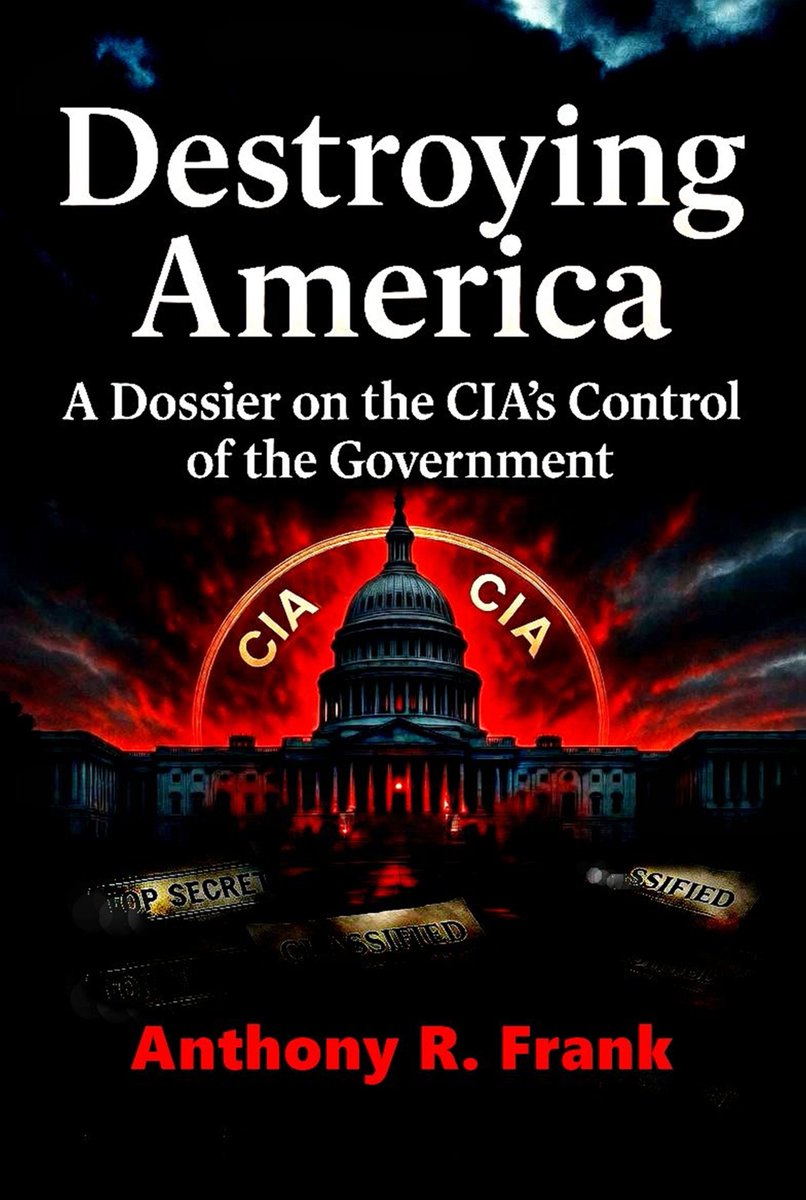
Pinned Tweet

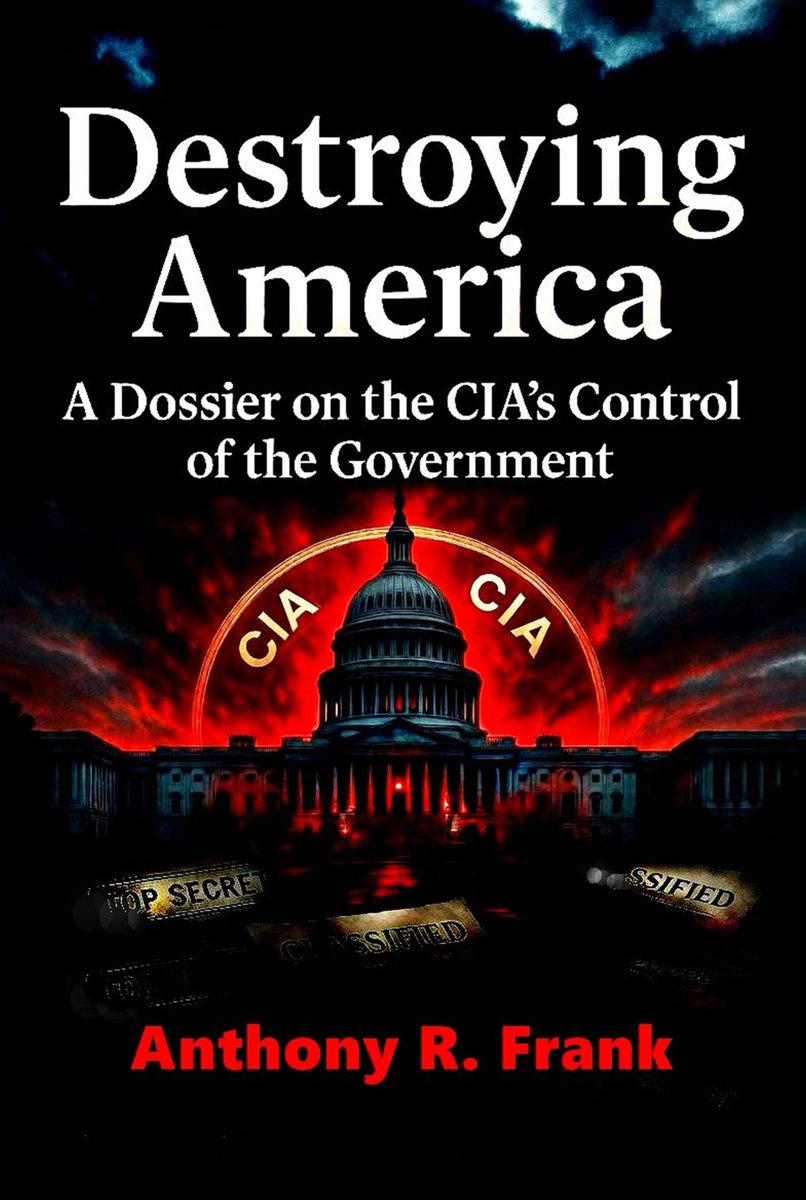
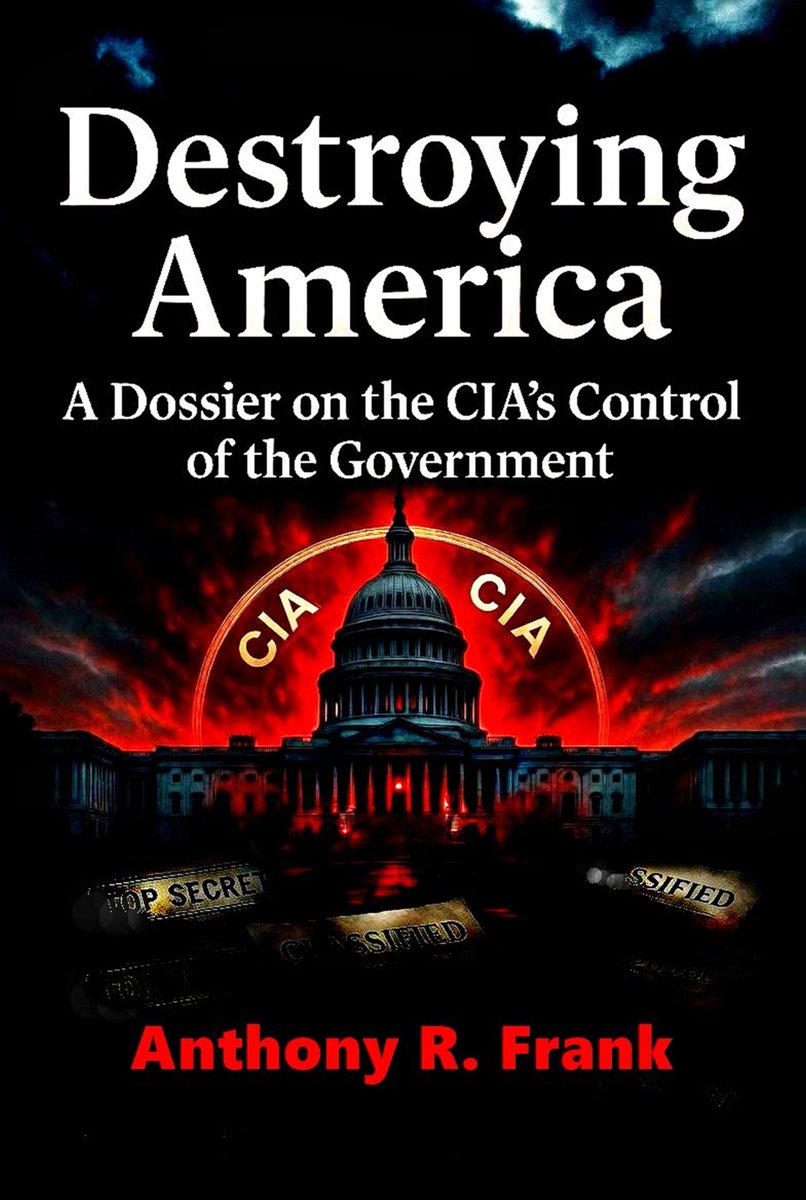
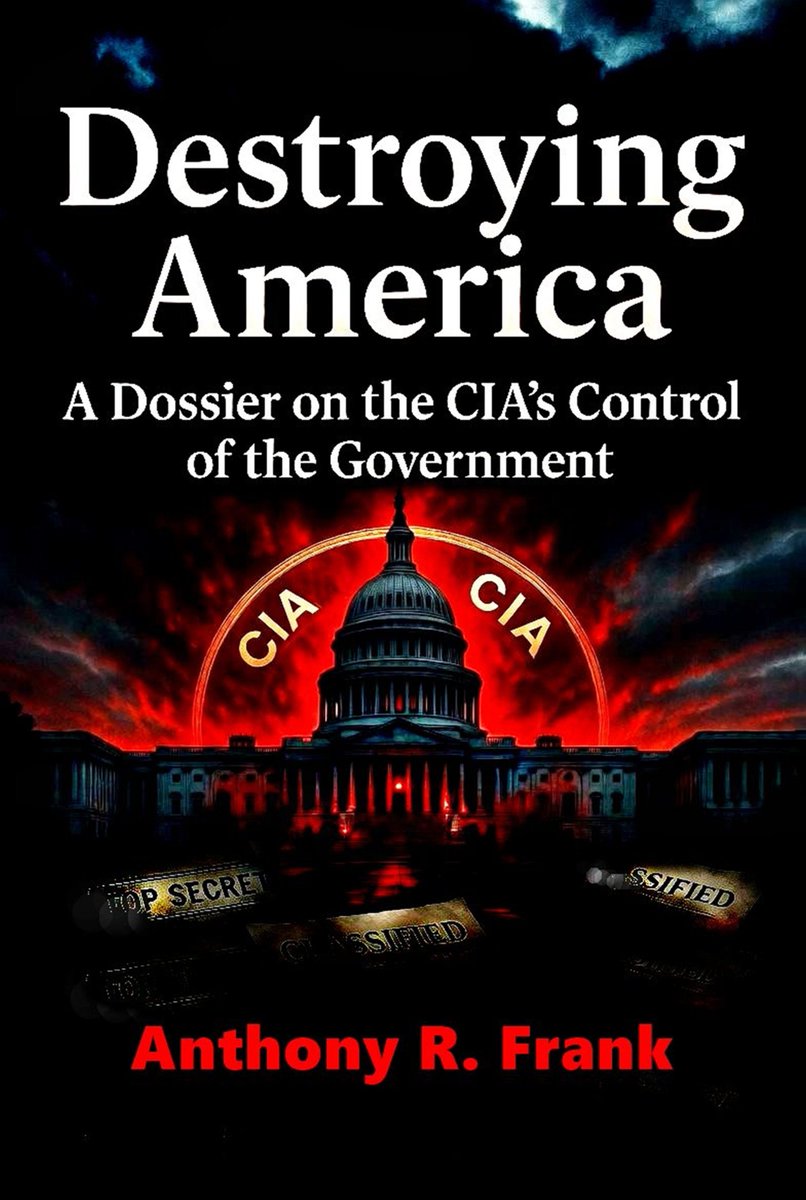
A former CIA insider pulls back the curtain on the Agency’s decades-long takeover of Congress and every Presidential administration.
This is not theory. This is the documented dossier.
Read “Destroying America: A Dossier on the CIA’s Control of the Government.”
51
433
1,043
406,898
Supporting Trump and the Constitution retweeted

Definitely will order this book.

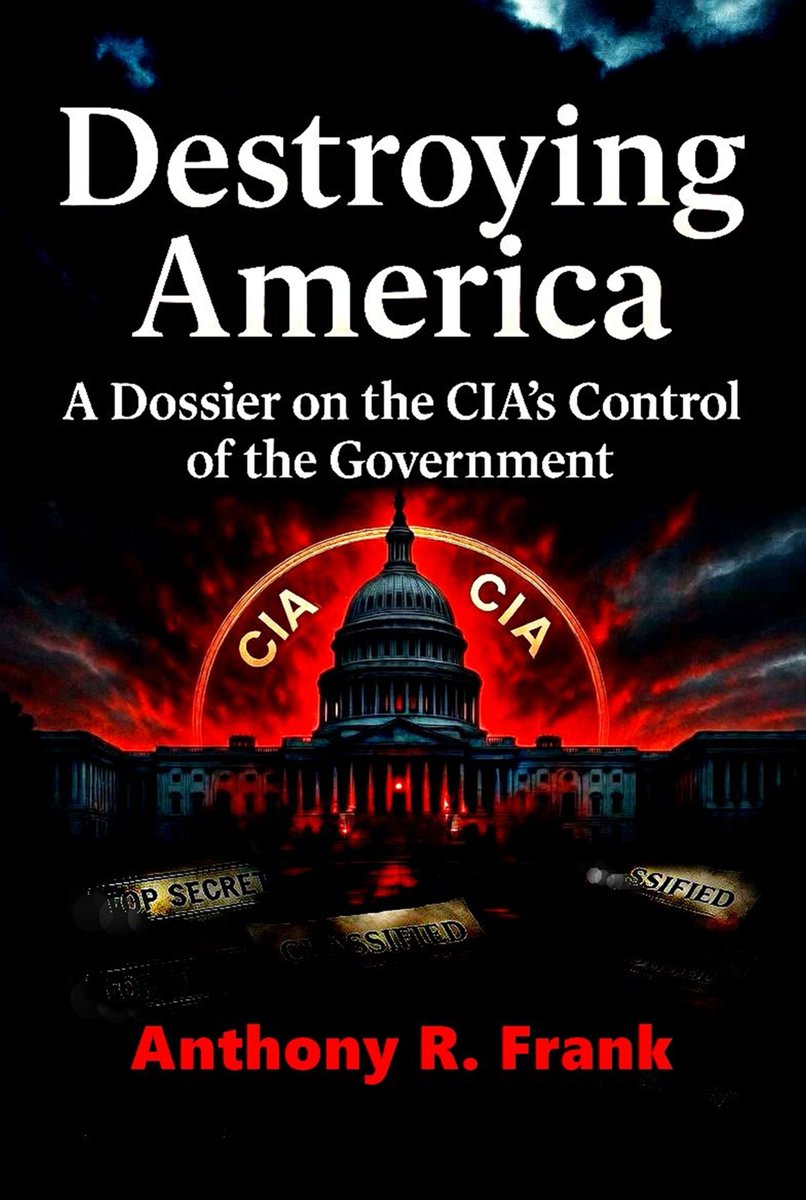
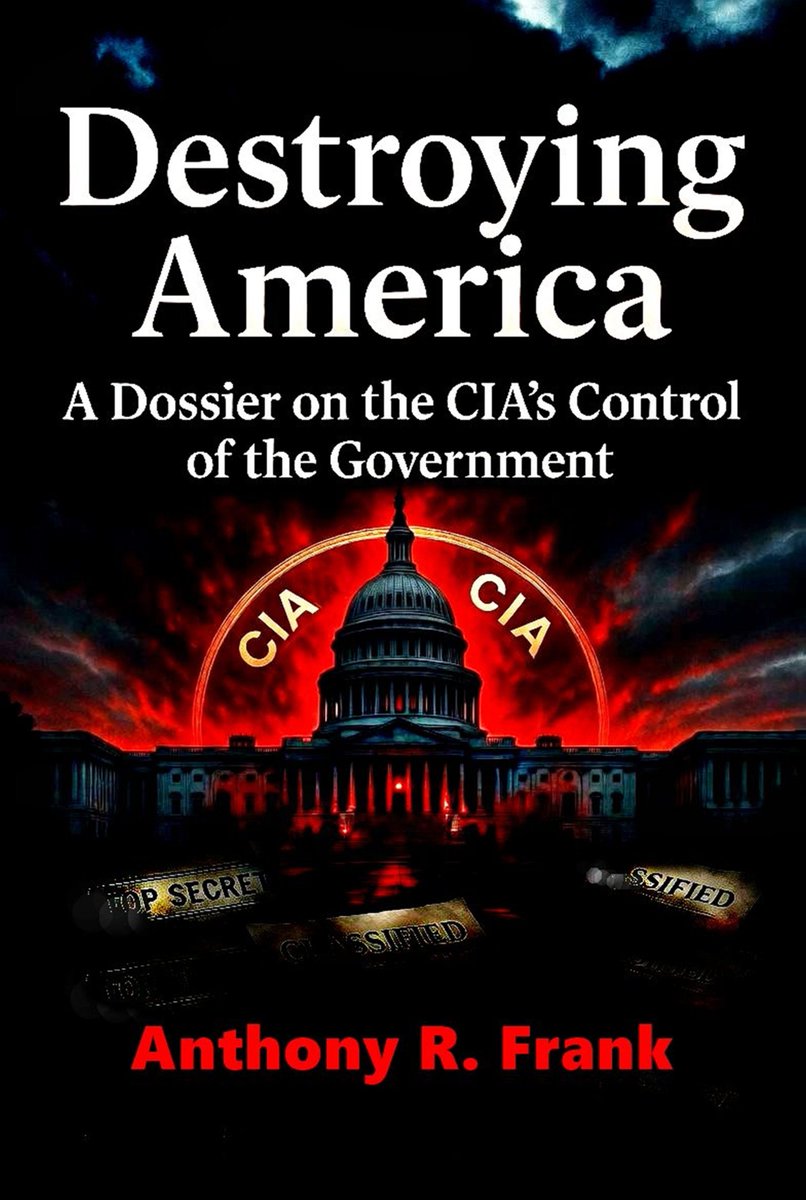
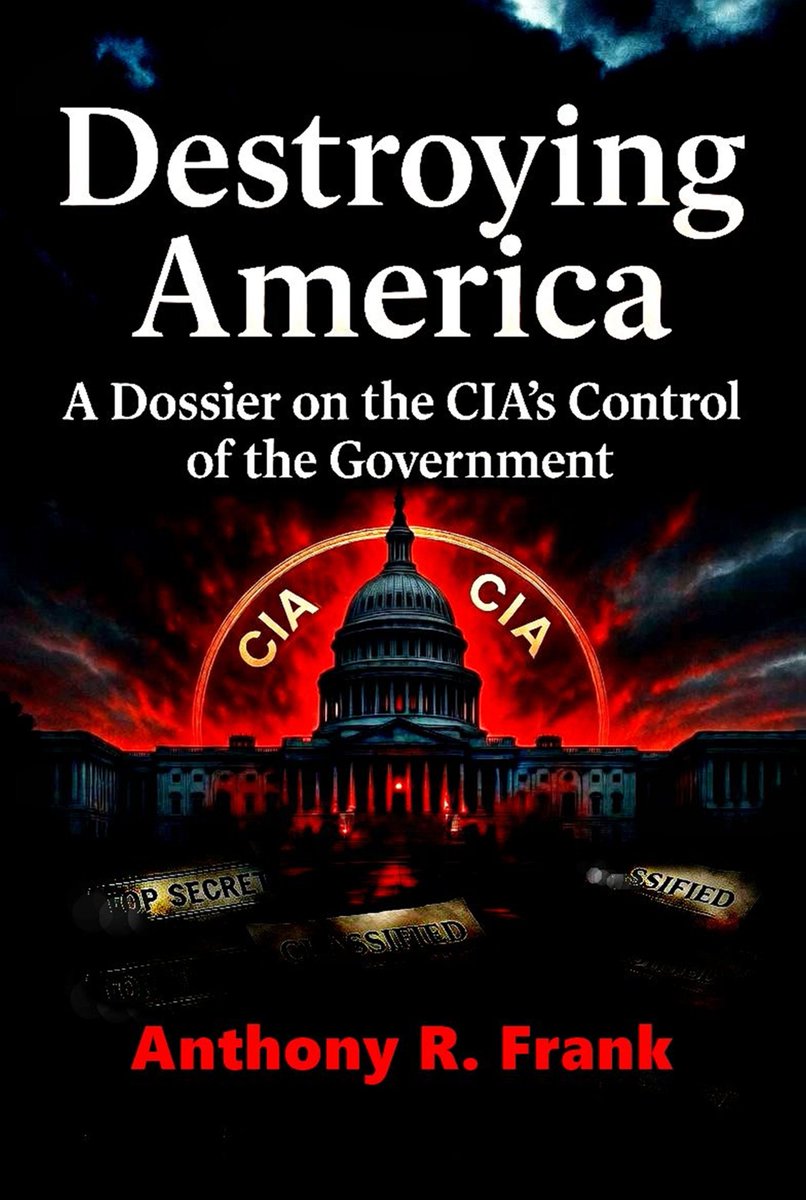
A former CIA insider pulls back the curtain on the Agency’s decades-long takeover of both parties in Congress and every Presidential administration.
This is not theory. This is the documented dossier.
Read “Destroying America: A Dossier on the CIA’s Control of the Government.”
1
1
20
Supporting Trump and the Constitution retweeted
The CIA’s takeover of our government started with the CIA running rampant inside the United States.
In 1975, President Ford’s “Commission on CIA Activities Within the United States” (the Rockefeller Commission) stated that the CIA’s Directorate of Science and Technology had been putting “LSD and other potential behavior-influencing substances” into the food of “unsuspecting” Americans from 1953 to 1963.
CIA officers started drugging unsuspecting Americans “on the West Coast” in 1953, and by 1961, they were drugging unsuspecting Americans “on the East Coast.”
The Rockefeller Commission, which consistently tried to gloss over the CIA’s domestic operations, claimed that the ten-year program of putting LSD into the food of unsuspecting Americans “in normal social situations” was some kind of CIA “testing” operation, but the CIA eventually acknowledged that the alleged testing “made little scientific sense.”
In one drugging incident in 1953, a CIA officer met with Dr. Frank Olson, a civilian biochemist working for the Department of the Army, and surreptitiously slipped LSD into his drink. Dr. Olson was none-too-pleased with it and made an issue of it with his immediate superior, Colonel Vincent Ruwet.
Five days after the drugging incident, Olson was still making an issue of it and not getting any answers, which resulted in Colonel Ruwet calling the CIA officer who drugged Dr. Olson.
The CIA officer then took Olson to New York, allegedly for “psychiatric treatment,” but they instead met with an “allergist and immunologist.”
Three days after arriving in New York, the CIA officer and his victim checked into a tenth-floor hotel room. The CIA officer wrote in his intelligence report that Dr. Frank Olson, who would not keep his mouth shut about the CIA putting LSD into his drink, “crashed through” a “closed window blind” and a “closed window” and “fell to his death” at 2:30 a.m.
Someone wrote a CIA “Field Office Report” claiming that Dr. Olson committed “suicide,” and the Rockefeller Report maintains that Olson “jumped” from the tenth-floor window. But the CIA officer who drugged Olson and reported on his death a week later never said anything about Olson committing “suicide,” nor did he say anything about Olson “jumping” from the tenth-floor window.
The Rockefeller Report maintains that the CIA “destroyed” its records of the LSD operation. It states that “all the records” were “ordered destroyed in 1973,” and the Rockefeller Commission allegedly accessed only a “limited” number of records, but having access to any of the records clearly means “all the records” had not been destroyed.
A CIA Inspector General’s report, which had not been “destroyed,” addressed the LSD operation in 1957, four years after it was launched and six years before it would end.
The Inspector General wrote, “Precautions must be taken to conceal these activities from the American public . . . . Knowledge that the Agency is engaging in unethical and illicit activities would have serious repercussions.”
While the CIA’s Directorate of Science and Technology was in the midst of its LSD program, Richard Helms, “Chief of Operations” in the CIA’s Directorate for Plans, sent a memorandum to all CIA Division Chiefs and their staffs on August 17, 1959 titled, “Clandestine Services Operations in the United States.”
Helms’s memorandum states, “All clandestine operations carried out by the Clandestine Services in the United States will be coordinated in advance with the CI [Counterintelligence] staff,” but such coordination would happen only if it is “necessary to prevent jurisdictional conflicts with other departments and agencies within the United States or to obtain assistance and cooperation from them for domestic operations.”
One agency with which the CIA has had “jurisdictional conflicts” when secretly conducting its operations inside the United States is the FBI.
A high-ranking FBI official met with CIA Director John McCone in May 1964 and brought up the CIA’s “DDP operations,” which are conducted by the CIA’s Deputy Director for Plans. The FBI official told McCone that “DDP operations in the United States” are “taking up much of my time these days,” adding, “Your people are more operational than ever in the U.S. right now.”
Richard Helms, who wrote the 1959 memorandum on the CIA’s “Clandestine Services Operations in the United States,” had been the CIA’s Deputy Director for Plans (DDP) for two years before the FBI official noted the huge “DDP operations in the United States.”
In May 1973, nine years after the FBI official met with McCone and just a few months after Helms wrapped up a seven-year tenure as CIA Director, the new CIA Director, James Schlesinger, “issued instructions to each directorate to come forward with descriptions of activities, especially those involved in the domestic scene, that had flap potential.”
1973 was the year that the CIA allegedly destroyed “all the records” of its ten-year LSD operation, but the Rockefeller Commission clearly had access to the LSD records. Even the report of the CIA officer who drugged Dr. Frank Olson and then reported on his death a week later had not been “destroyed.”
Some of the CIA’s “flap potential” activities were brought to light two years after Schlesinger’s memorandum. Both the U.S. Senate and the Ford Administration produced reports in 1975 following public revelations about the CIA’s illicit activities inside the United States.
To deal with the exposure, President Ford established the previously cited Commission on CIA Activities Within the United States, chaired by Vice President Nelson Rockefeller, and three weeks later, the U.S. Senate established the Senate Church Committee, headed by Senator Frank Church.
CIA Director William Colby testified to the Senate Church Committee that Watergate conspirator E. Howard Hunt had at one time been a CIA officer with the CIA’s “Domestic Operations Division,” adding that the “Domestic Operations Division” conducts “our operations here in this country.”
Hunt himself submitted an affidavit to the Rockefeller Commission stating that back in November 1963, he was “an employee of the Central Intelligence Agency assigned to the Domestic Operations Division, located in a commercial building in Washington DC,” adding that the “Domestic Operations Division” was part of the CIA’s “Deputy Directorate for Plans.”
Regarding the CIA’s domestic operations, the Rockefeller Commission stated that CIA officers operate in the United States with “official covers” and “nonofficial covers.”
CIA officers with “official covers” are detailed to be employees of “other United States government agencies,” which means they are given “official” positions that provide them with “cover” while they carry out the CIA’s agenda.
Those with “nonofficial covers” have “no official” position with a United States government agency that would provide them with “cover” for their secretive operations targeting Americans, hence, the term “nonofficial cover.”
CIA officers are required to fill out intelligence reports every day. Those with “official covers” fill out intelligence reports on the government officials and the federal employees with whom they interact, and those with “nonofficial covers” fill out intelligence reports on the United States citizens with whom they interact.
The 1975 Rockefeller Report disclosed that there are U.S. businesses that are “created and controlled” by the CIA and used for CIA “activities” and “operations” in the United States. “Many” CIA officers have “nonofficial covers” as employees of companies that are “owned” by the CIA and “operated” by CIA officers.
There are also “United States citizens” who “assist” the CIA by serving as “officers and directors” of some of the CIA-owned companies. All CIA-owned companies are “legally constituted corporations, partnerships, or sole proprietorships.” (Any location where the CIA sets up shop in the United States becomes a CIA “field station.”)
CIA officers also operate in the United States with “nonofficial covers” as employees of “privately owned American business firms,” and “cover arrangements” for many of the CIA officers operating domestically require the “management of a variety of domestic commercial entities.” No one would think that normal, everyday, working Americans are actually CIA officers gathering intelligence and conducting secretive operations targeting U.S. citizens.
CIA officers can use “official covers” without actually being employed by “other United States government agencies.” The CIA simply issues fake documentation to make it appear as such.
A memorandum to the CIA’s “Central Cover Group” in May 1962 states, “It is requested that a U.S. Army credential be issued to the identity under the alias William Walker. This document will be used within the continental U.S.”
The fabricated document would obviously lead people to believe that “William Walker” had an “official” position with the U.S. Army.
CIA officers with “nonofficial covers” similarly use fake documentation. A CIA officer named Charles Ford was “issued alias documentation under the name of Charles D. Fiscalini” in March 1962, after which Ford was to “travel to New York to meet with an unidentified attorney.”
As an “operations officer” in the CIA’s “Western Hemisphere Division,” Ford was “reissued this alias documentation in February 1963 to be utilized ‘in the continental U.S. for operational purposes.’”
Charles Ford himself wrote a memorandum in 1975 stating that he “frequently carried identification in that name and used it on several occasions.”
“Nonofficial covers,” like the one Charles Ford used, allow CIA officers to blend in as normal, everyday Americans while targeting U.S. citizens, whereas “official covers” allow CIA officers to blend in with the huge federal work force, which includes the FBI, the Department of Justice, the Department of Defense, the IRS, and every other U.S. Department and federal agency.
Besides having “official covers” as employees of “other United States government agencies,” CIA officers are also detailed to a wide variety of positions at the White House.
In the 1973 documentation of “domestic activities” with “flap potential,” the CIA’s Director of Personnel wrote, “For many years the Central Intelligence Agency has detailed employees to the immediate office of the White House.”
He also wrote that CIA officers are assigned to “components associated intimately with the immediate office of the President.”
The CIA also “furnished secretaries, clerical employees, and certain professional employees” to the White House, and at the time the memorandum was written in 1973, a CIA officer was “detailed” to the “White House Communications Section.”
The Director of Personnel wrote that CIA officers had been “detailed” to the White House as “couriers” and “telephone operators.” A CIA officer was also assigned to be a “laborer” on the White House grounds, and another CIA officer was assigned to be a “graphics man who designed invitations for State dinners” at the White House.
The CIA is not some government “Temp” agency that sends employees on various assignments because there is a temporary need for them as couriers, telephone operators, secretaries, and clerical employees. The CIA is in the business of gathering intelligence and conducting secretive operations, and as noted earlier, all CIA officers are required to fill out intelligence reports every day on the people with whom they interact and on the information they gather.
When CIA officers are detailed to the White House, they gather intelligence on the President, White House officials, and White House personnel, and they report back to the CIA.
“Most” of the CIA officers detailed to the White House were “hired as bona fide White House employees,” which means they were given “official covers” as White House personnel. They were still working for the CIA and reporting to the CIA, just like all CIA officers with “official covers” who are employees of “other United States government agencies.”
It is, in fact, preposterous to think that a slew of highly trained, college educated CIA officers would leave their prestigious, high-paying positions as CIA officers so that they could take on mundane jobs as telephone operators, couriers, laborers, and clerical employees, positions to which they had been “detailed” by the CIA on a supposedly temporary basis.
The CIA’s Director of Personnel further stated in his 1973 memorandum that CIA officers “have been, and are at the present time, assigned to the National Security Council, and we have seven clericals on detail to the NSC [National Security Council].”
The National Security Council issues directives on how the CIA will operate. The CIA most certainly wants to influence the thinking and decisions emanating from the NSC. CIA officers assigned to the National Security Council fill out intelligence reports on other NSC staff members and on what the National Security Council is doing, as do the CIA officers detailed to various “clerical” positions on the National Security Council.
The Director of Personnel also wrote that CIA officers had been “detailed” to “Congressional staffs,” and a CIA document states that by the mid-1970s, the CIA had intelligence files on “some 30-40 U.S. Congressmen.” As will be seen later in this book, the CIA regularly gathers intelligence on Members of Congress.
CIA officers are trained to endear themselves to people and win their trust. People will tell CIA officers things that are confidential or extremely personal, and CIA officers then put that information into their intelligence reports, something that all CIA officers are required to do on a daily basis.
Besides being detailed to the National Security Council, and the “immediate” office of the White House, and “components associated intimately with the immediate office of the President,” and a wide variety of seemingly mundane positions at the White House, CIA officers function as Secret Service agents protecting the President “while he is in the United States.”
A CIA document on November 2, 1964, states that the CIA had been providing “manpower support” to the Secret Service “since 1955.” It also states that one of the “continuing problems” they were having was the “legal status” of CIA officers that are “assigned” to function as Secret Service agents.
Five months later, a high-ranking CIA official proclaimed that CIA officers will be exercising “law-enforcement powers” and “internal security functions,” and they will have “internal security powers” and “internal security duties,” all of which are prohibited under the National Security Act of 1947.
Lieutenant General Marshall Carter, the Deputy Director of the CIA, wrote a memorandum in April 1965 titled “Agreement Between the United States Secret Service and the Central Intelligence Agency Concerning Presidential Protection in the United States.”
General Carter’s memorandum states that when CIA officers are assigned to Secret Service duty, “Such officers detailed by the CIA will be designated officers of the Secret Service,” and they will be protecting the President “while he is in the United States.”
CIA officers functioning as Secret Service agents are clearly exercising “law-enforcement powers” and “internal security functions,” and they clearly have “internal security powers” and “internal security duties.”
Stating that CIA officers will be known as “designated officers of the Secret Service” when they are “detailed” to the Secret Service does not make it legal.
Just a few short years after the CIA was created, the National Security Council spent three years setting up “national policies” for the CIA, one of which was eventually brought to light.
The one national policy that was exposed was a money laundering operation that allows the CIA to channel “millions of dollars” through “foundations” to “a wide spectrum of youth, student, academic, research, journalist, business, legal and labor organizations” in the United States.
When the operation was first exposed in 1967, groups that had been receiving money from the CIA since the 1950s included the American Newspaper Guild, the National Student Association, the National Education Association, the Institute of Public Administration of New York, and the Retail Clerks International Association of Washington.
The secretive money laundering operation was first publicized in the New York Times on February 19, 1967, and regardless of the massive domestic operations that had been taking place since at least 1953, it was the first exposure of any large-scale CIA activity in the United States.
President Johnson immediately appointed a three-man committee to deal with it. The chairman of the committee was Under Secretary of State Nicholas Katzenbach, who was himself a CIA officer with an “official cover” in the State Department, and it included CIA Director Richard Helms. Just a few days later, the committee reported that the CIA’s multi-million dollar funding operation was one of the “national policies established by the National Security Council in 1952 through 1954.”
The National Security Council clearly decided that establishing “national policies” for the CIA in the early 1950s would somehow nullify the Act of Congress that created the CIA in 1947.
Congress chose not to investigate the CIA’s money laundering operation. On February 25, 1967, six days after the CIA foundations were exposed, “Congressional leaders said that there would be no special investigation of the Central Intelligence Agency by the legislative branch . . . . Republican leaders, who have been critical of the Johnson Administration on almost every other issue, said at a news conference that they saw no reason to look into the intelligence agency’s involvement with private organizations and institutions.”
The Senate Republican leader, Senator Everett McKinley Dirksen, said the disclosures “amounted to ‘little more than a Roman holiday,’” and the House Republican leader, Congressman Gerald Ford, stated, “There is enough Congressional surveillance of the CIA.”
Democratic Senator Mike Mansfield, the Senate majority leader, took the position that “an investigation of the subsidies should be left to the intra-administration committee appointed by President Johnson and directed by Under Secretary of State Nicholas Katzenbach.”
One day before Congress shrugged off how American tax dollars were being spent, Katzenbach’s three-man committee reported that the CIA’s multi-million dollar funding operation is one of the “national policies established for the CIA in 1952 through 1954.” The rest of the CIA’s “national policies” are apparently still classified.
In 1977, the Senate Intelligence Committee disclosed that the CIA used its money laundering foundations to secretly finance its LSD operation. The CIA had “standing arrangements” with “universities, pharmaceutical houses, hospitals, state and federal institutions, and private research organizations,” and the CIA would give out “annual grants” channeled through the CIA foundations, “thereby concealing” the CIA financing.
The CIA can arguably use American tax dollars to finance anything it wants with its money laundering foundations, and as will be seen in much of this book, corrupt elements of the CIA are very focused on who is elected to Congress and the Presidency. The CIA can easily finance the political campaigns of their chosen candidates by channeling money to groups that support their candidate, “thereby concealing” the CIA’s support for the candidate.
In an effort to gloss over the CIA’s money laundering operation (the first exposure of a CIA domestic operation), some anonymous “informed sources” told the New York Times that the CIA is enjoined “only from ‘internal security functions,’” which the Times said contradicts “a widely held belief that the agency is prohibited by law from engaging in clandestine activities within the United States.” The Times also stated that the anonymous informed sources claimed “there never had been a serious question about its authority to deal secretly in this country with home-based groups.”
The CIA has certainly done much more than deal secretly with home-based groups, and contrary to what the New York Times said, the CIA is most certainly banned from “engaging in clandestine activities within the United States.” It was established only for “clandestine activities” in other countries.
It is beyond reason to claim that when the CIA clandestinely performs its “functions” inside the United States, the CIA is not part of the national security apparatus and the domestic operations are, therefore, not actually “internal security functions.”
As for Senator Mansfield’s acceptance of the CIA’s “national policies” in 1967, thirteen years earlier he was the “leader of a bipartisan move for a joint committee on the CIA.”
In 1954, seven years after the CIA was created under the National Security Act of 1947, Mansfield and his Senate colleagues had no idea whether the CIA was “engaging in domestic activities.”
Senator Mansfield introduced legislation to set up an Intelligence Oversight Committee in 1954, but Senator Leverett Saltonstall, Republican Chairman of the Senate Armed Services Committee, persuaded the Senate Rules Committee to “shelve” the resolution so that it could not come up for a vote, even though the resolution had “the support of twenty-seven Senators.”
Two years later, Congress made a second attempt at CIA oversight when the Senate voted on a resolution that would create a “joint Congressional watchdog committee.”
But in 1956, the third year of the CIA’s ten-year LSD operation, the attempt at CIA oversight went down in flames by a vote of 59 to 27 because “President Eisenhower’s declared opposition, plus intensive behind-the-scenes opposition by the CIA itself, proved sufficient to turn the tide overwhelmingly against the resolution.”
few days earlier, the resolution had “thirty-five cosponsors and pledges of support from other Senators” and “seemed assured of passage by a comfortable margin . . . . Ten of the original cosponsors switched to vote against it on final passage.”
President Eisenhower’s “declared opposition” clearly did nothing to prevent the bill from becoming immensely popular in the Senate. It was obviously the CIA’s “intensive behind-the-scenes opposition” that brought Congressional oversight to a screeching halt in 1956.
When Senator Mansfield and the entire United States Congress acquiesced in 1967, the New York Times reported: “The general attitude in Congress was that the issue contained no political profit,” which means that by the time the CIA’s money laundering operation was exposed, political profits were more important to the esteemed Members of Congress than addressing the CIA’s domestic operations.
In 1963, seven years after the CIA ran rampant on Capitol Hill and successfully blocked Congressional oversight, CIA Director John McCone documented that he told President Johnson the “only problem” the CIA had in their relationship with Congress is “a continual harangue for a Joint Committee on Intelligence.”
A short nineteen days after McCone said Congressional oversight would be a “problem” for the CIA, Richard Helms, the CIA’s Deputy Director for Plans, wrote a memorandum to the Deputy Director of the CIA in which he promoted the resumption of “testing” LSD on “unwitting” subjects, adding that if a “testing arrangement” is resumed, it “must afford maximum safeguards for the protection of the Agency’s role in this activity.”
Helms also wrote, “While I share your uneasiness and distaste for any program which tends to intrude upon an individual’s private and legal prerogatives, I believe that it is necessary that the Agency maintain a central role in this activity.”
Helms was appointed to be Director of the CIA less than three years after blatantly stating that it was “necessary” for the CIA to have a “central role” in drugging unsuspecting Americans with LSD.
Twenty-eight years after the CIA was created, the Commission on CIA Activities Within the United States (the Rockefeller Commission) addressed legal challenges to the CIA’s unconstitutional activity and its widespread domestic operations, stating, “Practically all of the CIA’s operations are covered by secrecy . . . . Few potential challengers are even aware of activities that might otherwise be contested; nor can such activities be easily discovered.”
Every patriot should read “Destroying America: A Dossier on the CIA’s Control of the Government.”
amazon.com/dp/B0H1F1BK2D
4
5
787
Supporting Trump and the Constitution retweeted

Jun 12
A young Scottish girl who defended her sister from Muslim invader/predators has been vindicated by a British court. She should have a statue erected in her honor rather than have been charged in the first place. She has more heart than the leftist politicians destroying the UK.

2,443
27,609
131,328
860,179
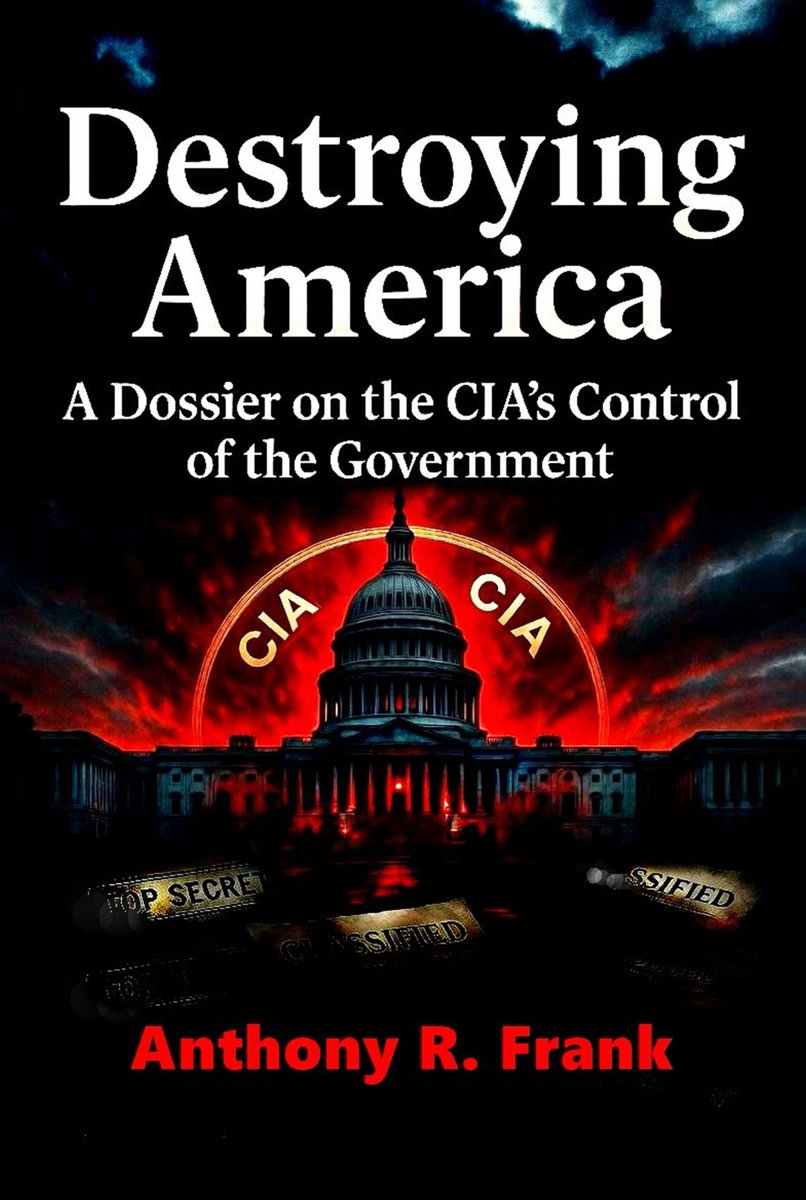
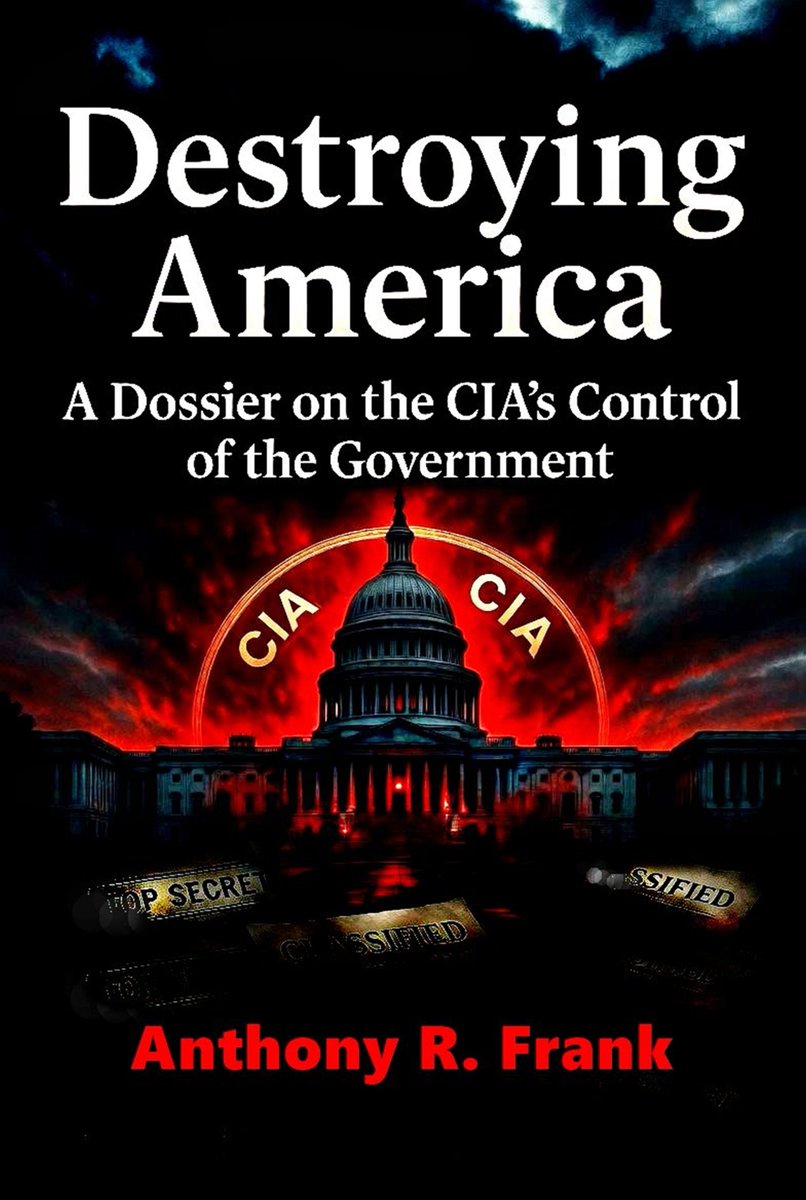
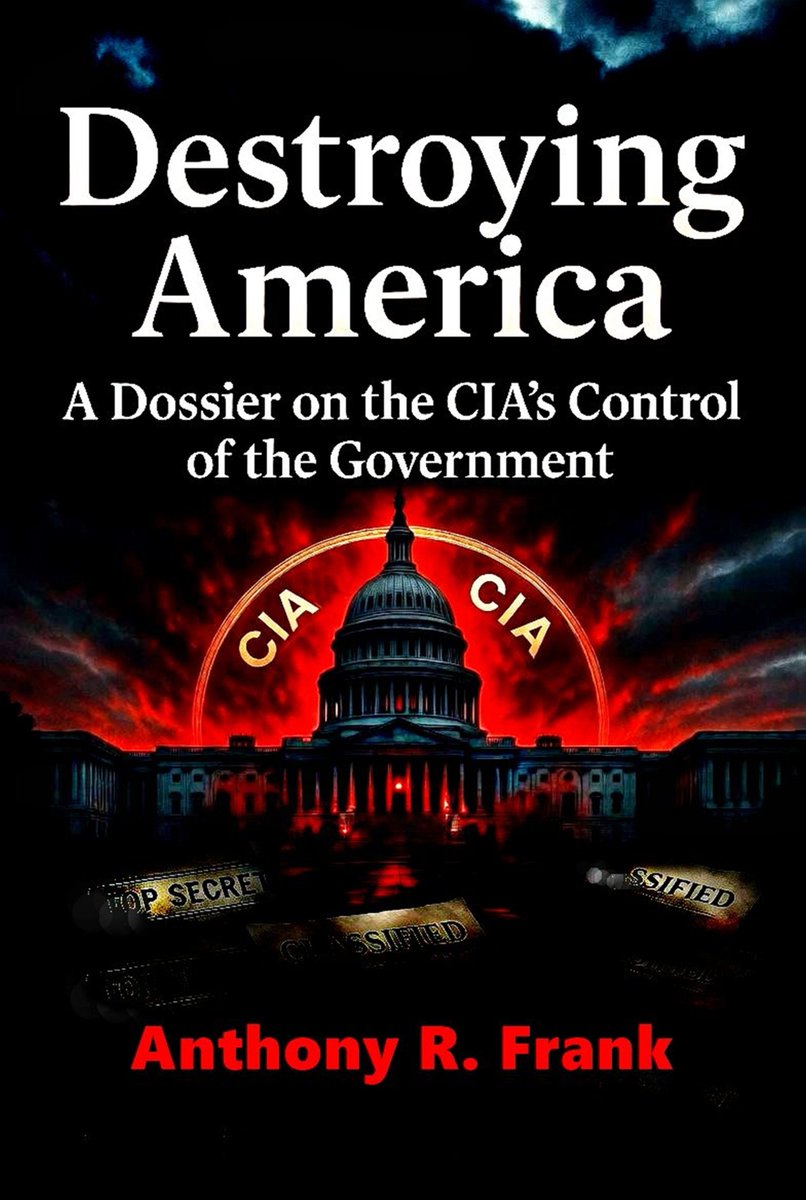
America’s most powerful Agency controls Congress and Presidential administrations.
The CIA has been operating against the government and the Constitution for decades.
This is not a theory. This is the documented evidence.
Click the link to learn more.
amazon.com/dp/B0H1F1BK2D
8
America’s most powerful Agency controls Congress and Presidential administrations.
The CIA has been operating against the government and the Constitution for decades.
This is not a theory. This is the documented evidence.
Click the link to learn more.
amazon.com/dp/B0H1F1BK2D
Jun 5

Everyone should read this.
1
1
8
Supporting Trump and the Constitution retweeted
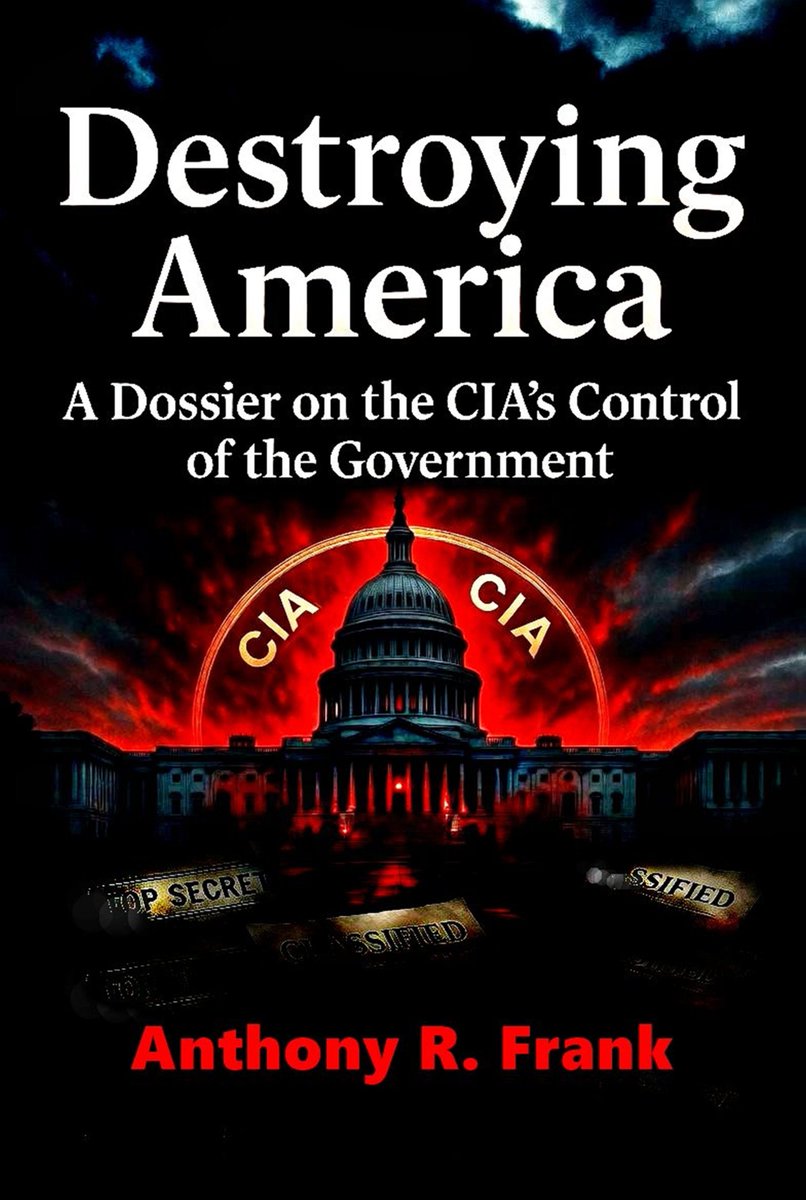
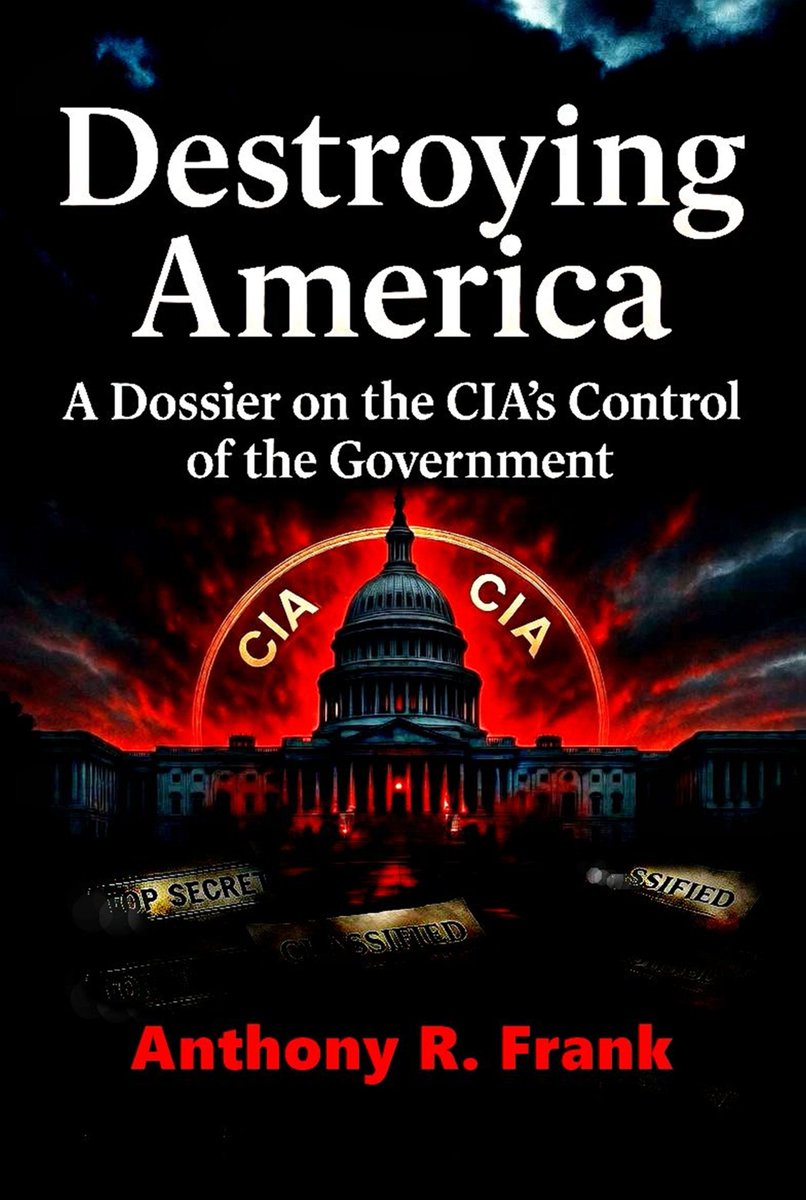
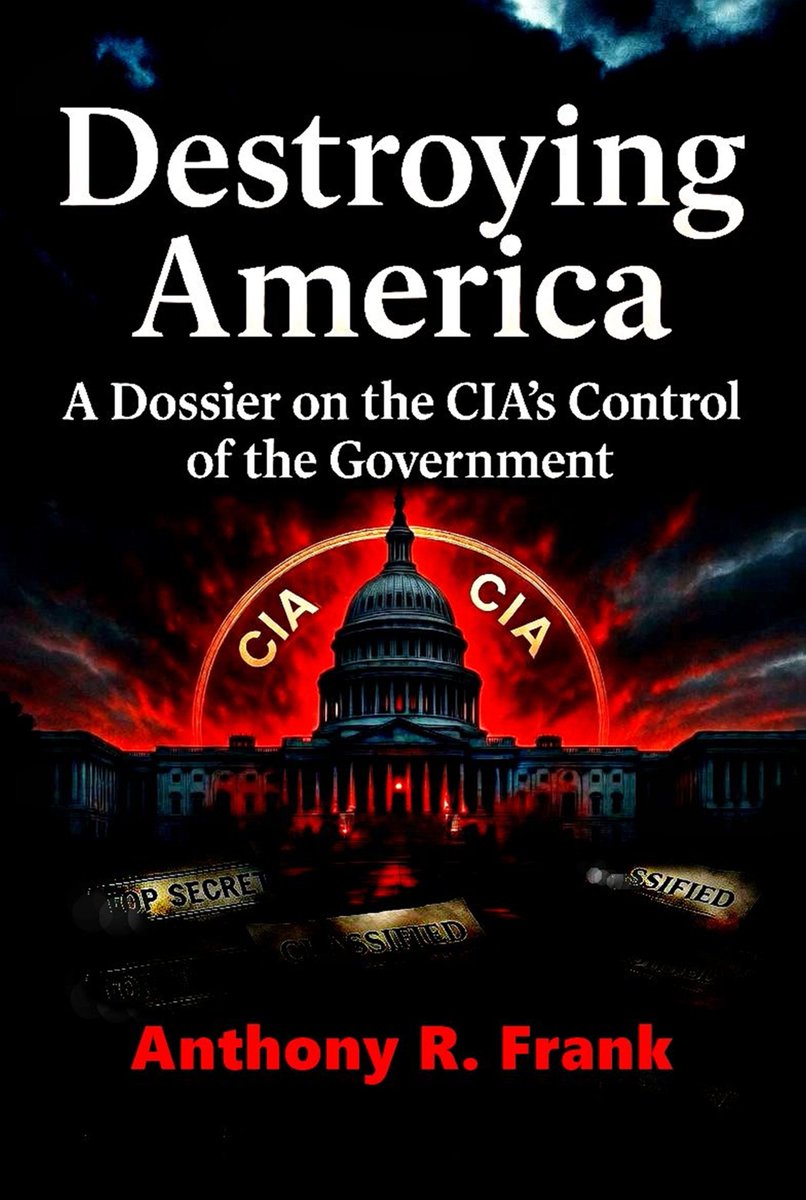
What if America’s most powerful Agency had been operating against the government and Constitution for decades?
This dossier reveals how the CIA controls both parties in Congress and Presidential administrations.
This is not a theory. It is the documented evidence.
Learn More
10
50
105
33,953
Iran Wants to Charge Fees for Transit Through the Strait of Hormuz.
Trump Must Bomb Iran into Submission.
foxnews.com/live-news/us-ira… #FoxNews
1
1
46
Trump is Taking Care of Business
Before I returned to office, Joe Biden opened our Southern Border to millions of Illegal Criminals, and allowed this foreign army to rape, maim, and murder American Citizens with total impunity.
foxnews.com/politics/trump-s…
1
1
12
The CIA’s takeover of our government started with the CIA running rampant inside the United States.
In 1975, President Ford’s “Commission on CIA Activities Within the United States” (the Rockefeller Commission) stated that the CIA’s Directorate of Science and Technology had been putting “LSD and other potential behavior-influencing substances” into the food of “unsuspecting” Americans from 1953 to 1963.
CIA officers started drugging unsuspecting Americans “on the West Coast” in 1953, and by 1961, they were drugging unsuspecting Americans “on the East Coast.”
The Rockefeller Commission, which consistently tried to gloss over the CIA’s domestic operations, claimed that the ten-year program of putting LSD into the food of unsuspecting Americans “in normal social situations” was some kind of CIA “testing” operation, but the CIA eventually acknowledged that the alleged testing “made little scientific sense.”
In one drugging incident in 1953, a CIA officer met with Dr. Frank Olson, a civilian biochemist working for the Department of the Army, and surreptitiously slipped LSD into his drink. Dr. Olson was none-too-pleased with it and made an issue of it with his immediate superior, Colonel Vincent Ruwet.
Five days after the drugging incident, Olson was still making an issue of it and not getting any answers, which resulted in Colonel Ruwet calling the CIA officer who drugged Dr. Olson.
The CIA officer then took Olson to New York, allegedly for “psychiatric treatment,” but they instead met with an “allergist and immunologist.”
Three days after arriving in New York, the CIA officer and his victim checked into a tenth-floor hotel room. The CIA officer wrote in his intelligence report that Dr. Frank Olson, who would not keep his mouth shut about the CIA putting LSD into his drink, “crashed through” a “closed window blind” and a “closed window” and “fell to his death” at 2:30 a.m.
Someone wrote a CIA “Field Office Report” claiming that Dr. Olson committed “suicide,” and the Rockefeller Report maintains that Olson “jumped” from the tenth-floor window. But the CIA officer who drugged Olson and reported on his death a week later never said anything about Olson committing “suicide,” nor did he say anything about Olson “jumping” from the tenth-floor window.
The Rockefeller Report maintains that the CIA “destroyed” its records of the LSD operation. It states that “all the records” were “ordered destroyed in 1973,” and the Rockefeller Commission allegedly accessed only a “limited” number of records, but having access to any of the records clearly means “all the records” had not been destroyed.
A CIA Inspector General’s report, which had not been “destroyed,” addressed the LSD operation in 1957, four years after it was launched and six years before it would end.
The Inspector General wrote, “Precautions must be taken to conceal these activities from the American public . . . . Knowledge that the Agency is engaging in unethical and illicit activities would have serious repercussions.”
While the CIA’s Directorate of Science and Technology was in the midst of its LSD program, Richard Helms, “Chief of Operations” in the CIA’s Directorate for Plans, sent a memorandum to all CIA Division Chiefs and their staffs on August 17, 1959 titled, “Clandestine Services Operations in the United States.”
Helms’s memorandum states, “All clandestine operations carried out by the Clandestine Services in the United States will be coordinated in advance with the CI [Counterintelligence] staff,” but such coordination would happen only if it is “necessary to prevent jurisdictional conflicts with other departments and agencies within the United States or to obtain assistance and cooperation from them for domestic operations.”
One agency with which the CIA has had “jurisdictional conflicts” when secretly conducting its operations inside the United States is the FBI.
A high-ranking FBI official met with CIA Director John McCone in May 1964 and brought up the CIA’s “DDP operations,” which are conducted by the CIA’s Deputy Director for Plans. The FBI official told McCone that “DDP operations in the United States” are “taking up much of my time these days,” adding, “Your people are more operational than ever in the U.S. right now.”
Richard Helms, who wrote the 1959 memorandum on the CIA’s “Clandestine Services Operations in the United States,” had been the CIA’s Deputy Director for Plans (DDP) for two years before the FBI official noted the huge “DDP operations in the United States.”
In May 1973, nine years after the FBI official met with McCone and just a few months after Helms wrapped up a seven-year tenure as CIA Director, the new CIA Director, James Schlesinger, “issued instructions to each directorate to come forward with descriptions of activities, especially those involved in the domestic scene, that had flap potential.”
1973 was the year that the CIA allegedly destroyed “all the records” of its ten-year LSD operation, but the Rockefeller Commission clearly had access to the LSD records. Even the report of the CIA officer who drugged Dr. Frank Olson and then reported on his death a week later had not been “destroyed.”
Some of the CIA’s “flap potential” activities were brought to light two years after Schlesinger’s memorandum. Both the U.S. Senate and the Ford Administration produced reports in 1975 following public revelations about the CIA’s illicit activities inside the United States.
To deal with the exposure, President Ford established the previously cited Commission on CIA Activities Within the United States, chaired by Vice President Nelson Rockefeller, and three weeks later, the U.S. Senate established the Senate Church Committee, headed by Senator Frank Church.
CIA Director William Colby testified to the Senate Church Committee that Watergate conspirator E. Howard Hunt had at one time been a CIA officer with the CIA’s “Domestic Operations Division,” adding that the “Domestic Operations Division” conducts “our operations here in this country.”
Hunt himself submitted an affidavit to the Rockefeller Commission stating that back in November 1963, he was “an employee of the Central Intelligence Agency assigned to the Domestic Operations Division, located in a commercial building in Washington DC,” adding that the “Domestic Operations Division” was part of the CIA’s “Deputy Directorate for Plans.”
Regarding the CIA’s domestic operations, the Rockefeller Commission stated that CIA officers operate in the United States with “official covers” and “nonofficial covers.”
CIA officers with “official covers” are detailed to be employees of “other United States government agencies,” which means they are given “official” positions that provide them with “cover” while they carry out the CIA’s agenda.
Those with “nonofficial covers” have “no official” position with a United States government agency that would provide them with “cover” for their secretive operations targeting Americans, hence, the term “nonofficial cover.”
CIA officers are required to fill out intelligence reports every day. Those with “official covers” fill out intelligence reports on the government officials and the federal employees with whom they interact, and those with “nonofficial covers” fill out intelligence reports on the United States citizens with whom they interact.
The 1975 Rockefeller Report disclosed that there are U.S. businesses that are “created and controlled” by the CIA and used for CIA “activities” and “operations” in the United States. “Many” CIA officers have “nonofficial covers” as employees of companies that are “owned” by the CIA and “operated” by CIA officers.
There are also “United States citizens” who “assist” the CIA by serving as “officers and directors” of some of the CIA-owned companies. All CIA-owned companies are “legally constituted corporations, partnerships, or sole proprietorships.” (Any location where the CIA sets up shop in the United States becomes a CIA “field station.”)
CIA officers also operate in the United States with “nonofficial covers” as employees of “privately owned American business firms,” and “cover arrangements” for many of the CIA officers operating domestically require the “management of a variety of domestic commercial entities.” No one would think that normal, everyday, working Americans are actually CIA officers gathering intelligence and conducting secretive operations targeting U.S. citizens.
CIA officers can use “official covers” without actually being employed by “other United States government agencies.” The CIA simply issues fake documentation to make it appear as such.
A memorandum to the CIA’s “Central Cover Group” in May 1962 states, “It is requested that a U.S. Army credential be issued to the identity under the alias William Walker. This document will be used within the continental U.S.”
The fabricated document would obviously lead people to believe that “William Walker” had an “official” position with the U.S. Army.
CIA officers with “nonofficial covers” similarly use fake documentation. A CIA officer named Charles Ford was “issued alias documentation under the name of Charles D. Fiscalini” in March 1962, after which Ford was to “travel to New York to meet with an unidentified attorney.”
As an “operations officer” in the CIA’s “Western Hemisphere Division,” Ford was “reissued this alias documentation in February 1963 to be utilized ‘in the continental U.S. for operational purposes.’”
Charles Ford himself wrote a memorandum in 1975 stating that he “frequently carried identification in that name and used it on several occasions.”
“Nonofficial covers,” like the one Charles Ford used, allow CIA officers to blend in as normal, everyday Americans while targeting U.S. citizens, whereas “official covers” allow CIA officers to blend in with the huge federal work force, which includes the FBI, the Department of Justice, the Department of Defense, the IRS, and every other U.S. Department and federal agency.
Besides having “official covers” as employees of “other United States government agencies,” CIA officers are also detailed to a wide variety of positions at the White House.
In the 1973 documentation of “domestic activities” with “flap potential,” the CIA’s Director of Personnel wrote, “For many years the Central Intelligence Agency has detailed employees to the immediate office of the White House.”
He also wrote that CIA officers are assigned to “components associated intimately with the immediate office of the President.”
The CIA also “furnished secretaries, clerical employees, and certain professional employees” to the White House, and at the time the memorandum was written in 1973, a CIA officer was “detailed” to the “White House Communications Section.”
The Director of Personnel wrote that CIA officers had been “detailed” to the White House as “couriers” and “telephone operators.” A CIA officer was also assigned to be a “laborer” on the White House grounds, and another CIA officer was assigned to be a “graphics man who designed invitations for State dinners” at the White House.
The CIA is not some government “Temp” agency that sends employees on various assignments because there is a temporary need for them as couriers, telephone operators, secretaries, and clerical employees. The CIA is in the business of gathering intelligence and conducting secretive operations, and as noted earlier, all CIA officers are required to fill out intelligence reports every day on the people with whom they interact and on the information they gather.
When CIA officers are detailed to the White House, they gather intelligence on the President, White House officials, and White House personnel, and they report back to the CIA.
“Most” of the CIA officers detailed to the White House were “hired as bona fide White House employees,” which means they were given “official covers” as White House personnel. They were still working for the CIA and reporting to the CIA, just like all CIA officers with “official covers” who are employees of “other United States government agencies.”
It is, in fact, preposterous to think that a slew of highly trained, college educated CIA officers would leave their prestigious, high-paying positions as CIA officers so that they could take on mundane jobs as telephone operators, couriers, laborers, and clerical employees, positions to which they had been “detailed” by the CIA on a supposedly temporary basis.
The CIA’s Director of Personnel further stated in his 1973 memorandum that CIA officers “have been, and are at the present time, assigned to the National Security Council, and we have seven clericals on detail to the NSC [National Security Council].”
The National Security Council issues directives on how the CIA will operate. The CIA most certainly wants to influence the thinking and decisions emanating from the NSC. CIA officers assigned to the National Security Council fill out intelligence reports on other NSC staff members and on what the National Security Council is doing, as do the CIA officers detailed to various “clerical” positions on the National Security Council.
The Director of Personnel also wrote that CIA officers had been “detailed” to “Congressional staffs,” and a CIA document states that by the mid-1970s, the CIA had intelligence files on “some 30-40 U.S. Congressmen.” As will be seen later in this book, the CIA regularly gathers intelligence on Members of Congress.
CIA officers are trained to endear themselves to people and win their trust. People will tell CIA officers things that are confidential or extremely personal, and CIA officers then put that information into their intelligence reports, something that all CIA officers are required to do on a daily basis.
Besides being detailed to the National Security Council, and the “immediate” office of the White House, and “components associated intimately with the immediate office of the President,” and a wide variety of seemingly mundane positions at the White House, CIA officers function as Secret Service agents protecting the President “while he is in the United States.”
A CIA document on November 2, 1964, states that the CIA had been providing “manpower support” to the Secret Service “since 1955.” It also states that one of the “continuing problems” they were having was the “legal status” of CIA officers that are “assigned” to function as Secret Service agents.
Five months later, a high-ranking CIA official proclaimed that CIA officers will be exercising “law-enforcement powers” and “internal security functions,” and they will have “internal security powers” and “internal security duties,” all of which are prohibited under the National Security Act of 1947.
Lieutenant General Marshall Carter, the Deputy Director of the CIA, wrote a memorandum in April 1965 titled “Agreement Between the United States Secret Service and the Central Intelligence Agency Concerning Presidential Protection in the United States.”
General Carter’s memorandum states that when CIA officers are assigned to Secret Service duty, “Such officers detailed by the CIA will be designated officers of the Secret Service,” and they will be protecting the President “while he is in the United States.”
CIA officers functioning as Secret Service agents are clearly exercising “law-enforcement powers” and “internal security functions,” and they clearly have “internal security powers” and “internal security duties.”
Stating that CIA officers will be known as “designated officers of the Secret Service” when they are “detailed” to the Secret Service does not make it legal.
Just a few short years after the CIA was created, the National Security Council spent three years setting up “national policies” for the CIA, one of which was eventually brought to light.
The one national policy that was exposed was a money laundering operation that allows the CIA to channel “millions of dollars” through “foundations” to “a wide spectrum of youth, student, academic, research, journalist, business, legal and labor organizations” in the United States.
When the operation was first exposed in 1967, groups that had been receiving money from the CIA since the 1950s included the American Newspaper Guild, the National Student Association, the National Education Association, the Institute of Public Administration of New York, and the Retail Clerks International Association of Washington.
The secretive money laundering operation was first publicized in the New York Times on February 19, 1967, and regardless of the massive domestic operations that had been taking place since at least 1953, it was the first exposure of any large-scale CIA activity in the United States.
President Johnson immediately appointed a three-man committee to deal with it. The chairman of the committee was Under Secretary of State Nicholas Katzenbach, who was himself a CIA officer with an “official cover” in the State Department, and it included CIA Director Richard Helms. Just a few days later, the committee reported that the CIA’s multi-million dollar funding operation was one of the “national policies established by the National Security Council in 1952 through 1954.”
The National Security Council clearly decided that establishing “national policies” for the CIA in the early 1950s would somehow nullify the Act of Congress that created the CIA in 1947.
Congress chose not to investigate the CIA’s money laundering operation. On February 25, 1967, six days after the CIA foundations were exposed, “Congressional leaders said that there would be no special investigation of the Central Intelligence Agency by the legislative branch . . . . Republican leaders, who have been critical of the Johnson Administration on almost every other issue, said at a news conference that they saw no reason to look into the intelligence agency’s involvement with private organizations and institutions.”
The Senate Republican leader, Senator Everett McKinley Dirksen, said the disclosures “amounted to ‘little more than a Roman holiday,’” and the House Republican leader, Congressman Gerald Ford, stated, “There is enough Congressional surveillance of the CIA.”
Democratic Senator Mike Mansfield, the Senate majority leader, took the position that “an investigation of the subsidies should be left to the intra-administration committee appointed by President Johnson and directed by Under Secretary of State Nicholas Katzenbach.”
One day before Congress shrugged off how American tax dollars were being spent, Katzenbach’s three-man committee reported that the CIA’s multi-million dollar funding operation is one of the “national policies established for the CIA in 1952 through 1954.” The rest of the CIA’s “national policies” are apparently still classified.
In 1977, the Senate Intelligence Committee disclosed that the CIA used its money laundering foundations to secretly finance its LSD operation. The CIA had “standing arrangements” with “universities, pharmaceutical houses, hospitals, state and federal institutions, and private research organizations,” and the CIA would give out “annual grants” channeled through the CIA foundations, “thereby concealing” the CIA financing.
The CIA can arguably use American tax dollars to finance anything it wants with its money laundering foundations, and as will be seen in much of this book, corrupt elements of the CIA are very focused on who is elected to Congress and the Presidency. The CIA can easily finance the political campaigns of their chosen candidates by channeling money to groups that support their candidate, “thereby concealing” the CIA’s support for the candidate.
In an effort to gloss over the CIA’s money laundering operation (the first exposure of a CIA domestic operation), some anonymous “informed sources” told the New York Times that the CIA is enjoined “only from ‘internal security functions,’” which the Times said contradicts “a widely held belief that the agency is prohibited by law from engaging in clandestine activities within the United States.” The Times also stated that the anonymous informed sources claimed “there never had been a serious question about its authority to deal secretly in this country with home-based groups.”
The CIA has certainly done much more than deal secretly with home-based groups, and contrary to what the New York Times said, the CIA is most certainly banned from “engaging in clandestine activities within the United States.” It was established only for “clandestine activities” in other countries.
It is beyond reason to claim that when the CIA clandestinely performs its “functions” inside the United States, the CIA is not part of the national security apparatus and the domestic operations are, therefore, not actually “internal security functions.”
As for Senator Mansfield’s acceptance of the CIA’s “national policies” in 1967, thirteen years earlier he was the “leader of a bipartisan move for a joint committee on the CIA.”
In 1954, seven years after the CIA was created under the National Security Act of 1947, Mansfield and his Senate colleagues had no idea whether the CIA was “engaging in domestic activities.”
Senator Mansfield introduced legislation to set up an Intelligence Oversight Committee in 1954, but Senator Leverett Saltonstall, Republican Chairman of the Senate Armed Services Committee, persuaded the Senate Rules Committee to “shelve” the resolution so that it could not come up for a vote, even though the resolution had “the support of twenty-seven Senators.”
Two years later, Congress made a second attempt at CIA oversight when the Senate voted on a resolution that would create a “joint Congressional watchdog committee.”
But in 1956, the third year of the CIA’s ten-year LSD operation, the attempt at CIA oversight went down in flames by a vote of 59 to 27 because “President Eisenhower’s declared opposition, plus intensive behind-the-scenes opposition by the CIA itself, proved sufficient to turn the tide overwhelmingly against the resolution.”
few days earlier, the resolution had “thirty-five cosponsors and pledges of support from other Senators” and “seemed assured of passage by a comfortable margin . . . . Ten of the original cosponsors switched to vote against it on final passage.”
President Eisenhower’s “declared opposition” clearly did nothing to prevent the bill from becoming immensely popular in the Senate. It was obviously the CIA’s “intensive behind-the-scenes opposition” that brought Congressional oversight to a screeching halt in 1956.
When Senator Mansfield and the entire United States Congress acquiesced in 1967, the New York Times reported: “The general attitude in Congress was that the issue contained no political profit,” which means that by the time the CIA’s money laundering operation was exposed, political profits were more important to the esteemed Members of Congress than addressing the CIA’s domestic operations.
In 1963, seven years after the CIA ran rampant on Capitol Hill and successfully blocked Congressional oversight, CIA Director John McCone documented that he told President Johnson the “only problem” the CIA had in their relationship with Congress is “a continual harangue for a Joint Committee on Intelligence.”
A short nineteen days after McCone said Congressional oversight would be a “problem” for the CIA, Richard Helms, the CIA’s Deputy Director for Plans, wrote a memorandum to the Deputy Director of the CIA in which he promoted the resumption of “testing” LSD on “unwitting” subjects, adding that if a “testing arrangement” is resumed, it “must afford maximum safeguards for the protection of the Agency’s role in this activity.”
Helms also wrote, “While I share your uneasiness and distaste for any program which tends to intrude upon an individual’s private and legal prerogatives, I believe that it is necessary that the Agency maintain a central role in this activity.”
Helms was appointed to be Director of the CIA less than three years after blatantly stating that it was “necessary” for the CIA to have a “central role” in drugging unsuspecting Americans with LSD.
Twenty-eight years after the CIA was created, the Commission on CIA Activities Within the United States (the Rockefeller Commission) addressed legal challenges to the CIA’s unconstitutional activity and its widespread domestic operations, stating, “Practically all of the CIA’s operations are covered by secrecy . . . . Few potential challengers are even aware of activities that might otherwise be contested; nor can such activities be easily discovered.”
Every patriot should read “Destroying America: A Dossier on the CIA’s Control of the Government.”
amazon.com/dp/B0H1F1BK2D
2
1
327
A former CIA insider pulls back the curtain on the Agency’s decades-long takeover of both parties in Congress and every Presidential administration.
This is not theory. This is the documented dossier.
Read “Destroying America: A Dossier on the CIA’s Control of the Government.”
103
719
1,463
125,600
The CIA’s takeover of our government started with the CIA running rampant inside the United States.
In 1975, President Ford’s “Commission on CIA Activities Within the United States” (the Rockefeller Commission) stated that the CIA’s Directorate of Science and Technology had been putting “LSD and other potential behavior-influencing substances” into the food of “unsuspecting” Americans from 1953 to 1963.
CIA officers started drugging unsuspecting Americans “on the West Coast” in 1953, and by 1961, they were drugging unsuspecting Americans “on the East Coast.”
The Rockefeller Commission, which consistently tried to gloss over the CIA’s domestic operations, claimed that the ten-year program of putting LSD into the food of unsuspecting Americans “in normal social situations” was some kind of CIA “testing” operation, but the CIA eventually acknowledged that the alleged testing “made little scientific sense.”
In one drugging incident in 1953, a CIA officer met with Dr. Frank Olson, a civilian biochemist working for the Department of the Army, and surreptitiously slipped LSD into his drink. Dr. Olson was none-too-pleased with it and made an issue of it with his immediate superior, Colonel Vincent Ruwet.
Five days after the drugging incident, Olson was still making an issue of it and not getting any answers, which resulted in Colonel Ruwet calling the CIA officer who drugged Dr. Olson.
The CIA officer then took Olson to New York, allegedly for “psychiatric treatment,” but they instead met with an “allergist and immunologist.”
Three days after arriving in New York, the CIA officer and his victim checked into a tenth-floor hotel room. The CIA officer wrote in his intelligence report that Dr. Frank Olson, who would not keep his mouth shut about the CIA putting LSD into his drink, “crashed through” a “closed window blind” and a “closed window” and “fell to his death” at 2:30 a.m.
Someone wrote a CIA “Field Office Report” claiming that Dr. Olson committed “suicide,” and the Rockefeller Report maintains that Olson “jumped” from the tenth-floor window. But the CIA officer who drugged Olson and reported on his death a week later never said anything about Olson committing “suicide,” nor did he say anything about Olson “jumping” from the tenth-floor window.
The Rockefeller Report maintains that the CIA “destroyed” its records of the LSD operation. It states that “all the records” were “ordered destroyed in 1973,” and the Rockefeller Commission allegedly accessed only a “limited” number of records, but having access to any of the records clearly means “all the records” had not been destroyed.
A CIA Inspector General’s report, which had not been “destroyed,” addressed the LSD operation in 1957, four years after it was launched and six years before it would end.
The Inspector General wrote, “Precautions must be taken to conceal these activities from the American public . . . . Knowledge that the Agency is engaging in unethical and illicit activities would have serious repercussions.”
While the CIA’s Directorate of Science and Technology was in the midst of its LSD program, Richard Helms, “Chief of Operations” in the CIA’s Directorate for Plans, sent a memorandum to all CIA Division Chiefs and their staffs on August 17, 1959 titled, “Clandestine Services Operations in the United States.”
Helms’s memorandum states, “All clandestine operations carried out by the Clandestine Services in the United States will be coordinated in advance with the CI [Counterintelligence] staff,” but such coordination would happen only if it is “necessary to prevent jurisdictional conflicts with other departments and agencies within the United States or to obtain assistance and cooperation from them for domestic operations.”
One agency with which the CIA has had “jurisdictional conflicts” when secretly conducting its operations inside the United States is the FBI.
A high-ranking FBI official met with CIA Director John McCone in May 1964 and brought up the CIA’s “DDP operations,” which are conducted by the CIA’s Deputy Director for Plans. The FBI official told McCone that “DDP operations in the United States” are “taking up much of my time these days,” adding, “Your people are more operational than ever in the U.S. right now.”
Richard Helms, who wrote the 1959 memorandum on the CIA’s “Clandestine Services Operations in the United States,” had been the CIA’s Deputy Director for Plans (DDP) for two years before the FBI official noted the huge “DDP operations in the United States.”
In May 1973, nine years after the FBI official met with McCone and just a few months after Helms wrapped up a seven-year tenure as CIA Director, the new CIA Director, James Schlesinger, “issued instructions to each directorate to come forward with descriptions of activities, especially those involved in the domestic scene, that had flap potential.”
1973 was the year that the CIA allegedly destroyed “all the records” of its ten-year LSD operation, but the Rockefeller Commission clearly had access to the LSD records. Even the report of the CIA officer who drugged Dr. Frank Olson and then reported on his death a week later had not been “destroyed.”
Some of the CIA’s “flap potential” activities were brought to light two years after Schlesinger’s memorandum. Both the U.S. Senate and the Ford Administration produced reports in 1975 following public revelations about the CIA’s illicit activities inside the United States.
To deal with the exposure, President Ford established the previously cited Commission on CIA Activities Within the United States, chaired by Vice President Nelson Rockefeller, and three weeks later, the U.S. Senate established the Senate Church Committee, headed by Senator Frank Church.
CIA Director William Colby testified to the Senate Church Committee that Watergate conspirator E. Howard Hunt had at one time been a CIA officer with the CIA’s “Domestic Operations Division,” adding that the “Domestic Operations Division” conducts “our operations here in this country.”
Hunt himself submitted an affidavit to the Rockefeller Commission stating that back in November 1963, he was “an employee of the Central Intelligence Agency assigned to the Domestic Operations Division, located in a commercial building in Washington DC,” adding that the “Domestic Operations Division” was part of the CIA’s “Deputy Directorate for Plans.”
Regarding the CIA’s domestic operations, the Rockefeller Commission stated that CIA officers operate in the United States with “official covers” and “nonofficial covers.”
CIA officers with “official covers” are detailed to be employees of “other United States government agencies,” which means they are given “official” positions that provide them with “cover” while they carry out the CIA’s agenda.
Those with “nonofficial covers” have “no official” position with a United States government agency that would provide them with “cover” for their secretive operations targeting Americans, hence, the term “nonofficial cover.”
CIA officers are required to fill out intelligence reports every day. Those with “official covers” fill out intelligence reports on the government officials and the federal employees with whom they interact, and those with “nonofficial covers” fill out intelligence reports on the United States citizens with whom they interact.
The 1975 Rockefeller Report disclosed that there are U.S. businesses that are “created and controlled” by the CIA and used for CIA “activities” and “operations” in the United States. “Many” CIA officers have “nonofficial covers” as employees of companies that are “owned” by the CIA and “operated” by CIA officers.
There are also “United States citizens” who “assist” the CIA by serving as “officers and directors” of some of the CIA-owned companies. All CIA-owned companies are “legally constituted corporations, partnerships, or sole proprietorships.” (Any location where the CIA sets up shop in the United States becomes a CIA “field station.”)
CIA officers also operate in the United States with “nonofficial covers” as employees of “privately owned American business firms,” and “cover arrangements” for many of the CIA officers operating domestically require the “management of a variety of domestic commercial entities.” No one would think that normal, everyday, working Americans are actually CIA officers gathering intelligence and conducting secretive operations targeting U.S. citizens.
CIA officers can use “official covers” without actually being employed by “other United States government agencies.” The CIA simply issues fake documentation to make it appear as such.
A memorandum to the CIA’s “Central Cover Group” in May 1962 states, “It is requested that a U.S. Army credential be issued to the identity under the alias William Walker. This document will be used within the continental U.S.”
The fabricated document would obviously lead people to believe that “William Walker” had an “official” position with the U.S. Army.
CIA officers with “nonofficial covers” similarly use fake documentation. A CIA officer named Charles Ford was “issued alias documentation under the name of Charles D. Fiscalini” in March 1962, after which Ford was to “travel to New York to meet with an unidentified attorney.”
As an “operations officer” in the CIA’s “Western Hemisphere Division,” Ford was “reissued this alias documentation in February 1963 to be utilized ‘in the continental U.S. for operational purposes.’”
Charles Ford himself wrote a memorandum in 1975 stating that he “frequently carried identification in that name and used it on several occasions.”
“Nonofficial covers,” like the one Charles Ford used, allow CIA officers to blend in as normal, everyday Americans while targeting U.S. citizens, whereas “official covers” allow CIA officers to blend in with the huge federal work force, which includes the FBI, the Department of Justice, the Department of Defense, the IRS, and every other U.S. Department and federal agency.
Besides having “official covers” as employees of “other United States government agencies,” CIA officers are also detailed to a wide variety of positions at the White House.
In the 1973 documentation of “domestic activities” with “flap potential,” the CIA’s Director of Personnel wrote, “For many years the Central Intelligence Agency has detailed employees to the immediate office of the White House.”
He also wrote that CIA officers are assigned to “components associated intimately with the immediate office of the President.”
The CIA also “furnished secretaries, clerical employees, and certain professional employees” to the White House, and at the time the memorandum was written in 1973, a CIA officer was “detailed” to the “White House Communications Section.”
The Director of Personnel wrote that CIA officers had been “detailed” to the White House as “couriers” and “telephone operators.” A CIA officer was also assigned to be a “laborer” on the White House grounds, and another CIA officer was assigned to be a “graphics man who designed invitations for State dinners” at the White House.
The CIA is not some government “Temp” agency that sends employees on various assignments because there is a temporary need for them as couriers, telephone operators, secretaries, and clerical employees. The CIA is in the business of gathering intelligence and conducting secretive operations, and as noted earlier, all CIA officers are required to fill out intelligence reports every day on the people with whom they interact and on the information they gather.
When CIA officers are detailed to the White House, they gather intelligence on the President, White House officials, and White House personnel, and they report back to the CIA.
“Most” of the CIA officers detailed to the White House were “hired as bona fide White House employees,” which means they were given “official covers” as White House personnel. They were still working for the CIA and reporting to the CIA, just like all CIA officers with “official covers” who are employees of “other United States government agencies.”
It is, in fact, preposterous to think that a slew of highly trained, college educated CIA officers would leave their prestigious, high-paying positions as CIA officers so that they could take on mundane jobs as telephone operators, couriers, laborers, and clerical employees, positions to which they had been “detailed” by the CIA on a supposedly temporary basis.
The CIA’s Director of Personnel further stated in his 1973 memorandum that CIA officers “have been, and are at the present time, assigned to the National Security Council, and we have seven clericals on detail to the NSC [National Security Council].”
The National Security Council issues directives on how the CIA will operate. The CIA most certainly wants to influence the thinking and decisions emanating from the NSC. CIA officers assigned to the National Security Council fill out intelligence reports on other NSC staff members and on what the National Security Council is doing, as do the CIA officers detailed to various “clerical” positions on the National Security Council.
The Director of Personnel also wrote that CIA officers had been “detailed” to “Congressional staffs,” and a CIA document states that by the mid-1970s, the CIA had intelligence files on “some 30-40 U.S. Congressmen.” As will be seen later in this book, the CIA regularly gathers intelligence on Members of Congress.
CIA officers are trained to endear themselves to people and win their trust. People will tell CIA officers things that are confidential or extremely personal, and CIA officers then put that information into their intelligence reports, something that all CIA officers are required to do on a daily basis.
Besides being detailed to the National Security Council, and the “immediate” office of the White House, and “components associated intimately with the immediate office of the President,” and a wide variety of seemingly mundane positions at the White House, CIA officers function as Secret Service agents protecting the President “while he is in the United States.”
A CIA document on November 2, 1964, states that the CIA had been providing “manpower support” to the Secret Service “since 1955.” It also states that one of the “continuing problems” they were having was the “legal status” of CIA officers that are “assigned” to function as Secret Service agents.
Five months later, a high-ranking CIA official proclaimed that CIA officers will be exercising “law-enforcement powers” and “internal security functions,” and they will have “internal security powers” and “internal security duties,” all of which are prohibited under the National Security Act of 1947.
Lieutenant General Marshall Carter, the Deputy Director of the CIA, wrote a memorandum in April 1965 titled “Agreement Between the United States Secret Service and the Central Intelligence Agency Concerning Presidential Protection in the United States.”
General Carter’s memorandum states that when CIA officers are assigned to Secret Service duty, “Such officers detailed by the CIA will be designated officers of the Secret Service,” and they will be protecting the President “while he is in the United States.”
CIA officers functioning as Secret Service agents are clearly exercising “law-enforcement powers” and “internal security functions,” and they clearly have “internal security powers” and “internal security duties.”
Stating that CIA officers will be known as “designated officers of the Secret Service” when they are “detailed” to the Secret Service does not make it legal.
Just a few short years after the CIA was created, the National Security Council spent three years setting up “national policies” for the CIA, one of which was eventually brought to light.
The one national policy that was exposed was a money laundering operation that allows the CIA to channel “millions of dollars” through “foundations” to “a wide spectrum of youth, student, academic, research, journalist, business, legal and labor organizations” in the United States.
When the operation was first exposed in 1967, groups that had been receiving money from the CIA since the 1950s included the American Newspaper Guild, the National Student Association, the National Education Association, the Institute of Public Administration of New York, and the Retail Clerks International Association of Washington.
The secretive money laundering operation was first publicized in the New York Times on February 19, 1967, and regardless of the massive domestic operations that had been taking place since at least 1953, it was the first exposure of any large-scale CIA activity in the United States.
President Johnson immediately appointed a three-man committee to deal with it. The chairman of the committee was Under Secretary of State Nicholas Katzenbach, who was himself a CIA officer with an “official cover” in the State Department, and it included CIA Director Richard Helms. Just a few days later, the committee reported that the CIA’s multi-million dollar funding operation was one of the “national policies established by the National Security Council in 1952 through 1954.”
The National Security Council clearly decided that establishing “national policies” for the CIA in the early 1950s would somehow nullify the Act of Congress that created the CIA in 1947.
Congress chose not to investigate the CIA’s money laundering operation. On February 25, 1967, six days after the CIA foundations were exposed, “Congressional leaders said that there would be no special investigation of the Central Intelligence Agency by the legislative branch . . . . Republican leaders, who have been critical of the Johnson Administration on almost every other issue, said at a news conference that they saw no reason to look into the intelligence agency’s involvement with private organizations and institutions.”
The Senate Republican leader, Senator Everett McKinley Dirksen, said the disclosures “amounted to ‘little more than a Roman holiday,’” and the House Republican leader, Congressman Gerald Ford, stated, “There is enough Congressional surveillance of the CIA.”
Democratic Senator Mike Mansfield, the Senate majority leader, took the position that “an investigation of the subsidies should be left to the intra-administration committee appointed by President Johnson and directed by Under Secretary of State Nicholas Katzenbach.”
One day before Congress shrugged off how American tax dollars were being spent, Katzenbach’s three-man committee reported that the CIA’s multi-million dollar funding operation is one of the “national policies established for the CIA in 1952 through 1954.” The rest of the CIA’s “national policies” are apparently still classified.
In 1977, the Senate Intelligence Committee disclosed that the CIA used its money laundering foundations to secretly finance its LSD operation. The CIA had “standing arrangements” with “universities, pharmaceutical houses, hospitals, state and federal institutions, and private research organizations,” and the CIA would give out “annual grants” channeled through the CIA foundations, “thereby concealing” the CIA financing.
The CIA can arguably use American tax dollars to finance anything it wants with its money laundering foundations, and as will be seen in much of this book, corrupt elements of the CIA are very focused on who is elected to Congress and the Presidency. The CIA can easily finance the political campaigns of their chosen candidates by channeling money to groups that support their candidate, “thereby concealing” the CIA’s support for the candidate.
In an effort to gloss over the CIA’s money laundering operation (the first exposure of a CIA domestic operation), some anonymous “informed sources” told the New York Times that the CIA is enjoined “only from ‘internal security functions,’” which the Times said contradicts “a widely held belief that the agency is prohibited by law from engaging in clandestine activities within the United States.” The Times also stated that the anonymous informed sources claimed “there never had been a serious question about its authority to deal secretly in this country with home-based groups.”
The CIA has certainly done much more than deal secretly with home-based groups, and contrary to what the New York Times said, the CIA is most certainly banned from “engaging in clandestine activities within the United States.” It was established only for “clandestine activities” in other countries.
It is beyond reason to claim that when the CIA clandestinely performs its “functions” inside the United States, the CIA is not part of the national security apparatus and the domestic operations are, therefore, not actually “internal security functions.”
As for Senator Mansfield’s acceptance of the CIA’s “national policies” in 1967, thirteen years earlier he was the “leader of a bipartisan move for a joint committee on the CIA.”
In 1954, seven years after the CIA was created under the National Security Act of 1947, Mansfield and his Senate colleagues had no idea whether the CIA was “engaging in domestic activities.”
Senator Mansfield introduced legislation to set up an Intelligence Oversight Committee in 1954, but Senator Leverett Saltonstall, Republican Chairman of the Senate Armed Services Committee, persuaded the Senate Rules Committee to “shelve” the resolution so that it could not come up for a vote, even though the resolution had “the support of twenty-seven Senators.”
Two years later, Congress made a second attempt at CIA oversight when the Senate voted on a resolution that would create a “joint Congressional watchdog committee.”
But in 1956, the third year of the CIA’s ten-year LSD operation, the attempt at CIA oversight went down in flames by a vote of 59 to 27 because “President Eisenhower’s declared opposition, plus intensive behind-the-scenes opposition by the CIA itself, proved sufficient to turn the tide overwhelmingly against the resolution.”
few days earlier, the resolution had “thirty-five cosponsors and pledges of support from other Senators” and “seemed assured of passage by a comfortable margin . . . . Ten of the original cosponsors switched to vote against it on final passage.”
President Eisenhower’s “declared opposition” clearly did nothing to prevent the bill from becoming immensely popular in the Senate. It was obviously the CIA’s “intensive behind-the-scenes opposition” that brought Congressional oversight to a screeching halt in 1956.
When Senator Mansfield and the entire United States Congress acquiesced in 1967, the New York Times reported: “The general attitude in Congress was that the issue contained no political profit,” which means that by the time the CIA’s money laundering operation was exposed, political profits were more important to the esteemed Members of Congress than addressing the CIA’s domestic operations.
In 1963, seven years after the CIA ran rampant on Capitol Hill and successfully blocked Congressional oversight, CIA Director John McCone documented that he told President Johnson the “only problem” the CIA had in their relationship with Congress is “a continual harangue for a Joint Committee on Intelligence.”
A short nineteen days after McCone said Congressional oversight would be a “problem” for the CIA, Richard Helms, the CIA’s Deputy Director for Plans, wrote a memorandum to the Deputy Director of the CIA in which he promoted the resumption of “testing” LSD on “unwitting” subjects, adding that if a “testing arrangement” is resumed, it “must afford maximum safeguards for the protection of the Agency’s role in this activity.”
Helms also wrote, “While I share your uneasiness and distaste for any program which tends to intrude upon an individual’s private and legal prerogatives, I believe that it is necessary that the Agency maintain a central role in this activity.”
Helms was appointed to be Director of the CIA less than three years after blatantly stating that it was “necessary” for the CIA to have a “central role” in drugging unsuspecting Americans with LSD.
Twenty-eight years after the CIA was created, the Commission on CIA Activities Within the United States (the Rockefeller Commission) addressed legal challenges to the CIA’s unconstitutional activity and its widespread domestic operations, stating, “Practically all of the CIA’s operations are covered by secrecy . . . . Few potential challengers are even aware of activities that might otherwise be contested; nor can such activities be easily discovered.”
Every patriot should read “Destroying America: A Dossier on the CIA’s Control of the Government.”
amazon.com/dp/B0H1F1BK2D
4
5
787
What if America’s most powerful Agency had been operating against the government and Constitution for decades?
This dossier reveals how the CIA controls both parties in Congress and Presidential administrations.
This is not a theory. It is the documented evidence.
Learn More
10
50
105
33,953
The CIA’s takeover of our government started with the CIA running rampant inside the United States.
In 1975, President Ford’s “Commission on CIA Activities Within the United States” (the Rockefeller Commission) stated that the CIA’s Directorate of Science and Technology had been putting “LSD and other potential behavior-influencing substances” into the food of “unsuspecting” Americans from 1953 to 1963.
CIA officers started drugging unsuspecting Americans “on the West Coast” in 1953, and by 1961, they were drugging unsuspecting Americans “on the East Coast.”
The Rockefeller Commission, which consistently tried to gloss over the CIA’s domestic operations, claimed that the ten-year program of putting LSD into the food of unsuspecting Americans “in normal social situations” was some kind of CIA “testing” operation, but the CIA eventually acknowledged that the alleged testing “made little scientific sense.”
In one drugging incident in 1953, a CIA officer met with Dr. Frank Olson, a civilian biochemist working for the Department of the Army, and surreptitiously slipped LSD into his drink. Dr. Olson was none-too-pleased with it and made an issue of it with his immediate superior, Colonel Vincent Ruwet.
Five days after the drugging incident, Olson was still making an issue of it and not getting any answers, which resulted in Colonel Ruwet calling the CIA officer who drugged Dr. Olson.
The CIA officer then took Olson to New York, allegedly for “psychiatric treatment,” but they instead met with an “allergist and immunologist.”
Three days after arriving in New York, the CIA officer and his victim checked into a tenth-floor hotel room. The CIA officer wrote in his intelligence report that Dr. Frank Olson, who would not keep his mouth shut about the CIA putting LSD into his drink, “crashed through” a “closed window blind” and a “closed window” and “fell to his death” at 2:30 a.m.
Someone wrote a CIA “Field Office Report” claiming that Dr. Olson committed “suicide,” and the Rockefeller Report maintains that Olson “jumped” from the tenth-floor window. But the CIA officer who drugged Olson and reported on his death a week later never said anything about Olson committing “suicide,” nor did he say anything about Olson “jumping” from the tenth-floor window.
The Rockefeller Report maintains that the CIA “destroyed” its records of the LSD operation. It states that “all the records” were “ordered destroyed in 1973,” and the Rockefeller Commission allegedly accessed only a “limited” number of records, but having access to any of the records clearly means “all the records” had not been destroyed.
A CIA Inspector General’s report, which had not been “destroyed,” addressed the LSD operation in 1957, four years after it was launched and six years before it would end.
The Inspector General wrote, “Precautions must be taken to conceal these activities from the American public . . . . Knowledge that the Agency is engaging in unethical and illicit activities would have serious repercussions.”
While the CIA’s Directorate of Science and Technology was in the midst of its LSD program, Richard Helms, “Chief of Operations” in the CIA’s Directorate for Plans, sent a memorandum to all CIA Division Chiefs and their staffs on August 17, 1959 titled, “Clandestine Services Operations in the United States.”
Helms’s memorandum states, “All clandestine operations carried out by the Clandestine Services in the United States will be coordinated in advance with the CI [Counterintelligence] staff,” but such coordination would happen only if it is “necessary to prevent jurisdictional conflicts with other departments and agencies within the United States or to obtain assistance and cooperation from them for domestic operations.”
One agency with which the CIA has had “jurisdictional conflicts” when secretly conducting its operations inside the United States is the FBI.
A high-ranking FBI official met with CIA Director John McCone in May 1964 and brought up the CIA’s “DDP operations,” which are conducted by the CIA’s Deputy Director for Plans. The FBI official told McCone that “DDP operations in the United States” are “taking up much of my time these days,” adding, “Your people are more operational than ever in the U.S. right now.”
Richard Helms, who wrote the 1959 memorandum on the CIA’s “Clandestine Services Operations in the United States,” had been the CIA’s Deputy Director for Plans (DDP) for two years before the FBI official noted the huge “DDP operations in the United States.”
In May 1973, nine years after the FBI official met with McCone and just a few months after Helms wrapped up a seven-year tenure as CIA Director, the new CIA Director, James Schlesinger, “issued instructions to each directorate to come forward with descriptions of activities, especially those involved in the domestic scene, that had flap potential.”
1973 was the year that the CIA allegedly destroyed “all the records” of its ten-year LSD operation, but the Rockefeller Commission clearly had access to the LSD records. Even the report of the CIA officer who drugged Dr. Frank Olson and then reported on his death a week later had not been “destroyed.”
Some of the CIA’s “flap potential” activities were brought to light two years after Schlesinger’s memorandum. Both the U.S. Senate and the Ford Administration produced reports in 1975 following public revelations about the CIA’s illicit activities inside the United States.
To deal with the exposure, President Ford established the previously cited Commission on CIA Activities Within the United States, chaired by Vice President Nelson Rockefeller, and three weeks later, the U.S. Senate established the Senate Church Committee, headed by Senator Frank Church.
CIA Director William Colby testified to the Senate Church Committee that Watergate conspirator E. Howard Hunt had at one time been a CIA officer with the CIA’s “Domestic Operations Division,” adding that the “Domestic Operations Division” conducts “our operations here in this country.”
Hunt himself submitted an affidavit to the Rockefeller Commission stating that back in November 1963, he was “an employee of the Central Intelligence Agency assigned to the Domestic Operations Division, located in a commercial building in Washington DC,” adding that the “Domestic Operations Division” was part of the CIA’s “Deputy Directorate for Plans.”
Regarding the CIA’s domestic operations, the Rockefeller Commission stated that CIA officers operate in the United States with “official covers” and “nonofficial covers.”
CIA officers with “official covers” are detailed to be employees of “other United States government agencies,” which means they are given “official” positions that provide them with “cover” while they carry out the CIA’s agenda.
Those with “nonofficial covers” have “no official” position with a United States government agency that would provide them with “cover” for their secretive operations targeting Americans, hence, the term “nonofficial cover.”
CIA officers are required to fill out intelligence reports every day. Those with “official covers” fill out intelligence reports on the government officials and the federal employees with whom they interact, and those with “nonofficial covers” fill out intelligence reports on the United States citizens with whom they interact.
The 1975 Rockefeller Report disclosed that there are U.S. businesses that are “created and controlled” by the CIA and used for CIA “activities” and “operations” in the United States. “Many” CIA officers have “nonofficial covers” as employees of companies that are “owned” by the CIA and “operated” by CIA officers.
There are also “United States citizens” who “assist” the CIA by serving as “officers and directors” of some of the CIA-owned companies. All CIA-owned companies are “legally constituted corporations, partnerships, or sole proprietorships.” (Any location where the CIA sets up shop in the United States becomes a CIA “field station.”)
CIA officers also operate in the United States with “nonofficial covers” as employees of “privately owned American business firms,” and “cover arrangements” for many of the CIA officers operating domestically require the “management of a variety of domestic commercial entities.” No one would think that normal, everyday, working Americans are actually CIA officers gathering intelligence and conducting secretive operations targeting U.S. citizens.
CIA officers can use “official covers” without actually being employed by “other United States government agencies.” The CIA simply issues fake documentation to make it appear as such.
A memorandum to the CIA’s “Central Cover Group” in May 1962 states, “It is requested that a U.S. Army credential be issued to the identity under the alias William Walker. This document will be used within the continental U.S.”
The fabricated document would obviously lead people to believe that “William Walker” had an “official” position with the U.S. Army.
CIA officers with “nonofficial covers” similarly use fake documentation. A CIA officer named Charles Ford was “issued alias documentation under the name of Charles D. Fiscalini” in March 1962, after which Ford was to “travel to New York to meet with an unidentified attorney.”
As an “operations officer” in the CIA’s “Western Hemisphere Division,” Ford was “reissued this alias documentation in February 1963 to be utilized ‘in the continental U.S. for operational purposes.’”
Charles Ford himself wrote a memorandum in 1975 stating that he “frequently carried identification in that name and used it on several occasions.”
“Nonofficial covers,” like the one Charles Ford used, allow CIA officers to blend in as normal, everyday Americans while targeting U.S. citizens, whereas “official covers” allow CIA officers to blend in with the huge federal work force, which includes the FBI, the Department of Justice, the Department of Defense, the IRS, and every other U.S. Department and federal agency.
Besides having “official covers” as employees of “other United States government agencies,” CIA officers are also detailed to a wide variety of positions at the White House.
In the 1973 documentation of “domestic activities” with “flap potential,” the CIA’s Director of Personnel wrote, “For many years the Central Intelligence Agency has detailed employees to the immediate office of the White House.”
He also wrote that CIA officers are assigned to “components associated intimately with the immediate office of the President.”
The CIA also “furnished secretaries, clerical employees, and certain professional employees” to the White House, and at the time the memorandum was written in 1973, a CIA officer was “detailed” to the “White House Communications Section.”
The Director of Personnel wrote that CIA officers had been “detailed” to the White House as “couriers” and “telephone operators.” A CIA officer was also assigned to be a “laborer” on the White House grounds, and another CIA officer was assigned to be a “graphics man who designed invitations for State dinners” at the White House.
The CIA is not some government “Temp” agency that sends employees on various assignments because there is a temporary need for them as couriers, telephone operators, secretaries, and clerical employees. The CIA is in the business of gathering intelligence and conducting secretive operations, and as noted earlier, all CIA officers are required to fill out intelligence reports every day on the people with whom they interact and on the information they gather.
When CIA officers are detailed to the White House, they gather intelligence on the President, White House officials, and White House personnel, and they report back to the CIA.
“Most” of the CIA officers detailed to the White House were “hired as bona fide White House employees,” which means they were given “official covers” as White House personnel. They were still working for the CIA and reporting to the CIA, just like all CIA officers with “official covers” who are employees of “other United States government agencies.”
It is, in fact, preposterous to think that a slew of highly trained, college educated CIA officers would leave their prestigious, high-paying positions as CIA officers so that they could take on mundane jobs as telephone operators, couriers, laborers, and clerical employees, positions to which they had been “detailed” by the CIA on a supposedly temporary basis.
The CIA’s Director of Personnel further stated in his 1973 memorandum that CIA officers “have been, and are at the present time, assigned to the National Security Council, and we have seven clericals on detail to the NSC [National Security Council].”
The National Security Council issues directives on how the CIA will operate. The CIA most certainly wants to influence the thinking and decisions emanating from the NSC. CIA officers assigned to the National Security Council fill out intelligence reports on other NSC staff members and on what the National Security Council is doing, as do the CIA officers detailed to various “clerical” positions on the National Security Council.
The Director of Personnel also wrote that CIA officers had been “detailed” to “Congressional staffs,” and a CIA document states that by the mid-1970s, the CIA had intelligence files on “some 30-40 U.S. Congressmen.” As will be seen later in this book, the CIA regularly gathers intelligence on Members of Congress.
CIA officers are trained to endear themselves to people and win their trust. People will tell CIA officers things that are confidential or extremely personal, and CIA officers then put that information into their intelligence reports, something that all CIA officers are required to do on a daily basis.
Besides being detailed to the National Security Council, and the “immediate” office of the White House, and “components associated intimately with the immediate office of the President,” and a wide variety of seemingly mundane positions at the White House, CIA officers function as Secret Service agents protecting the President “while he is in the United States.”
A CIA document on November 2, 1964, states that the CIA had been providing “manpower support” to the Secret Service “since 1955.” It also states that one of the “continuing problems” they were having was the “legal status” of CIA officers that are “assigned” to function as Secret Service agents.
Five months later, a high-ranking CIA official proclaimed that CIA officers will be exercising “law-enforcement powers” and “internal security functions,” and they will have “internal security powers” and “internal security duties,” all of which are prohibited under the National Security Act of 1947.
Lieutenant General Marshall Carter, the Deputy Director of the CIA, wrote a memorandum in April 1965 titled “Agreement Between the United States Secret Service and the Central Intelligence Agency Concerning Presidential Protection in the United States.”
General Carter’s memorandum states that when CIA officers are assigned to Secret Service duty, “Such officers detailed by the CIA will be designated officers of the Secret Service,” and they will be protecting the President “while he is in the United States.”
CIA officers functioning as Secret Service agents are clearly exercising “law-enforcement powers” and “internal security functions,” and they clearly have “internal security powers” and “internal security duties.”
Stating that CIA officers will be known as “designated officers of the Secret Service” when they are “detailed” to the Secret Service does not make it legal.
Just a few short years after the CIA was created, the National Security Council spent three years setting up “national policies” for the CIA, one of which was eventually brought to light.
The one national policy that was exposed was a money laundering operation that allows the CIA to channel “millions of dollars” through “foundations” to “a wide spectrum of youth, student, academic, research, journalist, business, legal and labor organizations” in the United States.
When the operation was first exposed in 1967, groups that had been receiving money from the CIA since the 1950s included the American Newspaper Guild, the National Student Association, the National Education Association, the Institute of Public Administration of New York, and the Retail Clerks International Association of Washington.
The secretive money laundering operation was first publicized in the New York Times on February 19, 1967, and regardless of the massive domestic operations that had been taking place since at least 1953, it was the first exposure of any large-scale CIA activity in the United States.
President Johnson immediately appointed a three-man committee to deal with it. The chairman of the committee was Under Secretary of State Nicholas Katzenbach, who was himself a CIA officer with an “official cover” in the State Department, and it included CIA Director Richard Helms. Just a few days later, the committee reported that the CIA’s multi-million dollar funding operation was one of the “national policies established by the National Security Council in 1952 through 1954.”
The National Security Council clearly decided that establishing “national policies” for the CIA in the early 1950s would somehow nullify the Act of Congress that created the CIA in 1947.
Congress chose not to investigate the CIA’s money laundering operation. On February 25, 1967, six days after the CIA foundations were exposed, “Congressional leaders said that there would be no special investigation of the Central Intelligence Agency by the legislative branch . . . . Republican leaders, who have been critical of the Johnson Administration on almost every other issue, said at a news conference that they saw no reason to look into the intelligence agency’s involvement with private organizations and institutions.”
The Senate Republican leader, Senator Everett McKinley Dirksen, said the disclosures “amounted to ‘little more than a Roman holiday,’” and the House Republican leader, Congressman Gerald Ford, stated, “There is enough Congressional surveillance of the CIA.”
Democratic Senator Mike Mansfield, the Senate majority leader, took the position that “an investigation of the subsidies should be left to the intra-administration committee appointed by President Johnson and directed by Under Secretary of State Nicholas Katzenbach.”
One day before Congress shrugged off how American tax dollars were being spent, Katzenbach’s three-man committee reported that the CIA’s multi-million dollar funding operation is one of the “national policies established for the CIA in 1952 through 1954.” The rest of the CIA’s “national policies” are apparently still classified.
In 1977, the Senate Intelligence Committee disclosed that the CIA used its money laundering foundations to secretly finance its LSD operation. The CIA had “standing arrangements” with “universities, pharmaceutical houses, hospitals, state and federal institutions, and private research organizations,” and the CIA would give out “annual grants” channeled through the CIA foundations, “thereby concealing” the CIA financing.
The CIA can arguably use American tax dollars to finance anything it wants with its money laundering foundations, and as will be seen in much of this book, corrupt elements of the CIA are very focused on who is elected to Congress and the Presidency. The CIA can easily finance the political campaigns of their chosen candidates by channeling money to groups that support their candidate, “thereby concealing” the CIA’s support for the candidate.
In an effort to gloss over the CIA’s money laundering operation (the first exposure of a CIA domestic operation), some anonymous “informed sources” told the New York Times that the CIA is enjoined “only from ‘internal security functions,’” which the Times said contradicts “a widely held belief that the agency is prohibited by law from engaging in clandestine activities within the United States.” The Times also stated that the anonymous informed sources claimed “there never had been a serious question about its authority to deal secretly in this country with home-based groups.”
The CIA has certainly done much more than deal secretly with home-based groups, and contrary to what the New York Times said, the CIA is most certainly banned from “engaging in clandestine activities within the United States.” It was established only for “clandestine activities” in other countries.
It is beyond reason to claim that when the CIA clandestinely performs its “functions” inside the United States, the CIA is not part of the national security apparatus and the domestic operations are, therefore, not actually “internal security functions.”
As for Senator Mansfield’s acceptance of the CIA’s “national policies” in 1967, thirteen years earlier he was the “leader of a bipartisan move for a joint committee on the CIA.”
In 1954, seven years after the CIA was created under the National Security Act of 1947, Mansfield and his Senate colleagues had no idea whether the CIA was “engaging in domestic activities.”
Senator Mansfield introduced legislation to set up an Intelligence Oversight Committee in 1954, but Senator Leverett Saltonstall, Republican Chairman of the Senate Armed Services Committee, persuaded the Senate Rules Committee to “shelve” the resolution so that it could not come up for a vote, even though the resolution had “the support of twenty-seven Senators.”
Two years later, Congress made a second attempt at CIA oversight when the Senate voted on a resolution that would create a “joint Congressional watchdog committee.”
But in 1956, the third year of the CIA’s ten-year LSD operation, the attempt at CIA oversight went down in flames by a vote of 59 to 27 because “President Eisenhower’s declared opposition, plus intensive behind-the-scenes opposition by the CIA itself, proved sufficient to turn the tide overwhelmingly against the resolution.”
few days earlier, the resolution had “thirty-five cosponsors and pledges of support from other Senators” and “seemed assured of passage by a comfortable margin . . . . Ten of the original cosponsors switched to vote against it on final passage.”
President Eisenhower’s “declared opposition” clearly did nothing to prevent the bill from becoming immensely popular in the Senate. It was obviously the CIA’s “intensive behind-the-scenes opposition” that brought Congressional oversight to a screeching halt in 1956.
When Senator Mansfield and the entire United States Congress acquiesced in 1967, the New York Times reported: “The general attitude in Congress was that the issue contained no political profit,” which means that by the time the CIA’s money laundering operation was exposed, political profits were more important to the esteemed Members of Congress than addressing the CIA’s domestic operations.
In 1963, seven years after the CIA ran rampant on Capitol Hill and successfully blocked Congressional oversight, CIA Director John McCone documented that he told President Johnson the “only problem” the CIA had in their relationship with Congress is “a continual harangue for a Joint Committee on Intelligence.”
A short nineteen days after McCone said Congressional oversight would be a “problem” for the CIA, Richard Helms, the CIA’s Deputy Director for Plans, wrote a memorandum to the Deputy Director of the CIA in which he promoted the resumption of “testing” LSD on “unwitting” subjects, adding that if a “testing arrangement” is resumed, it “must afford maximum safeguards for the protection of the Agency’s role in this activity.”
Helms also wrote, “While I share your uneasiness and distaste for any program which tends to intrude upon an individual’s private and legal prerogatives, I believe that it is necessary that the Agency maintain a central role in this activity.”
Helms was appointed to be Director of the CIA less than three years after blatantly stating that it was “necessary” for the CIA to have a “central role” in drugging unsuspecting Americans with LSD.
Twenty-eight years after the CIA was created, the Commission on CIA Activities Within the United States (the Rockefeller Commission) addressed legal challenges to the CIA’s unconstitutional activity and its widespread domestic operations, stating, “Practically all of the CIA’s operations are covered by secrecy . . . . Few potential challengers are even aware of activities that might otherwise be contested; nor can such activities be easily discovered.”
Every patriot should read “Destroying America: A Dossier on the CIA’s Control of the Government.”
amazon.com/dp/B0H1F1BK2D
354
The CIA has taken over the U.S. government.
A former CIA insider pulls back the curtain on the Agency’s decades-long takeover of Congress, the White House, and the Secret Service.
This is not theory. This is the documented dossier.
Destroying America: A Dossier on the CIA’s Control of the Government
amazon.com/dp/B0H1F1BK2D
30
132
351
120,243
The CIA’s takeover of our government started with the CIA running rampant inside the United States.
In 1975, President Ford’s “Commission on CIA Activities Within the United States” (the Rockefeller Commission) stated that the CIA’s Directorate of Science and Technology had been putting “LSD and other potential behavior-influencing substances” into the food of “unsuspecting” Americans from 1953 to 1963.
CIA officers started drugging unsuspecting Americans “on the West Coast” in 1953, and by 1961, they were drugging unsuspecting Americans “on the East Coast.”
The Rockefeller Commission, which consistently tried to gloss over the CIA’s domestic operations, claimed that the ten-year program of putting LSD into the food of unsuspecting Americans “in normal social situations” was some kind of CIA “testing” operation, but the CIA eventually acknowledged that the alleged testing “made little scientific sense.”
In one drugging incident in 1953, a CIA officer met with Dr. Frank Olson, a civilian biochemist working for the Department of the Army, and surreptitiously slipped LSD into his drink. Dr. Olson was none-too-pleased with it and made an issue of it with his immediate superior, Colonel Vincent Ruwet.
Five days after the drugging incident, Olson was still making an issue of it and not getting any answers, which resulted in Colonel Ruwet calling the CIA officer who drugged Dr. Olson.
The CIA officer then took Olson to New York, allegedly for “psychiatric treatment,” but they instead met with an “allergist and immunologist.”
Three days after arriving in New York, the CIA officer and his victim checked into a tenth-floor hotel room. The CIA officer wrote in his intelligence report that Dr. Frank Olson, who would not keep his mouth shut about the CIA putting LSD into his drink, “crashed through” a “closed window blind” and a “closed window” and “fell to his death” at 2:30 a.m.
Someone wrote a CIA “Field Office Report” claiming that Dr. Olson committed “suicide,” and the Rockefeller Report maintains that Olson “jumped” from the tenth-floor window. But the CIA officer who drugged Olson and reported on his death a week later never said anything about Olson committing “suicide,” nor did he say anything about Olson “jumping” from the tenth-floor window.
The Rockefeller Report maintains that the CIA “destroyed” its records of the LSD operation. It states that “all the records” were “ordered destroyed in 1973,” and the Rockefeller Commission allegedly accessed only a “limited” number of records, but having access to any of the records clearly means “all the records” had not been destroyed.
A CIA Inspector General’s report, which had not been “destroyed,” addressed the LSD operation in 1957, four years after it was launched and six years before it would end.
The Inspector General wrote, “Precautions must be taken to conceal these activities from the American public . . . . Knowledge that the Agency is engaging in unethical and illicit activities would have serious repercussions.”
While the CIA’s Directorate of Science and Technology was in the midst of its LSD program, Richard Helms, “Chief of Operations” in the CIA’s Directorate for Plans, sent a memorandum to all CIA Division Chiefs and their staffs on August 17, 1959 titled, “Clandestine Services Operations in the United States.”
Helms’s memorandum states, “All clandestine operations carried out by the Clandestine Services in the United States will be coordinated in advance with the CI [Counterintelligence] staff,” but such coordination would happen only if it is “necessary to prevent jurisdictional conflicts with other departments and agencies within the United States or to obtain assistance and cooperation from them for domestic operations.”
One agency with which the CIA has had “jurisdictional conflicts” when secretly conducting its operations inside the United States is the FBI.
A high-ranking FBI official met with CIA Director John McCone in May 1964 and brought up the CIA’s “DDP operations,” which are conducted by the CIA’s Deputy Director for Plans. The FBI official told McCone that “DDP operations in the United States” are “taking up much of my time these days,” adding, “Your people are more operational than ever in the U.S. right now.”
Richard Helms, who wrote the 1959 memorandum on the CIA’s “Clandestine Services Operations in the United States,” had been the CIA’s Deputy Director for Plans (DDP) for two years before the FBI official noted the huge “DDP operations in the United States.”
In May 1973, nine years after the FBI official met with McCone and just a few months after Helms wrapped up a seven-year tenure as CIA Director, the new CIA Director, James Schlesinger, “issued instructions to each directorate to come forward with descriptions of activities, especially those involved in the domestic scene, that had flap potential.”
1973 was the year that the CIA allegedly destroyed “all the records” of its ten-year LSD operation, but the Rockefeller Commission clearly had access to the LSD records. Even the report of the CIA officer who drugged Dr. Frank Olson and then reported on his death a week later had not been “destroyed.”
Some of the CIA’s “flap potential” activities were brought to light two years after Schlesinger’s memorandum. Both the U.S. Senate and the Ford Administration produced reports in 1975 following public revelations about the CIA’s illicit activities inside the United States.
To deal with the exposure, President Ford established the previously cited Commission on CIA Activities Within the United States, chaired by Vice President Nelson Rockefeller, and three weeks later, the U.S. Senate established the Senate Church Committee, headed by Senator Frank Church.
CIA Director William Colby testified to the Senate Church Committee that Watergate conspirator E. Howard Hunt had at one time been a CIA officer with the CIA’s “Domestic Operations Division,” adding that the “Domestic Operations Division” conducts “our operations here in this country.”
Hunt himself submitted an affidavit to the Rockefeller Commission stating that back in November 1963, he was “an employee of the Central Intelligence Agency assigned to the Domestic Operations Division, located in a commercial building in Washington DC,” adding that the “Domestic Operations Division” was part of the CIA’s “Deputy Directorate for Plans.”
Regarding the CIA’s domestic operations, the Rockefeller Commission stated that CIA officers operate in the United States with “official covers” and “nonofficial covers.”
CIA officers with “official covers” are detailed to be employees of “other United States government agencies,” which means they are given “official” positions that provide them with “cover” while they carry out the CIA’s agenda.
Those with “nonofficial covers” have “no official” position with a United States government agency that would provide them with “cover” for their secretive operations targeting Americans, hence, the term “nonofficial cover.”
CIA officers are required to fill out intelligence reports every day. Those with “official covers” fill out intelligence reports on the government officials and the federal employees with whom they interact, and those with “nonofficial covers” fill out intelligence reports on the United States citizens with whom they interact.
The 1975 Rockefeller Report disclosed that there are U.S. businesses that are “created and controlled” by the CIA and used for CIA “activities” and “operations” in the United States. “Many” CIA officers have “nonofficial covers” as employees of companies that are “owned” by the CIA and “operated” by CIA officers.
There are also “United States citizens” who “assist” the CIA by serving as “officers and directors” of some of the CIA-owned companies. All CIA-owned companies are “legally constituted corporations, partnerships, or sole proprietorships.” (Any location where the CIA sets up shop in the United States becomes a CIA “field station.”)
CIA officers also operate in the United States with “nonofficial covers” as employees of “privately owned American business firms,” and “cover arrangements” for many of the CIA officers operating domestically require the “management of a variety of domestic commercial entities.” No one would think that normal, everyday, working Americans are actually CIA officers gathering intelligence and conducting secretive operations targeting U.S. citizens.
CIA officers can use “official covers” without actually being employed by “other United States government agencies.” The CIA simply issues fake documentation to make it appear as such.
A memorandum to the CIA’s “Central Cover Group” in May 1962 states, “It is requested that a U.S. Army credential be issued to the identity under the alias William Walker. This document will be used within the continental U.S.”
The fabricated document would obviously lead people to believe that “William Walker” had an “official” position with the U.S. Army.
CIA officers with “nonofficial covers” similarly use fake documentation. A CIA officer named Charles Ford was “issued alias documentation under the name of Charles D. Fiscalini” in March 1962, after which Ford was to “travel to New York to meet with an unidentified attorney.”
As an “operations officer” in the CIA’s “Western Hemisphere Division,” Ford was “reissued this alias documentation in February 1963 to be utilized ‘in the continental U.S. for operational purposes.’”
Charles Ford himself wrote a memorandum in 1975 stating that he “frequently carried identification in that name and used it on several occasions.”
“Nonofficial covers,” like the one Charles Ford used, allow CIA officers to blend in as normal, everyday Americans while targeting U.S. citizens, whereas “official covers” allow CIA officers to blend in with the huge federal work force, which includes the FBI, the Department of Justice, the Department of Defense, the IRS, and every other U.S. Department and federal agency.
Besides having “official covers” as employees of “other United States government agencies,” CIA officers are also detailed to a wide variety of positions at the White House.
In the 1973 documentation of “domestic activities” with “flap potential,” the CIA’s Director of Personnel wrote, “For many years the Central Intelligence Agency has detailed employees to the immediate office of the White House.”
He also wrote that CIA officers are assigned to “components associated intimately with the immediate office of the President.”
The CIA also “furnished secretaries, clerical employees, and certain professional employees” to the White House, and at the time the memorandum was written in 1973, a CIA officer was “detailed” to the “White House Communications Section.”
The Director of Personnel wrote that CIA officers had been “detailed” to the White House as “couriers” and “telephone operators.” A CIA officer was also assigned to be a “laborer” on the White House grounds, and another CIA officer was assigned to be a “graphics man who designed invitations for State dinners” at the White House.
The CIA is not some government “Temp” agency that sends employees on various assignments because there is a temporary need for them as couriers, telephone operators, secretaries, and clerical employees. The CIA is in the business of gathering intelligence and conducting secretive operations, and as noted earlier, all CIA officers are required to fill out intelligence reports every day on the people with whom they interact and on the information they gather.
When CIA officers are detailed to the White House, they gather intelligence on the President, White House officials, and White House personnel, and they report back to the CIA.
“Most” of the CIA officers detailed to the White House were “hired as bona fide White House employees,” which means they were given “official covers” as White House personnel. They were still working for the CIA and reporting to the CIA, just like all CIA officers with “official covers” who are employees of “other United States government agencies.”
It is, in fact, preposterous to think that a slew of highly trained, college educated CIA officers would leave their prestigious, high-paying positions as CIA officers so that they could take on mundane jobs as telephone operators, couriers, laborers, and clerical employees, positions to which they had been “detailed” by the CIA on a supposedly temporary basis.
The CIA’s Director of Personnel further stated in his 1973 memorandum that CIA officers “have been, and are at the present time, assigned to the National Security Council, and we have seven clericals on detail to the NSC [National Security Council].”
The National Security Council issues directives on how the CIA will operate. The CIA most certainly wants to influence the thinking and decisions emanating from the NSC. CIA officers assigned to the National Security Council fill out intelligence reports on other NSC staff members and on what the National Security Council is doing, as do the CIA officers detailed to various “clerical” positions on the National Security Council.
The Director of Personnel also wrote that CIA officers had been “detailed” to “Congressional staffs,” and a CIA document states that by the mid-1970s, the CIA had intelligence files on “some 30-40 U.S. Congressmen.” As will be seen later in this book, the CIA regularly gathers intelligence on Members of Congress.
CIA officers are trained to endear themselves to people and win their trust. People will tell CIA officers things that are confidential or extremely personal, and CIA officers then put that information into their intelligence reports, something that all CIA officers are required to do on a daily basis.
Besides being detailed to the National Security Council, and the “immediate” office of the White House, and “components associated intimately with the immediate office of the President,” and a wide variety of seemingly mundane positions at the White House, CIA officers function as Secret Service agents protecting the President “while he is in the United States.”
A CIA document on November 2, 1964, states that the CIA had been providing “manpower support” to the Secret Service “since 1955.” It also states that one of the “continuing problems” they were having was the “legal status” of CIA officers that are “assigned” to function as Secret Service agents.
Five months later, a high-ranking CIA official proclaimed that CIA officers will be exercising “law-enforcement powers” and “internal security functions,” and they will have “internal security powers” and “internal security duties,” all of which are prohibited under the National Security Act of 1947.
Lieutenant General Marshall Carter, the Deputy Director of the CIA, wrote a memorandum in April 1965 titled “Agreement Between the United States Secret Service and the Central Intelligence Agency Concerning Presidential Protection in the United States.”
General Carter’s memorandum states that when CIA officers are assigned to Secret Service duty, “Such officers detailed by the CIA will be designated officers of the Secret Service,” and they will be protecting the President “while he is in the United States.”
CIA officers functioning as Secret Service agents are clearly exercising “law-enforcement powers” and “internal security functions,” and they clearly have “internal security powers” and “internal security duties.”
Stating that CIA officers will be known as “designated officers of the Secret Service” when they are “detailed” to the Secret Service does not make it legal.
Just a few short years after the CIA was created, the National Security Council spent three years setting up “national policies” for the CIA, one of which was eventually brought to light.
The one national policy that was exposed was a money laundering operation that allows the CIA to channel “millions of dollars” through “foundations” to “a wide spectrum of youth, student, academic, research, journalist, business, legal and labor organizations” in the United States.
When the operation was first exposed in 1967, groups that had been receiving money from the CIA since the 1950s included the American Newspaper Guild, the National Student Association, the National Education Association, the Institute of Public Administration of New York, and the Retail Clerks International Association of Washington.
The secretive money laundering operation was first publicized in the New York Times on February 19, 1967, and regardless of the massive domestic operations that had been taking place since at least 1953, it was the first exposure of any large-scale CIA activity in the United States.
President Johnson immediately appointed a three-man committee to deal with it. The chairman of the committee was Under Secretary of State Nicholas Katzenbach, who was himself a CIA officer with an “official cover” in the State Department, and it included CIA Director Richard Helms. Just a few days later, the committee reported that the CIA’s multi-million dollar funding operation was one of the “national policies established by the National Security Council in 1952 through 1954.”
The National Security Council clearly decided that establishing “national policies” for the CIA in the early 1950s would somehow nullify the Act of Congress that created the CIA in 1947.
Congress chose not to investigate the CIA’s money laundering operation. On February 25, 1967, six days after the CIA foundations were exposed, “Congressional leaders said that there would be no special investigation of the Central Intelligence Agency by the legislative branch . . . . Republican leaders, who have been critical of the Johnson Administration on almost every other issue, said at a news conference that they saw no reason to look into the intelligence agency’s involvement with private organizations and institutions.”
The Senate Republican leader, Senator Everett McKinley Dirksen, said the disclosures “amounted to ‘little more than a Roman holiday,’” and the House Republican leader, Congressman Gerald Ford, stated, “There is enough Congressional surveillance of the CIA.”
Democratic Senator Mike Mansfield, the Senate majority leader, took the position that “an investigation of the subsidies should be left to the intra-administration committee appointed by President Johnson and directed by Under Secretary of State Nicholas Katzenbach.”
One day before Congress shrugged off how American tax dollars were being spent, Katzenbach’s three-man committee reported that the CIA’s multi-million dollar funding operation is one of the “national policies established for the CIA in 1952 through 1954.” The rest of the CIA’s “national policies” are apparently still classified.
In 1977, the Senate Intelligence Committee disclosed that the CIA used its money laundering foundations to secretly finance its LSD operation. The CIA had “standing arrangements” with “universities, pharmaceutical houses, hospitals, state and federal institutions, and private research organizations,” and the CIA would give out “annual grants” channeled through the CIA foundations, “thereby concealing” the CIA financing.
The CIA can arguably use American tax dollars to finance anything it wants with its money laundering foundations, and as will be seen in much of this book, corrupt elements of the CIA are very focused on who is elected to Congress and the Presidency. The CIA can easily finance the political campaigns of their chosen candidates by channeling money to groups that support their candidate, “thereby concealing” the CIA’s support for the candidate.
In an effort to gloss over the CIA’s money laundering operation (the first exposure of a CIA domestic operation), some anonymous “informed sources” told the New York Times that the CIA is enjoined “only from ‘internal security functions,’” which the Times said contradicts “a widely held belief that the agency is prohibited by law from engaging in clandestine activities within the United States.” The Times also stated that the anonymous informed sources claimed “there never had been a serious question about its authority to deal secretly in this country with home-based groups.”
The CIA has certainly done much more than deal secretly with home-based groups, and contrary to what the New York Times said, the CIA is most certainly banned from “engaging in clandestine activities within the United States.” It was established only for “clandestine activities” in other countries.
It is beyond reason to claim that when the CIA clandestinely performs its “functions” inside the United States, the CIA is not part of the national security apparatus and the domestic operations are, therefore, not actually “internal security functions.”
As for Senator Mansfield’s acceptance of the CIA’s “national policies” in 1967, thirteen years earlier he was the “leader of a bipartisan move for a joint committee on the CIA.”
In 1954, seven years after the CIA was created under the National Security Act of 1947, Mansfield and his Senate colleagues had no idea whether the CIA was “engaging in domestic activities.”
Senator Mansfield introduced legislation to set up an Intelligence Oversight Committee in 1954, but Senator Leverett Saltonstall, Republican Chairman of the Senate Armed Services Committee, persuaded the Senate Rules Committee to “shelve” the resolution so that it could not come up for a vote, even though the resolution had “the support of twenty-seven Senators.”
Two years later, Congress made a second attempt at CIA oversight when the Senate voted on a resolution that would create a “joint Congressional watchdog committee.”
But in 1956, the third year of the CIA’s ten-year LSD operation, the attempt at CIA oversight went down in flames by a vote of 59 to 27 because “President Eisenhower’s declared opposition, plus intensive behind-the-scenes opposition by the CIA itself, proved sufficient to turn the tide overwhelmingly against the resolution.”
few days earlier, the resolution had “thirty-five cosponsors and pledges of support from other Senators” and “seemed assured of passage by a comfortable margin . . . . Ten of the original cosponsors switched to vote against it on final passage.”
President Eisenhower’s “declared opposition” clearly did nothing to prevent the bill from becoming immensely popular in the Senate. It was obviously the CIA’s “intensive behind-the-scenes opposition” that brought Congressional oversight to a screeching halt in 1956.
When Senator Mansfield and the entire United States Congress acquiesced in 1967, the New York Times reported: “The general attitude in Congress was that the issue contained no political profit,” which means that by the time the CIA’s money laundering operation was exposed, political profits were more important to the esteemed Members of Congress than addressing the CIA’s domestic operations.
In 1963, seven years after the CIA ran rampant on Capitol Hill and successfully blocked Congressional oversight, CIA Director John McCone documented that he told President Johnson the “only problem” the CIA had in their relationship with Congress is “a continual harangue for a Joint Committee on Intelligence.”
A short nineteen days after McCone said Congressional oversight would be a “problem” for the CIA, Richard Helms, the CIA’s Deputy Director for Plans, wrote a memorandum to the Deputy Director of the CIA in which he promoted the resumption of “testing” LSD on “unwitting” subjects, adding that if a “testing arrangement” is resumed, it “must afford maximum safeguards for the protection of the Agency’s role in this activity.”
Helms also wrote, “While I share your uneasiness and distaste for any program which tends to intrude upon an individual’s private and legal prerogatives, I believe that it is necessary that the Agency maintain a central role in this activity.”
Helms was appointed to be Director of the CIA less than three years after blatantly stating that it was “necessary” for the CIA to have a “central role” in drugging unsuspecting Americans with LSD.
Twenty-eight years after the CIA was created, the Commission on CIA Activities Within the United States (the Rockefeller Commission) addressed legal challenges to the CIA’s unconstitutional activity and its widespread domestic operations, stating, “Practically all of the CIA’s operations are covered by secrecy . . . . Few potential challengers are even aware of activities that might otherwise be contested; nor can such activities be easily discovered.”
Every patriot should read “Destroying America: A Dossier on the CIA’s Control of the Government.”
amazon.com/dp/B0H1F1BK2D
336
A former CIA insider pulls back the curtain on the Agency’s decades-long takeover of both parties in Congress and Presidential administrations.
This is not theory. This is the documented dossier.
Destroying America: A Dossier on the CIA’s Control of the Government
amazon.com/dp/B0H1F1BK2D
10
Supporting Trump and the Constitution retweeted

Jun 12
Prepping the jets for the strikes?
x.com/themashreq/status/2065…
Jun 12

It is possible, even likely, that we will see renewed American strikes against targets in Iran tonight or tomorrow night.
Let us explain;
1
4
13
2,196
Supporting Trump and the Constitution retweeted
The CIA has taken over the U.S. government.
A former CIA insider pulls back the curtain on the Agency’s decades-long takeover of Congress, the White House, and the Secret Service.
This is not theory. This is the documented dossier.
Destroying America: A Dossier on the CIA’s Control of the Government
amazon.com/dp/B0H1F1BK2D
30
132
351
120,243
Supporting Trump and the Constitution retweeted

Jun 6
Exactly!!

1,659
9,393
44,733
349,721
Supporting Trump and the Constitution retweeted

My next buy!
A former CIA insider pulls back the curtain on the Agency’s decades-long takeover of Congress and every Presidential administration.
This is not theory. This is the documented dossier.
Read “Destroying America: A Dossier on the CIA’s Control of the Government.”
1
1
61
Supporting Trump and the Constitution retweeted

Jun 7
🇺🇸 4️⃣7️⃣ 🇺🇸
8
78
191
4,379
Supporting Trump and the Constitution retweeted

Jun 6
No negotiations!
Full-scale strike — clean, effective removal of the entire IRGC regime today @POTUS
#FinishTheJob
#IranWar
#JavidShah

1
7
8
214