
To inform, educate, empower, and advocate for faculty in service to students and the communities of CA. linktr.ee/faccc #TrustEducators #HigherEd
Joined November 2008
- Tweets 7,478
- Following 757
- Followers 1,821
- Likes 381
1,517 Photos and videos
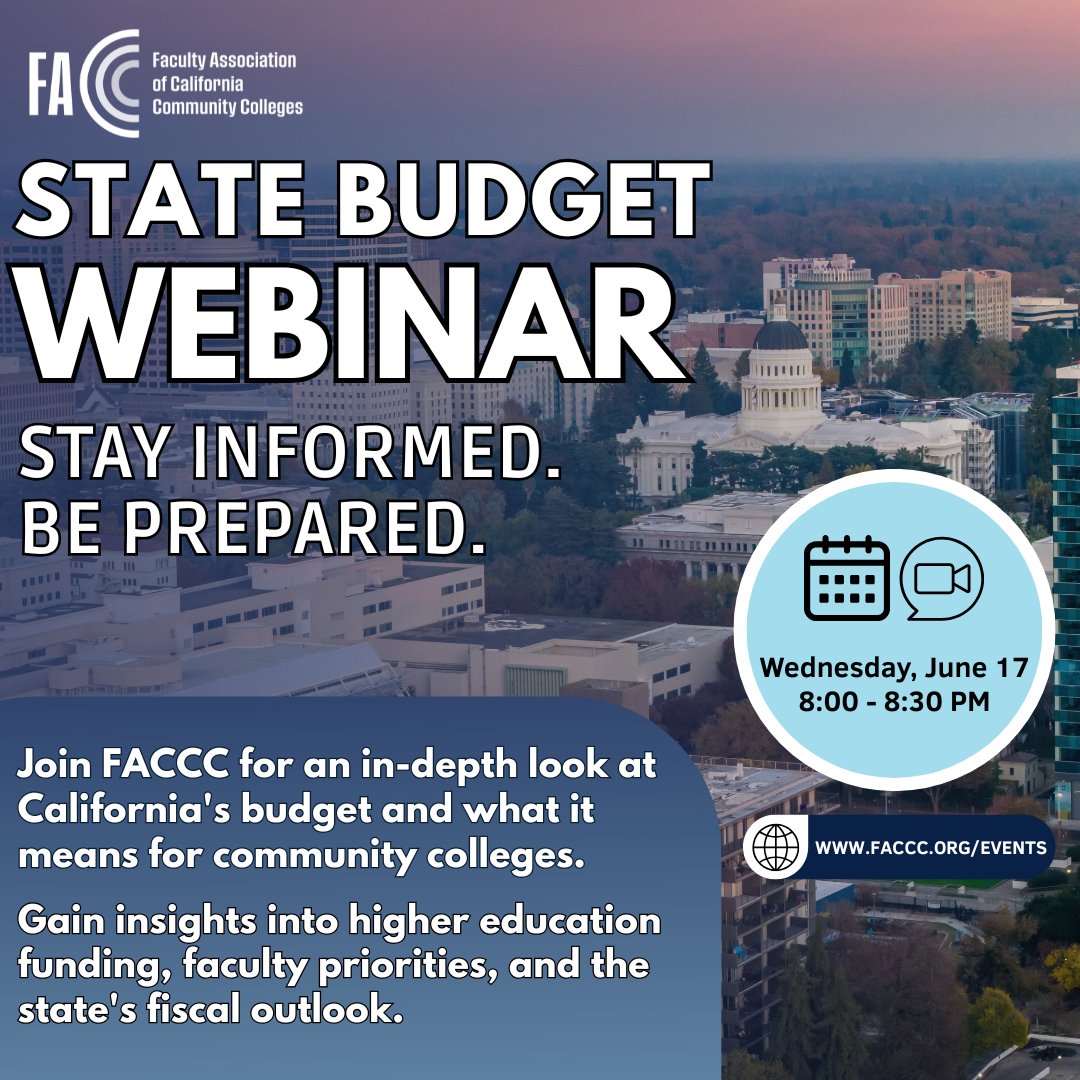

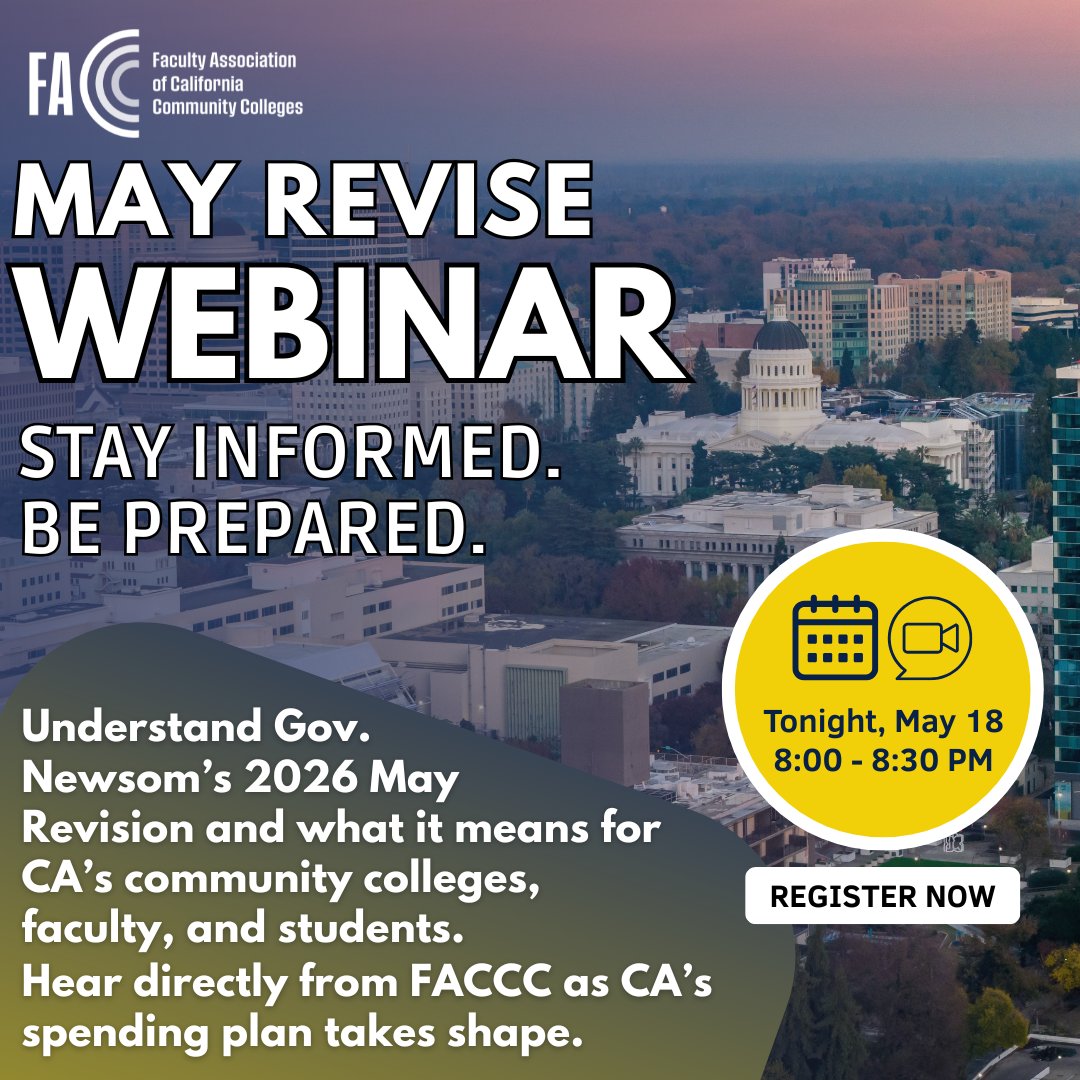




Join FACCC next Wednesday at 8:00 PM as we break down the budget, key funding decisions, faculty priorities, and the outlook for California's community colleges.
Do you have questions for us? Send them in advance to info@faccc.org.
Register today at FACCC.org/events.
1
13
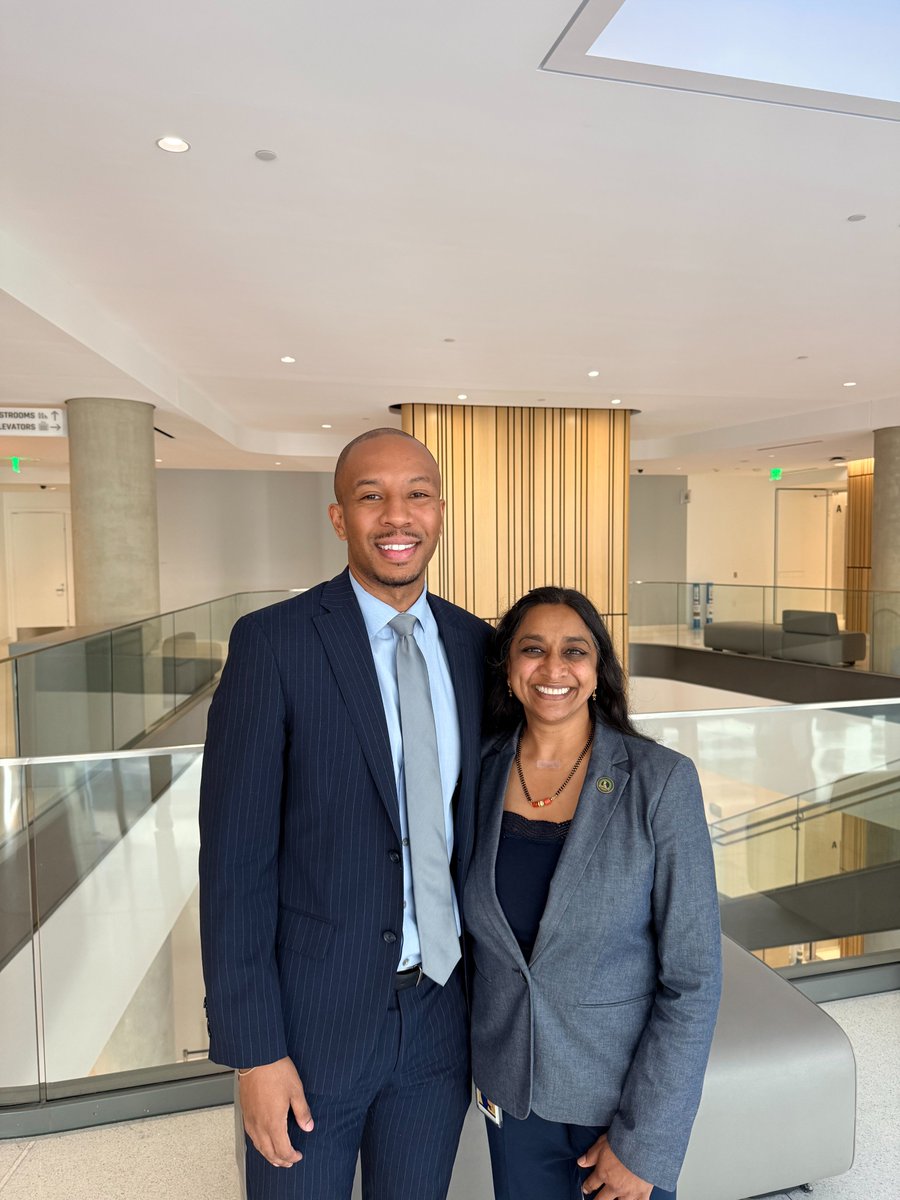
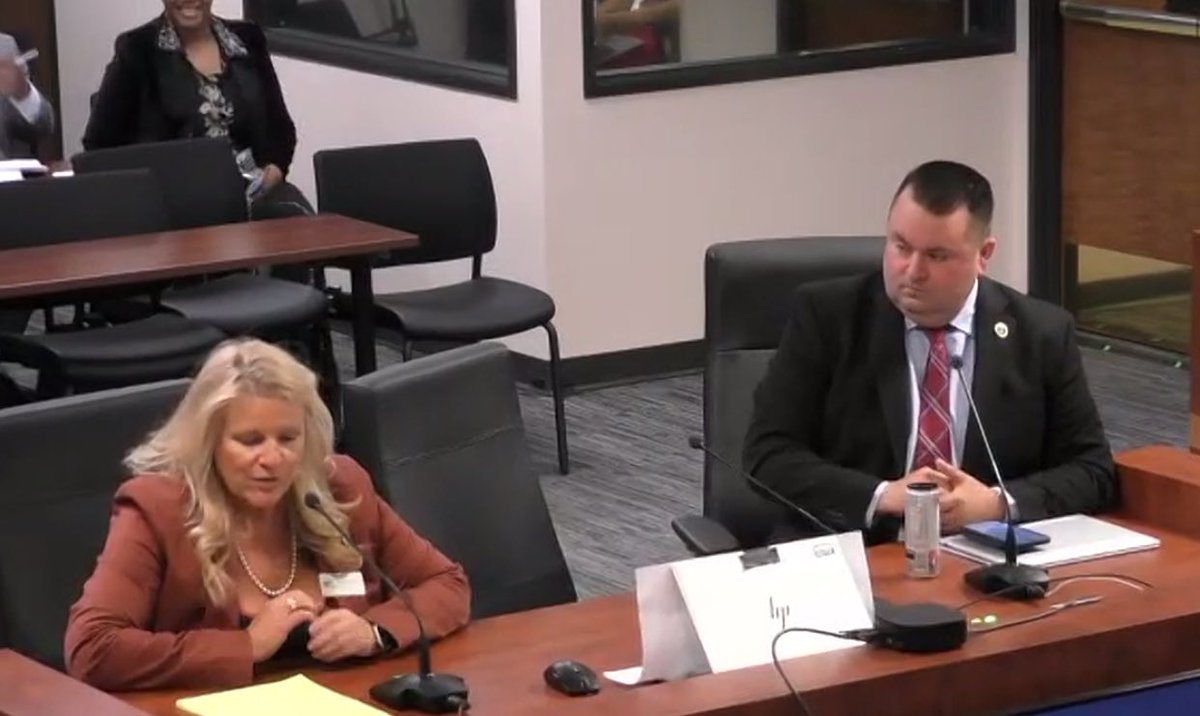
Today, FACCC-sponsored AB 1171 (@AsmDarshana) advanced out of the Senate Education Committee.
FACCC Govt. Relations Specialist Jason Henderson testified in support of the bill, which helps ensure health care funds reach the part-time faculty they are intended to support.
1
40
Thank you to Assemblymember Dr. Patel for your leadership and commitment to strengthening support for California's community college faculty.
#CaLeg #HigherEd #TrustEducators #CACommunityColleges
35
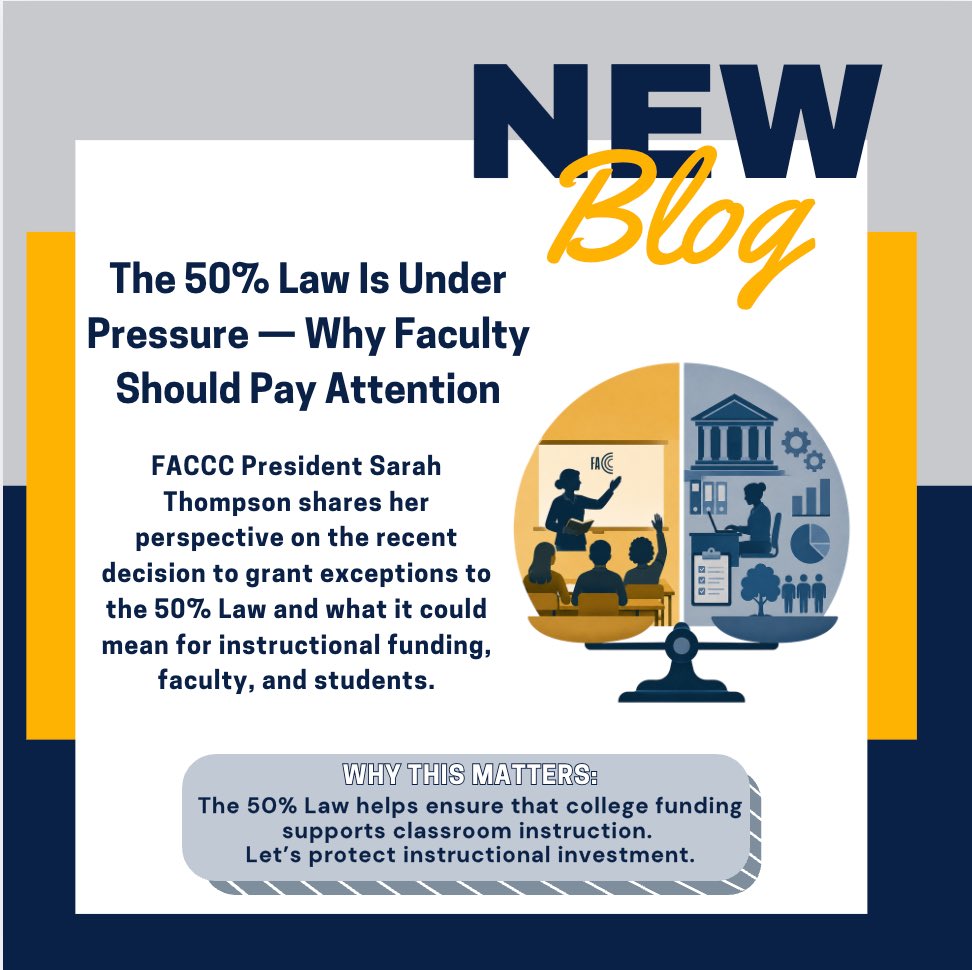
FACCC President Sarah Thompson shares her perspective on the recent CCC BOG vote to grant 50% Law exceptions to three districts, what it could signal for the future of instructional funding, and what may be at stake for faculty and students.
Read more: faccc.org/blog
36
FACCC President Sarah Thompson provided public comment at today’s California Community Colleges Board of Governors meeting, emphasizing the importance of protecting the 50% Law and preserving investment in classroom instruction and student learning.
#TrustEducators
1
1
41
15
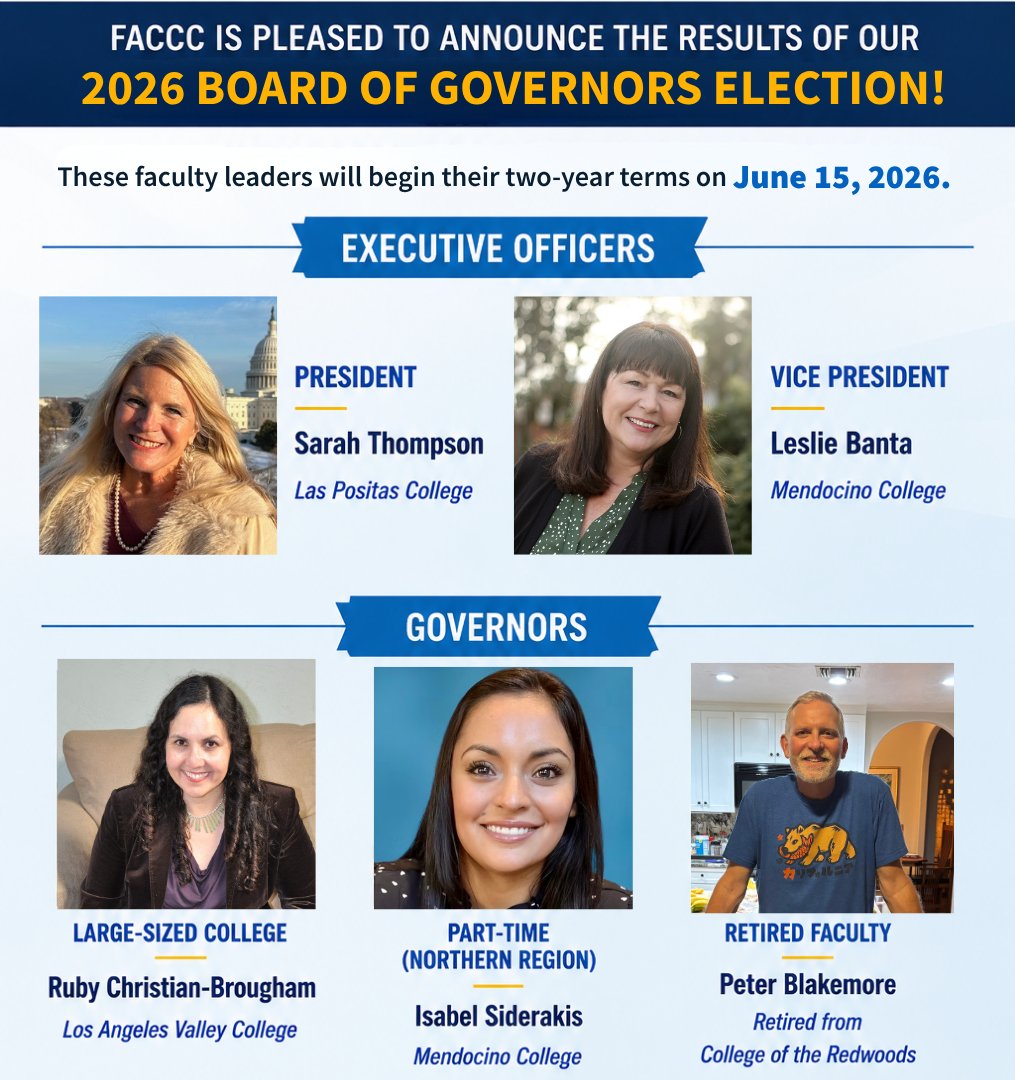
Congratulations to FACCC’s 2026 Board of Governors! We’re excited to welcome both new and returning faculty leaders who will begin their two-year terms on June 15. Thank you for stepping up to lead, advocate, and strengthen the voice of CA community college faculty statewide.
1
1
61
Please join us in congratulating our Executive Officers and Governors! #FACCC #FacultyLeaders #HigherEd #TrustEducators
17
“We’re entering into a realm of infinite possibility but also infinite danger,” Thompson said, emphasizing the importance of learning from this moment and examining the vulnerabilities created when institutions move too far from analog systems.
➡️bit.ly/faccc_sacbee
23
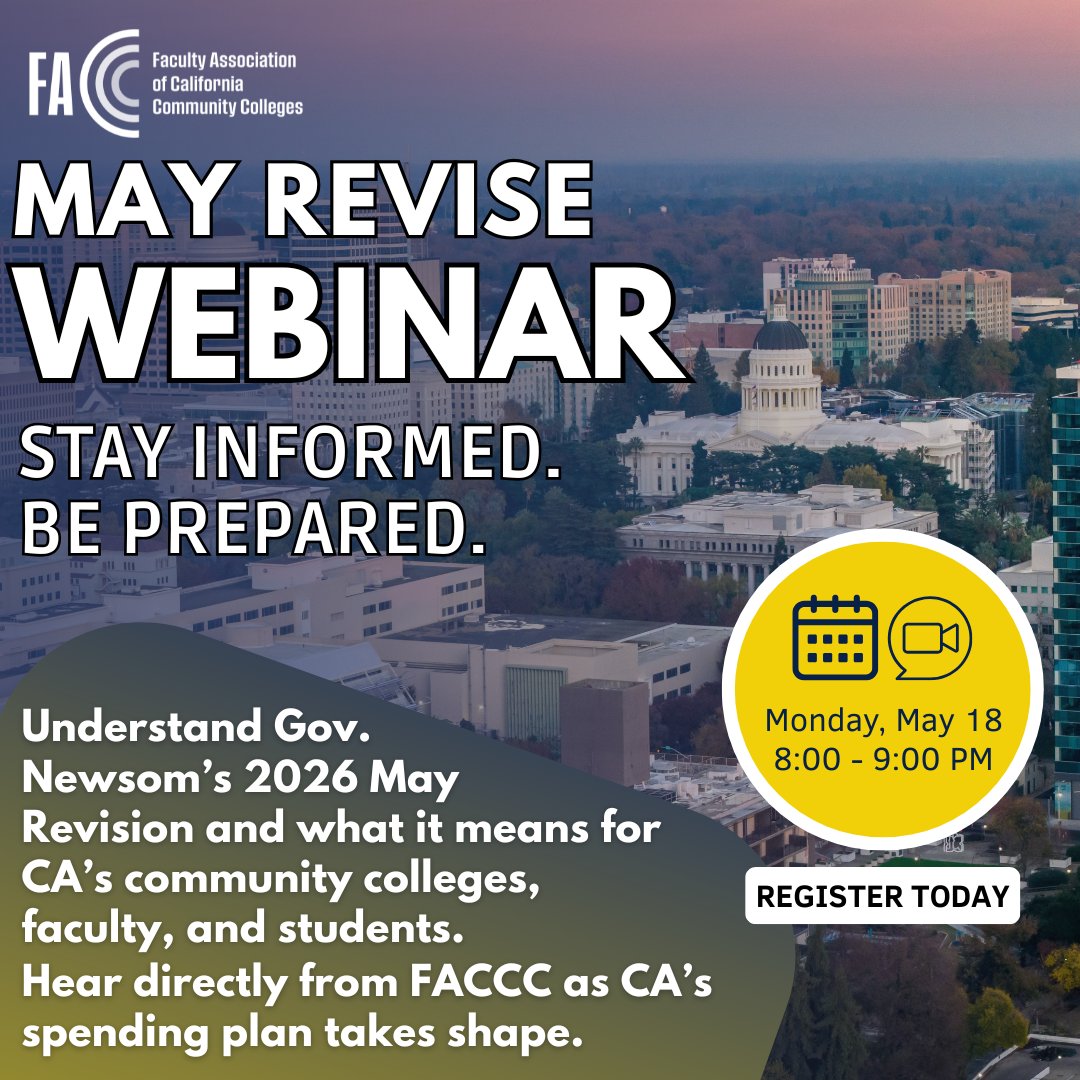
Join us next Monday for a breakdown of Gov. Newsom’s May Revision and what it means for our CCCs, faculty, and students. Have questions you want addressed during the webinar? Send them in advance to info@faccc.org.
Mark your calendar and register today: bit.ly/4nvfD1W
49
If you haven’t voted yet, please check your inbox (and spam folder) or mailbox for your voter information and make your voice heard before tonight's deadline.
Learn more about the candidates and how to vote at faccc.org/elections.
12
Today, we celebrate National #TeacherAppreciationDay and recognize #TeacherAppreciationWeek. We’re grateful for our FACCC members, board members, committee members, and the broader community who show up for students across the CCCs. Your dedication and impact do not go unnoticed.
29
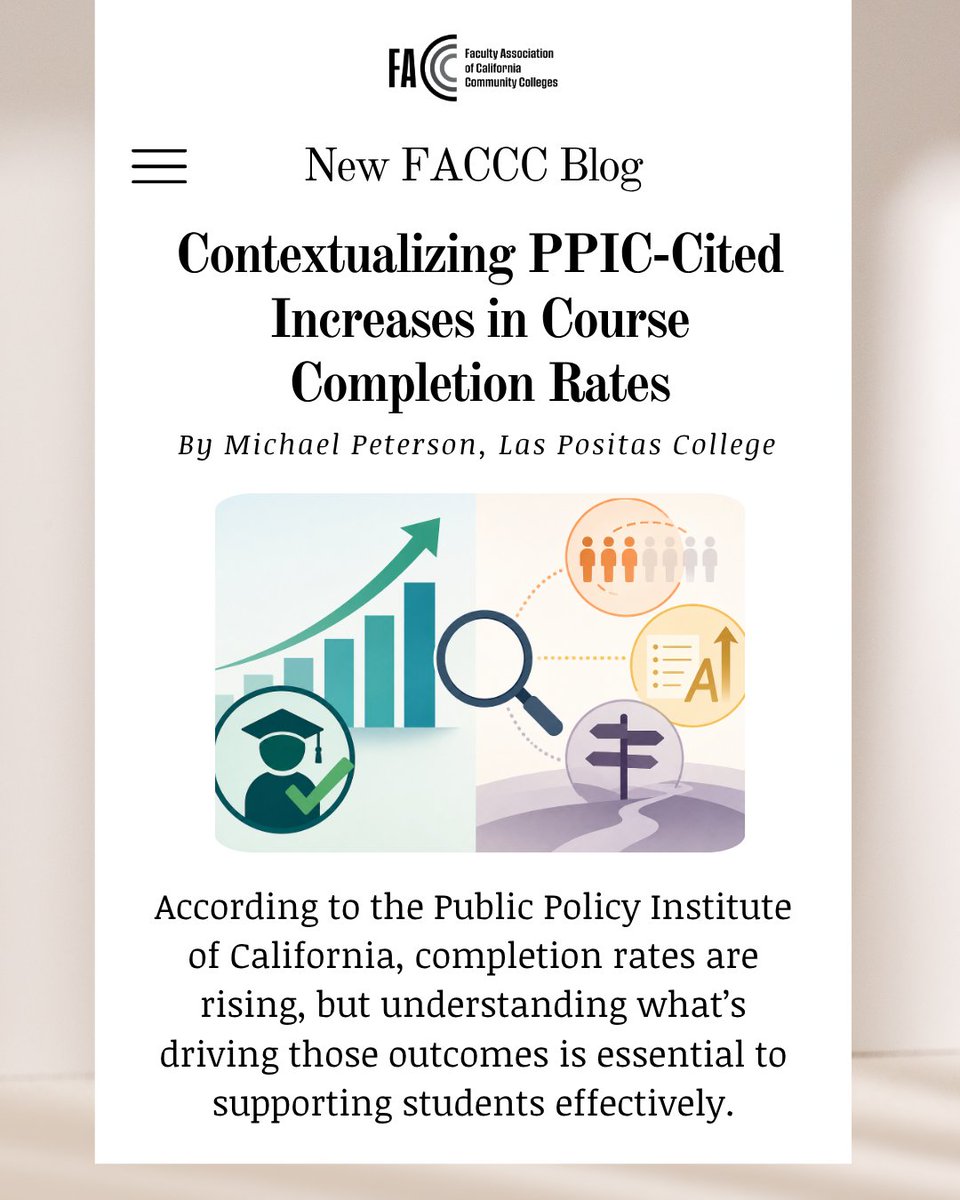
Understanding the full picture is key to supporting all community college students.
Read more: faccc.org/blog
#TrustEducators #HigherEd #NewBlog #CACommunityColleges
19