
We aim to optimise the multidisciplinary management of patients with a fragility fracture, including secondary prevention.
Joined December 2011
- Tweets 2,613
- Following 2,958
- Followers 2,867
- Likes 1,608
929 Photos and videos
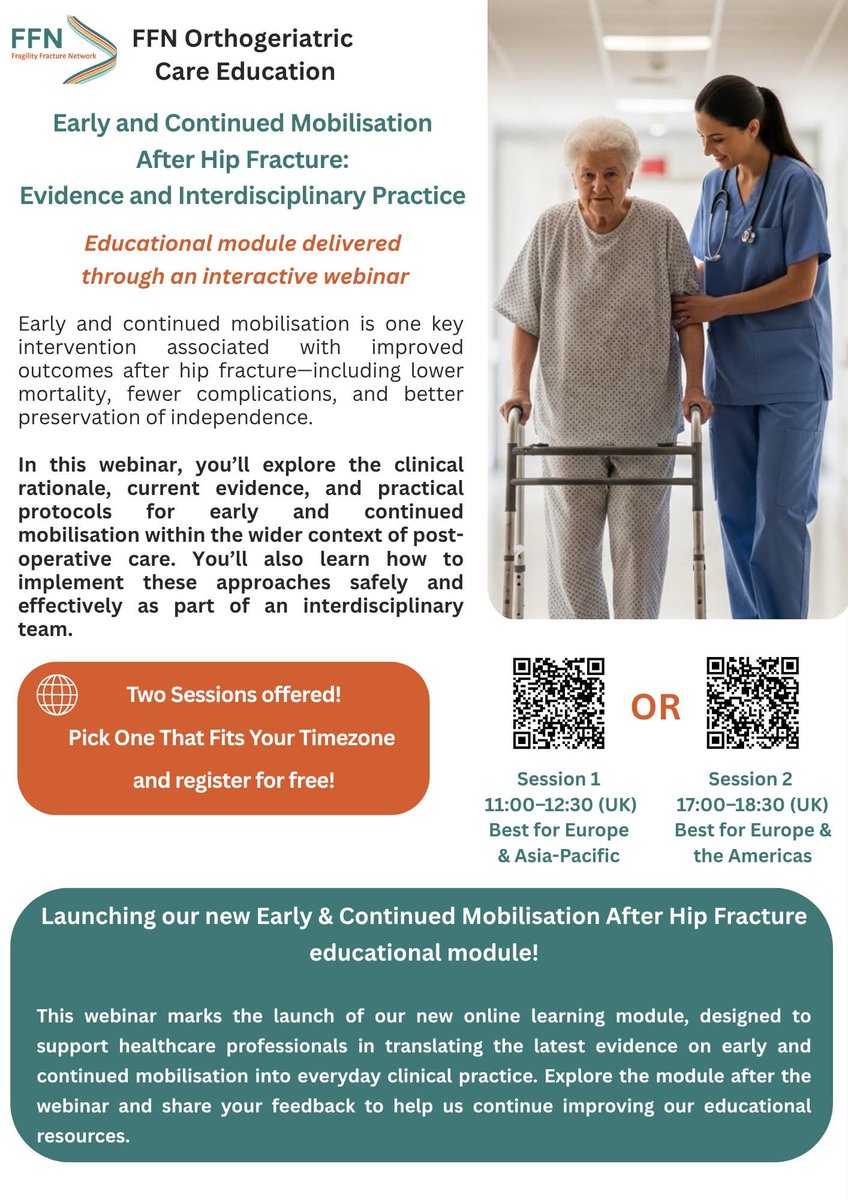




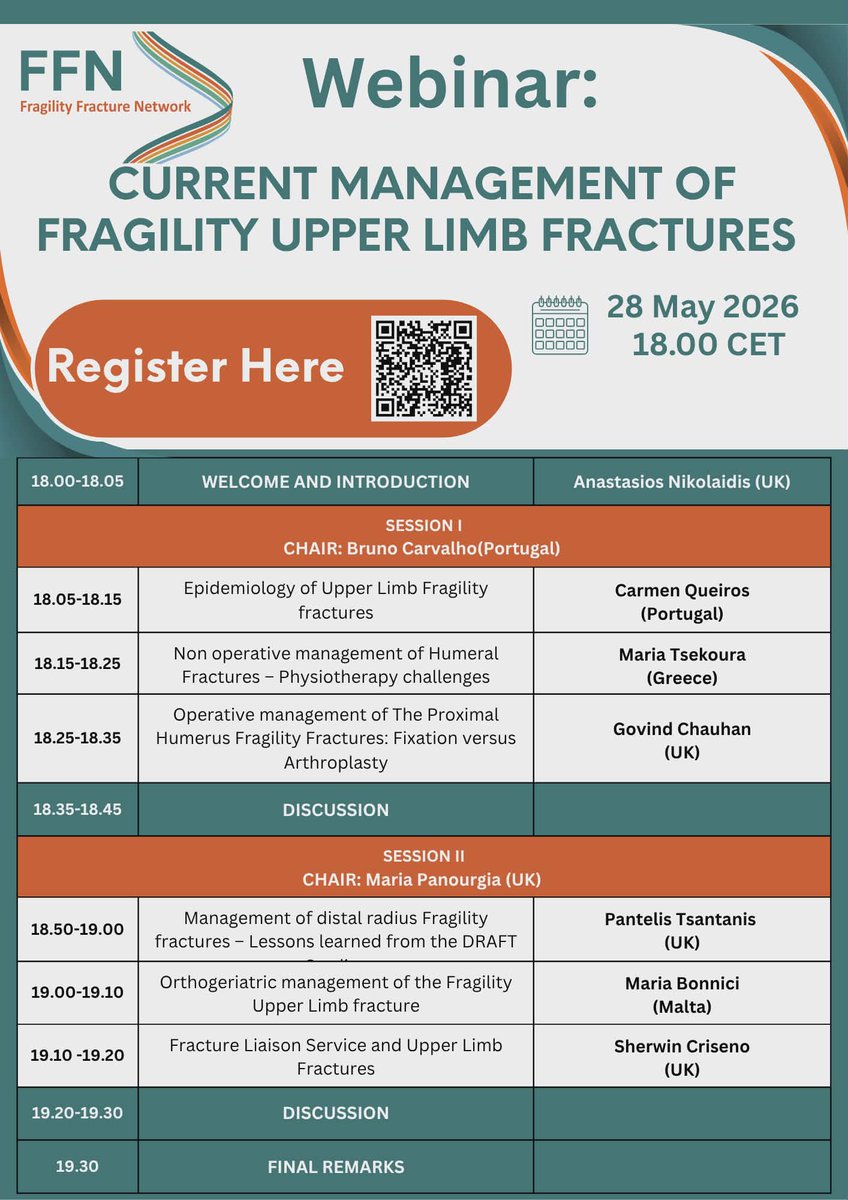

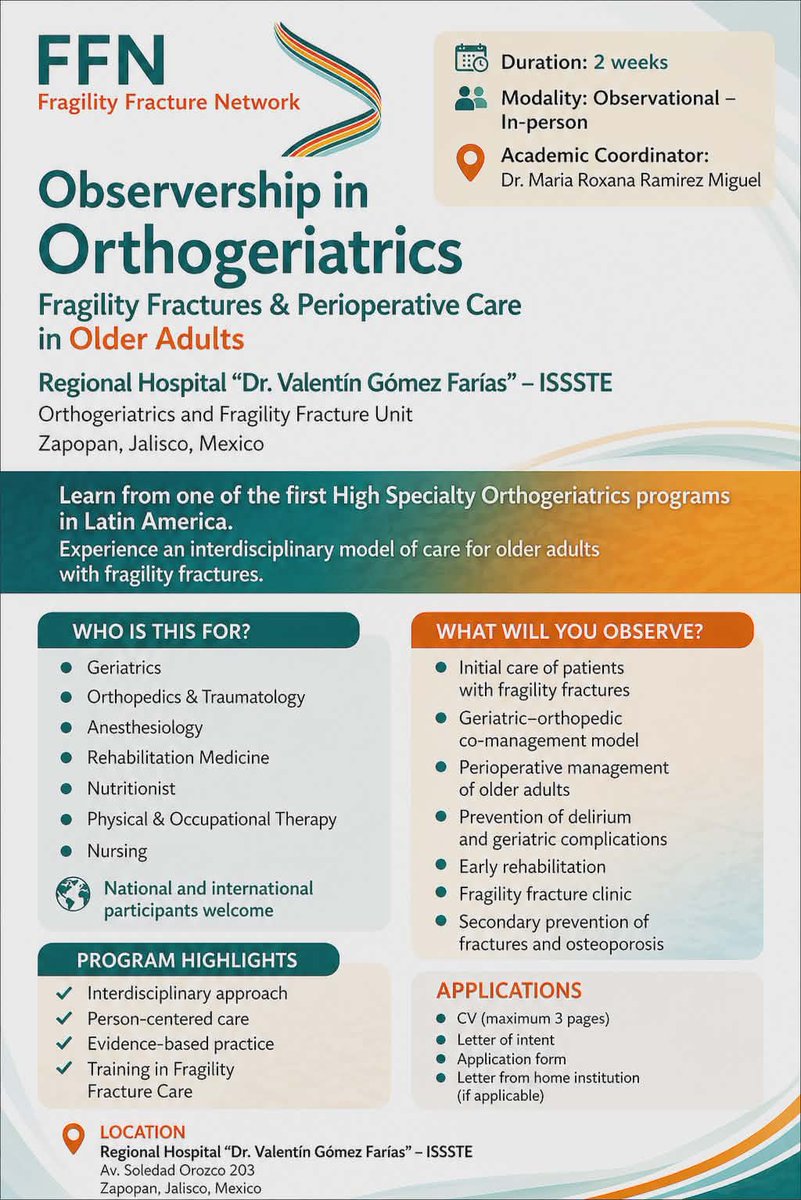





Webinar: Early and Continued Mobilisation AfterHip Fracture: Evidence and Interdisciplinary Practice
Join us on June 30th for an interactive webinar exploring the evidence, clinical rationale, and practical approaches to early and continued mobilisation after hip fracture.
1
1
189
involved in hip fracture care
This webinar also marks the launch of our new online educational module, helping clinicians translate the latest evidence into everyday practice.
1
14
Register today and choose the session that works best for you.
Register for Session 1 (11 am UK time)
OR
Register for Session 2 (5 pm UK time)
16
What Factors Influence Early Mobility After Total Hip Replacement?
A prospective study of 71 older adults in Brazil found that only 50.7% of patients could stand and 39.4% could walk by postoperative day 3 following total hip replacement for femoral neck fractures.
3
2
3
228
These findings highlight the value of assessing cognitive function, functional status, and muscle health before surgery to identify patients at risk of delayed recovery and guide targeted rehabilitation strategies.
Learn more journals.lww.com/jgpt/fullte…
1
62
• Lower prefracture functional independence
Sarcopenia was also associated with slower recovery, particularly for walking, while BMI showed no significant relationship with mobility outcomes.
1
53
The strongest predictors of delayed mobility recovery were:
• Older age
• Cognitive impairment
1
92
🚭 New evidence from a meta-analysis of 58 international cohort studies involving over 1.69 million participants confirms that current smoking is a significant predictor of future fracture risk.
1
1
156
The study also found that former smokers have a substantially lower fracture risk than current smokers, suggesting that the harmful effects of smoking on fracture risk may be at least partially reversible.
1
75
These findings strengthen the evidence supporting smoking as an independent risk factor for fracture and will help inform future updates of the FRAX fracture risk assessment tool.
Learn more link.springer.com/article/10…
19
A recent umbrella review, synthesising five systematic reviews including two network meta-analyses, found that combined exercise and nutritional interventions are the most effective strategy for managing sarcopenia and reducing fall risk in older adults.
1
3
3
192
Key recommendations include:
• Progressive resistance and balance training
• Optimised protein intake and adequate vitamin D
• Multidisciplinary care involving physiotherapists, dietitians, geriatricians, nurses, and other healthcare professionals
1
1
1
68
These findings reinforce the importance of integrated approaches that combine exercise, nutrition, and coordinated care to support healthy ageing, maintain function, and reduce falls.
Learn more sciencedirect.com/science/ar…
1
51
A recent study highlights a critical evidence-to-practice gap in postoperative care for older adults with hip fractures in Brazil. Despite strong evidence supporting early mobilization, many physiotherapists are not implementing these interventions consistently.
1
1
1
116
✅ Greater clinical autonomy without requiring surgeon authorization
✅ Use of mobility assessments
These findings underscore the importance of education, interdisciplinary care models, and organizational support to improve rehabilitation outcomes after hip fracture surgery.
1
1
87