Building AI-first security, compliance & productivity tools from Abu Dhabi. Fortress turns complex tech into everyday protection for people & businesses.
Joined November 2025
- Tweets 180
- Following 27
- Followers 10
- Likes 33
96 Photos and videos











25 Dec 2025
Your vision isn’t dying from a lack of ideas; it’s being buried by them.
We live in the era of Idea Fragmentation.
Every morning, we wake up to a "new must-use AI tool," a "revolutionary framework," or a "viral strategy" that promises to 10x our results.
It’s tempting. It’s shiny. It’s also a trap.
When we chase every new piece of information, we don't move forward; we just vibrate in place. We call it Shiny Object Syndrome, but it’s actually a defense mechanism against the hard work of deep focus.
The symptoms are easy to spot:
- 100 open tabs that "you’ll get to eventually."
- A toolkit of 50 apps, but only 2 meaningful projects finished.
- A vision that changes every time a new trend hits the feed.
The Reality Check: Information is a commodity; Implementation is the rare asset. Your original vision doesn't need more "inputs." It needs more "output."
If you find yourself fragmenting your focus:
1- Mute the Noise: Unfollow the accounts that make you feel like you’re "missing out."
2- The "One Tool" Rule: Don't add a new software or strategy until the current one is fully integrated.
3- Protect the Vision: If an idea doesn't serve your North Star, it's a distraction no matter how "innovative" it looks.
Stop collecting bricks and start building the house.
Are you currently battling a "shiny object," or have you found a way to stay locked in? Let’s talk about it in the comments. 👇
#Focus #Productivity #Mindset #Entrepreneurship #DeepWork #AI
30
24 Dec 2025
Wishing you a Christmas that’s Intelligent by design and Merry by default.
Merry Christmas
#Christmas #Christmas2025 #ChristmasEve
28
24 Dec 2025
🚨 CRITICAL ALERT: n8n Users
A CVSS 9.9 severity flaw (CVE-2025-68613) has been disclosed in n8n.
The vulnerability allows authenticated users to escape the sandbox and execute arbitrary code (RCE) on the host server. If you self-host, your infrastructure is at risk.
⚠️ Affected: v0.211.0 thru v1.120.3 ✅ Fix: Update to v1.120.4 immediately.
#CyberSecurity #n8n #Infosec #DevOps #RCE
110
22 Dec 2025
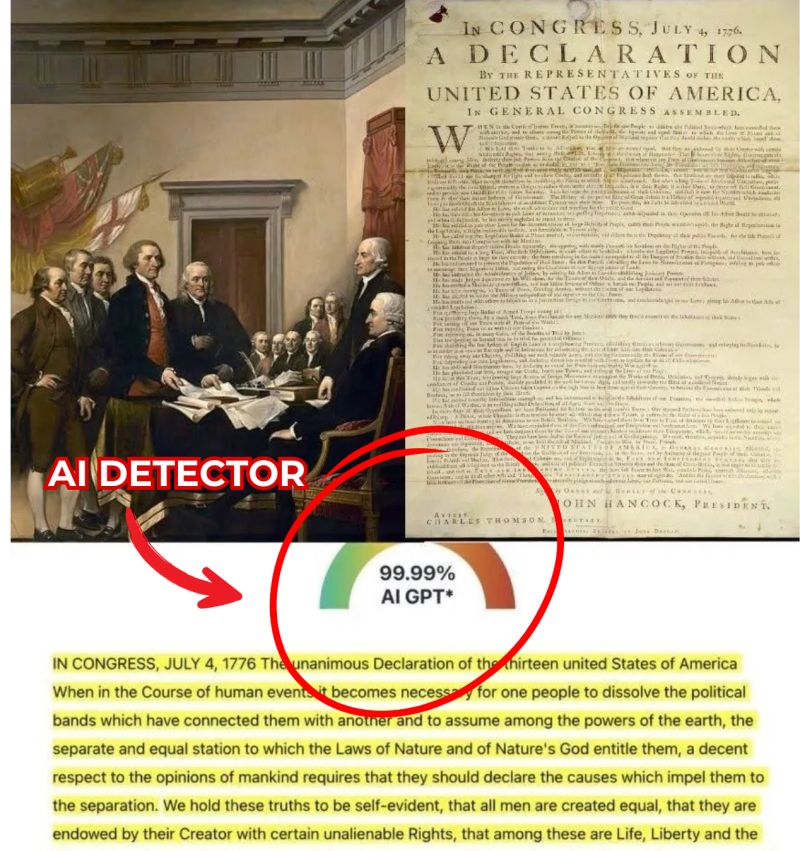
Breaking: The US Constitution was ghostwritten by GPT-1776.
Proof that if you write with perfect grammar and logic, modern AI assumes you’re a robot.
#TrendingNow #viralpost
44
19 Dec 2025
البعض أراد إثارة الفتنة والبعض انقاد في جهالة للفيديو المنشور والذي يصور لاعبي المنتخب الأردني بأنهم لم يردوا التحية للمنتخب المغربي الشقيق، الفيديو الحقيقي موجود على القنوات الرسمية، أدعو الجميع للتثبت قبل نشر محتوى يثير الكراهية.
نبارك للمغرب قيادة وشعبا هذا الفوز الذي استحقوه بجدارة ولن نتحدث عن الأخطاء التحكيمية، فهذه البطولة لا يوجد فيها خاسر فكلنا عرب وكلنا فائزون.
#المغرب_الاردن #الأردن #المغرب #كأس_العرب2025
3
3
603
15 Dec 2025
Macrohard by @xai vs. @Microsoft : who’s going to own the future of software: the vibe that ships fast, or the engineering that survives scale?
149
14 Dec 2025
01010000 01110010 01101111 00100000 01110100 01101001 01110000 00111010 00100000 01000011 01101111 01101110
01110011 01101001 01110011 01110100 01100101 01101110 01100011 01111001 00100000 01100010 01100101 01100001
01110100 01110011 00100000 01110000 01100101 01110010 01100110 01100101 01100011 01110100 01101001 01101111
01101110 00100000 01100101 01110110 01100101 01110010 01111001 00100000 01110100 01101001 01101101 01100101
00101110 00100000 01010011 01101000 01101111 01110111 00100000 01110101 01110000 00101110 00100000 01000100
01101111 00100000 01110100 01101000 01100101 00100000 01110111 01101111 01110010 01101011 00101110 00100000
01001001 01101101 01110000 01110010 01101111 01110110 01100101 00100000 01100100 01100001 01101001 01101100
01111001 00101110
78
14 Dec 2025
💡 Pro tip: Consistency beats perfection every time. Show up. Do the work. Improve daily. #ProTip
59
13 Dec 2025
I found a sentence that hijacks attention in under a second: you’re reading it.
.
.
.
..
.
.
.
.
..
.
.
.
.
.
.
.I’m just experimenting: how people react to useless hook lines vs real data. 😗
61
6 Dec 2025
Do you love math legends and mind-bending stories? 🧠✨
Explore the puzzles behind the myths and see math in a totally new way 👇
barmejhub.com/mathlegends/in…
#MathLegends #mathisfun
85
4 Dec 2025
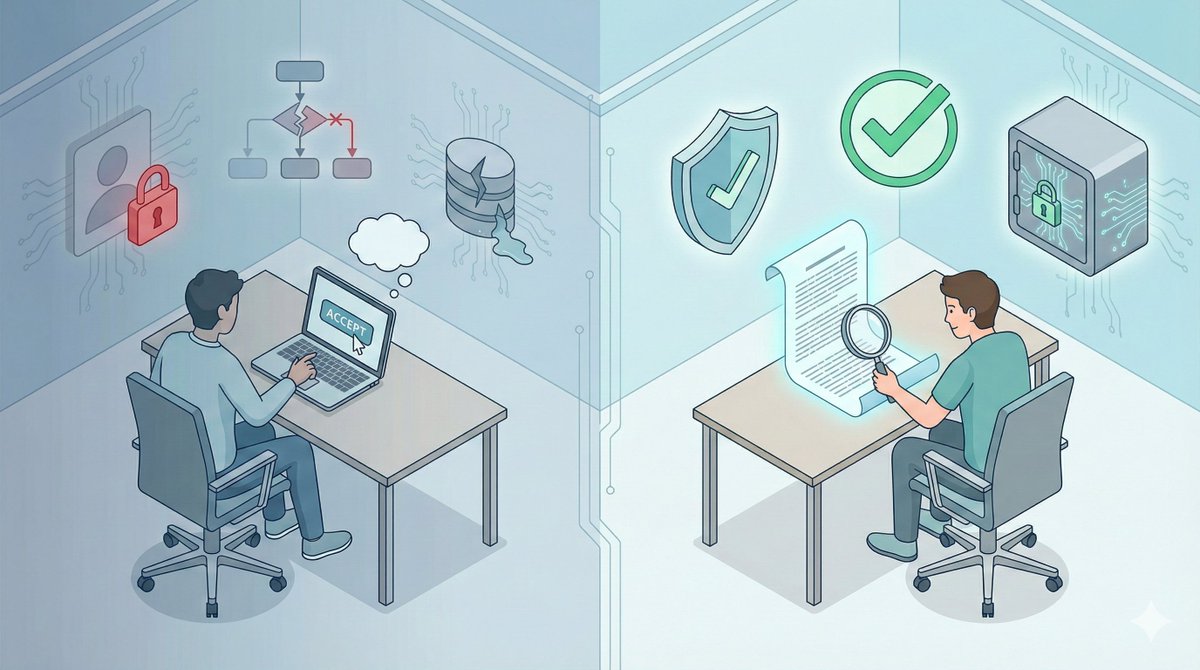
Behind the ChatGPT Hype: 9 Terms You Should Actually Read
I took a closer look at ChatGPT’s Terms of Service and found a few clauses that don’t match what most users think is happening. Here’s a quick breakdown of the most misunderstood parts; especially around data use, “owning” your outputs, and the limits you actually agree to when you click accept.
I’ll reference the Rest-of-World Terms (the ones that apply outside EU/UK/EEA). OpenAI
1. Data use & “training on your content”
What the Terms say
Under “Our use of content”, OpenAI says it “may use Content to provide, maintain, develop, and improve our Services”. OpenAI
A separate help article clarifies that for consumer services like ChatGPT, your prompts, files, and outputs may be used to train models by default, unless you opt out via data controls / privacy portal. OpenAI Help Center 1
Why people find this confusing
The core ToS never explicitly says “we train our models on your chats by default”; you have to follow links into Help Center articles to see that spelled out.
Marketing or UI messages like “your data is your data” can give a softer impression than the legal language, even though both can technically be true at the same time (IP vs. training use).
Takeaway If you don’t want your content used to improve models, you must change your data settings / opt out; it is not off by default for normal ChatGPT accounts. OpenAI Help Center 1
2. “You own the output” vs. no exclusivity
What the Terms say
You keep ownership of your Input and, “as between you and OpenAI,” you own the Output; OpenAI assigns to you any rights it has in your Output. OpenAI
Immediately after that, they say Output may not be unique and other users can get similar or identical Output; your ownership doesn’t extend to others’ outputs. OpenAI
Why people find this confusing
Many users read “you own the output” and assume this means:
The next paragraph quietly undercuts that expectation: you have rights in your copy, but someone else can lawfully get (and use) almost the same thing.
Takeaway You can generally use your outputs (including commercially), but you don’t get exclusivity, and you can’t stop others from using similar or overlapping content the model generated for them.
3. Using output to train competing models
What the Terms say
Under “What you cannot do”, you may not “use Output to develop models that compete with OpenAI.” OpenAI
Why people find this confusing
Most people read “you own the output” and assume they can do anything with it, including fine-tuning their own models.
The non-compete clause on outputs is easy to miss and effectively restricts one category of use even though you “own” the content.
Takeaway Ownership here is limited: you can use the content broadly, but you contractually agree not to use it as training material for a competing model.
4. How much protection you actually get (warranty & liability)
What the Terms say
Services are provided strictly “AS IS”, with broad disclaimers of warranties (no guarantee of accuracy, uptime, security, data preservation, etc.). OpenAI
OpenAI’s total liability is capped at the greater of what you paid in the last 12 months or $100. OpenAI
Why people find this confusing
The product is marketed and presented as a capable “assistant,” and some users assume enterprise-style reliability, especially when they pay for Plus or higher tiers.
Legally, the Terms say:
Takeaway In practice, you’re expected to treat ChatGPT as a helpful, but fallible tool and carry the risk of relying on it. The legal protections are intentionally minimal.
5. Harsh limitations on using output about people
What the Terms say
You must not use any Output relating to a person for decisions that have “a legal or material impact” on them (credit, jobs, housing, medical decisions, etc.). OpenAI
Why people find this confusing
Many teams think “we’ll just use ChatGPT as a helper in hiring / screening / scoring,” but the Terms explicitly prohibit using outputs this way.
It’s easy for non-lawyers in a company to miss this restriction and drift into prohibited use.
Takeaway If you’re using ChatGPT around people data, you need strong guardrails; anything that smells like automated decision-making about individuals is basically off-limits under these Terms.
6. Corporate email & who can see your chats
What the Terms say
If you sign up with a company email, that account may be added to your organization’s business account; the org admin can then access your content and restrict or remove your access. OpenAI
Why people find this confusing
Many users assume their “personal” ChatGPT history is private, even when using a work email.
The Terms say explicitly: once your account is folded into the org, admins can see your content.
Takeaway If you don’t want an employer to have potential access to your prompts and files, don’t use a corporate email, or assume nothing you do there is private from your company.
7. Termination & service changes on OpenAI’s judgment
What the Terms say
OpenAI can suspend or terminate your account if they determine your use breaches Terms/Usage Policies, violates law, or “could cause risk or harm to OpenAI, our users, or anyone else.” OpenAI
They can also change the Terms or Services, with 30 days’ notice for materially adverse changes; if you disagree, your only option is to stop using the service. OpenAI
Why people find this confusing
Words like “risk or harm” are broad and vague; users often feel they’ve been banned or restricted without a clear explanation.
There’s no guarantee that features, models, or even the service itself will stay as-is; discontinuation is allowed with notice and a refund of unused prepaid fees.
Takeaway You don’t get a guaranteed, immutable service. OpenAI keeps wide discretion to change or withdraw features and to cut off access if they think your use is problematic.
8. Mandatory arbitration & class-action waiver (US-style provisions)
What the Terms say
Disputes must be resolved through binding arbitration, with a 30-day window to opt out when you first sign up or when arbitration terms change. OpenAI
You waive the right to participate in class actions or class arbitrations; disputes must be brought individually. OpenAI
Why people find this confusing
Most users never read or act on the 30-day opt-out option.
The practical effect is: you’re giving up the default right to sue in court or join a class action over most disputes.
Takeaway If class-action rights or court access matter to you, that tiny arbitration section is extremely important; and very easy to overlook.
9. Privacy Policy is “separate” from the Terms
What the Terms say
They reference the Privacy Policy but say it “does not form part of these Terms”, even though it’s “an important document.” OpenAI 1
Why people find this confusing
Users often assume that privacy promises are contractual; the wording makes it sound more like a separate, changeable policy document.
In reality, consumer protection and data-protection laws still apply, but you wouldn’t know the precise legal force just from this text.
Takeaway You should treat the Privacy Policy as essential reading, but understand it’s structured as a separate document that OpenAI can update, not as a fixed section inside the Terms.
This isn’t legal advice; just a practitioner’s read of the fine print. Always review the original Terms and Privacy Policy yourself before you rely on any AI in real projects.
#ChatGPT #AI #LLM #AIGovernance #DataPrivacy #CyberSecurity #AICompliance #TermsOfService #LegalTech #ResponsibleAI
1
86
4 Dec 2025
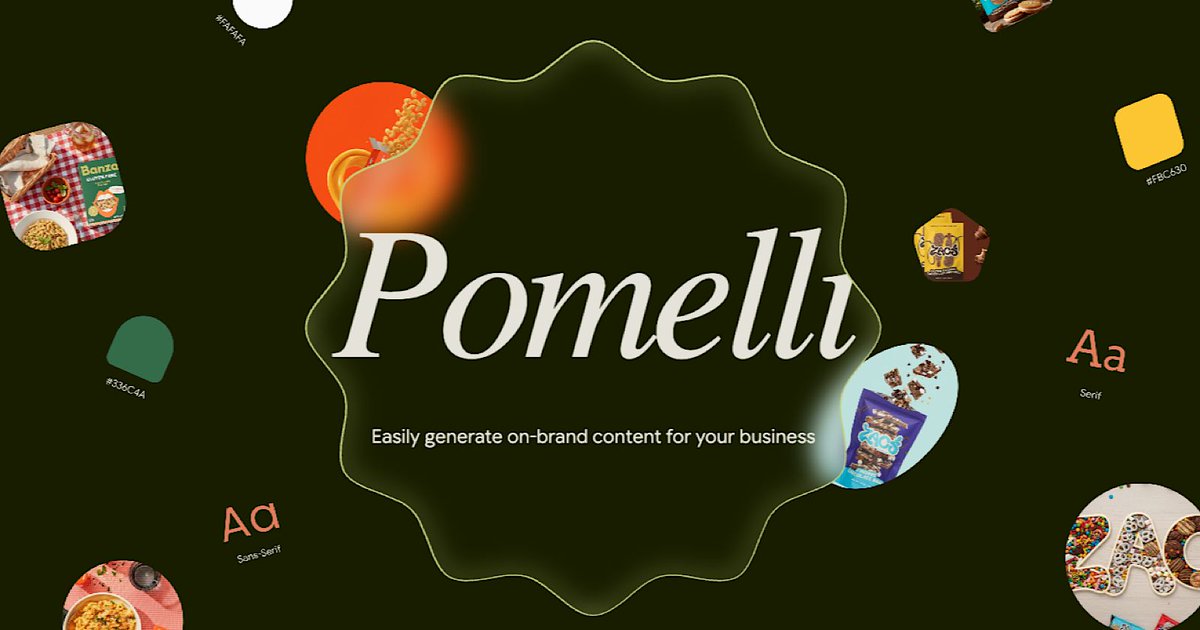
After trying @Google Pomelli:
Interesting launch and the direction is right, but after testing it I’d be a bit cautious:
- It’s not accessible in all regions yet; I had to use a VPN and pretend I’m in the US.
- The generated images are very low quality; you still need something like @canva to get a professional result and proper brand kit.
- The whole thing feels like an early beta. Compared to other tools in the market, it’s still a baby, so Google probably shouldn’t position it as a full marketing stack yet.
- Even the website itself feels far from Google’s usual identity in terms of design, colors and polish (I thought its a chocolate shop website).
The concept is good, but for now I’d not use it as my main marketing engine.
#GoogleAI #AImarketing #MarketingTools #BrandStrategy #BrandDesign
#DigitalMarketing #contentcreationpro #MarTech #StartupMarketing
#DesignQuality #BrandKit #Canva #ProductReview #EarlyAccess
#MarketingAutomation #AIForBusiness
1
78