
An indexed, peer-reviewed journal of the AAFP | Practical ideas for improving practice, enhancing the patient experience, and developing a rewarding career
Joined May 2009
- Tweets 5,071
- Following 132
- Followers 6,551
- Likes 367
1,453 Photos and videos










Jun 11
Approximately half of U.S. adults are lonely, and lonely people are 26% more likely to die prematurely. Three questions can help physicians identify lonely patients, who may benefit from simple interventions such as social prescribing. bit.ly/4ehSprL
39
Jun 9
The Medicare QPP 2024 Doctors and Clinicians Preview Period is open, but only until June 11. Here's how to check the 2024 performance information that will be included on your Medicare.gov Compare tool profile page. bit.ly/43WuBor
36
Jun 1
The latest Coding & Documentation includes:
• Compliance programs for small practices
• Tuberculosis skin test
• Hospital care for patient with infectious disease
• G2211 with advance care planning
• Remote physiologic monitoring time requirements bit.ly/42WGZEE
48
May 29
EHRs took some of the human touch out of medicine. AI may help us get it back. bit.ly/4wYYodJ
28
May 27
Common practices such as pre-charting and using templates can help plaintiffs’ attorneys paint you in a negative light if not done carefully. Here’s how to make the chart your ally rather than the plaintiff’s best witness. bit.ly/3RMl4NY
56
May 21
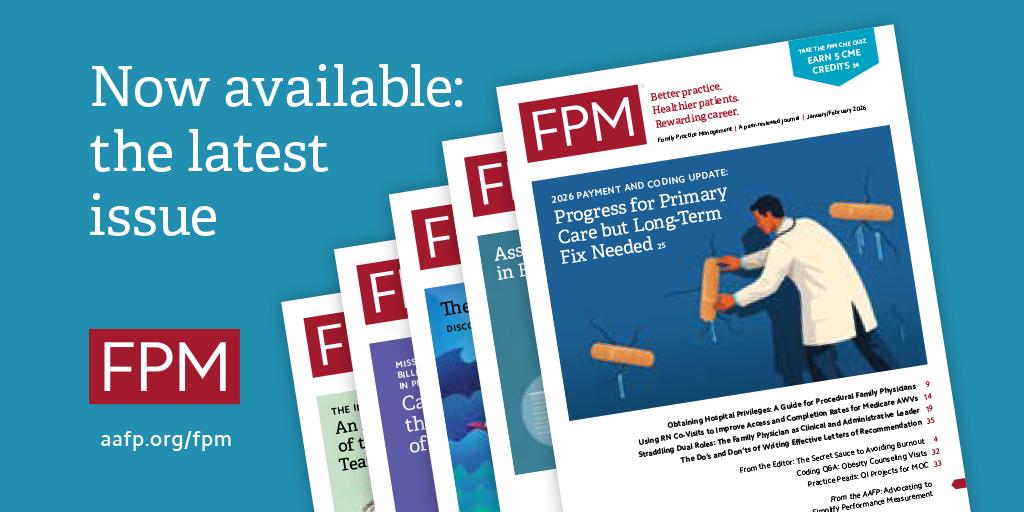
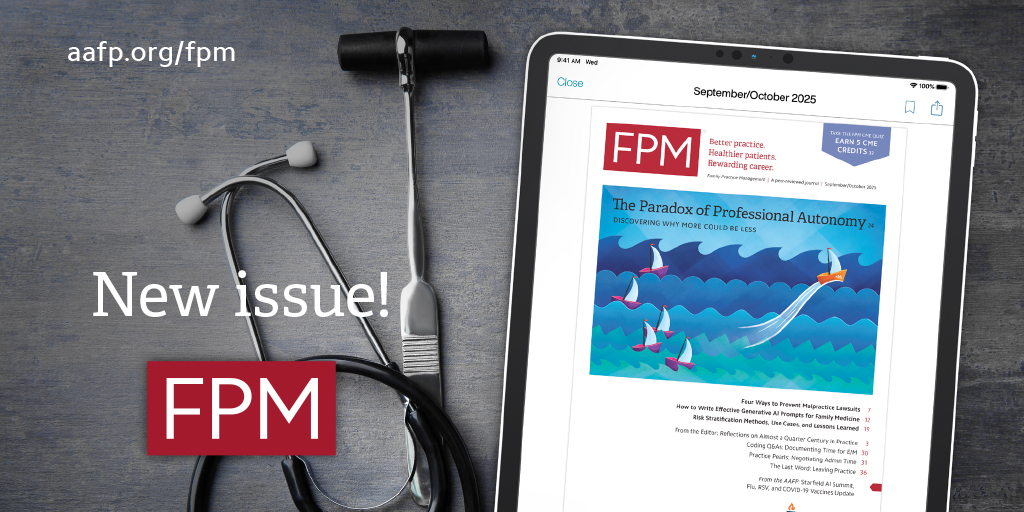
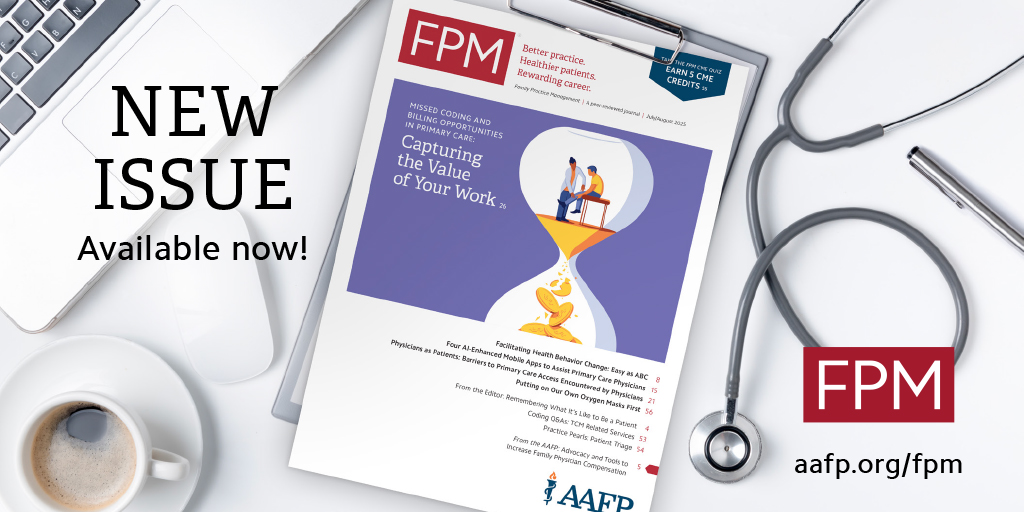
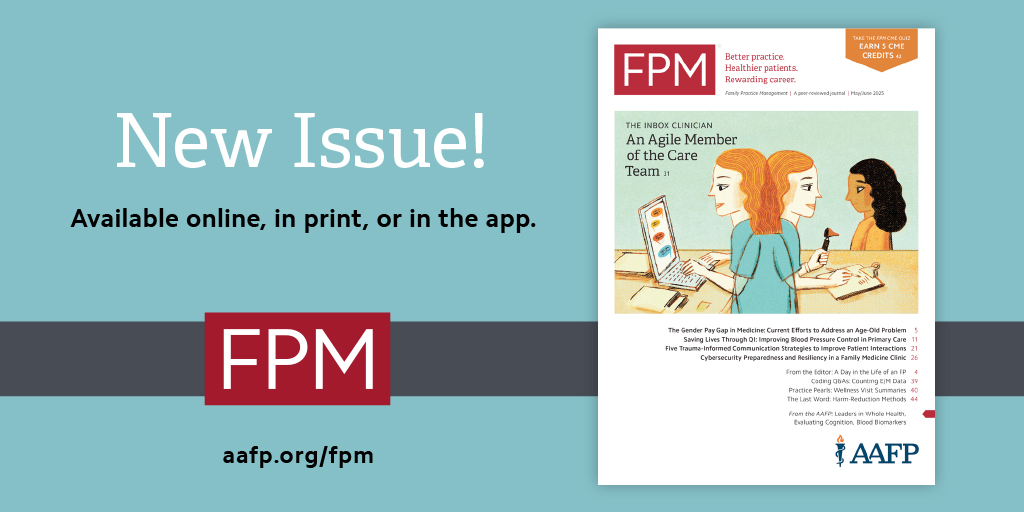
Highlights from our latest issue: How to Keep the Chart From Becoming the Plaintiff’s Best Witness | Tips for AI Clinical Searches | Addressing Patient Loneliness | Fourth-Trimester Care Tools | Coding Q&As aafp.org/fpm
1
2
117
Apr 14
DPC Right Out of Residency? It’s Possible:
Many of these startup tips also apply to veteran physicians contemplating direct primary care. bit.ly/4ccOOdE
66
Apr 10
Modifier 25 is commonly used to bill for significant, separate services provided at the same office visit. But other coding modifiers can also be useful for ensuring payers appropriately compensate you. bit.ly/4skfz5S
80
Apr 8
MAHA ELEVATE’s Initial Deadline Coming Soon:
Letters of intent for new federal grants for providing functional or lifestyle medicine services are due April 10. bit.ly/3NZJsdw
57
Apr 2
What Does Verdi's Requiem Have to Do With Family Medicine?
Perhaps we need a requiem to help us grieve our losses — and hope for something better. bit.ly/4dmzPjq
53
Mar 27
The letter-of-intent deadline is approaching for the Center for Medicare and Medicaid Innovation’s (CMMI) new Making America Healthy Again Enhancing Lifestyle & Evaluating Value-based Approaches Through Evidence (MAHA ELEVATE) model. bit.ly/3NZJsdw
1
74
Mar 27
Decisions about screening, prevention, and treatment should be based on the results of randomized controlled trials (RCTs) or systematic reviews of RCTs. But studies often report relative risks, which can be misleading. Enter the ARR and NNT. bit.ly/4rUT33a
1
92
Mar 11
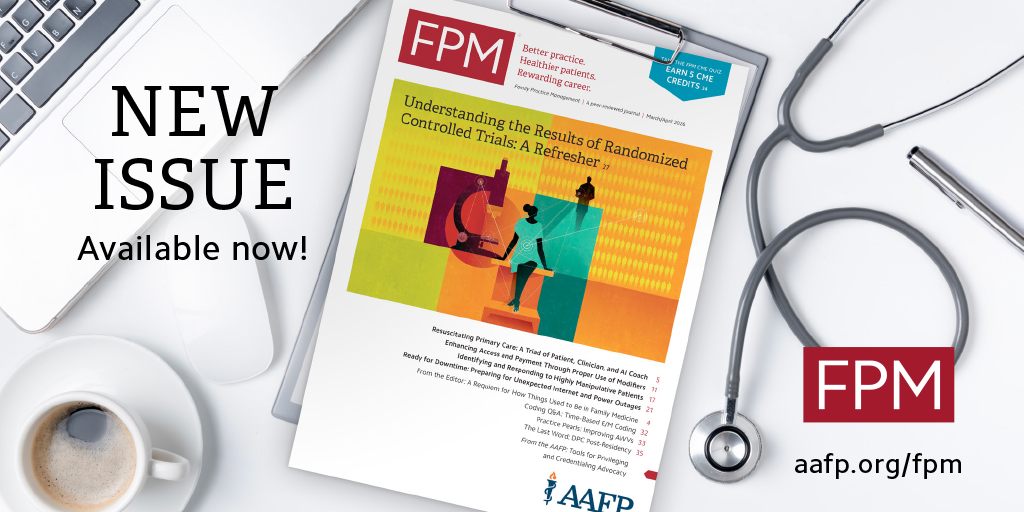
The latest issue of FPM is now available: Understanding the Results of Randomized Controlled Trials, Modifiers That Can Enhance Payment, Caring for Highly Manipulative Patients, Preparing Your Practice for Internet and Power Outages. bit.ly/4s3T4CN
64
Mar 2
The latest edition of FPM's Practice Pearls includes:
• Use recent QI projects to meet certification requirements
• Ask about procedures when job hunting
• Position patients properly for BP measurement
bit.ly/46uGUdA
2
102
Feb 27
The latest edition of FPM's Coding & Documentation includes info on:
• Visits for excess weight only
• Reporting hyperglycemia with prediabetes
• Hypertensive heart disease with cardiomegaly counseling
• Billing an office visit after TCM denial
bit.ly/4aVmawR
109
Feb 25
Primary care physicians are key to helping patients achieve optimal health — but system-driven burnout has repeatedly been identified as a major obstacle. Waiting for administrators to fix the system is one strategy, but perhaps there’s a better one. bit.ly/3Ozk8em
1
2
139
Feb 16
To make the process of writing recommendation letters less drudgerous and help your letters stand out, follow these do’s and don’ts. bit.ly/4kviypL
138
Feb 13
Training and skills don’t guarantee hospital privileges, unfortunately, but using these 10 tactics can help. bit.ly/4bKHiIg
1
1
185
Feb 11
When Medicare patients are scheduled for a visit with their physician, offer a same-day annual wellness visit (AWV) with an RN. This co-visit model increases AWV completion rates, leading to better preventive care and better quality metrics. bit.ly/4rCAXmW
1
135
Feb 9
This brief overview describes who might be interested in each of the payment models that the Center for Medicare & Medicaid Innovation is rolling out. bit.ly/4ahdyAn
111