Engineering Blockchain Applications for the Future. Engineering firm with decades of experience.
Joined May 2024
- Tweets 6,390
- Following 94
- Followers 4,645
- Likes 2,042
709 Photos and videos






There's a common assumption that AI will reduce complexity in software development.
In reality, it may do the opposite.
AI can generate code, integrations, workflows, and applications faster than ever before. The challenge is that every new system still needs to be maintained, understood, secured, and evolved over time.
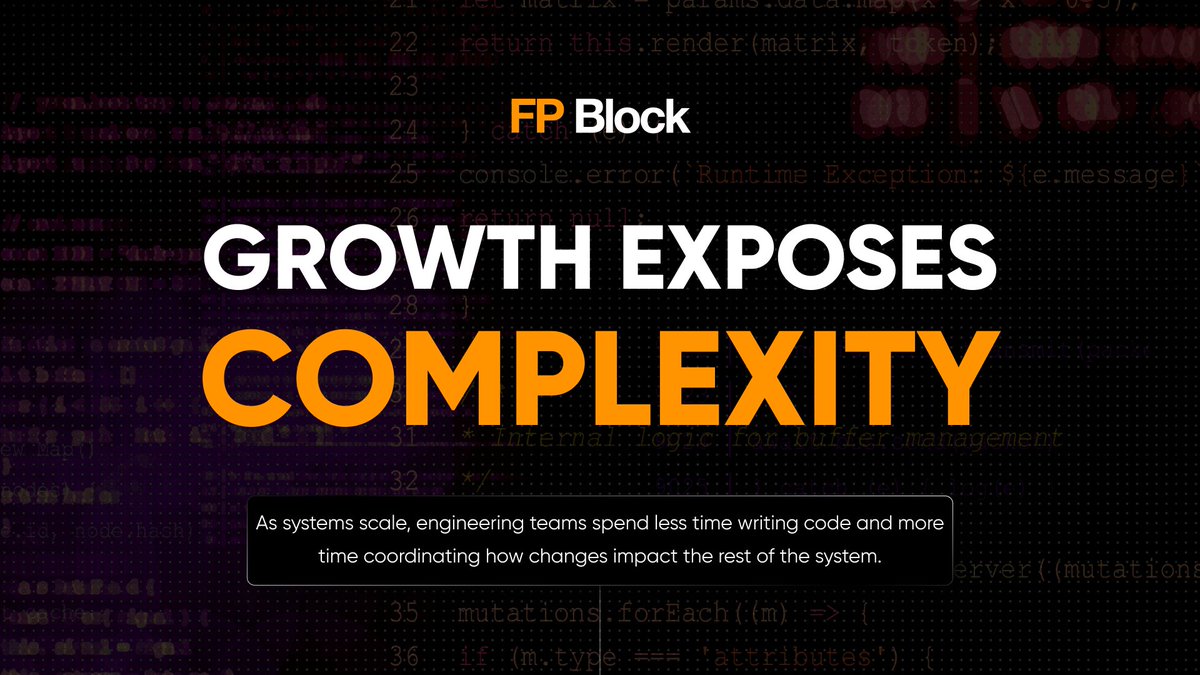
The bottleneck is shifting from creating software to managing the complexity that comes with it.
5
1
8
685
Building Web3 Products That Actually Scale x.com/i/broadcasts/1lJQRRejg…
2
44
6,885
FP Block retweeted

Jun 10
Everyone talks about scaling Web3.
Few talk about how to actually do it.
Join Genzio and @FP_Block live on June 11th at 10:00 AM EST as we break down what it takes to build Web3 products that scale.
Link coming soon.
10
7
33
1,918
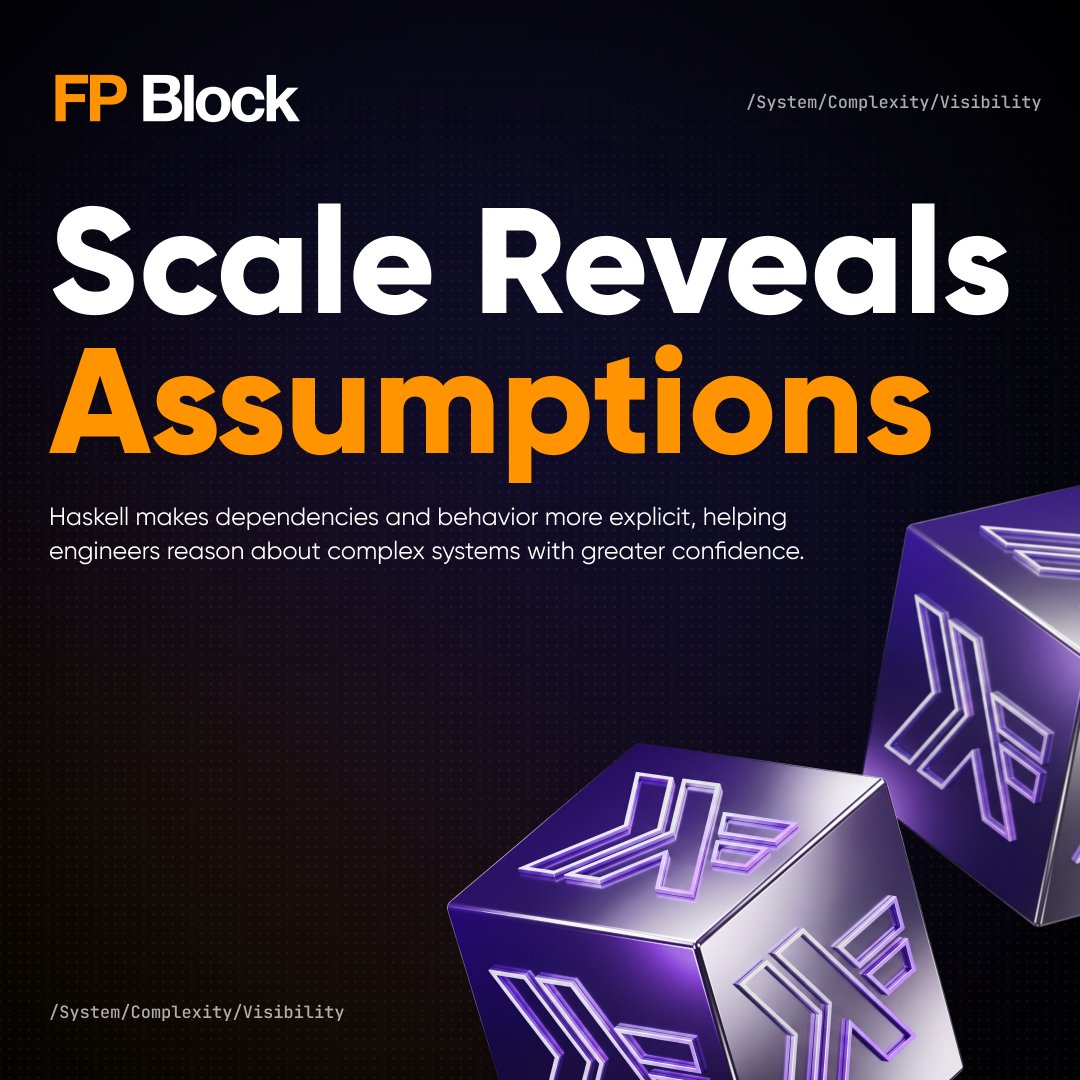
Most software gets harder to understand as it grows.
Because as the code gets bigger, the number of hidden assumptions grows with it.
One of the core ideas behind Haskell is making dependencies and behavior more explicit, so engineers can reason about systems with greater confidence as complexity increases.
293
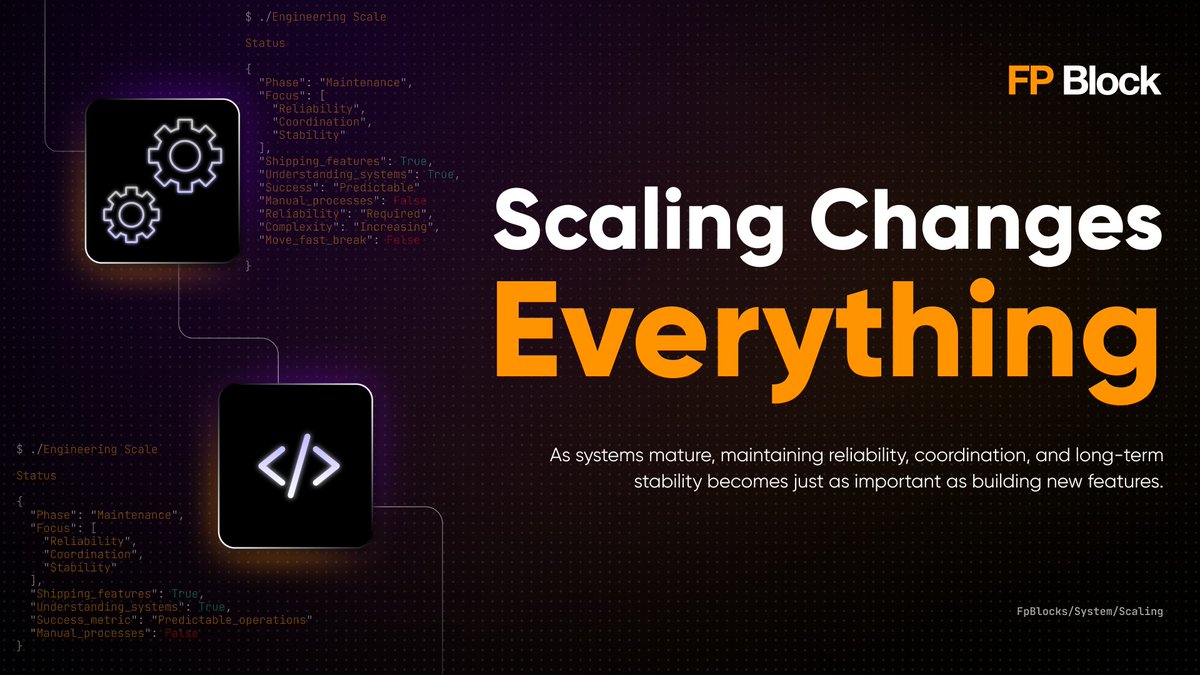
One of the hardest transitions for engineering teams is moving from building features to maintaining systems.
The skills are different.
The tradeoffs are different.
Even the definition of success starts to change.
What's been the biggest adjustment for your team as you've scaled?
5
1
31
1,080
A weird thing that happens as financial systems scale:
The hardest problems stop being purely technical.
They become problems around coordination, state consistency, permissions, workflows, and making sure every participant in the system behaves predictably.
That’s part of the engineering philosophy behind DAML and why these conversations matter more as blockchain infrastructure matures.
5
6
32
422
For decades, access to private companies has largely been limited to institutions, venture funds, and accredited investors.
Now we're seeing exchanges experiment with bringing that access on-chain through tokenized and synthetic exposure to private markets.
Coinbase's new SpaceX-linked pre-IPO market is another signal that the infrastructure around private assets is evolving quickly.
The interesting question isn't just whether investors want access.
It's what the underlying systems need to look like once private markets become more accessible, more liquid, and increasingly connected to digital asset infrastructure.
Read more here: cointelegraph.com/news/coinb…
7
7
28
853
A lot of teams enter Web3 assuming they’ll build on one chain and stay there long term.
In reality, infrastructure, liquidity, users, costs, and capabilities are spread across ecosystems that evolve constantly.
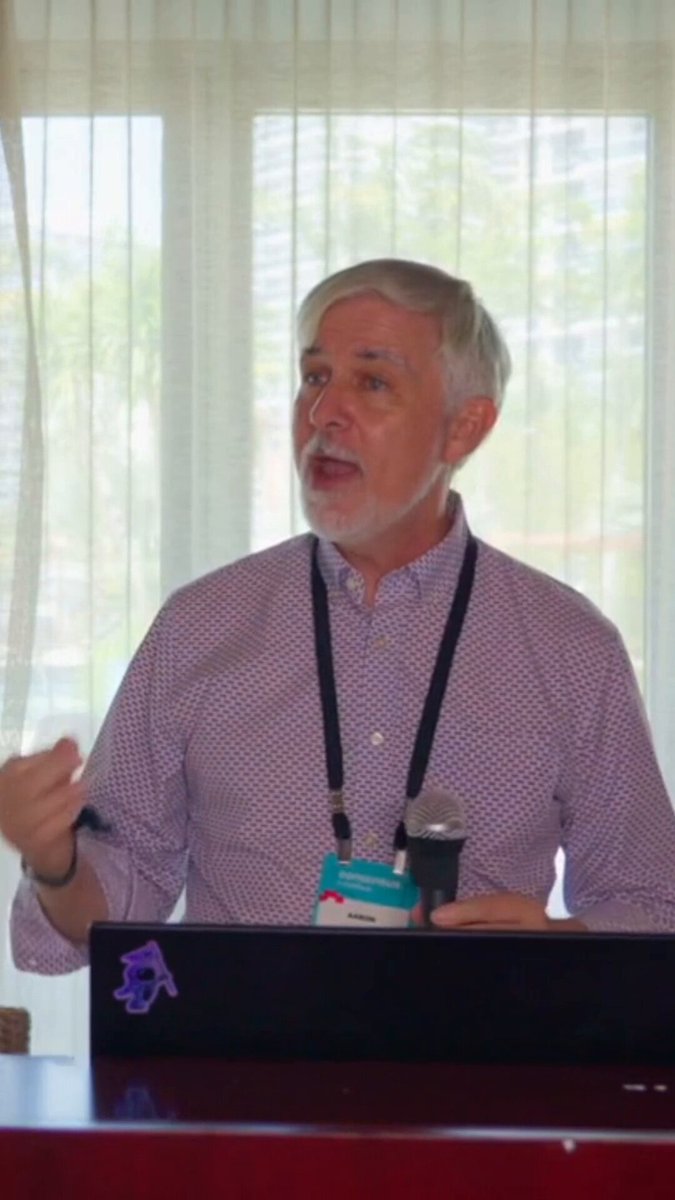
As Aaron Contorer explains here, that’s a big part of why multichain architecture and reusable infrastructure matter so much as systems mature.
The challenge is no longer just launching an application. It’s building one that can adapt as the environment around it changes.
6
10
1,533
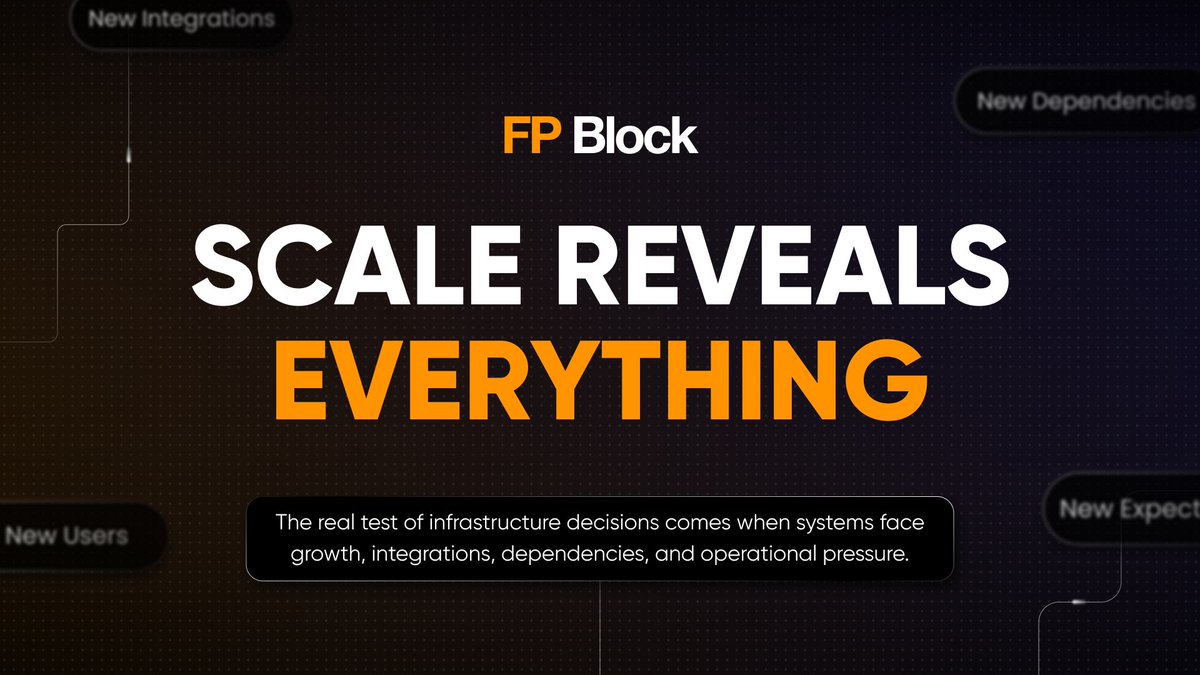
A lot of infrastructure decisions look smart at small scale.
The real test is whether they still make sense after:
✅ new users
✅ new integrations
✅ new dependencies
✅ new expectations
✅ new operational pressure
Most systems get judged under conditions they were never originally designed for.
292
Most developers use abstractions every day without ever seeing what’s underneath them.
One of the valuable things about Haskell is that it forces you to think much more carefully about:
▶️ evaluation
▶️ mutation
▶️ state
▶️ side effects
▶️ execution order
That changes how engineers reason about reliability once systems become large and interconnected.
5
9
30
1,075
One of the biggest shifts happening in Web3 infrastructure right now is moving away from constantly rebuilding the same systems from scratch.
As Aaron Contorer explains here, long-term scalability often comes down to how effectively teams can reuse proven software and infrastructure over time.
The teams that scale sustainably are usually not the ones rewriting everything every cycle. They’re the ones building systems that can evolve without rebuilding the foundation underneath them.
6
25
1,674
AI is producing a lot of plausible code right now.
That’s very different from producing reliable systems.
Something can look correct, run correctly a few times, and still introduce serious operational problems once real scale, edge cases, and infrastructure complexity enter the picture.
As AI speeds up development, engineering judgment becomes even more important.
5
23
861