I know everything about Tuco.
Joined September 2011
- Tweets 43,213
- Following 487
- Followers 572
- Likes 205,626
712 Photos and videos












Hoaxbuster retweeted

“israel we’re your biggest fans, please stop being mean to us!”

🚨 WOW! JD Vance is DIRECTLY calling out Israeli cabinet members for their personal attacks on President Trump
"Donald J. Trump is the ONLY head of state in the ENTIRE WORLD who is sympathetic to the nation of Israel at this moment in time, and he happens to be the head of state of the world superpower.
If I was in the cabinet of the Israeli government, I might not be attacking the only powerful ally that I have ANYWHERE left in the entire world."
"The other thing that I would say is that over the last 3 months, TWO-THIRDS of the defensive weapons that have protected your homeland have been built by AMERICAN HANDS and paid for by AMERICAN TAX DOLLARS.
The problem for Israel is not Donald J. Trump, and anybody in Israel who thinks their biggest problem is the President of the United States needs to WAKE UP and smell the reality of the situation that country is in."
3
9
93
2,144


Hoaxbuster retweeted

23h
It is made up. Only 1/5 of non-European migrants in the UK are Muslim, and of those, most are secular. You're a Tommytarded Jewish cats paw having your stupidity activated by the very Zionist regime replacing you.
12
10
179
3,167
Hoaxbuster retweeted
Jun 17
Here are the top five sources of immigrants to the UK in recent years: India, Nigeria, China, Pakistan, and Zimbabwe.
Out of these, only one is a Muslim country.
So you're being flooded with Asians and Africans, only a fraction of which practice Islam. Yet the British right wing can't help but frame the whole issue as one about Muslims, using data sourced from Sargon of Akkad's podcasting club that honestly looks completely made up.
The majority of British right wingers are funded by Jews and work for Israel, not the white British people. If you are interested in stopping the Great Replacement, this is not going to get you anywhere. It's Counter-Jihad all over again.
Jun 16

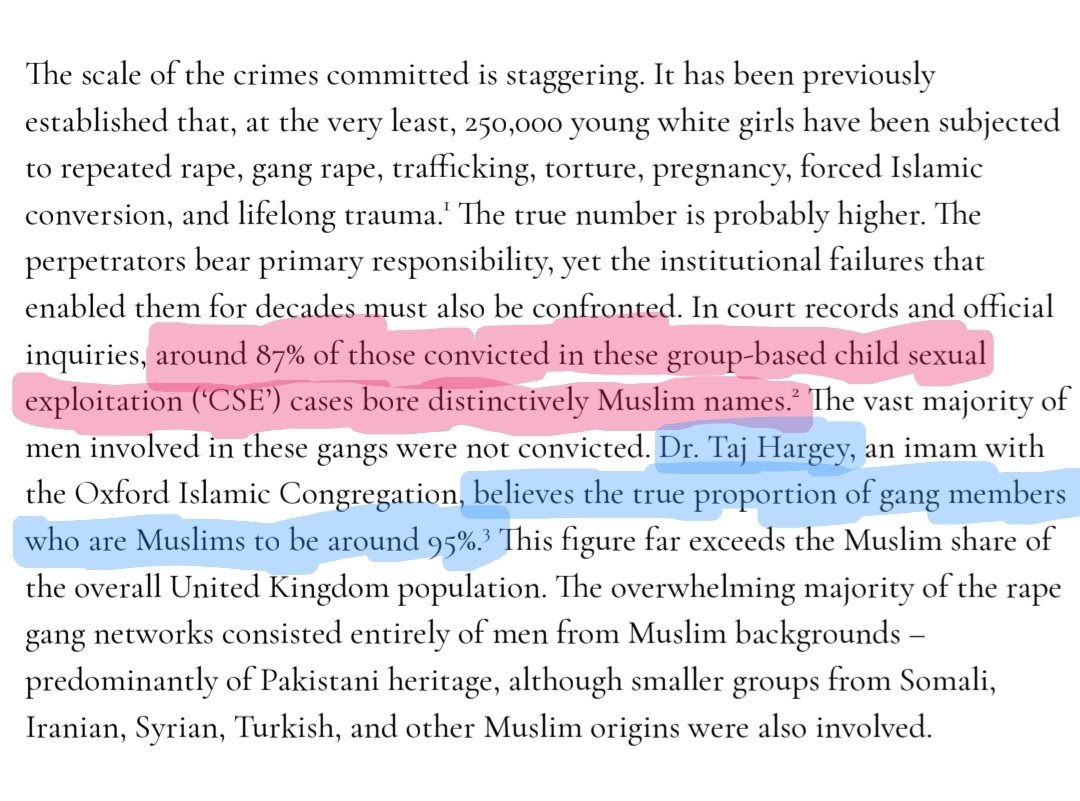
We finally have the number we've been waiting years to receive:
87 to 95% of the rape gang members were Muslims.
112
73
448
179,055
Hoaxbuster retweeted

Yes. I travel globally and every flight carrying Indians is absolutely clogged with wheelchairs at offload. They either have a diet that makes them weak and feeble or they're just scamming the system. Probably both.
Jun 17

One of the biggest scams going on at airports is Indians, who are perfectly capable of walking, are abusing the airport wheelchair service to skip long walks and get priority boarding
508
1,620
14,464
453,904
Hoaxbuster retweeted

Jun 17
This is why we must keep our guns
Jun 17

This man's daughter had been kidnapped and was being abused by a Pakistani rape gang
He tried to rescue her from the property she was being held at
British Police arrived and arrested HIM for trying to save his daughter
38
95
849
14,912
Hoaxbuster retweeted

Jan 13
The shortest possible history of ethnic Germans in the Russian Empire and USSR I could write. I have updated it to reflect recent census data from this decade.
The Russian Germans are the descendants of those German speakers from Central Europe who settled in the Russian Empire during the 18th and 19th centuries. It does not include the much older Baltic German population in Estland, Livland, and Kurland, present day Estonia and Latvia. The German immigrants that founded the various Russian German settlements came to the Russian Empire to take advantage of privileges and opportunities not available in their home states. The very large number of German communities in the Russian Empire differed significantly from each other in geographical settlement, confession and dialect. Russian German colonies existed along the Volga and Black Sea regions and in Central Russia, and later the Caucasus, Volhynia, Bessarabia, the Urals, Siberia and Central Asia. Both the Tsarist Russian and Soviet governments classified all of these settlers as “Germans,” even those descended from immigrants originating from Holland, Switzerland, Austria and France on the basis that they spoke a German dialect.
On 22 July 1763, Empress Catherine II issued a manifesto offering free transport to Russia, free land, freedom of religion, temporary exemption from taxes, local self government, interest free loans and permanent freedom from conscription to all Christian foreigners. The Russian government sent out agents and scouts to publicize this manifesto throughout Europe. Most of the foreigners taking up this offer came from the German speaking states of Central Europe. In particular, a large number of immigrants initially came to the Russian Empire from Hesse. The Seven Years War had meant high taxes, religious persecution and military conscription for them.
The Volga region of the Russian Empire near the city of Saratov contained the earliest and largest concentration of German settlers and their descendants. Responding to the invitation by Catherine II, between 1764 and 1774, over 23,000 settlers established 66 Lutheran and 38 Catholic colonies along the Volga River. This initial population would eventually grow to more than 600,000 people by the late 19th century.
The second large area of settlement for ethnic Germans in the Russian Empire appeared along the Black Sea region, in what is today southern Ukraine. The first settlements in Ukraine can be dated back to 1765 in the area near Kiev. Mennonites from West Prussia began settling the region in 1789. By 1810, nearly 18,000 Mennonites had settled in southern Ukraine. The devastation to the German speaking states of Central Europe caused by the Napoleonic Wars from 1804 to 1815 spurred a mass exodus eastward. The settlement of the Black Sea region by immigrants from Baden, Württemberg and Alsace continued to the late 1850s and involved over 100,000 people. Natural population growth increased the number of German colonists in the Black Sea region to over half a million people before the end of the Russian Empire.
The final large waves of German immigrants from Central Europe into the Russian Empire settled in Volhynia in what is today northwestern Ukraine. After the defeat of Napoleon, the Kingdom of Poland came under Russian rule. Known as Congress Poland, it had a large German population, many of whom later migrated to Volhynia. This region had earlier been annexed to the Russian Empire from Poland. The Volhynian Germans purchased land confiscated from Polish nobles by the Tsarist government following the Polish uprisings of 1830 and 1863. Between 1831 and 1880, over 170,000 German settlers from Poland and northern Germany arrived in Volhynia. After 1881, new German immigration into the Russian Empire remained very limited.
The land tenure system of the various German colonists varied dramatically depending upon where they settled. The initial settlements in the Volga moved to communal farming similar to the Russian mir. Here the German village elders periodically redistributed strips of land among the families in the colony on the basis of how many agricultural laborers they had. In the Black Sea colonies, individual families maintained ownership and farming of the land. These plots could not be subdivided and were usually inherited by the youngest son. The other sons had to purchase new lands to farm. In the Volga and Black Sea regions, the Russian Germans lived in closed settlements defined by confession. Each village centered on a single church and had a school. The Volhynian Germans in contrast purchased or more often leased individual households and farms mixed among the native population. Community ties among the Volhynian Germans thus tended to be much weaker than among most other German colonists.
The various German colonies in the Russian Empire generally prospered for most of the 19th century. During the 1870s, the Russian government revoked many of the privileges of the Russian German colonists and reduced them to the legal status of freed serfs. Combined with economic difficulties, this motivated considerable emigration to the Western hemisphere. Between 1874 and 1915, over 185,000 Russian Germans immigrated to the US alone. Many others migrated from the Volga and Black Sea regions to Asian areas of the Russian Empire. Mennonites from the Black Sea and Volga regions established the first Russian German settlements in Central Asia in 1882. Russian German Lutherans and Catholics as well as Mennonites later established other colonies in Kazakhstan, Central Asia, the Urals and Siberia. This migration grew rapidly in the early 20th century. By 1914, there were over 75,000 Russian Germans in Siberia alone. The situation of the Russian Germans reached a nadir during World War One, when the Tsarist regime deported some 200,000 Germans from Volhynia, Poland, Bessarabia and other western areas of the Russian Empire to the Volga and Siberia. Only the overthrow of the Tsarist government in February 1917 prevented the total dispossession of the Russian Germans.
During the 1920s, the Soviet government established a number of national administrative territories for the Russian Germans in order to support cultural institutions such as German language schools, media, publishing and arts. The largest and most important of these territories was the Volga German ASSR (Autonomous Soviet Socialist Republic). Originally founded as the Volga German Labor Commune on 19 October 1918, Moscow upgraded this administrative unit to an ASSR on 20 February 1924. This territory had a population of 366,685 Russian Germans by 1939. The Soviet government also created eleven smaller national districts in Ukraine, Crimea, the Kuban, Siberia and Azerbaijan for other Russian German communities. The mid and late 1920s were generally a period of cultural and economic growth for the Russian Germans.
During the 1930s, Soviet policies became increasingly repressive toward the Russian Germans. In 1930 and 1931, Russian-Germans made up a disproportionately large number of kulaks deported to special settlements during collectivization. In 1935 and 1936, the Soviet government deported German communities on the borders of Poland to eastern Ukraine and Kazakhstan. Finally, during 1937 and 1938 the NKVD (Peoples Commissariat or Internal Affairs – political police) launched a “German Operation” as part of the Great Terror. The “German Operation” accounted for 38,000 out of around 75,000 Russian Germans arrested and 29,000 out of around 46,000 Russian Germans executed during these years. Simultaneously, the Soviet government eliminated all German national districts and their institutions outside of the Volga German ASSR. The Stalin regime came to view the Russian-Germans as an internal enemy nation during the 1930s.
In the summer of 1941, following the Nazi attack on the USSR, the NKVD began the systematic deportation of the Russian German communities living in the European areas of the USSR to regions east of the Urals. In total, the Stalin regime forcibly relocated a recorded 799,459 Russian Germans from their homelands in the Volga, Ukraine, Caucasus, and other regions to Kazakhstan and Siberia by 1 January 1942. The NKVD classified the Russian German exiles as special settlers and confined them to restricted areas. They could not leave their assigned locality even for short periods of time without NKVD permission. The NKVD controlled their housing and work assignments and enforced a separate and unequal legal and administrative system upon them. The deported Russian Germans also suffered from severe material deprivation in Siberia and Kazakhstan. Large numbers perished from malnutrition, disease and exposure due to a lack of proper food, housing, clothing and medicine. The deportation ushered in a decade of misery for the Russian Germans.
During 1942 and 1943, the Stalin regime subjected the Russian Germans to additional forced relocation and forced labor. The NKVD transported over 50,000 Russian Germans from southern to northern Siberia to work in fishing camps. They also mobilized over 315,000 Russian German men and women into forced labor detachments to work in industrial construction, felling timber, coal mining and oil extraction in the Urals and other regions. Collectively known as the labor army (trudarmiia) these detachments employed the majority of the able bodied Russian German adult population. Over 182,000 of these individuals worked in Gulag camps and most of the rest in the commissariats of coal and oil under NKVD supervision. Hunger, unsanitary living conditions, and exhausting labor led to the death of around 60,000 to 70,000 Russian Germans conscripted into the labor army. The Soviet government began to dismantle the labor army in 1946. Those discharged from the labor army became reclassified as special settlers, but often remained attached to the same economic enterprises.
In 1945 and 1946, two other categories of Russian Germans came under special settlement restrictions. The first group consisted of 203,796 Russian Germans repatriated to the USSR from what had been Nazi controlled territory. The second group represented 105,817 of the 209,581 Russian Germans living east of the Urals before 1941. The Soviet government placed almost all the Russian Germans in Kazakhstan and Central Asia under special settlement restrictions. Only a little over 100,000 Russian-Germans in Siberia and the Urals remained outside this system.
The harsh conditions of deportation, exile and forced labor during the 1940s led to the premature death of around 245,000 Russian Germans. They remained under special settlement restrictions until after Stalin’s death. Only on 13 December 1955, did the Soviet regime remove the last Russian Germans from the special settler rolls. They could not, however, return home or receive compensation for lost property or suffering.
After World War II, the Soviet government refused to allow the Russian Germans to return to their previous areas of settlement. They continued to suffer from discrimination in education and employment due to their German ancestry. A lack of German schools and other institutions in a predominantly Russian language environment led to an increasing loss of the German language and culture among younger Russian Germans. From 1964 to 1967, a small movement composed of Russian German activists sought to lobby the Soviet government to recreate the Volga German ASSR. This movement, however, failed to achieve any substantial results. A more vigorous movement to address the problems of continued discrimination and acculturation arose in 1972. The proposed solution of this movement was emigration out of the USSR and settlement in West Germany.
The movement of Russian Germans to leave the USSR and settle in Germany had limited success until 1987. Pressure by Russian-German activists and the West German government only managed to convince the Soviet regime to allow the emigration of 63,204 people between 1971 and 1980. From 1981 to 1986, the Soviets only allowed 9,417 Russian Germans to emigrate. On 1 January 1987, Mikhail Gorbachev repealed all restrictions on emigrating out of the USSR. Since this time more than two million Russian Germans and their family members have left the USSR and its successor states and settled in Germany. New restrictions passed by the German government on 1 January 2005 later reduced Russian German migration from the former USSR to Germany to only a few thousand a year. Attrition of deaths of old people exceeding births have continued to reduce the ethnic German population in Russia. The 2010 Russian census listed nearly 400,000 ethnic Germans. The 2021 census recorded about half that many. In Kazakhstan in contrast the population grew from 178,000 in 2009 to 226,000 in 2021 due to both natural population growth and people of mixed heritage switching their identification from Russian to German.
The Russian Germans have lived in the territory of the former Russian Empire now for nearly two and a half centuries. During this time they experienced both prosperity and extreme repression. This repression reached its height during World War Two with the mass deportation of the Russian Germans to Kazakhstan and Siberia. This experience greatly alienated the Russian-Germans from the Soviet regime. This alienation led to a massive emigration out of the Soviet Union to Germany when the opportunity presented itself in the late 1980s. Less than a quarter of the 1989 population remains in the Russian Federation and Kazakhstan.
Bibliography
Auman, V.A. and Chebotareva, V.G., eds. 1993. Istoriia rossiiskikh nemtsev v dokumentakh (1763-1992 gg.). Moscow: MIGP.
Berdinskikh, V.A. 2005. Spetsposelentsy: Politcheskaia ssylka narodov Sovetskoi Rossii. Moscow. Novoe literaturnoe obozrenie.
Bugai, N.F., ed., 1992. Iosif Stalin – Lavrentiiu Berii: “Ikh nado deportirovat’” Dokumenty, fakty, kommentarii. Moscow: Druzhba narodov.
Bugai, N.F., ed. 1998. “Mobilizovat’ nemtsev v rabochie kolonny…I. Stalin”: Sbornik dokumentov (1940-40-e gody) Moscow: Gotika.
Eisfeld, Alfred. 2003. Die Aussiedlung der Deutschen aus der Wolgarepublik 1941-1957. Munich: Osteuropa-Institute.
Kabuzan, V.M. 2003. Nemetskoiazychnoe naslenie v rossiiskoi imperii I SSSR v xviii-xx vekakh (1719-1989 gg) istoriko-staticheskoe issledovanie. Moscow: RAN.
Krieger, Viktor, et al. 2006. Deutsche aus Russland gestern und heute: Volk auf dem Weg. Stuttgart: Landsmannschaft der Deutschen aus Russland.
German, A.A. and Kurochkin, A.N. 1998. Nemtsy SSSR v trudovoi armii (1941-1955). Moscow: Gotika.
Okhotin, N. and Roginskii, A. 1999. ‘Iz istorii ‘nemtskoi operatsii’ NKVD 1937-1938 gg.’ In I.L. Schcherbakova. (ed.), Nakazannye narod: Repressi protiv rossiiskikh nemtsev. Moscow: ‘Zve’ia.’
Stricker, Gerd. 2000. ‘Ethnic Germans in Russia and the Former Soviet Union’ In Stefan Wolff (ed.), German Minorities in Europe: Identity and Cultural Belonging. NY: Berghahn Books.
6
26
179
10,512
Hoaxbuster retweeted
Both Manifesto Day (July 22nd) and the Day of Remembrance for the WWII genocide against the ethnic Germans in the USSR (August 28th) are coming up soon. I am thinking of maybe organizing some events locally, but I do not think there would be any interest even with free food.
Jan 13

The shortest possible history of ethnic Germans in the Russian Empire and USSR I could write. I have updated it to reflect recent census data from this decade.
The Russian Germans are the descendants of those German speakers from Central Europe who settled in the Russian Empire during the 18th and 19th centuries. It does not include the much older Baltic German population in Estland, Livland, and Kurland, present day Estonia and Latvia. The German immigrants that founded the various Russian German settlements came to the Russian Empire to take advantage of privileges and opportunities not available in their home states. The very large number of German communities in the Russian Empire differed significantly from each other in geographical settlement, confession and dialect. Russian German colonies existed along the Volga and Black Sea regions and in Central Russia, and later the Caucasus, Volhynia, Bessarabia, the Urals, Siberia and Central Asia. Both the Tsarist Russian and Soviet governments classified all of these settlers as “Germans,” even those descended from immigrants originating from Holland, Switzerland, Austria and France on the basis that they spoke a German dialect.
On 22 July 1763, Empress Catherine II issued a manifesto offering free transport to Russia, free land, freedom of religion, temporary exemption from taxes, local self government, interest free loans and permanent freedom from conscription to all Christian foreigners. The Russian government sent out agents and scouts to publicize this manifesto throughout Europe. Most of the foreigners taking up this offer came from the German speaking states of Central Europe. In particular, a large number of immigrants initially came to the Russian Empire from Hesse. The Seven Years War had meant high taxes, religious persecution and military conscription for them.
The Volga region of the Russian Empire near the city of Saratov contained the earliest and largest concentration of German settlers and their descendants. Responding to the invitation by Catherine II, between 1764 and 1774, over 23,000 settlers established 66 Lutheran and 38 Catholic colonies along the Volga River. This initial population would eventually grow to more than 600,000 people by the late 19th century.
The second large area of settlement for ethnic Germans in the Russian Empire appeared along the Black Sea region, in what is today southern Ukraine. The first settlements in Ukraine can be dated back to 1765 in the area near Kiev. Mennonites from West Prussia began settling the region in 1789. By 1810, nearly 18,000 Mennonites had settled in southern Ukraine. The devastation to the German speaking states of Central Europe caused by the Napoleonic Wars from 1804 to 1815 spurred a mass exodus eastward. The settlement of the Black Sea region by immigrants from Baden, Württemberg and Alsace continued to the late 1850s and involved over 100,000 people. Natural population growth increased the number of German colonists in the Black Sea region to over half a million people before the end of the Russian Empire.
The final large waves of German immigrants from Central Europe into the Russian Empire settled in Volhynia in what is today northwestern Ukraine. After the defeat of Napoleon, the Kingdom of Poland came under Russian rule. Known as Congress Poland, it had a large German population, many of whom later migrated to Volhynia. This region had earlier been annexed to the Russian Empire from Poland. The Volhynian Germans purchased land confiscated from Polish nobles by the Tsarist government following the Polish uprisings of 1830 and 1863. Between 1831 and 1880, over 170,000 German settlers from Poland and northern Germany arrived in Volhynia. After 1881, new German immigration into the Russian Empire remained very limited.
The land tenure system of the various German colonists varied dramatically depending upon where they settled. The initial settlements in the Volga moved to communal farming similar to the Russian mir. Here the German village elders periodically redistributed strips of land among the families in the colony on the basis of how many agricultural laborers they had. In the Black Sea colonies, individual families maintained ownership and farming of the land. These plots could not be subdivided and were usually inherited by the youngest son. The other sons had to purchase new lands to farm. In the Volga and Black Sea regions, the Russian Germans lived in closed settlements defined by confession. Each village centered on a single church and had a school. The Volhynian Germans in contrast purchased or more often leased individual households and farms mixed among the native population. Community ties among the Volhynian Germans thus tended to be much weaker than among most other German colonists.
The various German colonies in the Russian Empire generally prospered for most of the 19th century. During the 1870s, the Russian government revoked many of the privileges of the Russian German colonists and reduced them to the legal status of freed serfs. Combined with economic difficulties, this motivated considerable emigration to the Western hemisphere. Between 1874 and 1915, over 185,000 Russian Germans immigrated to the US alone. Many others migrated from the Volga and Black Sea regions to Asian areas of the Russian Empire. Mennonites from the Black Sea and Volga regions established the first Russian German settlements in Central Asia in 1882. Russian German Lutherans and Catholics as well as Mennonites later established other colonies in Kazakhstan, Central Asia, the Urals and Siberia. This migration grew rapidly in the early 20th century. By 1914, there were over 75,000 Russian Germans in Siberia alone. The situation of the Russian Germans reached a nadir during World War One, when the Tsarist regime deported some 200,000 Germans from Volhynia, Poland, Bessarabia and other western areas of the Russian Empire to the Volga and Siberia. Only the overthrow of the Tsarist government in February 1917 prevented the total dispossession of the Russian Germans.
During the 1920s, the Soviet government established a number of national administrative territories for the Russian Germans in order to support cultural institutions such as German language schools, media, publishing and arts. The largest and most important of these territories was the Volga German ASSR (Autonomous Soviet Socialist Republic). Originally founded as the Volga German Labor Commune on 19 October 1918, Moscow upgraded this administrative unit to an ASSR on 20 February 1924. This territory had a population of 366,685 Russian Germans by 1939. The Soviet government also created eleven smaller national districts in Ukraine, Crimea, the Kuban, Siberia and Azerbaijan for other Russian German communities. The mid and late 1920s were generally a period of cultural and economic growth for the Russian Germans.
During the 1930s, Soviet policies became increasingly repressive toward the Russian Germans. In 1930 and 1931, Russian-Germans made up a disproportionately large number of kulaks deported to special settlements during collectivization. In 1935 and 1936, the Soviet government deported German communities on the borders of Poland to eastern Ukraine and Kazakhstan. Finally, during 1937 and 1938 the NKVD (Peoples Commissariat or Internal Affairs – political police) launched a “German Operation” as part of the Great Terror. The “German Operation” accounted for 38,000 out of around 75,000 Russian Germans arrested and 29,000 out of around 46,000 Russian Germans executed during these years. Simultaneously, the Soviet government eliminated all German national districts and their institutions outside of the Volga German ASSR. The Stalin regime came to view the Russian-Germans as an internal enemy nation during the 1930s.
In the summer of 1941, following the Nazi attack on the USSR, the NKVD began the systematic deportation of the Russian German communities living in the European areas of the USSR to regions east of the Urals. In total, the Stalin regime forcibly relocated a recorded 799,459 Russian Germans from their homelands in the Volga, Ukraine, Caucasus, and other regions to Kazakhstan and Siberia by 1 January 1942. The NKVD classified the Russian German exiles as special settlers and confined them to restricted areas. They could not leave their assigned locality even for short periods of time without NKVD permission. The NKVD controlled their housing and work assignments and enforced a separate and unequal legal and administrative system upon them. The deported Russian Germans also suffered from severe material deprivation in Siberia and Kazakhstan. Large numbers perished from malnutrition, disease and exposure due to a lack of proper food, housing, clothing and medicine. The deportation ushered in a decade of misery for the Russian Germans.
During 1942 and 1943, the Stalin regime subjected the Russian Germans to additional forced relocation and forced labor. The NKVD transported over 50,000 Russian Germans from southern to northern Siberia to work in fishing camps. They also mobilized over 315,000 Russian German men and women into forced labor detachments to work in industrial construction, felling timber, coal mining and oil extraction in the Urals and other regions. Collectively known as the labor army (trudarmiia) these detachments employed the majority of the able bodied Russian German adult population. Over 182,000 of these individuals worked in Gulag camps and most of the rest in the commissariats of coal and oil under NKVD supervision. Hunger, unsanitary living conditions, and exhausting labor led to the death of around 60,000 to 70,000 Russian Germans conscripted into the labor army. The Soviet government began to dismantle the labor army in 1946. Those discharged from the labor army became reclassified as special settlers, but often remained attached to the same economic enterprises.
In 1945 and 1946, two other categories of Russian Germans came under special settlement restrictions. The first group consisted of 203,796 Russian Germans repatriated to the USSR from what had been Nazi controlled territory. The second group represented 105,817 of the 209,581 Russian Germans living east of the Urals before 1941. The Soviet government placed almost all the Russian Germans in Kazakhstan and Central Asia under special settlement restrictions. Only a little over 100,000 Russian-Germans in Siberia and the Urals remained outside this system.
The harsh conditions of deportation, exile and forced labor during the 1940s led to the premature death of around 245,000 Russian Germans. They remained under special settlement restrictions until after Stalin’s death. Only on 13 December 1955, did the Soviet regime remove the last Russian Germans from the special settler rolls. They could not, however, return home or receive compensation for lost property or suffering.
After World War II, the Soviet government refused to allow the Russian Germans to return to their previous areas of settlement. They continued to suffer from discrimination in education and employment due to their German ancestry. A lack of German schools and other institutions in a predominantly Russian language environment led to an increasing loss of the German language and culture among younger Russian Germans. From 1964 to 1967, a small movement composed of Russian German activists sought to lobby the Soviet government to recreate the Volga German ASSR. This movement, however, failed to achieve any substantial results. A more vigorous movement to address the problems of continued discrimination and acculturation arose in 1972. The proposed solution of this movement was emigration out of the USSR and settlement in West Germany.
The movement of Russian Germans to leave the USSR and settle in Germany had limited success until 1987. Pressure by Russian-German activists and the West German government only managed to convince the Soviet regime to allow the emigration of 63,204 people between 1971 and 1980. From 1981 to 1986, the Soviets only allowed 9,417 Russian Germans to emigrate. On 1 January 1987, Mikhail Gorbachev repealed all restrictions on emigrating out of the USSR. Since this time more than two million Russian Germans and their family members have left the USSR and its successor states and settled in Germany. New restrictions passed by the German government on 1 January 2005 later reduced Russian German migration from the former USSR to Germany to only a few thousand a year. Attrition of deaths of old people exceeding births have continued to reduce the ethnic German population in Russia. The 2010 Russian census listed nearly 400,000 ethnic Germans. The 2021 census recorded about half that many. In Kazakhstan in contrast the population grew from 178,000 in 2009 to 226,000 in 2021 due to both natural population growth and people of mixed heritage switching their identification from Russian to German.
The Russian Germans have lived in the territory of the former Russian Empire now for nearly two and a half centuries. During this time they experienced both prosperity and extreme repression. This repression reached its height during World War Two with the mass deportation of the Russian Germans to Kazakhstan and Siberia. This experience greatly alienated the Russian-Germans from the Soviet regime. This alienation led to a massive emigration out of the Soviet Union to Germany when the opportunity presented itself in the late 1980s. Less than a quarter of the 1989 population remains in the Russian Federation and Kazakhstan.
Bibliography
Auman, V.A. and Chebotareva, V.G., eds. 1993. Istoriia rossiiskikh nemtsev v dokumentakh (1763-1992 gg.). Moscow: MIGP.
Berdinskikh, V.A. 2005. Spetsposelentsy: Politcheskaia ssylka narodov Sovetskoi Rossii. Moscow. Novoe literaturnoe obozrenie.
Bugai, N.F., ed., 1992. Iosif Stalin – Lavrentiiu Berii: “Ikh nado deportirovat’” Dokumenty, fakty, kommentarii. Moscow: Druzhba narodov.
Bugai, N.F., ed. 1998. “Mobilizovat’ nemtsev v rabochie kolonny…I. Stalin”: Sbornik dokumentov (1940-40-e gody) Moscow: Gotika.
Eisfeld, Alfred. 2003. Die Aussiedlung der Deutschen aus der Wolgarepublik 1941-1957. Munich: Osteuropa-Institute.
Kabuzan, V.M. 2003. Nemetskoiazychnoe naslenie v rossiiskoi imperii I SSSR v xviii-xx vekakh (1719-1989 gg) istoriko-staticheskoe issledovanie. Moscow: RAN.
Krieger, Viktor, et al. 2006. Deutsche aus Russland gestern und heute: Volk auf dem Weg. Stuttgart: Landsmannschaft der Deutschen aus Russland.
German, A.A. and Kurochkin, A.N. 1998. Nemtsy SSSR v trudovoi armii (1941-1955). Moscow: Gotika.
Okhotin, N. and Roginskii, A. 1999. ‘Iz istorii ‘nemtskoi operatsii’ NKVD 1937-1938 gg.’ In I.L. Schcherbakova. (ed.), Nakazannye narod: Repressi protiv rossiiskikh nemtsev. Moscow: ‘Zve’ia.’
Stricker, Gerd. 2000. ‘Ethnic Germans in Russia and the Former Soviet Union’ In Stefan Wolff (ed.), German Minorities in Europe: Identity and Cultural Belonging. NY: Berghahn Books.
1
1
12
584
RT @FromKulak: @Donna_Rachel_ Not a coincidence.
One ethnicity is more over-represented than even Pakistanis in world sex-trafficking crim…
72
Hoaxbuster retweeted

Black man was blasting his music on his phone in the waiting room of the doctors office.
White woman calls him out for it and ask him to turn it down and he freaks out!
He even went as far as to say he would have his girlfriend beat her up.
Regular folks are fed up with this!

White woman goes off on a black man for disruptively playing music in the waiting room of a doctor’s office, and he threatens to have her beaten up.
“You don’t know how to act in public. You’re like 50 years old.”
4,482
14,322
92,233
3,359,257
Hoaxbuster retweeted

Lukashenko stated that the Jewish lobby deceived Putin and stopped Russia from achieving a quick victory in Ukraine.
Russian forces were already in Kiev when jews demanded a withdrawal, promising a 'peace deal'.
13
58
329
12,184
Imagine thinking America is still an intellectual powerhouse.
A mere 400 applications is really nothing. I applied to over 3000 assistant professor positions in the US and only got six interviews and no job during the last 20 years. Applications have not mattered for any jobs worth having in decades. Nor has merit. Everything is nepotism.
1
66
Hoaxbuster retweeted

Jun 17
Horses are the most interesting animals.
33
554
7,899
382,565
Hoaxbuster retweeted
Jun 17
When his friend falls, this donkey lies down to hug him & waits for him to get up. Every being has a degree of understanding & knows kindness.
10
97
667
89,805

Jun 17
A perfect description of paranoia, self-delusion, and supremacism as group evolutionary strategies.
Jun 16

Tonight, 1,500 Zionist Jews gathered in NYC and raised $20 million for life-saving services in Israel. The louder the anti-Zionists get, the stronger and more united we become 💪🏻🇮🇱

9
Hoaxbuster retweeted

Jun 16
Tonight, 1,500 Zionist Jews gathered in NYC and raised $20 million for life-saving services in Israel. The louder the anti-Zionists get, the stronger and more united we become 💪🏻🇮🇱
3
31
121
1,855
Jun 17
The Holocaust narrative has contributed to or caused the decline of Jewish people through intermarriage and other maladaptive (from a group evolutionary standpoint) behaviors, yet they cling to it.
Jun 17

The author of this book weaves together five compelling and interrelated narratives. The book’s main concern is to present the world’s first unauthorized biography of Elie Wiesel. It shines the light of truth on the mythomaniac who, in the 1970s, transformed the word “Holocaust” and made it the brand name of the world’s greatest hoax: the unfounded claim by an extremist segment of World Jewry to the effect that the German government’s wartime policy of territorial transfer of Europe’s Jews out of the Reich was in actuality an “extermination program.” In these pages, both Wiesel’s personal deceits and the whole myth of “the six million” are mercilessly exposed and laid bare for the reader’s perusal. Unfortunately, Zionist control of the U.S. Government as well as the nation’s media and academic apparatus has allowed Wiesel and his fellow extremists to force a string of U.S. presidents to genuflect before this imposter as symbolic acts of subordination to World Jewry, while simultaneously forcing U.S. school children to submit to Holocaust brainwashing by their teachers.
The second strand involves close readings of several of Wiesel’s published texts, with emphasis on his alleged “autobiography,” the novel Night. The author demonstrates Wiesel’s appalling ignorance of both the physical details and layouts of the Auschwitz and Buchenwald camps, and this ignorance also extends to German administrative protocols and procedures. Amazingly, the novel’s chronology of the events said to have “really happened” in the author’s life is also disjointed, confusing and internally contradictory. The author also shows the role played by the meme of “retroactive continuity” in the telling of the Holocaust story.
The third strand involves an historical account of the rise of Holocaust revisionism mainly in the U.S. and France in response to the many obvious lies contained in the Jewish Holocaust narrative. From the sudden appearance of the revisionist work of Profs. Butz and Faurisson in the 1970s, through the Zündel trials of the 1980s, to the work of contemporary revisionists like Bradley R. Smith, Germar Rudolf, Carlo Mattogno, Thomas Kues and others today, this study shows, through the words of the Holocaustian extremists themselves, how effective the revisionists have been in demolishing their lies.
The fourth strand shows how certain ambitious and unscrupulous U.S. Catholic intellectuals have hitched a ride on the Holocaust bandwagon as a means of advancing their careers. Ritual denunciation of the alleged “silence” of Pope Pius XII is unfortunately very much a part of this behavior.
Finally, the fifth strand concerns all those U.S. Jews, young and old, who have been turned off by one or another aspect of the Holocaust story and its use within the U.S. Jewish community, but who never criticize it openly for non-Jewish ears. As for younger U.S. Jews, Rabbi Jacob Neusner has been pointing out for years that it has not kept them Jewish. What he calls the “Holocaust and Redemption” cult within U.S. Jewry has contributed to a pronounced abandonment of Jewish identity through intermarriage with non-Jews at percentages never before seen or even imagined.
This title is available from ARMREG:
armreg.us/product/elie-wiese…

1
2
32
Hoaxbuster retweeted

We can build a beautiful world together — but it begins with prioritizing the White Anglo peoples whose language, laws, and culture have become the global hallmark of civilization. Yet their birthrates have collapsed and their numbers are plummeting toward extinction in their own ancestral homelands.
We must immediately end all further migration into White nations and make the explicit priority the rebuilding of White Anglo numbers as an endangered race and people.
The government and complicit Jewish media are responsible for this, so the change must be brought by the people. For the government and media are the ones who created this problem.
5
6
26
1,494
Hoaxbuster retweeted

Jun 15
Jews spend their entire existence trying to find ways to fool their god.
220
489
4,720
125,438
Hoaxbuster retweeted
The proposal suggested that they kill the inmates that couldn't be fed instead of letting them starve to death as seen on point 4. The internet holocaust affirmer tried to represent this point as evidence of homicidal gas chambers.
1
1
6
65