
Visionary. Blue sky thinker. Cult member.
Joined December 2016
- Tweets 7,334
- Following 352
- Followers 625
- Likes 18,948
995 Photos and videos
















Pinned Tweet

26 Apr 2023
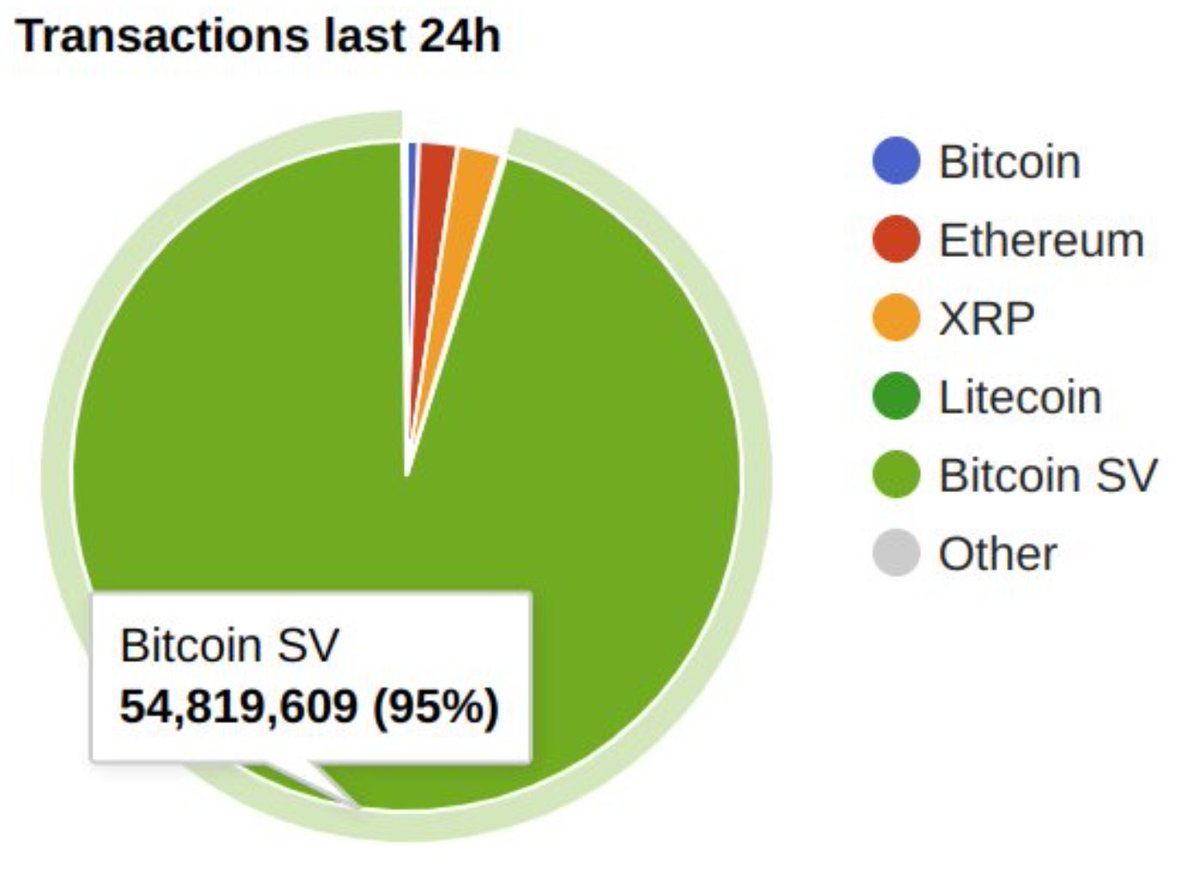
#Bitcoin can be a green technology💚.
How?
You scale it massively.
It's as if someone made a gasoline engine that nets you a 5 million mile range per tank. All of a sudden it'd be the greenest tech on earth.
8
14
57
6,001
I talk about Bitcoin and some strange female accounts start following me. That's my future death by kidnapping isn't it
1
31
Phil Fast retweeted

Intrinsic value is not bestowed by rhetoric; it is earned in use.
Even fiat, miserable creature that it is, can pay taxes, settle bills, and buy coffee. BTC cannot. Lightning does not scale. BTC does not scale.
A system that cannot be deployed, exchanged, or used at scale is not money. It is a glass ornament in a burning bank.
2
10
43
935
Phil Fast retweeted
Imagine the severe inability to think required to call BTC “the most decentralized system ever” while missing the obvious point.
Decentralization is about control and governance.
And BTC governance is not decentralized.
Three people control the GitHub keys. That is not a grand political philosophy. That is not a revolution. That is three gatekeepers with commit access and a mob pretending not to notice.
If you cannot work that one out, I am genuinely sorry for your lack of intelligence.
Jun 12

Bears: "$45K first."
Bulls: "bottom is in."
Both: "then six figures."
The entire argument is a 20% move everyone plans to buy.
The agreement is the 100% after.
BTC price: $63,500
4
22
88
3,283
Jun 10
You need to study Bitcoin Core (BTC) for at least 10,000 quadrillion million billion hours to understand its value proposition which is it's actually a naked emperor.
1
2
37

May 31
A mind in turmoil is busy trying to deal with the turmoil. In this state it will be more difficult to intentionally steer focus and attention.
Often the turmoil is near invisible - subconscious.
Bringing safety and peace to your mind is the fertile soil in which focus can rise.
1
27
May 30
Crazy how Satoshi named himself after the smallest Bitcoin unit, how did he know?
1
5
234
May 29
The simple Bitcoin value proposition nobody told you:
Take the transaction fees of VISA, Mastercard etc, which btw are a lot, then reduce them by like 99% by using Bitcoin instead and voila you saved a looot of money.
Oh and BTC can't do that, cause it's not Bitcoin.
Byeeee :)
43
Phil Fast retweeted
BTC is not TCP/IP. The comparison has the elegance of a silk waistcoat placed upon a scarecrow.
TCP/IP endured because it became the working grammar of networks. It scaled because it was designed as an internetworking architecture. Its layers are actual protocol layers: IP, TCP, UDP, routing, transport, application interfaces, all functioning inside a coherent communications stack. TCP did not survive because speculators admired it. It survived because machines used it.
BTC has not achieved anything analogous. It is not widely used as a cash system. It does not scale on-chain. It survives through market lock-in, not technical supremacy. That makes it less like TCP/IP and rather more like DECnet: once impressive, once installed, once defended by incumbents, and then increasingly a monument to yesterday’s architecture.
Nor does TCP/IP suffer from BTC’s governance theatre. TCP is stable in the meaningful sense: the core protocol does not require committees of priestly maintainers to reinterpret its purpose every few years while pretending the altar has never moved. Its stability is functional. BTC’s alleged stability is political. One is engineering; the other is etiquette among custodians of constraint.
And “layers” in BTC are not layers in the network sense. They are external systems built around an incapacity. IP layers are part of the communications architecture. BTC “layers” are workarounds, side arrangements, liquidity contraptions, trusted intermediations, and accounting systems that exist because the base system cannot do the work it was meant to do.
A better system does not “replace the internet” because the internet is not a speculative asset. It is a protocol substrate. BTC is not such a substrate. It is a restricted settlement token with a branding department and a congregation.
The internet won because it connected the world. BTC has spent years explaining why it need not.
7
14
85
1,636
Phil Fast retweeted
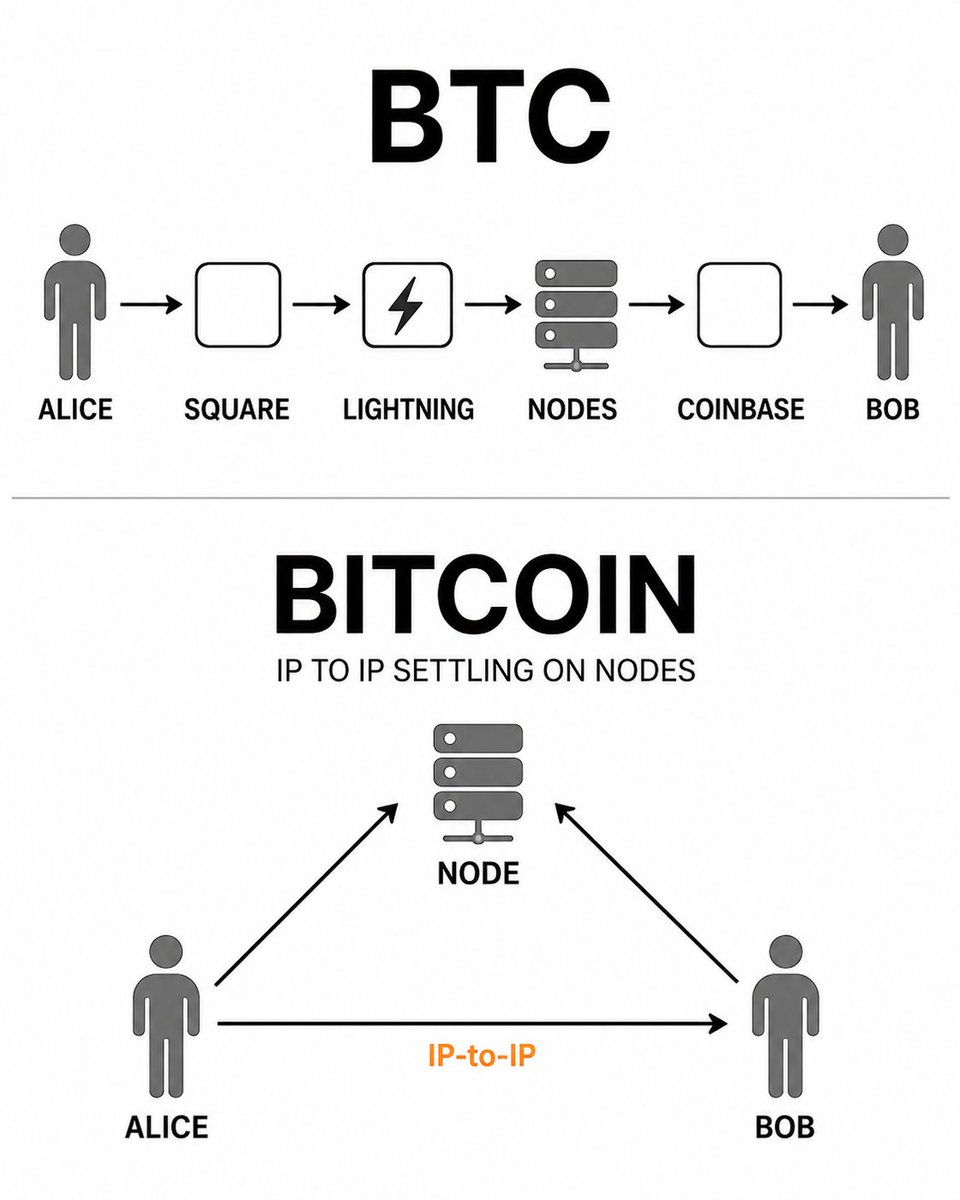
Yes... but BTC is not like bitcoin.
9
109
314
6,812
May 12
Nobody ever really explained to @PeterSchiff where Bitcoins value is supposed to come from.
Count up all the fees that are added by using the likes of VISA, slash them by like two magnitudes at least. That's the money Bitcoin can save.
BTC can't do that however.
1
4
154
May 10
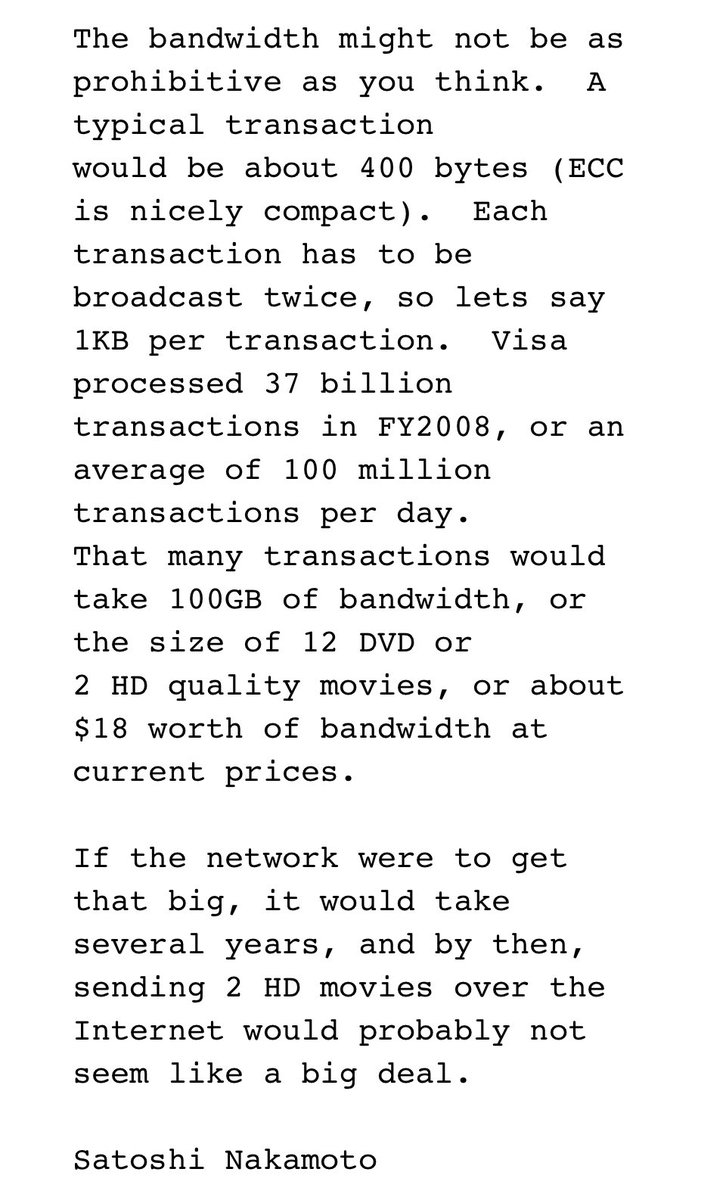
More compute is always the answer, after all that's what makes humans so smart, right? Right...?
25

May 8
It's simple and it's true. To believe in BTC you gotta be brain washed, ignorant or flat out dumb.

You really have not been keeping up.
BTC is crippled because it deliberately constrained throughput and then built a theology around its own limitations. That is not “Bitcoin.” That is an ideological fork preserving artificial scarcity while calling stagnation a virtue.
Actual Bitcoin scaling research has already demonstrated laboratory testing approaching a billion transactions per second, with existing live systems operating in the millions to tens of millions of transactions per second range under parallelised architectures and high-throughput transaction processing conditions.
So the “Bitcoin is slow” line increasingly sounds like a man standing beside a modern data centre triumphantly announcing that steam locomotives are inefficient.
The problem is not the protocol concept. The problem is BTC’s refusal to scale on-chain while pretending that deliberately throttling transaction capacity somehow represents engineering sophistication rather than self-inflicted impairment.
And the speedometer analogy only deepens the confusion. A speedometer measures output performance of the vehicle actually being driven. BTC enthusiasts, meanwhile, smashed the engine with a hammer in 2017 and now spend their days proudly explaining why the car was always meant to be parked permanently in a museum.
Bitcoin was designed as a scalable electronic cash system. Crippling capacity and then declaring throughput unnecessary is rather like building an ocean liner and afterwards insisting crossing water was never the point.
1
3
11
730
Phil Fast retweeted
The modern cult of the “node” is rather charming. Like watching a child put on a policeman’s hat and declare himself the state.
No. It is miners.
The only nodes that matter are the miners because they are the only systems propagating transactions and blocks across the network. Everything reaches them first. The rest sit downstream like old women peering through curtains pretending they run the city because they own binoculars.
Call them pools if it makes the marketing department feel warm and democratic. There are still only around a dozen actual coordinating entities in BTC producing and propagating blocks. Those are the nodes. Those are the machines enforcing consensus in practice.
The so-called “validators” do not propagate. They do not create blocks. They do not relay competing histories to the network. They merely inspect what miners already produced and mutter approval into the void like a theatre critic reviewing a play after the audience has gone home.
A validator that nobody listens to is not governing anything. It is a diary with electricity.
The fantasy that millions of passive observers somehow secure a network is one of the great comic operas of modern technology. Security comes from economically accountable block producers competing under proof-of-work, not from hobbyists running glorified packet sniffers beside their gaming PCs while congratulating themselves for “decentralising” civilisation.
The BTC crowd transformed miners into a dirty word because reality offended their theology.
2
9
27
508

May 1
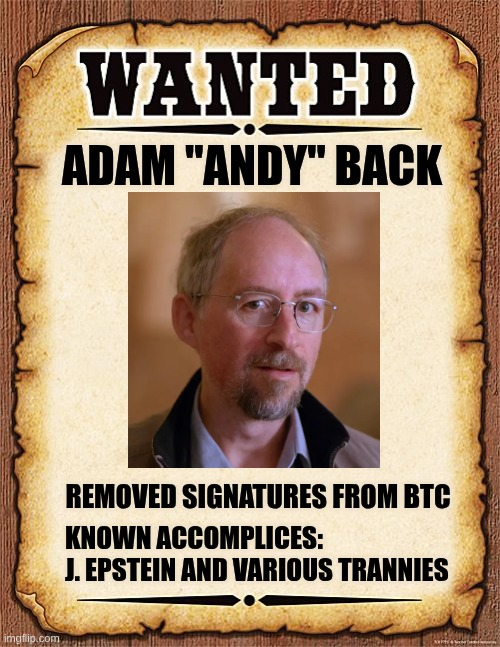
It takes 10,000 hours to understand Bitcoin.
If you study 10,001 hours you will learn even more, for example that Epstein influenced BTC heavily and that's why it's completely useless in the real world now except for number go up ponzi trading.
2
1
8
138
Apr 24
Anyone knows some really good ways to reeducate ones subconscious? Basically brain washing but in a useful, positive way for the subject
35
Apr 20
I'm expecting him to drop several "fuck yous" in a row 🤣
Apr 20


1
8
245
Phil Fast retweeted

Apr 10
Building ‘The supercar of blockchain’ was only possible with the right tools.
Teranode was built for global adoption & support from AWS infrastructure allowed us to deploy & push the limits of throughput.
Capable of holding the NY Stock Exchange on-chain, scalable dApps & a secure global data ledger.
Mar 31

How the BSV Association built a million-TPS blockchain node using AWS
This is how: aws.amazon.com/blogs/web3/ho…
Great article by Jordan Kramsky.
7
28
113
6,058