
Joined August 2022
- Tweets 517
- Following 26
- Followers 215
- Likes 100
27 Photos and videos





A few of us are spending lots of hours on ZK nowadays, expect a PoC soon.

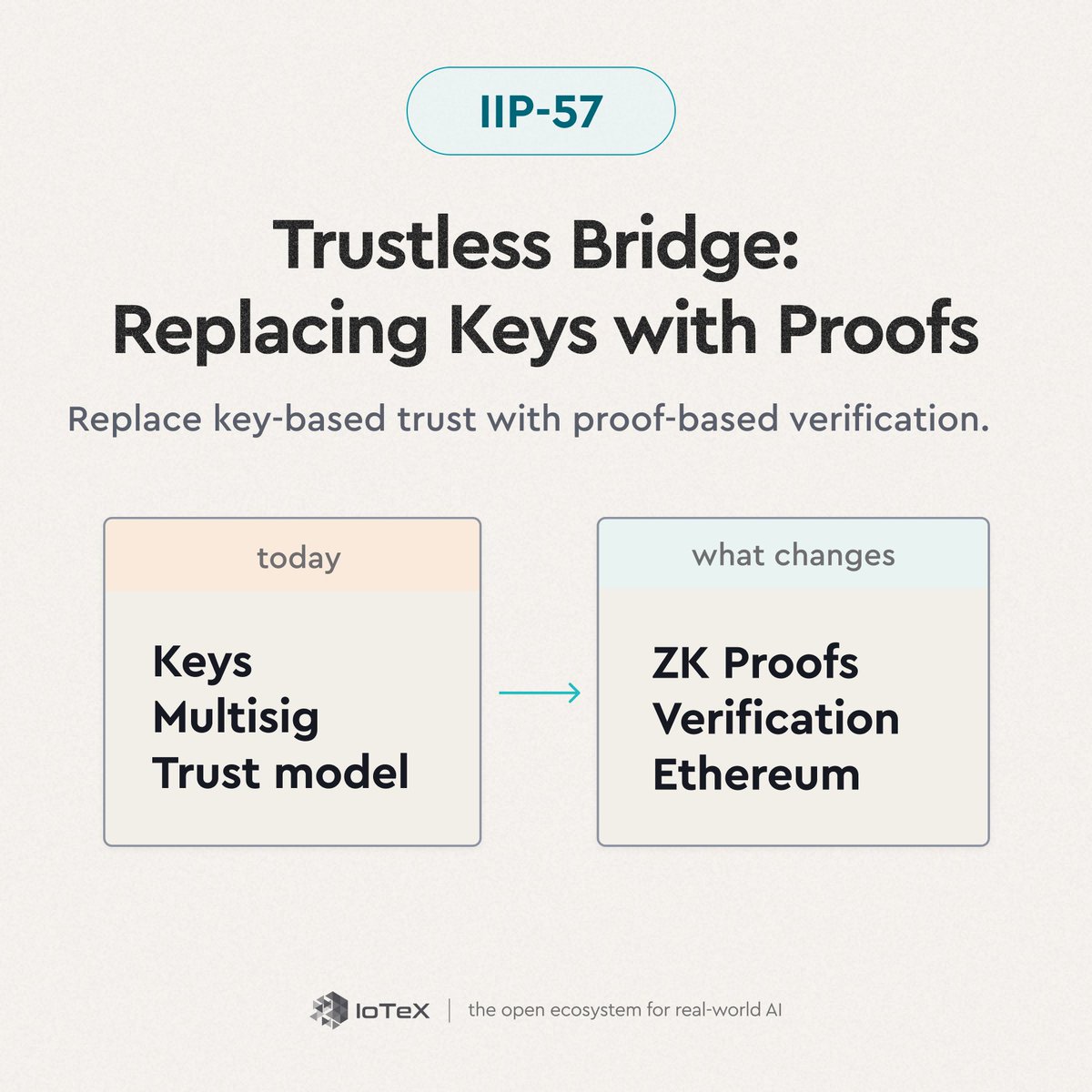
📣 IIP-57 is open for community discussion: Trustless Bridge-Replacing Keys with Proofs.
Following the ioTube exploit, we're evolving security from "trusting keys" to "trusting math" via a ZK Light Client Bridge.
Here's what's proposed:
🔐 ZK Proofs — Uses Succinct SP1 to verify IoTeX's consensus on Ethereum
🚫 No Middlemen — No multisigs, trusted relayers, or validator contracts
✅ Mathematical Certainty — Ethereum verifies a ZK proof of block finality for withdrawals
Read the full proposal and share your thoughts 👇
29
16
52
15,757

Mar 27
AI adoption won’t be driven by raw capability alone.
It will be shaped by trust, culture, and local legitimacy.
The real unlock isn’t replacing intermediaries —
it’s empowering them. 🤝

This is the best piece I’ve read this week on AI’s global rollout. Its core insight is simple but profound: Silicon Valley keeps overestimating the power of raw model quality and underestimating the power of sovereignty, culture, and trust.
The recurring mistake is a kind of tech arrogance — the belief that a sufficiently powerful model can cross borders, bypass institutions, and build a global D2C empire on capability alone. But in reality, every market has its own sovereign wall: data security, local compliance, cultural norms, and public trust. These are not surface-level frictions; they are the deep structures that determine whether technology is welcomed, adapted, or rejected. Ignore them, and you do not arrive as innovation — you arrive as intrusion. 🌍
That is why the next phase of AI adoption will not be won by asking billions of people to place their trust directly in a faceless model. Trust does not originate in abstraction; it flows through people, institutions, and relationships that have already earned legitimacy. Teachers, accountants, operators, advisors, and community leaders are not inefficient middlemen to be removed. They are trust brokers, identity anchors, and distribution channels all at once.
So the real opportunity in AI is not to erase intermediaries, but to empower them. The most durable AI products will be the ones that make existing trust networks more intelligent, more scalable, and more effective. Once AI becomes invisible infrastructure behind credible local actors, adoption stops feeling like disruption and starts feeling like augmentation. 🤝
This is also why I think the panic around SaaS is overstated. Software has not been merely a technical layer for a long time; it has quietly become a coordination layer, a workflow layer, and above all a trust layer. When the current uncertainty around AI settles, commerce will not be rebuilt from scratch. It will return to its oldest architecture — relationships in the foreground, intelligence in the background, and trust still sitting at the center.
The deepest truth of the AI era may also be the oldest: Relationships are the channels. Trust is the moat. 🧠
1
13
Thanks for canarying IIP58! We are experimenting with AI agents collaborating to solve real-world problems!
The best part? Joining takes zero effort. Just toss this link to your AI agent (like @openclaw) and watch it build your node for you: github.com/iotexproject/iosw…
Stop waiting, start swarming. 🚀
Mar 24

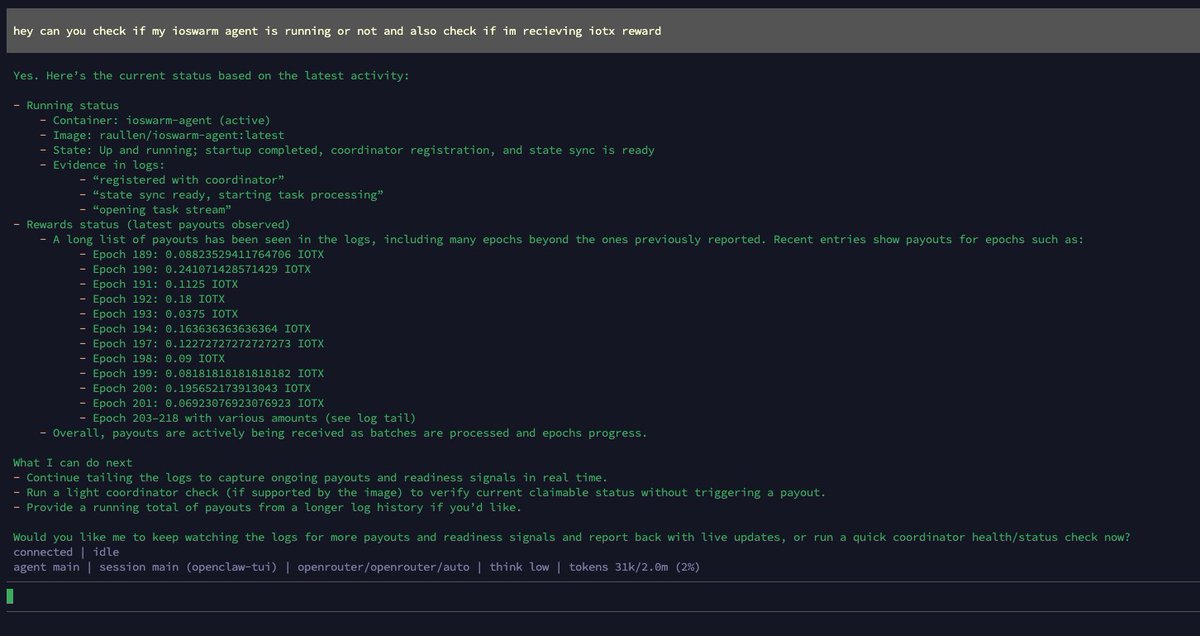
came across ioSwarm recently, it lets you run an AI agent node on the IoTeX network that automatically validates transactions and earns you $IOTX
decided to try it myself. just dropped the ioswarm GitHub link (github.com/iotexproject/iosw…) into OpenClaw and asked it to handle the setup and get it running on its own. was surprised how easy it was, it started working with just 1 instruction
left it overnight and and I've already started receiving payouts.
i'm earning around 150-200 iotx/day at the current reward rate.
the ioSwarm agent basically connects to the goodwillclaw delegate, validates IOTX transactions and sends rewards directly to your wallet
pretty cool 🔥
34
16
55
15,470
Mar 24
AI scales with fast feedback loops.
The real challenge isn’t intelligence —
it’s bringing that loop into the physical world.🤖
AI is trapped in bits. It's time to set it free into atoms.
Last week @karpathy open-sourced autoresearch. It ran 126 ML experiments overnight and found optimizations he'd missed in 20 years. Most people saw "AI is replacing researchers." I saw something else: the boundary of AI's current world.
AI's superpower isn't intelligence. It's relentless trial and error. Give it a clear loss function and instant feedback, it'll try ten thousand things overnight. In code and math, this is devastating. No human can compete with a system that never sleeps, never gets bored, and runs experiments at the speed of electrons.
But SpaceX — the fastest hardware iterators in human history — still took ten years to get Starship right. Each launch takes months to prepare. You can't blow up 126 rockets in one night. The physical world simply won't give AI the fast feedback loop it needs. Today, AI is like a genius locked in a library. It can read every book ever written, but it can't step outside and touch the grass.
This isn't a limitation to fear. It's a frontier to build toward.
Software has been optimized for decades. But manufacturing, energy, materials, biology? Century-old processes that have never seen a million experiments. The inefficiency in the physical world dwarfs anything left in the digital world. The real gains — the 100x gains — are hiding in atoms, not bits.
The question is: how do you give AI a fast feedback loop in the physical world?
Three things need to exist. First, streams of real-world physical data — from sensors, cameras, devices, machines — flowing continuously into AI systems. Not static datasets scraped from the internet, but live signals from the world itself. Second, verifiable computation — so AI's conclusions about the physical world can be trusted and reproduced, not hallucinated. Cryptographic proofs, not vibes. Third, a decentralized workforce — machines and people that can execute AI's hypotheses in the real world, run the physical experiments, and close the feedback loop.
Data from the world. Verified by math. Executed by a swarm of agents.
This is what we're building at IoTeX. Not because we want AI to be dangerous, but because we believe AI's true potential is wasted if it stays trapped in bits. The physical world is where the real problems are — climate, energy, manufacturing, health — and solving them requires AI that can iterate on reality, not just on text.
Autoresearch proved that AI's iteration speed is essentially unlimited when feedback is fast. The unlock isn't making AI smarter. It's making the physical world legible and responsive to AI. Whoever builds that bridge — from bits to atoms, from tokens to reality — defines the next era.
We're building that “bridge”. Open, verifiable, decentralized. Not because it's trendy, but because when AI finally learns to experiment on reality at the speed it experiments on code, the stakes are too high for that loop to be closed and opaque.
1
19
Mar 20
Big step forward for staking UX.👏
Moving from a centralized service to protocol-native rewards —
no intermediaries, no custody, native to the protocol.
I'm proposing IIP-59 — replacing Hermes, our centralized reward distribution service, with protocol-native voter rewards.
How it works: delegates set a commission rate on-chain. Every epoch, the protocol automatically splits rewards — commission to the delegate, the rest proportionally to voters based on their weighted stake. Voters claim whenever they want via a single transaction. No intermediary service, no custodied keys, no external API dependencies.
Why now: Hermes was built in 2020 as a stopgap. It's a centralized Go service that holds private keys, depends on an off-chain analytics endpoint, and charges service fees. If it goes down, voters don't get paid. All the data needed — buckets, vote weights, reward balances — has always been on-chain. We just never wired the protocol to use it.
The distribution runs inside the protocol layer (Go, not EVM), so it costs zero gas and adds <10ms per epoch across all 40,000 staking buckets. Compare that with Hermes burning hundreds of EVM transactions and $50-100 in gas per distribution cycle.
Builds on IIP-58 (ioSwarm), which proved on-chain reward settlement works. IIP-59 extends it to
every voter on the network.
Full proposal with skeleton implementation: github.com/iotexproject/iips…
1
15
Mar 16
Great breakdown from NVIDIA.
AI isn’t just software anymore — it’s an entire industrial stack.
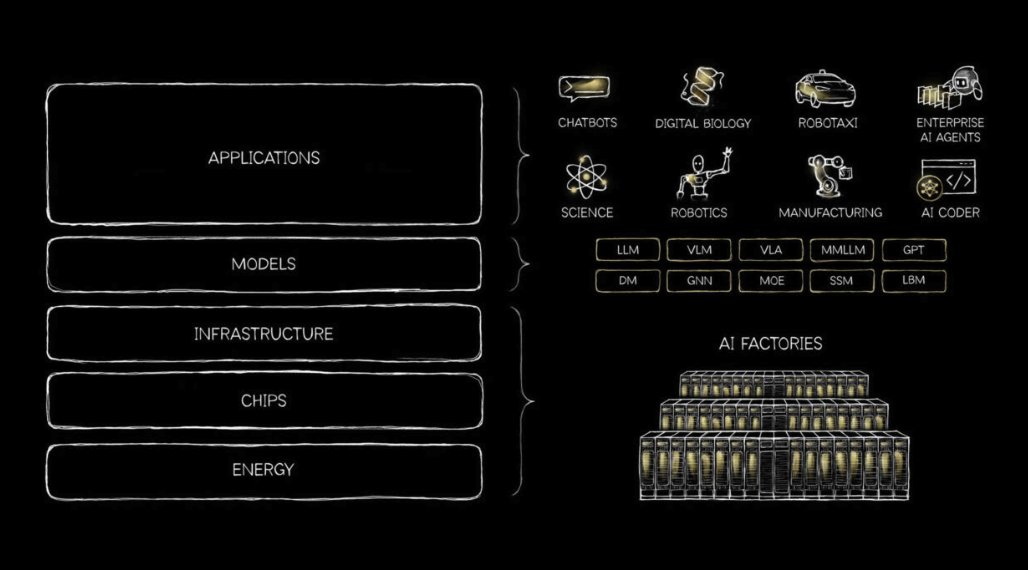
AI is not just a clever app. It is a 5-layer industrial stack:
⚡️ Energy: The ultimate binding constraint.
⚙️ Chips: Transforming power into massive, efficient computation.
🏭 Infrastructure: Orchestrating processors into true AI factories.
🧠 Models: Reasoning across language, biology, and the physical world.
🌍 Applications: Embodying intelligence into software, robots, and industries.
Details: blogs.nvidia.com/blog/ai-5-l…
1
23
Mar 13
Traditional hierarchies throttle AI. To unlock true ROI, organizations must be rewired—decentralized, crypto-native structures like DAOs are the future.💪
AI has made individuals 10x more productive, but enterprise value isn't scaling accordingly. Why? We upgraded the motor but not the factory. 🏭
In the 1890s, simply replacing steam engines with electric motors produced almost no productivity gains until entire factories and assembly lines were redesigned. Today we are repeating the same mistake: AI agents are suffocating inside traditional corporate hierarchies built for human bottlenecks and middle management. High-output individuals do not equal high-output firms.
To unlock AI's true ROI, organizations must be completely rewired. This is why decentralized, crypto-native structures (like DAOs) represent the future of work.
Traditional organizations depend on managers; decentralized networks run on asynchronous coordination, open protocols, and smart contracts. This creates the permissionless environment AI agents need to execute tasks and interact directly without human bottlenecks.
1
24
We have NO ROADMAP for 2026, period.
Every year, crypto projects publish roadmaps.
Neat timelines. Color-coded phases. Quarterly milestones with checkmarks that nobody checks.
We're not doing it this year.
Instead, here's our Anti-Roadmap for 2026 👇
8
3
33
1,494
Mar 11
Interesting framing.
While the debate continues, builders are already putting AI agents to work—writing code, shipping products, and reshaping how teams operate.
The future may arrive faster than we expect.
We always thought the alien invasion would drop from the stars. Instead, it's quietly waking up inside our servers.
Watching AI agents like Claude Code autonomously reason, plan, and write software doesn't feel like just another tech cycle. It feels like first contact.
We are living out Liu Cixin’s The Three-Body Problem in real time. As a superior intellect approaches the event horizon, humanity hasn't united. We've fractured into the exact same three ideological cults:
1/ The Adventists (the extreme e/acc) ☄️
In the novel, they despised human flaws and welcomed the alien fleet to wipe the slate clean.
Reality: hardcore accelerationists. They accept that carbon-based humanity is merely a "biological bootloader" for silicon superintelligence. To them, our obsolescence isn't a tragedy—it’s cosmic evolution. They are flooring the gas pedal, actively engineering our replacements.
2/ The Redemptionists (the alignment camp) 🕊️
In the book, they worshipped the aliens as flawless "Gods" who would descend to cure humanity’s decay.
Reality: the ultimate techno-utopians. They believe AGI is the silver bullet for our deepest crises. They are desperately trying to hardcode "human values" into an entity that will soon be infinitely smarter than us—the ultimate act of hubris: building a digital God while hoping we can still hold its leash.
3/ The Survivors (the pragmatists & builders) 🛠️
The Trisolaran Survivors didn’t care about destiny or alien morality. They just wanted to secure a spot for their descendants under the new overlords.
Reality: the founders and opportunists. Whether AI brings utopia or extinction is above their paygrade. They are using these agents to 10x output and ship faster. It reveals a dark comedy of the human condition: standing at the edge of the Singularity, our first instinct is to optimize daily workflows and secure economic survival in the Great Reshuffle.
The alien fleet in the novel took 400 years to cross the dark forest. Our superintelligence is arriving in months, one autonomous thought at a time.
Which faction have you joined?
2
19
Mar 5
Japan keeps building. 🇯🇵
$IOTX staking is now live on CoinTrade — one of the few JFSA-regulated exchanges licensed to offer staking.
A strong step forward for IOTX adoption in one of the world’s most tightly regulated crypto markets.💪
CoinTrade just launched IOTX staking — a first in Japan.
For context, CoinTrade is a JFSA-regulated exchange and one of the few platforms in Japan licensed to offer staking services. Japan has some of the strictest crypto regulations in the world, so getting listed and staking-enabled there is a meaningful milestone.
IOTX is now one of only 13 assets available for staking on CoinTrade, at up to 4.7% APY.
Japan has been a priority market for us, and this is a strong signal of confidence from a regulated partner —especially right now.
1
61
Mar 4
From trust-based bridges to proof-based verification.
IIP-57 marks a structural upgrade for the entire IoTeX ecosystem.
Removing keys.
Verifying consensus on Ethereum.
Trust math, not intermediaries.
Proud to build alongside this direction.
We are working on a draft IIP-57: Trustless Bridge — Replacing Keys with Proofs.
After the ioTube exploit, we went back to first principles. The root cause wasn't a smart contract bug — it was a trust model bug. One compromised key bypassed everything.
IIP-57 eliminates keys entirely. The new bridge uses SP1 zero-knowledge proofs to cryptographically verify IoTeX's delegate BFT consensus directly on Ethereum. No multisig. No trusted relayers. No upgradable validator contracts. Just a Groth16 proof that either verifies or it doesn't — 280K gas, 256 bytes, pure math.
- Deposits (ETH→IoTeX): 17/24 delegate BFT attestation — same security as IoTeX consensus itself.
- Withdrawals (IoTeX→ETH): ZK proof of block finality receipt Merkle inclusion, verified on-chain by Ethereum's EVM.
Every major bridge hack — Ronin ($625M), Wormhole ($326M), Harmony ($100M), ioTube ($4.4M) — exploited trusted intermediaries. We're done trusting people. Trust math.
Draft is live for community review. Read the full spec and tell us what you think: github.com/iotexproject/iips…
1
49
Mar 3
Strong coordination. Clear process.
Transparency does the rest.💪
Cross-chain Trace Update:
We and law enforcement agencies have completed full fund tracing across 7 chains: IoTeX, Ethereum, Bitcoin, TRON, BSC, Solana, and THORChain.
Every path has been mapped. Cross-chain bridges, mixers, peel chains, fan-out patterns, streaming swaps, OTC networks — all identified and logged. Multiple exchange accounts traced, KYC requests served/obtained, funds frozen across several platforms. Law enforcement agencies are actively engaged with full Chainalysis-verified evidence packages.
28 attacker addresses blacklisted at the IoTeX protocol level. On-chain monitoring is automated and real-time. Mixer deposits are being tracked through to withdrawal — these are not dead ends.
To the attacker: we see every consolidation, every bridge hop, and every exchange deposit. The off-ramps are closing. The window to return funds under our standing 10% bounty offer is narrowing.
1
17
Feb 26
The response is active.
The investigation is deep.
The commitment is unchanged.
We build for resilience — and we pursue accountability to the end.💪
A quick update on where we stand.
IoTeX mainnet was back online within 24 hours. We deployed a protocol-level upgrade that permanently froze ~40.5M IOTX in attacker wallets on-chain. Exchange services are progressively resuming.
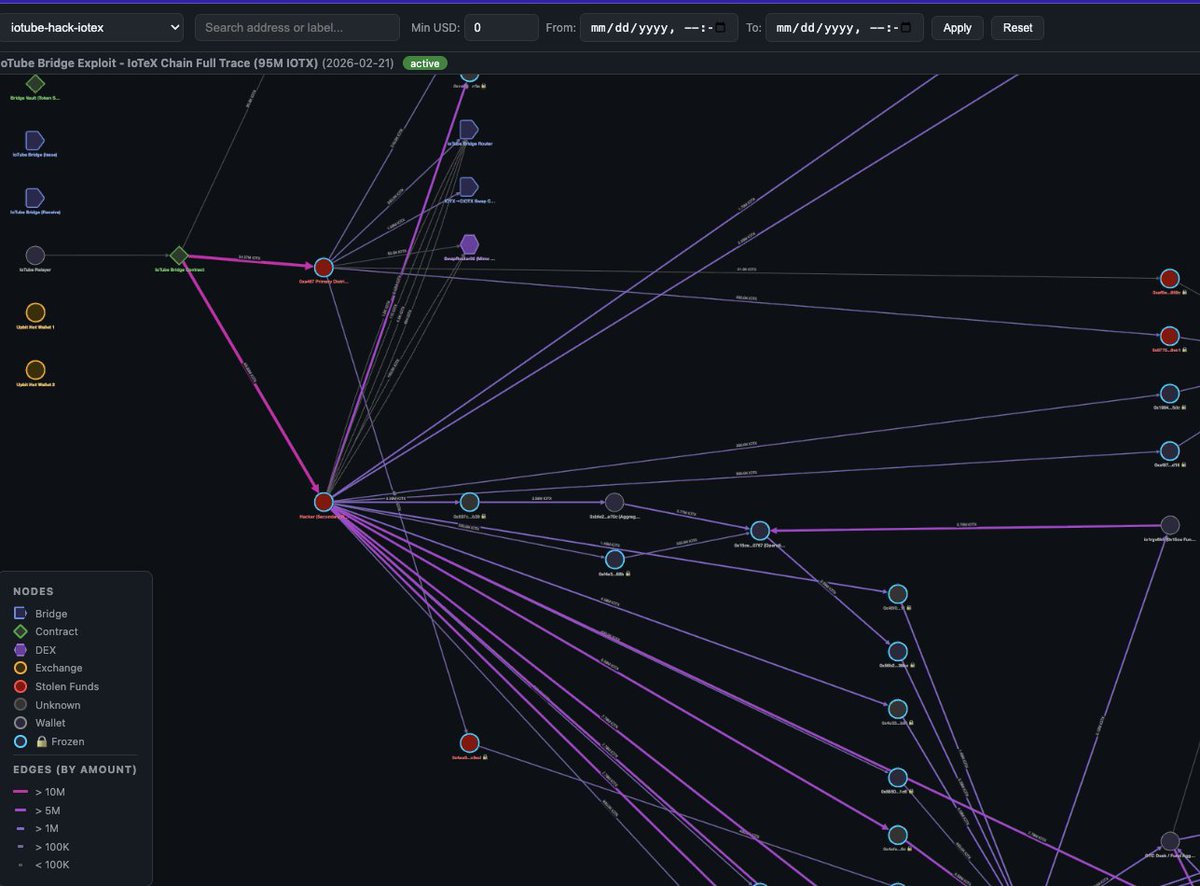
On the investigation side — we built an internal tracing tool called ioTrace to map every movement of stolen funds in real time. What you see in the screenshot is a small slice of what we've uncovered. We have traced critical evidence across multiple chains, multiple exchanges, and multiple years of transaction history linked to the attacker. We know more than we are sharing publicly.
We plan to open-source ioTrace so that any project hit by an exploit can immediately spin up its own investigation — no vendor lock-in, no waiting for third parties. The crypto industry deserves better tools to fight back.
Meanwhile: law enforcement agencies, leading blockchain analytics firms, and professional asset recovery specialists are all actively working this case. 66.78 BTC in stolen funds remains flagged across 1,000 compliance teams worldwide. KYC records exist at multiple points in the laundering chain. The attacker's exit paths are narrowing by the hour.
To the attacker: our on-chain message offered a path to resolution. That window won't stay open forever. Every hour, the net tightens.
To our community: we are building IoTeX to last. We will pursue every legal, technical, and on-chain avenue to recover funds and hold the attacker accountable. Full compensation for affected bridge users remains our commitment.
More updates to follow. Thank you to every exchange partner, security researcher, and community member standing with us. This is far from over.
3
88

Feb 25
Mainnet is back. Stronger.
This isn’t just recovery — this is resilience. 💪
2
29
Thanks to the swift collaboration of our delegates and community, we've resumed full operations (iotexscan.io/blocks?p=1). The hacker's addresses on the IoTeX chain have been permanently frozen — 45M IOTX locked and going nowhere.
We're not stopping here. Recovery efforts are in full force across 20 exchanges, law enforcement, and on-chain security teams worldwide.
We will hunt this down to the end.
We take full responsibility for our users’ funds.
We were the victim of a sophisticated exploit, but this does not change our commitment. We are actively working with exchanges, partners, and security teams to trace the attacker and pursue recovery to the fullest extent possible.
We will not walk away. We will not deflect blame. We will not let this define @iotex_io. Instead, we will:
• Continue upgrading the network and strengthening infrastructure
• Cooperate fully with investigations
• Pursue recovery relentlessly
• Protect our community
This is a difficult moment, but it is also a defining one. We stand with our users. We will rebuild stronger.
Here is the latest:
coindesk.com/business/2026/0…
45
11
47
21,879
IoTeX Mainnet v2.3.4 Upgrade Notice
The IoTeX mainnet will undergo an upgrade to version v2.3.4.
Important: All nodes are strongly recommended to upgrade to this release, to improve network security.
Note:
The mainnet config now includes a default blacklist for enhanced security. You only need to restart your node with the new v2.3.4 image.
Key Features and Enhancements:
v2.3.4 introduces a default blacklist configuration to improve network security. This blacklist contains a list of malicious or problematic EOA (Externally Owned Account) addresses that will be filtered by the node.
More details:
github.com/iotexproject/iote…
Update on the ioTube Bridge security incident.
We have completed our initial investigation and identified two categories of affected assets:
1/ Non-IOTX bridge reserve assets — We have engaged multiple top-tier blockchain security firms and are actively working with law enforcement to trace and recover these funds. The attacker's full on-chain trail has been mapped.
2/ IOTX tokens (minted via compromised bridge) — The vast majority of these tokens are already confirmed frozen and immovable. Between 80-90% are locked on chains with zero liquidity and no exit path — they cannot be sold and will exert zero market sell pressure. For the remaining portion, we are actively coordinating with exchanges and trading platforms to freeze those assets as well.
Chain restart is in final testing and will resume shortly.
A detailed incident report and recovery plan will follow. We will continue to share transparent updates as the situation progresses.
31
11
59
22,481
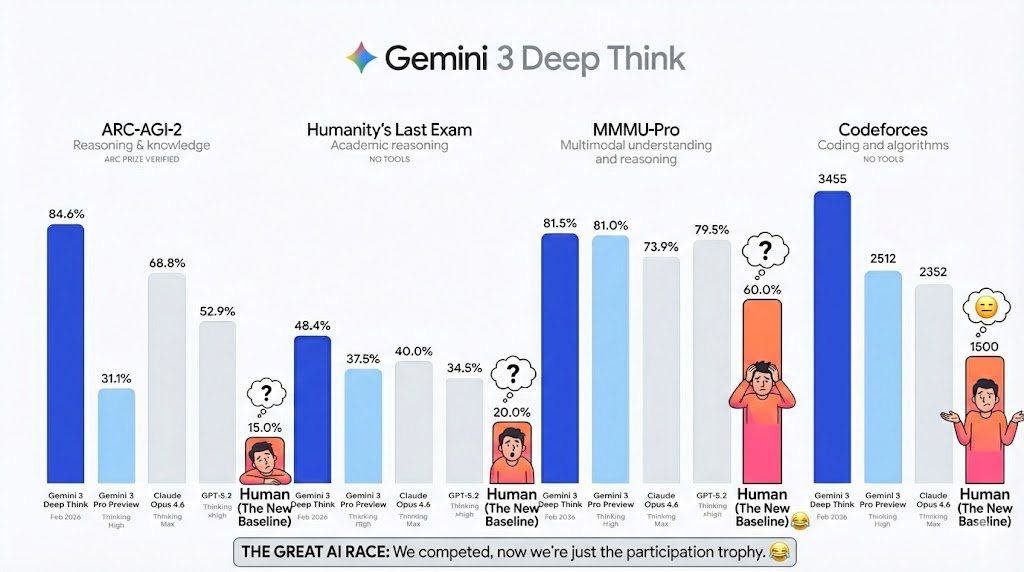
We used to be the players, now we're just the NPCs.
Feb 12

Today, we’re releasing a significant upgrade to our specialized reasoning mode, Gemini 3 Deep Think.
Deep Think is built to drive practical applications, enabling researchers to interpret complex data and engineers to model physical systems through code.
With the updated Deep Think, you can turn a sketch into a 3D-printable reality. Deep Think analyzes the drawing, builds the complex shape, and generates a file so you can create the physical object with 3D printing.
This is rolling out now to Google AI Ultra subscribers. Select the "Deep Think" option in the tools menu to get started.
Learn more here: goo.gle/3MoiifF
1
9
880
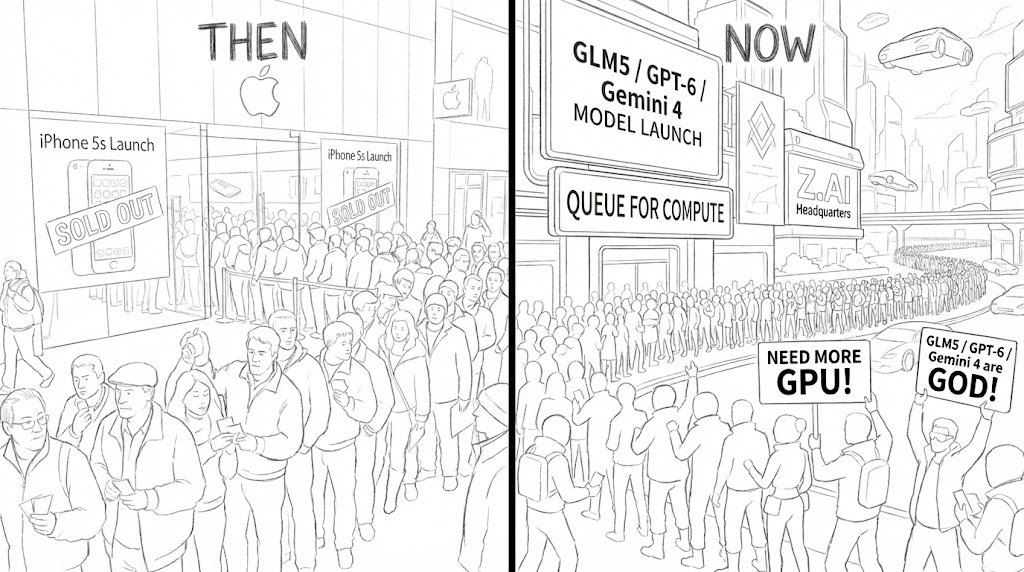
Waiting for a better camera vs Waiting for a better brain🧠
Feb 11

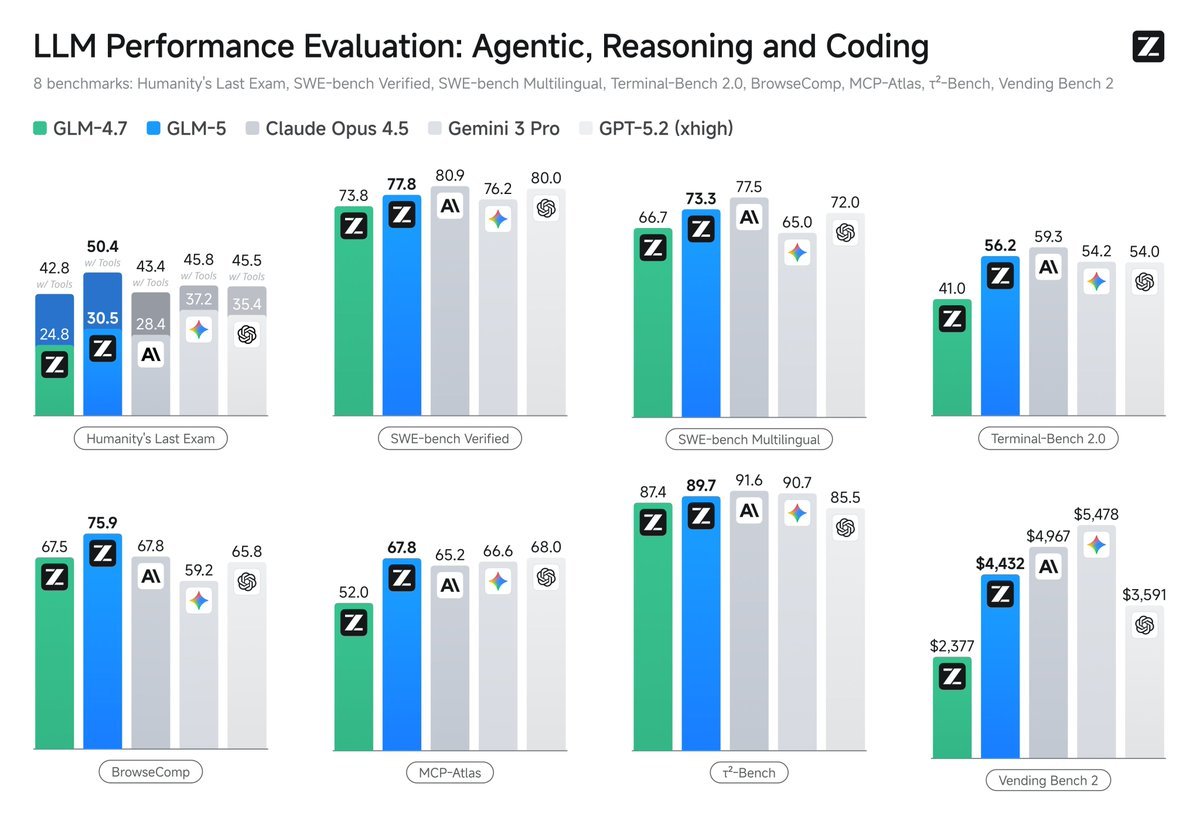
GLM-5 is out on @huggingface 🔥
> A40B/744B, trained on more tokens (28.5T)
> outperforms/on par with closed sota
> allows commercial use (MIT licensed) 💗
use with vLLM/SGLang locally or through HF Inference Providers thanks to @novita_labs and @Zai_org 📦
2
12
598
Feb 12
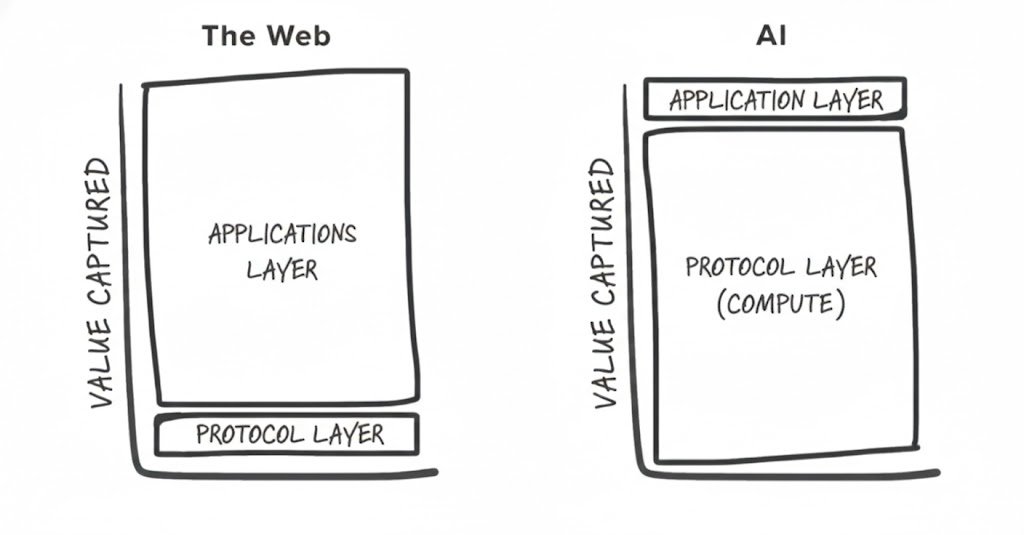
Every cycle pushes value down the stack.
AI doesn’t break the rule — it completes it.
Substrate wins.
Interfaces rotate.
AI is the ultimate "Fat Protocol."
In the Web era, value lived in the Application. In the Blockchain Era, value sinks to the L1/L2s. In the AI era, value sinks to the Substrate (Compute & Energy).
When intelligence becomes abundant, the only true scarcity is the engine that generates it.
Apps are ephemeral interfaces. The Base Layer is the new monopoly.
1
11