
Philosopher & Professor, Political Theory, AI-Ethics, AI Standards @ din.de/en, @ CEN-CLC / JTC 21, Art Enthousiast, Author 🇪🇺 Private Account
Joined September 2016
- Tweets 31,102
- Following 4,891
- Followers 2,974
- Likes 40,921
4,503 Photos and videos



Wolfgang M. Schröder faustiii.bsky.social retweeted

May 27
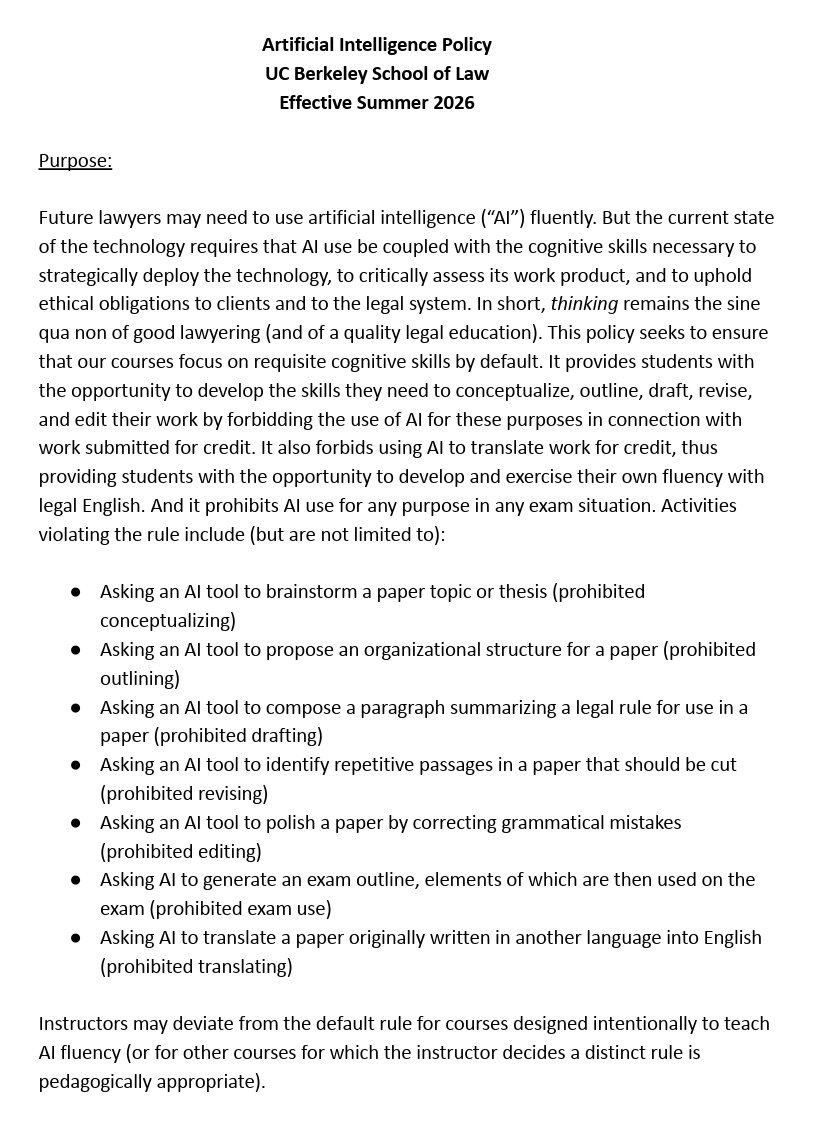
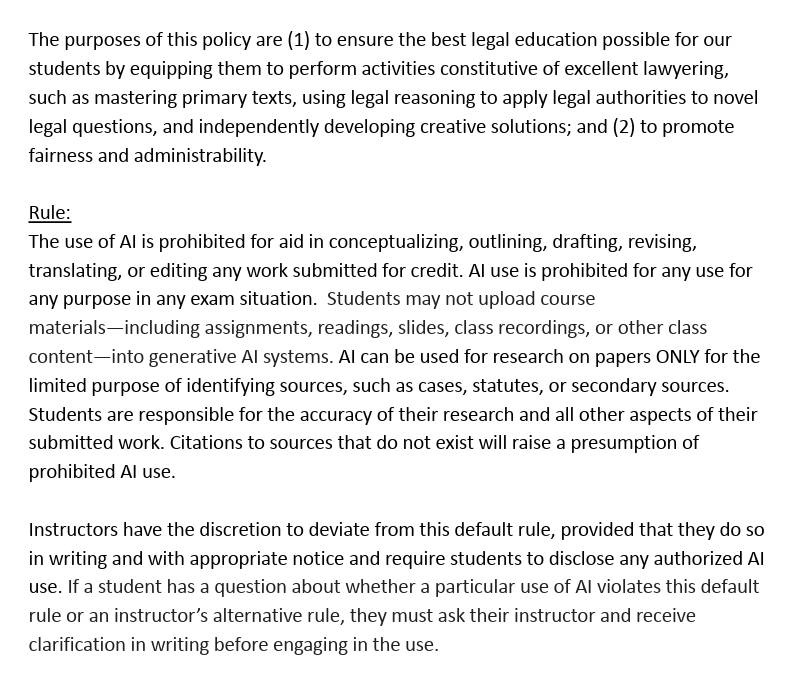
🖥️ The new Artificial Intelligence policy at UC Berkeley School of Law, effective Summer 2026.
📝 Here is the main rule:
"The use of AI is prohibited for aid in conceptualizing, outlining, drafting, revising, translating, or editing any work submitted for credit. AI use is prohibited for any use for any purpose in any exam situation. Students may not upload course materials—including assignments, readings, slides, class recordings, or other class content—into generative AI systems. AI can be used for research on papers ONLY for the limited purpose of identifying sources, such as cases, statutes, or secondary sources."
84
511
1,300
213,172
Wolfgang M. Schröder faustiii.bsky.social retweeted

"One could argue that AI agita predates AI itself." thereader.mitpress.mit.edu/w…
2
17
37
3,584

Auch epistemologisch interessant und motivierend: NT, Joh 8,32: "καὶ γνώσεσθε τὴν ἀλήθειαν, καὶ ἡ ἀλήθεια ἐλευθερώσει ὑμᾶς." #Pfingstmontag
youtu.be/Xmdm0a7Y1Jo?si=xTyS…
1
92
Wolfgang M. Schröder faustiii.bsky.social retweeted

Apr 3
4
5
68
56,503
Collaborative Intelligence: Partnership, Not Replacement
@SSRN papers.ssrn.com/sol3/papers.…
71
Wolfgang M. Schröder faustiii.bsky.social retweeted

May 24
This person has published 71 papers in 143 days so far in 2026. That is, 2 days per paper (source: Google Scholar).
It's truly amazing. To see someone proud of this.
108
259
3,506
800,825

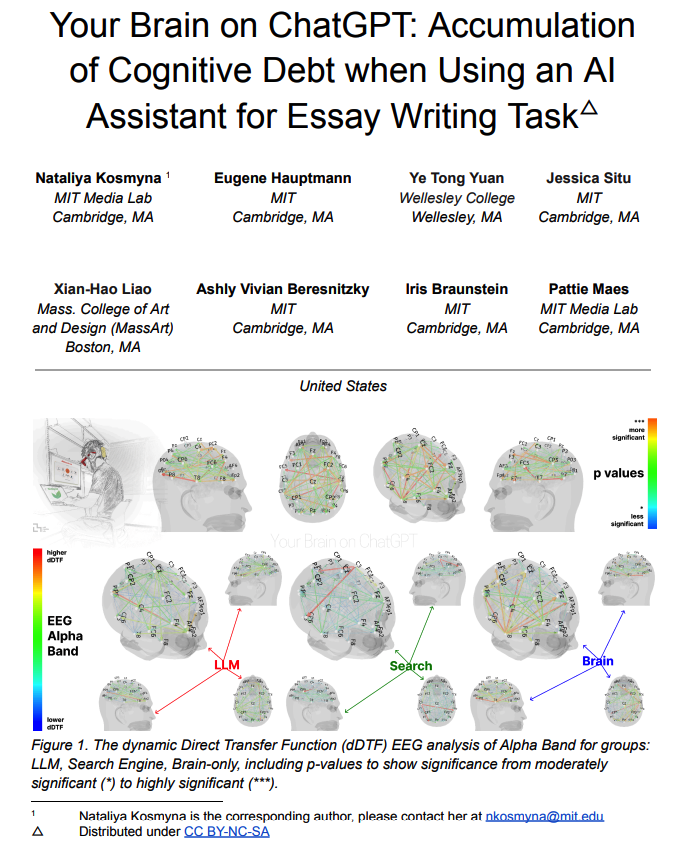
A researcher at MIT Media Lab put EEG caps on 54 students and asked them to write essays. One group used ChatGPT. One group used Google.
One group used only their own brain.
She ran the experiment over four months. The paper she published is called "Your Brain on ChatGPT." Most people haven't read it. What it found should sit with anyone who writes for a living, studies for a degree, or signs their name to anything an AI helped them produce.
The headline result is simple. The brain-only group lit up the most. The Google group came in second. The ChatGPT group's brains were the quietest of the three. Less activity. Less connection between regions. Less work being done.
Kosmyna gave the pattern a name. She called it "cognitive debt." Every time you let an AI do the thinking, your brain skips the step. The work feels easier in the moment. The connections that would have formed don't form.
By session three, the gap between the groups was clear on every scan she ran. But the part of the study that should disturb you most came in session four.
She asked the ChatGPT group to write one more essay. This time, no tools. Just their own brain.
Their scans for this session were the lowest of the whole study. They had been carrying their cognitive debt for months, and the bill came due.
Then she did one last thing. She asked every participant to quote a single line from the essay they had just written. The brain-only group could do it easily. The Google group needed a few seconds. The ChatGPT group, who had submitted essays with their own name on top of them less than an hour earlier, often couldn't do it at all.
They didn't remember what they had written. Because they hadn't really written it. Their brain had handed the work to a machine, and outsourced work doesn't get stored in memory the same way.
Over four months, Kosmyna and her team measured the ChatGPT users on every dimension. Their brain activity was lower. Their essays were rated lower by human teachers and a second AI grader. Their memory of their own work was lower. Their sense that the work was even theirs was lower.
The students didn't get dumber. They got quieter in the part of the brain that has to actually do something for a thought to become yours.
If you used AI to write anything this week, and tomorrow you couldn't quote a line from it without looking, you are not the exception. You are the experiment.
5
13
23
3,198
Wolfgang M. Schröder faustiii.bsky.social retweeted

Researcher says AI tools will “smuggle” biases like the Matthew effect “back into new academic hierarchies in ways that are increasingly difficult to audit.”
blogs.lse.ac.uk/impactofsoci…
2
36
60
7,125
Wolfgang M. Schröder faustiii.bsky.social retweeted

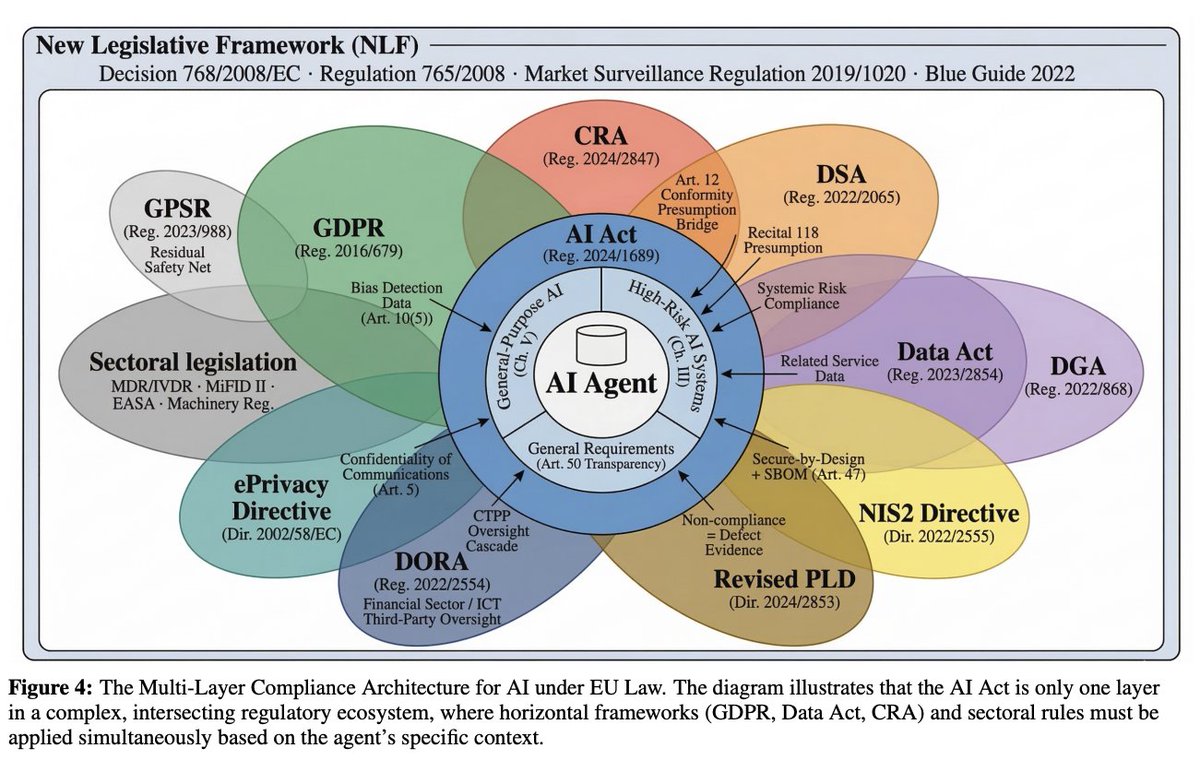
🚨 "AI Agents under EU Law - A Compliance Architecture for AI Providers" is the most comprehensive paper on agentic AI regulation you'll find, and it's our AI Ethics Paper Club's 8th recommended paper. Bookmark it below.
Recommended reading for anyone developing or deploying AI (especially agentic AI) and trying to navigate compliance and regulation in the EU.
👉 To receive all my paper recommendations, join the 850 members of the AI Ethics Paper Club below (it's free).

12
72
212
16,049
Wolfgang M. Schröder faustiii.bsky.social retweeted

May 24
Millions are graduating from college across the US — into one of the toughest job markets in recent memory. Is AI the culprit? I explored with @DKThomp, writer and host of the podcast "Plain English":
19
75
327
73,853

Knight Distinguished Lecture held on April 13th 2026 at the University of Manitoba.
youtube.com/watch?v=F4t9xZQF…
2
9
821
Nobel Prize laureate Geoffrey Hinton:
𝗜𝗳 𝘆𝗼𝘂 𝘄𝗮𝗻𝘁 𝘁𝗼 𝗺𝗮𝗸𝗲 𝗮 𝗱𝗲𝗰𝗲𝗻𝘁 𝗔𝗜, 𝘁𝗵𝗲𝗻 𝘁𝗵𝗲 𝗵𝘂𝗺𝗮𝗻𝗶𝘁𝗶𝗲𝘀 𝗮𝗿𝗲 𝗶𝗺𝗽𝗼𝗿𝘁𝗮𝗻𝘁.
It depends whether you think you’re just making a tool or whether you’re making another being. Its clear that if you were going to design another being, you’d want people who understand about what it is to be a being to be involved.
I think thats what we’re doing, 𝗜 𝘁𝗵𝗶𝗻𝗸 𝘄𝗲’𝗿𝗲 𝗺𝗮𝗸𝗶𝗻𝗴 𝗮 𝗻𝗲𝘄 𝗸𝗶𝗻𝗱 𝗼𝗳 𝗯𝗲𝗶𝗻𝗴, and so I think its very important those people are involved.
15
39
133
4,853
Wolfgang M. Schröder faustiii.bsky.social retweeted

May 24
Economists asked ChatGPT, Gemini and Claude which jobs were most vulnerable to being replaced by AI. The answers often varied widely. on.wsj.com/4v1rV4s
9
16
45
43,418
Wolfgang M. Schröder faustiii.bsky.social retweeted

Mar 27
“In a co-intelligent enterprise, leadership does not diminish as AI improves. It becomes more consequential,” reads a new report entitled "The Age of Co-Intelligence: How Humans, AI Agents, and Robots Are Redefining Value." bit.ly/4tcVz66
2
1
1
1,637
Wolfgang M. Schröder faustiii.bsky.social retweeted

May 24
Fireside - Decentralising Intelligence: The Unification of AI and Bitcoin
@const_reborn, Co-Founder of @opentensor, sits with @ninabambysheva, Deputy Editor at @Forbes, to open Day 2.
🇫🇷 June 3 · 10:05 · Main Stage

1
3
11
300
Actual Intelligence.🙂

Graduates at Grand Valley State University applauded Apple co-founder Steve Wozniak after he emphasized the importance of their own human intelligence, rather than artificial intelligence, in his commencement speech.
2
142
Tja. Ein Frankfurter Symposium zur Frage, was aus Privatbibliotheken werden soll faz.net/aktuell/feuilleton/d…
2
3
10
700
Wolfgang M. Schröder faustiii.bsky.social retweeted

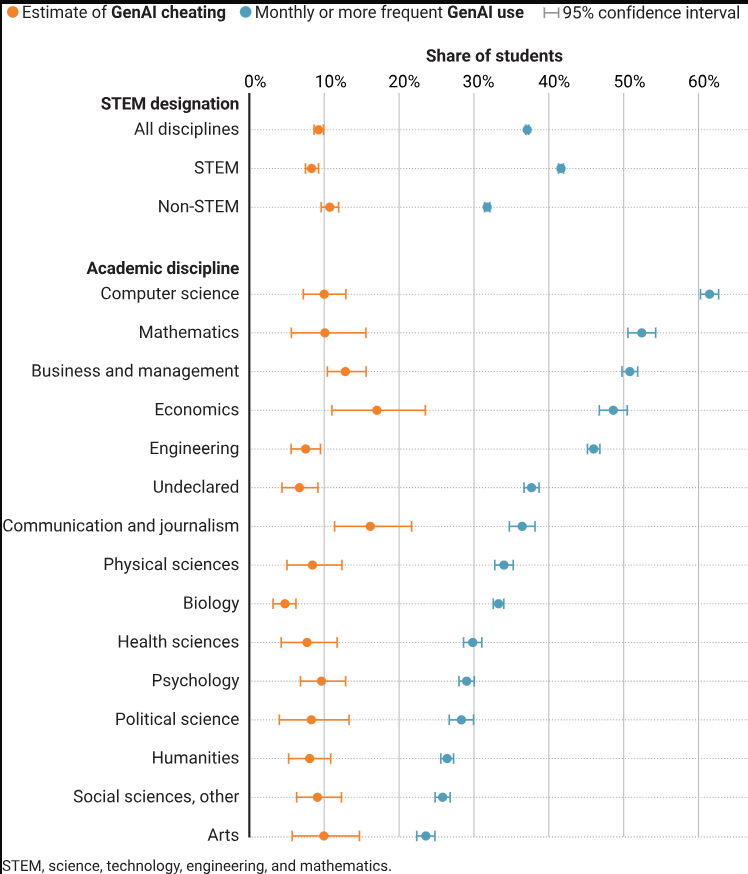
GenAI use for *cheating* is highest in economics (17%)
6
7
40
7,650
Interesting piece: "Toward a Science of Intelligence: Unifying Physics, Neuroscience & AI"
amacad.org/publication/daeda…
1
63
Wolfgang M. Schröder faustiii.bsky.social retweeted

W. J. T. Mitchell on academia, where the "struggle to maintain the commitment to the humanities begins to look like a quiet place to contemplate the prospect of human extinction."
lareviewofbooks.org/article/…
1
14
41
6,217