
3,499 Photos and videos





📜 10 REASONS as to why @OREsupply has a genuinely bright future and why I support it fully 🔮
1. $ORE isn't just another token -> it's a bold statement against all the shady launches, rugs, and fake promises in crypto 🗻
2. It gives me real hope that this space can still be fair and earned 🙏
3. Since 2013 I've seen every kind of bullshit: fake devs hyping nonsense, endless unlocks, insider dumps. Here we have @HardhatChad = a true GOAT, humble visionary, and one of the most honest builders in the game 🫡
4. Mining is next-level simple: no expensive rigs, no complicated manuals. Just your phone a bit of $SOL and you're in...love using my @solanamobile SEEKER dapp to mine...any phone or laptop works 📱
5. It's extremely rare -> max supply hard-capped at just 3 million ORE (7x rarer than @Bitcoin's 21M) 💎
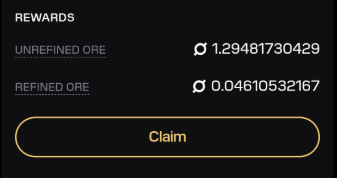
6. Hitting a single uORE (unrefined $ORE) feels genuinely rewarding especially on a low deploy -> $ORE is for ALL -> "Hard to get" = Rewarding 🎁
7. MotherLode kicks in my degeneracy hard…sometimes she slaps me, sometimes she kisses 💋
8. The community is something else -> real humans who occasionally give some $ORE to fellow miners and actually support each other. You rarely see that in web3. Additionally, whales are rnice chads and a decent number of crypto OGs are part of this wonderful journey 🤝
9. A ton of people are building tools -> @minemoreapp / @CompoundORE, games -> @voblefun, videos -> @Wisemenmentors, pools @kamino_liq / @MeteoraAG / @omnipair, articles -> @zinnresearch and protocols around $ORE -> I feel part of something much bigger than myself...our father @toly has embraced @OREsupply and he will carry on doing so (for many reasons) 🗺️
10. Auto staking and compounding -> stORE gives 17% APY and uORE (unrefined $ORE) gives roughly 70% APR 💸
11. @HardhatChad keeps shipping upgrades, keeping the upside alive long-term 🌕
12. It’s way lighter on the planet than traditional $BTC mining. Feels better knowing my hash power isn’t burning tons of resources and CO2 Every single $ORE is mined. No disrespect to our great grandfather ♥️
13. No pre-mine. No VC bags. Just pure, fair proof-of-work on @Solana -> the smoothest crypto experience on planet earth 🚀
This is why I mine uORE. This is why I hold stORE 💍
17
31
110
14,215
FiL ⛏️ retweeted

1
1
13


Tomorrow on X Spaces.
@HardhatChad joins @martypartymusic to talk V4, ORE's quantum-safe smart wallet, immutable programs, and the future of hard money on @solana.
1:00 PM EST / 17:00 UTC 🗓️
Set your reminder below. 🔔👇
x.com/i/spaces/1DxLddEjZoMxm
4
18
57
4,327
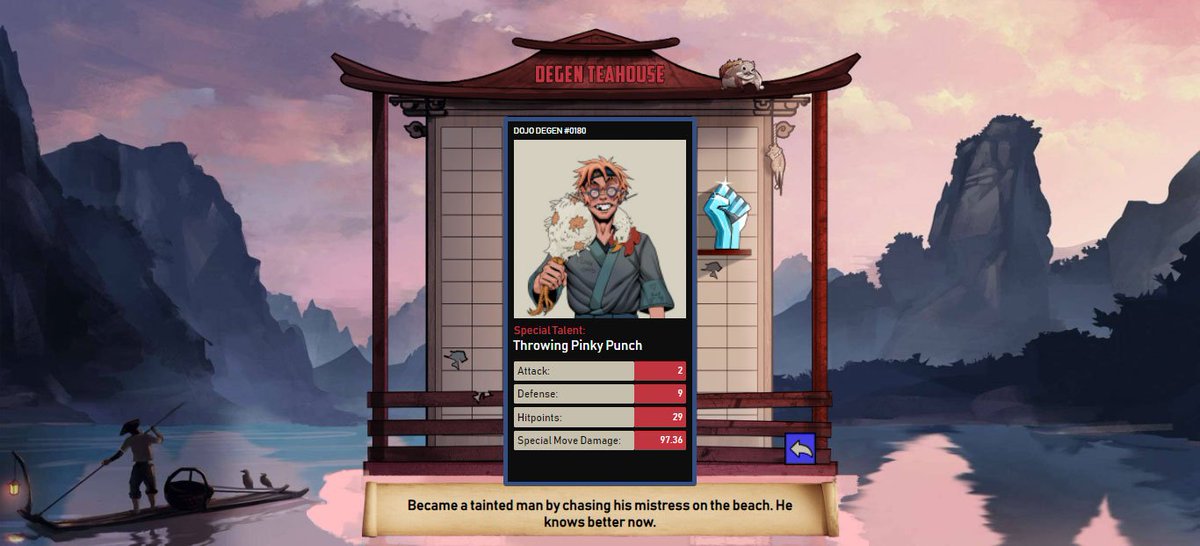
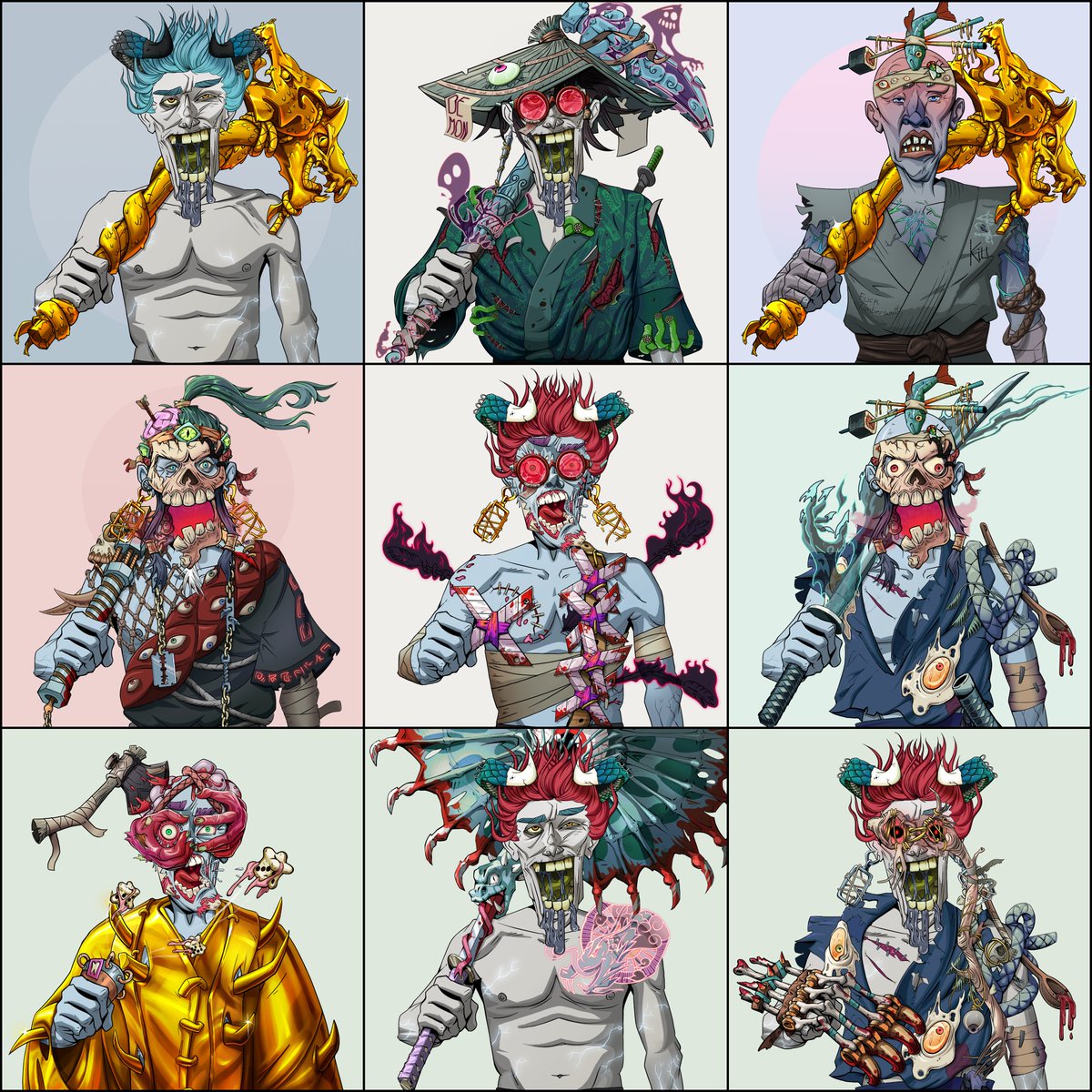
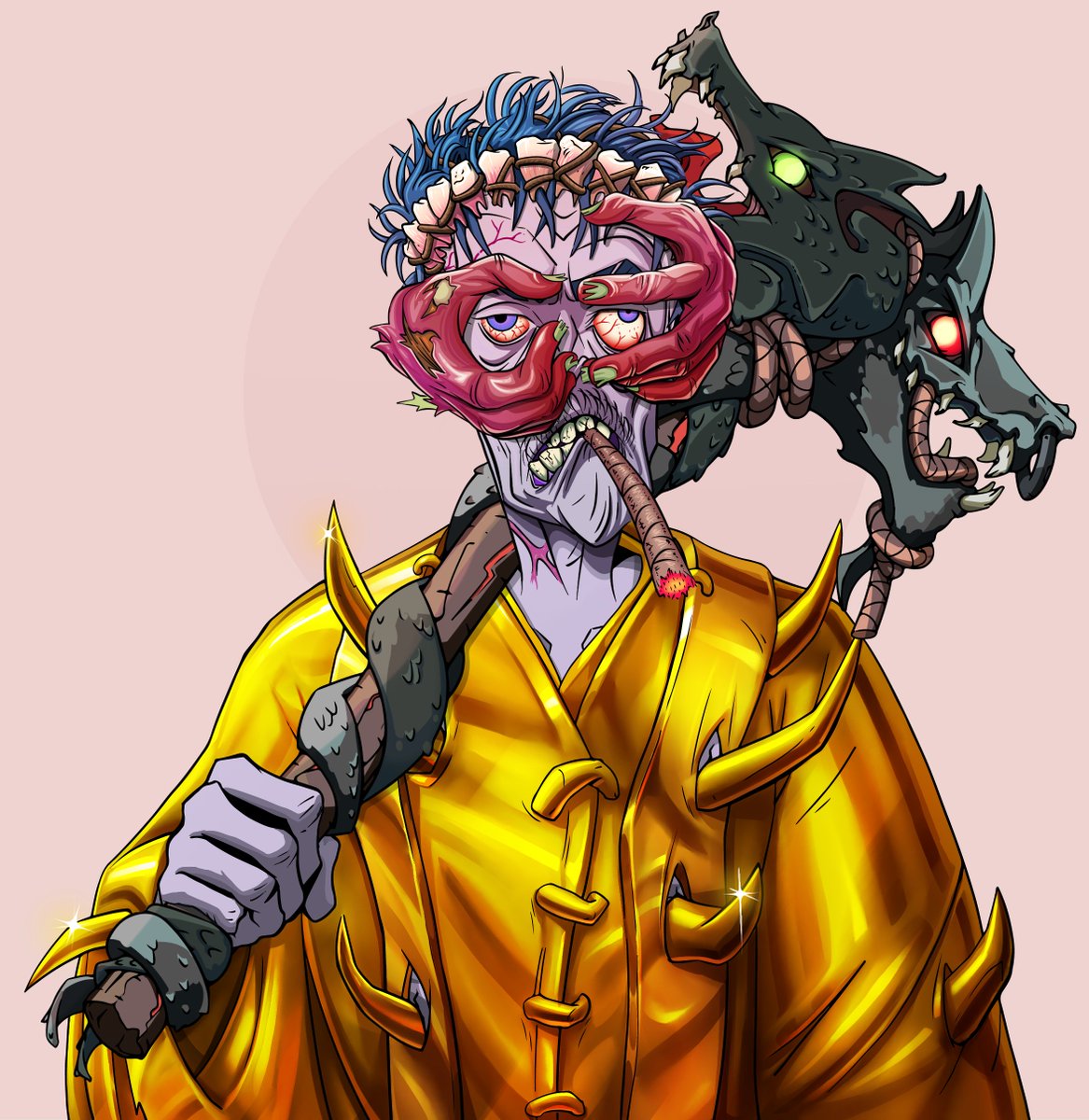
🦅 Character = Drooling Azuma...Weapon = Artisan Walking Cane...Clothing = Bird Shaman...Glasses = Golden...Background = Olive Green...Hair = Orange Bantu Knots 🦅


1
1
4
115
Do you ever wonder how the actual human being -> the developer behind what you’re holding actually thinks?
Do you ever ask yourself if their way of thinking truly aligns with your core beliefs as a human being?
Would you still embrace their vision if there were no monetary incentives?
Would you call a friend you love and trust and tell them to check it out?
Do you blindly trust the big accounts that loaded up on garbage and then told you to buy it from them at a premium?
Have you been fucked, rugged, scammed, and tricked for years by these so-called KOLs?
Would you trust 100 "normal" people that talk about a GEM or trust 5 KOLs that (usually) talk about CRAP after they’ve already loaded tons of trucks and are ready to dump it on your head?
Do you occasionally feel that you want to be part of something bigger than yourself?
Do you want to be part of a community that’s here for the long run?
Watch and listen below to understand mORE.
If you, as a person, genuinely appreciate it, then dig deeper into what @ORE is.
Because it’s not just a coin or an asset...it’s far more than that.

Few devs in crypto move like @HardhatChad. Watch this and you'll see why.
Doc asked him what time has to do with becoming a true store of value, and he answered with a range almost nobody in crypto carries.
He started with the community. Dialed in enough to know two and a half years of holding @ORE came with real ups and downs, and he shoulders that weight to push this thing to the next level. Then he pulled back to what a moat actually is, all the way up to gold and its 10,000 years. Then he closed through Hal Finney, the first person to ever receive a Bitcoin transaction, tying a founding voice of the whole story right back to the original question.
Very few, if any, answer with that kind of elegance.
Our piece is simple. Time is the only thing in crypto that proves you're here to stay. Years of ups and downs and still rising is what gives people that sleep at night conviction.
804 days in for ORE.
The Lost Tapes: Deep Cuts From the Mine. 📼
3
1
15
529
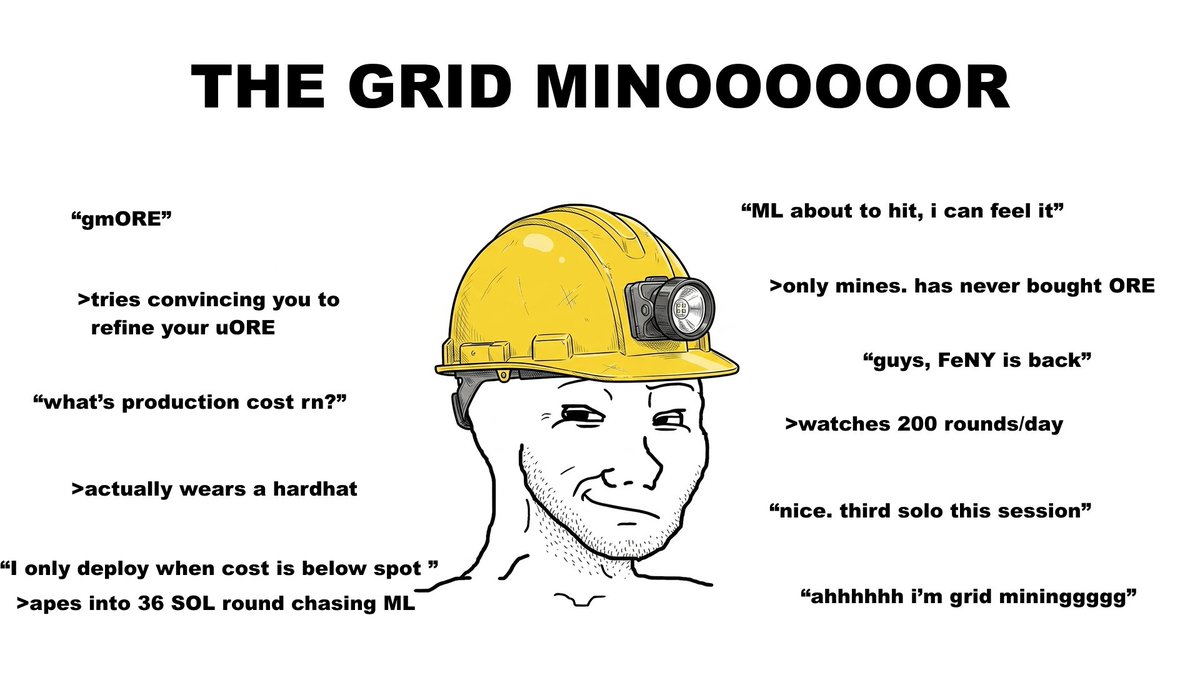
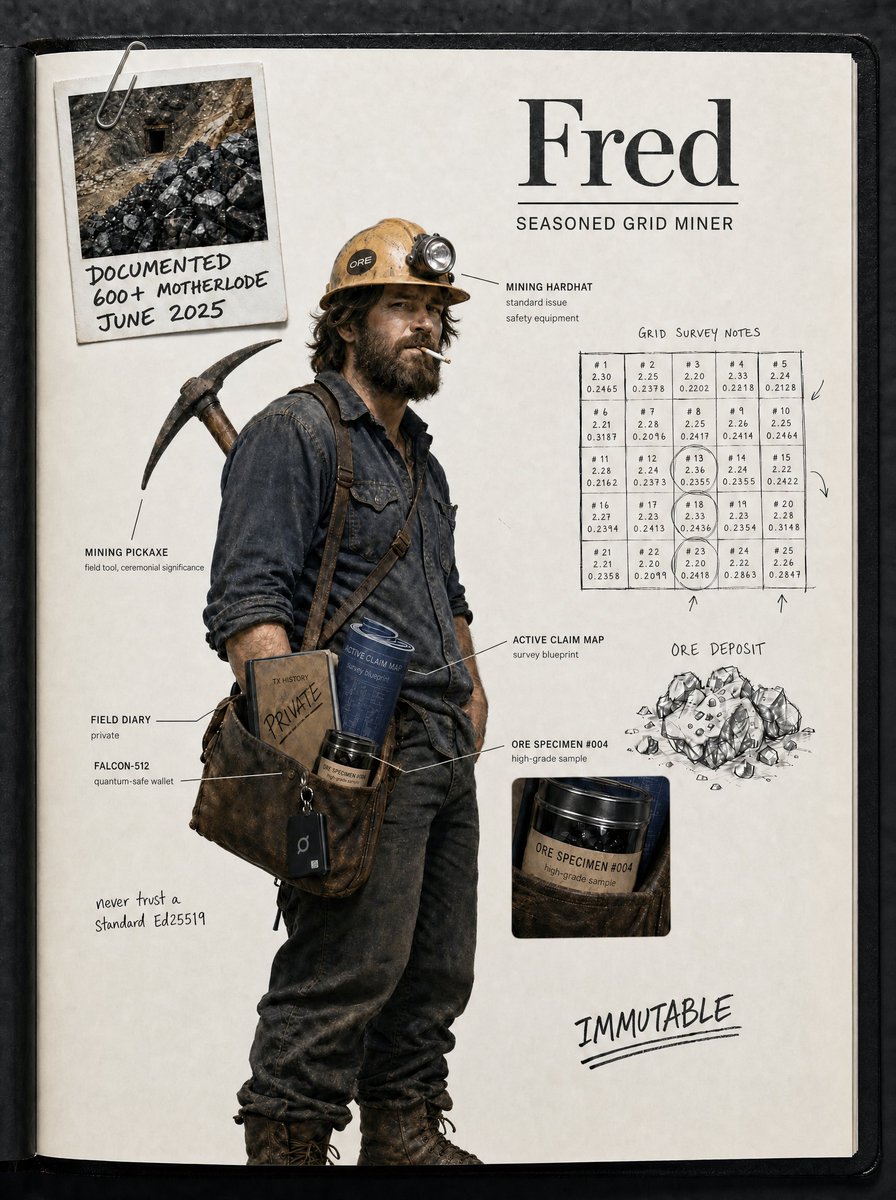
Fred,
Seasoned grid miner.
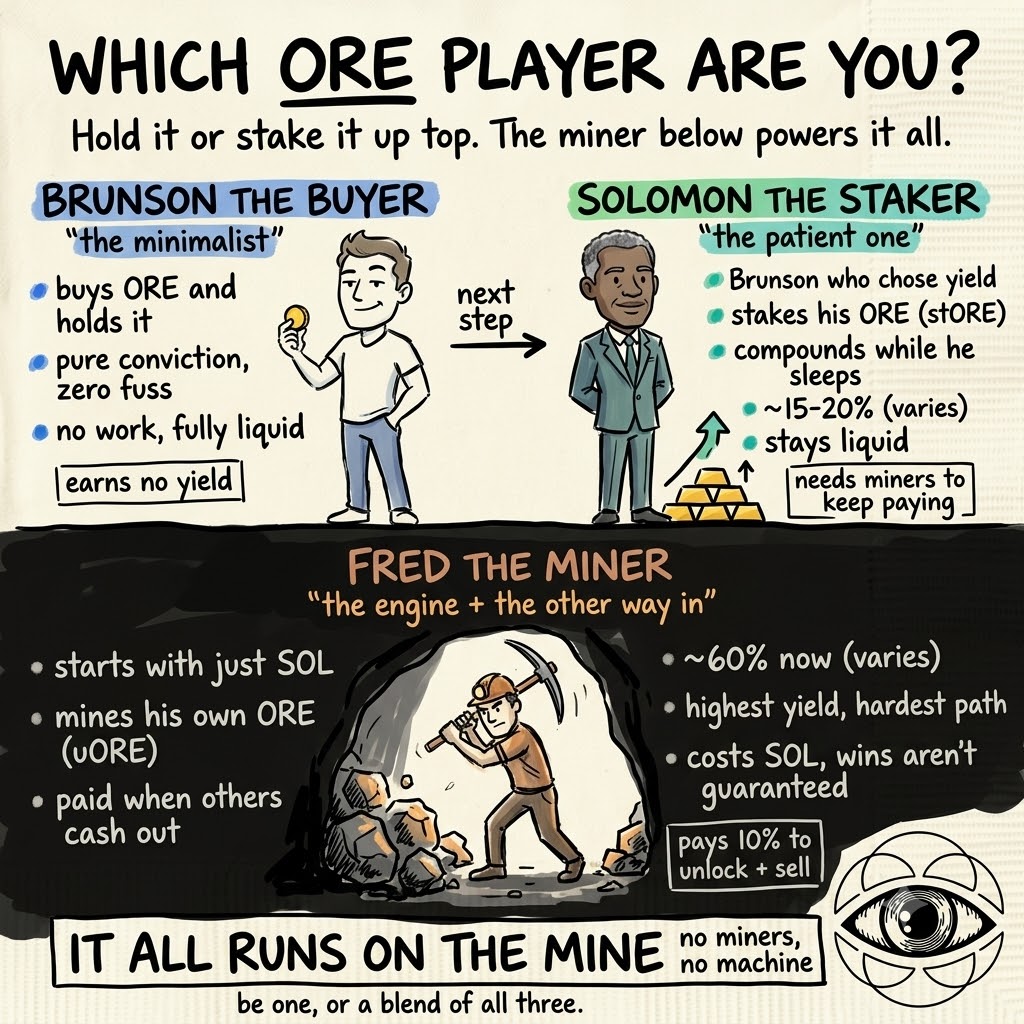
Which @ORE player are you?
People have always gone to extremes to earn yield on a scarce asset. Bitcoin holders learned it the hard way. They handed their coins to Celsius, BlockFi, and a dozen platforms for a few points of yield, then watched it vanish overnight. They weren't wrong to want it. The setups they trusted to deliver it were the problem, because none of those contracts were immutable. You gave up your keys to a company, and that company could change the rules or blow up on a Tuesday.
ORE flips that. You earn yield on a hard capped supply of three million, on an immutable contract with no admin key, so nobody can rewrite the rules or pull the rug. You can keep it private, shielding the transaction so you're not doxxed for earning. And you can hold it in a wallet that's started building in quantum resistant properties, not on some company's balance sheet. That stack of features is the first of its kind. It answers, almost point for point, the things people have spent years worrying about with Bitcoin.
So we built a way to explain how the yield actually works, because plenty of people, us included early on, never fully got it. We'll break it down the best we understand it, through three characters. Each one shows you which player you are in this ecosystem.
Brunson buys ORE off the open market. Already refined, liquid, ready to go. He holds it, bets on price, and that's the whole game for him. No yield, no homework. His edge is that simplicity. He isn't leaning on the yield machine to keep running, he just owns the asset on conviction and stays fully liquid.
Solomon is Brunson who took the leap and said, "I want my money working." He stakes his ORE. As long as miners are active, Solomon gets paid, and he takes that yield, puts it right back, and lets it compound. Compound interest is one of the most powerful forces in finance, and that's exactly what's running here. It mostly sits around 15 to 20%, and it can climb toward 25% when mining's heavy. The wild part is how little it asks. All Solomon needs is people mining every day who want to play the game, and there's no holding period.
Then there's Fred, and Fred has two layers. He can buy off spot and stake the whole thing like Solomon if he wants. But to actually mine, he shows up with SOL and goes to work. He's making fresh, unrefined ORE. It's not the finished version of itself yet, it isn't liquid, but it's real ORE, and staying unrefined is exactly where the benefit lives.
This is the game some are calling entertainment finance (shout out to @mattytay for the name). You bet on blocks and try to hit the motherlode, and every winning move puts more unrefined ORE in your pocket. Read that the right way though. This isn't gambling, it's strategy. You're playing position, not pulling a lever.
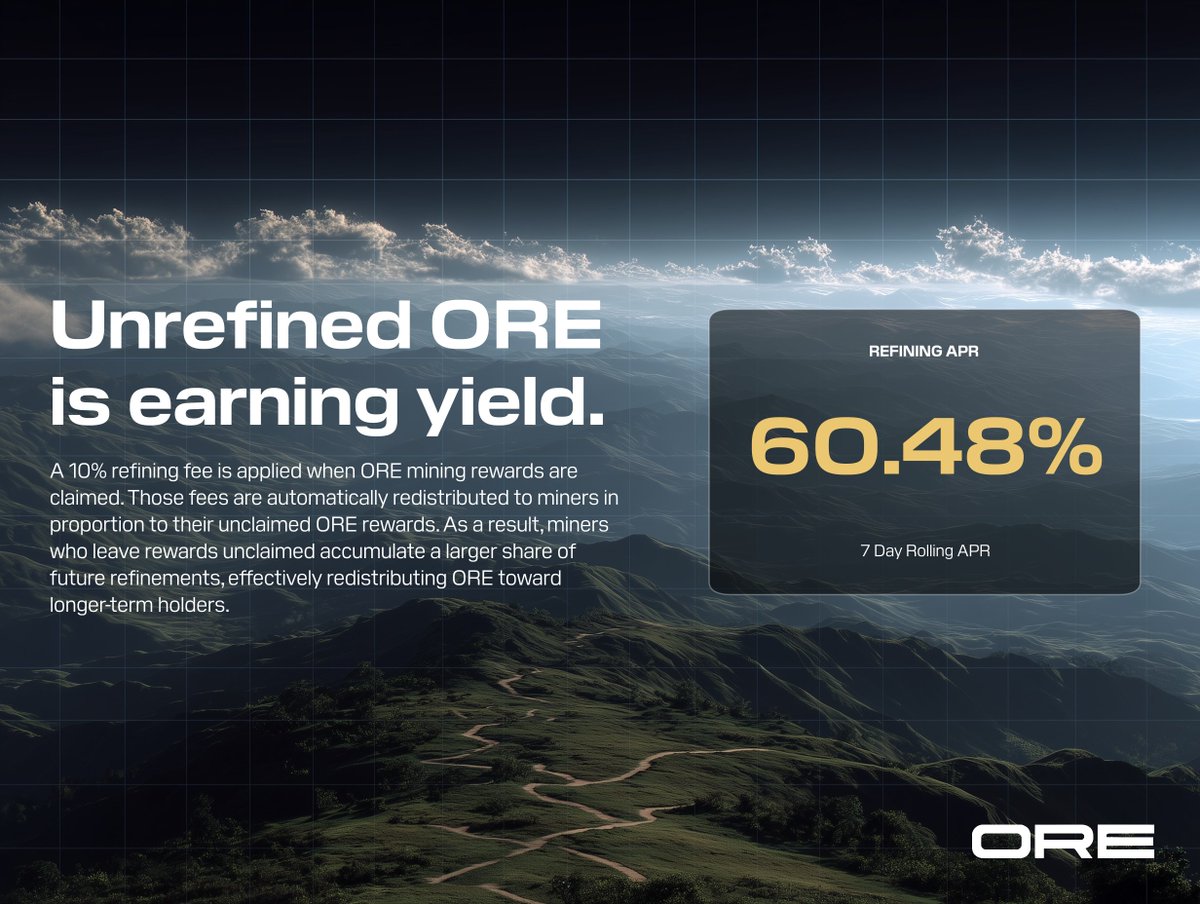
The engine is the exit fee. Anyone who leaves, anyone who refines their unrefined ORE to make it liquid, pays 10% on the way out. That 10% goes straight back to everyone still holding unrefined ORE. The patient get fed by the ones cashing out, and the system breathes on its own. That "yield," the unrefined payout, has sat anywhere from around 60% to over 100%, and it's even touched 140% in rare stretches. It all hangs on activity though, so when nobody's mining or refining, it could potentially fall to zero. But we haven't seen that. Honestly, what we've seen so far is crazy ROI, and there's real room to cook here if you've got the right strategy to earn uORE.
Now the balance, because this is the part most people miss. The unrefined payout only works if people actually exit. If hold culture gets too strong and nobody refines, fewer people pay that 10% exit fee, less flows back to the uORE holders, and the payout slows. Scarcity can pull people deeper into that corner. Only three million ORE will ever exist, so if people start treating it like the next Bitcoin, they stop trying to sell and just stack uORE, mining hard to pile up more. That's why it needs a healthy balance between the ones cashing out and the ones holding on. That balance is what lets it run at its best.
Every player shares one risk. If the mining stops, the whole thing dies. No miners, no flywheel. That's why Fred is the most important person in the room. Without Fred there's no Solomon, because there's no mining flow to pay the stakers. And no Brunson either, because there's no working market left to buy into. The miner is the engine, and everyone else is downstream of him. The only reason you even get to pick a player is that the network's busy enough right now to give you the choice.
One honest distinction, since people mix these up. Solomon's staking yield comes from mining activity, a slice of what the miners generate routed to the stakers, so more mining means more for Solomon. Fred's unrefined payout comes from the opposite direction, from people exiting and paying that 10%, which builds up how much your unrefined stack returns. There's a real debate over which is better long term, and I'll leave that to you. Both carry an upside and a catch, and people have made real money on each side.
Strip it all down and you land in the same place every time. Without Fred, none of it exists.
And you don't have to be just one. Most people end up a blend, holding a little, staking a little, mining a little, leaning toward whatever fits how they're wired. The mix is the strategy, and you get to move between them as you go.
So. Which player are you?
-The Wisemen 👁️
8
12
80
2,459
FiL ⛏️ retweeted
Which @ORE player are you?
People have always gone to extremes to earn yield on a scarce asset. Bitcoin holders learned it the hard way. They handed their coins to Celsius, BlockFi, and a dozen platforms for a few points of yield, then watched it vanish overnight. They weren't wrong to want it. The setups they trusted to deliver it were the problem, because none of those contracts were immutable. You gave up your keys to a company, and that company could change the rules or blow up on a Tuesday.
ORE flips that. You earn yield on a hard capped supply of three million, on an immutable contract with no admin key, so nobody can rewrite the rules or pull the rug. You can keep it private, shielding the transaction so you're not doxxed for earning. And you can hold it in a wallet that's started building in quantum resistant properties, not on some company's balance sheet. That stack of features is the first of its kind. It answers, almost point for point, the things people have spent years worrying about with Bitcoin.
So we built a way to explain how the yield actually works, because plenty of people, us included early on, never fully got it. We'll break it down the best we understand it, through three characters. Each one shows you which player you are in this ecosystem.
Brunson buys ORE off the open market. Already refined, liquid, ready to go. He holds it, bets on price, and that's the whole game for him. No yield, no homework. His edge is that simplicity. He isn't leaning on the yield machine to keep running, he just owns the asset on conviction and stays fully liquid.
Solomon is Brunson who took the leap and said, "I want my money working." He stakes his ORE. As long as miners are active, Solomon gets paid, and he takes that yield, puts it right back, and lets it compound. Compound interest is one of the most powerful forces in finance, and that's exactly what's running here. It mostly sits around 15 to 20%, and it can climb toward 25% when mining's heavy. The wild part is how little it asks. All Solomon needs is people mining every day who want to play the game, and there's no holding period.
Then there's Fred, and Fred has two layers. He can buy off spot and stake the whole thing like Solomon if he wants. But to actually mine, he shows up with SOL and goes to work. He's making fresh, unrefined ORE. It's not the finished version of itself yet, it isn't liquid, but it's real ORE, and staying unrefined is exactly where the benefit lives.
This is the game some are calling entertainment finance (shout out to @mattytay for the name). You bet on blocks and try to hit the motherlode, and every winning move puts more unrefined ORE in your pocket. Read that the right way though. This isn't gambling, it's strategy. You're playing position, not pulling a lever.
The engine is the exit fee. Anyone who leaves, anyone who refines their unrefined ORE to make it liquid, pays 10% on the way out. That 10% goes straight back to everyone still holding unrefined ORE. The patient get fed by the ones cashing out, and the system breathes on its own. That "yield," the unrefined payout, has sat anywhere from around 60% to over 100%, and it's even touched 140% in rare stretches. It all hangs on activity though, so when nobody's mining or refining, it could potentially fall to zero. But we haven't seen that. Honestly, what we've seen so far is crazy ROI, and there's real room to cook here if you've got the right strategy to earn uORE.
Now the balance, because this is the part most people miss. The unrefined payout only works if people actually exit. If hold culture gets too strong and nobody refines, fewer people pay that 10% exit fee, less flows back to the uORE holders, and the payout slows. Scarcity can pull people deeper into that corner. Only three million ORE will ever exist, so if people start treating it like the next Bitcoin, they stop trying to sell and just stack uORE, mining hard to pile up more. That's why it needs a healthy balance between the ones cashing out and the ones holding on. That balance is what lets it run at its best.
Every player shares one risk. If the mining stops, the whole thing dies. No miners, no flywheel. That's why Fred is the most important person in the room. Without Fred there's no Solomon, because there's no mining flow to pay the stakers. And no Brunson either, because there's no working market left to buy into. The miner is the engine, and everyone else is downstream of him. The only reason you even get to pick a player is that the network's busy enough right now to give you the choice.
One honest distinction, since people mix these up. Solomon's staking yield comes from mining activity, a slice of what the miners generate routed to the stakers, so more mining means more for Solomon. Fred's unrefined payout comes from the opposite direction, from people exiting and paying that 10%, which builds up how much your unrefined stack returns. There's a real debate over which is better long term, and I'll leave that to you. Both carry an upside and a catch, and people have made real money on each side.
Strip it all down and you land in the same place every time. Without Fred, none of it exists.
And you don't have to be just one. Most people end up a blend, holding a little, staking a little, mining a little, leaning toward whatever fits how they're wired. The mix is the strategy, and you get to move between them as you go.
So. Which player are you?
-The Wisemen 👁️
24
21
74
5,309
Smart contracts should make business more transparent, secure, and reliable; not less.
Jun 14
Smart contracts should make business more transparent, secure, and reliable; not less.
1
5
153
FiL ⛏️ retweeted

Jun 14
6
17
62
1,910
FiL ⛏️ retweeted

Jun 13
The future of money is open source.
6
17
120
3,003
FiL ⛏️ retweeted

Jun 13
"You'd never sign a paper contract they wouldn't let you read. A closed smart contract is exactly that. A blank sheet of paper that says sign here anyway."
- @HardhatChad of @ORE
Rule Number 1. Always open source.
The Lost Tapes 01: Deep Cuts From the Mine.
Jun 8
The Lost Tapes 01: Deep Cuts From the Mine.
feat. @HardhatChad of @ore.
The conversation the timeline needed.
Store of value. Privacy. DeFi. Mining. Quantum.
A @Wisemenmentors Production
2
14
46
5,842
🤝⛏️ whatever assets you hold or support, take the time to thoroughly research the developer’s philosophy, decision-making, and actions. For those seeking full transparency and fairness, I recommend learning more about @ORE 💎🗻
"upside means little if you are not part of a legitimate and honorable journey that upholds the true ethos (ήθος) of CRYPTO"
Jun 13
Definitely the protocol can get smarter about how it uses revenue. There are some experiments under development, coming very soon in v4.
At the same time, protocol revenue should be managed by the protocol. It should not managed by a hot wallet with single user or team making ad hoc discretionary decisions about its use, timing, and size.
1
23
640
Trust is everything
🤝⛏️ in a space where trust became a myth with fake ass devs along with ruthless KOLSs / scammers / grifters being in control for years due to degeneracy being considered as a cool thing -> it is time that people should sit their asses down and evaluate their decisions without being usd hoes for a second -> CRYPTO, as to what it stands for, got faded through the years for the reasons mentioned above...it's time for this space to flourish once again...in a few words this is why i support @ORE and what it stands for -> honor, honesty, resilience, fairness and so much mORE 💎🗻
Jun 13
Trust is everything
1
4
39
589
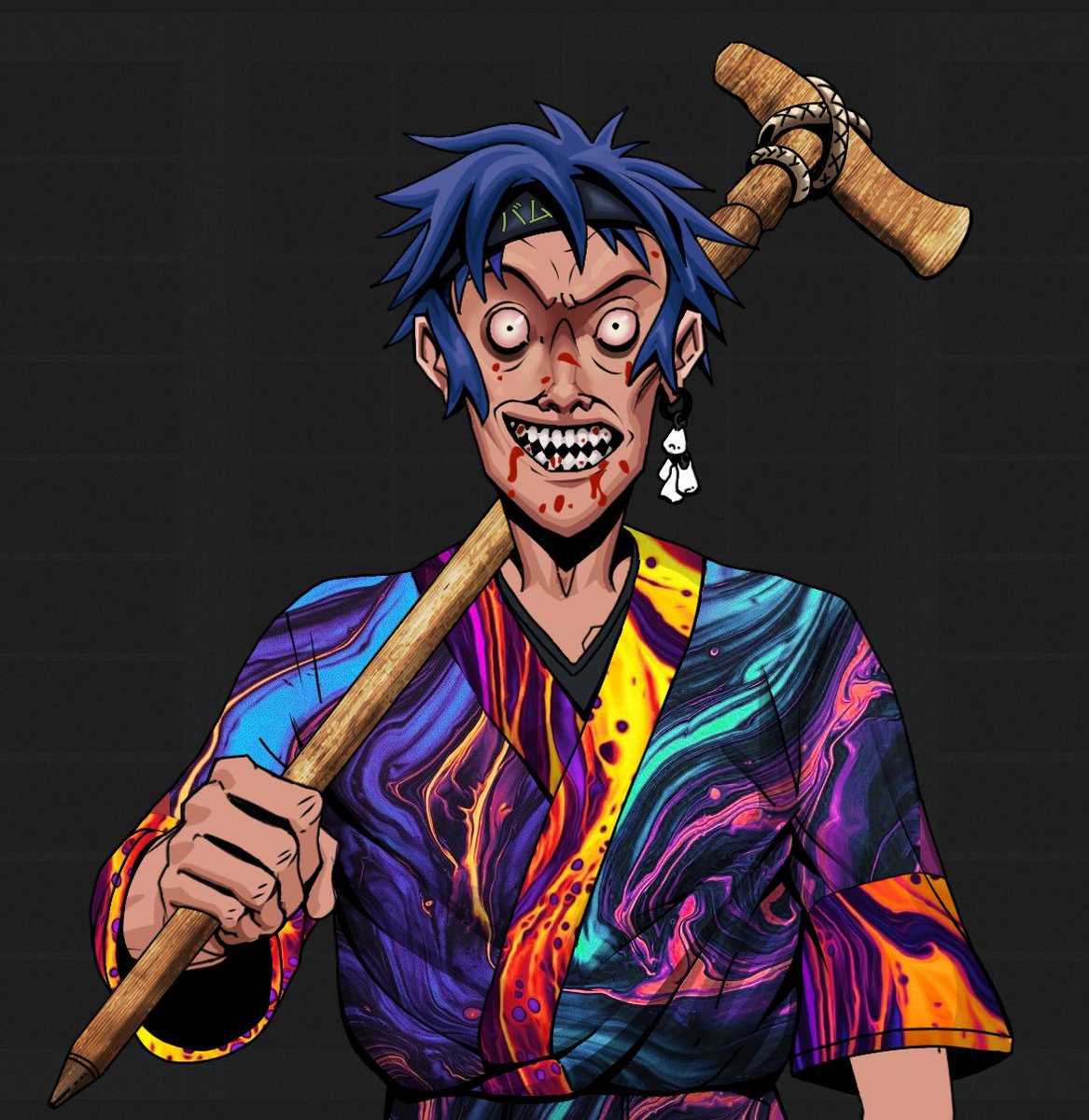
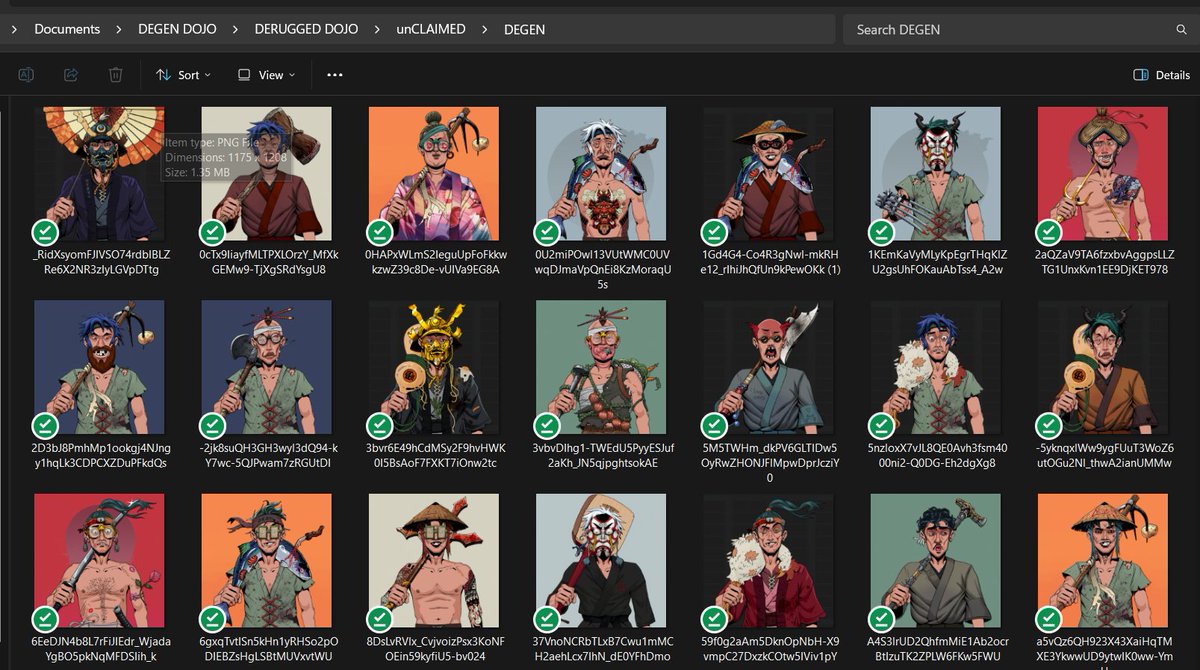
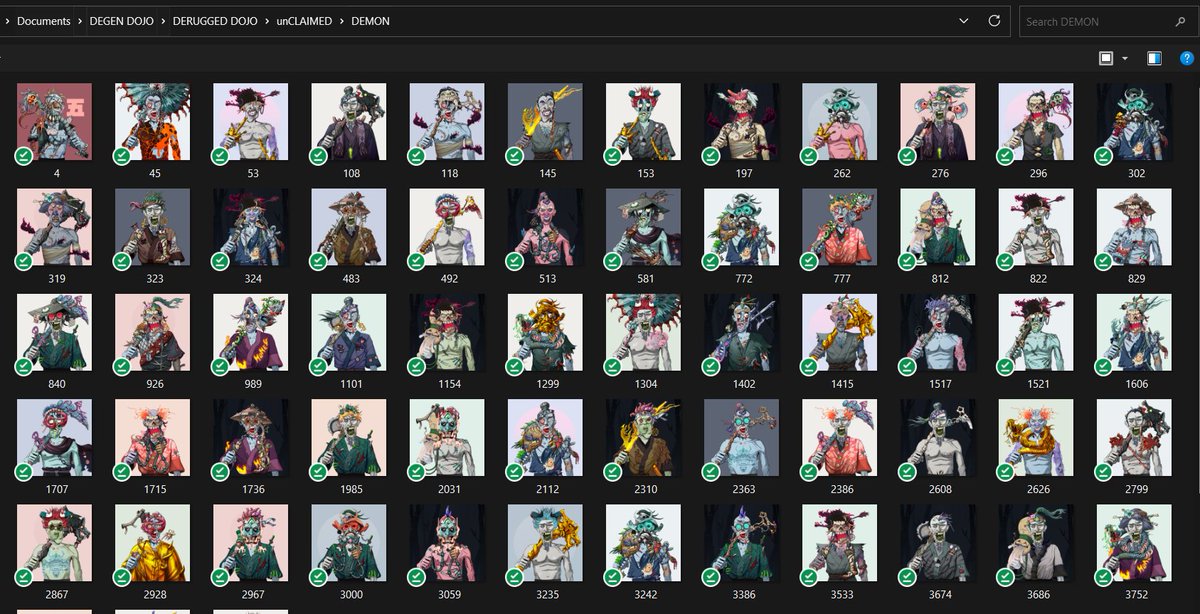
🤝 @AdamWeitsman i know you love ART and i bet you these (probably) are the best you have seen 🤝
⛩️ in order to appreciate them more you have to see how their degen (OG) version looked like and how the artist was able to demonize each single trait in such a remarkable way ⛩️
1
5
141
FiL ⛏️ retweeted

Jun 13
The benefits of staked ORE (as solana:sTorERYB6xAZ1SSbwpK3zoK2EEwbBrc7TZAzg1uCGiH) can easily go unnoticed or misunderstood.
Holding $ORE as a store of value is the start.
Holding $ORE as solana:sTorERYB6xAZ1SSbwpK3zoK2EEwbBrc7TZAzg1uCGiH is the smart.
It turns the store of value $ORE into a set-it-and-forget auto-compounding flywheel (~15% APR).
You no longer have to waste time claiming your rewards, and reinvesting, over and over to compound.
The claiming and re-staking also creates a tax accounting mess over time.
solana:sTorERYB6xAZ1SSbwpK3zoK2EEwbBrc7TZAzg1uCGiH does it all for you. No claiming. No staking. It just quietly auto-compounds the rewards on the backend. All the work is done for you.
Even better. You can shield it for privacy - and the auto-compounding and APR earnings still carry on, privately.
Let's say - you buy $10,000 worth of solana:sTorERYB6xAZ1SSbwpK3zoK2EEwbBrc7TZAzg1uCGiH today @ $50 each - and forget about it.
The 200 solana:sTorERYB6xAZ1SSbwpK3zoK2EEwbBrc7TZAzg1uCGiH tokens just sit in your wallet for 10 years. Let's use a gloomy scenario where $ORE price is stagnant at $50 for 10 years.
Without doing anything else --> your $10,000 solana:sTorERYB6xAZ1SSbwpK3zoK2EEwbBrc7TZAzg1uCGiH grows to roughly $40,500 – $44,800 (4.05x - 4.48x) from auto-compounding — with zero price increase in ORE needed.
Let's say $ORE price increases each year by 10% - 30%, typical of other store of value assets.
At the low end (10% ORE price growth per year): Your $10,000 becomes roughly $105,000 – $116,000.
At the high end (36% ORE price growth per year): Your $10,000 becomes roughly $876,000 – $970,000.
It's worth the time to research and understand, while it's early.
8
10
37
1,865