
We're a team of local leaders and advocates working toward a high-quality education for all kids, regardless of their address.
Joined February 2009
- Tweets 28,538
- Following 7,852
- Followers 24,251
- Likes 13,680
1,918 Photos and videos






50CAN retweeted

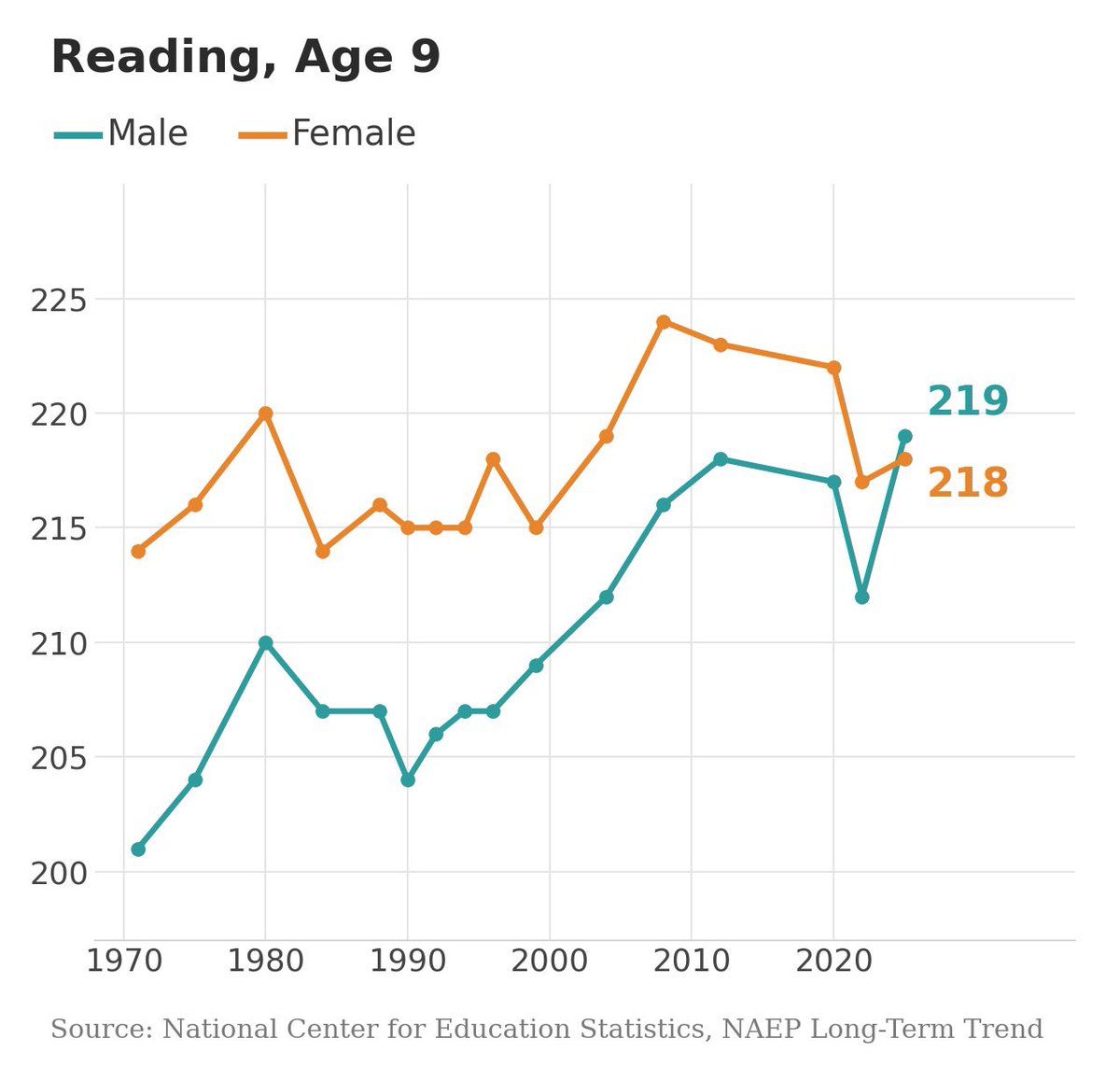
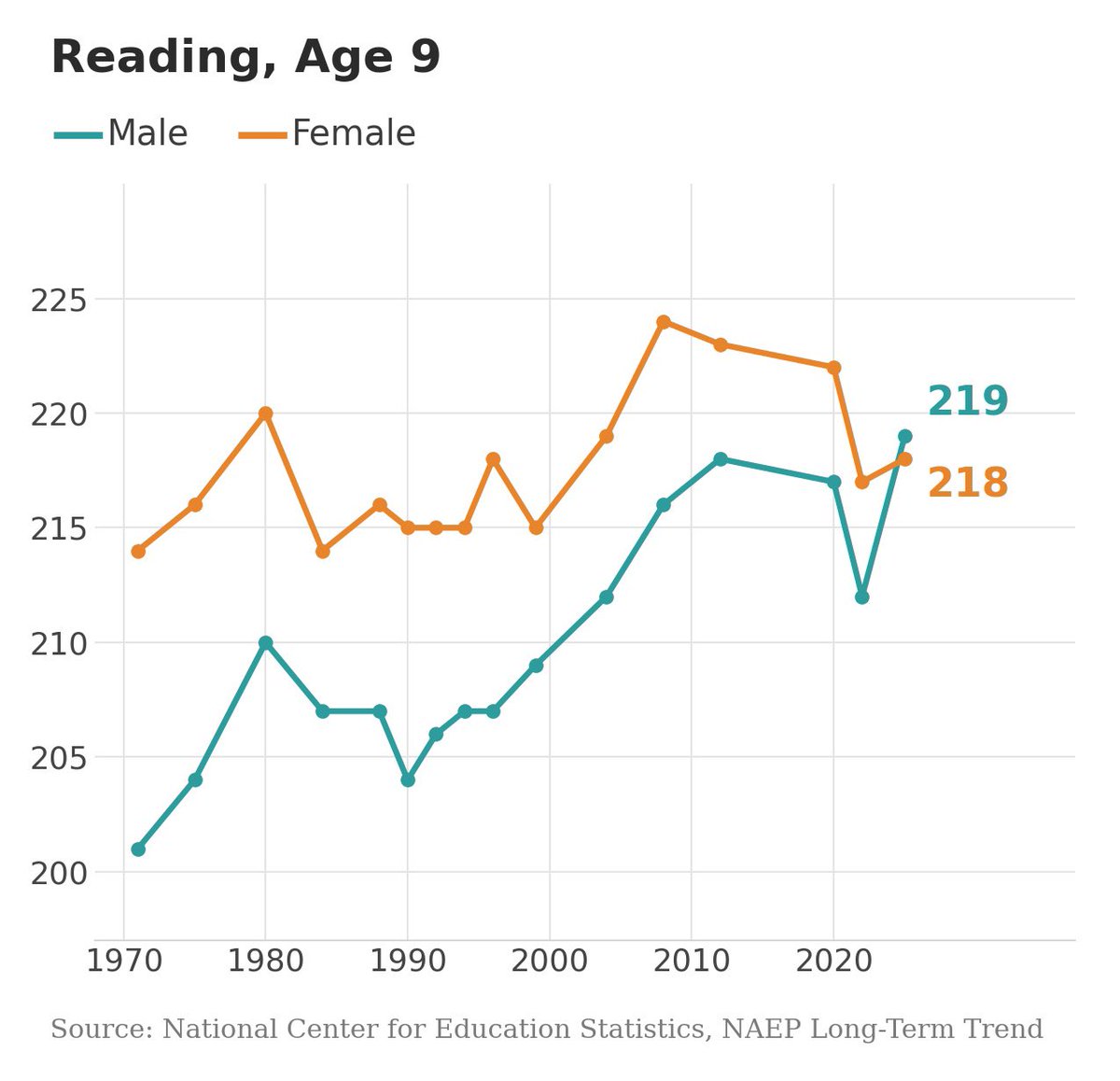
For more than 50 years nine year old girls did better than boys in reading on the NAEP, until 2025
25
37
231
222,861
50CAN retweeted
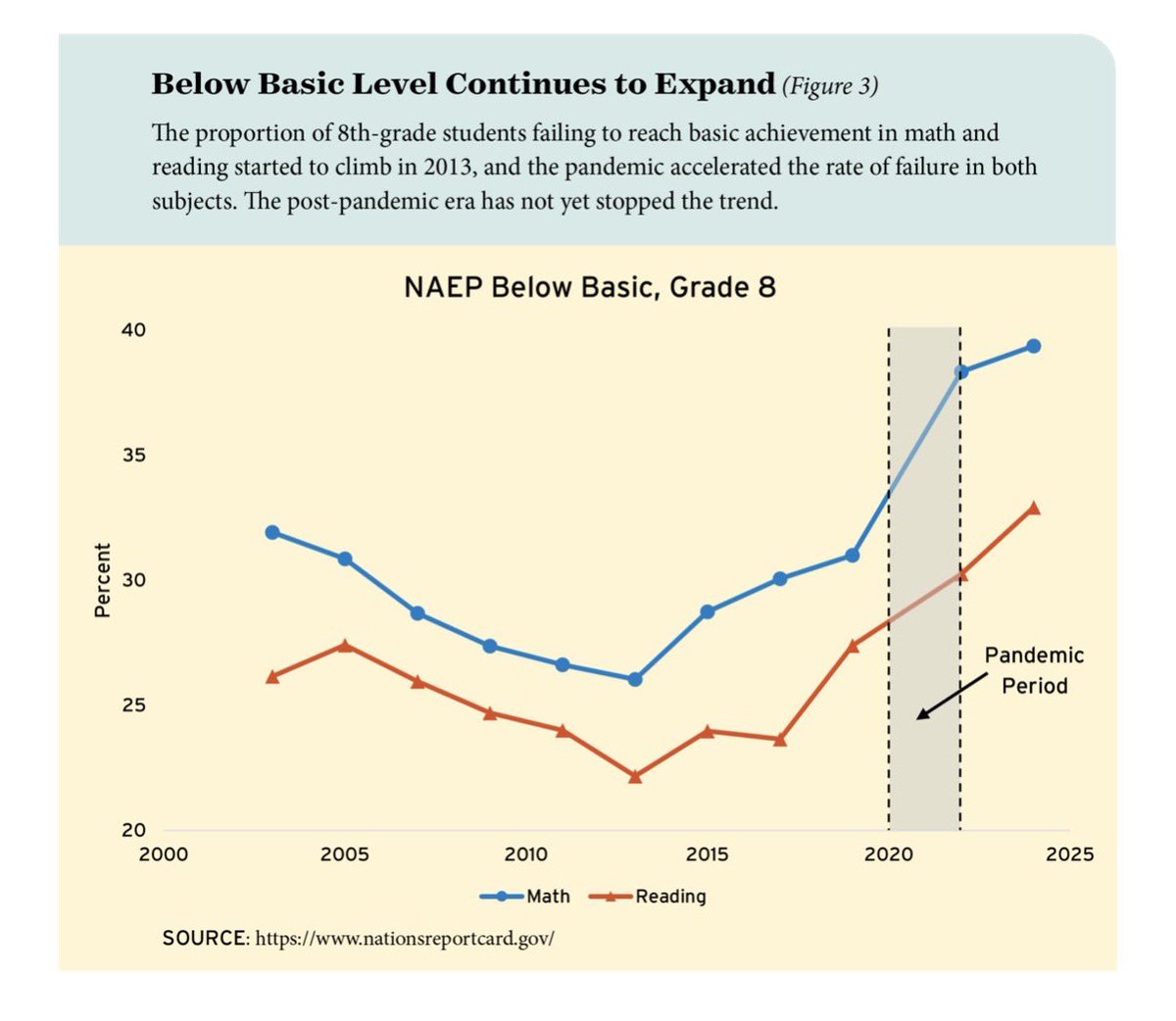
There are a bunch of ways to cut the NAEP results. One of the more illuminating is to look at the percentage of students who score “below basic.” These are the kids who have fallen significantly below what is expected of them at that age.
Here is what you see:
6
10
33
5,360
50CAN retweeted
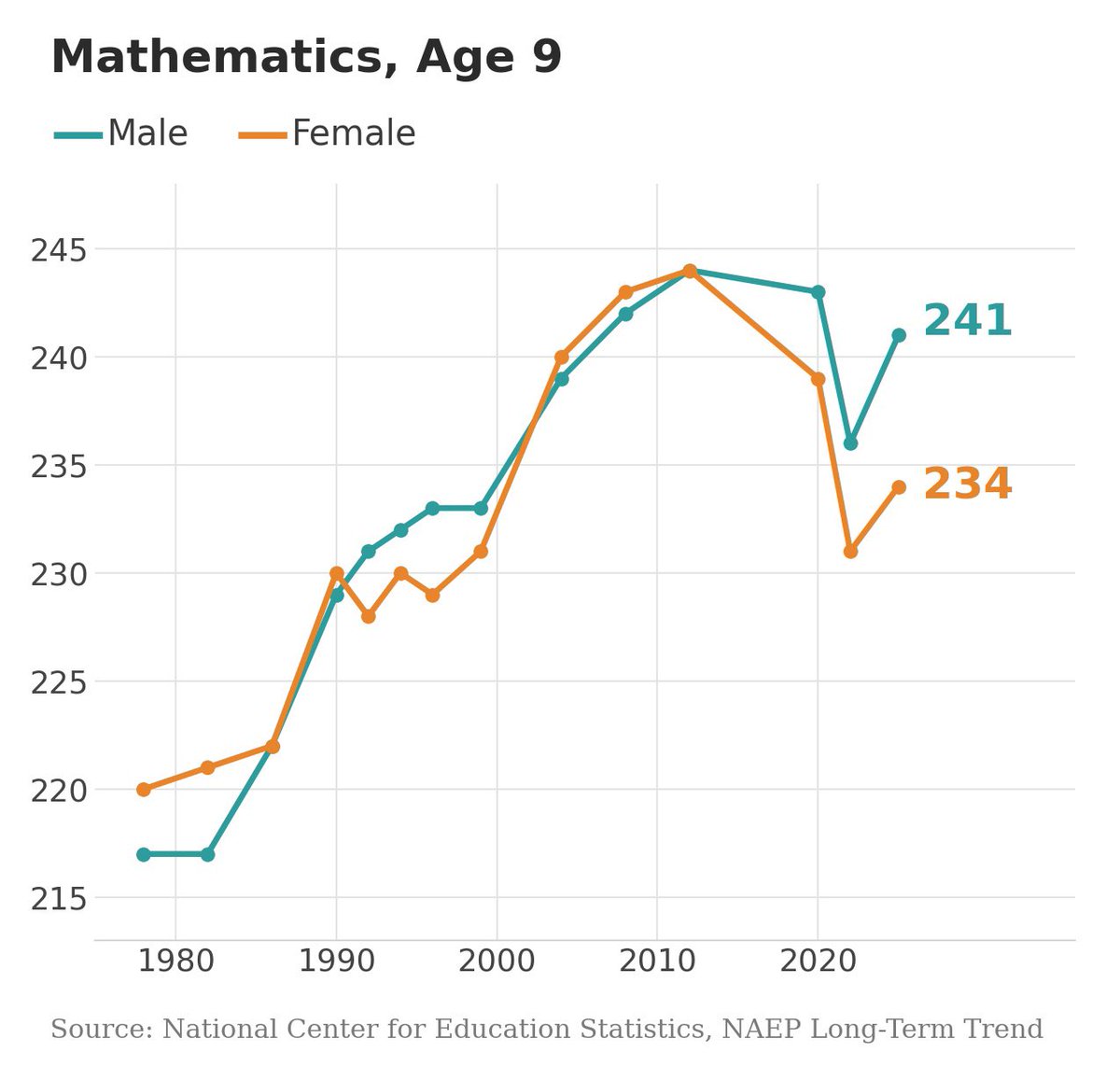
Here are 9 year olds. Same gender gap opening up.
2
3
57
5,648
50CAN retweeted
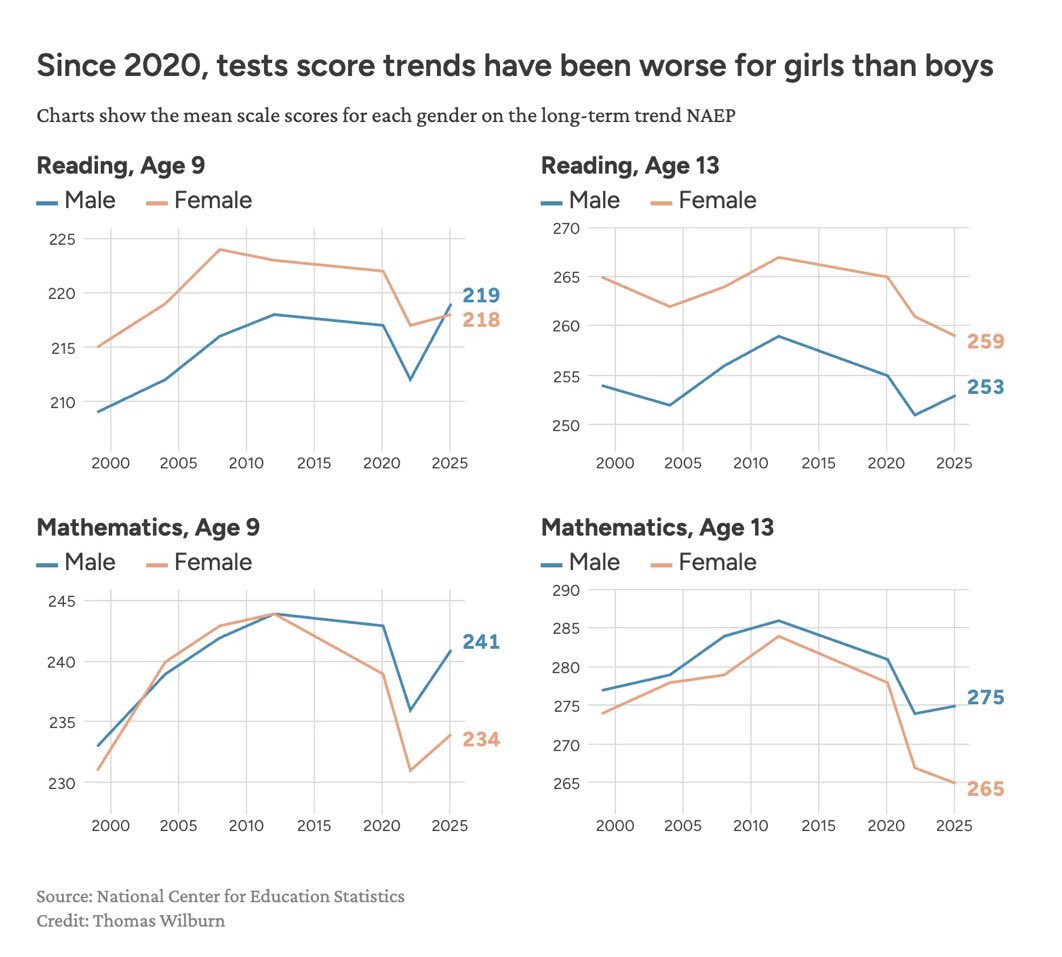
Here are the results for 9 year olds for reading. Girls have done better than boys for more than 50 years … until now
7
5
52
6,879
50CAN retweeted
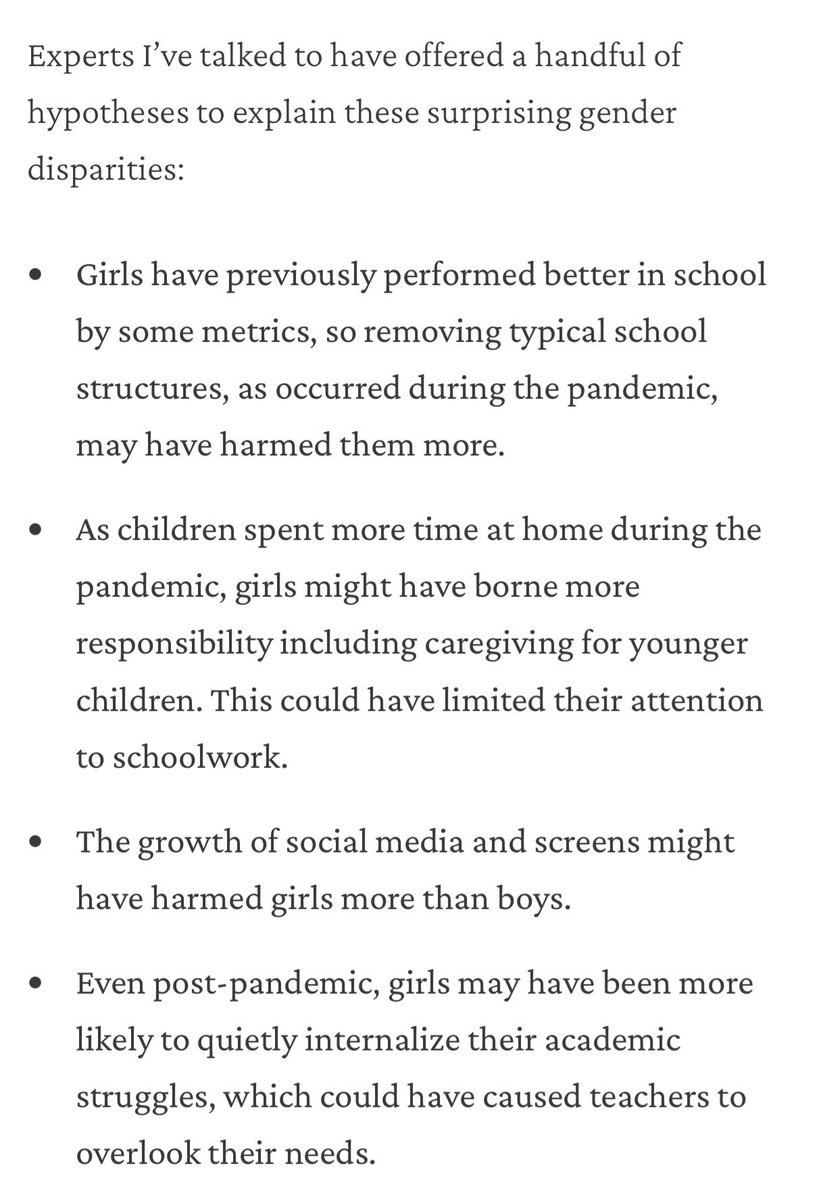
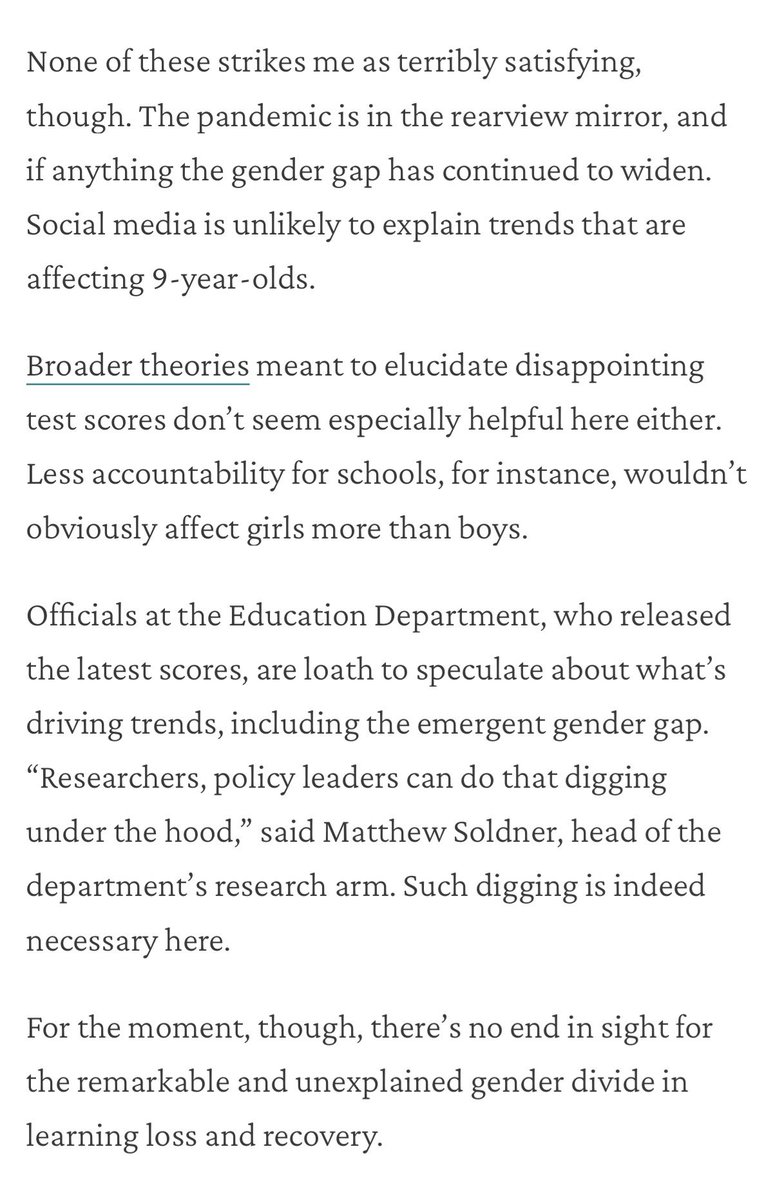
He offers these four explanations before arguing they aren’t too compelling. I think he is probably too quick to dismiss social media and phones. chalkbeat.org/2026/06/11/gir…
2
5
371
50CAN retweeted
Matt Barnum (@matt_barnum) asks the big question coming out of NAEP: what’s going on with girls?
7
2
26
1,417
50CAN retweeted

Jun 11
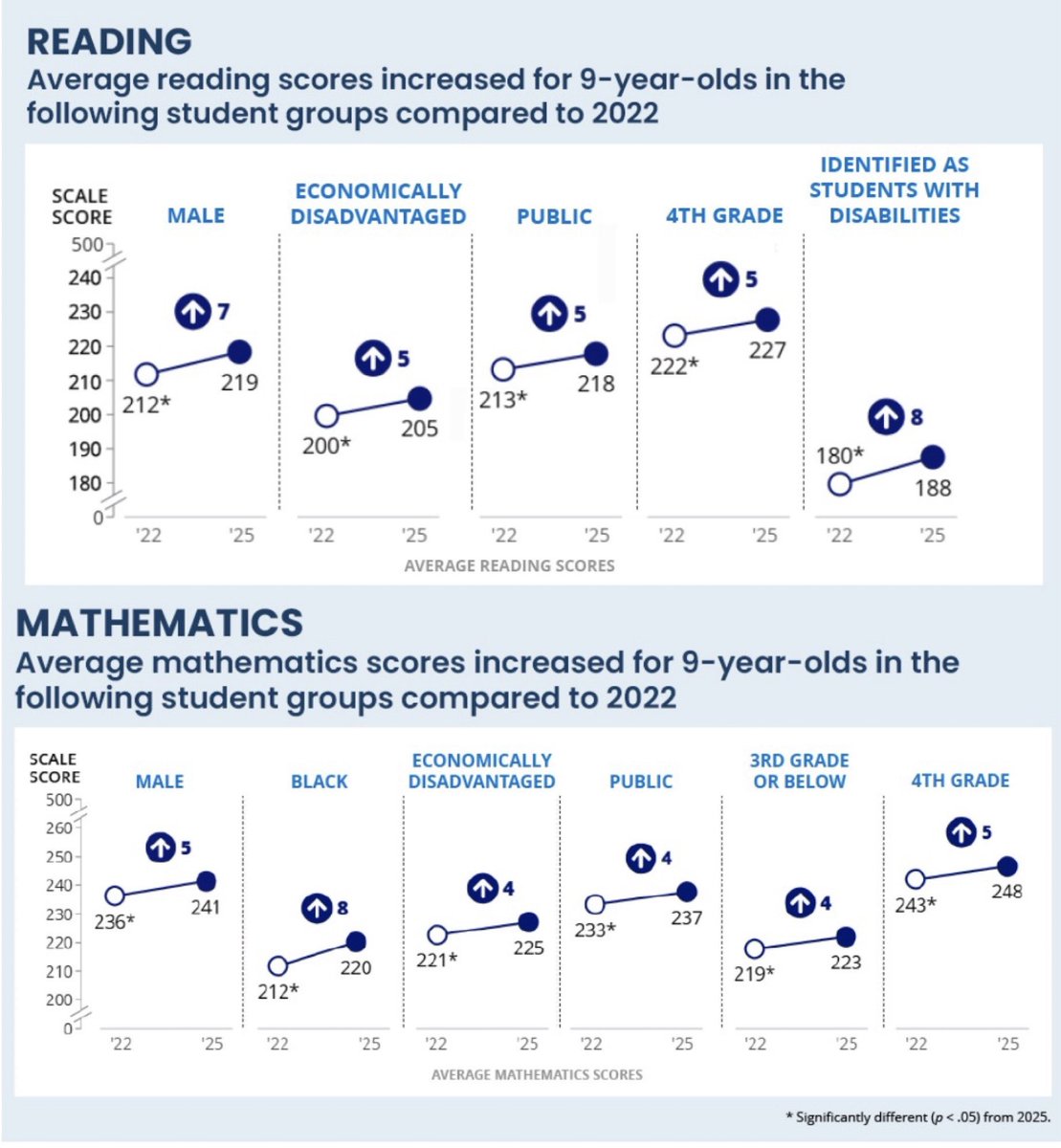
The rise in scores for males from 2022–2025 is promising, but the lag for females is puzzling. From my piece: "Boys made statistically significant gains, jumping by an average of 7 points in reading and 5 points in math. Girls improved by 1 point in reading and 3 points in math."

The new NAEP isn’t all bad news. The kids who weren’t in school when we shut it down for 1-2 years are rolling through the system and starting to out-perform the ones who were in elementary school when schools were closed.
Boys & low-income kids saw the biggest upswing.
1
3
9
2,797
50CAN retweeted

Jun 10
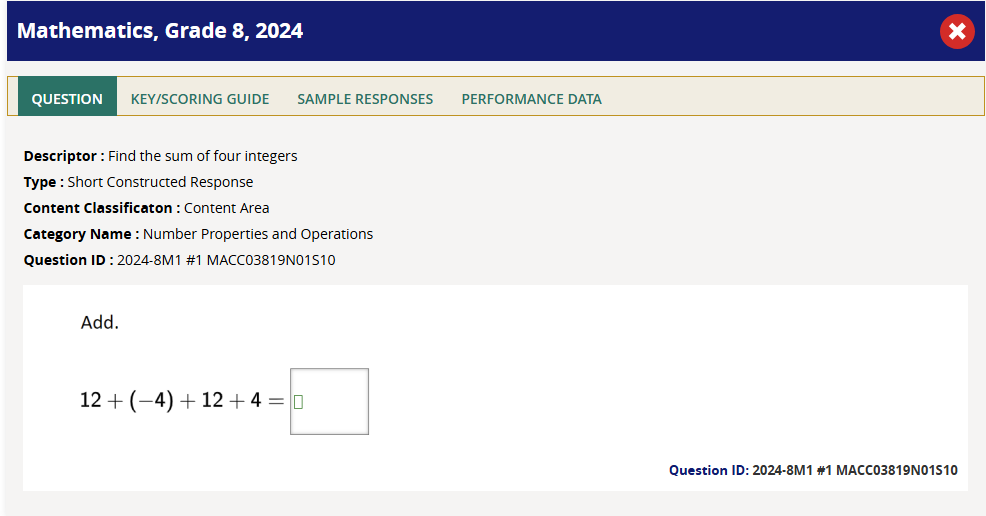
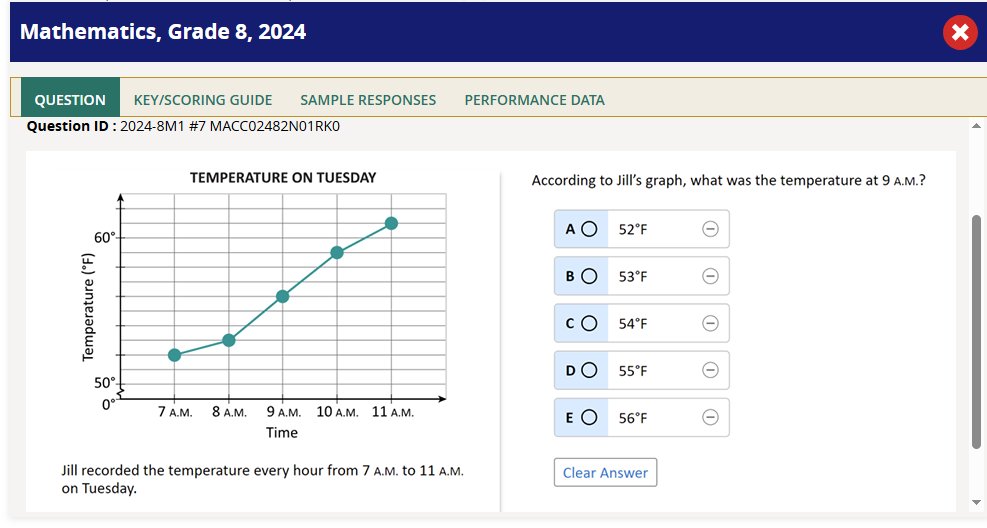
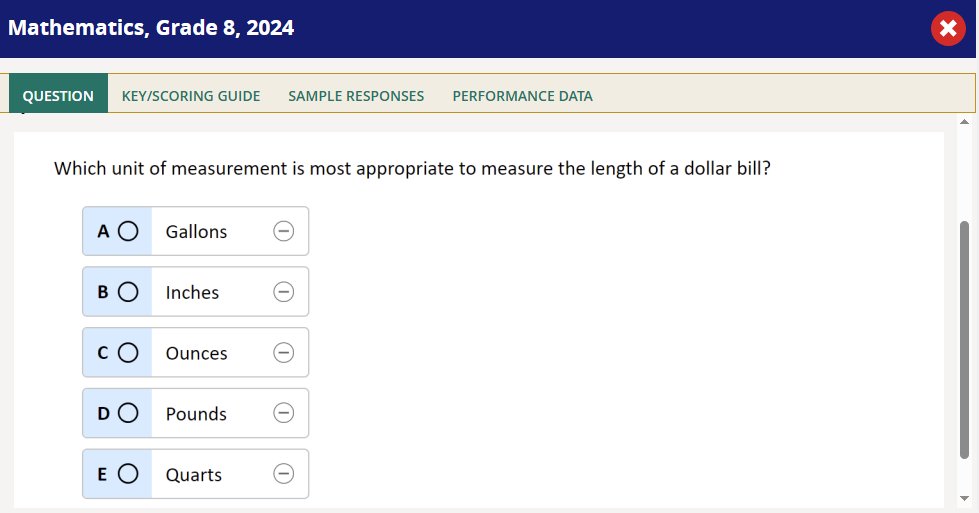
I like to use NAEP's examples.
Screenshot #1 is the most difficult question a 25th percentile was "likely" to answer correctly in 2010. Now, they would not, and #2 is the most difficult.
For 10th percentile, they could do #2 in 2010 but only #3 in 2025.
nationsreportcard.gov/itemma…
2
4
7
383
50CAN retweeted
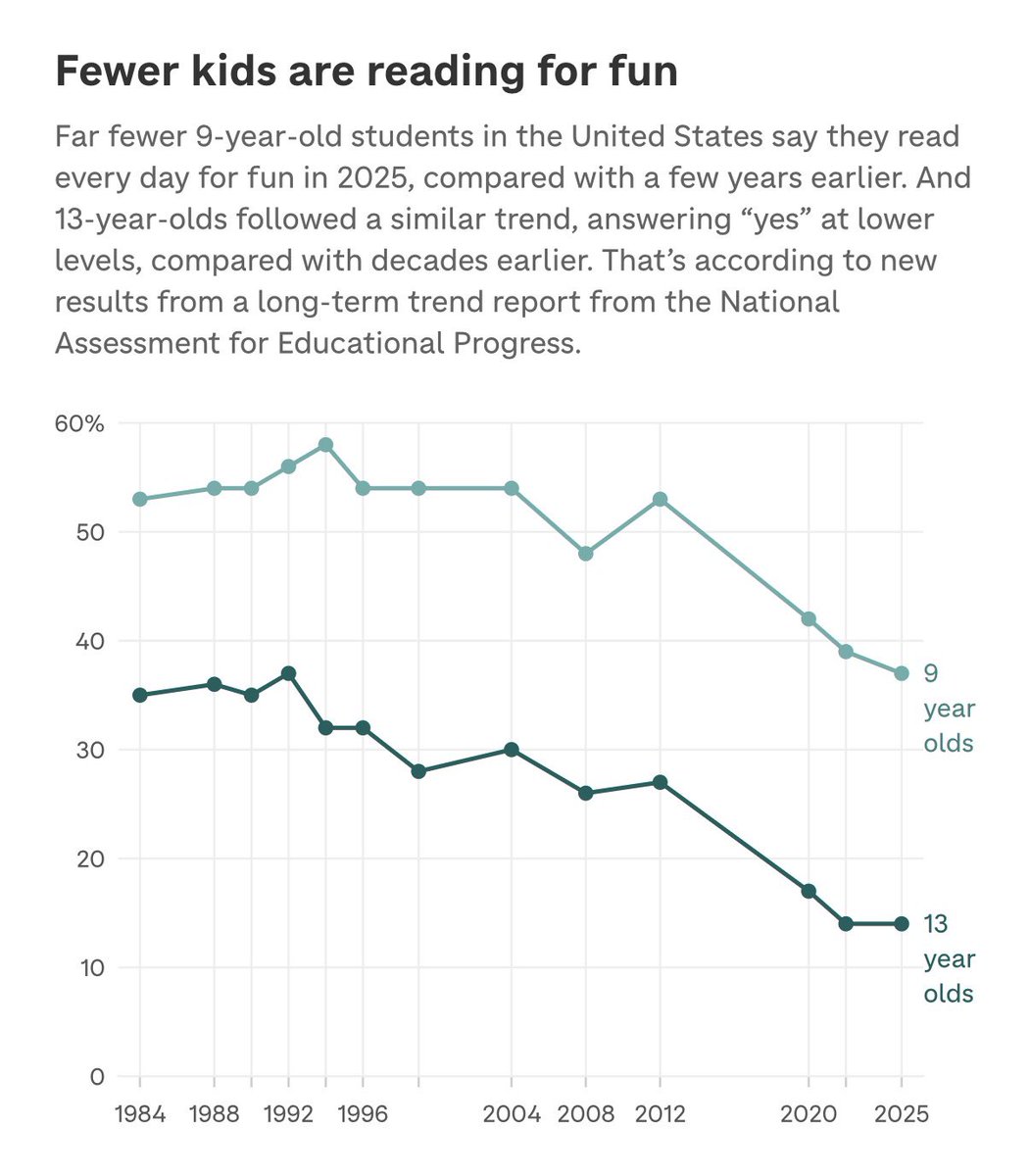
Here is a different way of visualizing the drop (from NPR)
1
9
21
2,097
50CAN retweeted
The new NAEP isn’t all bad news. The kids who weren’t in school when we shut it down for 1-2 years are rolling through the system and starting to out-perform the ones who were in elementary school when schools were closed.
Boys & low-income kids saw the biggest upswing.
5
21
58
7,317
50CAN retweeted
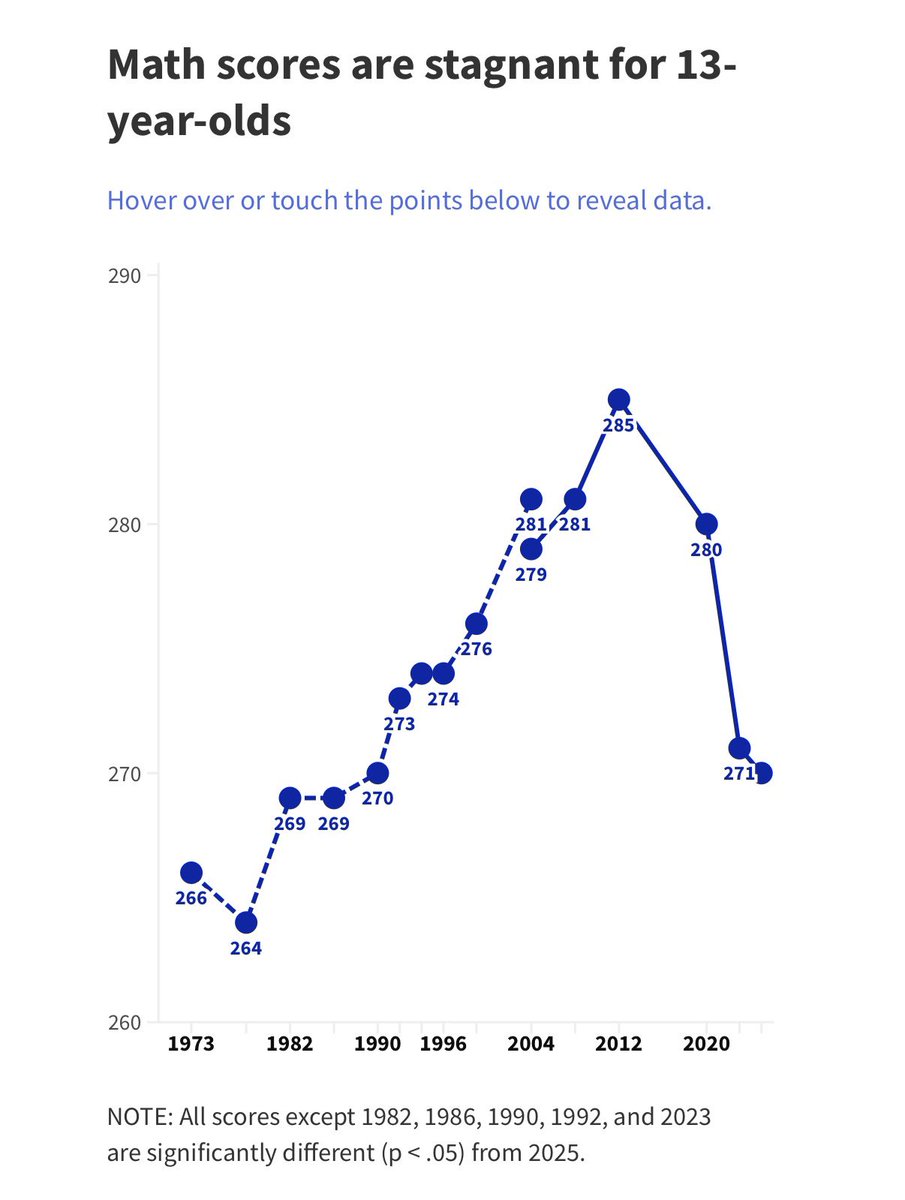
We’ve never seen drops in achievement like this before. It’s basically a loss of a year and a half of knowledge per child and a reversal of three and a half decades of steady progress.
The system isn’t designed to fix the scale of the problem. And the problem isn’t being fixed.
12
27
50
5,883
50CAN retweeted
1
3
258
50CAN retweeted
What can we do about this?
New data from NAEP
22
9
25
8,547

🚨 🚨 🚨
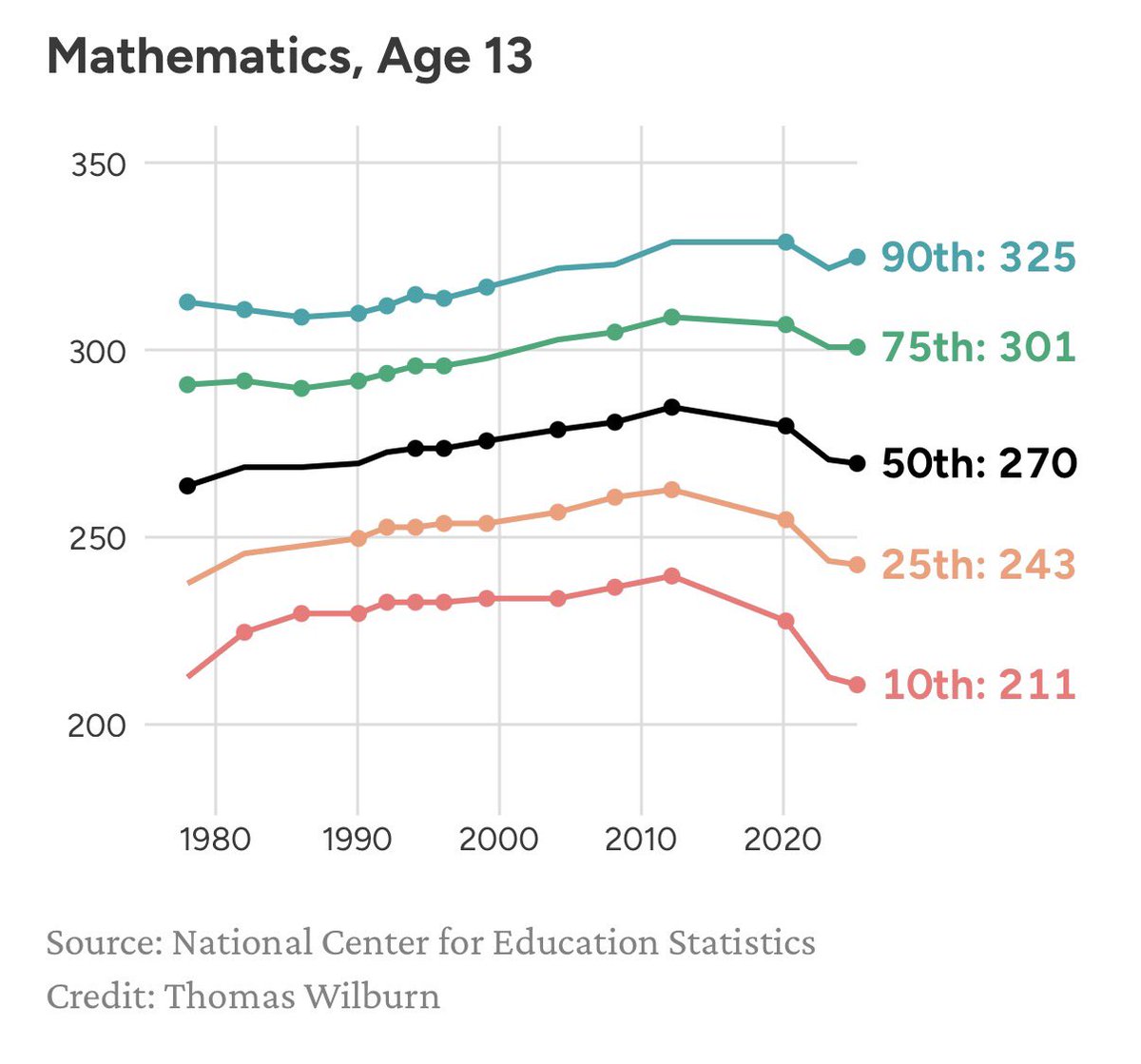
New NAEP results are out and it’s clear the bottom has fallen out for our lowest performing math students:
The bottom 10% of students performed worse than any cohort of students on the history of the test going all the way back to the 1970s
2
7
656
50CAN retweeted
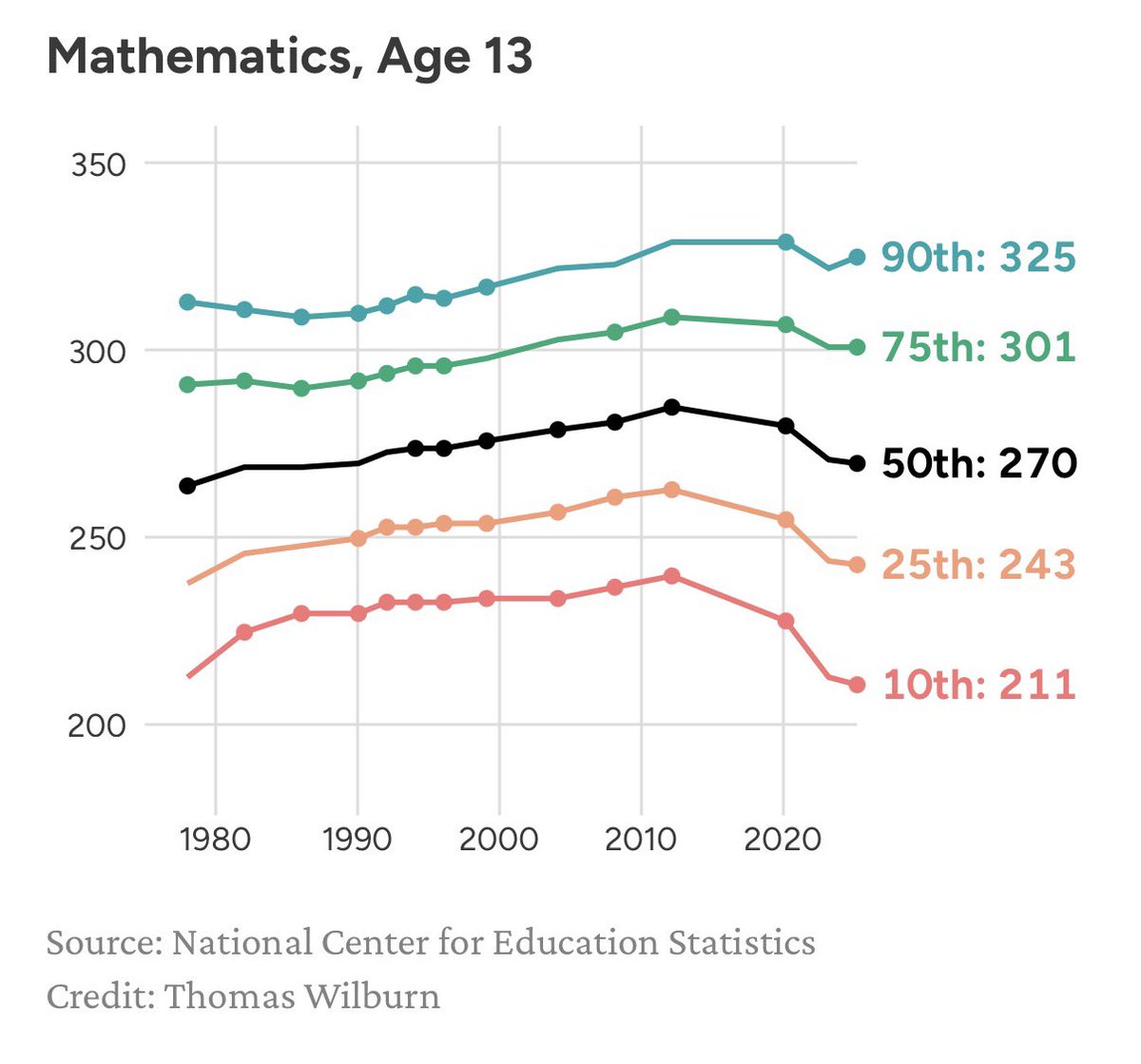
Meanwhile the gap between high and low performers continues to grow
2
6
236
50CAN retweeted
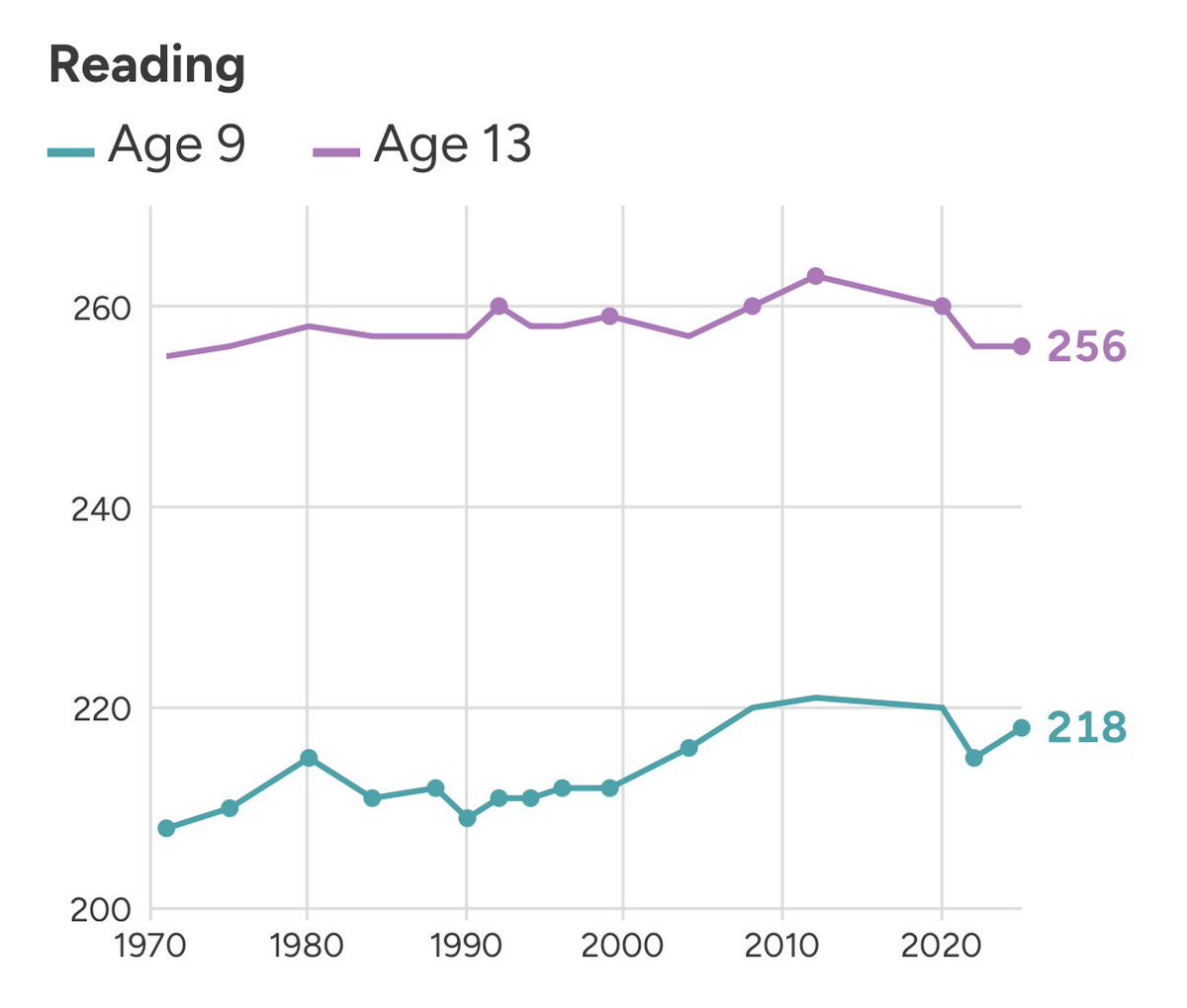
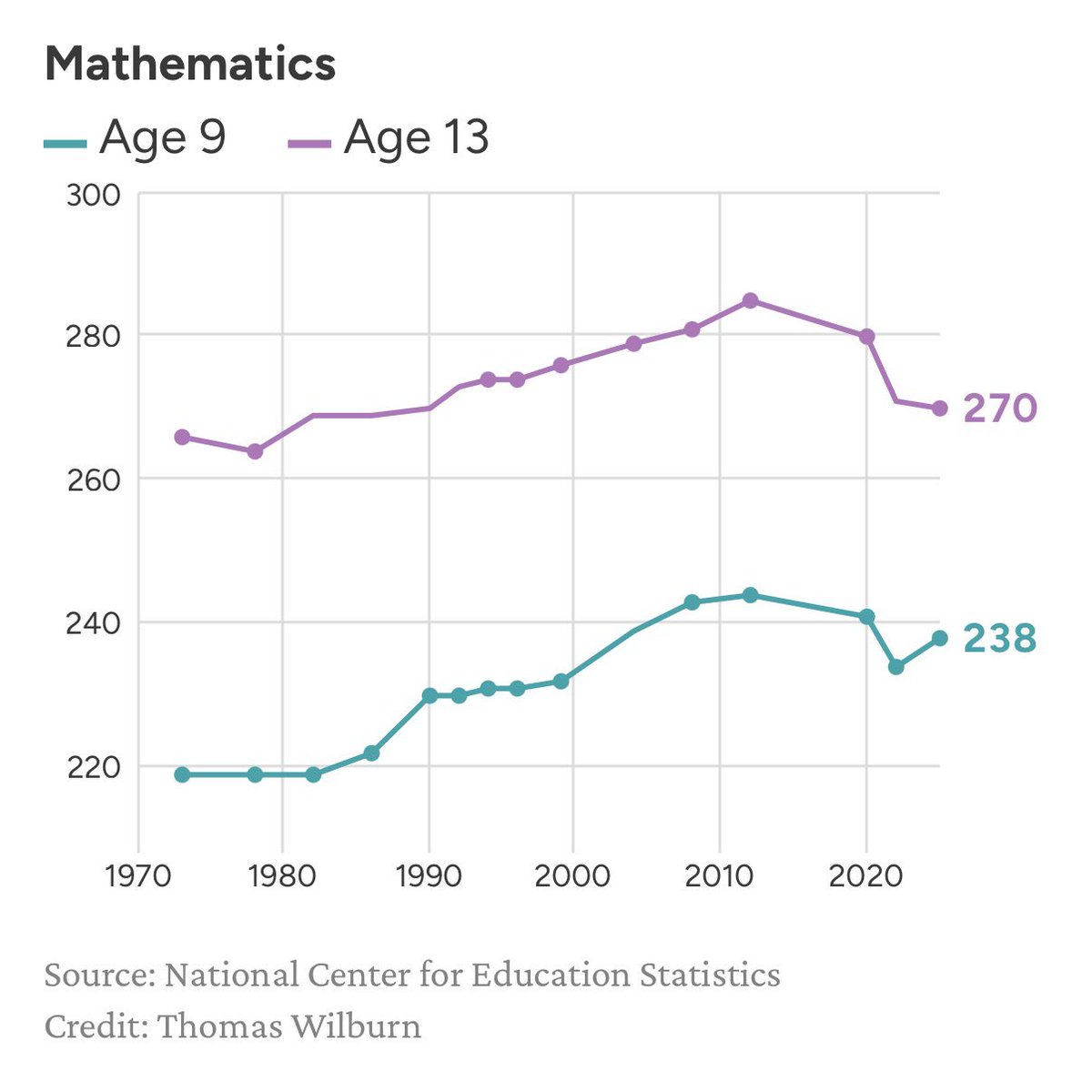
New NAEP results show that 9 year olds, who were on the cusp of kindergarten when Covid hit, are recovering in math and reading.
While 13 year olds, who were in elementary school when schools were shut down, continue to lose ground in math and are stalled out in reading.
1
7
15
3,100
50CAN retweeted
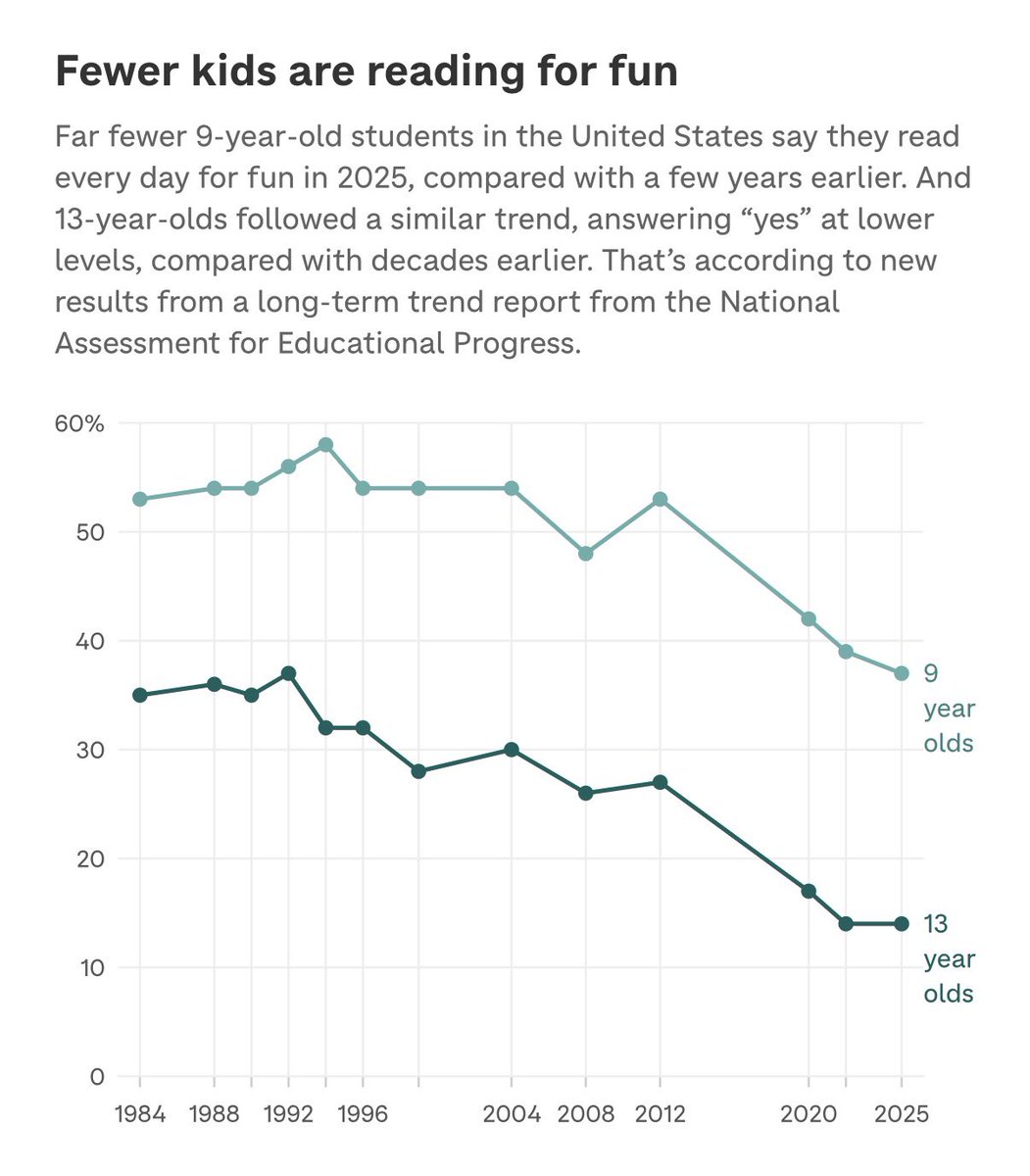
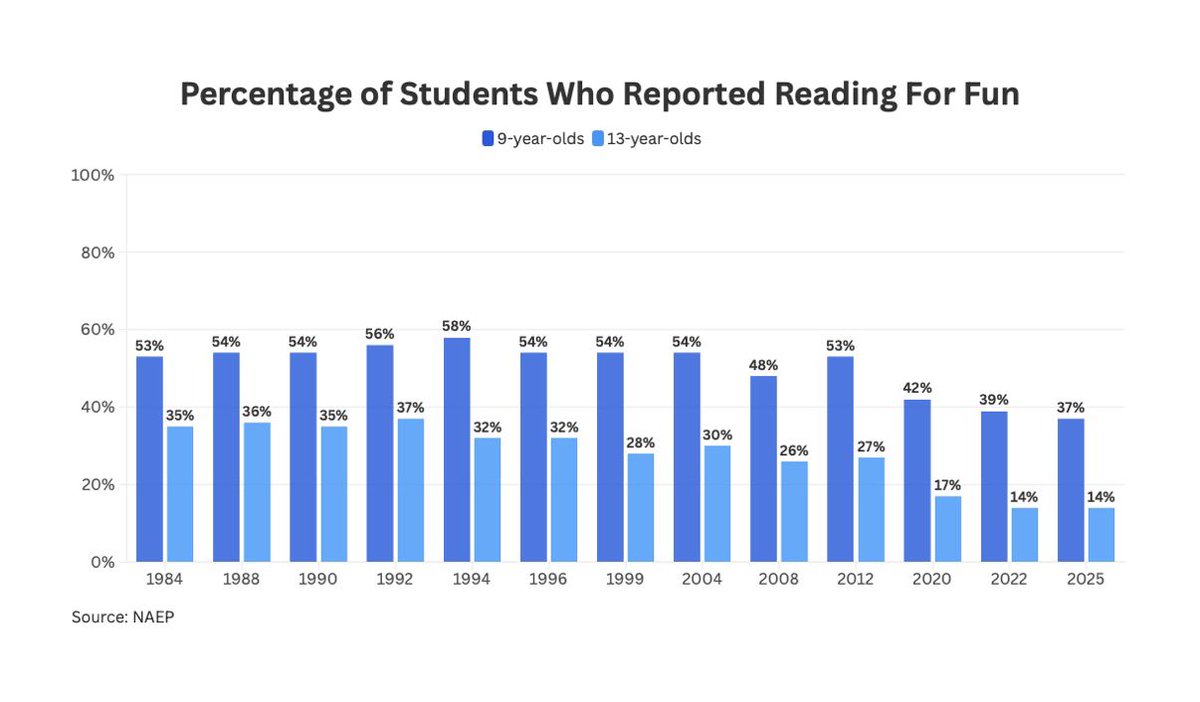
The percentage of 9 year olds who read for fun reaches a new low
Source: NAEP
37
55
286
441,539
50CAN retweeted
The trend line up until now. Tomorrow we will get a new data point.
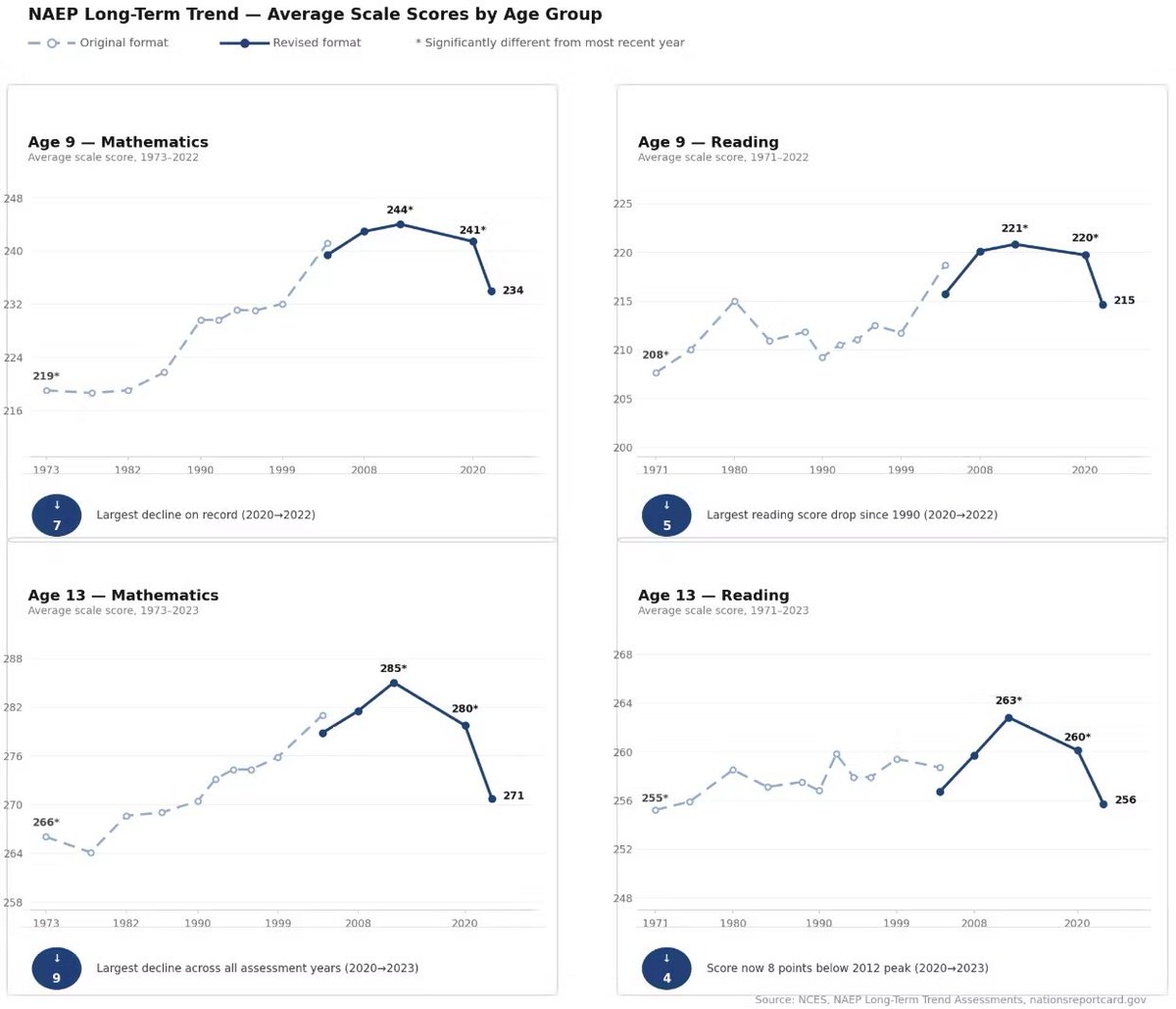
New NAEP results are coming out at midnight ET tonight.
This is the "Long-Term Trend" version of the test for 9 and 13-year-olds, meaning we will be able to make comparisons back to the 1970s. It will cover reading and math. It will not include states, just national results.
1
11
1,657
50CAN retweeted
Other questions:
- What differences will we see between the performance of boys and girls?
- Will we see more positive trends for math than reading?
- Are the racial and income gaps getting worse?
1
1
4
267