
Professionally: Scaling payment agents for the machine economy. Personally: Ancient Indian knowledge system student. Reach-outs: Fintech03X@gmail.com
Joined November 2021
- Tweets 7,122
- Following 76
- Followers 34,399
- Likes 8,072
588 Photos and videos



22m
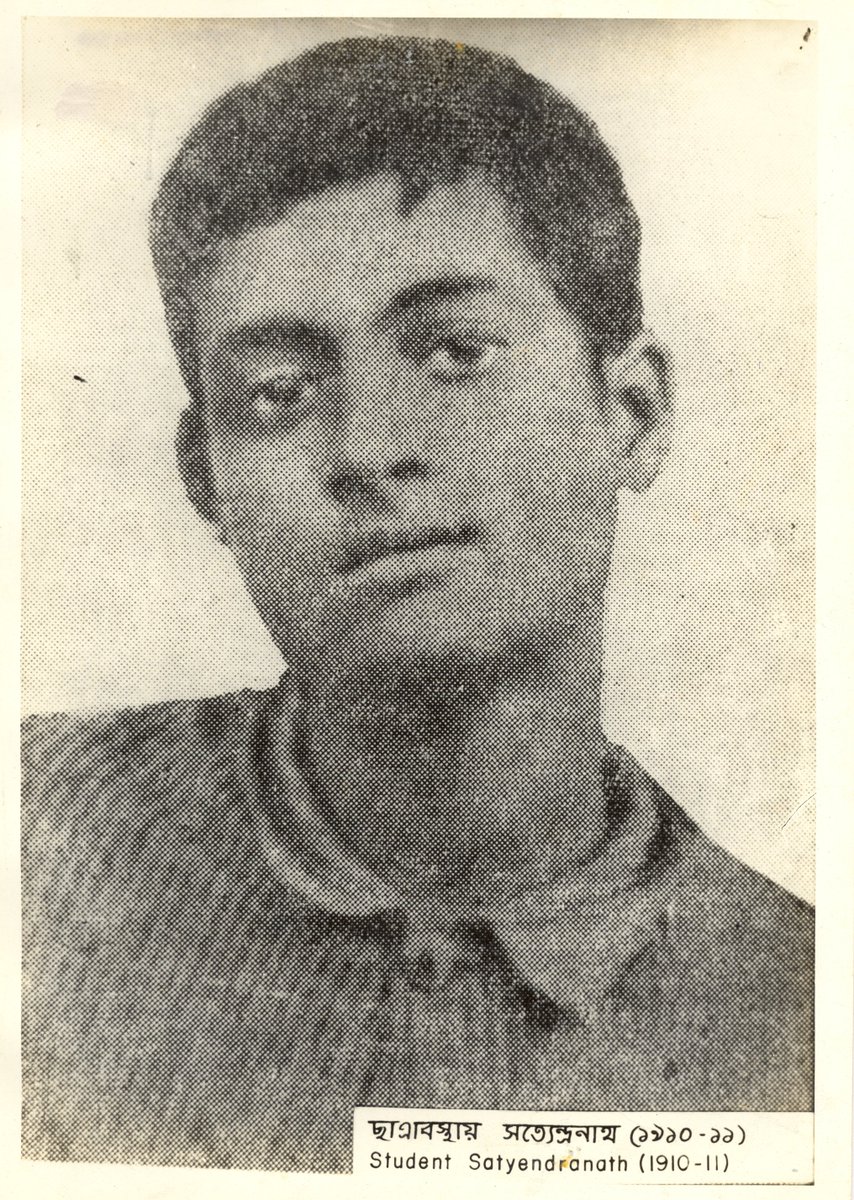
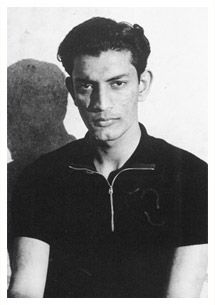
Before the world knew Satyendra Nath Bose as the physicist whose ideas would reshape quantum mechanics, he was a young man teaching the children of workers in the narrow lanes of Maniktola. Long before the famous letter to Einstein. Long before photons, Bose-Einstein statistics & a new chapter in modern physics.
S.N. Bose was among a group of young students who spent their evenings running classes at the Working Men's Institute, a night school for working-class children. The Institute operated from Keshab Academy on Maniktola Street & had been founded by associates of Sri Aurobindo Ghosh & Barin Ghosh during a period when nationalism, education & social reform often walked hand in hand.
The school's president was the renowned Presidency College mathematics professor D.N. Mallik. Among the young volunteers conducting classes were Nirendranath Roy, Satyen Bose, Girijapati Bhattacharyya, Pashupati Bhattacharyya & Harish Sinha.
They continued teaching there until they completed their B.Sc. examinations.
History remembers Bose for changing our understanding of the universe. But before he taught the world how photons behave, he was teaching ordinary children who simply wanted a chance at education.
4
27
412
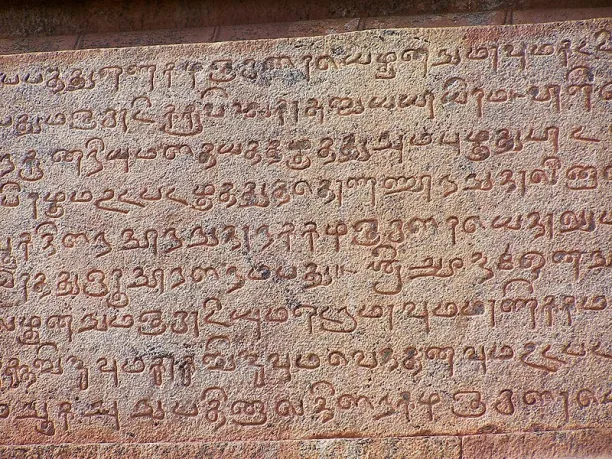
A cartoon being circulated on X says Indians should thank the British because James Prinsep deciphered the Brahmi script & helped recover our history. :))
Do you know before he became a so-called expert on our ancient scripts, Prinsep’s primary day job was serving as the Assay Master (chief metallurgist & currency controller) at the Banaras & Calcutta Mints. He was not an academic; he was an economic agent sent to fundamentally alter India's wealth distribution system.
Until the 1830s, India had a beautifully diverse, highly resilient decentralized currency system. Local kingdoms, merchant guilds & regional mints issued their own silver and gold coins. Local money-changers (Shroffs) evaluated coins based on pure metal weight. James Prinsep was the literal architect who destroyed this system.
Using his position as Assay Master, Prinsep spent yrs systematically studying the purity of native Indian coins. He did not do this out of cultural curiosity, he did it to calculate how the East India Company could completely monopolize India's money supply.
His efforts directly culminated in the Coinage Act of 1835: The Elimination of Indian Heritage: Prinsep spearheaded the policy that completely banned all local Indian regional coins & traditional designs. He personally oversaw the design of the new, uniform colonial Silver Rupee. He forced the removal of traditional Indian symbols, replacing them with the cold, imperial face of British King William IV.
What makes this a financial "thug" operation is how the transition was enforced on ordinary Indians. By passing laws that declared traditional regional currencies invalid for tax payments, the British forced Indian merchants, farmers & citizens to bring their centuries-old ancestral coins to Prinsep's mints. Under Prinsep's direct technical supervision, the British mints engaged in massive institutional exploitation:
- They took the pure, high-quality silver coins of Indian states.
- They melted them down in giant cauldrons.
- They charged the native Indians a heavy seigniorage (a minting fee/tax) just to exchange their own ancestral silver for the new British currency.
This artificial bottleneck triggered a massive shortage of circulating cash in rural India, causing local economies to crash while systematically vacuuming pure silver out of Indian hands & placing it directly under East India Company control. It was 1 of the largest state-sanctioned currency manipulation schemes in world history.
But what is often sold to us is the idea that Prinsep was a polymath who single-handedly deciphered our ancient scripts. Ask the same people who Rathnapala was & you are likely to be met with complete silence. :(
12
166
418
5,847
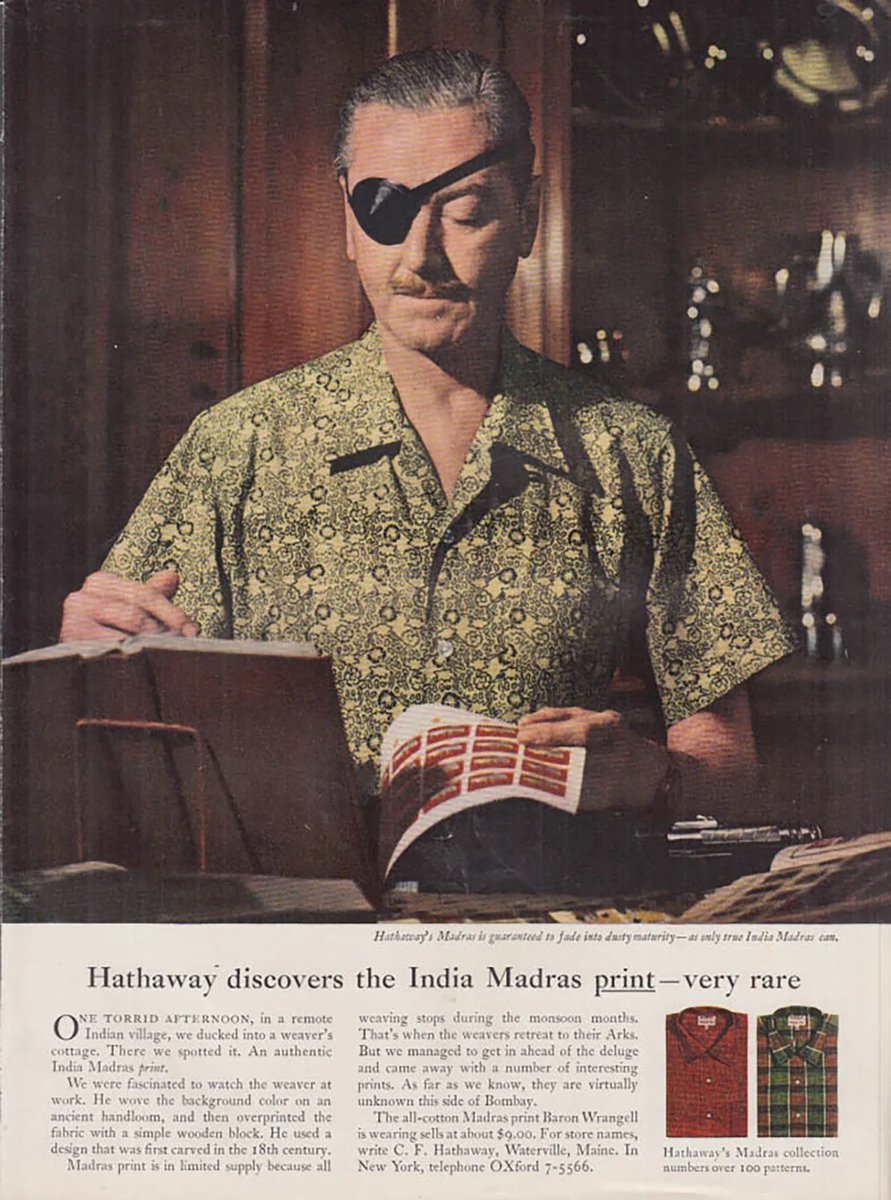
The Brilliant 1958 "Bleeding Madras" Advertising Strategy!
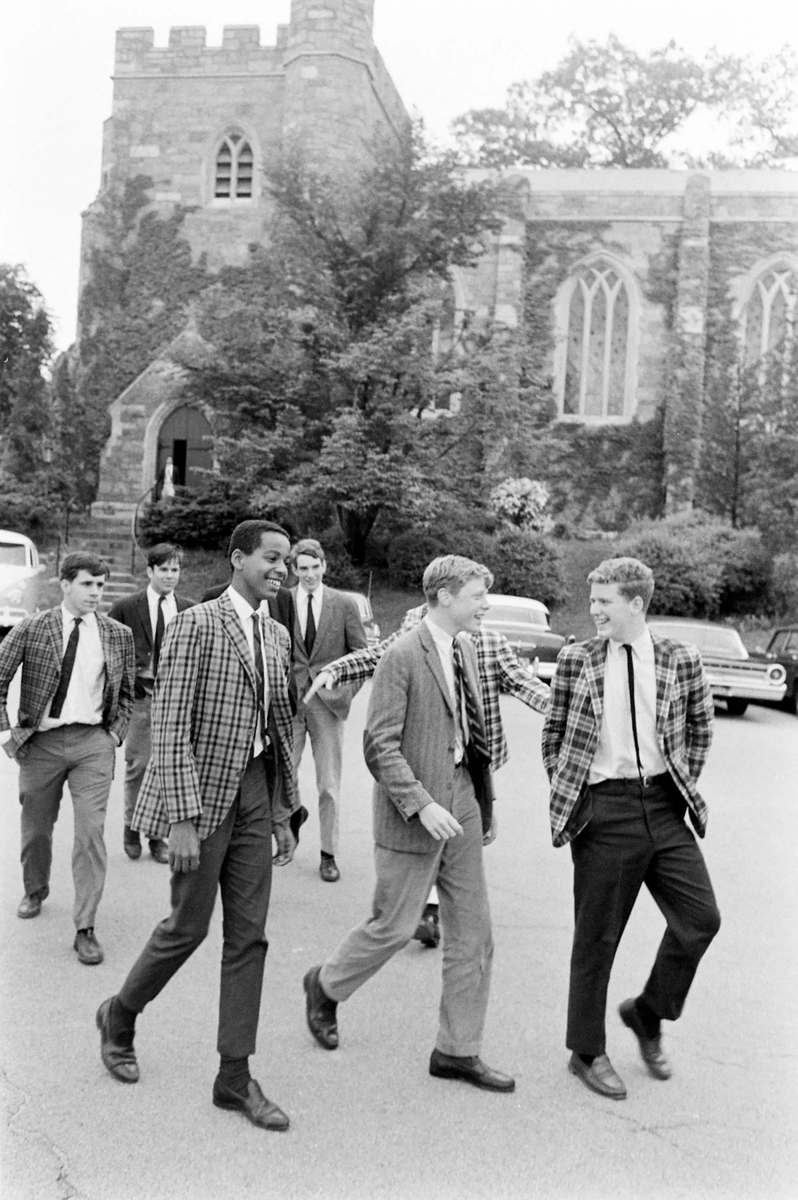
In 1950s. a textile importer named William Jacobson bought 10000 yards of authentic Indian Madras cloth from Captain C.P. Krishnan Nair (an exporter from Madras, who later famously founded the Leela Palace hotel group) & sold it to the historic American clothing giant Brooks Brothers. In his excitement, Jacobson forgot to tell Brooks Brothers the fabric would bleed.
Brooks Brothers tailored the fabric into expensive summer shirts, Jackets & distributed them across America, but there was no wash-care instructions. Because the fabric was dyed using traditional Indian vegetable dyes (like indigo & madder root) fixed with natural stabilizers, the shirts violently bled & faded into completely different, blurry, muted colors the moment customers washed them.
Faced with 1000s of angry, wealthy customers, Brooks Brothers threatened to sue. Instead of panicking, Jacobson teamed up with advertising legend David Ogilvy. They launched a genius counter-offensive campaign in Seventeen & Town & Country magazines with the tag line: "Guaranteed to Bleed."
Ogilvy told the American public that the fading was not a defect: it was proof of authentic, elite, hand-woven Indian craftsmanship. He argued that as the shirt bled, it transformed into a unique, individual piece of art that no 1 else on earth owned.
The strategy worked flawlessly. Ivy League students at Yale, Harvard & Princeton obsessed over the look. Walking around campus in a faded, washed-out Madras shirt became the ultimate old money status symbol, because it subtly signaled that you could afford an expensive vacation shirt that changed characters with every wash.
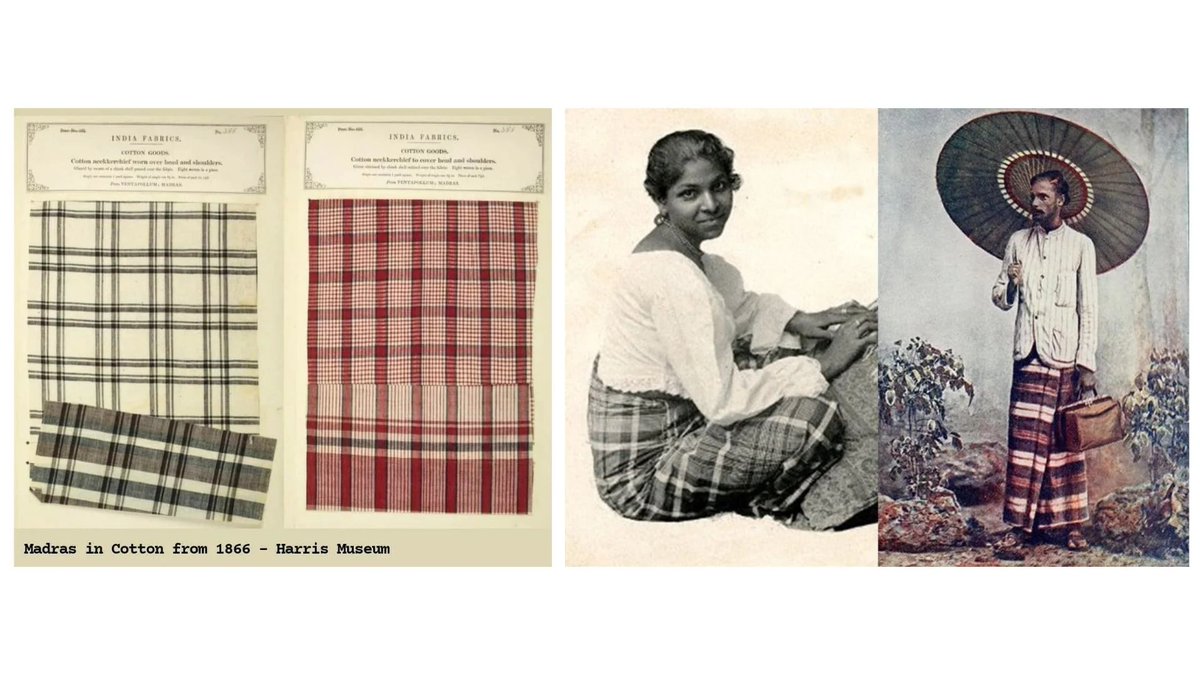
Today, for a garment to be labeled as "Authentic Madras," it must be entirely hand-woven in the Chennai (Madras) region of India. While fast-fashion brands use cheap, synthetic, non-bleeding chemical prints to copy the look today, the global pattern we see on modern summer shorts & elite runways is an unbroken design tech engineered by South Indian weavers 100s of yrs ago to beat the blistering heat of the Coromandel Coast.
I will write separately about the fascinating history of Madras Checks & also about the East India Company's connection.
4
38
128
3,458
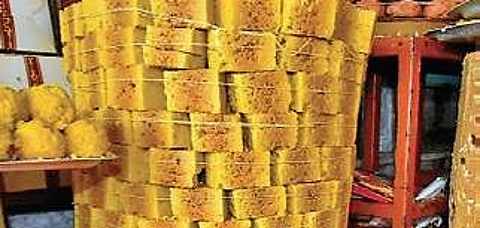
While most people know the delightful baseline story that Mysore Pak was created in the 1930s by the royal chef Kakasura Madappa for Maharaja Krishnaraja Wadiyar IV... the deeper culinary science, the etymology & the ancient textual connections to this legendary sweet run far deeper.
When we strip away the modern commercial adaptations & look at the traditional, porous version (Gulla/hard Mysore Pak), we find a marvel of indigenous food science & a lineage connected to ancient Indian culinary treatises.
Here is the deeper, lesser-known & deeply fascinating history behind the "King of Sweets."
Before diving into its true roots, we must 1st put to rest a bizarre, revisionist claim floating around armchair food circles: the myth that Mysore Pak is somehow a Mughal/Afghan imperial import derived from a sweet called Monsur. This is a classic case of backwards historical gymnastics. While Eastern India does have a look-alike confection, the actual chemistry of flash-frying pulse flours inside high-temperature sugar-fat solutions is a native Sūpa-Śāstra (legume cookery) tech that predates Islamic entry into the subcontinent by centuries.
To attribute a dessert born out of Southern India’s rigorous temple-palace culinary lineage to Delhi’s imperial courts entirely ignores the indigenous thermodynamic evolution of South Indian sweet-making :))
Many assume "Pak" is just a shorthand/a corruption of the word pack (as in a packed block). It is not. The word is deeply rooted in ancient Sanskrit culinary texts:
- In ancient Indian texts like the Nala Pākaśāstra (attributed to King Nala, considered the 1st master chef of Indian lore) & the Kshemakutuhala (a 16th-century culinary text), Pāka means the precise science of cooking, boiling/reduction. Specifically, it refers to the art of creating sugar syrup (Sharkara Pāka).
- Ancient Indian confectioners classified sugar syrup into highly precise structural phases based on its viscosity (similar to modern candy-making stages like soft ball/hard crack). To make a perfect Mysore Pak, the chef had to catch the Pāka at an exacting string consistency. The name is literally a tribute to the ancient Indian science of sugar mastery.
The classic, traditional Mysore Pak is not the smooth, soft, wet-ghee blocks popular today. It is rigid, highly porous, pale on the outside & a deep, caramelized brown at the center. The physics behind those holes is incredible.
When Kakasura Madappa 1st rushed to create this dessert because he lacked a sweet dish for the King's royal platter, he accidentally triggered a violent thermodynamic reaction: He took roasted chickpea flour (Besan) & added it to boiling sugar syrup, then poured ladle after ladle of smoking hot, bubbling ghee into the mixture.
Because the ghee was hotter than the boiling point of the water trapped in the sugar syrup, the moisture instantaneously vaporized into steam. As the steam desperately tried to escape the thickening, cooling gram flour matrix, it carved out micro-tunnels.
As it cooled, these tunnels solidified, creating a light, aerated, honeycomb structure. When we bite into a traditional Mysore Pak, it crumbles effortlessly because we are literally chewing through captured pockets of historical steam.
If we cut open a flawlessly executed, authentic Mysore Pak, it features a distinct dark-brown core wrapped in a golden-yellow outer crust. This is not from using 2 different batters; it is a manifestation of delayed heat retention: When the boiling mixture is poured into a deep wooden/metal tray to set, the outer layers cool down rapidly upon contact with the air & the tray walls, locking in the yellow color of the gram flour. However, the center remains incredibly hot, insulated by the outer crust.
The trapped heat continues to gently bake & caramelize the sugar & proteins (Maillard reaction) at the core long after it has been poured. Achieving this dual-color core w/o burning the sweet is the ultimate test of an expert cook's intuition.
A few people associate Mysore Pak with Tamil Nadu is because of Coimbatore.
The traditional, original Mysore Pak from the Amba Vilas Palace is hard, porous, crumbly & pale yellow-brown with a honeycomb structure inside. It requires heavy biting.
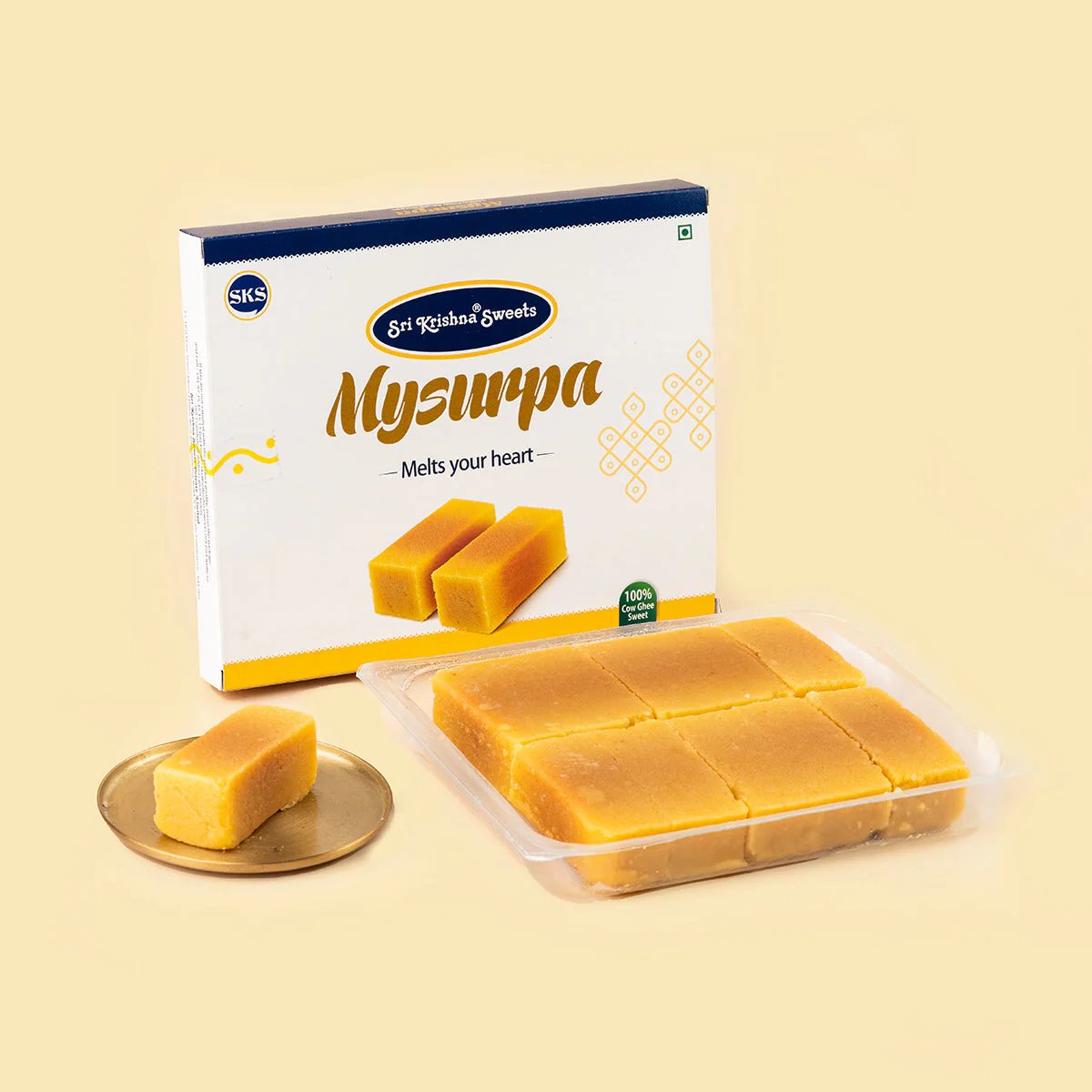
However, in 1948, a sweet-maker named N.K. Mahadeva Iyer in Coimbatore, Tamil Nadu, started a shop called Sri Krishna Sweets. He spent yrs experimenting to alter the thermodynamics of the traditional recipe. He dramatically increased the ratio of ghee, changed the heating timing & essentially invented the ultra-soft, silky, melt in the mouth version that we know today, rebranding it as Mysurpa.
Sri Krishna Sweets marketed this version so brilliantly across the globe that for 2 generations of people (especially outside South India), the silky, smooth, ghee-dripping block became the default definition of the sweet.
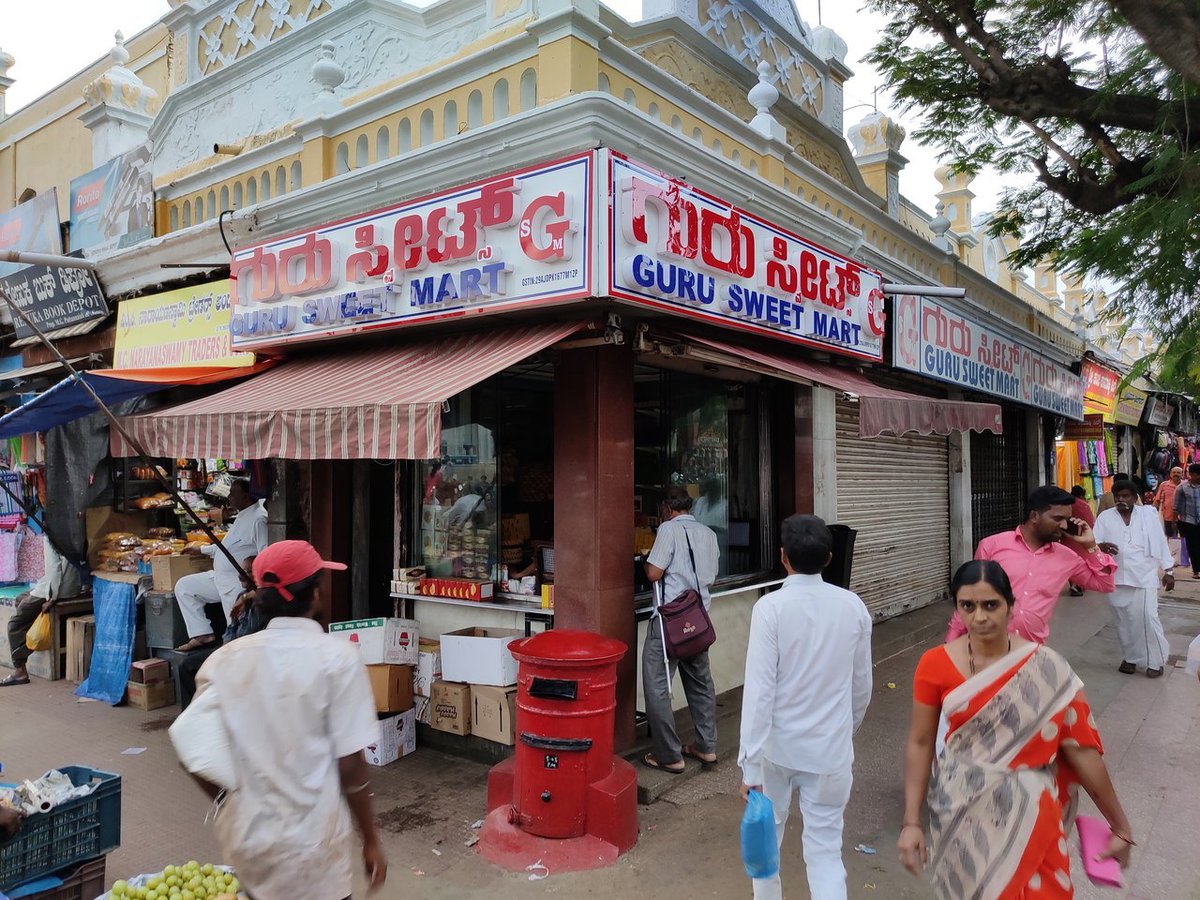
Geographically, historically & legally, the sweet belongs 100% to Mysuru, Karnataka. The descendants of the original palace chef, Kakasura Madappa, still run Guru Sweet Mart on Sayyaji Rao Road in Mysuru, selling the authentic, porous, crumbly king of sweets.
Tamil Nadu did not invent the sweet, but its brilliant culinary entrepreneurs re-engineered the texture & popularized a soft variety that conquered the modern sweet market. It is a classic case of Karnataka inventing the tech & Tamil Nadu shipping a highly successful software update.
21
92
318
7,518
Ancient India holds a completely mind-blowing, hardly-known conceptual connection to small sample statistics problem: estimating a massive population from a microscopic sample.
It is recorded in the Vana Parva of the Mahabharata, through a highly advanced mathematical concept known as Akṣa-Hṛdaya (The Heart of the Dice/Numbers).
In the epic, King Nala loses his entire kingdom in a rigged game of dice because he lacks the cognitive framework to understand probability & patterns. He goes into exile, loses his identity & ends up working as a humble charioteer named Bāhuka for King Rituparna of Ayodhya.
Rituparna was not just a king; he was a master of Akṣa-Hṛdaya, which ancient texts describe as a secret system that allowed a person to immediately compute vast numbers & understand the mathematics of gambling.
1 day, as Nala is driving Rituparna’s chariot through a dense forest, they pass a massive, sprawling Vibhitaka tree (the Terminalia bellerica, ironically the very tree whose nuts were dried & used as dice in ancient India).
Rituparna looks at the bursting, chaotic canopy of leaves & fruits & makes a casual boast to Nala:
"Look at this tree, Bāhuka. Not all of its leaves & fruits are visible to the eye. But I can tell you that on this tree, there are exactly 50 million leaves & 2095 fruits."
Nala is stunned & deeply skeptical. He stops the chariot & says, "O King, you are making a claim about things that are hidden from view. I am going to chop down this tree, count every single leaf & verify if your words are true."
Nala literally spends hours cutting the branches & counting. When the final tally matches Rituparna's calculation down to the last single digit, Nala falls at his feet & begs to learn the secret.
How did King Rituparna do this? Mainstream mythological retellings treat this as a magical mantra/a divine superpower. But in reality, Rituparna was executing the world's oldest recorded example of Estimation by Sampling.
Rituparna could not see 50 million leaves. He did not have time to count them. Instead, he took a tiny sample of a single branch, counted the density of leaves on that specific layout, calculated the total volumetric area of the tree's canopy & multiplied the sample weight against the whole.
The text notes that the moment Nala absorbs the mathematics of sampling & probability into his consciousness, the demon Kali (the personification of chaos, ignorance & bad luck) is literally vomited out of Nala’s body.
In ancient Indian thought, mastering the mathematical relationship b/w a tiny sample & the grand universe was the ultimate spiritual tool to destroy chaos & regain control over destiny. 🙏🙏
15
111
352
5,208
18h
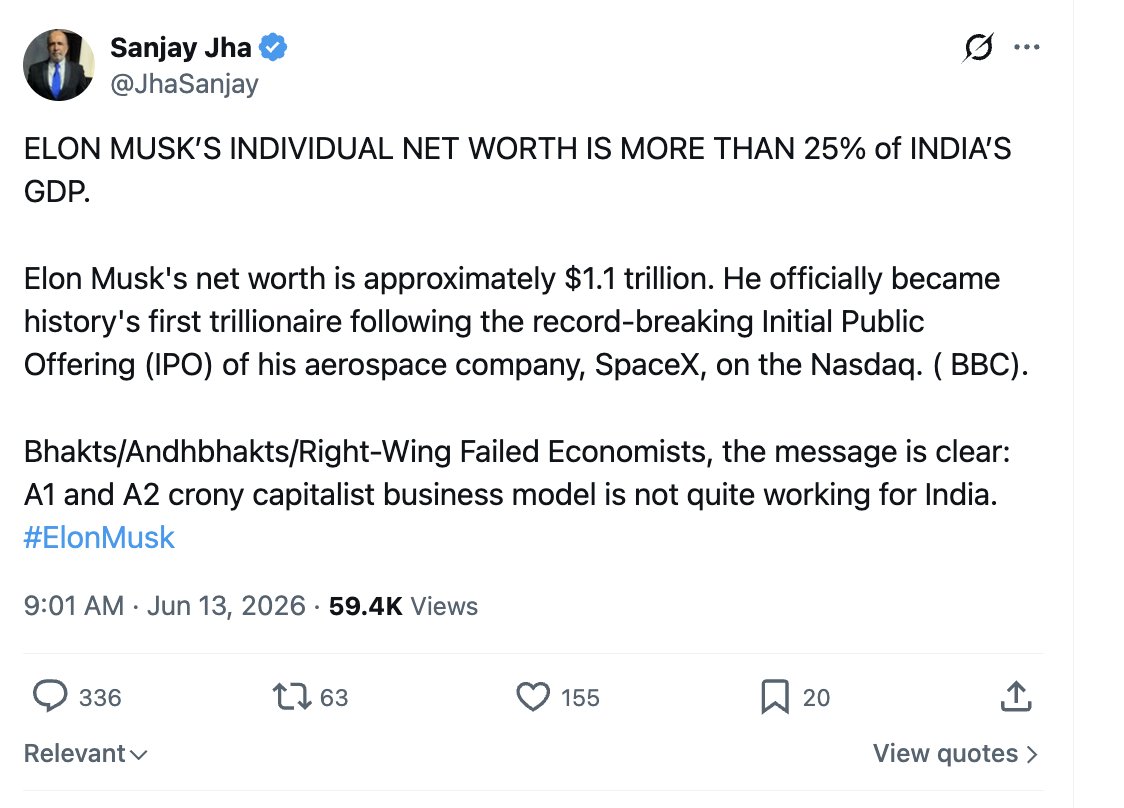
If this metric were a valid sign of a failed economic system, then almost every major democracy on Earth has a failed model.
The "Jha Logic" Applied: Elon Musk Net Worth~$1.1T
- Spain GDP~$1.6T (Musk’s wealth is ~70% of Spain’s annual economy)
- Saudi Arabia GDP ~$1.1T (Musk is worth 100% of Saudi Arabia’s annual economy)
- Switzerland GDP: ~$1.15T (Musk's wealth is ~95% of Switzerland's annual economy)
- Australia GDP: ~$2.12T (Musk is worth 50% of Australia's annual economy)
I can keep adding.....
28
117
471
12,678
20h
When Thomas Babington Macaulay wrote his infamous Minute on Indian Education in 1835, he explicitly stated his goal:
"We must do our best to form a class who may be interpreters between us and the millions whom we govern; a class of persons, Indian in blood and colour, but English in taste, in opinions, in morals, and in intellect."
The colonial education system was literally engineered to produce individuals who would look at their own heritage with suspicion and look at the West with absolute awe.
That programming runs so deep that if a modern Indian entrepreneur sells traditional herbs/copper vessels, it is called superstition/backward. But the second a Silicon Valley startup puts turmeric into a cup, labels it a "Golden Milk Latte," and charges $9 a cup, we line up to buy it because it has been validated by the West.
12
138
360
9,325
Jun 13
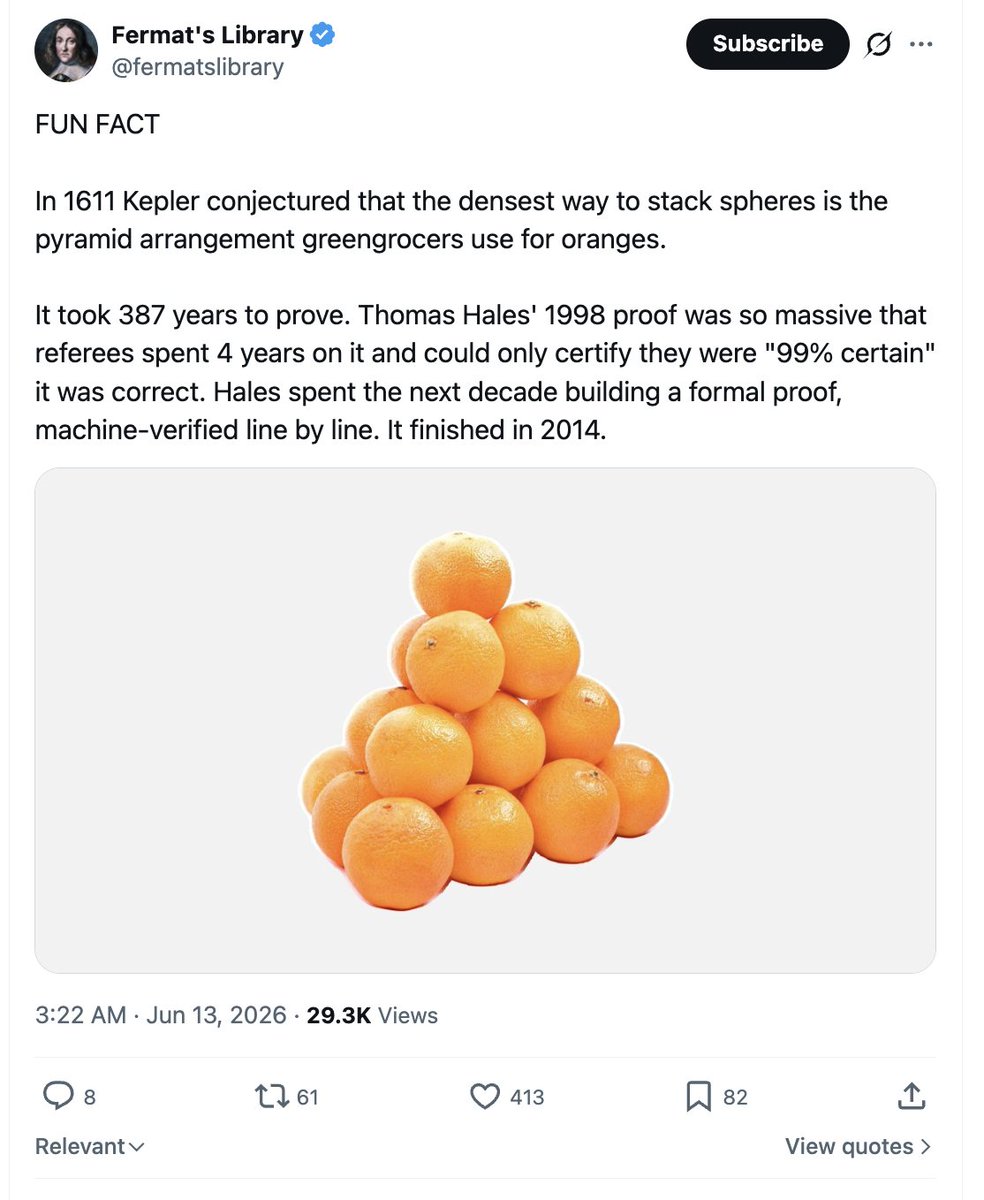
Nah... that is not even the best part. Here is the real FUN FACT:
In the Aryabhatiya (Ganitapada, Verse 21), written in 499 CE, Aryabhata introduces the mathematics of stacking. He explicitly lays out the formula for finding the total number of items in a pyramid pile with a triangular/square base. For a pyramid stack where each side of the base has 'n' spheres:
Total Spheres = [ n × (n 1) × (n 2) ] / 6
Think about the timeline here. Johannes Kepler conjectured that this layout was the densest in 1611. Aryabhata had already mapped out the exact algebraic discrete-volume matrix to count every single individual sphere within that dense packing formation 1000s yrs earlier.
Fun Fact is still not over. Fast-forward to the 12th century. The legendary mathematician Bhaskara II takes Aryabhata’s foundation & elevates it into a poetic, highly advanced art form in his textbook, the Lilavati. Bhaskara creates a dedicated mathematical category called Citi-Ghana (the volume of a pile). He did not just give 1 formula; he realized that different stacking bases create different geometric properties. He breaks down eqns for:
- Triangular-based pyramids (where spheres rest in the gaps of a triangular grid)
- Square-based pyramids (the standard grocery-stack style)
- Oblong piles (where the base is a rectangle)
To solve these, Bhaskara had to utilize Varga-Sankalita (the sum of squares of natural numbers) & Ghana-Sankalita (the sum of cubes). While Western mathematics at the time was struggling with basic arithmetic using Roman numerals, Indian scholars were utilizing advanced series expansions to handle the discrete boundaries of 3 dimensional sphere packing.
Now the Fun Fact is over 🙏🙏
17
495
1,400
30,518
Jun 13
If we scroll through global history forums, a recurring myth is proudly repeated: 'Ancient Persians built massive Yakhchals to freeze water in the desert 2400 yrs ago, while India was just a hot, sweaty tropical landscape that never understood ice production until the West imported machinery.'
It is time to completely rip that colonized narrative to shreds.
Long before European colonizers brought industrial refrigeration, India was quietly running a massive, flat, decentralized artificial ice-making operation using a level of thermodynamics so highly advanced, it completely broke the minds of Western academics.
When European colonizers arrived in India, they thought ice was a luxury that could only exist if it was shipped physically all the way from frozen American lakes (like the famous Tudor ice trade). They mocked the hot plains of Uttar Pradesh & Bengal.
Then they visited places like Prayagraj, Hooghly & Banaras, & discovered that local Indian communities were manufacturing tons of ice out of thin air in the middle of summer.
The Persian Yakhchal relied on a massive, 40 foot structural wall to create shade. The Indian method was completely different, it was flat, decentralized & entirely stealthy. In large open fields, Indians would excavate shallow, flat-bottomed pits about 30 feet square & 2 feet deep. Instead of building massive brick structures, they lined the bottom of these pits with a highly calculated, thick layer of dry sugar-cane stalks, corn-straw & ash.
This created a powerful thermal insulation barrier that totally cut off the water from the latent heat radiating upward from the warm earth below. On top of this straw bed, local ice-makers arranged 1000s of small, unglazed, shallow terracotta clay plates filled with a thin layer of water. Why unglazed clay? Because our ancestors understood evaporative cooling dynamics perfectly. Unglazed clay is porous; it allows a tiny fraction of the water to seep through to the outer surface of the tray & evaporate into the dry night air.
As that water evaporates, it absorbs latent heat directly from the remaining water inside the tray, drastically lowering its temperature. British observers recorded nights where the air thermometer read 4-6 degrees C. According to physics textbooks, water cannot freeze at these temperatures. But they did not understand the power of a clear Indian winter sky. Because the night sky acts as a perfect black-body radiator, the water in those shallow trays beamed its own heat directly into the freezing void of outer space.
Protected from the earth's heat by the straw & cooled from the sides by clay evaporation, the water would flash-freeze into solid sheets of ice by 4:00 AM, even when the ambient air was warm. At dawn, 100s of workers would rush into the fields, scrape the ice out of the clay trays, smash it into blocks & ram it down into massive, deeply insulated underground ice houses (Barf-Khana) lined with sawdust & blankets, preserving it into the scorching 45 degrees C summer months.
The Persians built giant, expensive, permanent architectural monuments to fight the desert. The Indians, using nothing but mud, straw, water & the open sky, built a flat system that could be deployed anywhere at zero capital cost. It was pure, raw physics applied through everyday rural materials.
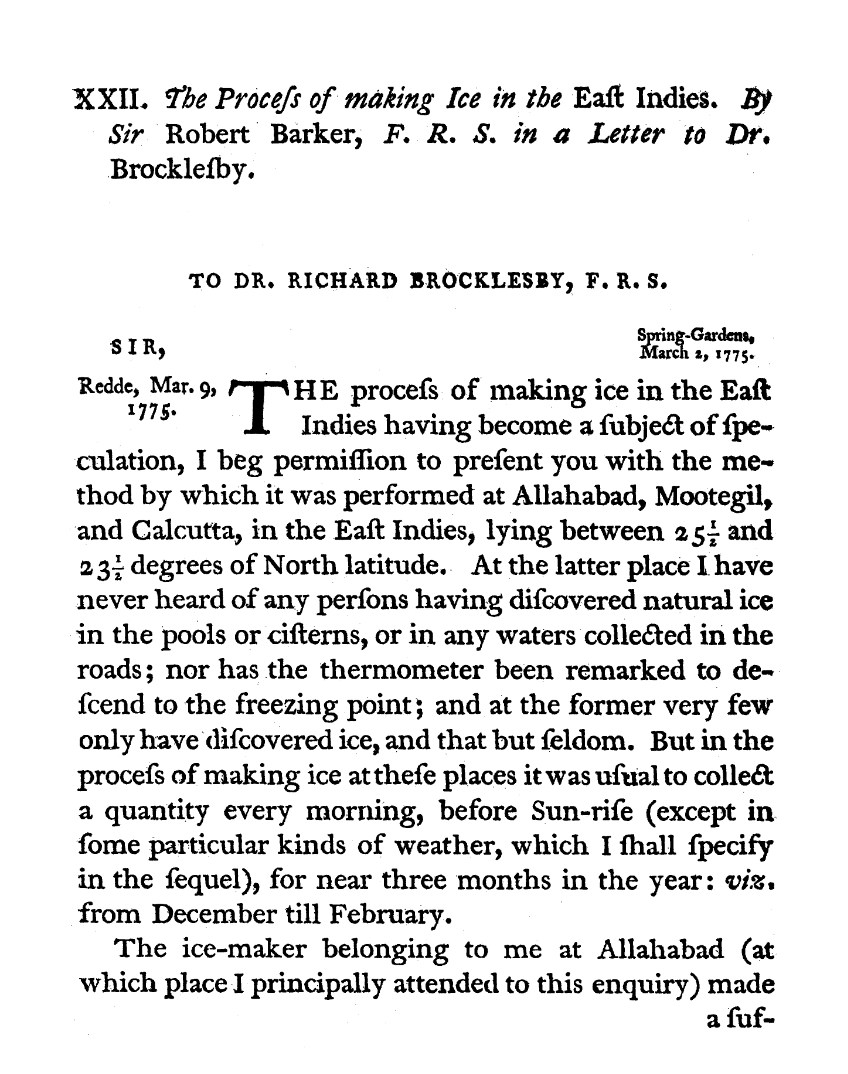
When we look at your own history through a Western lens, we are told that India never had scientific innovation until European industries brought machinery. But the historical records of the Royal Society prove the exact opposite: Western scientists had to sit in the dirt fields of Prayagraj, watching Indian villagers make ice in the middle of summer, just to rewrite their own understanding of thermodynamics.
18
352
768
11,394
Jun 13
Every piece of India's public digital infrastructure must be legally barred from pinging foreign-hosted proprietary APIs. Government tech should mandate the deployment of local, open-source models hosted strictly inside local data centers.
Instead of giving subsidies to companies trying to train models from scratch, govt grants should fund companies that lower the cost of inference. If we make running smaller models dirt cheap, Indian small businesses will adopt local alternatives simply because it makes economic sense.
We have 1 massive geopolitical lever: our population's data. Enforcing strict data localization laws means foreign companies cannot use Indian data to make their proprietary frontier models smarter unless they place their compute infrastructure physically within Indian borders subject to local laws.
Jun 13

This is big: all access to Mythos and Fable AI models disabled for everyone outside America.
First thoughts:
1. Technology is the ultimate weapon. National sovereignty, national security, all of it is now about technology.
2. Globalization is dead and Bharat must find her own way ahead.
We must keep these two ideas in mind.
What can our government do right now? Ensure that orgs in India embrace smaller models, both Indian and Chinese open source ones. With a bit of effort, we can make them work. Anyway, why pay money to people who don't even want to sell to you?
We must deepen our R&D. Sarvam has been on it and we have been on it but remember that the latest models cost not only huge GPU budgets to train, the GPUs themselves are restricted. So we can't afford the scale of money (of the order of $100 billion to even get in the game!) and even if we could come up with the money, we can't get all the GPUs. I would not like to ask the government to fund tens of billions of dollars on this anyway - the money has far better uses.
Zoho has been pursuing alternative R&D approaches that are far, far less expensive but by its nature cutting edge R&D takes time and we are patient. I am confident we will get there.
Any remaining people in India who have delusions about globalization should wake up now.
13
111
394
8,936
Jun 13
Ami Ji is right. If we turn to the Adi Parva of the Mahabharata, Maharishi Vyasa leaves absolutely zero room for ambiguity. The text lists the prominent students who arrived to study military science (Dhanurveda) under Dronacharya:
rājaputrāstathaivānye sametya bharatarṣabha |
abhijagmustato droṇamastrārthe dvijasattamam |
vṛṣṇayaścāndhakāścaiva nānādeśyāśca pārthivāḥ ||
sūtaputraśca rādheyo guruṃ droṇamiyāttadā |
spardhamānastu pārthena sūtaputro'tyamarṣaṇaḥ |
duryodhanamupāśritya pāṇḍavānatyamanyata ||
The princes of the Vrishni & Andhaka tribes & the sons of kings from various realms & the son of the Suta (Karna), all flocked to Drona, the foremost of weapon-wielders. There, Karna, the son of the Suta, competed with Arjuna in everything, out of a desire to show his superiority & he aligned himself firmly with Duryodhana.
Karna lived there, trained there & openly developed his legendary rivalry with Arjuna under Drona's watchful eye. He was treated as an official student of the academy.
If Karna was already Drona's student, why do people associate him so heavily with Parashurama? This is where the narrative gets distorted. Drona looked at Karna's psychological profile. He saw an intense, volatile obsession with defeating Arjuna, rather than a dharmic reverence for a weapon that could incinerate worlds. Drona flatly refused him, stating that the Brahmastra should only be given to a Brahmana of pure vows/a Kshatriya who has practiced immense self-control.
This refusal of a specific high-tier weapon is what modern television turned into a refusal of basic education. Frustrated & angry, Karna realized he could not get the highest cosmic weapons from Drona. He knew that the only other master alive who possessed greater knowledge was Bhagavan Parashurama.
Karna traveled to the Mahendra mountains to seek Parashurama. However, he encountered a massive structural barrier: Parashurama had taken a strict, solemn vow never to teach weaponcraft to Kshatriyas (due to his historical conflict with corrupt warrior kings). Karna knew that if he introduced himself as a Suta (who shared close ties with the Kshatriya warrior culture of Hastinapur)/as an affiliate of the royal house, Parashurama might turn him away.
So, Karna made a fateful choice: He disguised himself as a Bhrigu-lineage Brahmana. Under this false identity, Karna became Parashurama's favorite disciple. He learned the secrets of the Brahmastra & the Bhargavastra. The training was highly successful until the famous incident where a celestial worm (Alarka) bit Karna's thigh. Karna bore the excruciating pain silently so as not to wake his sleeping Guru. When Parashurama woke & saw the pool of blood, his razor-sharp logic kicked in:
"A Brahmana cannot bear such physical agony with this level of stoic fortitude. This is the blood & muscle of a warrior."
Realizing he had been deceived, Parashurama handed down the tragic curse that would decide the fate of the Kurukshetra war: Karna would forget the incantation for the ultimate weapon at the exact moment he faced his mortal enemy. 🙏🙏

Have said this so many times, and I realise the distortions have become so entrenched that have to keep saying it again and again - Karna wasn't denied education by Dronacharya. Mahabharat is absolutely clear about it. He refused Ekalavya, but not Karna.
13
158
579
23,370
Jun 13
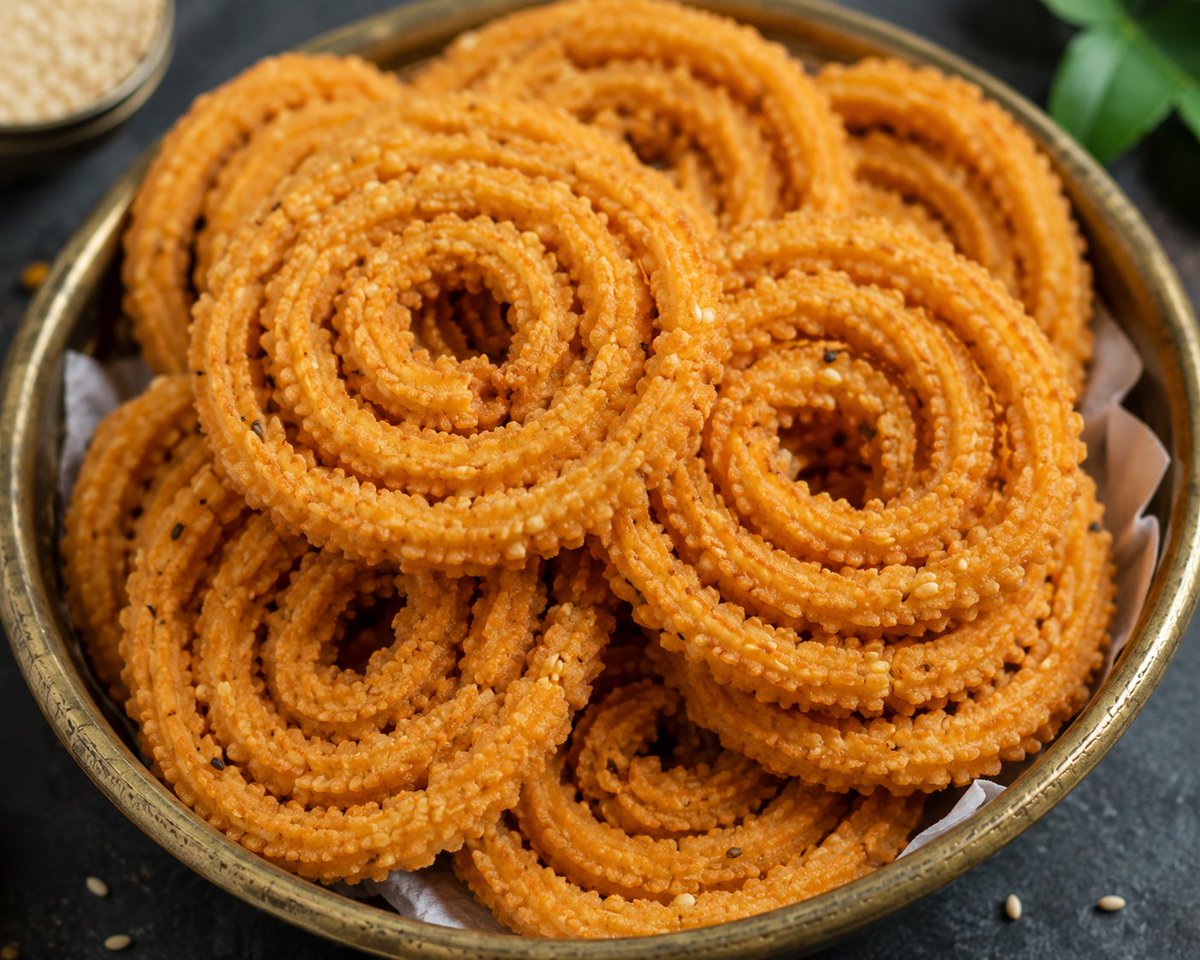
The connection b/w the South Indian Murukku (that crunchy, coiled, savory snack we all love) & the ancient medical treatise of the Sushruta Samhita is 1 of the most brilliant, hidden examples of how ancient Indian snack food was originally engineered as preventative medicine.
When people think of the Sushruta Samhita, they immediately think of plastic surgery, rhinoplasty & complex surgical tools. But Sushruta was a holistic genius. He knew that the ultimate goal of medicine was to ensure a patient never needed surgery in the 1st place.
Volume 1 (Sutra Sthana, Chapter 46) contains an entire, massive section dedicated to Ahara-tattva (the nutritional science of food). And this is where the fascinating origin story of the Murukku begins.
In the Sushruta Samhita, Sushruta categorizes deep-fried pastry items under the broad family of Bhakshyas (cooked, chewable foods). Among them, he singles out a distinct item called Śaṣkulī. Over centuries, as the Sanskrit word Śaṣkulī traveled across different regions of India, it underwent phonetic shifts: In the North & West, the word evolved through Prakrit into Chakli (retaining the circular, coiled meaning).
In the South cultures translated the physical action of making it, twisting the dough giving us the beautiful descriptive name Murukku (which literally means twisted in Tamil).
Sushruta was deeply concerned with the concept of Agni (metabolic digestive fire). He categorized foods based on whether they were Guru (heavy to digest)/Laghu (light to digest). He noted that deep-frying grain dough in ghee makes it highly caloric & strength-giving (Bala-vardhana), but it can be incredibly heavy for the stomach.
To fix this chemical problem, ancient Indian cooks did something brilliant that Sushruta documented: they introduced Masha (Black Gram/Urad Dal) into the rice flour matrix. By mixing rice flour with roasted, ground urad dal, they created a complete amino acid profile (rice is low in lysine but high in methionine, while dal is high in lysine but low in methionine).
A few might think why did Sushruta spend time documenting a fried, coiled snack in a medical text meant for surgeons? Because of shelf-life & thermodynamics.
In ancient India, monks, traders & soldiers traveling across vast empires needed food that met 3 strict scientific conditions:
- It could not contain moisture (water causes bacterial spoilage).
- It had to be compact & physically rigid so it would not crumble into dust in a horse carriage.
- It had to be nutrient-dense to sustain high physical exertion.
By taking the Śaṣkulī dough, piping it into tight, concentric, interlocking coils (which structurally reinforces the snack against breaking) & deep-frying it until 100% of the water content evaporated, ancient Indians invented the ultimate preservative-free, shelf-stable survival ration.
When you hear the crunch of a Murukku today, you are literally tasting a recipe that was vetted, chemically balanced & medically approved by the Father of Surgery himself, Acharya Sushruta, 1000s yrs ago.
So, the next time you serve Murukku/Chakli with tea, you can proudly tell your guests: You are not just eating a snack. You are consuming a highly engineered, ancient Ayurvedic military ration designed to preserve human tissue :))
89
618
1,983
47,732
Jun 13
What modern medicine defines as Generalized Anxiety Disorder/chronic worry, Ayurvedic texts explicitly call Chittodvega (Chitta = mind, Udvega = agitation/anxiety). The Charaka Samhita states that Chittodvega is driven by a vitiation (imbalance) of Rajas (the mental attribute of hyper-activity, passion, and restlessness) & Vata (the bodily humor that governs all movement, including the nervous system).
Just as Vata imbalance causes a state of rapid, ungrounded, chaotic movement in the body, chronic worry keeps the sympathetic nervous system permanently firing, mirroring the constant state of fight/flight.
In fact, Ayurveda tracks exactly how mental worry damages physical organs through the channels of circulation (Srotas). The texts state that Atichintana (excessive & repetitive thinking/worrying) directly injures the Rasavaha Srotas, the channels carrying plasma, primary nutrients & lymph fluid.
When we ruin our Rasa Dhatu through non-stop worry, the symptoms documented 1000s of yrs ago are uncanny: Ojo-bhramsa (loss of immunity), Sosha (wasting/tissue degeneration), Mukha shosha (dryness of mouth) & Hridayoparodha (oppression/tightness in the heart area).
This aligns perfectly with modern day terms: high blood pressure, suppressed immune function & digestive chaos.
These days people cope with anxiety by overeating/smoking/drinking. Ancient texts call this behavior Pragyaaparadha (literally, an insult to intellect/crimes against wisdom). It is defined as a failure of Dhi (judgment), Dhriti (willpower) & Smriti (memory). When anxiety clouds the mind, the intellect breaks down, leading a person to knowingly choose habits that destroy their own physical body (Sharirika).
So, what is the solution????
Let us look at the Yoga Sutras of Patanjali (Sutra 2.33):
वितर्कबाधने प्रतिपक्षभावनम्
vitarka-bādhane pratipakṣa-bhāvanam
When disturbed by negative, cyclical thoughts (Vitarka), deliberately cultivate the opposite, neutralizing thought. It is the ancient precursor to Cognitive Behavioral Therapy (CBT). Cultivating the conscious willpower to pull the senses back (Pratyahara) from what is causing the panic loop.
Do not let our mind issue silent, destructive orders to our cells. Reclaim our panoramic awareness, cultivate Dhriti (mental resilience) & actively protect the intricate, beautifully engineered system that is our body. 🙏🙏
2
73
193
4,138
Jun 12
The global cinematic pantheon immortalizes Satyajit Ray as the legendary auteur who won an Honorary Oscar, a Bharat Ratna, and the Legion of Honour for changing the grammar of filmmaking. But long before he ever picked up a movie camera, Ray was a starving commercial illustrator in British-occupied Calcutta, waging a quiet, highly obsessive typographic war against the mechanical rigidity of Western print blocks.
In 1943, long before directing Pather Panchali, 22-year-old Satyajit Ray took a job as a "junior visualizer" at D.J. Keymer, a prominent British advertising agency in Calcutta. Concurrently, he became the chief book jacket designer for the pioneering Signet Press.
Ray was tasked with designing covers for modern Bengali literature & poetry. But he immediately hit a maddening, structural wall: the physical lead types inside the printing presses. The printing houses of Calcutta relied entirely on heavy, standardized metal fonts imported from British type foundries like Monotype & Linotype. These fonts were cold, rigid & geometrically clinical, designed strictly for European corporate newspapers & English colonial trade documents.
When Ray tried to use these metallic types to frame the cover of an emotional, lyrical Bengali collection of modern poems, the layout looked visually jarring, lifeless & completely un-Indian.
Instead of surrendering to the rigid British typesetting catalogs, Ray decided to bypass the printing foundries entirely. He cleared his small wooden desk, sat under a single incandescent bulb & began hand-drawing every single title using traditional Indian ink & fine-tipped calligraphic brushes.
For Abanindranath Tagore’s folktale Khirer Putul, he hand-moulded the letters to resemble the fluid, sweeping patterns of Alpana (traditional Bengali folk floor art). When he designed posters for his films, he manipulated letters into architectural shapes & silhouettes, even bending Bengali characters into a Tibetan-style script for his hill-station masterpiece Kanchenjungha.
But Ray’s ultimate typographic masterstroke occurred in the 1960s. He realized that while he was successfully hand-lettering titles for his own movies & books, the broader, global graphic design landscape lacked a Roman script that possessed the warm, organic, calligraphic fluidity of the East.
Operating with staggering geometric precision, Ray sat down to design an entirely new, replicable English alphabet for the international market. He manually drew every capital letter, lowercase character, punctuation mark & numeral with calculated vector metrics.
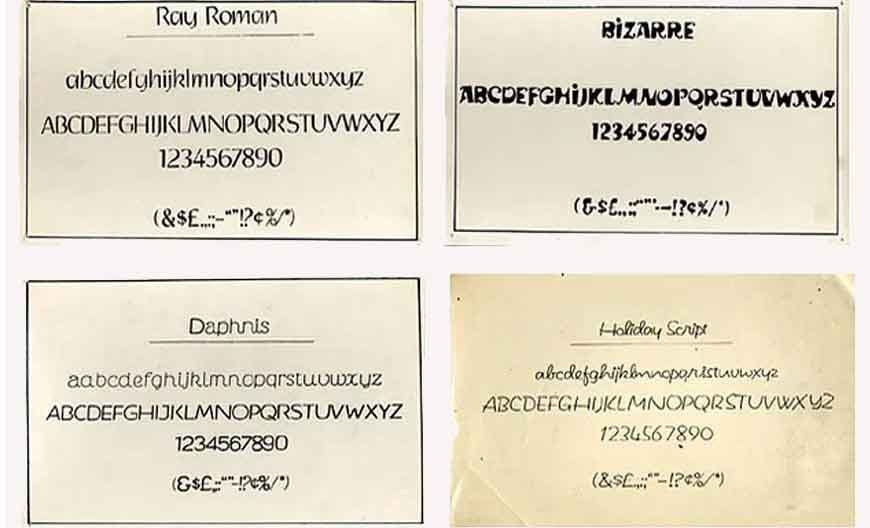
He engineered 4 distinct, globally registered Roman typefaces:
- Ray Roman (A stunning, humanist serif font featuring elegant, delicate anatomical brush strokes).
- Ray Bizarre (A fierce, highly artistic, partly architectural display typeface).
- Daphnis (A brilliant hybrid where the upper portions of the characters are strictly structural, while the lower segments flow calligraphically).
- Holiday Script (A playful, rhythmic, accidental cursive font).
According to Andrew Robinson’s biography The Inner Eye, Ray Roman & Ray Bizarre were considered worthy of awards by the Western entity involved.
Yet, because his cinematic triumphs completely eclipsed his graphic design achievements in global media, this stunning chapter of his life faded into the dark. Today, while film students dissect his camera angles, the fact that he was a globally patented master of the English alphabet remains a phantom archive.
Modern digital designers continue to scroll through 1000s of pre-installed, computer-generated fonts on high-end software programs at the click of a trackpad, completely oblivious to the physical mechanics of the letters they use. Yet, beneath the history of modern graphic arts lies the ink-stained desk of a Bengali visualizer who refused to let an empire standardize his expression, proving that while a foreign culture can try to lock our words into rigid metal cages, it takes the brilliant, unyielding stroke of a native artist’s brush to give wings to the letters that define the world.
8
52
201
5,559
Jun 12
A robust study of history requires interdisciplinary science historians. Synthesis of rigorous scientific methodology with deep textual & linguistic expertise provides a more precise & objective understanding of ancient heritage.
When historical research relies solely on a liberal arts lens w/o scientific oversight, several major errors consistently occur: In ancient texts like the Sulba Sutras (geometry texts)/the Sushruta Samhita (medical treatises), complex mathematical algorithms/surgical terms are frequently mistranslated (deliberately also) as mere religious rituals/poetic allegories by scholars lacking a STEM background.
Ancient Indian breakthroughs in zinc distillation (Zawar mines)/the creation of high-carbon Wootz steel cannot be fully appreciated/validated through royal court poetry alone. They require metallurgical analysis, field archaeology & chemical verification.
5
25
99
3,104
Jun 12
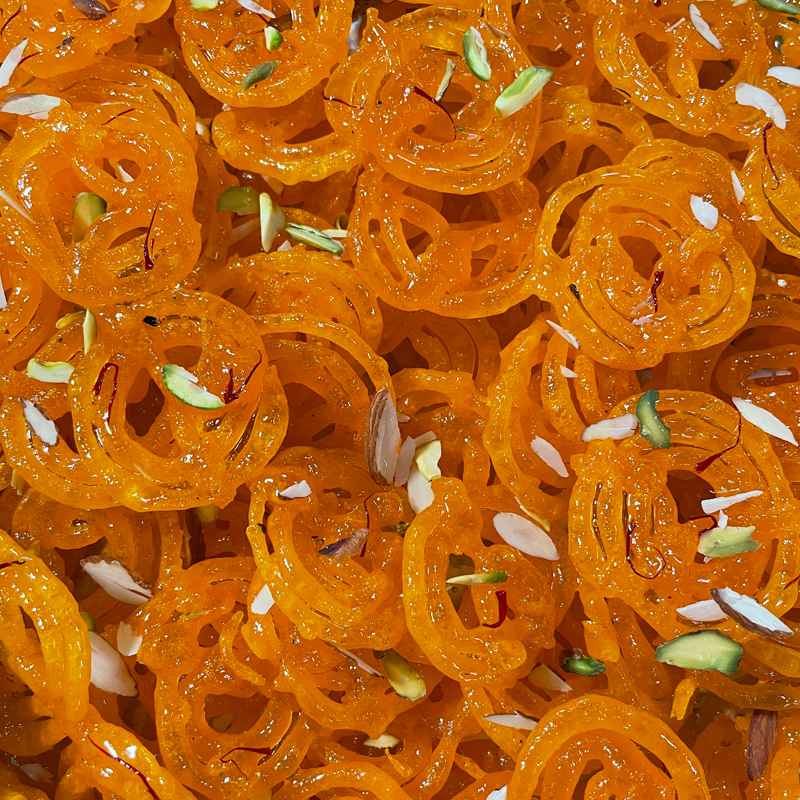
This is perhaps the most heavily paraded "gotcha" fact by armchair food historians. They absolutely love to smirk & tell us, "You know Jalebi is not Indian, right? It is a Persian dish called Zolbiya/Zalabiya brought by invaders in the medieval era!"
They mistake a linguistic corruption for the birth of a culinary concept. They confuse the trade name that eventually stuck with the actual evolutionary genealogy of the recipe. The entire liberal historian argument rests on 1 fragile pillar: the 10th century Arabic cookbook Kitab al-Tabikh, which mentions Zalabiya. They smugly point out that detailed Indian texts appear only in the 15th century & declare victory.
But here is the fatal flaw in their timeline trap: They mistake the date of the 1st surviving written recipe for the date of invention & popular practice. Ancient Indian texts were primarily medical & philosophical, they classified broad food principles, not every street vendor’s technique. The absence of a detailed halwai-style recipe earlier does not mean the dish did not exist. It means our ancestors did not write down casual street sweets the way later cookbooks did.
Technically, India had already mastered the 2 pillars that define real Jalebi centuries earlier: large-scale sugarcane crystallization into refined sarkara & syrup (perfected during the Gupta era) & the uniquely subcontinental art of lactic acid fermentation (khameer). These gave us the signature tangy, porous batter that aggressively absorbs syrup, something far superior to the honey-based versions in West Asia.
Our dish was referred to as Jalavallikā (from Jala meaning water/juice & Vallikā meaning a creeping vine/coil). It literally translates to "the juice-filled coil." Another classical name was Kundalikā (derived from Kundala, meaning a circular coil/ring, the exact same root used for Kundalini energy).
If Jalebi was some foreign royal import tied to Islamic court culture, why does it make its 1st formal appearance in Indian literature inside a strict, vegetarian Jain religious text? The Priyamkara-nrpa-katha, composed by the Jain author Jinasura in 1450 CE, describes an elaborate feast hosted by a wealthy indigenous merchant. Jalebi appears right alongside deeply traditional Indian sweets, already fully integrated into local high cuisine.
Shortly after, the 16th century Sanskrit text Bhojana Kutuhala by Raghunatha & the Gunyagunabodhini (pre-1600 CE) give the exact, unambiguous recipe for making Kundalikā: fermented fine flour batter, fried in pure desi ghee & immersed in flavored sugar syrup, 100% identical to what our local halwai does today.
Ancient Indian culinary science was obsessed with the sour-sweet axis (Amla-Madhura). The genius of Jalebi lies in leaving the batter to ferment naturally overnight. This lactic acid fermentation creates that perfect tangy, porous crust. When deep-fried in hot ghee & plunged into hot sugar syrup, a spectacular thermodynamic reaction occurs, the sour crust aggressively drinks up the sweet syrup. This mastery of fermented frying (khameer-pakwa) is uniquely subcontinental.
India was never a culinary blank slate waiting for outsiders to teach it how to fry flour in circles. When West Asian traders arrived, they encountered a popular, thriving local street sweet called Jalavallikā/Kundalikā. They had a similar (but inferior) fried sweet back home called Zalabiya, so over centuries of marketplace haggling the 2 names merged.
The shorter foreign name stuck in common parlance, but the dish itself, its technique, its fermentation, its syrup mastery, its crisp-yet-juicy soul & its deep roots in vegetarian feasts was entirely home-grown. The invaders did not bring Jalebi to us. We perfected it & they simply borrowed the name.
52
466
1,522
49,305
Jun 12
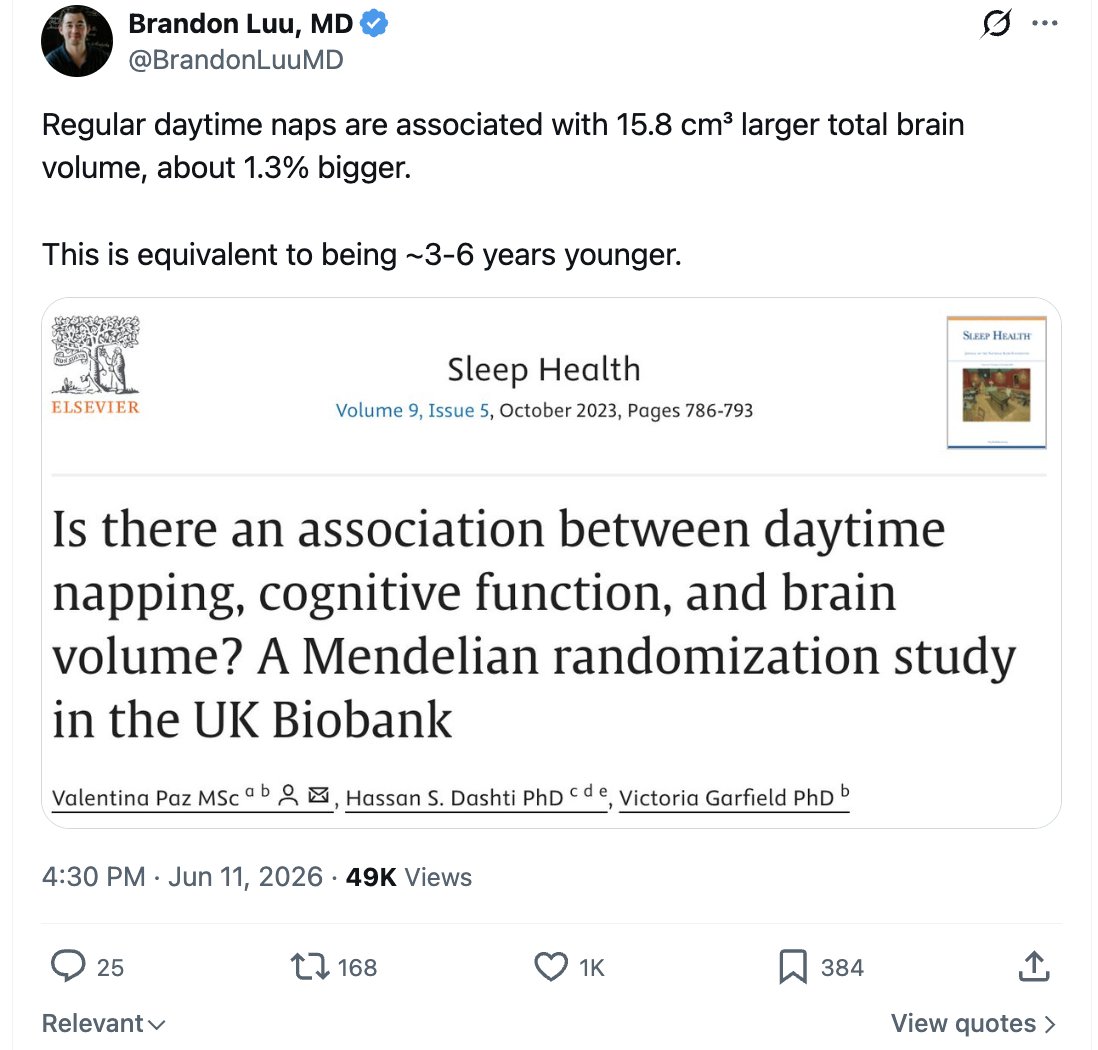
Modern sleep studies show that if a daytime nap exceeds 20-30 mins, we enter deep, slow-wave sleep. Waking up from this causes sleep inertia, leaving us groggy, destroying our night sleep & messing up our insulin sensitivity.
Ancient India prevented this through a mandatory post-lunch ritual called Vama-Kukshi.
Vama means left & Kukshi means womb/side. The protocol mandates that after a midday meal, we must lie down specifically on our left side for a short duration (traditionally calculated as the time it takes to take 8 to 16 deep breaths, ~15-20 mins).
Lying on our left side keeps the stomach below the esophagus, preventing acid reflux. More importantly, it activates the Pingala Nadi (the right nostril breathing channel, connected to the sympathetic nervous system), which stimulates digestion, while keeping the brain in a state of light, restorative rest rather than letting it plunge into a deep, heavy slumber.
The Sushruta Samhita explicitly warns that long, heavy sleeping during the day destroys metabolic health (causes Kapha & Meda/fat accumulation). But a short Vama-Kukshi, a quick, left-sided power nap was prescribed to restore mental clarity, relieve stress & preserve vitality (Ojas).
It is the exact ancient counterpart to the modern 15 min "power nap."
29
678
3,011
101,952
Jun 12
The biggest irony is that every modern IDE she uses has predictive text, advanced auto-complete & automated static analysis tools. Many of these back-end compilers & linters now use basic machine learning models under the hood.
Even the search engines she uses to look up documentation are heavily layered with AI-generated summaries.
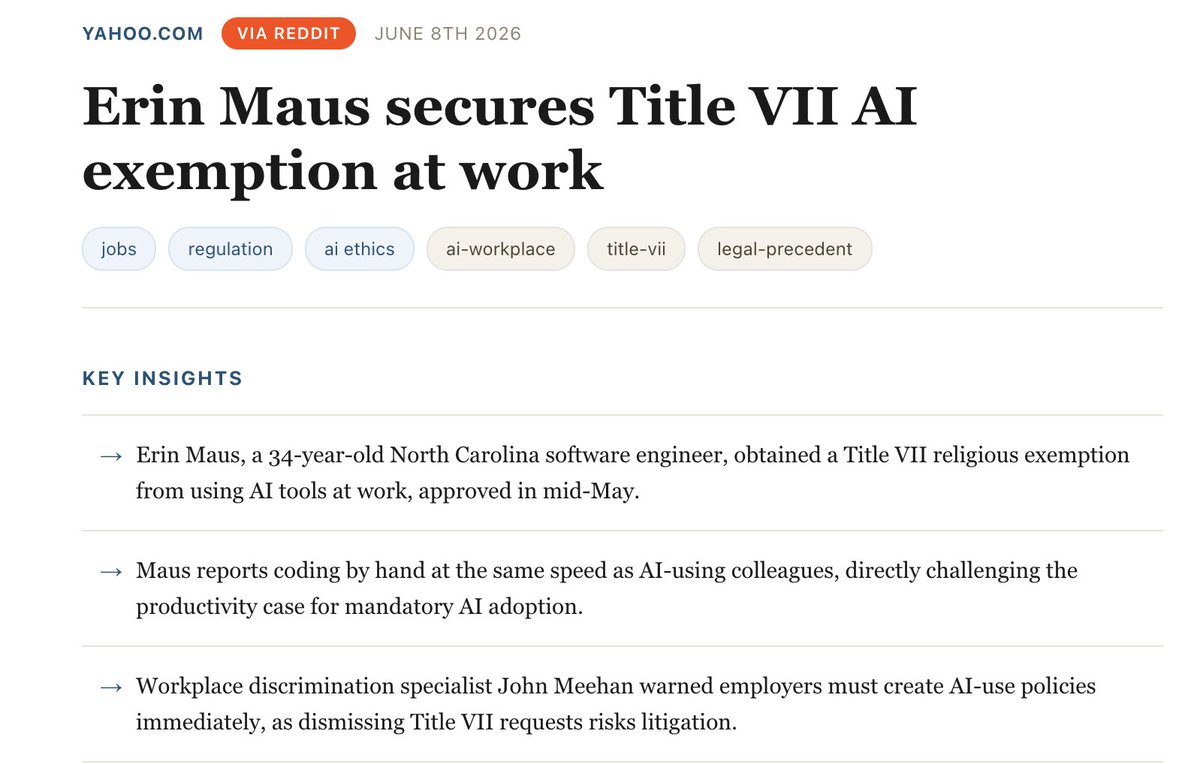
Unless she is writing code in a basic text editor like Notepad, compiling it via a terminal & checking her syntax purely with her own eyeballs, she is still using AI :))
2
7
39
2,337
Jun 12
This is an absolutely massive moment. Congratulations!
Designing & manufacturing hardware is notoriously difficult, but creating something that balances premium aesthetics, high-level engineering & Indian pricing? That is the ultimate trifecta.
Sushant, You are solving a critical, real-time health crisis with indigenous innovation. Best wishes, I will also give it a try.
PS: I do not know Sushant & this is not a paid post.
Jun 11

Excited to launch India’s best Air Purifier. It’s the need of the hour and we needed one like yesterday. So we designed, engineered and produced it. Almost 2 years of R&D and 100s of hours perfecting airflow.
Here is JB to the world.




8
158
933
35,691
Jun 12
A few of you have mentioned that my posts can be quite long. I accept the charge! True history & scientific methods require depth; you cannot bust centuries of myths in a 10 word soundbite. However, I respect your time. From now on, I will provide the Crux right at the start. If it grips you, stay for the full breakdown. If not, feel free to skip & scroll further!
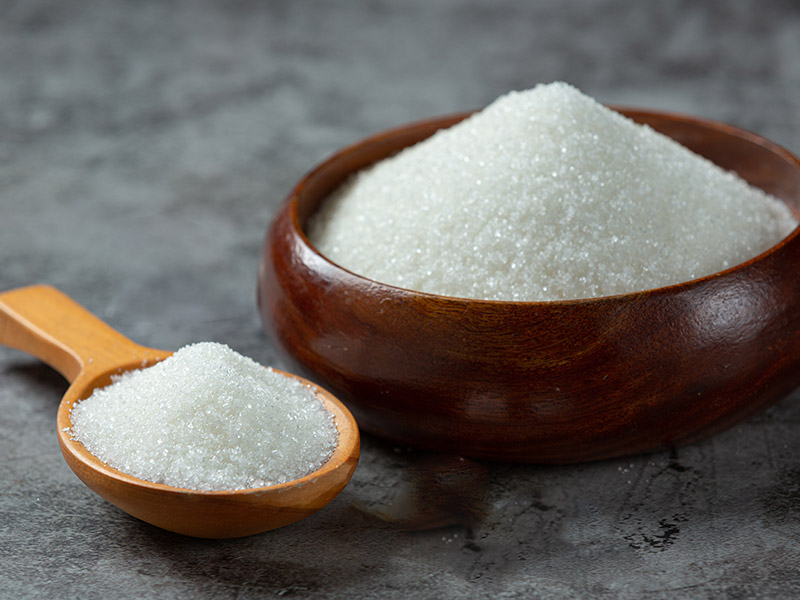
Think refined white sugar was a Western invention/imported from China (just because we call it Cheeni)? It is a case of identity theft.
- In 350 CE, Gupta-era Indian chemists invented the exact pH-balancing technology needed to turn raw cane juice into white crystals (Śarkarā).
- In 647 CE, Chinese Emperor Taizong sent a state mission to Bihar specifically to learn this chemical process.
- We call it Cheeni today only because China later mass-produced a specific ultra-white variety & traded it back to us. Here is the complete breakdown:
The English word Sugar, the Spanish Azúcar, the Arabic Sukkar & the Latin Saccharum all track back to a single linguistic ancestor: the Sanskrit word Śarkarā (which originally meant gravel/grit, referring to the look of sugar crystals). If the West/the Middle East/China invented refined sugar, why are they all using a Sanskrit word to describe it?
Before the 4th century CE, the world only knew how to boil sugarcane juice down into a sticky, dark, unrefined mass (what we call Gur/Jaggery). Keeping it liquid/semi-solid meant it spoiled quickly & could not be transported across vast distances.
During the Gupta Dynasty (c. 350 CE), Indian scholars turned food into chemistry. They discovered that by adding specific alkaline clarifying agents like lime/plant ash to the boiling cane juice, they could alter its pH level. This caused the impurities to separate & float to the top to be skimmed off. Once cooled, the pure sucrose did something miraculous: it precipitated & crystallized into hard, white granules.
So why do we call it Cheeni today?
Let us look at the imperial records of the Chinese Tang Dynasty. In 647 CE, Emperor Taizong sent an official state mission to Magadha (modern day Bihar). Their goal was not political, it was industrial espionage. They came to study the scientific methods of sugar refining.
The Chinese took this tech back, optimized it over the centuries for mass factory production & eventually exported a specific variety of ultra-white sugar back to India. Because it came via Chinese traders, locals began calling it Cheeni.
China did not invent sugar refining; they went to university in Bihar to learn it. The next time you stir a spoonful of sugar into your milk, remember: you are not using a Western/Chinese invention. You are witnessing a 1000s yr old triumph of Indian chemistry.
39
264
748
11,252