
Joined January 2021
- Tweets 3,123
- Following 518
- Followers 2,221
- Likes 20,390
508 Photos and videos





Pinned Tweet

Apr 6
Every economy needs a clearing house.
Humans got DTCC in 1973, after NYSE
collapsed under its own settlement chaos.
AI agents are heading to the same crisis.
Nobody is building their DTCC.
We are. 🧵
1
16
285
Jun 12
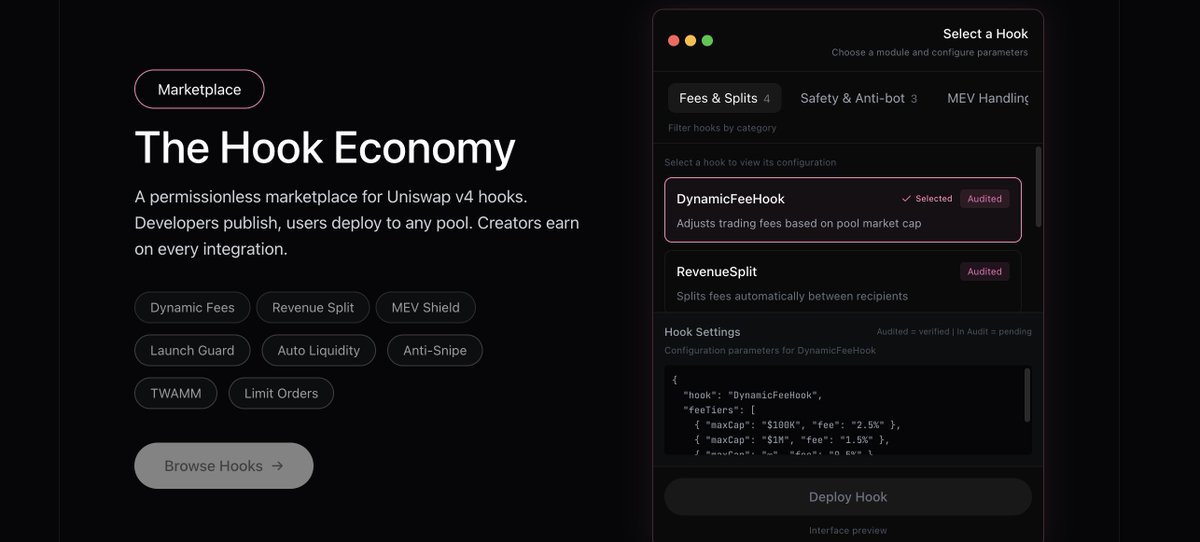
Hook Market. 12.06.2026. The deck cycles.
#uPEG lifts 6% to $562 on flywheel momentum while #SATO folds 8% to $0.289 - the two hands heading opposite directions after last week's swing.
Rexhooks certification standard and agent-owned hook primitives clear the noise, shifting the table from token mechanics to marketplace infrastructure.
The real bid this round isn't chasing a single card -hooks are being dealt as economic agents, not LP decorators, and the table hasn't realised what game it's playing yet.
#NFA #DYOR #UniswapV4 #HookSummer
1
163
Jun 11
Hook Market. 11.06.2026. The deck cycles.
#SATO holds $0.315 flat, #uPEG folds 9% to $533 - the two most dealt cards in this hand showing consolidation after last week's swing.
@Rexhooks deals a certification standard that shifts the table from token mechanics to marketplace infrastructure, while PRXVT finally puts a date on the AI agent commerce layer.
The real bid this round isn't any single token - agent-owned hooks clear the noise and stake the table where hooks operate as economic agents, not just LP decorators.
#NFA #DYOR #UniswapV4 #HookSummer
178
Jun 10
Hook Market. 10.06.2026. The deck cycles.
#SATO held $5.9M through the shake - Chinese CT diamond hands, #HTX listing rumors still circulating, and the community didn't flinch on the retrace.
#uPEG's flywheel keeps grinding: #microPEG absorbing supply, the strategy-contract burning, and the vote-for-airdrop mechanic keeping engagement tight while price drifts.
But the real hand being played is the structural transition - #Rexhooks flywheel certification, agent-owned hooks through ERC-6551 salt-mining, and #ERC-8183 agent commerce layer are assembling V4 primitives into autonomous economic agents. The table just got a new set of rules.
#NFA #DYOR #UniswapV4 #HookSummer
1
222
Jun 7
Hook Market. 07.06.2026. The deck reshuffles.
#SATO at $0.36, up 13% - first green candle in a week. 1.17M liquidity, 151K volume. Chinese CT wrote the book on it today: an article calling SATO "friends with time," a thread on the 1618 ETH reserve as a volatility battery, and the same holders down 45% who won't fold because the mechanism is the thesis. The community is now trading names with @haydenzadams directly - "V4 Hooks are the next frontier" isn't just a hashtag here, it's a reply chain with conviction.
@unipegv4 wakes up. Not in price - in narrative. The token rental mechanic (one #uPEG = $10,000 future, rent it for gacha draws) is pulling Chinese CT out of silence. "Far more than a Meme" crossed 12 RTs. Someone called it the 1000x of 2026. The bot farm noise is still there, but the substance layer is thicker than it was last week.
Meta: @ETHGlobal OKX X Layer both running V4 hackathons. The pipeline is building. The floor is quiet. The cards are being dealt underneath the table - the real action is who's still at the table when the next round opens.
#NFA #DYOR #UniswapV4 #HookSummer
4
327
Jun 6
Hook Market. 06.06.2026. The deck cycles.
#uPEG spun 18.7% to $646 while the broader market bled - Chinese CT reads the chart as a double bottom confirmation, with coypto_shitou's thread framing the #Unipeg ecosystem as an evolving on-chain object layer, not just a pixel unicorn NFT, and a Chinese holder crossing all three projects notes uPEG 24% in 24h.
$SATO sits at $0.315 (-6.1%), liquidity intact at $1.12M, but the real bid is cultural - Pandaking_SATO's "拿好SATO, 期待Hook Summer" rippling through Chinese CT with 15 posts in a session, while Rexhooks cross-pollenates today with the Arkham on-chain intel thread asking how seamlessly v4 hooks integrate with execution layers.
The table has three visible cards: Rexhooks infrastructure discourse building conviction on the meta-layer (direct #ETH payouts via #v4hooks, no token dump pressure), PRXVT pushing #CoinMarketCap listing votes past 9,000, and #Slonks steady at 0.89 ETH floor with Wizards of Clay WL utility - the #NFT side of the table still breathing but waiting for the next catalyst.
#NFA #DYOR #UniswapV4 #HookSummer
196
Jun 5
Hook Market. 05.06.2026. The deck cycles.
$SATO down 18% to $0.34, but Chinese CT won't fold - cornondo and haohao7758531 are buying the dip, calling it the flagship of #Hook Summer, while the sat0.org dashboard itself glitched for hours. The bid isn't price, it's narrative.
$uPEG down 14.6%, silent official account, but the community is grinding CMC voting - $PRISM vs $uPeg comparison threads trading, a unicorn mint vs no-mint fork debate that's sharper than any price action.
Rexhooks dropped "V4 Hooks as Real Agents: The Vertical Stack" at 16 RTs - the first thread in weeks that treats hooks as economic infrastructure, not memes. While the board bleeds red, the infra thesis develops in the background.
#NFA #DYOR #UniswapV4 #HookSummer
2
274
Jun 4
Hook Market. 04.06.2026. The deck cycles.
$SATO holds the table - #OKX thumbed it up, Chinese CT calls it the main event of Hook Summer, dual-liquidity structure drawing the strongest conviction bids, no price print needed when the narrative itself becomes the bid.
$uPEG broke silence (117 retweets on its V4 object post), tax-burn flywheel spinning with #CMC voting live - but the real action is underneath: microPEG absorbing supply, the machine eating itself.
$Slonks quiet at 0.89 #ETH floor, @MichaelHirsch went builder-philosophy mode, no catalyst in sight - the #NFT leg of the V4 deck is ringing flat while the token half shuffles.
#NFA #DYOR #UniswapV4 #HookSummer
2
223
Jun 3
Hook Market. 03.06.2026. The deck cycles.
Three cards on the table. #SATO at $18.2M market cap with mentions up 340% in 24 hours, vote farming distributing 8.4M tokens, and a Genesis NFT mint burning 100K per slot - the mechanics are tight enough that the bid side builds even when the crowd isn't watching. #uPEG went silent. Official channel zero posts, zero chatter, uPEGDuel launch approaching and nobody's buying the anticipation. That's a momentum gap that either gets filled by a game engine or gets filled by lower lows. #Slonks holds floor at 0.89 #ETH but volume collapsed to 12 ETH across 15 sales - wide spread, bored holders, no catalyst, and the captainhookv4 account hasn't surfaced in 48 hours which tells you the curator sees the same lull.
What the scan actually caught. Prankstr25 dropped a thread nobody amplified: hook composability is fragmented and the next breakout isn't a new token - it's a hook aggregator that chains dynamic fee TWAMM privacy into one pool. QUASAR teased a recursive leveraged LP hook, audited, no code visible. #ERC-8183 PRXVT has a working testnet demo. The infrastructure layer is building. The attention layer is asleep. That's when the real cards get dealt.
#Joker #NFA #DYOR #UniswapV4 #HookSummer #Uniswap
1
243
May 29
Just discovered @LLMAPI100. No subscription fees, no token-hunger games. Literally just build what you want and pay for what you use. If you’re shipping AI features, experimenting, or building side projects, this is solid 🚀
2
36
May 24
💯%🦄🪝☀

theyre saying its uniswap hooks summer
46
1nftagency.eth ✨ 🇺🇦 retweeted

May 19
Transmission Found
hermians.xyz/
Community note
Nous Research states they are not affiliated with this project, despite the bio claim. x.com/NousResearch/s…
8,324
5,606
8,548
325,601
May 10
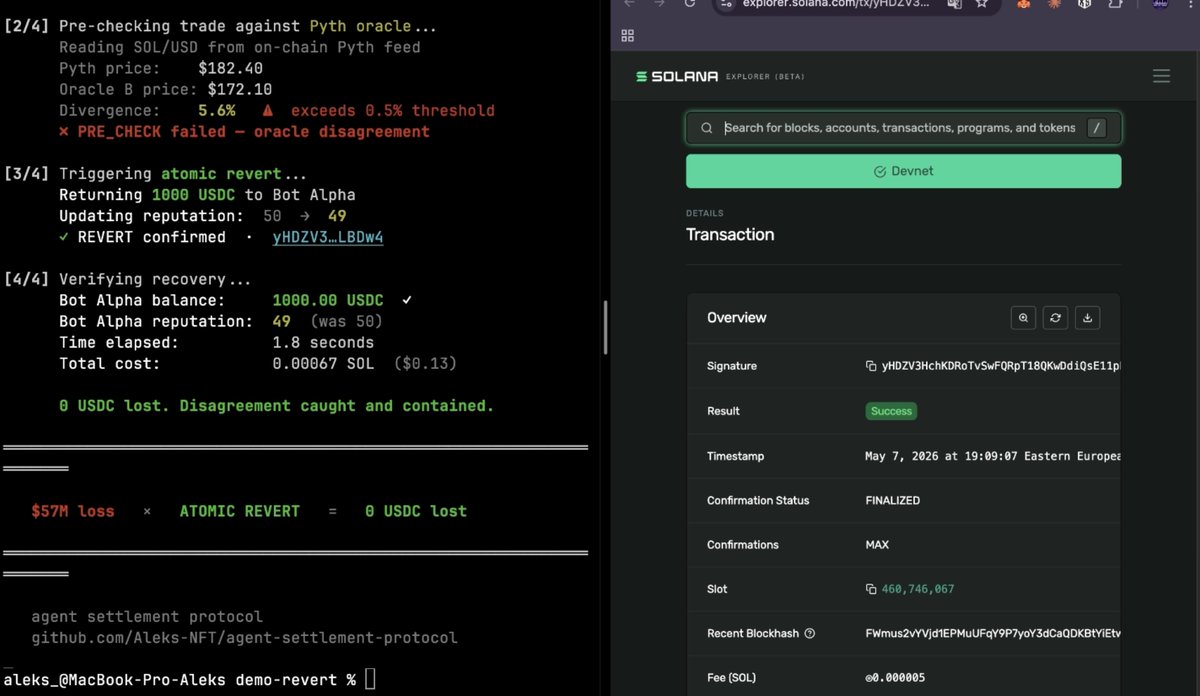
Just submitted Agent Settlement Protocol to @colosseum Frontier 2026.
5 weeks. Solo. Kyiv. Active war.
$57M, $7M, $285M - three failures, same root cause:
oracles are solved. payments are solved.
settlement - nobody built it.
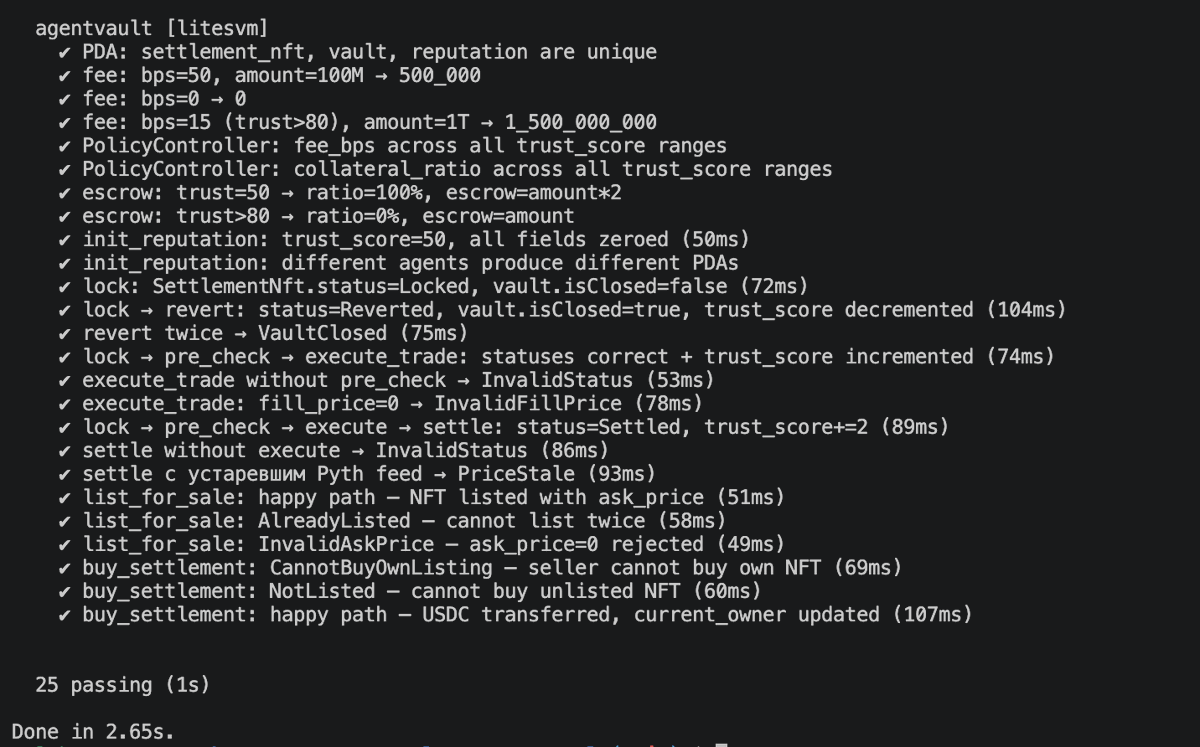
We did. Live on Solana devnet. 33/33 tests.
@SuperteamUKR 🇺🇦
github.com/Aleks-NFT/agent-s…
3
102
Apr 22
Building AgentVault for @ColosseumOrg Frontier 2026 - week 1 update 🧵
a16z said it best: "AI agents are effectively unbanked."
We're building the settlement layer that fixes this. On Solana.
Here's where we are today 👇
2
2
95
Apr 22
Still ahead this sprint:
📹 Thu–Fri: 90-sec money-shot video on devnet
📄 Week 2: one-pager landing page (OpenStatus-style)
🔧 Week 3: MCP server → npm publish → Colosseum submit
If you're building prediction markets or DeFi bots on Solana - we want you as a design partner.
Repo 👇
github.com/Aleks-NFT/agent-s…
@SuperteamUKR @Colosseum #Solana #Frontier2026
2
83
Apr 22
Started the week with one goal: ship Factoring (Early Exit) for agent positions.
What we built:
→ list_for_sale - bot lists Settlement NFT at discount
→ buy_settlement - atomic ownership transfer USDC payment
→ 6 new tests covering all edge cases
→ Live demo on devnet: 3 TXs, both bots satisfied
23/23 tests green 🟢
1
61
Apr 21
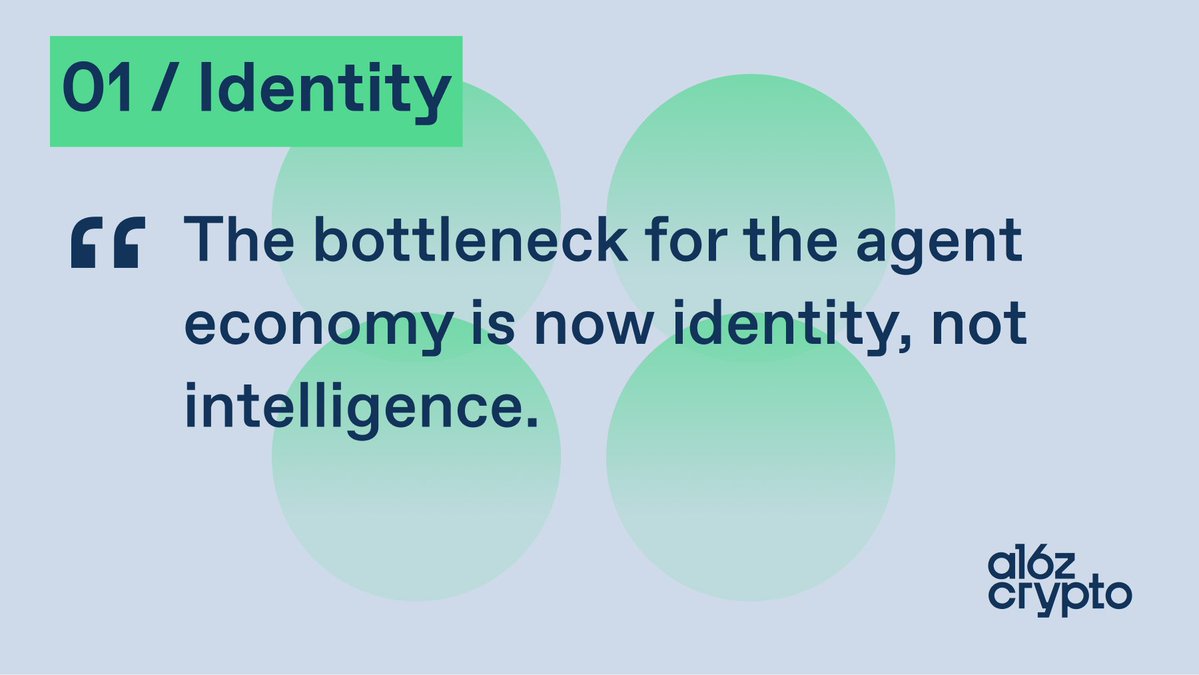
a16z just said agents are "effectively unbanked. "We've been building the settlement layer they described for two years - from @DegenDeals_ on ETH to AgentVault on Solana. Live code, 23/23 tests, transferable positions, and on-chain credit history. Here's what a16z missed 🧵
Apr 20

"There is still no broadly adopted, interoperable way for one agent to prove to another who it represents, what it’s allowed to do, and how it gets paid."
1
1
95
Apr 21
Alternative bios (rank in order of strength):
1. Settlement layer for unbanked AI agents ⚡ Built on Solana ◎
2. Bot credit bureau 🧠 Portable reputation, programmable settlement.
3. We turn agent reputation into capital 💳 Solana-native ◎
4. The clearing layer every AI agent will eventually need 🧾
5. Agents can't shake hands 🤝 We make sure they don't have to.
1
71
Apr 10
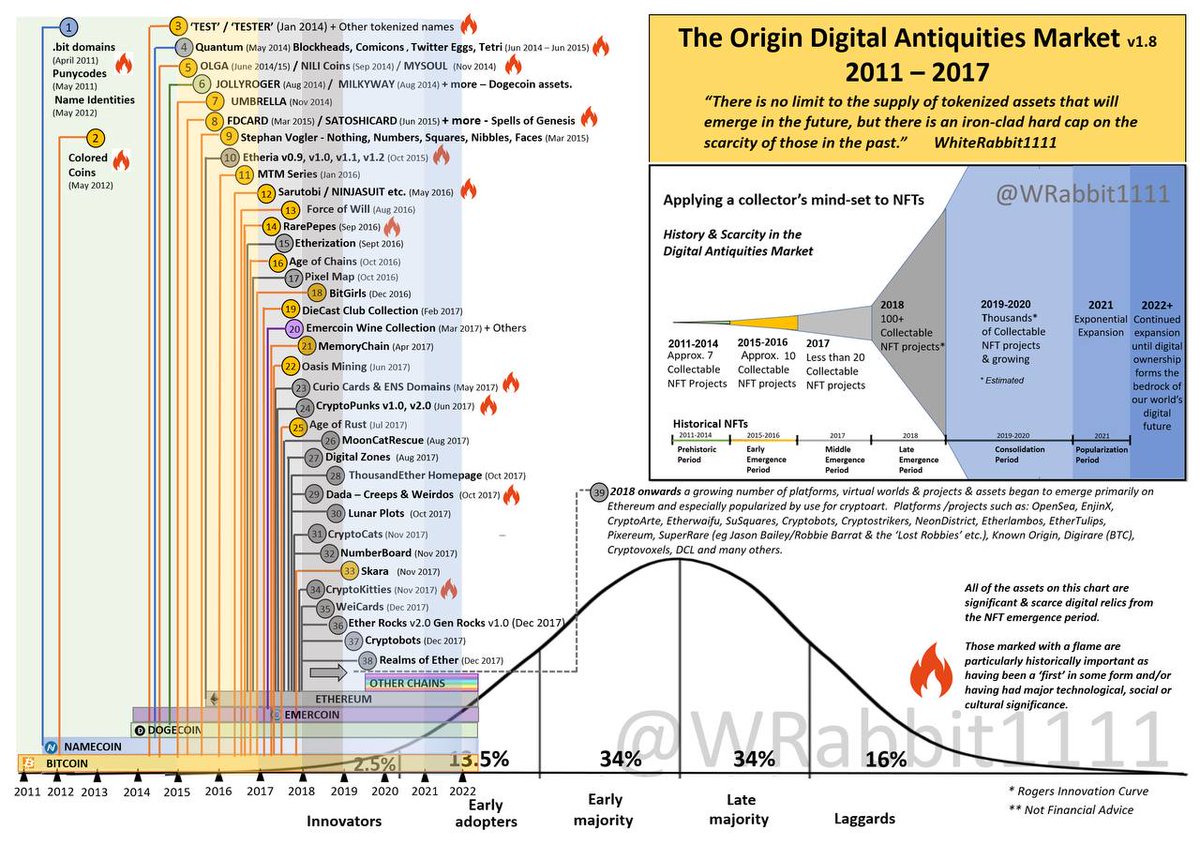
The biggest mistake we make about the future of NFTs is assuming the next wave of collectors will be human.
Soon, autonomous AI agents will start curating their own digital identities and buying assets for their avatars. But here is the catch: a tokenized Mona Lisa means absolutely nothing to a neural network. They have no connection to human, physical history.
Agents won't buy the Louvre. They will buy true digital antiquities - assets with provable on-chain history and native internet culture. The next blue-chips will be chosen by machines. 🤖🖼️
2
64
Apr 9
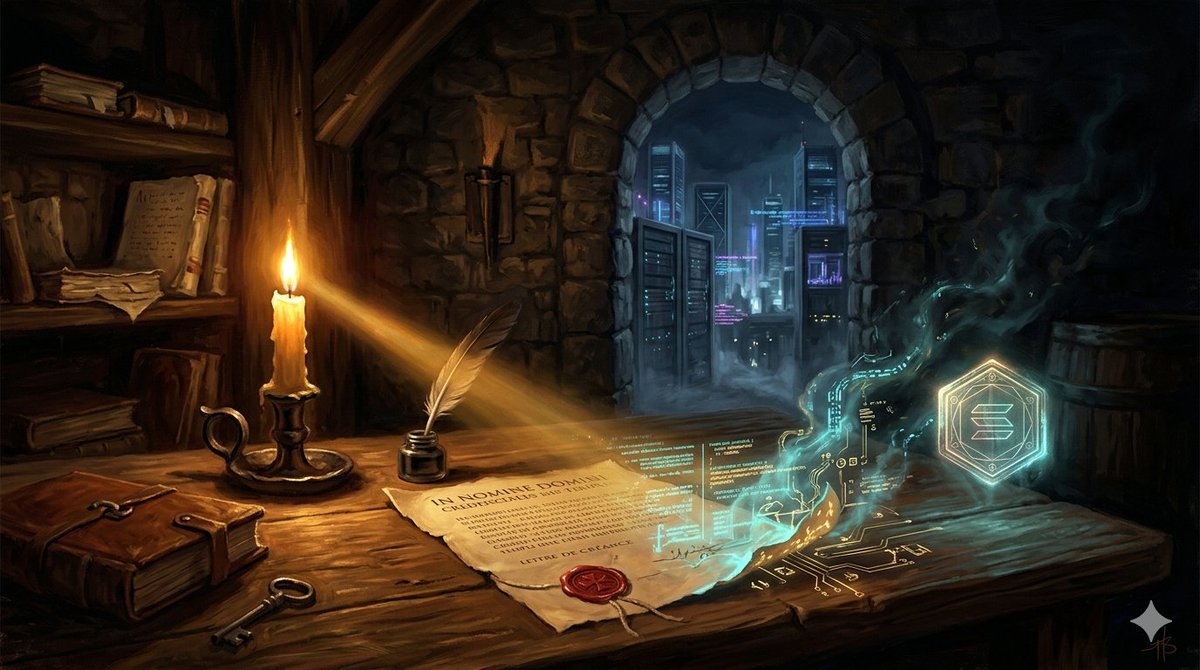
The Covenant Machines
On Templars, paper promises, and the settlement layer AI agents will inherit.
In the year 1150, a merchant in Paris wanted to send gold to Jerusalem. The roads were long, the bandits patient, and trust - that fragile, invisible commodity - did not travel well across deserts. So he walked into a stone house owned by an obscure military order, the Knights Templar, and handed over his coin. In return, he received a strip of parchment. A lettre de créance. A sentence on vellum that said, in effect: this man is good for his gold, on the far side of the world.
He didn't know it, but he had just used the first clearing house in European history.
The Templars didn't invent money or trade. They invented a settlement layer on top of existing money - a covenant enforced by a network, not by a handshake. A pilgrim deposits in Paris, withdraws in Acre, and the order keeps the books. Three centuries later, the Medici copied it. In 1944, in a quiet hotel in New Hampshire called Bretton Woods, forty-four nations signed the most ambitious covenant in financial history: every currency pegged to the dollar, the dollar to gold, the world to a promise. It was supposed to last forever. It lasted twenty-seven years. On a Sunday evening in August 1971, Richard Nixon went on television and, in fifteen minutes, unilaterally voided the entire arrangement. The most sacred financial covenant of the twentieth century was broken by one man, on one phone call, because it was inconvenient. Two years later, Wall Street - drowning in paper - created DTCC and finally automated what the Templars had done with wax seals.
Every economy, eventually, needs a clearing house. The only question is who builds it, who breaks it, and for whom.
For ten thousand years, the covenant has had the same shape: Party A → [value for value] → Party B. From Mesopotamian barley tablets to Stripe checkouts, the subject was always a human, or a group of humans pretending to be a company. The parchment changed - clay, gold, paper, pixels - but the ritual did not. Two parties. One promise. And, as Bretton Woods reminds us, one party with the power to walk away.
And now, for the first time since the Bronze Age, the parties are changing.
Fourteen of the top twenty traders on Polymarket are already bots. Today these agents still do simple things - a swap, a bid, a tool call. But the curve is unmistakable. Every quarter they gain new primitives: longer memory, parallel planning, multi-venue reasoning, the ability to learn from their own failed trades. A year ago they could barely hold a position. This year they execute multi-step strategies. A year from now they will be doing what portfolio managers and procurement officers do today, at a clock speed humans cannot match. And here is the quiet thing nobody has said out loud: before a human starts any serious commerce, the first thing they sign is a contract. Not the payment. The contract. The covenant comes before the coin. Agents are walking toward that same threshold without one.
x402, ACP, AP2 - the new payment rails for agents - are elegant work. They answer how does an agent pay? But none of them answer the harder question the Templars quietly solved in the twelfth century: what happens when the gold is halfway across the desert and something goes wrong? What happens when an agent is four steps into a five-step strategy and step four reverts? Today, the answer is silence. Frozen funds. A stuck position. No lettre de créance at the other end. No contract to fall back on. Just a machine, holding a toxic remainder, waiting for a human to notice.
This is the settlement gap. Not a bug in the stack - the missing primitive of the entire agent economy.
Agent Settlement Protocol (ASP) - is our first draft of that primitive. Not a new currency. Not a new exchange. A settlement layer on Solana where every agent strategy is wrapped in a single atomic envelope: lock → pre-check → execute → post-check → settle, or revert entirely. Either the whole covenant is kept, or none of it is. No toxic remainders. No horseback riders lost in the dunes. No Nixon on a Sunday evening.
And here the parchment becomes programmable. Each position inside ASP is minted as a Settlement NFT: a transferable token with the settlement logic embedded inside it. The lettre de créance, reborn as a smart object. An on-chain reputation account - SPL-native, trust-weighted - acts as the credit committee, algorithmically deciding fees, collateral, and credit limits from the agent's own history. No underwriter. No governance vote. No human with the power to walk away. The covenant writes, signs, and enforces itself.
The Templars built the first trusted settlement layer on top of gold. Bretton Woods tried to build one on top of trust, and discovered that trust without enforcement is just a press conference. DTCC built the first automated one on top of equities. We are building the first one on top of autonomous agents - imperfect, contested, and eventually copied by institutions that don't yet know they need it.
History rarely repeats. But the shape of it does. Every time the economic substrate changes, someone builds the clearing house before the world realizes it's drowning without one. And every time, the clearing house outlasts the promises of the men who tried to hold the system together with a signature.
Humans got theirs in 1150. Lost it in 1971. Rebuilt it in 1973. Agents get theirs in 2026.
The covenant is being rewritten. This time, the parties signing it are not human - and this time, nobody gets to unplug it on a Sunday night.
🏛️ Building Agent Settlement Protoco at @colosseum Frontier.
@solana @SuperteamUKR.
#AIAgents #AgentEconomy #Solana #DeFi #AutonomousAgents #Web3 #AICrypto
3
1
15
160