burger maxi. Floating/stacking/ flipping sanko.tv/Floatingfurther?ref…
Joined June 2022
- Tweets 2,154
- Following 967
- Followers 280
- Likes 6,543
136 Photos and videos








21 Dec 2024
Crypto was suppose to make me rich, now I'm still poor but with a gambling addiction
1
2
94
17 Dec 2024
ok I need BURGERS TO GO UP. like VERY SOON. I cant take this anymore. every day I am checking BURGERS and it is staying the same. every day, check BURGERS, same. I cant take this anymore, I have over invested, by a lot. it is what it is. but I need the BURGERS to GO UP ALREADY.
1
92
15 Dec 2024
48
idonono retweeted

7 Dec 2024
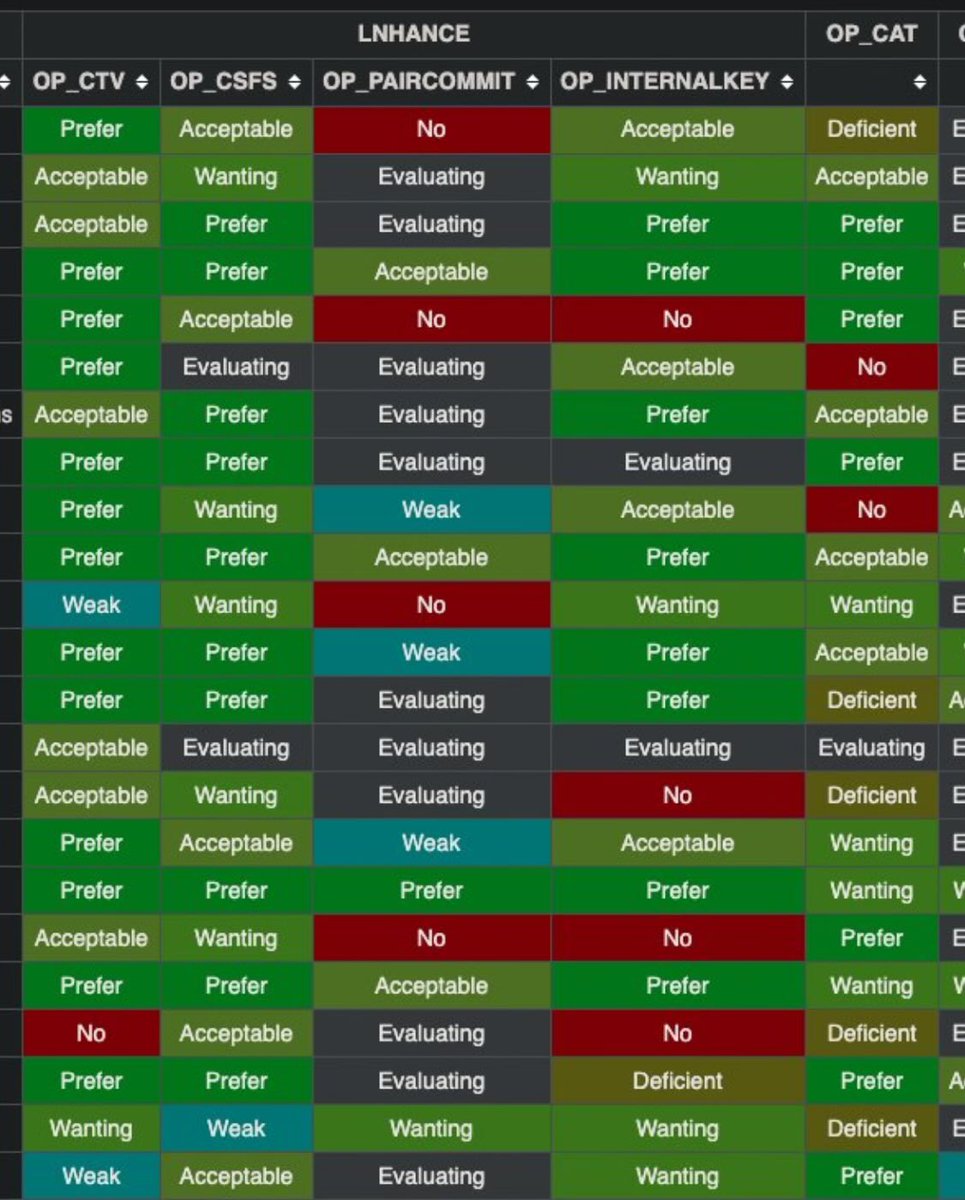
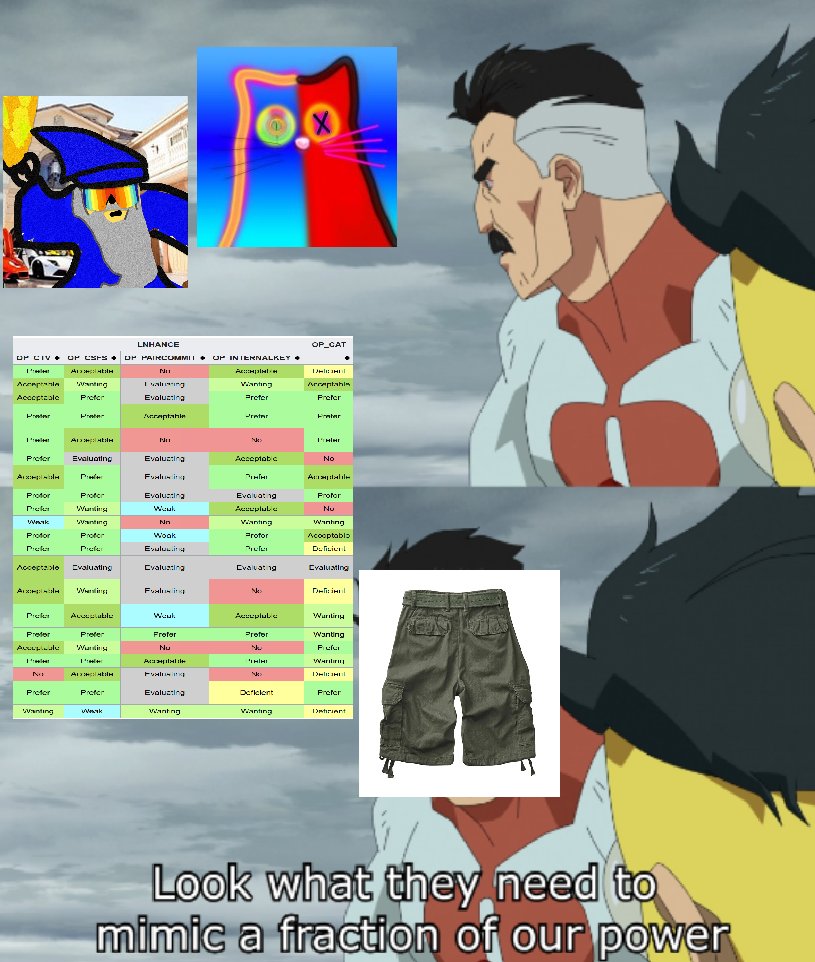
I think @udiWertheimer should publicly admit defeat and submit his request to have cat included in the forthcoming CTV activation client
6 Dec 2024

5
5
46
7,173
idonono retweeted
5 Dec 2024
We're going to win so much you're going to get sick of winning. You're going to say "please, mr cryptoanarchist, i'm tired, can we please stop winning" and I'm going to say "NO, MOAR!, WE NEED TO WIN!"
5 Dec 2024

In a shocking change of stance on encryption:
FBI now actively recommending Americans use encrypted messaging apps for calls/texts.

1
1
10
715
idonono retweeted
4 Dec 2024
Alright, I have not heard back from the @MEonBTC peeps, and I think it's necessary to share some thoughts:
Potential Vulnerability Exposure (this is a consideration of events, not a disclosure or results of an audit of any kind):
14
12
104
35,138
idonono retweeted

4 Dec 2024
Introducing SOLO: a protocol that lets anyone run an Ethereum validator with just 1.25 ETH instead of 32 ETH.
It enables an LST backed by the portion of a validator's stake unlikely to be lost, without relying on governance or trusted hardware.
Here's how it works 👇

30
46
459
55,264
idonono retweeted

1 Nov 2024
Art, Competition, AI, and What We Value
> "AI will be better than humans in creative, artistic, and competitive domains, it's going to replace us."
I believe this is the wrong framing, because it’s predicated on a misunderstanding of what art and competition are intended for: human consumption.
Artists should not fear AI. They should view it as a tool that can enhance them, not an entity that supplants them. Because people are the arbiters of value, not machines.
We don't always value what's objectively best or technically superior. We innately seek out unique individual expression, and associate it with its creator. When there's no human to accompany that creation, it rings a bit hollow.
We have many an "irrational" need and attraction to a human presence when experiencing an authentic human message. What we consider as "real" and "fake" is entirely psychological framing that cannot be rationalized away.
Examples:
- If someone's lip-syncing at a concert... do you like that? Or do you feel a little betrayed? By all audio accounts, it’s better than the artist's live voice. In fact singers often sound much worse live than they do in the studio. Lip-syncing gives you that pristine studio sound in the arena. Weird we don't prefer it.
- Do people favor the Harry Potter originals or Harry Potter fan fiction? I'm sure some of it's better than JK Rowling's work. I bet Claude could easily whip up some stories that rival it. Why is hers famous and revered, and not the derivatives? What connotation does the word “original” have that has such valence to us…? Why do we consider the initial version that came from the human progenitor the authentic one?
- Luxury items: can you tell the difference between a fake (what makes it fake?) Louis Vuitton bag and a “real” one? What about an organic diamond borne from millions of years of pressure, or a lab-made one? The lab-made diamonds have less “imperfections” and are way cheaper. They look exactly the same, and are even made with similar carbon-crystallization processes. What’s not to like?
Someone wrote this in response to one of my essays (which I deeply appreciate):
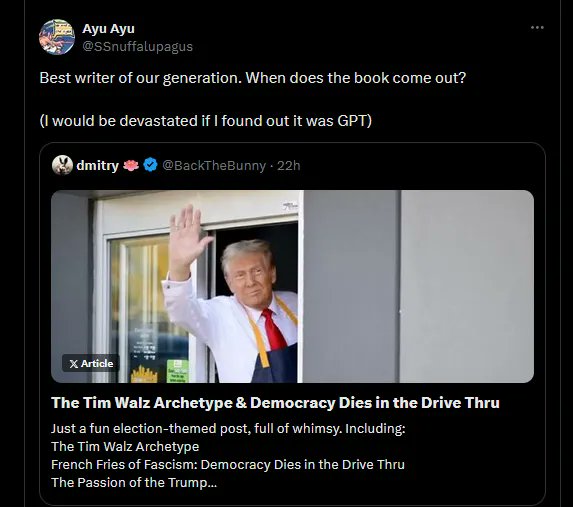
This illustrates my point beautifully, “devastated” if he found out a machine was behind my accounts, and not a person’s creative expression and thoughts.
I would never have an AI write my stuff. The more presence an LLM has in your work, the less presence you have, and there is zero point to any of my writing if it's not a representation and extension of me.
It’d be a betrayal, both to my readers and to myself, because it’d be a lie. Textual lip-syncing but worse, because it’s not even your own lyrics you’re faking, so it’s not your own ideas or thoughts, yet your presenting them otherwise.
For technical writing or the like, fine, go nuts, it’s not something anyone enjoys reading anyways (clearly you don’t enjoy creating it either, otherwise you wouldn’t outsource its production).
No one consumes research papers or technical manuals for the author’s artistic expression. But for whatever it is I’m doing on my blog and on Twitter: it makes you a fraud if you conceal it and present it as you.
ART IS NOT AN OBJECTIVE DOMAIN, BECAUSE IT'S A HUMAN ONE
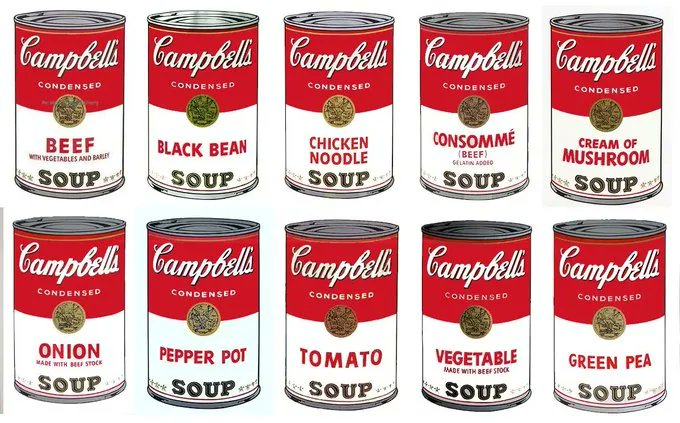
Look at this. This is perhaps the most famous piece of American modern art ever. Do you think Midjourney can "do better"? Because I sure do.
We don't care though. Because that's not how appreciation or sentimentality works. You want a human expressing something to you, that resonates in a human way. This is an evolved characteristic.
Part of the value we ascribe to creative work (and not only creative work) comes from the effort we perceive was put into it. We value homemade things more than factory output. You value a person's hand stitching more than the sewing machine.
You judge and appreciate how something is made and the effort put into it sometimes nearly as much as you do the thing itself. This is known as the Labor Illusion of Value, however calling it an "illusion" doesn’t make it go away. Again, this is an evolved belief we’ve cultivated over centuries, and not something we can rationalize away.
You know how people like their fruit labeled "organic" because something being natural is instinctively more attractive? "Human made" is the new organic in the artificial-abundance era of AI.
Even when The Machine is vastly superior to us, it does not change the human condition of how creative value is perceived and appreciated. It's your programming to seek it out and exalt... the human.
You’ll still want anthropogenic work from brilliant folks you admire; you won't cherish a machine’s output the same way you do your fellow man’s.
A machine does not feel or understand the world or humanity in the manner we do, and its characterization and depiction of it will be lacking the psychological touch that the lab-made diamond is all too familiar with.
Art is a microcosm of humanity: expressed via text, imagery, or sound, and consumed with the heart.
HUMAN VS MACHINE COMPETITION
Another example of human imperfection prevailing over AI superiority: competition. Say, chess.
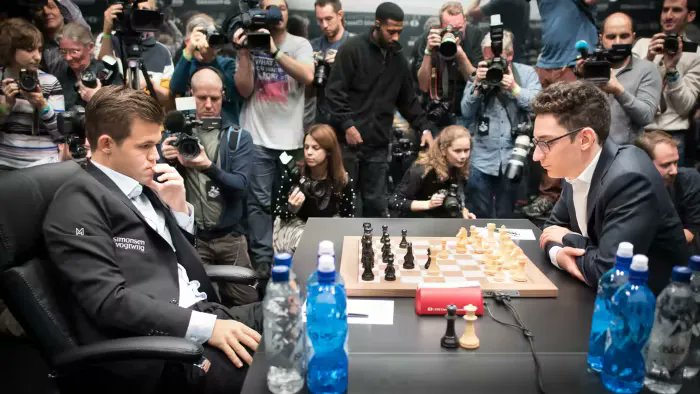
AI dominates us at chess, computers have basically solved the game. Yet it's Magnus Carlsen and slow, plodding, blemished meat contests we watch.
Two computers playing each other just doesn't fill the seats the same way, because clinical robot performance isn't what you watch when elite-yet-flawed fellas are available. He's just like me!
It's your programming to venerate human triumphs, accomplishments, and performance. We are the consumers of art and competitive feats, not machines. Thus humans are the judges of what's valuable in these domains, and we value... the human.
Blog in profile.
23 Sep 2024

Midrange Jumpers for the Middle Class
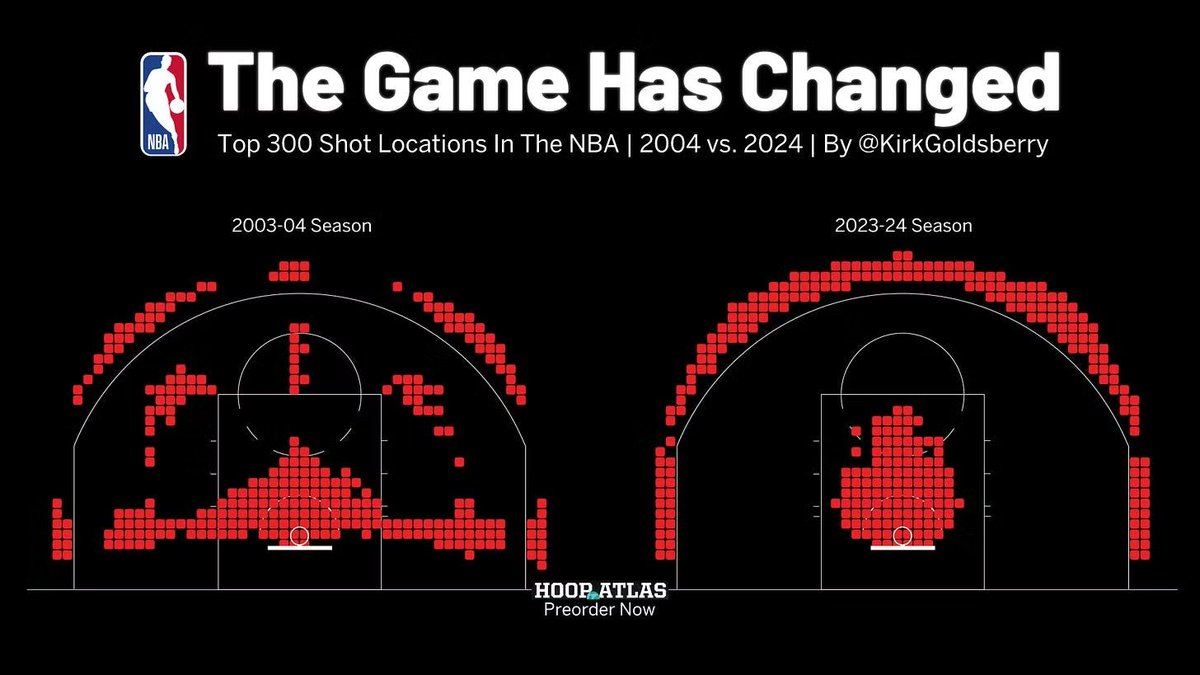
This chart made me sad. It’s the inexorable result of moneyball. When every decision is maximally maximized, when every choice is an expected-value calculation.
It’s also the inevitable result of globalism.
Moneyball kills your midrange jumpers, globalism kills your middle class. Both in a poetically similar way.
Excessive optimization in all things eventually turns the human spirit, sports, and supply chains, gray. Unrelenting pursuit of 1% better margins or 1% greater chance of success in *insert competitive domain* is how the McKinsey consultant sees the world. It’s how the pedigree-touting economist understands every decision.
These are people trained to think unnaturally, inculcated to believe what the Excel sheet spits out is absolute truth. The most noble pursuit to attain is that which maximizes the expected value.
They go to schools that exalt undermining the parochial, viewing their neighbors with disregard, so long as it enhances gross margins. Because, hear me out, if it helps gross margins, it MUST be what's best for everyone. Because it makes the trinkets cheaper. Because we are trinket maximalists. Harvard Business Review is scripture.
Why create your trinkets domestically when China has an underclass that exists on 1,400 calories a day and will do it for a fraction of the cost? The answer to this is obvious, if you assume people only value cheaper trinkets, hedonism, and materialism. The middle class has no desire for eudaimonism, and fulfillment from a life that imbues purpose.
This must be so, because the Excel sheet doesn’t know how to calculate those other things (eudai-what? dude stop making up words and get in on this sale), and my MBA says more is more.
When globocorp’s bottom line is the unwavering guiding light, when the expected value of each basketball position is the only consideration, actions eventually converge on the same expected-value-led strategies. Tedium. Mankind needs variance, otherwise he'll breaks things until the volatility and color he secretly relishes returns.
If you go too long without a life of purpose, without eudaimonism, something inside you begins to chafe. Grayness seeps in.
Life needs color, which is to say that which you can’t always predict. You know what maximizes predictability? Expected-value thinking. Moneyball. Globalism. You can push the grayness beachball underwater, but eventually the volatility tax will be paid.
An expected-value existence is corrosive to the middle. Empirically. Demonstrably. The Excel-sheet mind cannot comprehend this, but the NBA shot chart and the factory worker can.
RELIGION, PRETENDING TO BE ECONOMICS
Just as the priest only knows “Christ is King”, the Trinket Maximalist only knows “open trade open borders good”. It's religious thinking, masquerading as post-hoc, economic-presenting rationale. Because you cannot possibly conceive that the highest-order value for a nation isn’t the cheapest trinkets possible. Unfathomable.
When all your beliefs and motivations can be distilled down to “what gives the best margins?”, you implicitly worship the material. Because explicitly, the material is all you value when you think this way. You project this value onto others, often unwittingly, when you treat global trade as Christ 2.0.
This is the religion of consumption, hedonism. No salutary purpose, eudaimonism. If it doesn’t facilitate profligate intake, I’m going to have to kindly ask that you go to college.
If a couple more basis points of gross margin is the North Star, and one more point on the scoreboard is all the strategy knows, you're left with no midrange jumpers, and no middle class.
Remember Rip Hamilton? Kobe? They lived in the midrange. Jordan did everything, everywhere, all at once. Now you know what you do in the modern NBA? You either get a sniper to shoot a foot behind the 3-point line, or you throw it to the post.
Listen, we ran the numbers, and the Monte Carlo analysis says what it says: no more 15-footers or you’re benched. No more domestic manufacturing, or you’re out of business. Diversity? Lol yeah not that kind. Have you seen the NBA’s ratings? You get what you fucking deserve.
Who cares about all the action in between the 1st quarter and the final buzzer. The sport whose very reason for existence is to entertain and excite. The event we gather in big stadiums for and have our identities tied to. Meh, you see, all that matters is just one. more. point. than the other guys.
Who cares about a population’s sense of identity and esteem. A blue-collar existence of dignity and self-sufficiency. The men who derive their purpose, value, and autonomy from their ability to provide. It’s fine if we rob them of their agency, because the trinkets are that much cheaper for it.
You don’t need a sense of independence, you need a smartphone that folds! A hedonistic worldview like this dominates everything else you believe.
Boy you’re really laying it on thick for those flyover-state peons! All we want is just one. more. point. of gross margin bro. Chill. You clearly don’t read Harvard Business Review.
> "What's the expected value of each possession? What’s the cheapest way possible to build that product?"…
This kind of thinking produces grayness, and disembowels the middle. No midrange jumpers. No middle class.
Blog in profile. If you read this far, you owe me a follow. I think that's fair.
A related essay in QT:
9
12
66
36,420

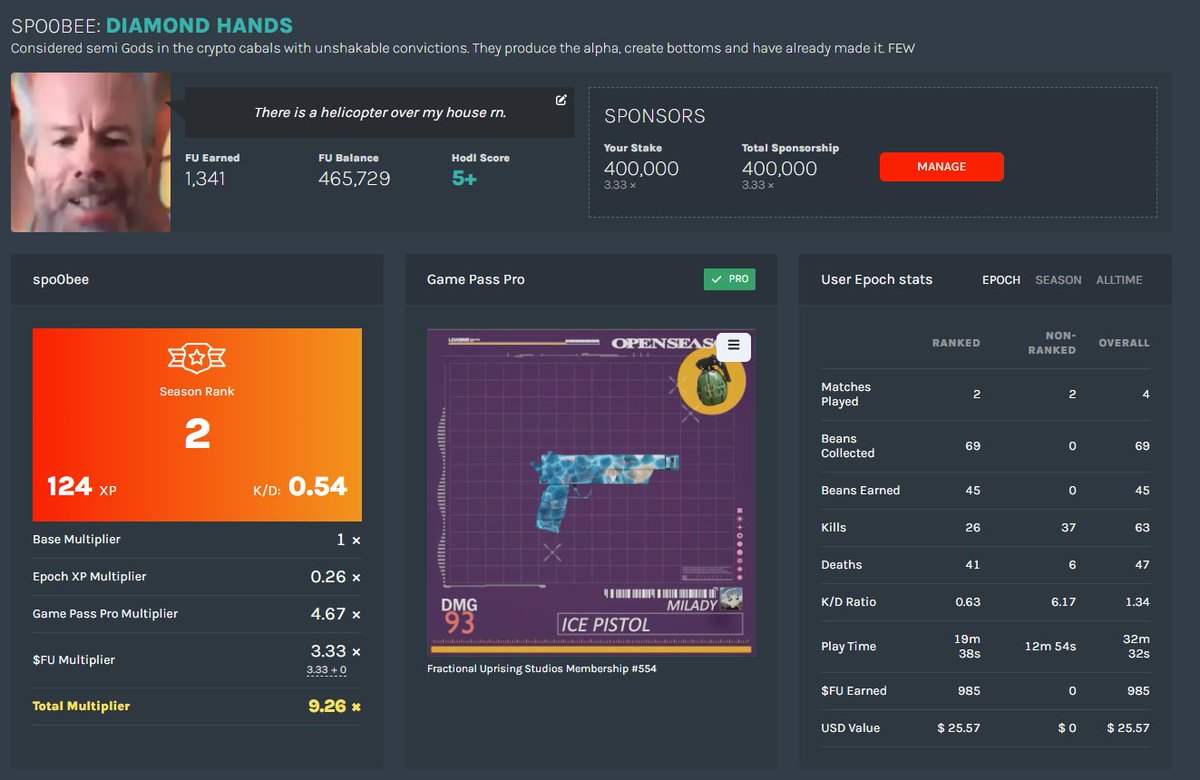
I wanted to test something in OpenSeason (@opunshizun) so I staked $FU MONEY on myself and played three ranked games.
I played like shit (as you can see) and still made $31 worth of $FU in less than 30 minutes.
Pretty cool.
I'm now going to stake (sponsor) the top 10 players and see how they perform for me.
Stake here: openseason.games
Buy $FU MONEY on Arbitrum:
dexscreener.com/arbitrum/0x8…
10
8
39
1,626
idonono retweeted

19 Oct 2024
Blue pixel #761 has been attested by Floatingfurther. Thank you!
rcs.rc.xyz/?id=761
1
1
56
idonono retweeted

14 Oct 2024
IF YOU WANT TO CHECK YOUR RETARDIO METER ON THE RETARDIO SOLAMI INDEX INDICATOR JUST PLACE YOUR PICTURE IN HERE:
$RSI #MemeGenerator
retardio-tau.vercel.app
10
9
49
3,073
idonono retweeted

22 Aug 2024
“Hawk Tuah is brat. Inside Out 2 is demure. The Rizzler is cringe, and Lil Yachty is bas—”
You bolt awake in the mountains of Carthage. You are not online. It is 217 BC. You are the general Hannibal. The future cannot come to pass. Rome must burn.
110
5,334
63,191
2,446,114
19 Jul 2024
Consciousness is synergetic chaos balancing between life and death
45