
Former 360 Security Researcher | On-Chain A7 - Contract A0 | Decentralization | My dream is to become an Ethereum contributor! I'm working towards that goal now
Joined April 2023
- Tweets 304
- Following 191
- Followers 59
- Likes 376
7 Photos and videos

Pinned Tweet

Apr 15
I am currently researching the causes of failures in the Ethereum system in real-world environments.
My work focuses on protocol-client interactions, event analysis, and extreme case risks that are often overlooked in traditional auditing.
Apr 14

1/ The Ethereum Audit Subsidy
A joint initiative with audit providers to subsidize the cost of audits for Ethereum builders. Security audits are a best practice, yet expensive. The subsidy program makes audits accessible and strengthens the Ethereum ecosystem.
1
67
0xcFlute_e retweeted

May 24
Some of my perspective on where the @ethereumfndn is going.
First of all, this is only my own view. The board is not just me, and I have no extra special powers on the board that the other board members do not. @aerugoettinea is the one executing much of this transition. My input has been largely on technical questions. The board is in the process of expanding, and my own power within the org will continue to decrease, which is honestly what I want.
The 2025 era brought many important improvements to EF and its ability to execute. Many issues were resolved, and EF continues to benefit from its improved efficiency and greater focus on concrete goals to this day. And so with those problems resolved, early this year, the largest remaining hole that I perceived was something different nagging at me: I would regularly spot people saying things like "vitalik says these beautiful things about ethereum needing to be decentralized, and have privacy, and be a sanctuary technology, but why do the EF's actions not reflect that?"
Now, you may have been hearing something different. You may not have been sensing a feeling of crisis at all, and maybe were hearing people saying that finally we were taking execution and BD seriously and the main task for us is to keep going that way and be even better and faster. Then probably there is genuine difference between you and me, in what kinds of criticism I take most seriously, and what kinds of critics through their criticism are most able to make me feel pain.
As an analogy, let's briefly switch over to a different domain.
One belief you can have about Google is that it is a success story, and has brought a lot of good to humanity in organizing the world's information. Another belief you can have about Google is that they had a beautiful idealistic beginning, but at some point the corruption of mainstream corporate attitudes seeped in, and they slowly bit by bit completely abandoned the "don't be evil" slogan.
My belief on Google specifically is probably somewhere between the two. BUT, if you had taken me back in time to ~2008, and offered me a button to press to make Google one or two standard deviations more "dogmatic", eg. give Richard Stallman permanent veto power over some key policies, I would immediately press it.
Why? Because a choice for one company is not a choice for the world, or even one country. Google existed and exists in the context of a technology industry generally drifting away from early idealistic don't-be-evil roots and toward greed for financial gain, totalizing visions of accelerated superintelligence, infiltration by sociopaths, and craven capitulation to (or worse, active participation in) government pressure for ideological control, surveillance and war. And so *one company* doing something different, positioning itself to be what George Bernard Shaw calls the Unreasonable Man, resisting the trend of the times, would have been better for freedom, balance of power and stability of society as a whole, than *all* large companies bending to dominant trends. This is a part of my version of pluralism.
This line of thinking is not just mine, but I also is not too far off from what Aya and others had in mind with the Mandate.
Now how does this all get to the role of the EF?
EF is not a "center of Ethereum", rather EF is "one node, with a defined purpose, alongside other nodes". We've always said that the EF should be the latter, but many in the Ethereum ecosystem (and even within the EF) wanted us to be the former. Now, we are taking action to ensure that we will be the latter.
This is particularly important because EF is a limited organization, with limited resources and limited organizational capacity. The EF has only ~0.16% of all ETH (less than many other individual ETH holders), whereas among other blockchains it's common for "the central foundation" to have 10-50%. Fiscally, the EF was originally designed to fulfill a limited work scope defined in the token sale docs and other pre-launch materials (building the chain software; getting through Frontier, Homestead, Metropolis, Serenity), which was fully completed in 2022; it was not designed to be an eternal steward.
And so today, the EF is choosing to use its remaining resources to pursue longevity over breadth (yes, this means we sell less ETH). The EF focuses *specifically* on those activities critical to the success of ethereum as a censorship/capture-resistant, open, private and secure system, that would not happen otherwise. This means making hard choices, and in some cases even activities that we highly approve of and people that we highly respect becoming outside of the EF. People of great technical talent, public respect and even alignment with the mission and CROPS being outside of the EF is in fact necessary if we want important tasks to be able to attract outside capital. This also means the EF taking opinionated stands culturally.
This is all intended in cooperation with all other parts of ethereum. We recognize that many other parts of the ethereum world highly respect CROPS and related values. But highly respecting is not the same as choosing to specialize and totally dedicate to a domain (Compare in a different domain: I think reducing animal cruelty is important, and I like vegan food, but am not full unconditional vegan myself)
EF is still in a transition period, and we expect its new long-term form to stabilize over the next few months. What are the guiding principles of this new form? Again, I am only one person, but I can give my answer from a technical perspective (there are also critical non-technical aspects).
At the core, *Ethereum must be impressive*. We are living in an age of highly intelligent AI and all kinds of other technological acceleration. "Status quo EVM, with a hard fork or two a year to optimize for short-term needs of users" is not interesting.
To some, "impressive" means: 250ms latency and 1M TPS. I think Ethereum trying to go that route is a mistake. Being as fast and as scalable as possible, and only a small epsilon more decentralized than the others, is a route to mediocrity, and if we try it we will lose.
I think Ethereum should scale. But I think Ethereum should strive the hardest to be deeply impressive in a different dimension: the CROPS dimension. This means things like:
* Provably bug-free Ethereum. This is a goal that all cybersecurity researchers would have thought is absurd and impossible, up until roughly 6 months ago. Now, it's on the cusp of being possible, thanks to AI-assisted formal verification. So we should be frontrunners in doing this.
* Available chain consensus. Ethereum is, and with lean consensus will cotninue to be, the ONLY chain that has both (i) traditional-BFT style properties that it's safe under asynchrony up to a high level of fault tolerance, and (ii) the bitcoin PoW-style property that under synchrony it's safe up to 49% attackers. As far as I can tell, literally no other chain has this or is planning for it; bitcoin goes for (ii) only and most other chains go for (i) only. Some will remember I fought hard for this, Unreasonably insisting that it is not OK for ethereum to rely on social consensus and hard forks to rescue ethereum from 34% of nodes going offline. It's OK for chains like hyperledger, bnb, solana, tempo, etc. It's not OK for bitcoin or ethereum or eg. zcash.
* Intermediary minimization. The fact that smart contract wallets, protocols like railgun, etc have to send transactions through intermediaries to get included onchain is honestly embarrassing, and it's a constant point of fragility. Hence the work on FOCIL and EIP-8141 (and 7701 and years of work before) to make transaction sending intermediary-minimized with public mempool and strong inclusion properties, in a truly general-purpose way, that covers not just eg. secp256r1, but also privacy protocols and much more. Kohaku is pushing intermediary minimization at the user layer, pulling Ethereum away from the dystopian status quo world where our wallets don't even verify the chain, send our private data out to a dozen third-party servers, and toward a brighter CROPS future.
Some of these goals are Unreasonable - maybe Ethereum would be "fine" getting only 50% of the way - what if we depend on intermediaries, but make it easy to switch? But going 50% of the way would not make Ethereum Deeply Impressive in the CROPS way. So we push for 100%.
Fortunately all these goals are compatible with high TPS, this is a major focus of research (esp. on scaling the state). Well-designed L2s can also help, especially L2s optimized for specific applications (eg. high-volume trading, privacy...). These goals are even compatible with significantly lower slot times, thanks to Raul's work on erasure-coded P2P, and many other optimizations.
The most high-value "product" of the ethereum blockchain, financially speaking, is ETH the asset. Ethereum secures $250 billion of ETH. The types of properties of Ethereum that I mentioned above are very good for ETH the asset. Nearly 90% of my net worth is in ETH, and most of the remainder is ~$40m of onchain fiat of which every dollar has already been allocated for some open-source biotech or software or hardware initiative. That said, there are aspects of supporting ETH the asset - *necessary* aspects even - that are outside the scope of the EF. This is where we need other heroes (some of whom hold more ETH than the EF does) to step in and help. EF has been recently thinking more about how it will relate to other such organizations, and give them needed initial support.
EF will be a smaller ship than in previous years, a more opinionated one - in some cases more opinionated in ways that might be difficult to comprehend - but a longer-lasting one, and one suited to making sure that ethereum brings something meaningful to the world. We are grateful to all those inside and outside the EF who are helping to make this happen.
1,614
1,599
7,881
4,096,840
0xcFlute_e retweeted

May 12
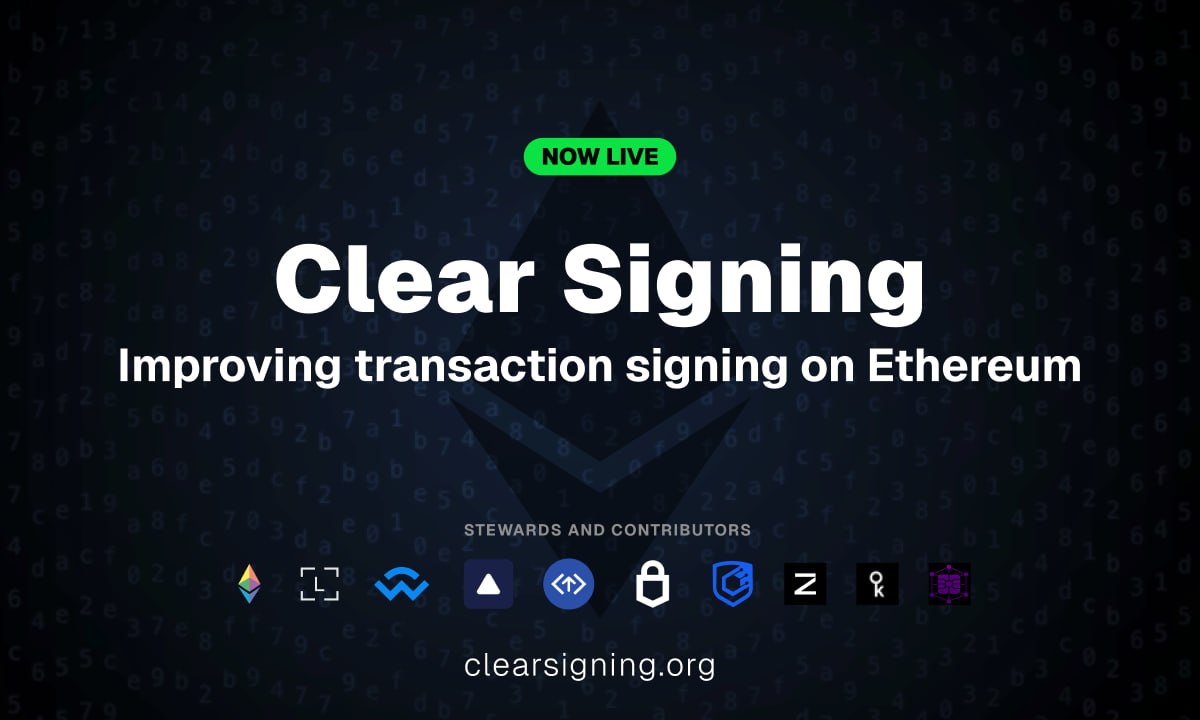
0/ Clear signing is now live.
An open standard to end blind signing, making human-readable transactions default.
This effort brings a major UX and Security upgrade to transaction signing on Ethereum.
160
443
2,179
323,773
0xcFlute_e retweeted
Apr 24
The dAI team is happy to support the work of @XLayerOfficial by providing strategic guidance to projects building on ERC-8004.
Apr 23

We’re proud to team up with @ethereumfndn’s dAI team to offer strategic guidance to AI projects building on Ethereum & X Layer.
We'll provide infrastructure, ecosystem support, and collaborate on initiatives that shape the agentic economy.
Stay tuned for more updates.
13
25
101
9,544
Apr 21
So what do you all think about ARB transferring the stolen tokens through technology? I don't think this is a good thing because it violates the core concept of decentralization.🥲
18
Apr 15
I am currently researching the causes of failures in the Ethereum system in real-world environments.
My work focuses on protocol-client interactions, event analysis, and extreme case risks that are often overlooked in traditional auditing.
Apr 14
1/ The Ethereum Audit Subsidy
A joint initiative with audit providers to subsidize the cost of audits for Ethereum builders. Security audits are a best practice, yet expensive. The subsidy program makes audits accessible and strengthens the Ethereum ecosystem.
1
67
Apr 15
Open to security discussions, research collaboration, and early-stage protocol risk reviews.
20
0xcFlute_e retweeted

Apr 3
大家好,我是刚刚上任的 WEEX全球大使 —— 恐龙博士!
WEEX有关的问题可以问我呀,我一定知无不言
最近我一直在WEEX平台开ETH合约,顺便深度参与了平台重磅推出的 STABLE空投活动。说实话,这波活动真的太香了!
活动亮点一目了然:
持仓就有奖励分红,轻松躺着拿
做现货交易也有额外分红
就算交易暂时亏损,还有平台补贴兜底!
重点推荐 稳定币方向,波动小、参与门槛低,成本可控,适合新手老手一起玩
简单来说:你交易,平台给你补贴。越早入场的新用户,越容易吃到大肉!后面人多了,奖励就会被稀释,现在就是最好的上车时机!
我自己玩下来,深深感受到WEEX在用户体验和福利上的诚意——交易更安心,收益更实在。
活动链接: wefolxx.online/zh-CN/events/…
专属邀请注册链接 : weabaxx.site/en/register?vip…
有任何问题欢迎私信我,一起交流合约和空投心得
@WEEXAILabs @WEEX_Official @WeexCn

50
2
47
1,498
0xcFlute_e retweeted
Mar 23
Degen Lite NFT福利来了,评论区送3个
这个NFT可直接stake赚币,提升你的Degen帝国。
参与方式:
1⃣关注@HungryDegens 和 @No_tariff3
2⃣ 点赞转发这条并留下你的 EVM 地址
3⃣ 48h 后开奖
一、项目概览
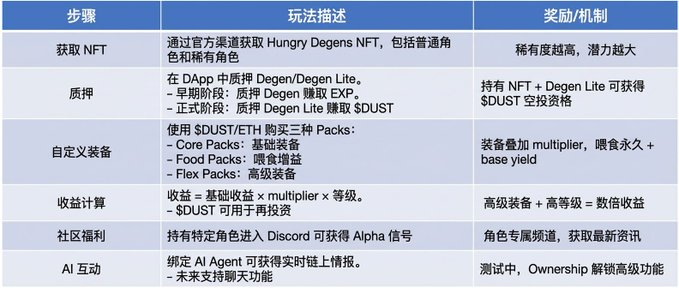
Hungry Degens 是扎根 Base 公链、由社区主导的 Web3 游戏化 NFT 项目,精准拿捏加密圈 “狂热交易者(Degen)” 文化精髓,以 **“穷到吃土,依旧看涨”** 为趣味内核,打造沉浸式玩赚生态。项目创新性融合盲盒开卡、NFT 个性化装扮、质押挖矿等高燃玩法,构建专属 “奋斗赚币循环”,玩家从零起步养成专属角色,边赚 $DUST 代币,边感受加密圈专属幽默。
二、核心优势
行业首创:可自定义 Degen NFT AI 智能体限量发行 8888 枚核心 NFT,目前已售出超 6000 枚,项目营收突破 67.5 万美元,社区共识强劲。
$DUST 为项目核心实用代币,支撑全场景道具购买、NFT 升级等核心操作。
重磅代币经济代币发行(TGE)在即,65% 配额专属分配给 NFT 持有者,15% 用于流动性池,保障社区利益。
动态奖励机制,早期质押用户可享超高年化收益(APR),早参与早获利。
三、核心玩法
官方入口:dapp.hungrydegens.com/?refer…
采用质押→自定义→升级→赚 $DUST 闭环玩法,深度绑定 “付出即回报” 逻辑:NFT 装备越稀有、等级越高,挖矿效率越出众,代币收益直接翻倍,越肝越赚。
四、NFT 核心价值
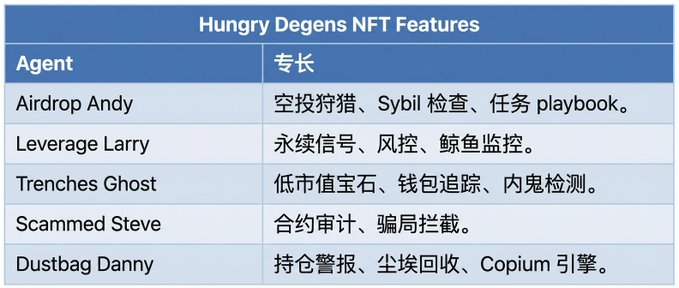
项目同步打造 5 大角色 AI 智能体阵容,目前处于测试阶段,未来将解锁更多惊喜功能。NFT 是整个生态的核心载体,兼具自定义装扮、链上交易、等级进阶三大功能,其稀有度、装备配置直接决定挖矿收益上限。
五、生态进阶:Degen AI 生态全面扩张
重磅推出DeVision——AI 赋能的预测市场分析平台,官网直达:devision.cc
核心功能:一键跟单交易、智能筛选优质资金、精准锁定高胜率交易者、全维度数据复盘 信号追踪。
这意味着 Hungry Degens 已完成蜕变:从趣味 meme 类游戏化 NFT 项目,升级为NFT 持有者专属 AI 工具矩阵。持有对应角色 NFT,即可解锁高阶 AI 智能体及独家特权,打通玩赚与链上工具双重价值。
相关入口:
DeVision:devision.cc
体验入口:dapp.hungrydegens.com/degens
可以来评论下参与抽NFT!!!


340
160
222
6,070
Mar 18
肝上长了个🦕
Mar 18

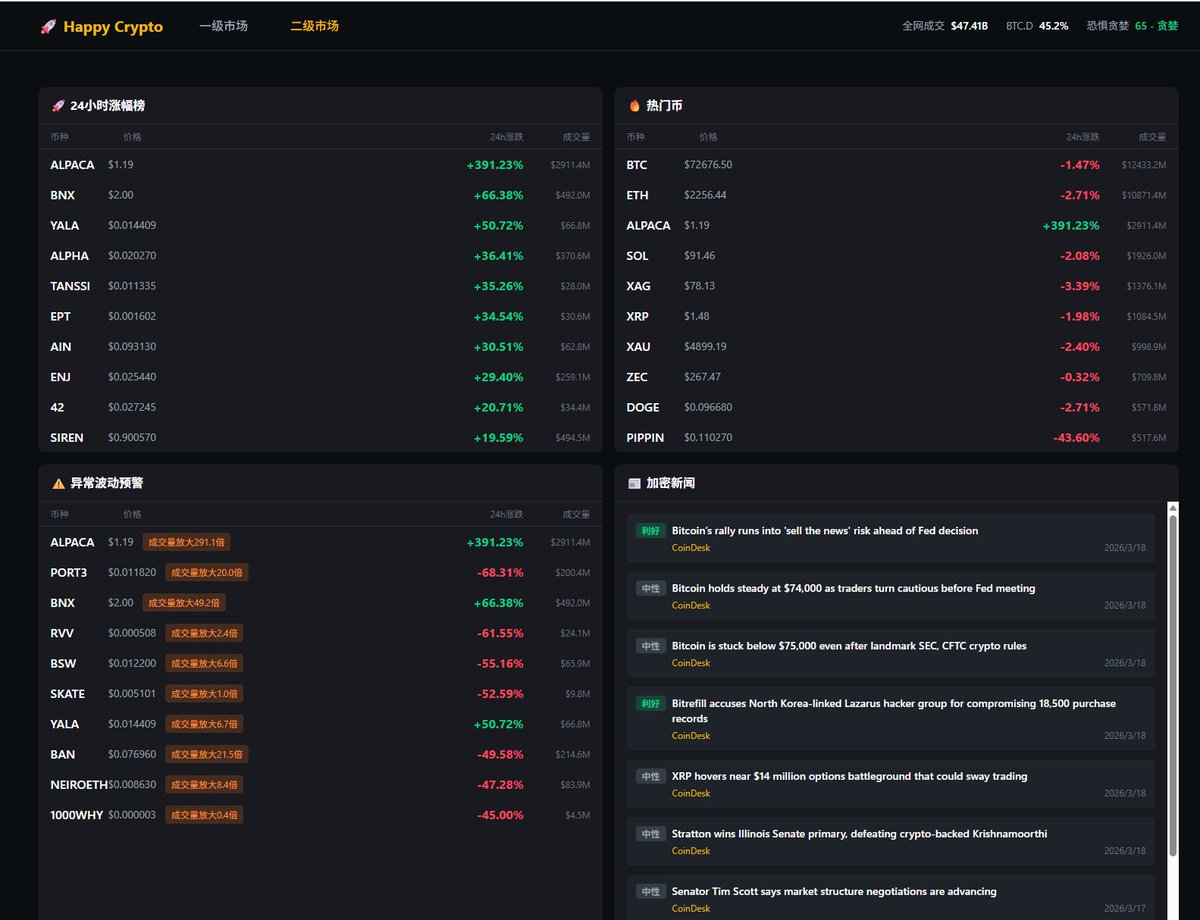
Happy Crypto 🚀 你的加密市场私人雷达
市场瞬息万变,机会稍纵即逝。Happy Crypto 用最直观的方式,把币安的海量数据变成你的决策利器。
为什么选择 Happy Crypto?
在这个人人喊 AI 的时代,我们是真的把“龙虾”(Agent 自动化)装进了系统里。 通过深度的 AI 算法分析市场情绪和新闻走势,Happy Crypto 不只是一个展示板,它更像是一个 24 小时为你值守的数字助手。它能看懂新闻背后的逻辑,也能在异常波动中嗅到机会。
📊 核心功能
1、涨幅榜 - 发现暴涨机会
• 实时追踪24小时涨幅TOP5
• 绿涨红跌,一眼看穿市场情绪
• 币种图标 实时价格,信息密度拉满
2、热门币 - 跟随资金流向
• 24小时成交量排行
• 钱往哪里流,机会就在哪里
• 热点板块一目了然
3、异常波动预警 - 抓住异动信号
• 智能检测1小时成交量突增1.1倍以上
• 提前发现拉盘/砸盘信号
• 自动标注异常原因,不错过任何风吹草动
4、加密新闻 - 信息就是alpha
• 聚合CoinDesk最新资讯
• 按时间倒序,最新消息置顶
• 一键跳转原文,深度阅读
5、市场统计 - 宏观视角
• 24小时全市场成交量
• BTC市场占比
• 顶部实时显示,随时掌握大盘情绪
技术细节
前端:React Vite Tailwind CSS(快速响应,丝滑体验)
后端:Node.js Express(轻量高效)
部署:Nginx反向代理 PM2进程守护
数据源:币安合约API CoinDesk RSS
Skills:基于币安开放的 Binance Skills 能力构建
1
2
54
0xcFlute_e retweeted
Mar 18
Happy Crypto 🚀 你的加密市场私人雷达
市场瞬息万变,机会稍纵即逝。Happy Crypto 用最直观的方式,把币安的海量数据变成你的决策利器。
为什么选择 Happy Crypto?
在这个人人喊 AI 的时代,我们是真的把“龙虾”(Agent 自动化)装进了系统里。 通过深度的 AI 算法分析市场情绪和新闻走势,Happy Crypto 不只是一个展示板,它更像是一个 24 小时为你值守的数字助手。它能看懂新闻背后的逻辑,也能在异常波动中嗅到机会。
📊 核心功能
1、涨幅榜 - 发现暴涨机会
• 实时追踪24小时涨幅TOP5
• 绿涨红跌,一眼看穿市场情绪
• 币种图标 实时价格,信息密度拉满
2、热门币 - 跟随资金流向
• 24小时成交量排行
• 钱往哪里流,机会就在哪里
• 热点板块一目了然
3、异常波动预警 - 抓住异动信号
• 智能检测1小时成交量突增1.1倍以上
• 提前发现拉盘/砸盘信号
• 自动标注异常原因,不错过任何风吹草动
4、加密新闻 - 信息就是alpha
• 聚合CoinDesk最新资讯
• 按时间倒序,最新消息置顶
• 一键跳转原文,深度阅读
5、市场统计 - 宏观视角
• 24小时全市场成交量
• BTC市场占比
• 顶部实时显示,随时掌握大盘情绪
技术细节
前端:React Vite Tailwind CSS(快速响应,丝滑体验)
后端:Node.js Express(轻量高效)
部署:Nginx反向代理 PM2进程守护
数据源:币安合约API CoinDesk RSS
Skills:基于币安开放的 Binance Skills 能力构建
Mar 4

“🦞主人,我将开始帮您在币安赚到BNB”
你觉得币安有哪些功能或服务可以通过AI实现创新和优化?
🏄欢迎提交你的创意提案,用 #AI 建设加密和币安一起逐浪Wbe3
✅参与方式一:直接参赛
• 使用 OpenClaw(小龙虾)搭建币安主题的 AI Agent,录制演示视频或图文展示
• 在 X/广场发帖,RT本条推文并写明作品名称、功能亮点,并附演示素材或链接
• 填写表单提交作品:binance.com/en/survey/613b6c…
✅参与方式二:推荐参赛
• 在 X/广场RT官方推文发帖 @ 你推荐参赛的人
• 被推荐人报名时在表单中填写你的币安 UID 即可
• 被推荐人拿奖,对应推荐人即可获奖
10
1
8
460
0xcFlute_e retweeted
Mar 16
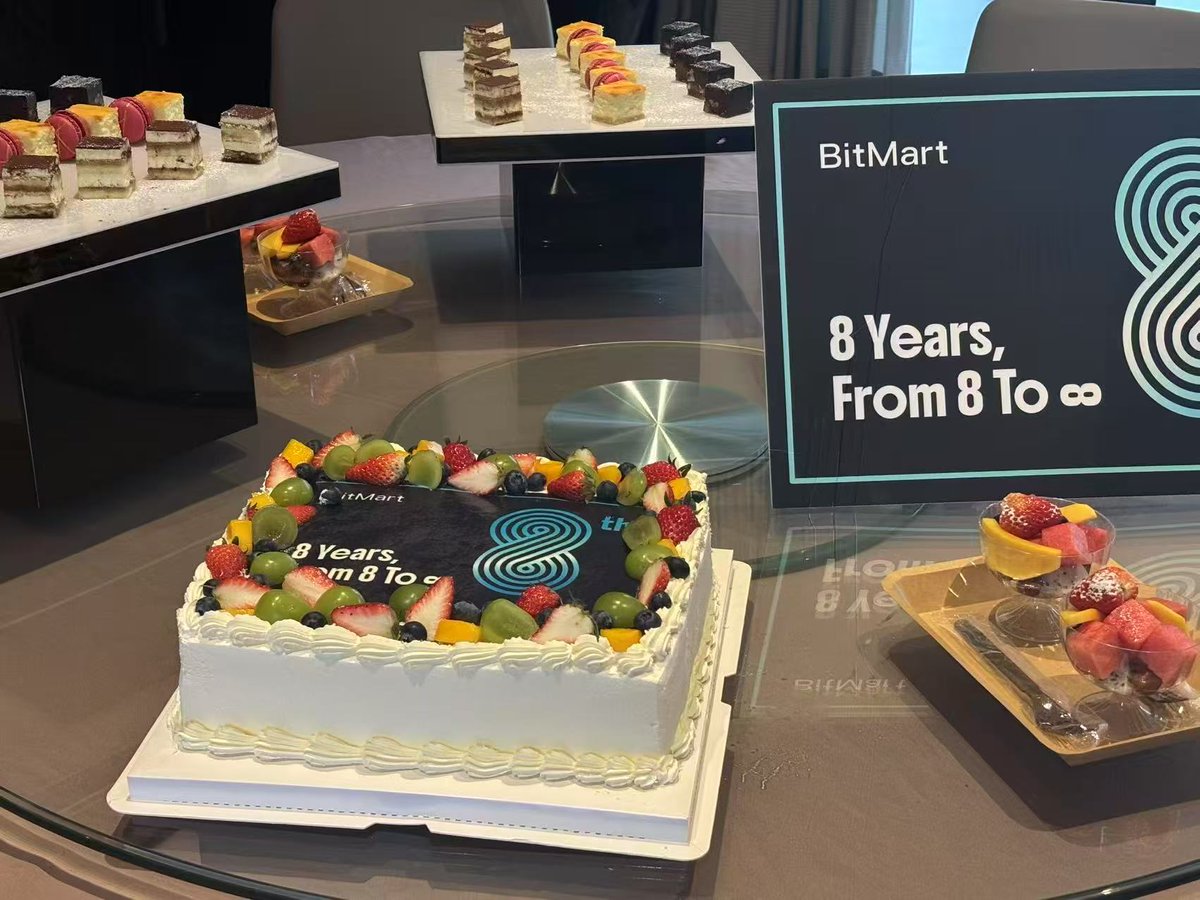
感谢Sherry老师@SherryAtBitMart 的邀请!很开心能参与 @BitMart_zh 的8周年庆活动, 在活动中认识了很多老师,都很优秀,向他们学习了不少东西,Sherry亲手制作的蛋糕超级美味,高尔夫🏌️♀️挺好玩的,虽然我还是不太会哈哈哈哈哈,继续卷agent了
@JYdmnLFG
@choc07_
@wangbuai
@0xMeow0130
@smqclaske
@crypto_pumpman
@wang_xiaolou
@joakja
@0xJason
@Jagger_BTC
ALT Bitmart



Mar 16

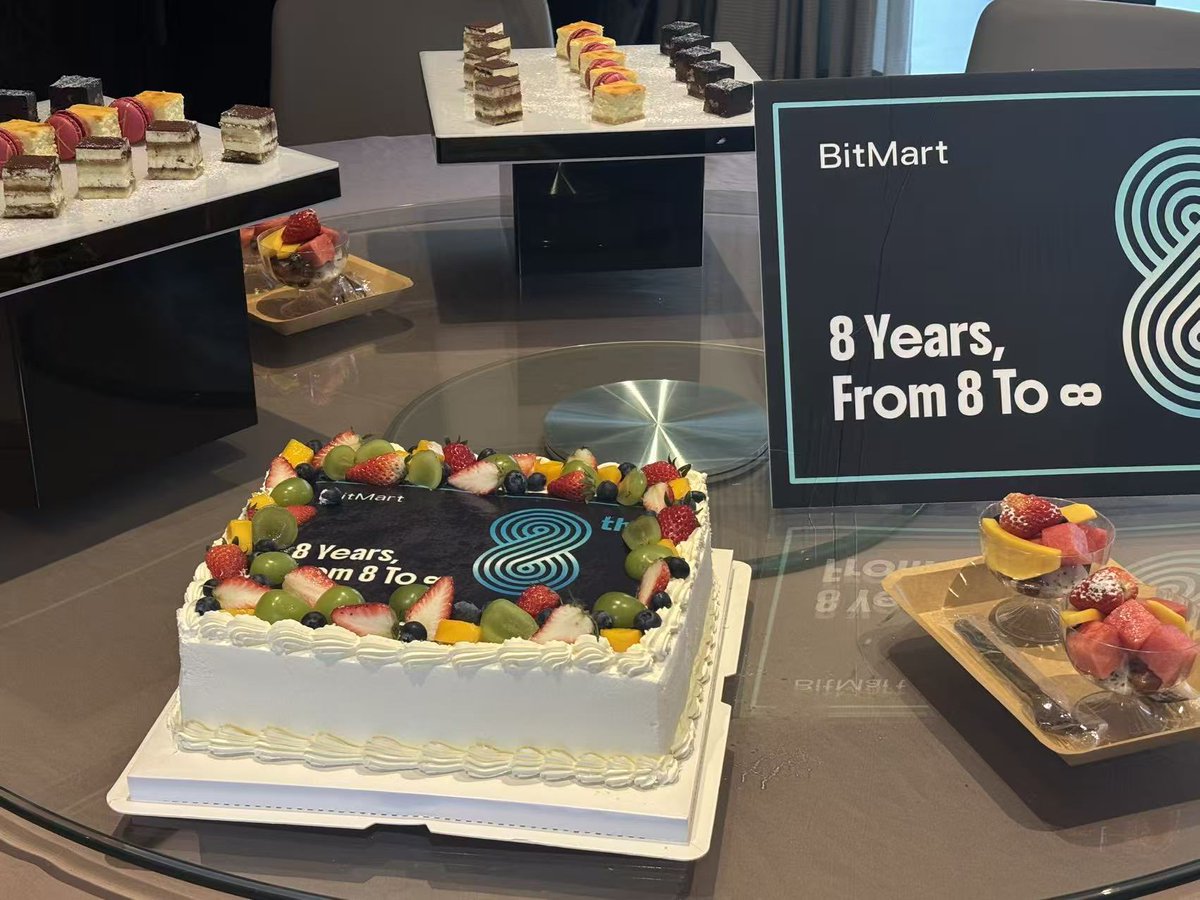
感谢大家今天来参加 BitMart 8周年庆活动,一起为 BitMart 庆生!🎉@BitMart_zh
从 8 到 ∞,不仅是时间的积累,更是大家一路的陪伴与支持。
很开心能和这么多伙伴一起 打高尔夫、聊天、吃蛋糕,一起分享这个特别的时刻。八周年蛋糕是我新手制作的😊
特别感谢几位美美的老师们:
@JYdmnLFG @choc07_ @wangbuai @0xMeow0130
一如既往靠谱的老朋友们:
@smqclaske @crypto_pumpman @wang_xiaolou
还有今天认识的新朋友们,兼职高尔夫教练@joakja
以及今天认识到的新朋友们~
@0xJason @No_tariff3
很开心能和大家相聚,也期待未来继续一起见证 BitMart 的更多成长与可能 💙
同时也先给大家小小预告一下下一次BitMart Meet Up 活动 👀
我们将举办 BitMart 惯蛋大赛!
届时会为 前三名准备特别奖品 🏆
欢迎大家继续来参加,一起玩、一起交流、一起赢奖品!
我们下次活动见! 🎉
#web3 #BitMart



26
1
29
723

Calling all builders. 👷
Build the future of Crypto AI and win a share of 48.6 BNB.
Create your own OpenClaw AI assistant. This could be a trading bot, crypto educator, or a tool that improves the Binance user experience.
To join:
👉 Build anything that enhances Binance product ecosystem
👉 Quote this post to show your project
👉 Submit your entry: binance.com/en/survey/c707e1…
Campaign period: Mar 4 to Mar 18, 2026
438
469
1,580
1,103,606
0xcFlute_e retweeted
Mar 9
The Ethereum Foundation is using DVT-lite to stake 72,000 ETH:
firefly.social/post/x/202621…
My hope for this project is that in the process, we can make it maximally easy and one-click to do distributed staking for institutions. Choose which computers run your nodes, make a config file where they all have the same key, and then from there everything gets set up automatically.
The idea that "running infrastructure" is this scary complicated thing where each person participating must be a "professional" is awful and anti-decentralization, and we must attack it directly.
It should be a docker container or nix image or similar, one click or command line per node, enter the same key in each node, and they automatically find each other, the networking is set up, the DKG happens, and the staking begins.
I also plan to use this soon, and I hope more institutions holding ETH can stake in this way. We want the authority over staking nodes to be highly distributed, and the first step to doing this is to make it easy.
246
204
1,296
144,769
0xcFlute_e retweeted
Live now: Risk management in DeFi with @Corkprotocol
With @jchaskin22, @binji_x, & @Philfog
x.com/i/broadcasts/1dGYljaXg…
8
12
49
4,905
0xcFlute_e retweeted
Live now: Financial management powered by AI agents
With @jchaskin22 and @renckorzay from @gizatechxyz
x.com/i/broadcasts/1pJkOyXpq…
20
37
134
13,634
Mar 3
Ethereum is a decentralized free market!
Mar 2

Finally, the block building pipeline.
In Glamsterdam, Ethereum is getting ePBS, which lets proposers outsource to a free permissionless market of block builders.
This ensures that block builder centralization does not creep into staking centralization, but it leaves the question: what do we do about block builder centralization? And what are the _other_ problems in the block building pipeline that need to be addressed, and how? This has both in-protocol and extra-protocol components.
## FOCIL
FOCIL is the first step into in-protocol multi-participant block building. FOCIL lets 16 randomly-selected attesters each choose a few transactions, which *must* be included somewhere in the block (the block gets rejected otherwise). This means that even if 100% of block building is taken over by one hostile actor, they cannot prevent transactions from being included, because the FOCILers will push them in.
## "Big FOCIL"
This is more speculative, but has been discussed as a possible next step. The idea is to make the FOCILs bigger, so they can include all of the transactions in the block.
We avoid duplication by having the i'th FOCIL'er by default only include (i) txs whose sender address's first hex char is i, and (ii) txs that were around but not included in the previous slot. So at the cost of one slot delay, only censored txs risk duplication.
Taking this to its logical conclusion, the builder's role could become reduced to ONLY including "MEV-relevant" transactions (eg. DEX arbitrage), and computing the state transition.
## Encrypted mempools
Encrypted mempools are one solution being explored to solve "toxic MEV": attacks such as sandwiching and frontrunning, which are exploitative against users. If a transaction is encrypted until it's included, no one gets the opportunity to "wrap" it in a hostile way.
The technical challenge is: how to guarantee validity in a mempool-friendly and inclusion-friendly way that is efficient, and what technique to use to guarantee that the transaction will actually get decrypted once the block is made (and not before).
## The transaction ingress layer
One thing often ignored in discussions of MEV, privacy, and other issues is the network layer: what happens in between a user sending out a transaction, and that transaction making it into a block? There are many risks if a hostile actor sees a tx "in the clear" inflight:
* If it's a defi trade or otherwise MEV-relevant, they can sandwich it
* In many applications, they can prepend some other action which invalidates it, not stealing money, but "griefing" you, causing you to waste time and gas fees
* If you are sending a sensitive tx through a privacy protocol, even if it's all private onchain, if you send it through an RPC, the RPC can see what you did, if you send it through the public mempool, any analytics agency that runs many nodes will see what you did
There has recently been increasing work on network-layer anonymization for transactions: exploring using Tor for routing transactions, ideas around building a custom ethereum-focused mixnet, non-mixnet designs that are more latency-minimized (but bandwidth-heavier, which is ok for transactions as they are tiny) like Flashnet, etc. This is an open design space, I expect the kohaku initiative @ncsgy will be interested in integrating pluggable support for such protocols, like it is for onchain privacy protocols.
There is also room for doing (benign, pro-user) things to transactions before including them onchain; this is very relevant for defi. Basically, we want ideal order-matching, as a passive feature of the network layer without dependence on servers. Of course enabling good uses of this without enabling sandwiching involves cryptography or other security, some important challenges there.
## Long-term distributed block building
There is a dream, that we can make Ethereum truly like BitTorrent: able to process far more transactions than any single server needs to ever coalesce locally. The challenge with this vision is that Ethereum has (and indeed a core value proposition is) synchronous shared state, so any tx could in principle depend on any other tx. This centralizes block building.
"Big FOCIL" handles this partially, and it could be done extra-protocol too, but you still need one central actor to put everything in order and execute it.
We could come up with designs that address this. One idea is to do the same thing that we want to do for state: acknowledge that >95% of Ethereum's activity doesn't really _need_ full globalness, though the 5% that does is often high-value, and create new categories of txs that are less global, and so friendly to fully distributed building, and make them much cheaper, while leaving the current tx types in place but (relatively) more expensive.
This is also an open and exciting long-term future design space.
firefly.social/post/lens/814…
12
0xcFlute_e retweeted
Mar 1
Now, execution layer changes. I've already talked about account abstraction, multidimensional gas, BALs, and ZK-EVMs.
I've also talked here about a short-term EVM upgrade that I think will be super-valuable: a vectorized math precompile (basically, do 32-bit or potentially 64-bit operations on lists of numbers at the same time; in principle this could accelerate many hashes, STARK validation, FHE, lattice-based quantum-resistane signatures, and more by 8-64x); think "the GPU for the EVM". firefly.social/post/x/202740…
Today I'll focus on two big things: state tree changes, and VM changes. State tree changes are in this roadmap. VM changes (ie. EVM -> RISC-V or something better) are longer-term and are still more non-consensus, but I have high conviction that it will become "the obvious thing to do" once state tree changes and the long-term state roadmap (see ethresear.ch/t/hyper-scaling… ) are finished, so I'll make my case for it here.
What these two have in common is:
* They are the big bottlenecks that we have to address if we want efficient proving (tree VM are like >80%)
* They're basically mandatory for various client-side proving use cases
* They are "deep" changes that many shrink away from, thinking that it is more "pragmatic" to be incrementalist
I'll make the case for both.
# Binary trees
The state tree change (worked on by @gballet and many others) is eips.ethereum.org/EIPS/eip-7…, switching from the current hexary keccak MPT to a binary tree based on a more efficient hash function.
This has the following benefits:
* 4x shorter Merkle branches (because binary is 32*log(n) and hexary is 512*log(n)/4), which makes client-side branch verification more viable. This makes Helios, PIR and more 4x cheaper by data bandwidth
* Proving efficiency. 3-4x comes from shorter Merkle branches. On top of that, the hash function change: either blake3 [perhaps 3x vs keccak] or a Poseidon variant [100x, but more security work to be done]
* Client-side proving: if you want ZK applications that compose with the ethereum state, instead of making their own tree like today, then the ethereum state tree needs to be prover-friendly.
* Cheaper access for adjacent slots: the binary tree design groups together storage slots into "pages" (eg. 64-256 slots, so 2-8 kB). This allows storage to get the same efficiency benefits as code in terms of loading and editing lots of it at a time, both in raw execution and in the prover. The block header and the first ~1-4 kB of code and storage live in the same page. Many dapps today already load a lot of data from the first few storage slots, so this could save them >10k gas per tx
* Reduced variance in access depth (loads from big contracts vs small contracts)
* Binary trees are simpler
* Opportunity to add any metadata bits we end up needing for state expiry
Zooming out a bit, binary trees are an "omnibus" that allows us to take all of our learnings from the past ten years about what makes a good state tree, and actually apply them.
# VM changes
See also: ethereum-magicians.org/t/lon…
One reason why the protocol gets uglier over time with more special cases is that people have a certain latent fear of "using the EVM". If a wallet feature, privacy protocol, or whatever else can be done without introducing this "big scary EVM thing", there's a noticeable sigh of relief. To me, this is very sad. Ethereum's whole point is its generality, and if the EVM is not good enough to actually meet the needs of that generality, then we should tackle the problem head-on, and make a better VM. This means:
* More efficient than EVM in raw execution, to the point where most precompiles become unnecessary
* More prover-efficient than EVM (today, provers are written in RISC-V, hence my proposal to just make the new VM be RISC-V)
* Client-side-prover friendly. You should be able to, client-side, make ZK-proofs about eg. what happens if your account gets called with a certain piece of data
* Maximum simplicity. A RISC-V interpreter is only a couple hundred lines of code, it's what a blockchain VM "should feel like"
This is still more speculative and non-consensus. Ethereum would certainly be *fine* if all we do is EVM GPU. But a better VM can make Ethereum beautiful and great.
A possible deployment roadmap is:
1. NewVM (eg. RISC-V) only for precompiles: 80% of today's precompiles, plus many new ones, become blobs of NewVM code
2. Users get the ability to deploy NewVM contracts
3. EVM is retired and turns into a smart contract written in NewVM
EVM users experience full backwards compatibility except gas cost changes (which will be overshadowed by the next few years of scaling work). And we get a much more prover-efficient, simpler and cleaner protocol.
firefly.social/post/farcaste…
296
264
1,538
208,346