Joined January 2023
- Tweets 57
- Following 45
- Followers 506
- Likes 14
20 Photos and videos














Pinned Tweet

18 Dec 2025
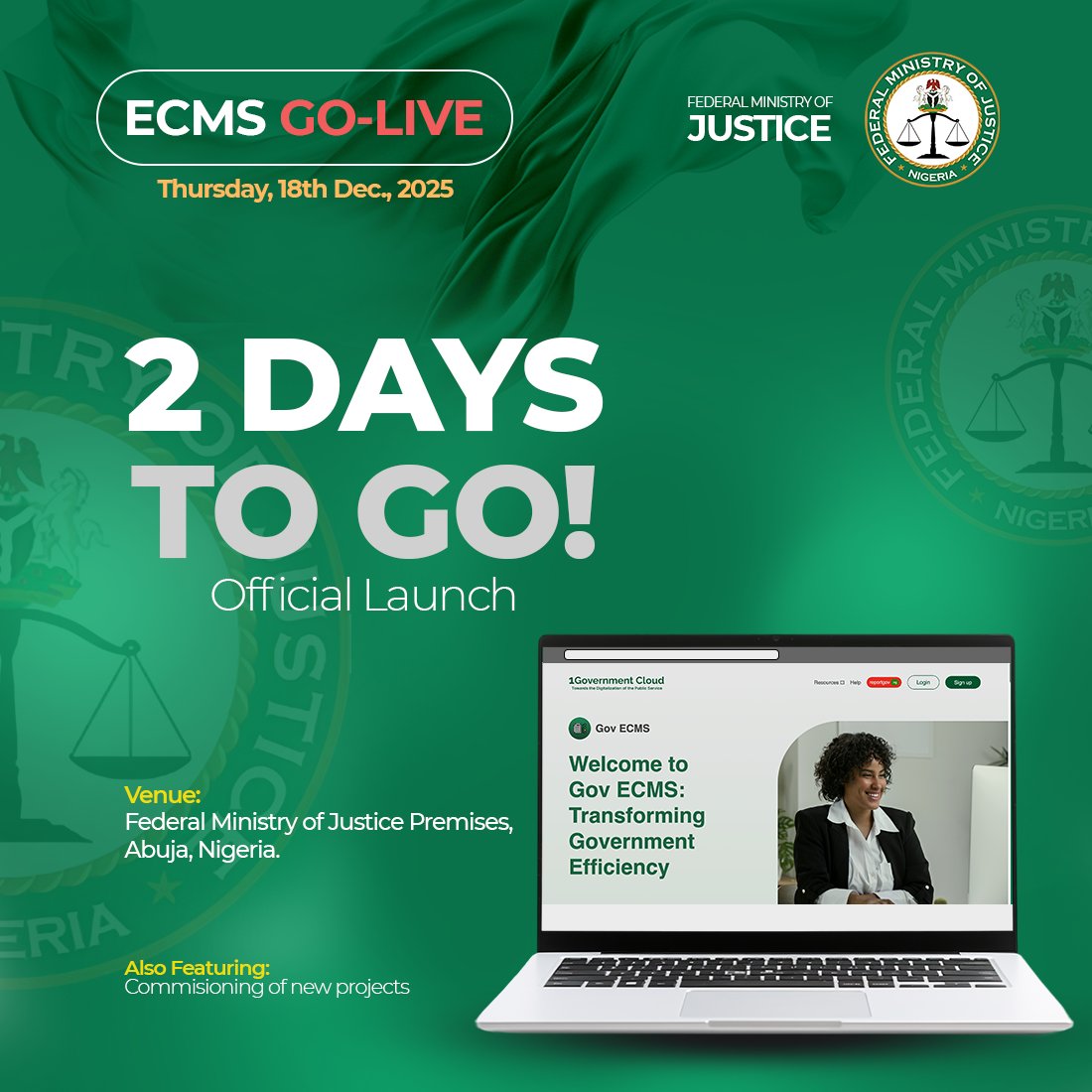
🚀 Happening Today!
The Federal Ministry of Justice launches its Enterprise Content Management System (ECMS) in Abuja!
A big leap toward:
✅ Faster legal processes
✅ Paperless operations
✅ Transparency & data security
5
5
472
Federal Ministry of Justice retweeted

20 Dec 2025
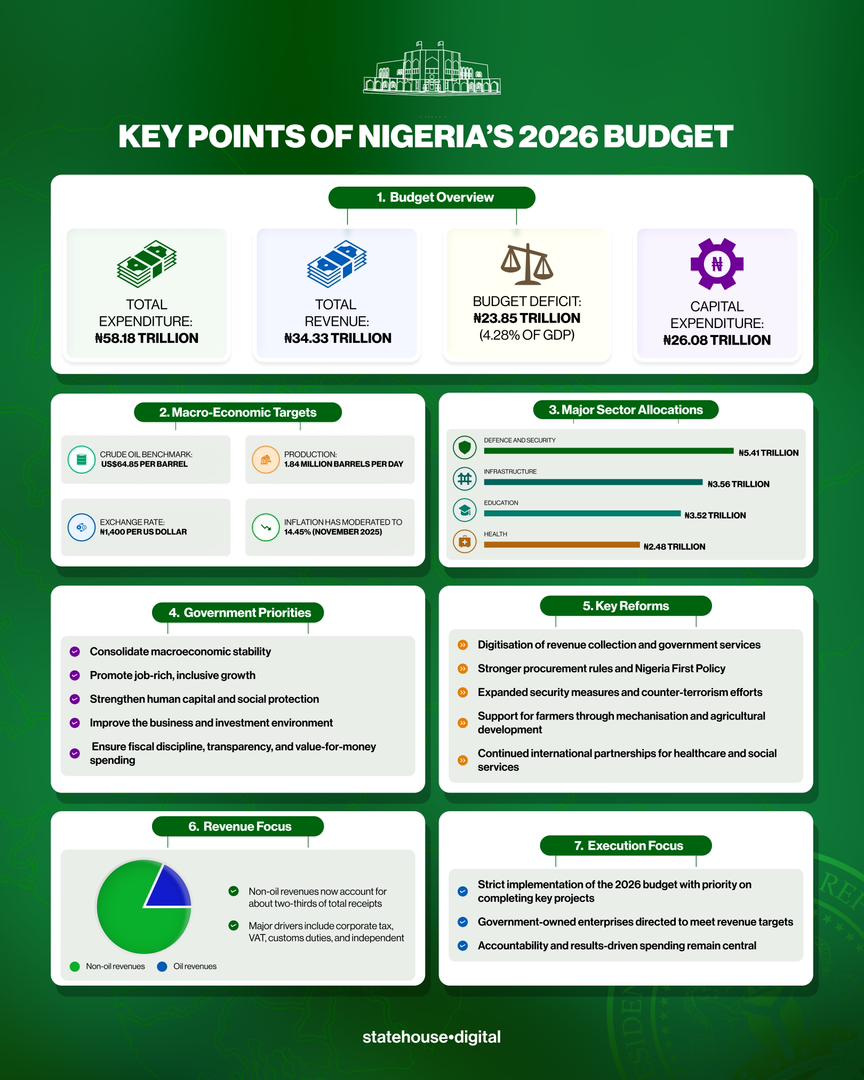
President Bola Tinubu has presented the 58.18 Trillion 2026 Appropriation Bill to the National Assembly. The budget is designed to turn economic stabilization into actual improved living standards.
The Budget Overview:
• Total Expenditure (Spending): ₦58.18 Trillion
• Projected Revenue (Earnings):₦34.33 Trillion
• The Gap(Deficit): ₦23.85 Trillion (to be funded through strategic borrowing).
Where is the money going?
Security: ₦5.41T (Modernizing our Armed Forces & intelligence).
Infrastructure: ₦3.56T (Finishing ongoing road and rail projects).
Education: ₦3.52T (Strengthening human capital & Student Loans).
Health: ₦2.48T (Disease prevention & maternal health).
Why the borrowing?
The budget allocates 26.08 Trillion to Capital Projects. The strategy is to use borrowed funds alongside revenue to invest in infrastructure that creates jobs and long term wealth.
Key Economic Targets:
Exchange Rate: ₦1,400/$1
Oil Production: 1.84 Million Barrels/Day
Inflation Target: Easing to 14.45% as at November 2025
The priorities of the government include:
1. To Consolidate macroeconomic stability
2. To Promote job rich, inclusive growth
3. To Strengthen human capital and social protection
4. Improve the business and investment environment
5. Ensure fiscal discipline, transparency, and value for money spending
The Goal: 2026 is set to be the year we move from fixing the foundation to building the house. By sticking to a single revenue cycle and ending overlapping budgets, the focus is now on results and accountability.
7
106
226
20,270
20 Dec 2025
This is the way to go. Digitalization has come to stay
20 Dec 2025

Aviation ministry goes fully digital, phases out paper-based processes pmnewsnigeria.com/2025/12/19…
113
Federal Ministry of Justice retweeted

19 Dec 2025
Public Alert No. 041/2025.
Recall of Indomie brand noodles (Vegetable Flavour Product) due to the presence of undeclared allergens (milk and eggs)
#NAFDACAlerts
bit.ly/4aXPQuQ

57
1,206
1,362
190,615
20 Dec 2025
🗂️ Outdated paperwork is slowing justice down. Piles of files, lost documents, and inefficiency have no place in a modern legal system.
It’s time for a digital leap.
📲 Embrace Electronic Content Management Systems (ECMS) — for speed, transparency, and accountability.
#justice
1
72
20 Dec 2025
64
Federal Ministry of Justice retweeted

19 Dec 2025
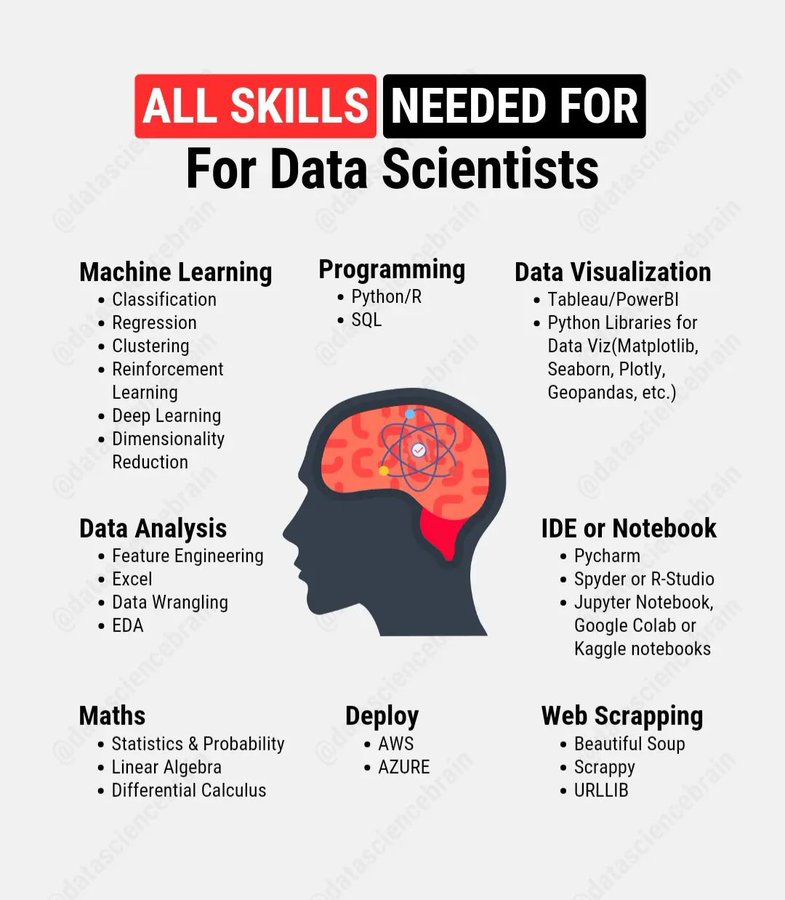
Free Certification Courses to Learn Data Science in 2025:
1. Python
🔗 imp.i384100.net/5gmXXo
2. SQL
🔗 edx.org/learn/relational-dat…
3. Statistics and R
🔗 edx.org/learn/r-programming/…
4. Data Science: R Basics
🔗edx.org/learn/r-programming/…
5. Excel and PowerBI
🔗 learn.microsoft.com/en-gb/tr…
6. Data Science: Visualization
🔗edx.org/learn/data-visualiza…
7. Data Science: Machine Learning
🔗edx.org/learn/machine-learni…
8. R
🔗imp.i384100.net/rQqomy
9. Tableau
🔗imp.i384100.net/MmW9b3
10. PowerBI
🔗 lnkd.in/dpmnthEA
11. Data Science: Productivity Tools
🔗 lnkd.in/dGhPYg6N
12. Data Science: Probability
🔗mygreatlearning.com/academy/…
13. Mathematics
🔗matlabacademy.mathworks.com
14. Statistics
🔗 lnkd.in/df6qksMB
15. Data Visualization
🔗imp.i384100.net/k0X6vx
16. Machine Learning
🔗 imp.i384100.net/nLbkN9
17. Deep Learning
🔗 imp.i384100.net/R5aPOR
18. Data Science: Linear Regression
🔗pll.harvard.edu/course/data-…
19. Data Science: Wrangling
🔗edx.org/learn/data-science/h…
20. Linear Algebra
🔗 pll.harvard.edu/course/data-…
21. Probability
🔗 pll.harvard.edu/course/data-…
22. Introduction to Linear Models and Matrix Algebra
🔗edx.org/learn/linear-algebra…
23. Data Science: Capstone
🔗 edx.org/learn/data-science/h…
24. Data Analysis
🔗 pll.harvard.edu/course/data-…
25. IBM Data Science Professional Certificate
imp.i384100.net/9gxbbY
26. Neural Networks and Deep Learning
imp.i384100.net/DKrLn2
27. Supervised Machine Learning: Regression and Classification
imp.i384100.net/g1KJEA
13
390
1,568
81,647
Federal Ministry of Justice retweeted

19 Dec 2025
Free Artificial Intelligence Course with Certificate | Social Impact Focus
Applications are now open for a free online Artificial Intelligence (AI) course focused on social impact. Participants will gain valuable AI skills and receive a free certificate of completion upon finishing the course.
Course Provider: Asian Development Bank Institute
Application & Details: scholarshipscorner.website/f…
This opportunity is shared by the Professor Isa Pantami Foundation as part of its commitment to promoting education, empowerment, and community development across Africa.
#PIPFoundation #ScholarshipOpportunities #EducationForAll

26
222
563
299,077
Federal Ministry of Justice retweeted
19 Dec 2025
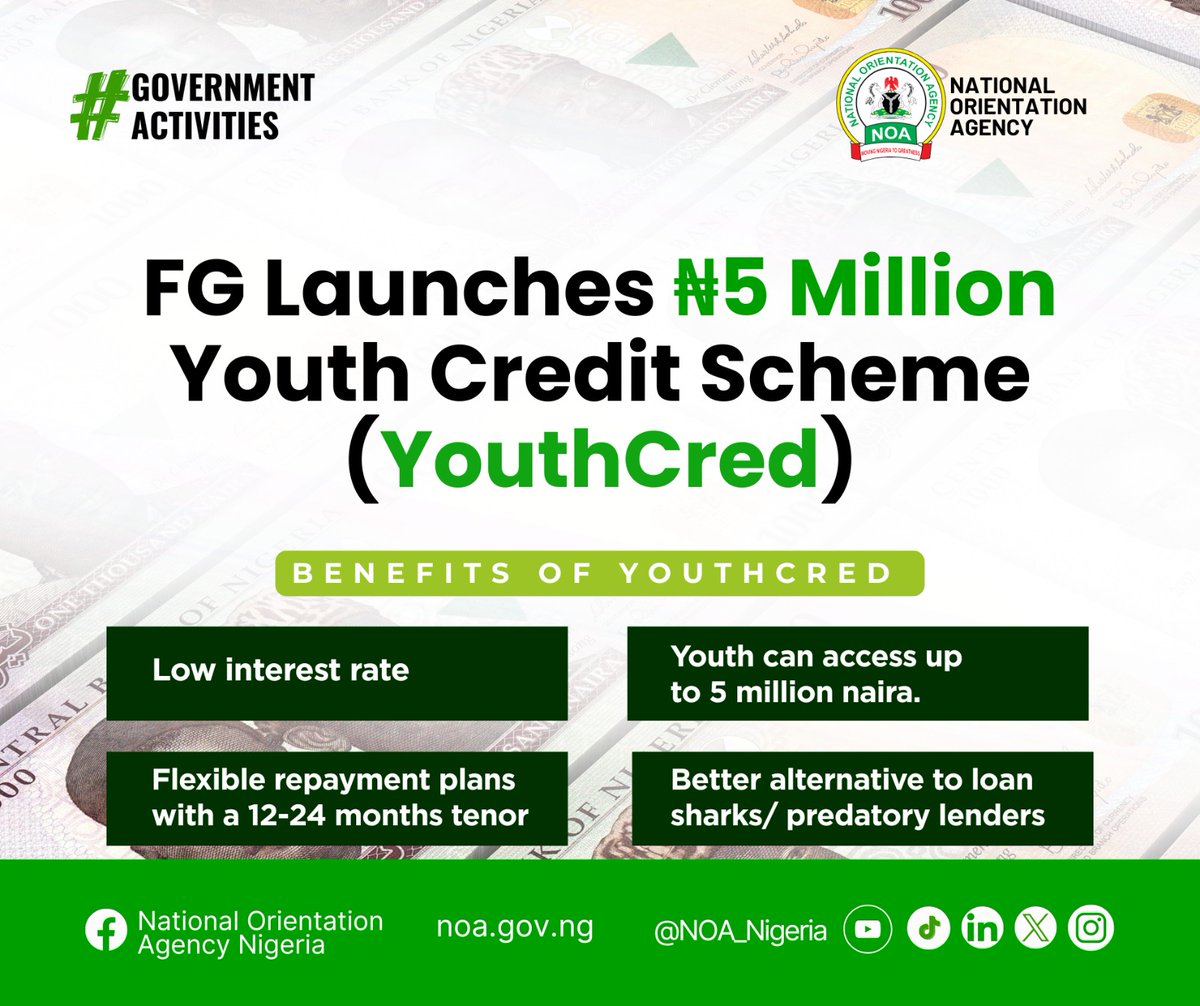
FG Launches ₦5 Million Youth Credit Scheme (YouthCred)
The Federal Government has introduced YouthCred, a new credit scheme that allows gainfully employed Nigerian youths (18-39 years) to access affordable loans of up to ₦5 million through the Nigerian Consumer Credit Corporation (CREDICORP).
The programme is designed to help young workers overcome financial challenges, improve productivity, and build a formal credit history without falling into the hands of loan sharks or unregulated lenders.
Who can apply?
Employed youths in the public or private sector
Loan amount:
Up to ₦5 million
Interest rate:
Low and affordable (government-backed)
Repayment method:
Structured repayment with salary reduction.
Why it matters:
YouthCred provides a safer, transparent alternative to high-interest loan apps and informal lenders.
Link to apply: youthcred.com
220
912
2,353
312,254
19 Dec 2025
The ECMS Go-Live Launch is a game-changer for Nigeria’s justice system and public service. Here’s why it matters:
- 📁 Digitized Justice: Transforms manual processes into digital workflows, reducing paperwork and delays.
- ⚖️ Faster Case Resolution: Speeds up legal processes
1
35
19 Dec 2025
and improves access to justice for all Nigerians.
- 🛡️ Enhanced Data Security: Protects sensitive legal documents with robust access controls.
- 🔍 Greater Transparency: Enables real-time tracking and accountability in legal proceedings.
- 🌐 Modern Governance: Positions Nigeria
1
23
19 Dec 2025
as a leader in legal tech and digital public service reform.
- 💼 Efficiency for Officials: Empowers the Ministry of Justice with smarter tools for decision-making and service delivery.
#ECMSLaunch #DigitalJustice #NigeriaJusticeReform #GovTech #TransparencyMatters
22
18 Dec 2025
The Federal Ministry of Justice invites you to attend the Enterprise Content Management System (ECMS) Go-Live and Multi-Project Commissioning Ceremony.
Date: today 18th December 2025
Time: 4:00 p.m.
Virtual participation link: fmoj.1gov.ng/conferencing/jo…
1
3
119
18 Dec 2025
Through the Renewed Hope Agenda of Mr. President ,
the Permanent Secretary FMoJ under the leadership of the Honorable Attorney General of the Federal/Minister of Justice. Justice is now Digitalized via ECMS
#FMoJ #innovation2025 #ECMS #Nigeria #Digitalwork #renewedhope
1
63
18 Dec 2025
🚀 Happening Today!
The Federal Ministry of Justice launches its Enterprise Content Management System (ECMS) in Abuja!
A big leap toward:
✅ Faster legal processes
✅ Paperless operations
✅ Transparency & data security
5
5
472
18 Dec 2025
📢 Digital justice is no longer the future — it’s NOW.
#ECMSLaunch #DigitalJustice #Nigeria #eGovernance #JusticeReform #FMJ #InnovationInGov
1
1
45
17 Dec 2025
TOMORROW
A New Chapter Begins
Tomorrow, the Federal Ministry of Justice officially:
• Goes Live with the Enterprise Content Management System (ECMS)
• Commissions key infrastructure projects
• Unveils a smarter, more inclusive way of working
We are ready.
1
1
33
17 Dec 2025
Thursday, 18 December 2025
📍 Ministry of Justice Premises
Innovation. Accountability. Service Excellence.
Federal Ministry of Justice
Aligned with FCSSIP 2021–2025
#ECMSGoLive #JusticeInAction #FMoJ
31
16 Dec 2025
🗓 2 Days to Go
This is more than a system launch.
It is:
✔ Faster workflows
✔ Secure records
✔ Transparent approvals
✔ Smarter public service
And beyond digital reform, we commission projects that put people first — health, ...
1
38
16 Dec 2025
38