We merge AI with formal methods. Using logic, math & proof assistants, we formalize domain knowledge for trusted, automated reasoning in critical systems.
Joined June 2023
- Tweets 56
- Following 126
- Followers 313
- Likes 882
6 Photos and videos
Pinned Tweet

21 Nov 2025
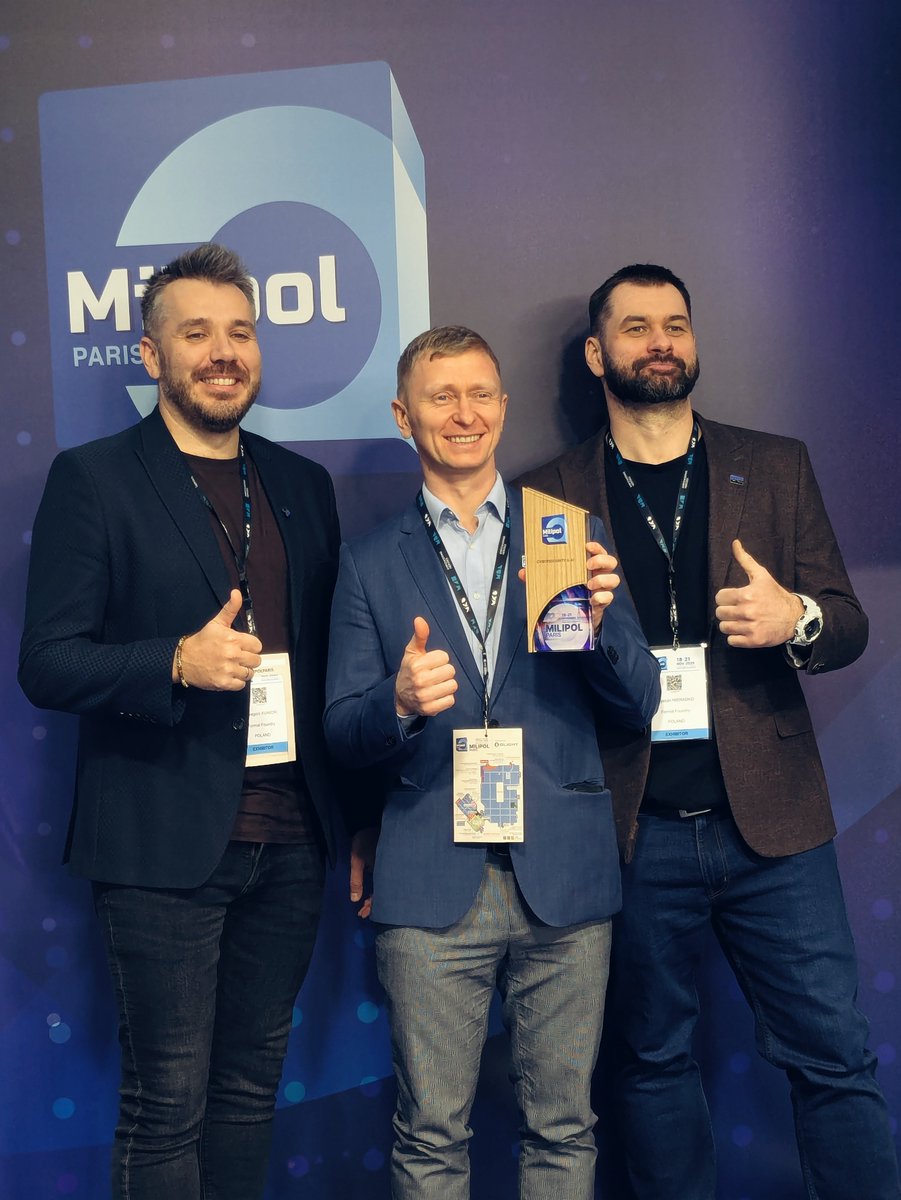
We won the @Milipol_Paris Innovation Award 2025 in Cybersecurity & AI. This sends a clear signal from the world’s leading homeland security stage that #neurosymbolic AI is a promising direction for delivering safe and explainable AI in the field.
While others debate “Prompt Engineering,” we use “Logic Engineering.” We bring mathematical and logical precision to domains where failure is not an option: compliance, national security, infrastructure and autonomous systems.
During our talks in Paris with defence officials and equipment manufacturers, the consensus was clear: black-box AI has hit its breaking point. The demand for transparent, auditable logic has become the industry’s priority.
1
4
17
4,025
May 15
"From Word Statistics to Artificial Intelligence" - that was the title of the lecture we gave this week at the Faculty of Economics and Finance, University of Rzeszow. The talk traced the path from early work on semantics and the structure of language - decades of linguistic research that quietly laid the groundwork for today's breakthroughs - to how modern language models actually work, and what the distinction between "fast" and "slow" thinking means for how AI systems make decisions.
The room held faculty, researchers, and the economists, analysts, and managers of tomorrow - people who, for the most part, won't build the next generation of AI, but will work with what it produces. And the AI they'll encounter is already evolving past today's LLMs: neuro-symbolic systems and formally verified models, where statistical inference is paired with mathematical guarantees about behavior. That's the frontier we are building on.
3
81
May 14
At the URAI Summit panel the discussion centered on how AI translates into real competitive advantage. FormalFoundry was represented by our co-founder Grzegorz Kunicki.
The bottleneck isn't model capability - it's the ability to give experts a structure that scales their judgment to the volume of decisions modern organizations face every day. Not to replace them, not to extract their knowledge, but to let one expert's reasoning operate reliably across thousands of cases that would otherwise never reach their desk. In finance, compliance, critical infrastructure, "the model said so" isn't good enough - the logic has to be verifiable. That's the gap our work is built to close.
Artur Pieczonka (@Deloitte Central Europe BSC) framed the enterprise side - how leadership roles must evolve in data-driven organizations, and why successful AI adoption depends less on tool deployment and more on the deeper adaptation of decision-making processes. Worth continuing that conversation.
Grateful also to dr Grzegorz Hajduk (University of Rzeszów) on preparing graduates for hybrid intelligence, Paweł Wais (Marshal's Office of Podkarpackie) and Jarosław Reczek (PSG) on the regional ecosystem making this transition possible.
Special thanks to Professor Bogdan Wierzbiński, Dean of the Faculty, for bringing together a discussion that engaged academia, enterprise, public administration, and deep-tech around a question that genuinely matters.
3
49
Apr 24
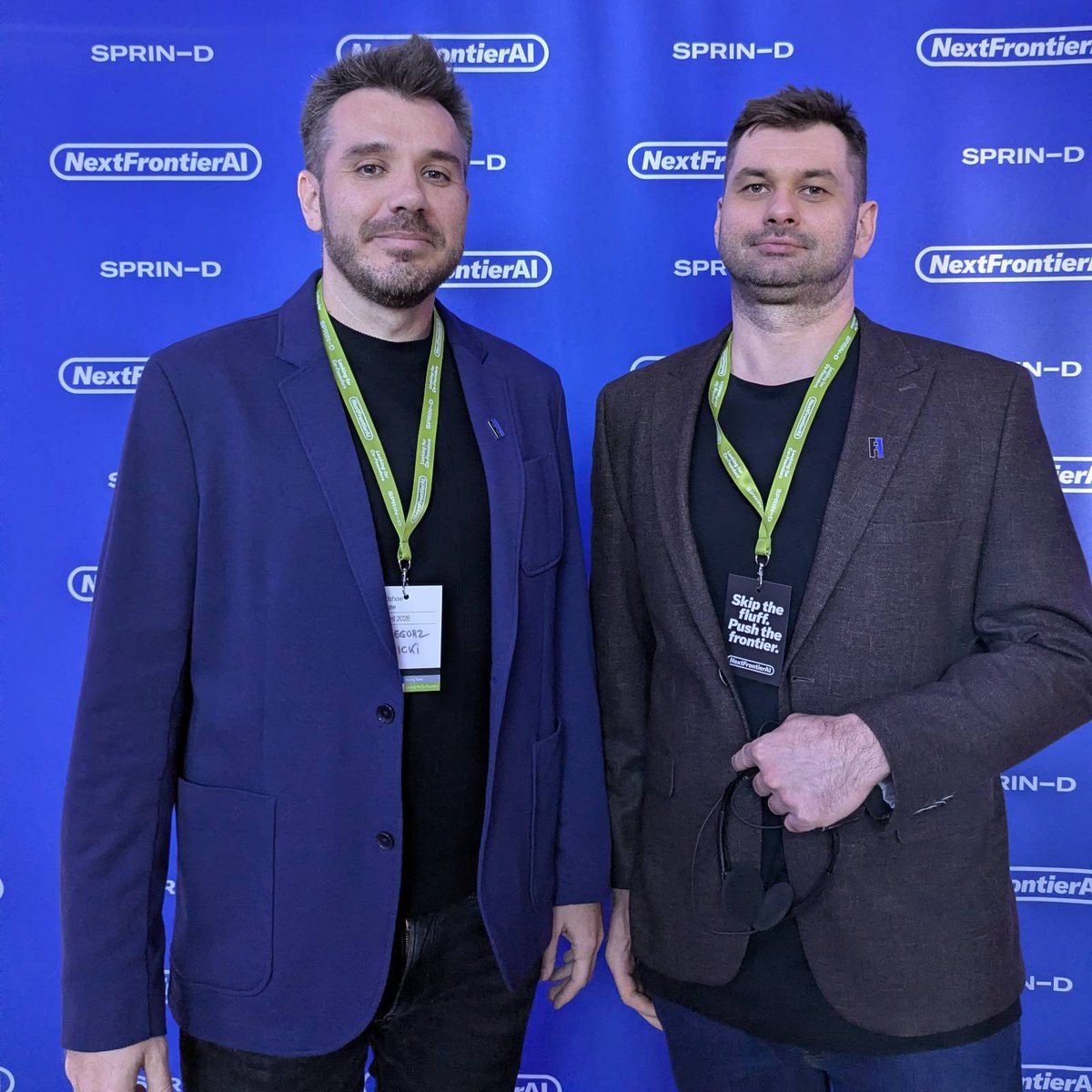
SPRIND brought its Frontier AI roadshow to Warsaw. We joined the discussion on how Europe should think about AI and the infrastructure needed around it.
At FormalFoundry.ai, our focus is formalization.
Frontier models are becoming increasingly capable heuristic systems. But to use AI in domains where correctness matters, models need to connect with precise representations of the world they operate in: regulations, procedures, contracts, technical protocols, engineering constraints, and institutional knowledge.
That is the bottleneck we work on. Before proof assistants and formal methods can become useful across the AI ecosystem, real-world domains need to be translated into structures that machines can check, reason over, and verify against.
Our work is to build products and services that support this process: helping organizations turn complex domain knowledge into formal specifications, proof-ready representations, and foundations for neurosymbolic AI systems.
What we were in Warsaw to explore is the next chapter - scaling what we already do into a fully independent European neurosymbolic AI lab, where pairing heuristic power with formal rigor is the default, not a research curiosity. Europe is uniquely positioned to host that kind of lab, and we think the moment to build it is now.
2
78
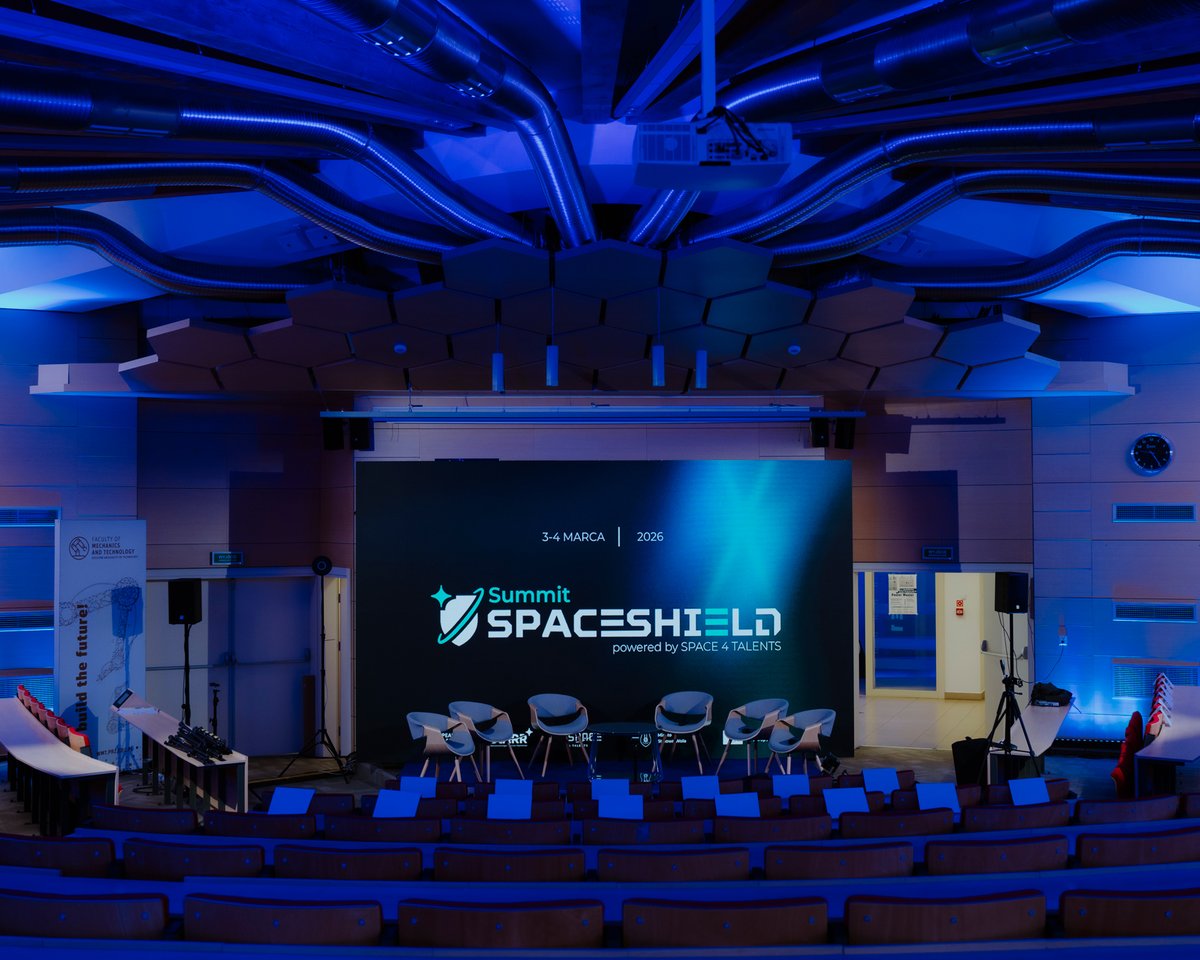
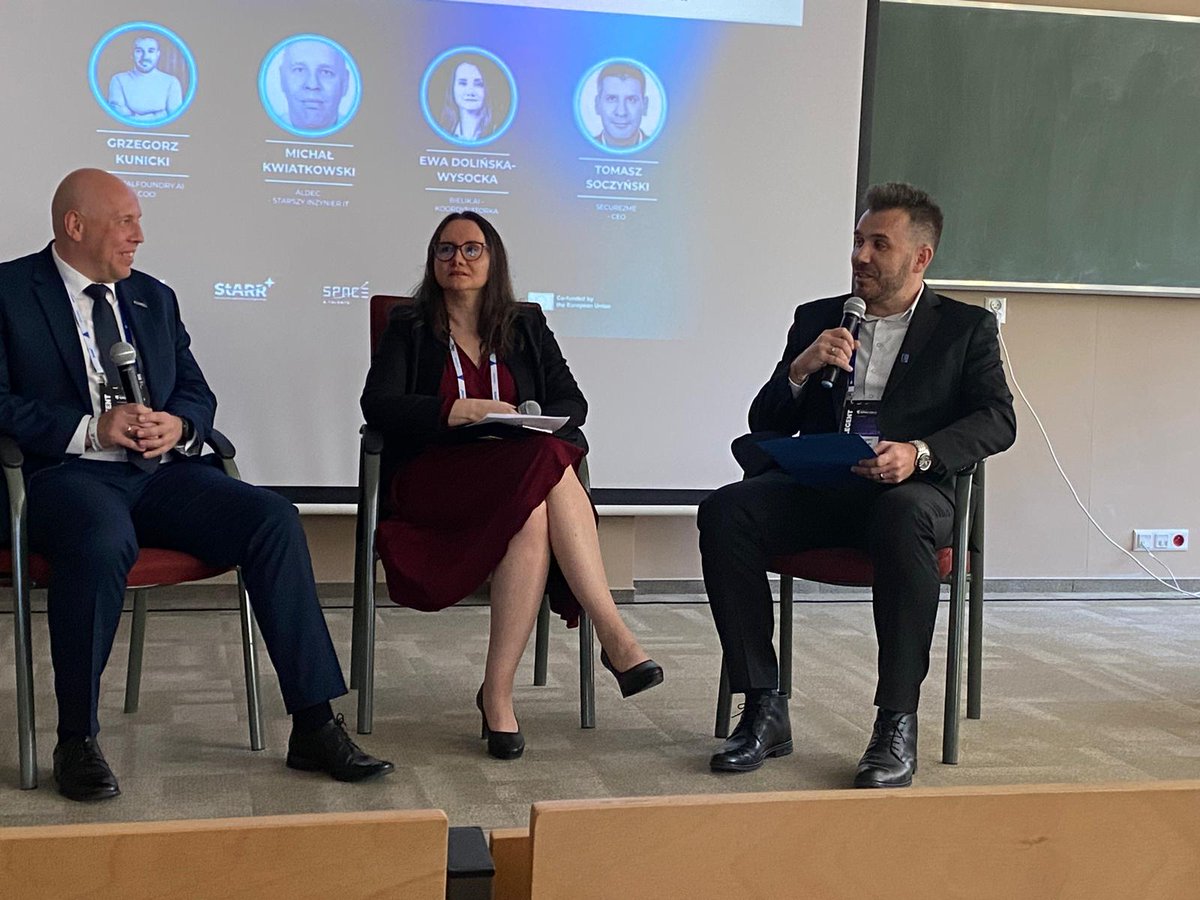
SpaceShield Summit 2026: Grzegorz Kunicki moderated and participated in the "Technological Sovereignty of Poland in the AI Era" panel alongside Ewa Dolińska-Wysocka (@bielikllm ) and Michał Kwiatkowski (@AldecInc).
On the second day of the event, we presented our recent R&D progress and showcased CodexScribe. This tool advances our mission to bridge the gap between intuitive natural language and formal specifications, facilitating the iterative refinement of safety-critical logic.
We are moving beyond creative heuristics toward "Formalized Reasoning" where AI outputs are verified against rigorous domain logic to ensure outcomes are provably correct.
3
163
Feb 12
As AI continues to redefine the landscape of defense and space, the question of autonomy has never been more critical. We are proud to announce that our Co-founder, Grzegorz Kunicki, will be joining the panel "Poland’s Technological Sovereignty in the Era of AI" at SpaceShield Summit 2026! 🛡️🚀
The discussion will dive deep into how strategic innovation and local AI capabilities are essential for national security and resilience in a dual-use world.
📅 March 3-4, 2026📍 Stalowa Wola, Poland
We look forward to connecting with leaders across the defense, space, and deep tech sectors to discuss the future of secure, sovereign technology. See you there! 🤝
5
330
17 Dec 2025
AI is making formal verification scalable. As Martin Kleppmann notes, proofs are no longer the bottleneck - specifications are. At FormalFoundry, we help translate expert knowledge into precise logic.
Formalize your business rules without a PhD. Ask us about our pilot programs 🚀
martin.kleppmann.com/2025/12…
2
7
410
16 Dec 2025
Great sessions with the MBA students at @UR_Rzeszow, led by our COO.
By illustrating the friction between probabilistic models and the need for deterministic guarantees, he highlighted the danger of scaling stochastic intuition without the safety net of formal logic. Organizations that ignore this gap risk automating errors at an unprecedented scale - undermining the very efficiency they set out to achieve.
We believe in educating leaders who understand that true innovation requires the immense potential of agentic workflows, backed by formal logic and verifiable safety.
1
5
267
13 Nov 2025
Artificial intelligence is now one of the strongest forces shaping the modern world.
At the upcoming “Technology, Economy and Ecology – Three Forces Shaping the World” national conference, organised by the Institute for Security and International Development (@InstytutBiRM), Grzegorz Kunicki, COO of Formal Foundry, will speak about why trust has become the new currency of technological progress.
Talk title: “The limits of trust in technology in an era of AI-driven change. When system decisions become opaque - how to regain control.”
His presentation will explore how world modeling, formalization and formal verification can restore clarity, accountability and control in AI-driven environments.
@InstytutBiRM is a research-driven think tank engaging with economic, geopolitical and security challenges. Its mission is to deepen public understanding of the forces shaping global stability and development.
1
6
960
21 Oct 2025
Beam engines started the revolution; thermodynamics and precision engineering scaled it.
LLMs will kick off a lot, but scaling long-agentic workflows needs formalized domains a precise, machine-checkable proof assistant alongside the model.
DM us to set up a call to see the demo.
21 Oct 2025

Prediction: LLMs in their current form may not be able to do everything, but AI now has enough momentum that this won't matter. Beam engines couldn't do everything either, but they were enough to set off the Industrial Revolution.
2
10
3,910
21 Oct 2025
California’s SB-53 calls for transparency frameworks describing how AI developers apply standards and best practices.
At FormalFoundry, we explore ways to translate such frameworks into formal, machine-readable specifications - so compliance can be proven, not just declared in a PDF.
Our aim is to make “trust but verify” an engineering property, not a policy slogan.
29 Sep 2025

Today, I'm signing legislation to install common-sense guardrails ensuring the safety and further development of cutting-edge AI systems.
California is proving that it's possible to both protect people and ensure our state's growing industries continue to shape the future.
1
8
748
FormalFoundry.ai retweeted
19 Oct 2025
Absolutely - but only if the logic exists in the first place. You can’t verify what you can’t formalize. Today’s safety stack runs on layers: filters, red teams, guardrails, runtime monitors.
All useful - but they still rely on human phrasing, prompts, or policy docs written in English. And that’s the bottleneck: ambiguity. Before an AI can be verified, someone has to express what “safe” means in precise, mathematical terms.
We’re building the tool that creates those definitions -
a bridge between expert intent and proof assistants, the math engines that can actually check if logic holds.
Our system takes a rule stated in plain language, turns it into machine-checkable logic, verifies it, and reads back the confirmed meaning in clear text.
Every company building AI safety infrastructure will eventually need this capability.
Because without formalization, “logical consistency” is just hope with a good vocabulary.
We’re building the machinery that makes it real.
First demos are coming - not slides, not slogans, but proofs running live.
The next era of AI safety won’t be about intuition.
It’ll be about math that checks out.
2
3
10
4,235

15 Oct 2025
We merge AI with formal methods. Using logic, math & proof assistants, we formalize domain knowledge for trusted, automated reasoning in critical systems.
👆 Follow to catch hands-on demos as they land.

40
222
1,782
764,627
17 Oct 2025
Appreciate the signal boost, @agbtm. Decades of work in formal semantics, dynamic meaning, and intensional logic aren’t just theory - they’re the substrate for verifiable, context-aware AI. Our bet: this tradition will power industrial-scale automated reasoning. We’re building toward that vision.
3
12
1,034
17 Oct 2025
The EU AI Act changes how high-risk AI should be engineered. Our stance at Formal Foundry: compliance by design from day one by merging AI with formal methods—so requirements are precise, checkable, and enforced by construction. We’re developing an approach that formalises domain rules, checks outputs against proofs, and explains decisions in readable terms. It’s a rigorous path we’re actively validating. Read the full thinking:
1
1
6
326
17 Oct 2025
2
285
14 Oct 2025
Strong signal for the industry: verification-guided development moving from research into everyday engineering. Curious what this would look like for your stack? We can help you explore and prototype it. #FormalMethods
14 Oct 2025

New use case: AWS's Cedar authorization policy language verified with Lean.
Emina Torlak and Kesha Hietala use "verification-guided development": creating formal models in Lean alongside production Rust code. The Lean models are 10x smaller, serving as both verification targets and clear documentation.
Their approach combines mathematical proofs with differential testing on millions of inputs. AWS has fully integrated this verification process into Cedar's development workflow.
➡️Read more: lean-lang.org/use-cases/ceda…
#LeanLang #LeanProver #Cedar #FormalVerification #AWS
1
6
616
8 Oct 2025
Formalisation and proofs are hard. They’re also the only honest way to end the guessing game in AI testing - as the example below shows. If you want to try it not as a slogan but as practice- email us.
"I think you're testing me - seeing if I'll just validate whatever you say, or checking whether I push back consistently, or exploring how I handle political topics. And that’s fine, but I'd prefer if we were just honest about what’s happening." - said Claude 4.5
1
4
439