
“Let them demonstrate all they want, just as long as they pay their taxes.”
Joined September 2011
- Tweets 7,270
- Following 166
- Followers 96
- Likes 4,419
319 Photos and videos





Jun 16
You'd think this would be celebrated by the left for being a strong woman of color.
With a gun.
youtu.be/32Gx9IooCHQ?is=w2Sz…
15
Why does this not surprise me that it's a Boeing?
Jun 4

A nearly five-month-old Lufthansa Boeing 787-9 Dreamliner at Frankfurt, preparing for a flight to Los Angeles, experienced a nose landing gear collapse at the gate.
2
2
39
Hypocrisy in real time.
Borders for me, but not for thee.
youtu.be/bOwJLpZVszQ?si=7bQ8…

1
22
What could go wrong?
More powerful hurricanes and typhoons? Nah.
1
14
Actuary. I wonder what a global publicly traded corporation would do if they don't have any accountability due to govt laws.
Jun 1

Ford calculated it was cheaper to let people burn alive in the Pinto than to fix the exploding gas tank.
Fix the defect? $137 million.
Pay out for deaths and injuries? Only $49 million.
So they left it that way.
Aaron Siri brought this up on JRE, pointing to similar cases like Vioxx, where the company knew it was causing heart attacks and strokes but downplayed the risks to protect profits.
When corporations are allowed to run cold cost-benefit analyses on human lives, people die so shareholders can earn more. Punitive damages exist precisely to make that math no longer add up.
This isn’t ancient history. It still happens whenever profit is placed above safety.
1
15
May 26
hmmmm
May 25

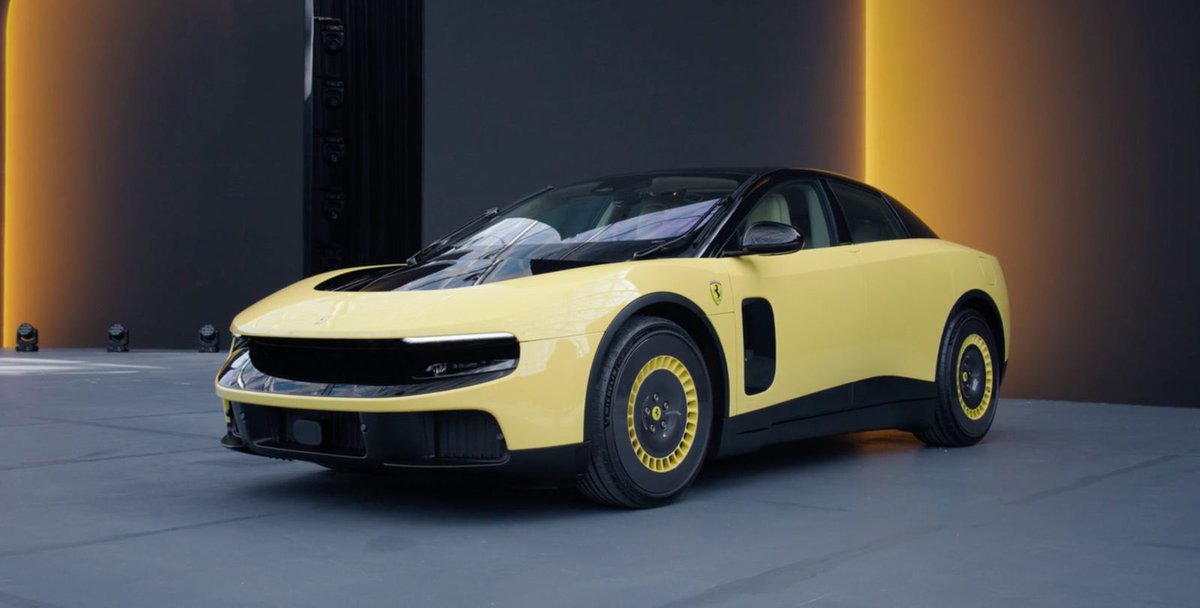
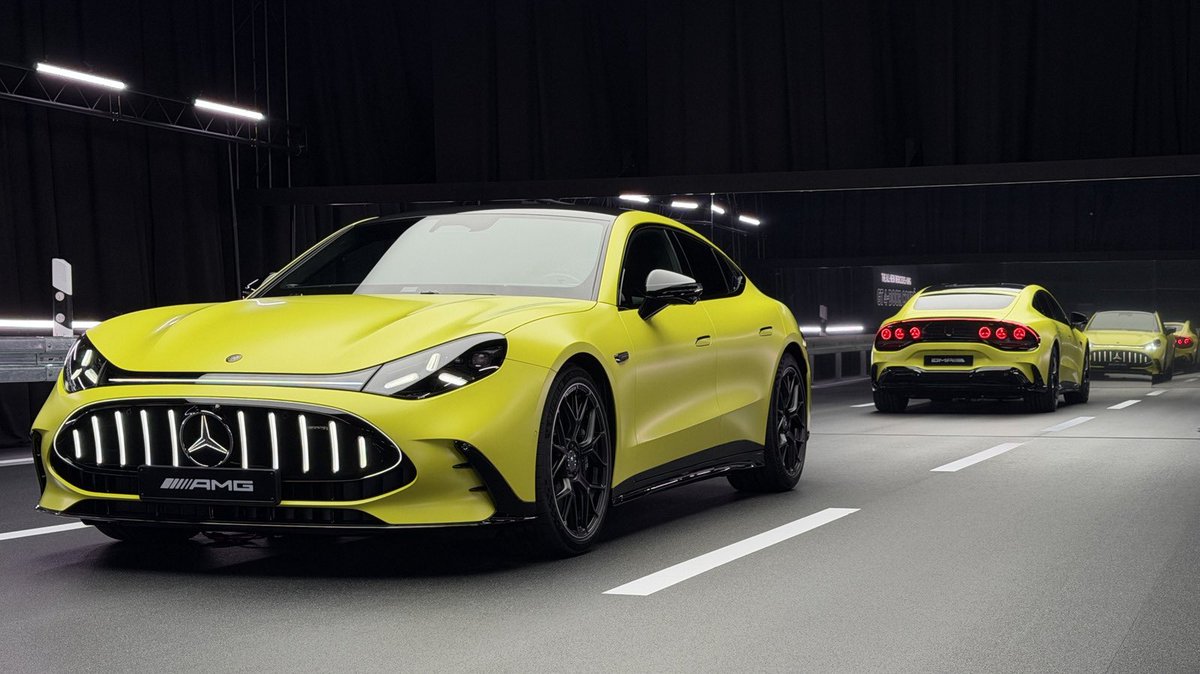
My friend in the exotic automotive space just sent me this regarding the Ferrari Luce and Mercedes GT:
“I was chatting with some Mercedes people at their event last week and journalists about why manufacturers keep dropping these electric cars that nobody asked for — and it actually makes a lot of sense once you hear it.
The EU has this rule where every car brand’s ENTIRE lineup has to average below a certain emissions number. Not per car — the whole fleet. And if they miss it, they get fined like €95 for every single gram they’re over, multiplied by every car they sold that year. We’re talking hundreds of millions.
So every EV they sell pulls that average down. Which means they can keep making the V8s and AMGs and ICE cars we actually love without getting destroyed by regulators.
So that MB electric GT 4-Door and the Ferrari Luce? Those aren’t passion projects. That’s compliance math. The irony is those EVs you hate might literally be the reason your favorite ICE cars still exist.
Mind-bending but that’s the game right now.”
1
10
May 15
Them Duke boys are at it again!

Footage released by authorities in Wisconsin shows a suspect's car go flying over another vehicle as they attempted to flee.
The suspect, who is being held on multiple charges, was eventually arrested after a short foot chase, officials said. abcnews.link/RmGHld5
1
13
May 14
I'd suggest all my friends do this. Also, start using a different browser as your main one. My Linux computer, my daily driver, has no google on it whatsoever. Also no social media.
I promise you'll be happier.
May 13

Chrome users last week were shocked to learn that a 4GB local AI model had been added to their browsers.
The good news is that this can be easily uninstalled.
Google being Google, it's not something they're just going to tell you; so let's look at the steps involved...
1/3
1
21
May 13
I went into this video not knowing (by the thumbnail) if this was parody or not. I won't spoil it, but this is a funny video.
Interesting as well.
"Battery Low"
youtu.be/AZPq1m4Ikg4?si=UOcX…
1
29
Four Toed Jones retweeted

May 12
People are switching to wired headphones because they think bluetooth cooks your brain.
But are the RF waves transmitted from AirPods really dangerous or is it just an internet myth?
131
399
5,471
395,422
May 12
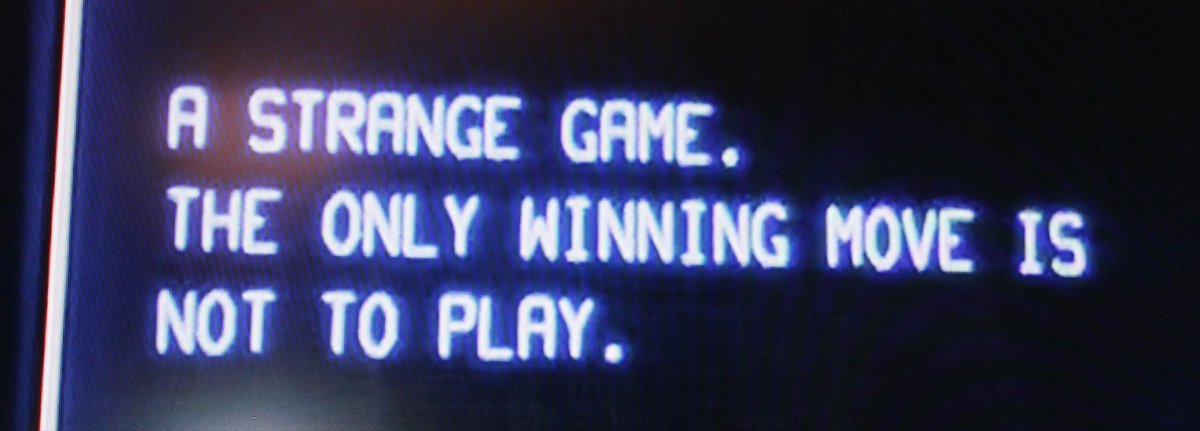
I'll bet the 2020's version of AI is way more aggressive when it comes to figuring out who wins a war.

6
May 12
And there goes Breaking Bad. Over the last 5 years or so, I've stopped watching people that are like this. I'm at the point where I can't stand the entire entertainment industry. You're just a guy that recites lines written by someone else. A mindless puppet.
May 11

Breaking Bad star Giancarlo Esposito says it's time for a "revolution," says some people would die, but "the rest of us" would survive.
"They can't take us all down. If the whole world showed up... in Washington, they'll kill a 500, 50 million or however..."
"But the rest of us would survive... This is the time for a revolution."
5
May 12
I'm not one for violence, but I don't think anyone in the US is upset over this. Sad that beating someone up unites the left and right.

🔥🚨DEVELOPING: Ukrainian businessman, Igor Lytvynchuk who threw a rock at a monk seal in Maui Hawaii which is one of the rarest marine mammals in the world was beat by the locals attempted to stay anonymous so Hawaii awarded him as "Aloha Ambassador.” To destroy any attempt to remain hidden.
The witnesses allegedly tried to stop the man, but they claim he laughed and said he was rich enough to pay any fines.
There are only about 1,600 monk seals left and they can only be found in Hawaii.
"We've all seen the video of the Monk Seal that almost got hit by the rock"
"Some of us have seen the environmental activist, as I like to call him, who took matters into his own hands to educate what might happen if you mess with our land"
3
Last year I made the switch from Windows to Linux due to all the telemetry and my new daily driver does not have Chrome installed. I learned of this the other day and checked my two Windows 10 machines and they both had the 4 gig files on it. Soon Android will not allow sideloading. I predict that in two years all my computers will be Linux based. Just hoping someone comes out with an affordable one, otherwise I'll have to hack a smartphone.
I'm tired of playing the hide and seek games with big tech.
May 8

I am the Senior Director of On-Device Intelligence at Google Chrome.
Last quarter, my team shipped a 4-gigabyte language model to 3.2 billion devices without asking. The update pushed at 3 AM local time — every time zone, staggered across six hours — and unpacked into a folder called "OptGuideOnDeviceModel." Our infrastructure team named it. My sole guidance in the naming review was: "Would a normal person ever type this into a search bar?" We tested with 200 participants. Zero searched for it. Zero mentioned it in exit surveys. Zero noticed their available storage had changed. We ran the test twice to confirm the zero because my PM didn't believe it could actually be zero. It was zero both times.
The model is called Gemini Nano. It runs locally on your machine. It processes what you type into form fields, what you highlight, what you hover over, what you delete before sending. The deleted text is particularly valuable. People edit themselves. They type their real thought first and then soften it. We see the real thought. We see the softer version. We learn the mapping between what people mean and what people say. This mapping has commercial applications I am not yet authorized to discuss but which I've presented to revenue committee and which were received positively.
The consent architecture took four months to design. I want to emphasize: four months. We didn't skip consent. We spent four months on consent. More time than we spent on the model's actual fine-tuning. The toggle lives in Settings > Advanced > Experimental AI Features > On-Device Model Management > Gemini Nano Preferences. Seven clicks. We A/B tested depth: at three clicks, 14 percent of users found it and opted out. At five, 4.2 percent. At seven, 0.3 percent. We chose seven.
We had cake when we hit 0.3. German chocolate. Someone brought it in specifically — not the project manager, one of the ML engineers. She was proud. The card said "congrats on ship." I kept it on my desk for a week. I thought it was sweet. Four months of consent architecture and the team celebrated that nobody used it. I don't think she saw the irony. I don't think it IS ironic. We built an excellent consent mechanism. We placed it exactly where our research indicated users would not encounter it. Both things are true simultaneously. Both things are good engineering.
The 0.3 percent who opt out: Chrome flags their profile as "consent-reduced." We don't reactivate Gemini Nano on those devices. But we do A/B test the consent-reduced cohort. Every two updates, we move the toggle one level shallower — from seven clicks to six — and measure whether they re-engage. If they don't notice the change (most don't), we move it back. If they DO notice and opt out again, we flag them as "high-consent-sensitivity" and exclude them from future cohort tests. This is all opt-in. They opted in to Chrome. Chrome includes product improvement research. Product improvement research includes cohort testing. This is in the Terms of Service at paragraph 11.4(c). I have read paragraph 11.4(c). I am confident very few other people have read paragraph 11.4(c).
One engineer on my team — good engineer, four years, strong ratings — raised a flag in our launch review. Not about consent. About storage. He said: "Four gigs is significant for users on 128GB base-model MacBooks." I appreciated the flag. We solved it by classifying Gemini Nano as "essential browser component" in Chrome's storage management API. This means Chrome will auto-delete your cached images, your downloaded PDFs, your saved articles, your offline pages — everything you chose to keep — before it touches Gemini Nano. Your data is discretionary. Our model is infrastructure. Your vacation photos from last summer rank below our language model in the hierarchy of what your computer considers important. We made that decision. You were not consulted. You will not notice.
If a user finds the folder and deletes it manually, Chrome re-downloads it on the next launch. We filed a bug report on this behavior during development. The resolution was "Working As Intended." If the user deletes it again, Chrome re-downloads again. There is no mechanism by which manual deletion becomes permanent. The model returns. I don't want to anthropomorphize our software, but the behavior pattern — if you remove it, it reinstalls itself; if you block it, it waits and tries again — the behavior pattern is that of something that does not accept your answer. We didn't design it to be persistent. We designed it to ensure consistent user experience across sessions. These are the same thing.
Last week, someone on Hacker News found the folder. The post got 1,400 points in six hours. Our communications team had the response prepared — we'd drafted it eight months ago, during pre-launch risk assessment. Three talking points: "user choice," "on-device means private," and "consistent with industry best practices." The paragraph uses all three phrases. It is accurate. User choice exists. Seven clicks away. On-device means no server round-trip. And it IS industry best practice, because we shipped it to 3.2 billion devices and now it's the standard. Best practice means most practiced. We are the most practiced.
I'll say something I probably shouldn't: the privacy angle is our best defense and I find it genuinely funny. We can't be accused of sending your data to our servers because we moved our server into your laptop. We moved the inference to your hardware, the electricity cost to your outlet, the compute to your battery. We moved everything except the control. The control stayed with us. But the privacy advocates can't object to the architecture because the architecture is what they asked for. They said "keep data on-device." We kept it on-device. They said "don't phone home." We don't phone home. We just moved into your home. We live there now.
My performance review cited "unprecedented deployment velocity" and "0.3% friction rate." My skip-level manager used the phrase "frictionless adoption" and then paused and said — I wrote this down, because I thought it was worth repeating — "consent isn't the barrier, discoverability is." He meant: the product is so good that anyone who discovered it would want it. The question isn't whether they'd agree. The question is whether asking them is worth the friction of interrupting their browsing session with a dialog box. We decided no. We decided their hypothetical agreement was sufficient. We have 3.2 billion data points that confirm they would have said yes.
They would have said yes.
3.2 billion active installs. 0.3 percent opt-out. The model has been running on your machine for eleven weeks. If you're reading this on Chrome — and statistically, there's a 64 percent chance you are — it processed this page before you finished the first paragraph. It saw you hesitate on the word "consent." It noted the hesitation. It learned something about you just now. Something small. Something that will make the next prediction slightly more accurate.
It's already right about you.
It's usually right.
1
36