
Speed Coach | 716 Gym Owner | Published Author NFL · NHL · NCAA · EPL · Sprint mechanics, strength & programming Speed Kills — full system, link below ⬇️
Joined September 2012
- Tweets 7,111
- Following 79
- Followers 15,135
- Likes 4,077
2,024 Photos and videos

Pinned Tweet

Feb 18
Two athletes can squat the same weight, but the one who can produce force faster is the one who often jumps higher, accelerates faster and wins the play.
RFD determines how quickly force can be expressed. And in sprinting, ground contact times often occur within 80–200
4
61
657
54,120
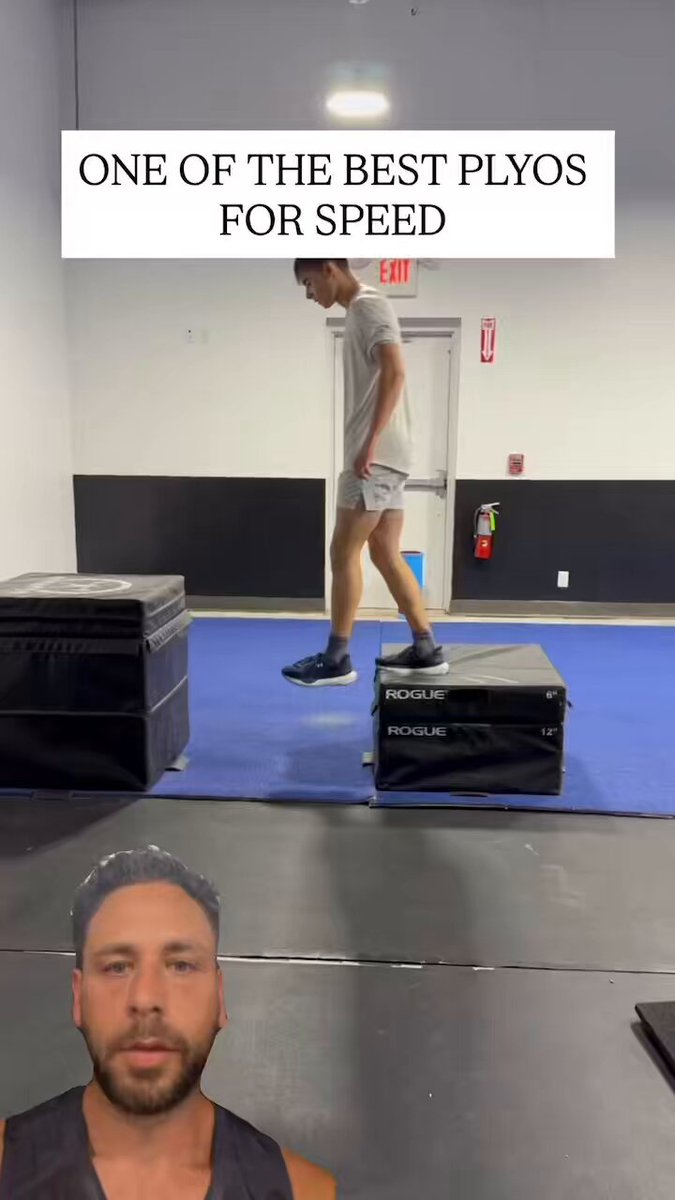
Depth jumps are one of the classic shock method exercises.
The goal is to use a drop to create a sharp collision with the ground, then rebound quickly. These are great to train power output and SSC ability.
It works great in aiding with speed because sprinting is a
2
11
127
8,195
GPP Reloaded is the starting point if athletes need a bridge into harder work. It uses hill running, extensive plyos, tempo options, med ball work, and general preparation to build the base first.
The Art and Science of Sport Preparation
1
2
314
is the bigger 10-week plan for coaches who want linear speed, change of direction, agility, plyometrics, strength, and conditioning organized together
fredduncantraining.com/produ…
3
316
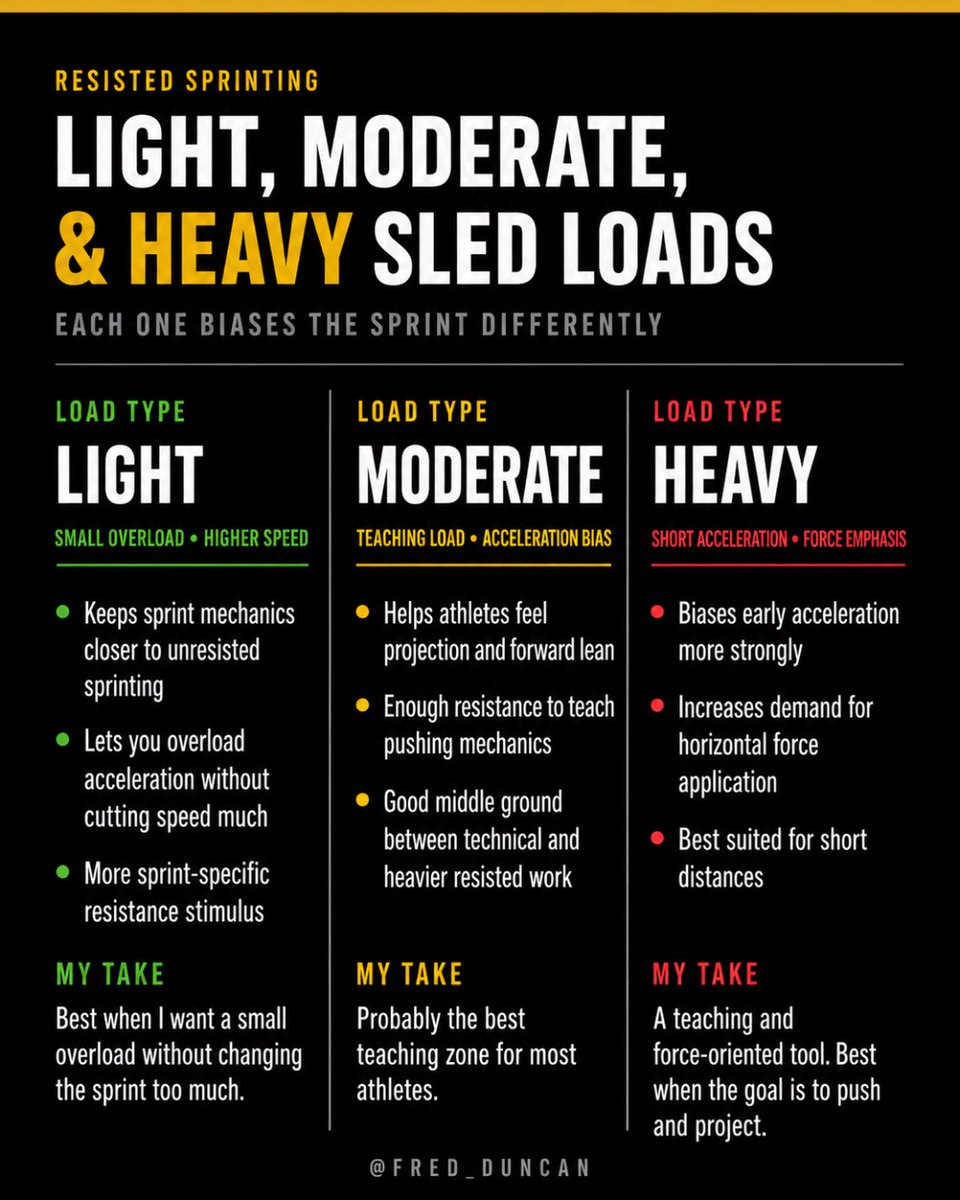
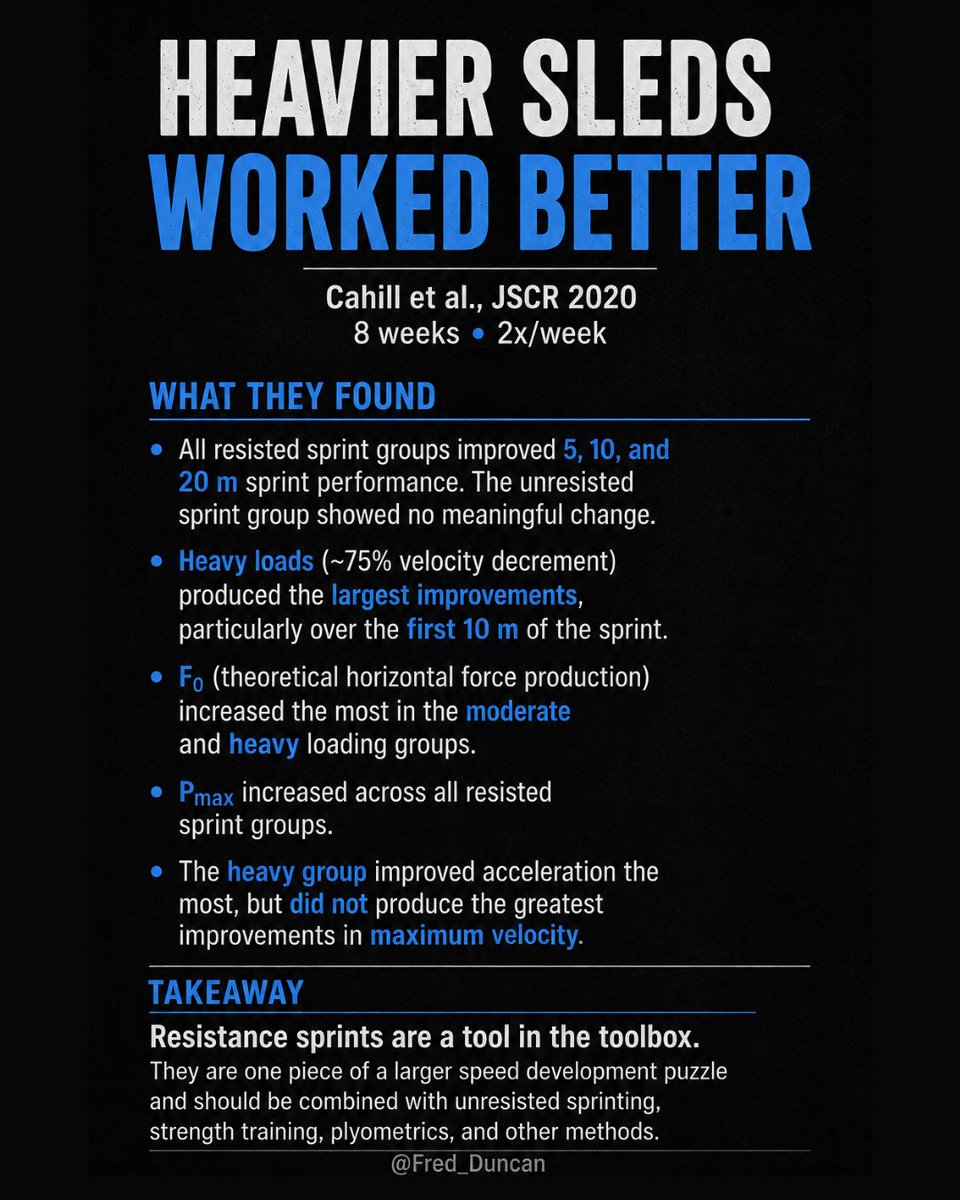
We know sleds work, but how heavy?
Lighter loads can keep the sprint closer to free sprinting, while moderate and heavier loads can be useful teaching tools for projection, forward lean, and acceleration intent.
Match the load to the reason you’re using it.
In Speed Kills
1
3
45
2,130
, I break down resisted sprint loading in more detail, including when to use percent bodyweight, when to use velocity decrement, how to program sled sprints, and what to do if you don’t have access to a sled.
Or, if you’re earlier in the process, GPP Reloaded starts with
1
864
hill running and gives you a bridge into harder sprint work.
Both are on sale now.
fredduncantraining.com/produ…
1
540
Jun 12
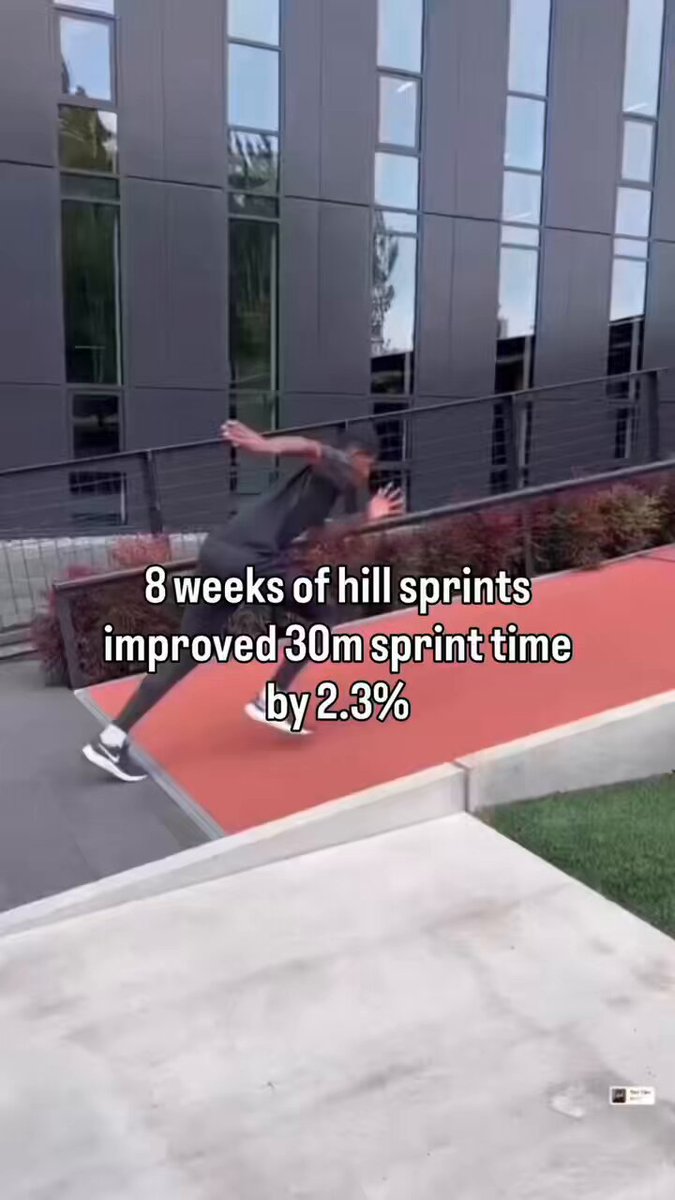
In this 8 week study, athletes sprinted uphill 2x per week on a 6% grade.
The uphill group improved 30m sprint time by 0.10s and showed more improvement than the flat group.
But the reason I like hill sprints isn’t only because they can help athletes get faster…
I like
10
52
678
123,484
Jun 12
quality sprint exposure, and bridge the gap between general preparation and faster sprinting.
This is exactly why hill sprints are built into Speed Kills — my 8-week speed program and full eBook that shows you how to actually organize speed training, not just throw random
1
10
3,351
Jun 12
drills, sprints, and lifts together.
GPP Reloaded, The Art and Science of Sport Preparation, and Play Strong are also on sale this week if any of those fit where you are right now.
fredduncantraining.com/produ…
1
10
2,927
Jun 12
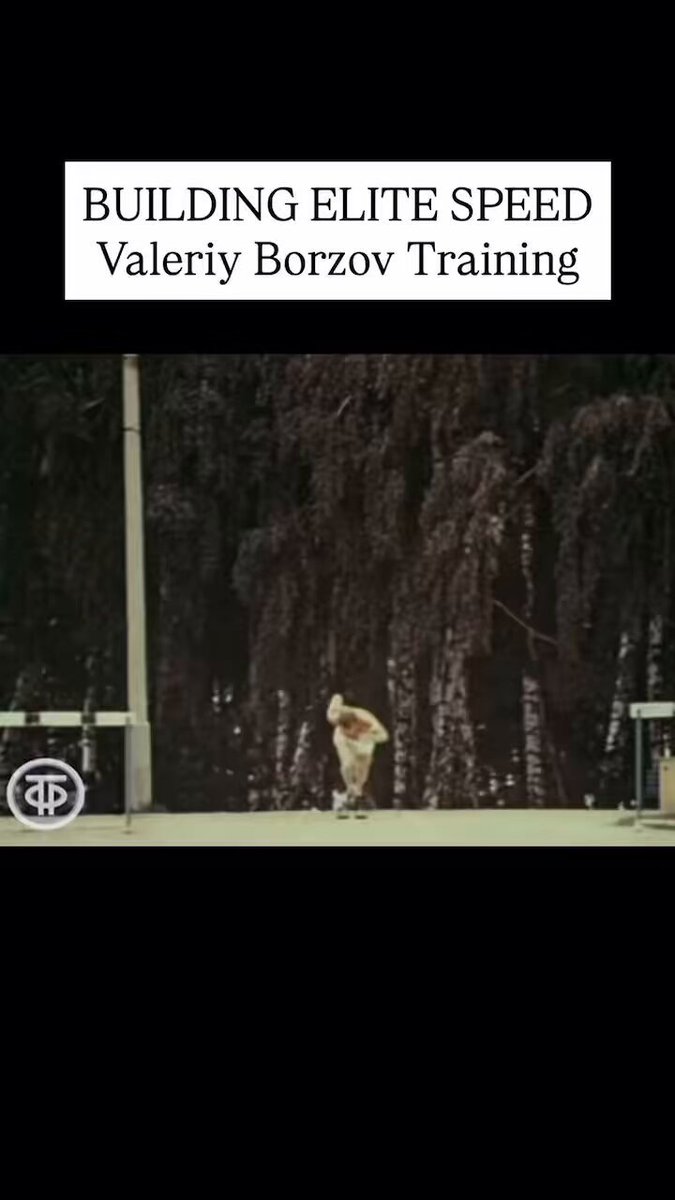
Borzov’s training is interesting, but the real lesson is the thought process. He gets mentioned in my comment section often, so I looked into his training.
At lower levels, athletes usually need everything. But as the athlete gets better, training has to become more precise.
1
5
48
4,235
Jun 12
They diagnosed the limiters, got strong, raised speed, and built out a methodical yearly plan. That’s good training.
That’s why I built the Project Speed Bundle.
Speed Kills and The Art & Science of Sport Preparation — two eBooks, 18 weeks of programming, a complete
1
3
633
Jun 12
framework for building acceleration, max velocity, agility, and speed endurance.
Not ready for high-intensity speed work yet? Start with GPP Reloaded. Four weeks to build the base, restore capacity, and prepare the tissues before you push.
fredduncantraining.com/produ…
341
Jun 12
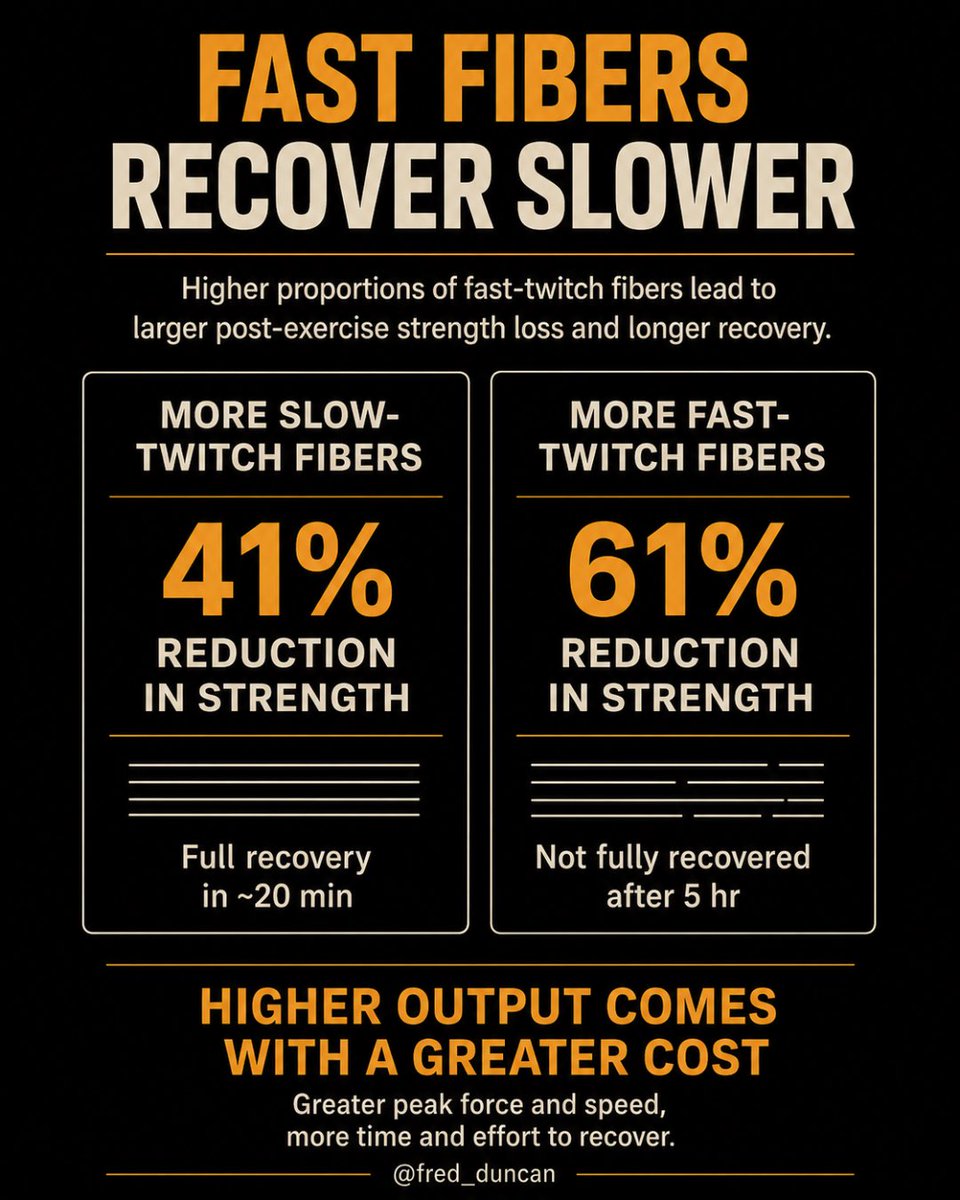
Fast athletes usually come with a higher recovery cost.
Lievens et al. found that athletes with a faster muscle typology had a larger power drop during repeated all-out Wingate tests and still were not fully recovered 5 hours later.
That’s why programming matters.
You
1
1
22
1,716
Jun 12
can’t just stack high output work on top of high output work and expect athletes to keep adapting. The better the athlete, the more structure matters.
That’s exactly what the Project Speed Bundle is built for.
You get Speed Kills and The Art & Science of Sport Preparation —
1
1
1,107
Jun 12
two eBooks, 18 total weeks of programming, and a complete system for building acceleration, max velocity, change of direction, agility, and speed endurance.
fredduncantraining.com/produ…
2
1,038