
Clinical Psychologist interested in psychoanalysis and psychotherapy.
Joined September 2020
- Tweets 4,444
- Following 948
- Followers 2,044
- Likes 13,587
144 Photos and videos



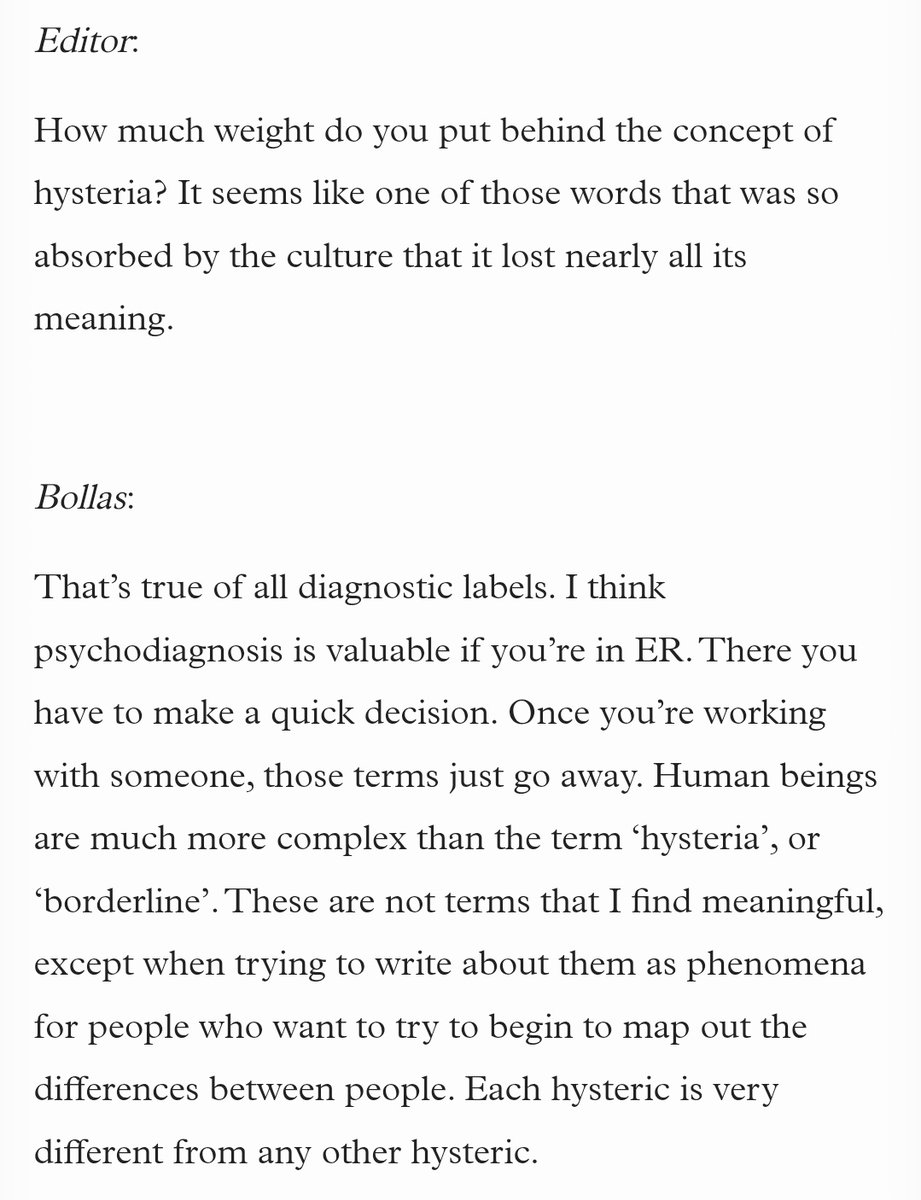

Freudian Slippers retweeted
A new and quite flavorful Substack piece is up today!
I wrote this one purely for the purpose of pleasure and enjoyment.
So, please enjoy! 🍨
Link in the reply below! 👇

4
3
34
1,834
Freudian Slippers retweeted

Theory is important, but it is not everything. Becoming too absorbed in theory can remove the therapist from the intuitive, felt sense that emerges in treatment. Theory is helpful when it allows us to listen more deeply to our patients...each time differently, and with no guarantees! We are talking about the unconscious here, peeps.
2
3
13
450
Freudian Slippers retweeted

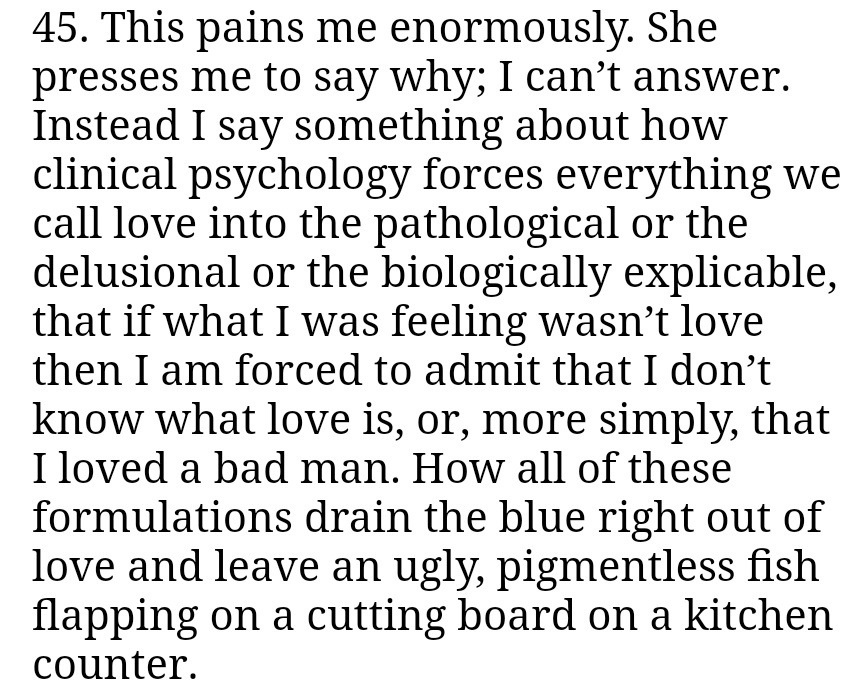
why do i love clarice lispector? why did i write a book on her work? because she writes things like this... 💕


12
190
2,155
62,414
Freudian Slippers retweeted

A true innovator in photography. The realest one because he fundamentally distrusted photography as a medium. As a result he squeezed every bit of potential out of it to try to replicate our natural way of seeing. Distrust any artist who loves gear and lenses more than seeing.





7
827
7,883
147,554
Freudian Slippers retweeted

Jun 13
No one captures the heartbreak of ordinary life like Elizabeth Strout.
“So blind we humans are - so blind. To each other & to ourselves, moving thru life as though thru shadows, putting out a hand in the dark & thinking we have touched someone. And maybe we have …

1
2
5
251
Freudian Slippers retweeted

Jun 12
Here is a list of things to practice/work on (in sequence of which you should focus on) to become a “good enough” beginner-ish therapist. IMO. FWIW. It’s all stuff we continue to refine and master over years, but you can get the hang of it enough to be “good enough” first. 1/
11
56
311
30,174
Freudian Slippers retweeted

Jun 12
In terms of choosing a new therapist or analyst, here is some unsolicited advice, for all who might need it:
People talk a great deal about “fit” and “comfort,” but I feel, at times, things get rather blurry. People feel comfortable with what is familiar, and perhaps what is familiar is not without its challenges?
So, I feel compelled to make this simpler. It may sound obvious, but it is not just about if you feel drawn to, excited, inspired, or intrigued by this particular person, but also, do they seem like they would like to work with you?
Do you get this impression, from the very first session?
I do not mean to ask if they are overly demonstrative, solicitous, or obsequious. And I don’t mean, “are they ‘selling’ themselves on you?” (e.g., by formulating something about you in the initial session, and suggesting that they believe that they can help you with the very construct they’ve created — this is a clever tactic from high-pressure sales strategy, and honestly, I don’t like hearing about the therapists who “sell” themselves, and their services, with this particular technique).
I simply mean something more like: curious, interested, open, giving you the chance to express yourself freely, and overall demonstrating simply enough that they have been listening to you closely; and they already understand a little bit about you and your needs; and that they would like to get to know you further, and see what develops from there.
And they are happy to schedule another session with you, but also do not seem to be too desperate or unwilling to hear you express your uncertainty or ambivalence.
In contrast, if in the first session, they strike you as: confused; bored; irritated; struggling to listen to you or understand what you are trying to tell them; showing signs that they seem shocked, disturbed, or disoriented by you; or are hesitant and/or expressing mixed feelings about whether they are the right clinician for you; then my personal opinion is that these are all good signs to look elsewhere.
If you want to be sure, it is usually a good idea to schedule at least three sessions before making your final determination. And this is because this can take some time; people’s clinical and personal styles can differ considerably from one another, and you may need more exposure to this person and their style to make a clearer assessment and determination of whether or not you feel like THIS therapist or analyst could be potentially helpful for YOU.
Of course, we tend to make our initial judgments and impressions of others rather immediately, but sometimes, this can lead us to go towards the “comfortable” that may no longer be as beneficial for ourselves.
So, we hold our gut instincts in a certain tension with our broader personal questions about what we are looking for in OUR treatment.
This is very individual and subjective for each patient.
However, my two red flags are:
1) when therapists try to “hard sell” themselves on you by basically just talking TOO much in your first session (as it is easy to sound “humble” but also be working quite hard to suggest something about their unique qualities and brilliance in an indirect, but still rather manipulative, approach);
And 2) when a therapist or analyst expresses so much uncertainty and ambivalence that this invokes a compulsion for a person to “prove” themselves, and their worthiness as a potential patient, to this provider.
You should truly never have to jump through any hoops to convince someone to “take a chance” on working with you.
And you should also not feel so pressured by the therapist or analyst that you start to feel anxious and scared about disappointing them, and hurting their feelings.
Of course, some people may experience one or the other outcome regardless of whoever they are meeting with — but it still may be more active in some situations than in others.
The red flags you may have ignored can be, in the end, why this does not work out well for you.
5
10
69
3,336
Freudian Slippers retweeted
Jun 11
The complicated part of this is that there is a positive point to all that, which is to be able to remove oneself from the immediacy of one’s personal emotional and often times overwhelming and possibly over-reactive process to make more sober-minded decisions, and a negative, which is what is described here.
In fact, we see a lot of people in therapy or analysis who have this secondary, dissociative problem as their primary issue, which few of them recognize at the beginning.
Often, it’s in response to someone growing up who had outsized “big feelings” that took up a lot of room.
So they suppress their own feelings, and they act them out unconsciously, while assuming they have a great deal of emotional maturity and control.
Sometimes, we need them to experience being a little less “in control.” A practical piece of advice is to do some kind of team sport, intense physical exercise, or even something like joining an improv team or acting class.
Anything that exposes them, heightens their emotional and bodily awareness, and allows them to learn to manage the stress and anxiety that comes from doing something that they can’t do quietly, privately, and without their feelings and their bodies involved.
If they don’t learn to do that, then what they don’t necessarily realize is how much their feelings are still “leaking out” everywhere and anywhere, regardless of how “professorial” or self-contained they might imagine they appear.
Analysis or psychoanalytic psychotherapy of course, also helps with this, but especially with an analyst who expresses less interest in their analysands’ intellectual processing and far more on their emotional and/or somatic experiences, including all that occur in vivo in their sessions.

it is very odd to realize that CBT sort of drilled into me a tendency to intellectualize my emotions by cognitively reappraising them to death. it’s sort of like i am afraid of thinking in a black & white way so i overcompensate via “nuance” & dissociate myself
5
5
54
3,154
Freudian Slippers retweeted

Jun 8
"Writing isn’t just the production of sentences – it’s the training of endurance by way of sustained attention."
theguardian.com/us-news/ng-i…
1
25
119
10,284
Freudian Slippers retweeted

Elizabeth Strout’s Latest Feels Like a Fresh Start. A fine thoughtful review of another moving Strout novel about the epics of everyday life. nytimes.com/2026/05/04/books…
3
3
545
Freudian Slippers retweeted

Jun 7
Felice Casorati. Girls at Nervi (1926).

16
98
3,264
Freudian Slippers retweeted

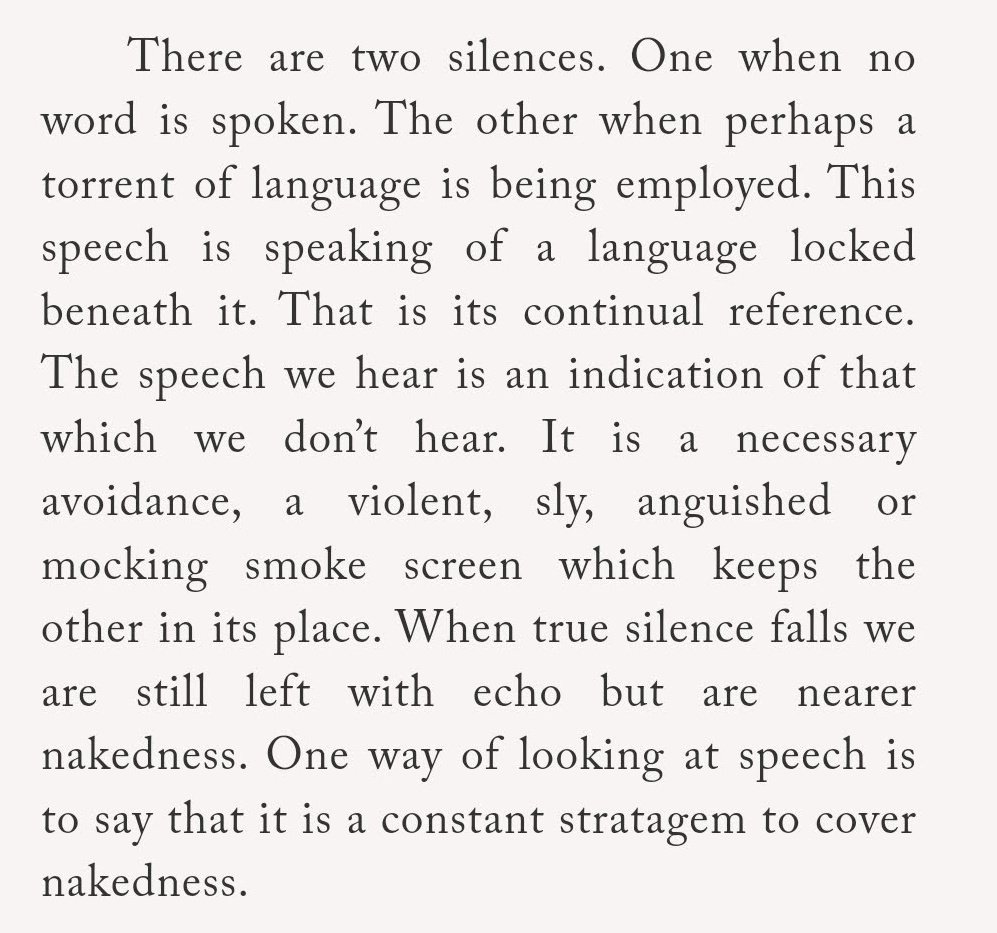
“The effects of his [Moustafa Safouan] silences were equally powerful, at times even more so. At the end of my admitting something shameful or having just related a particularly painful memory, his silence could stun me, as if I'd been struck with a blunt object. In that silence my own words would come back to me as if someone else had uttered them. It's the most basic tenet of Lacan's teaching. Regardless of our intentions, we almost always say something more than we mean to.” (p. 42)
—Richard Boothby, Blown Away: Refinding Life After My Son's Suicide (2022)

ALT https://www.reddit.com/r/EarthPorn/comments/cmov6h/sunset_at_loch_raven_reservoir_baltimore_md_oc/
2
3
231
Freudian Slippers retweeted
Jun 6
Have been reflecting a lot on antipsychiatry, anti-medicine (eg anti-vax), anti-introspection (eg Andreesen, but also Shrier), anti-therapy, anti-involved parenting, pro-AI “therapy,” and “psychosomatics are never a factor in any cases” movements.
They all share a sort of
7
17
61
11,436

If you want to get really under the skin of Welsh-language working-class culture, you’ve got to go to the north. That’s where the kids fuck and fight in Welsh...
theguardian.com/film/2026/ju…
168
Freudian Slippers retweeted

Jun 5
"I don't feel safe". What makes this so obnoxious? (When it is, I mean; obvs!) Because it dresses up "I get anxious when you're righteously angry at me" in the clothes of "I've reasonable grounds to think you'll wound me", so is covert blame-shifting and victim-playing.
3
17
797
Freudian Slippers retweeted

Jun 4
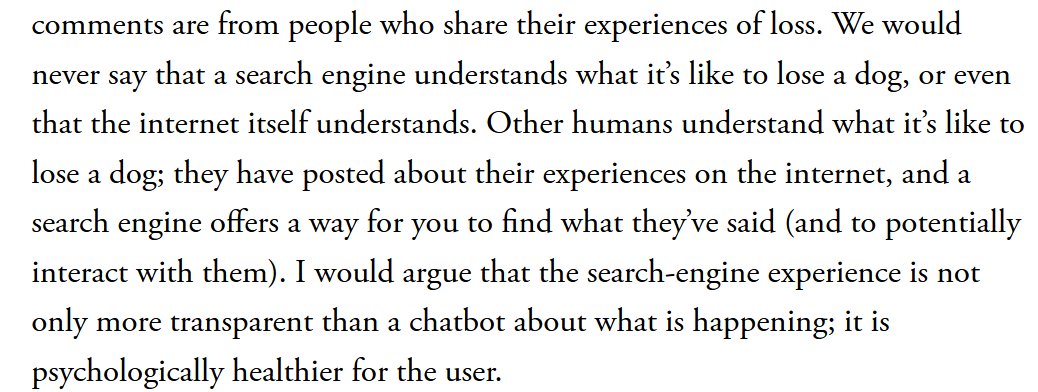
Ted Chiang is right; chatbots are manipulative and harmful as a technology. Remove the personal pronouns, remove the cute, cloying, conversational tone. A good product would just provide the results with links and citations to point you toward primary sources.
6
3
48
2,223
Freudian Slippers retweeted

This is great.

Jun 3

If we confuse generative AI’s ability to produce text with consciousness, we risk assigning moral responsibility to chatbots—and not to their makers, Ted Chiang argues. theatlantic.com/philosophy/2…
80
1,118
7,304
229,667
Freudian Slippers retweeted

18 Jul 2023
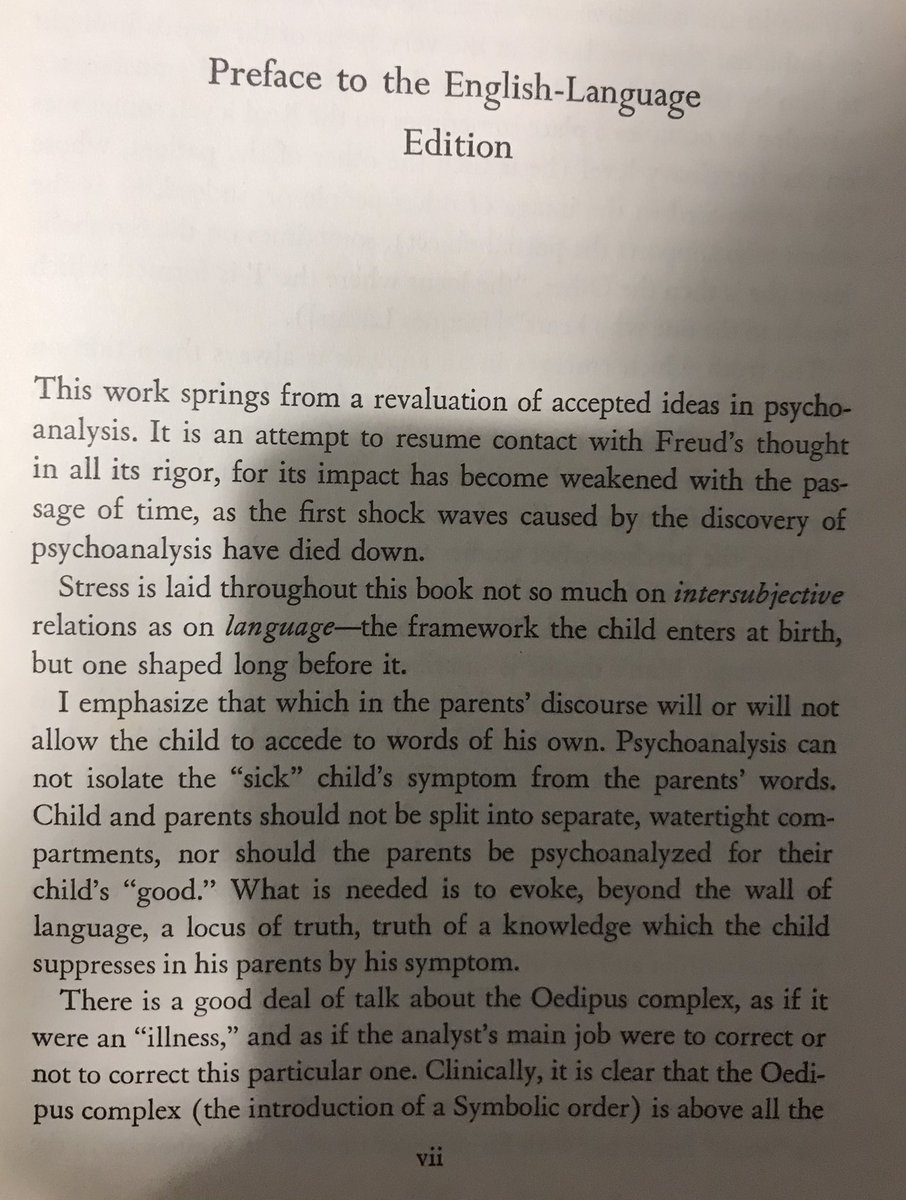
Here’s the preface to Maud Mannoni’s “The Child, his ‘Illness,’ and the Others.”



16 Jul 2023

I tweeted some time ago now asking whether there were any important Lacanian child analysts. I just discovered an answer to that question: Maud Mannoni, the wife of Octave Mannoni.

1
1
2
483
Freudian Slippers retweeted
Jun 2
I have a lot to say about POSSIBLE psychosomatic symptoms but here is the most important thing:
Individual clinicians MUST take the patient and the symptoms seriously. BOTH must FEEL and explore the possibility that the symptoms aren’t or aren’t entirely psychosomatic AND the 1/
11
16
122
16,202
Freudian Slippers retweeted
I wrote about the Pope and why Christian tech critics often have a more compelling response to the AI crisis than their secular counterparts. Simply, Christian writers aren't afraid of "human nature" talk, and they understand THE question of the AI Age is: what are people for? 🧵
Jun 2
Pope Leo and other Christian thinkers have captured the gravity of the AI revolution in a way that many secular thinkers have not, @Tyler_A_Harper argues. theatlantic.com/culture/2026…
21
165
937
108,284