
Small Entrepreneur, a History Lover!
Joined May 2020
- Tweets 5,624
- Following 573
- Followers 1,672
- Likes 7,750
1,018 Photos and videos

Pinned Tweet

13 Aug 2025
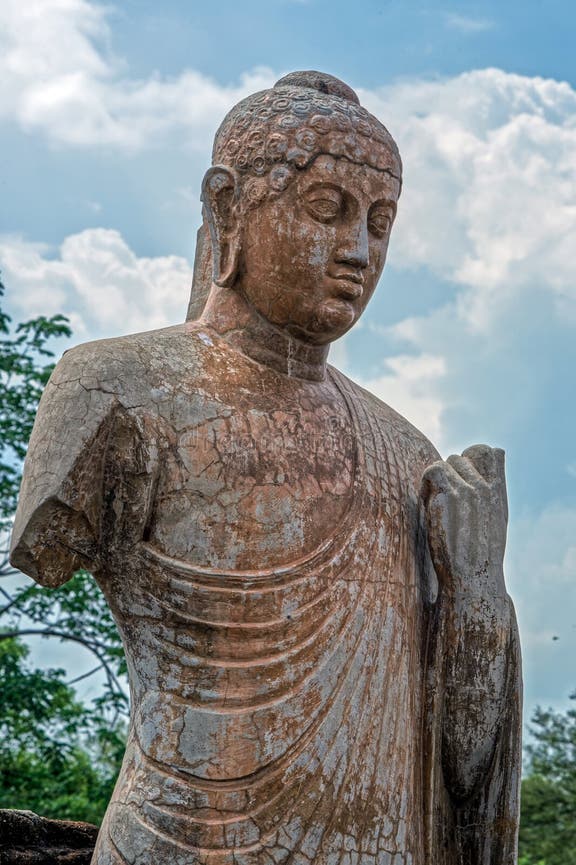
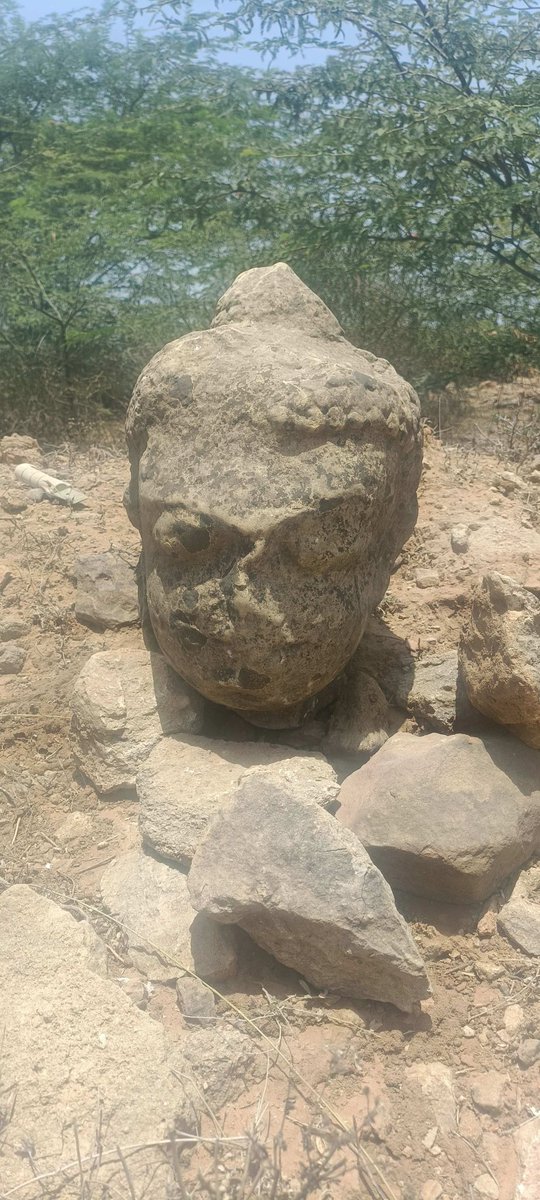
The Buddha's head, possibly Kshatrapa or Gupta period, near Dwarka, Saurashtra region.
I have been seeing it in this condition for almost 20-25 years, @ASIGoI is in totally neglected mode.
Photo credit: Myself.
11
81
390
20,106
Jun 13
Jain and Buddhist history is authentic and well-documented through extensive archaeology, inscriptions, and literary traditions spanning centuries. They do not need such fabricated or exaggerated claims.
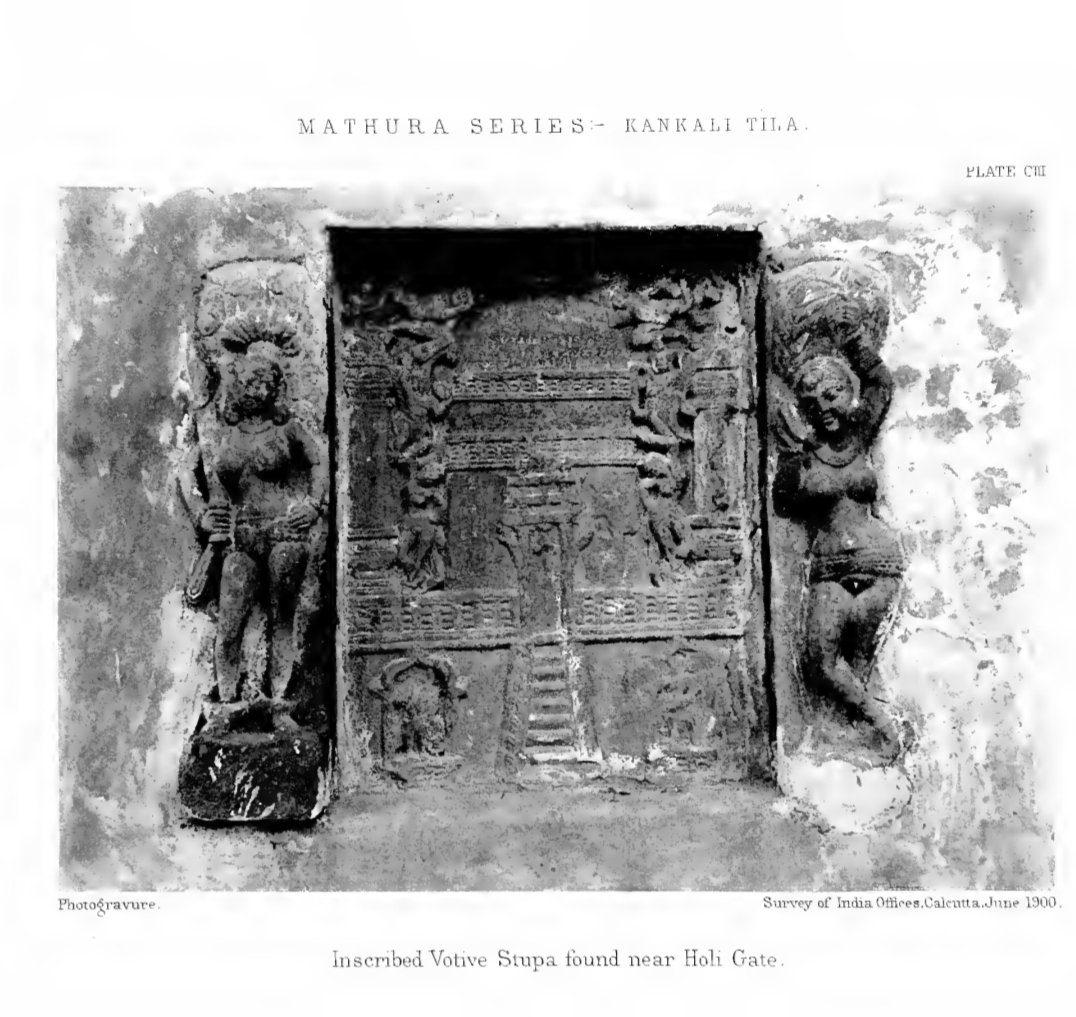
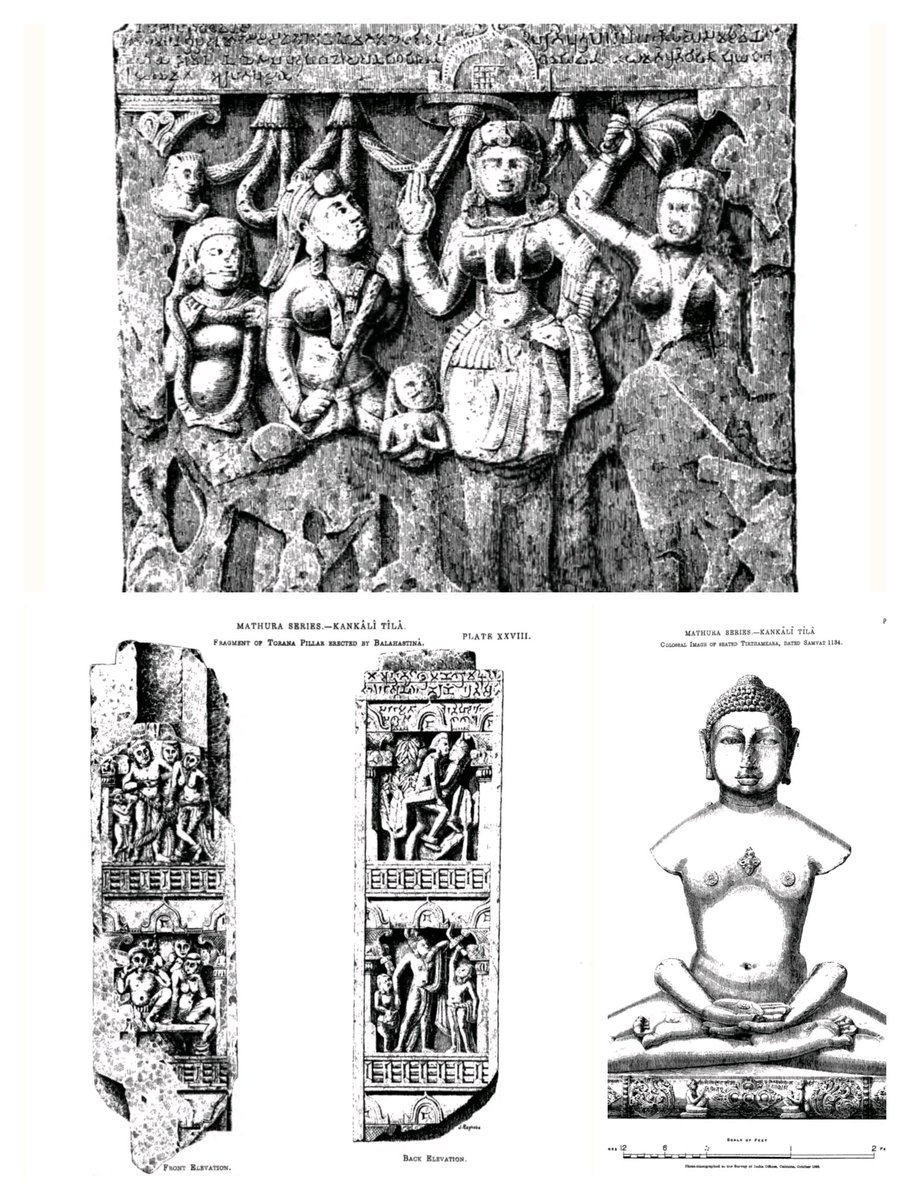
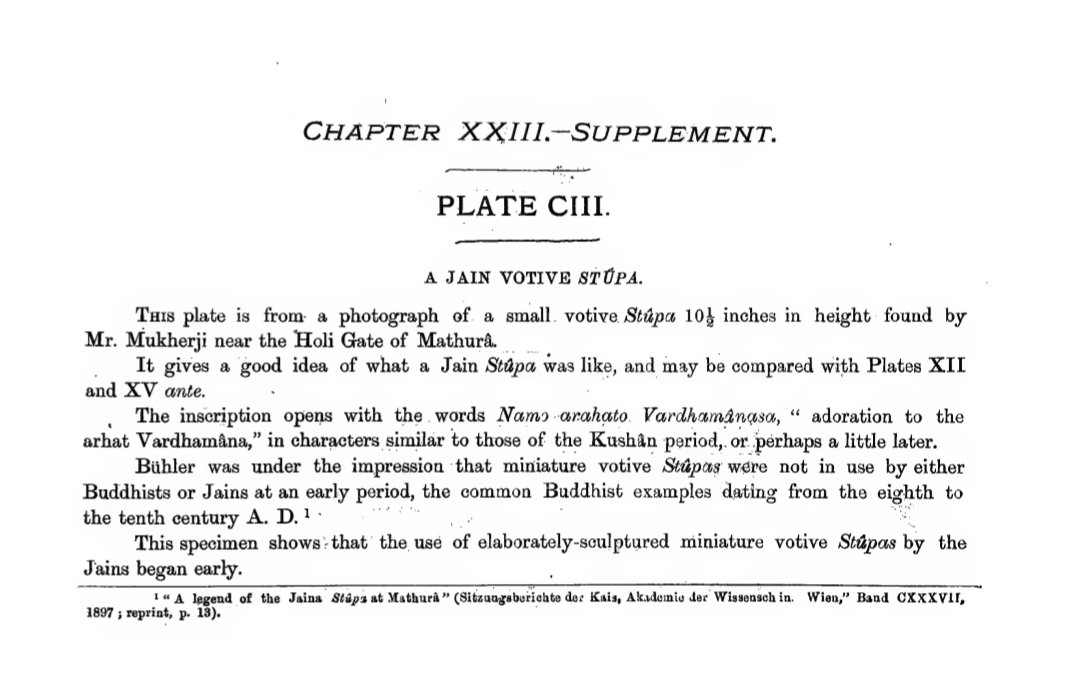
The material from Kankali Tila in Mathura is indeed valuable and shows a long and rich history of Jain presence there, but it is not 3000 years old. The attached screenshot is from Vincent A. Smith’s scholarly book The Jain Stūpa and other Antiquities of Mathurā (1901), which describes a small Jain votive stūpa (just 10½ inches high) found near the Holi Gate.
The inscription on it begins with “Namo arahato Vardhamānasa” in characters similar to those of the Kushan period (1st–3rd century CE), or perhaps a little later.
Smith clearly notes that this shows early use of such miniature votive stūpas by Jains, but still firmly places it in the early historical period, not in the Harappan era.
Mainstream archaeology dates the important Jain remains, sculptures, and ayagapatas from Kankali Tila roughly from the 2nd century BCE to the 12th century CE. This already represents many centuries of continuous Jain activity and artistic achievement at Mathura a heritage that stands strong on its own verified evidence. There is no archaeological support for a direct link to Harappan culture or for dating these artifacts to 3000 years ago.
Traditional beliefs can be respected, but physical evidence and paleography must guide historical claims. Exaggeration only weakens the credibility of genuine history.
Jun 13

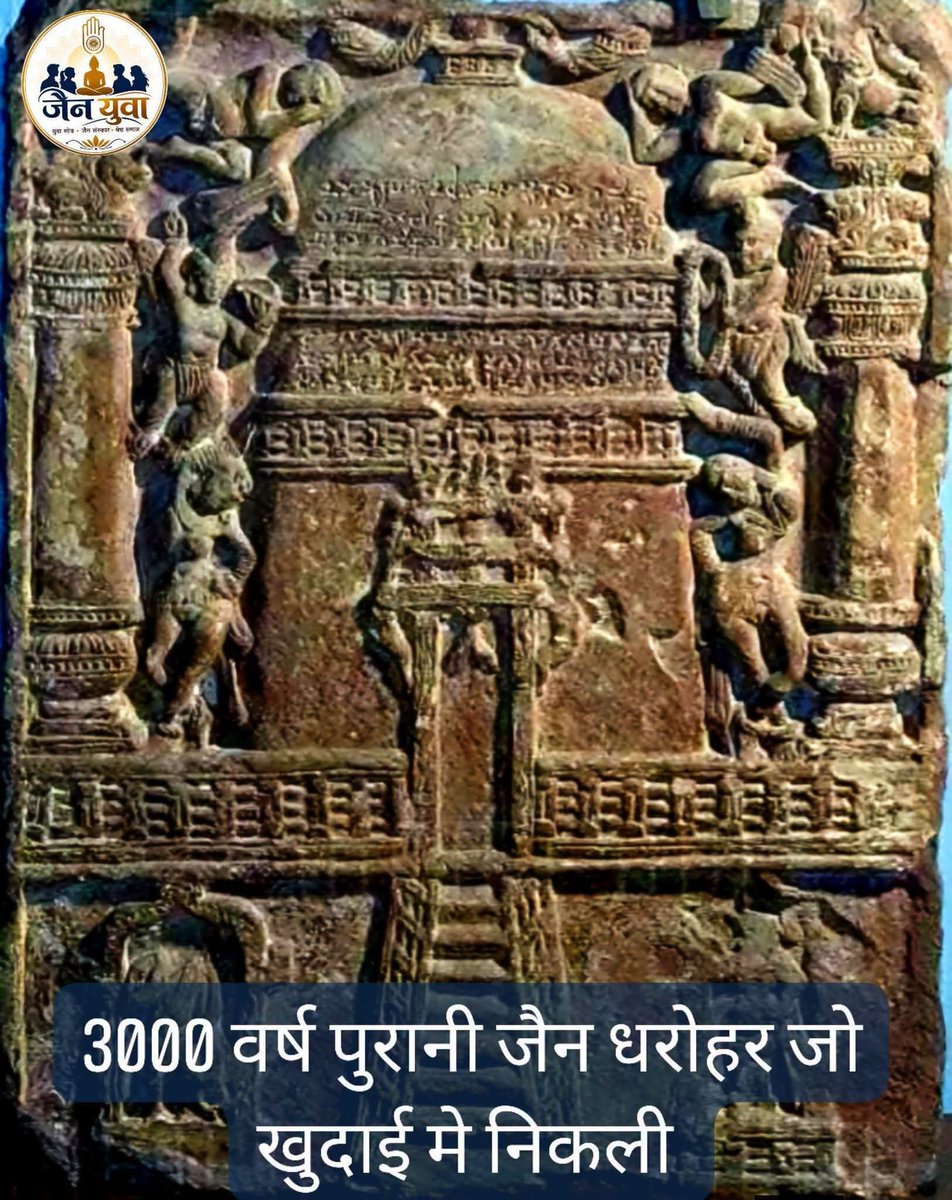
3000 वर्ष से भी अधिक प्राचीन जैन स्तूप ।
मथुरा कंकाली टीला से प्राप्त पुरातत्व विभाग को यहां 600 से अधिक अवशेष प्राप्त हुए हैं।
हमें प्राचीन भारतीय सभ्यता,संस्कृति और सामाजिक व्यवस्थाओं के इतिहास की वृहद जानकारियां प्राप्त होती है । जो हमें हड़प्पा संस्कृति से सीधे जोड़ती हैं।
9
9
47
1,124
Jun 13
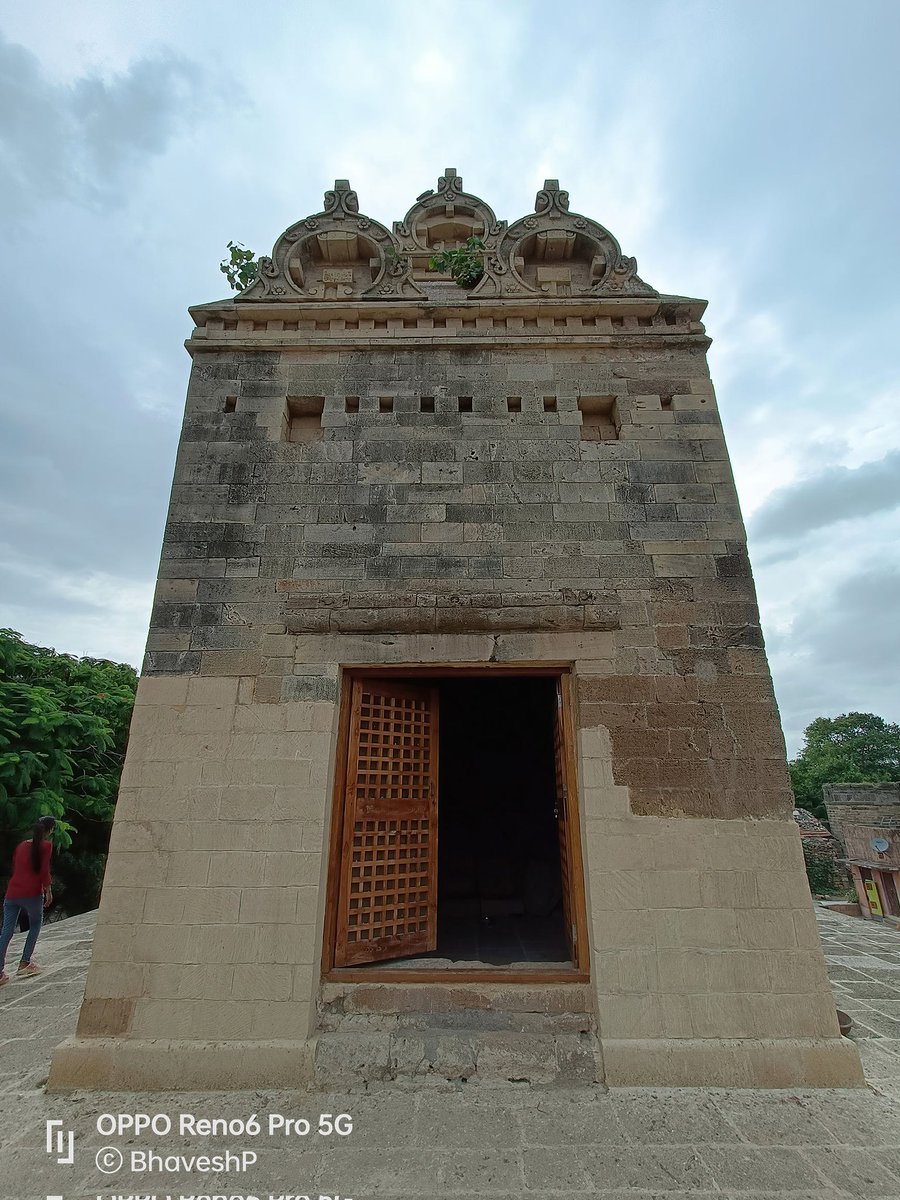
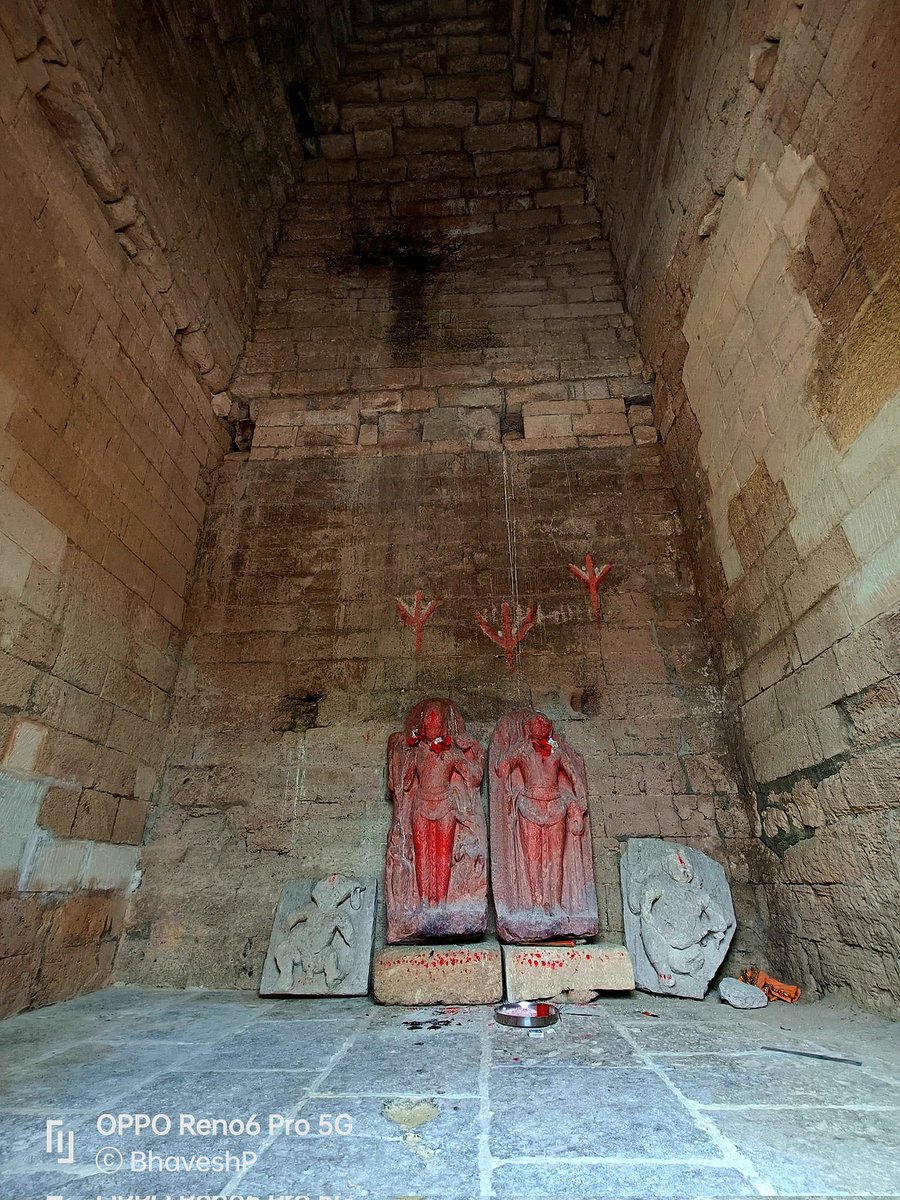
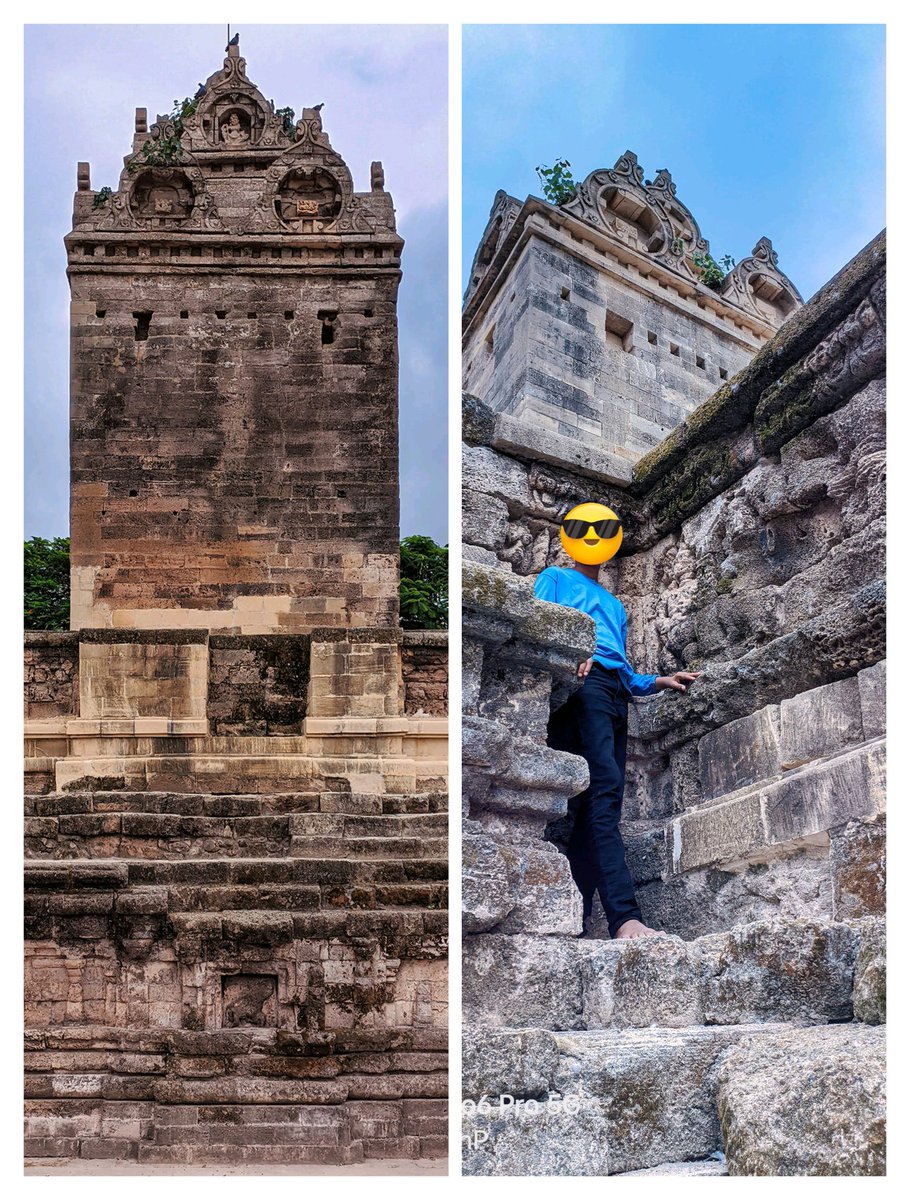
Tucked away in Jinavari village near Jamnagar, Saurastra stands this small, unassuming square shrine just 10.9 feet inside, 23 feet high, with plain walls that suddenly curve into a striking stepped pyramidal śikhara.
Built in the 5th–6th century during the Maitraka dynasty, it is one of the oldest surviving stone temples in Gujarat and a rare pre-Caulukyan masterpiece.
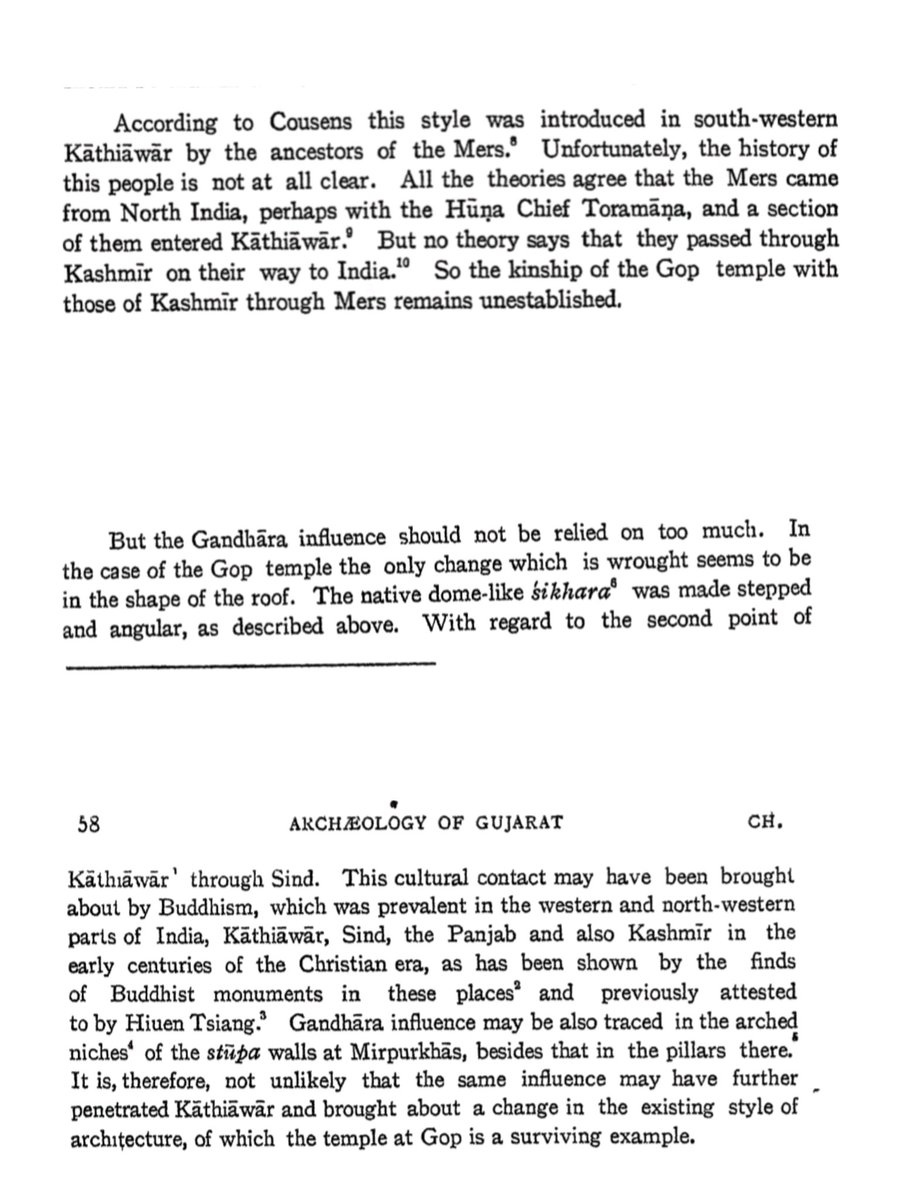
Even more fascinating: according to archaeologist Cousens, this unique style was likely introduced to southwestern Kathiawar by the ancestors of the Mer community of Saurastra-Kathiawar.
Its bold use of Buddhist-Gandhara architectural elements caitya windows, corbelled hollow roof, and angular stepped spire seamlessly blended into a Hindu temple. They took the best from Buddhist cave and stupa traditions and created something new that later flowered into the grand Solanki-Cãulukyan style.
Small in size, massive in significance. Gop quietly proves that Indian temple architecture has always been about fearless innovation and cultural synthesis.
Photo credit: BhaveshP by @OPPOIndia
7
27
801
Jun 12
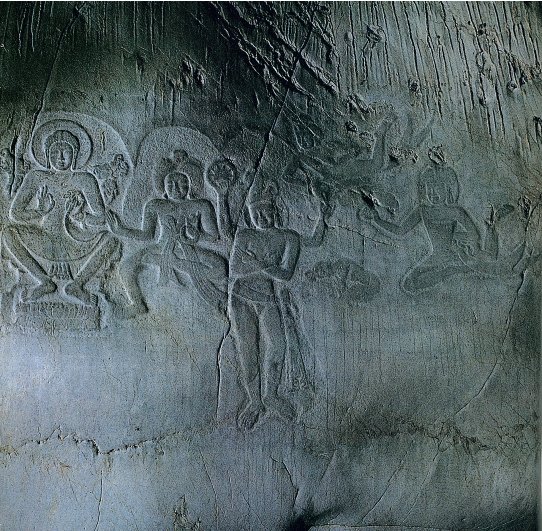
The seventh-century rock-cut relief in the cave interior at Tham Phra Phothisat, central Thailand, is the most spectacular demonstration of this phenomenon:
An enthroned Buddha is seen preaching to the Brahmanical gods Siva and Visnu, both of whom gesture submission as they receive instruction in Buddhist dharma.
This scene illustrates the "Indianization" of Southeast Asia, where Indic religious ideas were adopted and synthesized with local traditions.
4
16
90
1,958
Jun 11
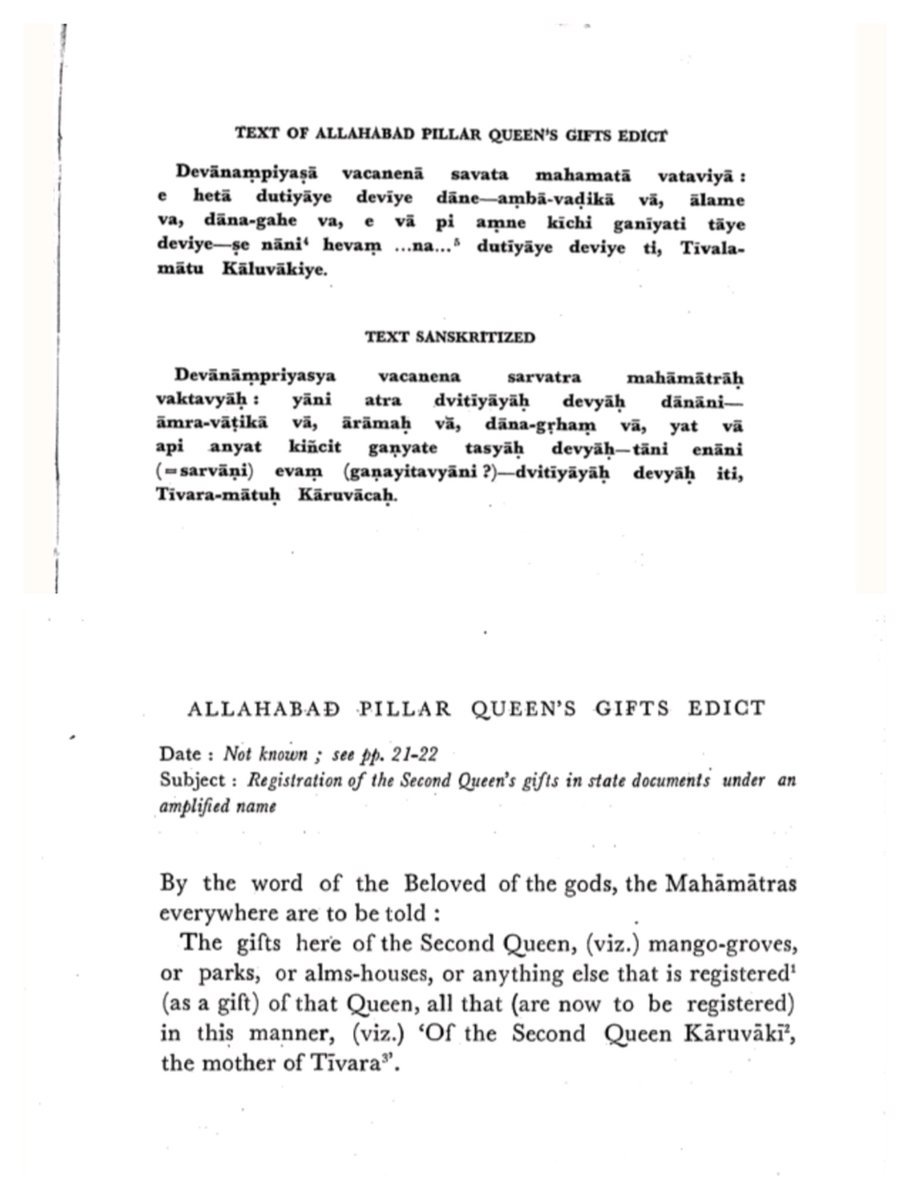
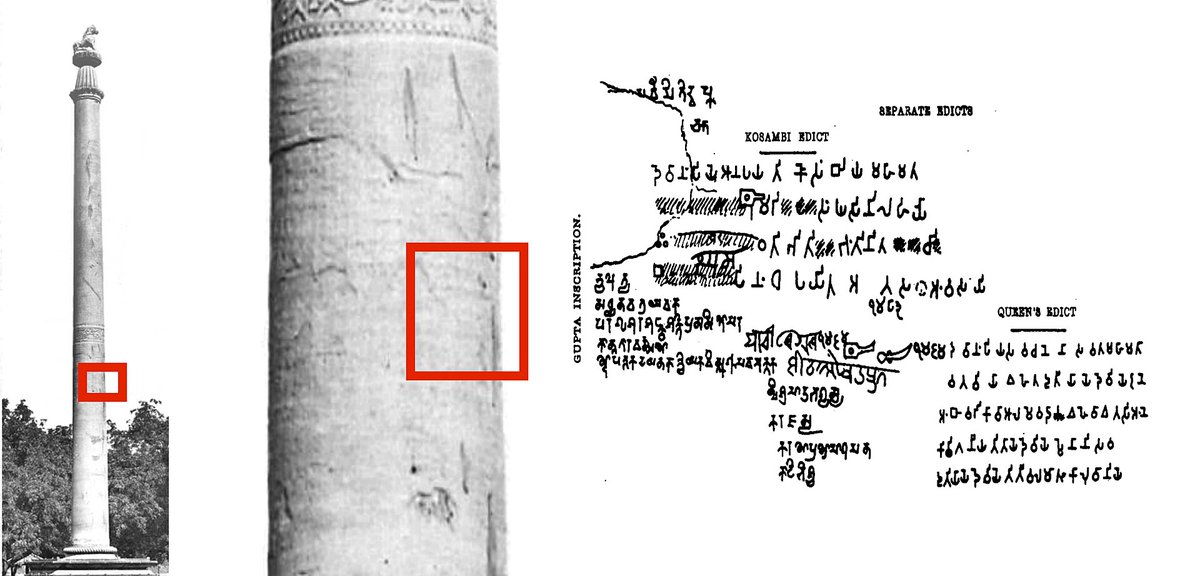
Asōka’s Queen: The Only Inscription Dedicated to His Queen.
Inscribed on the Allahabad Pillar (Prayag) Among the hundreds of rock and pillar edicts of Emperor Asōka (268–232 BCE), the name of any of his queens appears only once in this unique inscription.
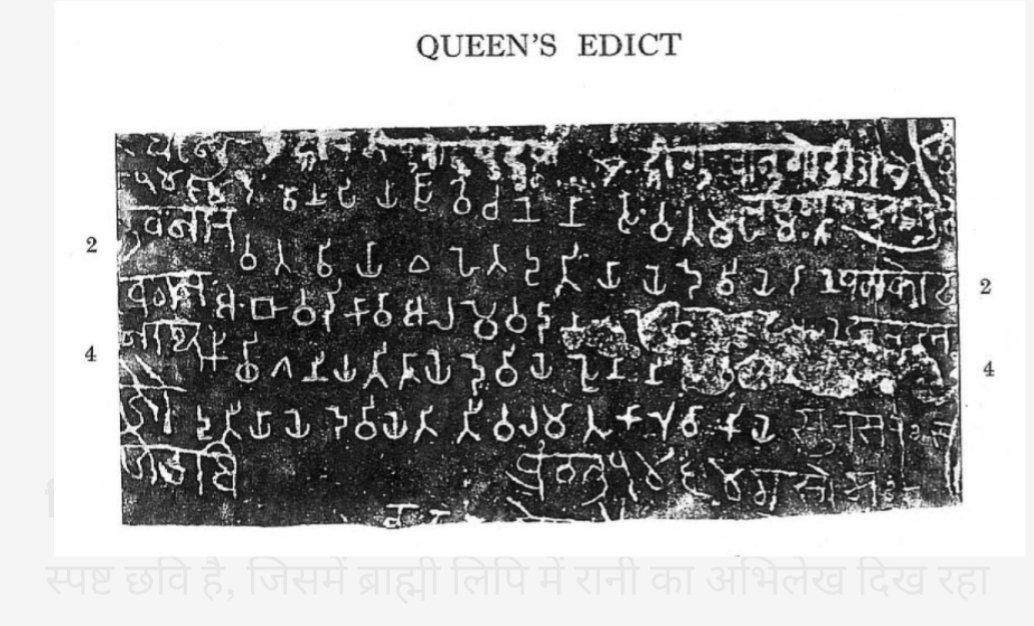
Carved on the lower portion of the Allahabad Pillar, this edict is known as the Queen’s Gifts Edict.
Devānampiyasa vacanena savata mahāmātā vaktavyā :
E heta dutiyāye deviye dāne ambā-vaḍikā vā, ārāme vā, dāna-gahe vā, e vā pi aṃne kiṃci gaṇiyati tāye deviye tāni hevaṃ dutiyāye deviye ti,
Tīvala-mātu Kāruvākiye.
“By the word of the Beloved of the Gods, the Mahamatras everywhere are to be told: Whatever gifts of the Second Queen whether mango-groves, or gardens, or almshouses, or anything else that is reckoned as a gift all these are to be reckoned as of that Queen, the Second Queen Kāruvākī, the mother of Tīvala.”
This is the only known historical mention of Asōka’s second queen, Kāruvākī, and their son, Prince Tīvala.
Asōka personally ordered that all charitable donations made by the queen mango orchards, pleasure gardens, rest houses, and other public welfare works must be officially recorded in her name alone, and not credited to the king or the state.
The edict reflects Asōka’s respect for his queen’s independent piety and his desire that her good deeds (punya) be properly attributed to her.
From the point of view of known history, this is the first recorded mention of a queen of any emperor in the Indian subcontinent.
2
16
49
1,405
Jun 11
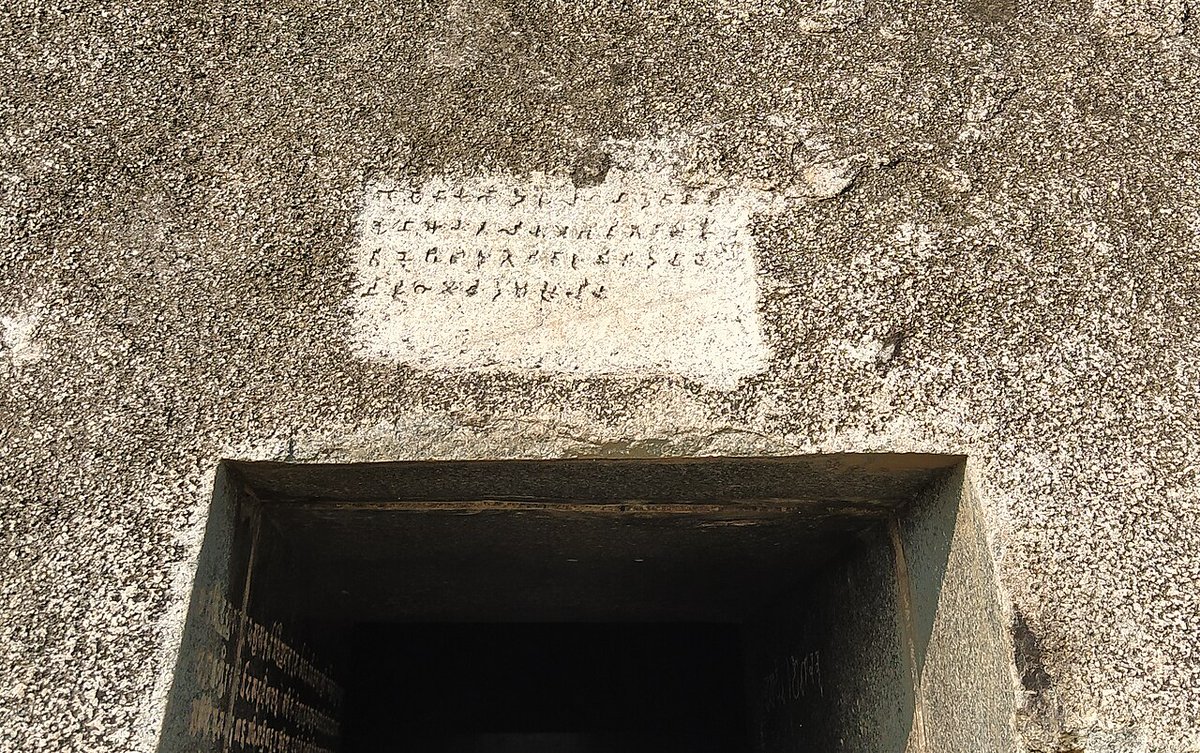
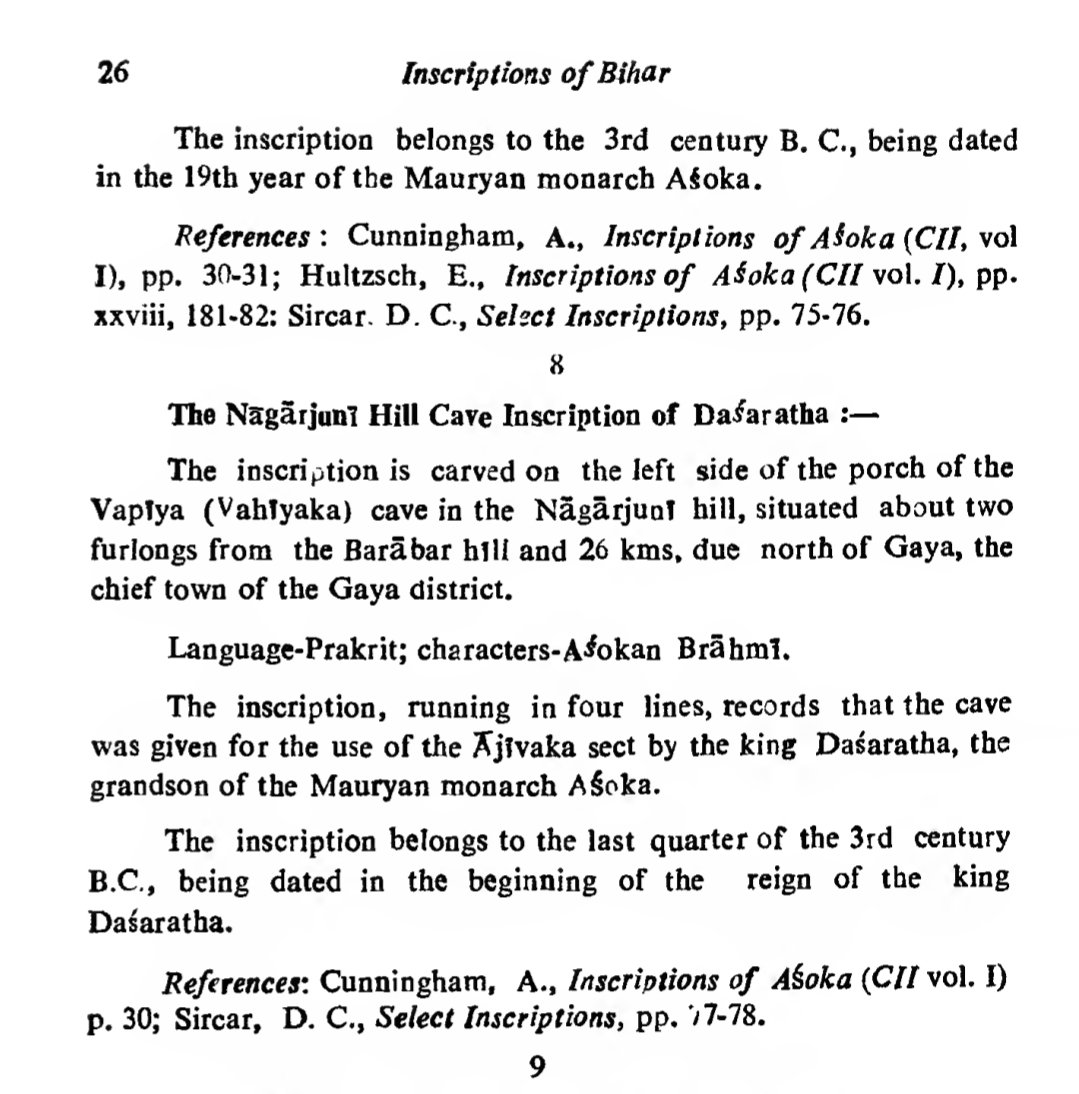
While Emperor Asōka is famous for his support of Buddhism, here's a fascinating inscription from his grandson that proves the Mauryan dynasty extended patronage to another major contemporary sect, the Ājīvikas.
Dasaratha’s Nagarjuni Hill Cave Inscription (3rd century BCE):
सिद्धं। देवानंपियेन दसरथेन राजिना महामात-पुता-भिसितेन एस वपियका-कुभा दानं आजीविकानं।
This is powerful epigraphic proof that the Mauryas actively supported multiple heterodox sects both Buddhists and Ājīvikas demonstrating remarkable religious pluralism and tolerance at the highest level of the empire.
This inscription also shows the organizational importance of the Buddhist and Ajivika religions of that time.
1
12
65
2,716
Jun 10
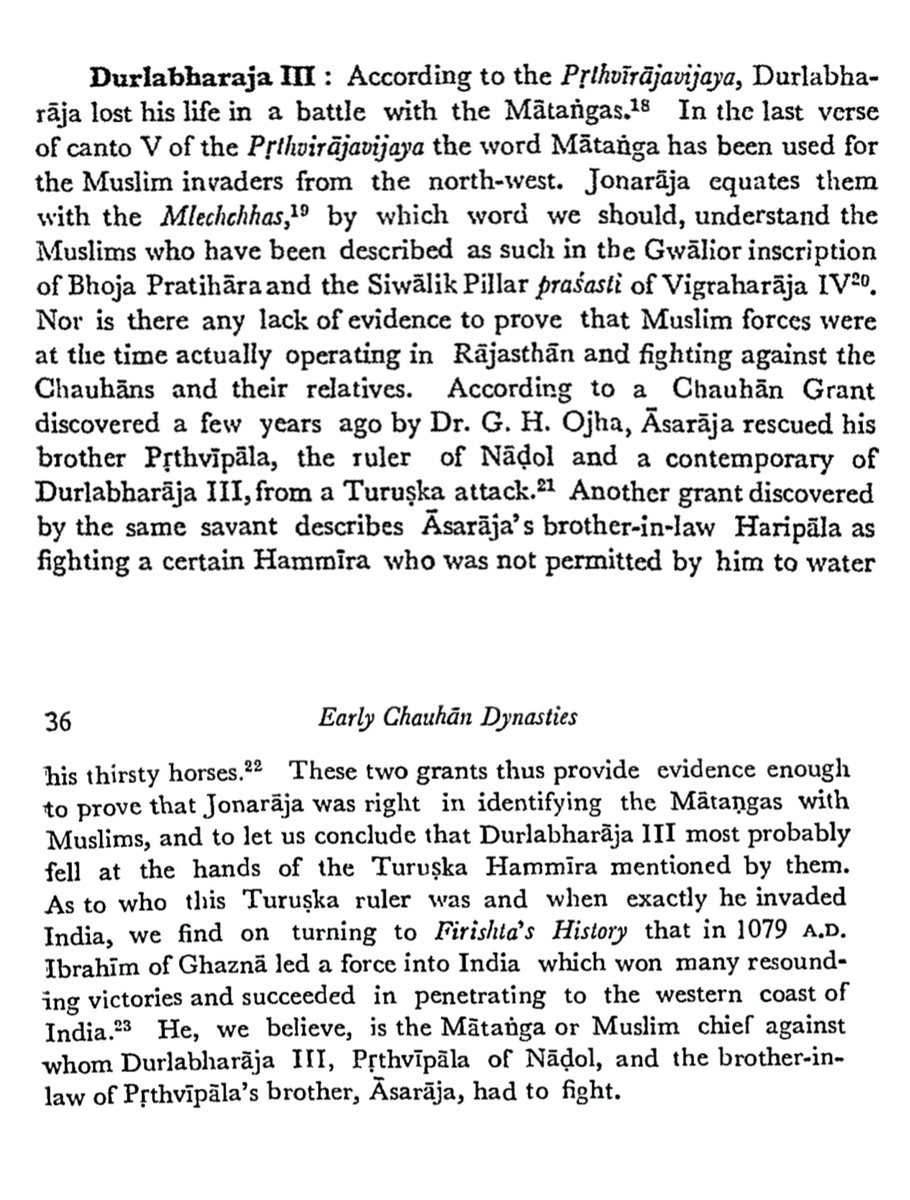
According to the Prithvirajavijaya, Chauhan ruler Durlabharaja III lost his life fighting the Mātangas the Muslim invaders from the North-West. The term Mātanga was used as a synonym for the Mlechchhas (Muslims), as also mentioned in other contemporary inscriptions.
Two important Chauhan grants discovered by Dr. G.H. Ojha provide strong evidence:
Asaraja rescued his brother Prithvipala of Nadol from a Turushka attack.
Haripala fought against a certain Hammira who was denied water for his horses.
Historians identify this invasion with Ibrahim of Ghazna’s campaign in 1079 AD. This incidence marks one of the early resistances by the Chauhans (Rajputs) against the expanding Muslim invasions in Rajasthan.
4
13
576
Jun 10
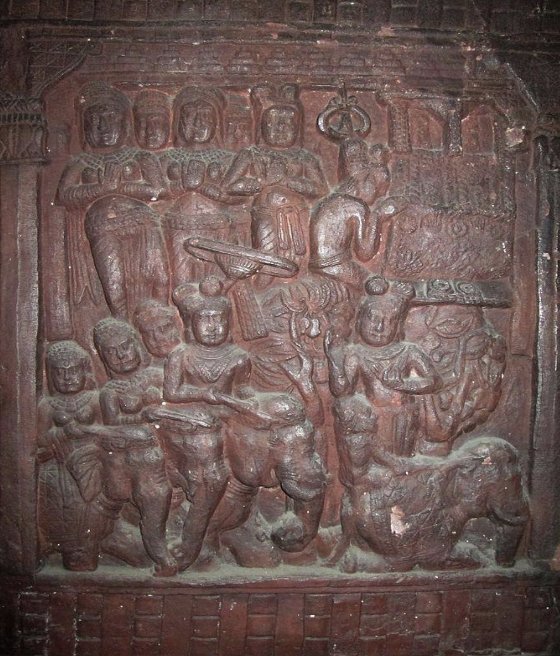
This relief narrates the story of the Haryanka ruler’s visit to the Buddha in four scenes.
In the lower left corner, Ajatashatru and his wives are going forth on elephant back to seek out the Buddha. To the right, Ajatashatru is dismounting from his elephant in Jivaka’s mango grove (Jivaka amravana).
The left rear of the panel shows the king and his queens standing with hands folded in adoration at nighttime. The last scene to the right rear depicts Ajatashatru kneeling in veneration before a pair of footprints (buddhapada), a throne (asana) and a parasol (chhattra).
The label inscribed sideways along the pilaster enclosing the panel on the right says "Ajatasatu Bhagavato vandate"
To those claiming Ajatashatru is just a Buddhist myth. The Bharhut Stupa pillar (2nd century BCE) literally says:
“Ajatasatu Bhagavato vandate”
He was a real 5th-century BCE Magadhan ruler and contemporary of the Buddha.
#Archaeology doesn’t lie.
14
52
1,672
Jun 9
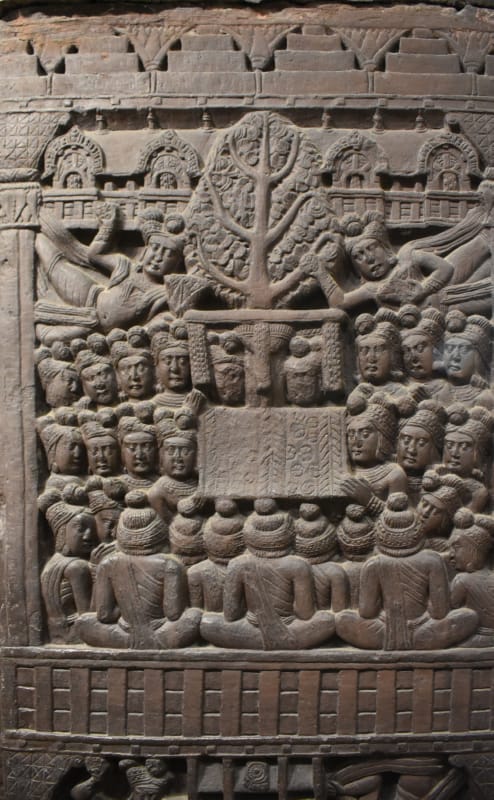
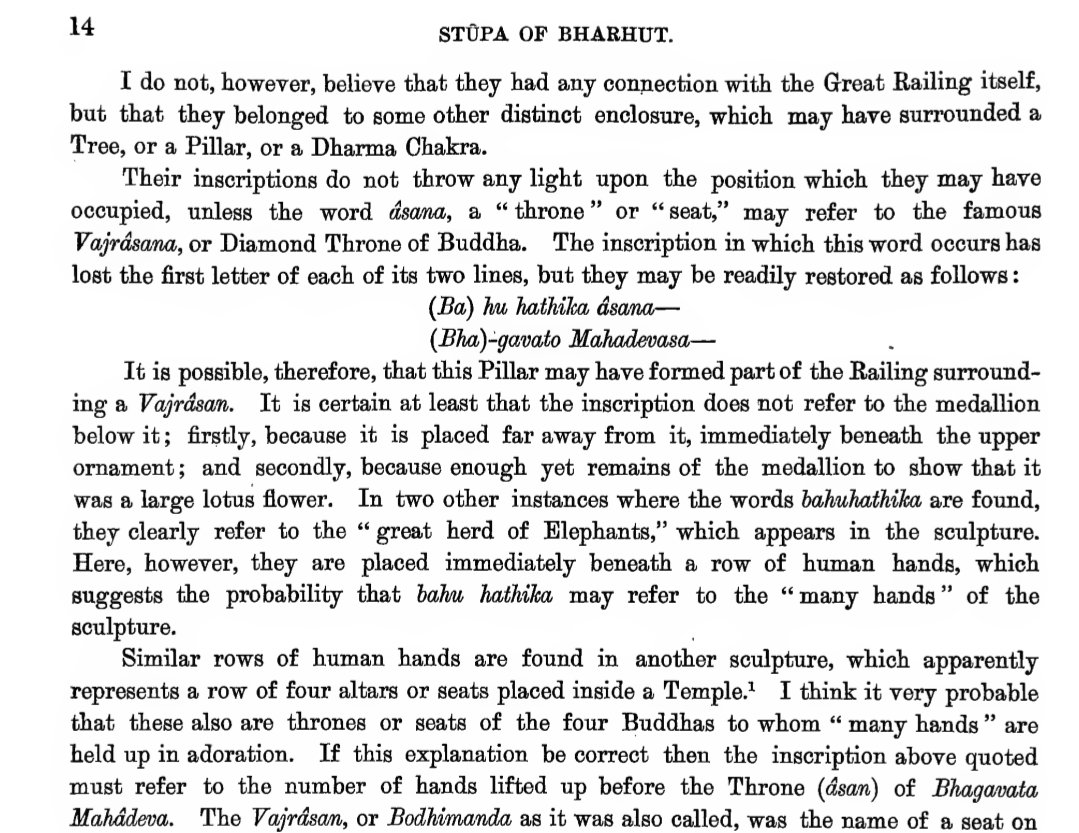
Ancient Inscription Addresses Lord Buddha as “Bhagavato Mahadevasa”!
On the railing of the Bharhut Stupa (2nd century BCE) in Madhya Pradesh, a remarkable inscription has been found: "Bahuhathika Asana Bhagavato Mahadevasa".
Means “The many-handed seat (or throne) of the Lord Mahadeva.” Here, “Bhagavato” is the common Buddhist title meaning “the Blessed One” or “Lord”, and “Mahadevasa” refers to the “Great God” or “Great Lord”.
In the early aniconic Buddhist tradition, Buddha was never shown in human form. He was represented by symbols like the empty Vajrasana, Bodhi tree, or footprints. Devotees raised their hands in worship hence “Bahuhathika” (many-handed).
Sir Alexander Cunningham, who excavated Bharhut in 1874, wrote in his book The Stupa of Bharhut (1879): “The inscription… (Ba)hu-hathika âsana — (Bha)gavato Mahadevasa.
It is possible, therefore, that this Pillar may have formed part of the Railing surrounding a Vajrâsan.”
This clearly refers to Lord Buddha, not any other deity. In ancient India, the title “Mahadeva” was also used respectfully for the Buddha, highlighting his supreme spiritual status.
8
24
89
3,484
Jun 8
Some are unemployed, some are suffering losses in business, some are troubled by neighbors, some by relatives, some by their daughter-in-law, some by their mother-in-law. All these frustrations are expressed in this situation.
These are all low-class (SC/ST/OBC), undereducated people, whom these hypocritical babas exploit to run their businesses. These people are termites, eroding our ancient civilization from within.
Jun 8

રાજકોટ
ધીરેન્દ્ર શાસ્ત્રીનું દિવ્ય દરબાર આવ્યું વિવાદમાં
આસ્થાના નામે અંધશ્રદ્ધા ફેલાવવામાં આવી હોવાના આરોપ
ધીરેન્દ્ર શાસ્ત્રીના હુંકાર બાદ ભૂત પ્રેત ધુણવા લાગ્યા
ભૂત પ્રેતના નામે અનેક લોકો ધુણવા લાગતા અફરા-તફરી
ધુણતા ધુણતા એક મહિલાએ સિક્યુરિટી, પત્રકાર અને ભક્ત પર કર્યો હુમલો
મહિલાએ પ્રેત આવ્યાના નામે કર્યો હુમલો
લોકો ધુણતા હતા અને સ્ટેજ ઉપરથી ધીરેન્દ્ર શાસ્ત્રી તમાશો જોઈ રહ્યા હતા
સોશિયલ મીડિયામાં વિડીયો વાયરલ થતા લોકોએ અંધશ્રદ્ધાના નામે ધુણવાની કરી ટીકા
4
160
May 29
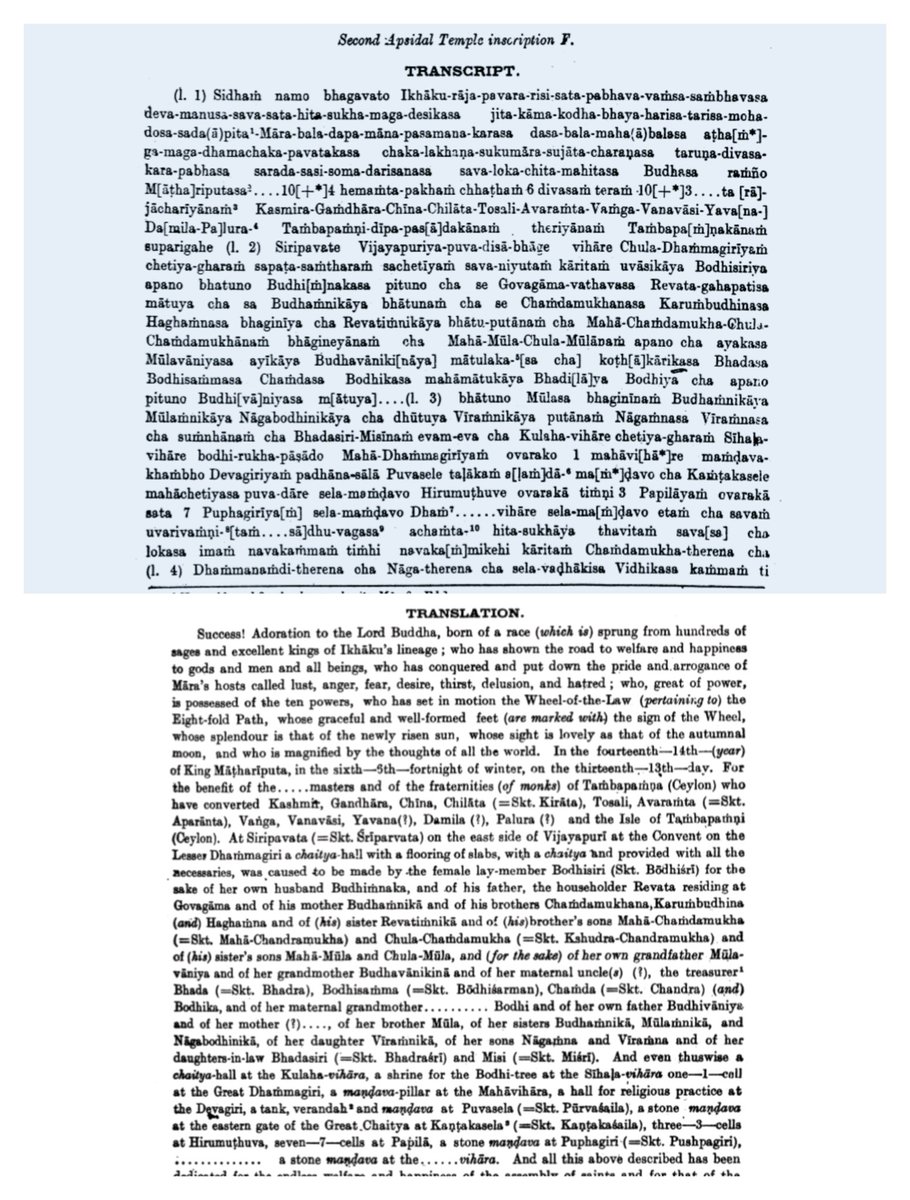
The Ikshvakus trace their lineage to the Buddha. Significantly, they did not include Rama, Dilipa, or Bhagiratha in this category. Here, the Buddha is addressed as Bhagavato Ikshvaku Raja.
Sidham:
Namo bhagavato Ikhaku-rāja-pavara-risi-satta-
pabhava-vamsa-sambhavasa deva-manusa-sava-sata-hita-
sukha-maga-desikasa.
3
9
58
2,151
May 28
Historically and textually misleading.
The posture being referenced actually belongs to the Sraman tradition, not broader Hindu scriptures. The description of the deity or Tirthankara (such as Lord Mahavira) attaining enlightenment or meditating in Mulabandhasana comes from canonical Jain scriptures, primarily the Acharanga Sutra and the Kalpa Sutra.
May 28

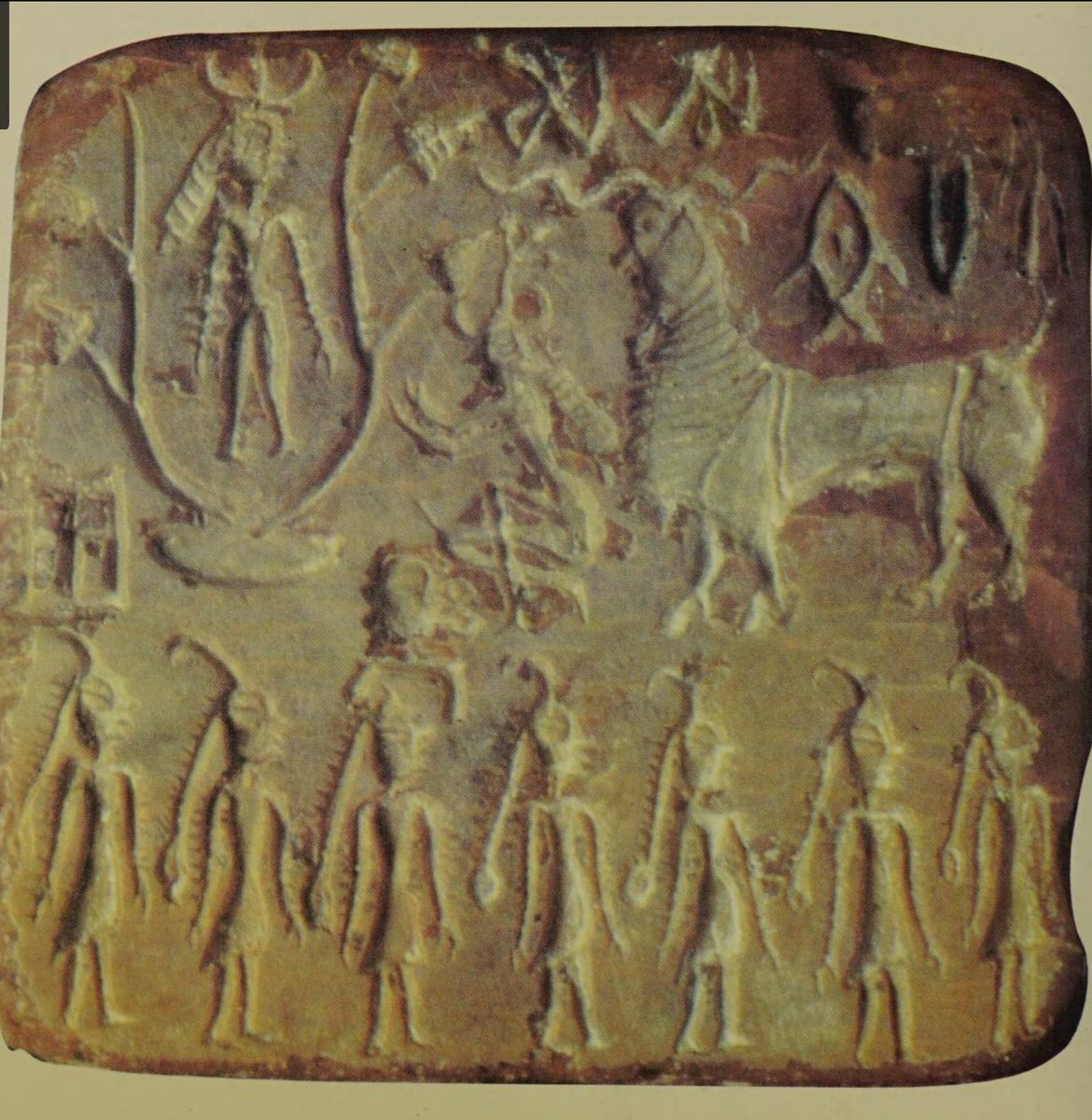
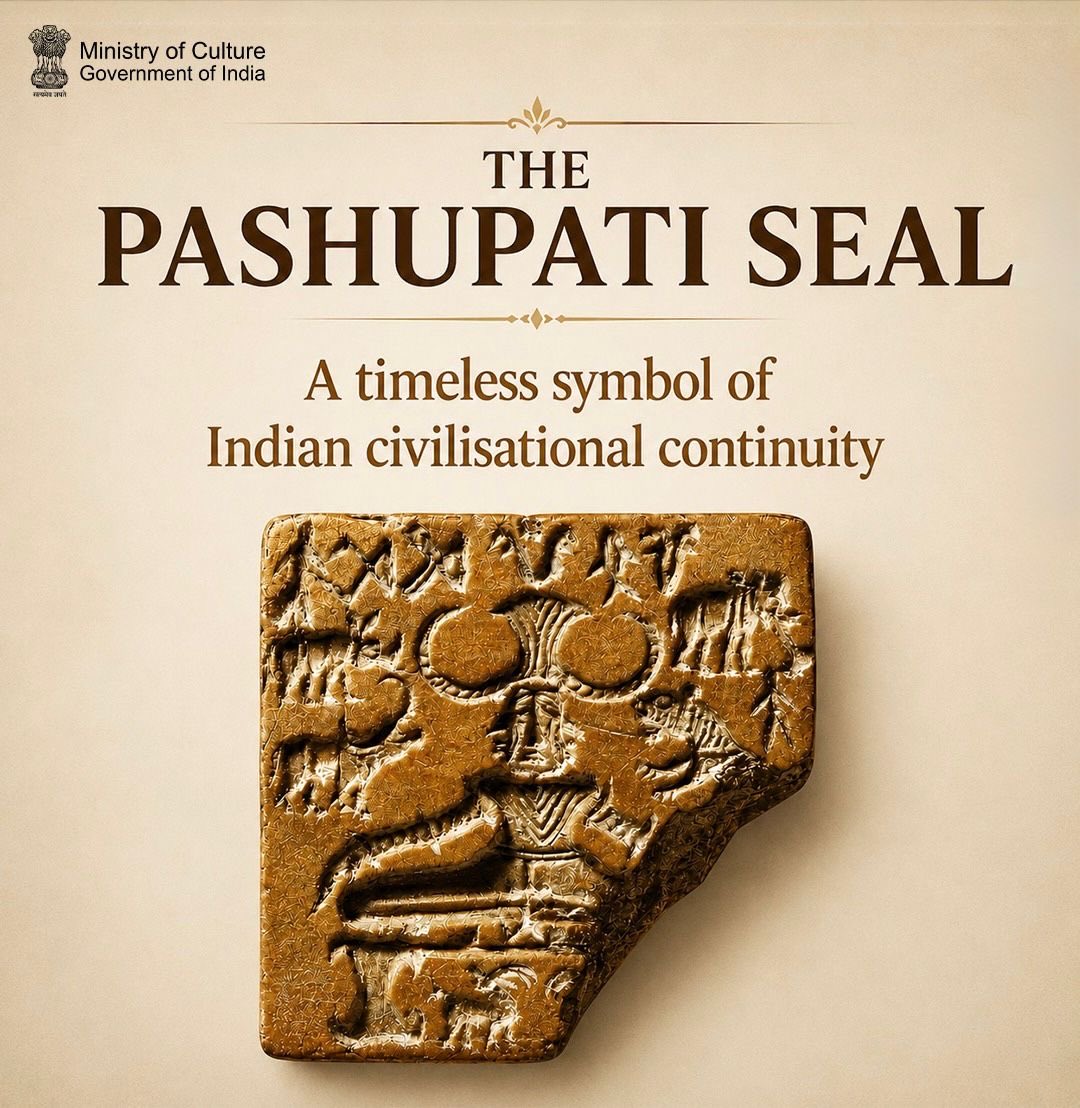
There is absolutely no doubt that this is indeed ‘Pashupati’, a form of Shiva. There are several evidences visible in the seal itself.
- The yogic posture of the deity, seated in Mulabandhasana, closely matches the descriptions found in Hindu scriptures such as the Kalpa Sutra.
- The symbolism resembling a trident-like headgear is significant. Similar iconographic elements can also be seen in later-period Shaiva sculptures.
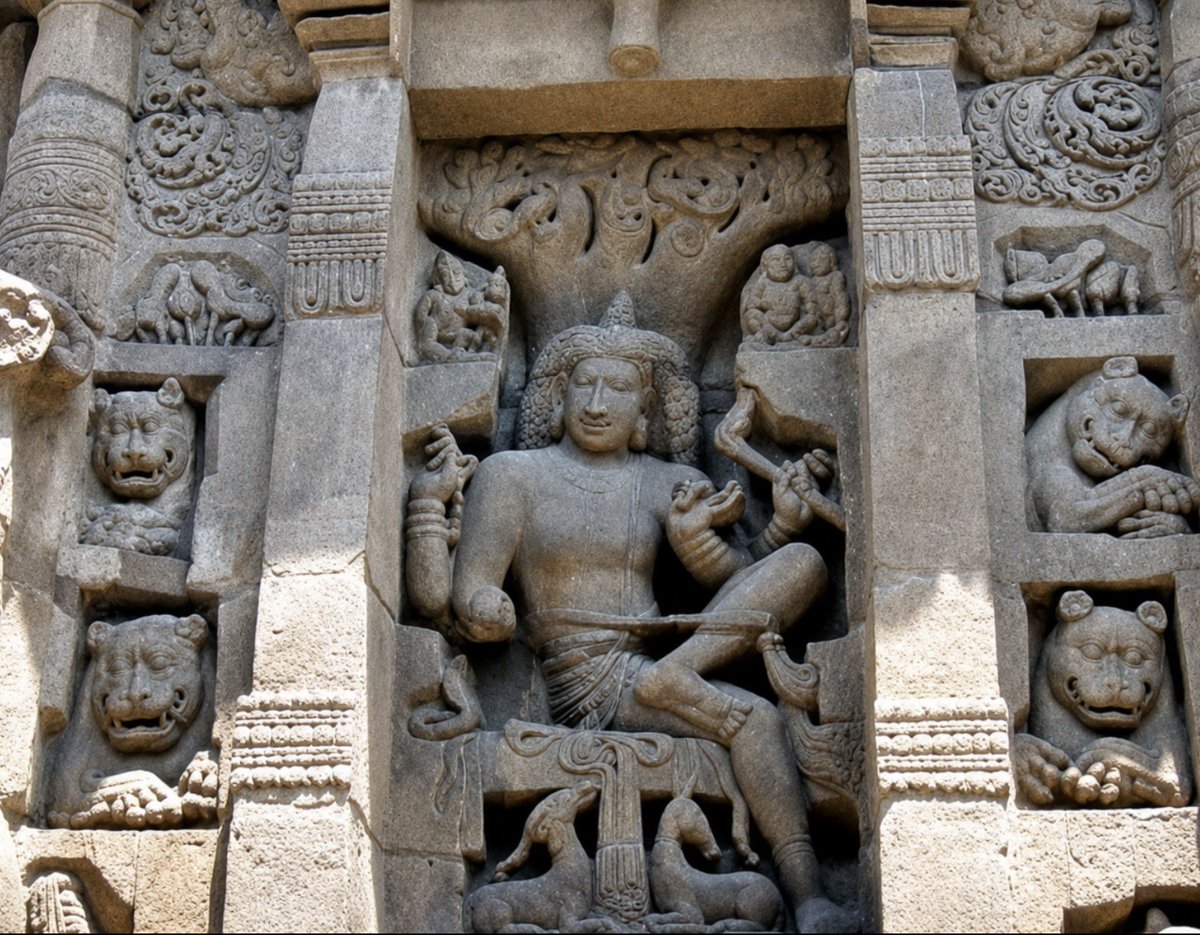
- A similar seal from the same civilisation depicts a similar deity along with the Saptamatrikas, providing further evidence for identifying the figure as Shiva. Comparable iconographic panels of Shiva with the Saptamatrikas appear in later Hindu temples across India.
- The deity is surrounded by animals, clearly aligning with the very meaning of the name Pashupati, “Lord of Animals.” Even in later Dakshinamurthy panels, Shiva is often depicted along with animals such as deer, tiger, and other creatures.
No matter how much certain Westerners attempted to deny or misinterpret it, this remains a powerful symbol of Bharat’s cultural continuity across thousands of years, exactly as observed by @MinOfCultureGoI
20
16
54
4,271
May 27
The Padmasana pose of yoga is originally a part of Buddhism.
May 27

still, you cannot reject the padmasana pose of yoga, which is only practiced in hindu worship.
49
25
116
6,539
May 27
Whatever opinion one may have about the seal's iconography, it always begins with Marshall's interpretation. Overall, the seal's primordial Shiva character is accepted." (But this is conjecture.)
But Doris Srinivasan's research of 1975–76 is considered the most authentic and influential, which strongly challenges the "Pashupati/Proto-Shiva" hypothesis propagated by Indian/Western historians.
Comparisons of the seal with the Kalibangan terracotta bull, the Mohenjo-daro horned mask, and the Kot Diji horned deity point to a divine buffalo-man or bovine deity, not the Vedic/Hindu Shiva.

One of the most powerful symbols of India’s unbroken civilizational continuity!
Discovered at Mohenjo-daro in undivided India this steatite seal, about 4,300-year-old, shows a seated figure in yogic posture (widely seen as Shiva-Pashupati) seated in Mulabandhasana, surrounded by animals.
While ancient sites may lie across modern borders, India remains the living custodian of this heritage. The yogic posture, Shaivite symbolism, and spiritual ethos seen in the Pashupati Seal continue to thrive in India’s temples, daily worship of Shiva, yogic traditions, and cultural life even today.
From the Vedic period to contemporary Bharat, this civilizational thread has remained alive and unbroken — deeply embedded in our philosophy, rituals, and collective consciousness.🇮🇳
#PashupatiSeal #IndusSaraswatiCivilization #LivingIndianHeritage
18
12
49
4,416
May 26
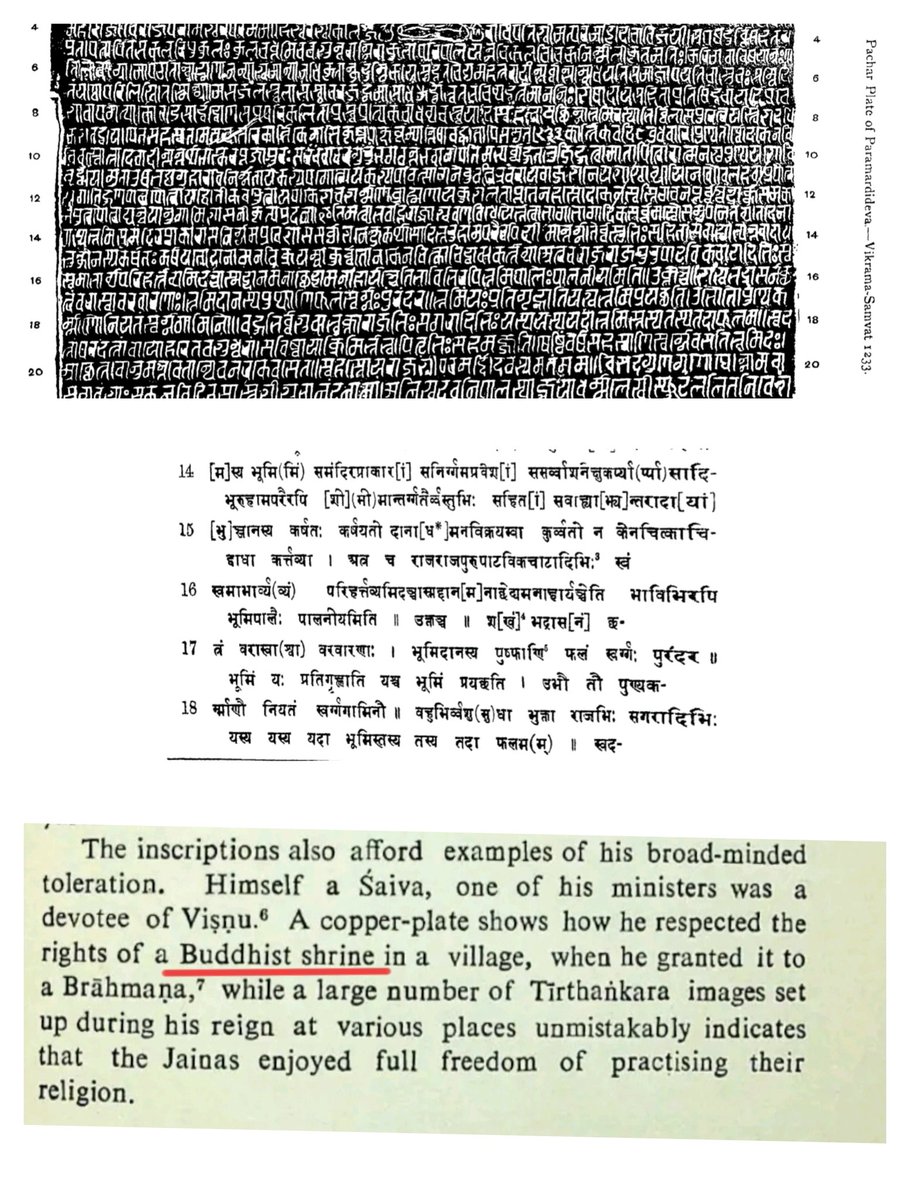
The Pachar Copper Plate Inscription, attributed to Paramardideva, the last prominent king of the Chandela dynasty, is associated with the Khajuraho region. It contains a rare mention of patronage of a Buddhist temple along with a Brahmin donation.
This copper plate is a land grant by the Chandela king Paramardideva (Parmal) to a Brahmin. The king mentions maintaining the rights previously granted to the Buddhist temple, reflecting his religious tolerance.
The king states that the earlier donation to the Buddhist temple will not be affected by this new Brahmin donation, adding that future kings should also maintain it.
Arthur Venis (editor of Epigraphia Indica Vol. X) and later historians drew this conclusion from an exception in the grant portion. R.K. Dikshit, citing the Pachar Plate, clearly states that Paramardideva, while donating a village to a Brahmin, respected the prior rights of the Buddhist shrine located in the village and preserved them as an exception.
Venis edited the original inscription, but the clear definition of "Buddhist shrine" is recorded in the most detail in R.K. Dikshit's book The Candellas of Jejakabhukti.
This is considered a major evidence of the religious tolerance of the Chandela kings towards Buddhists.
9
38
1,136
May 20
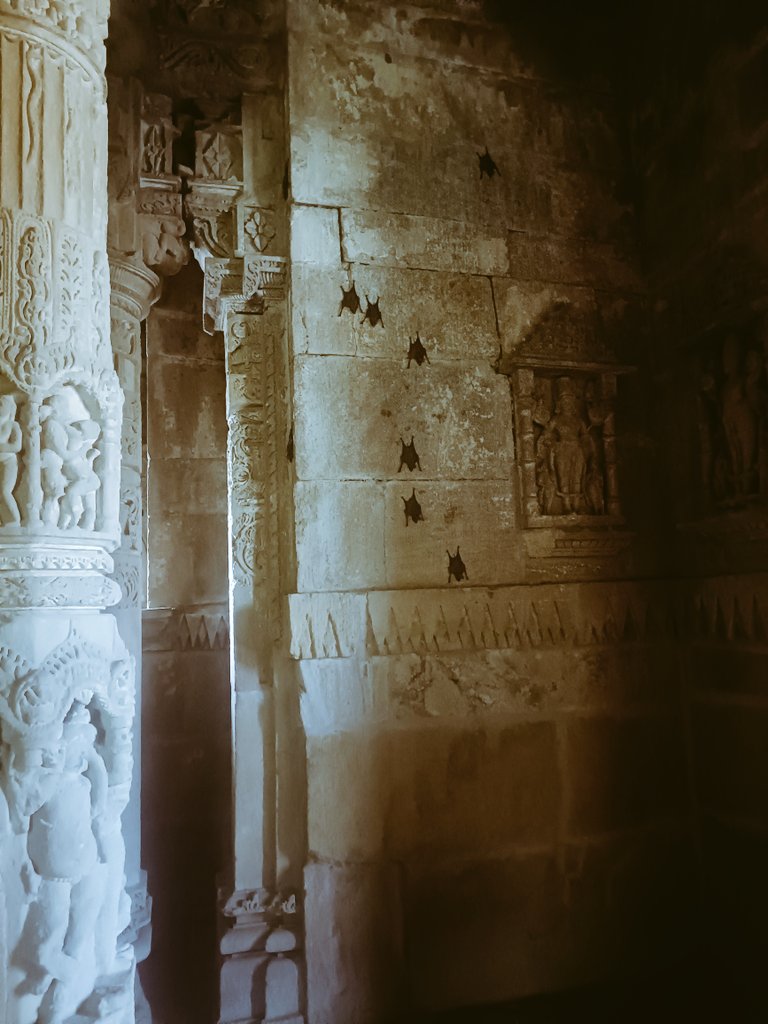
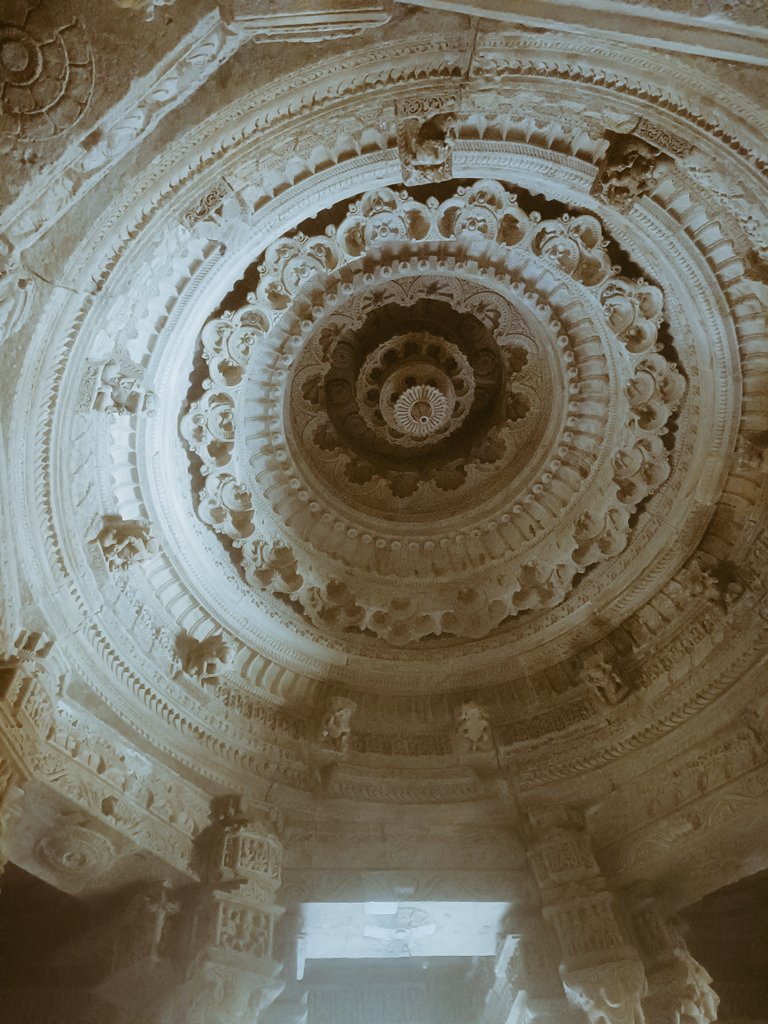
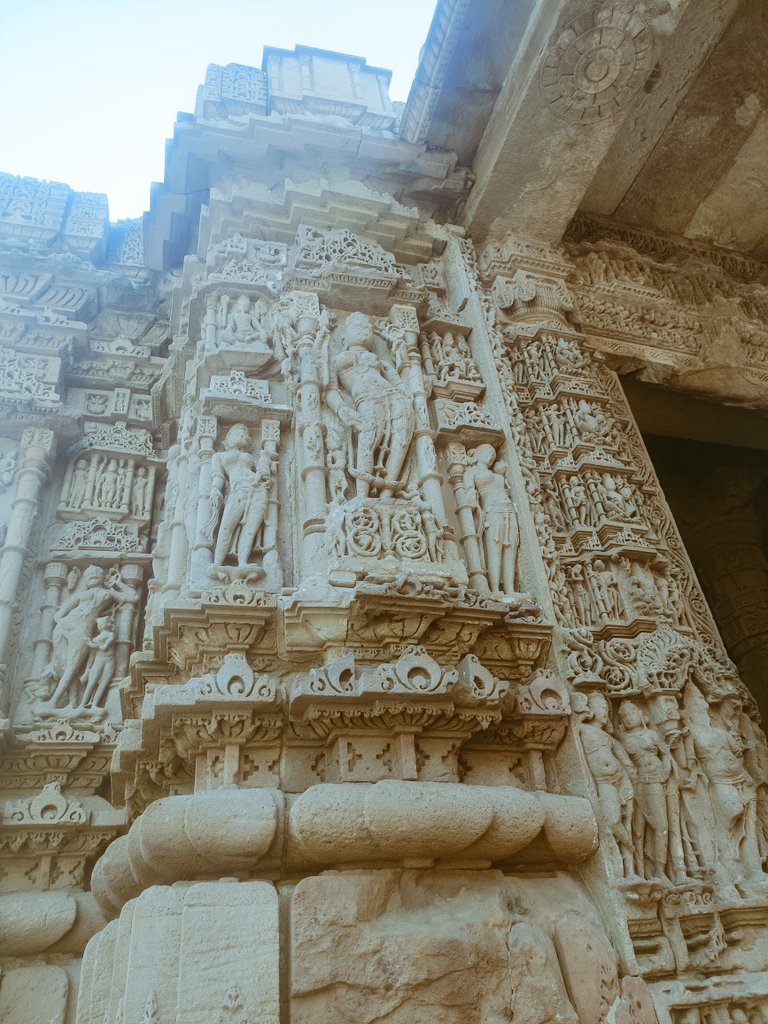
Bats and spiders have made the Sun Temple their home. The intricate carvings on the sculptures are fading, yet the @ASIGoI maintains this heritage site well.
Modhera Sun Tample, Gujarat,
Western Chalukyas (Solanki),
11th century CE.
1
3
14
387
May 19
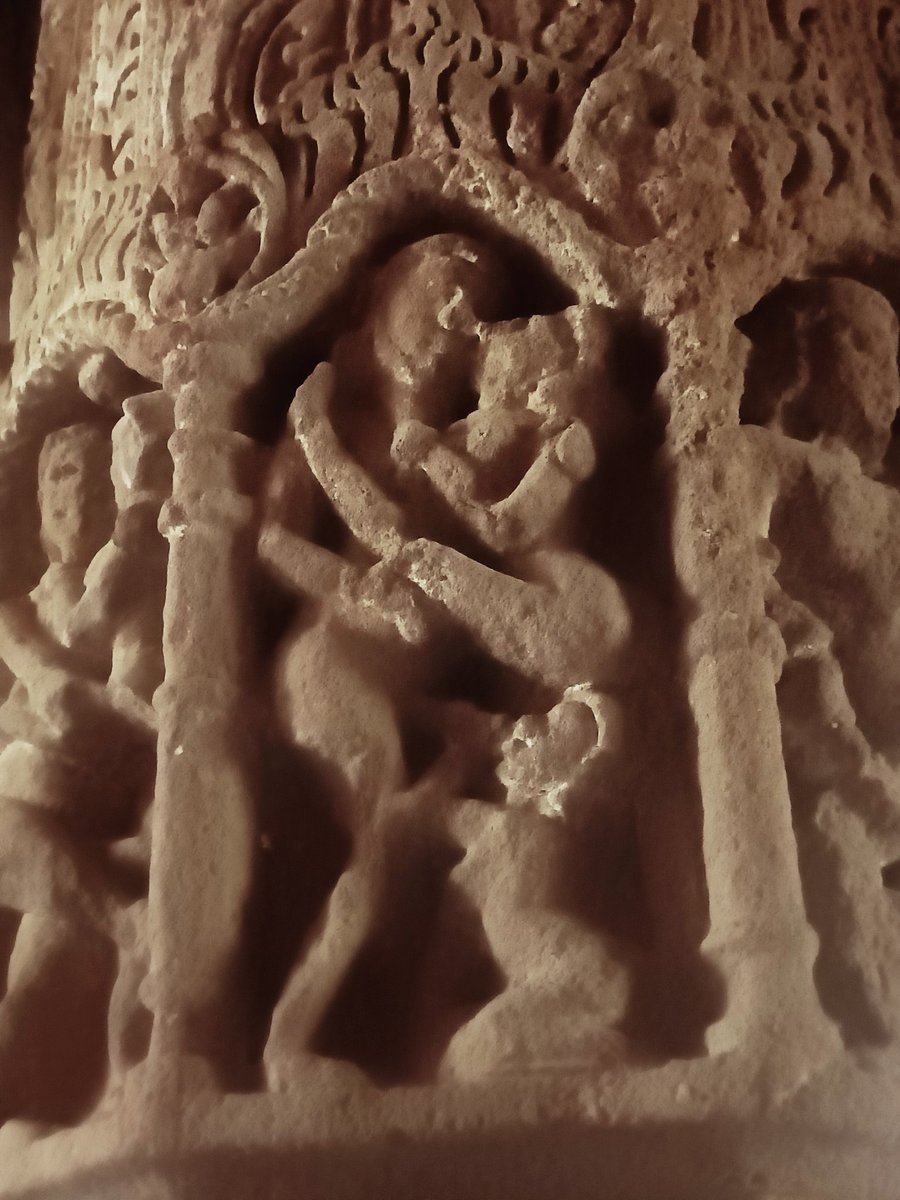
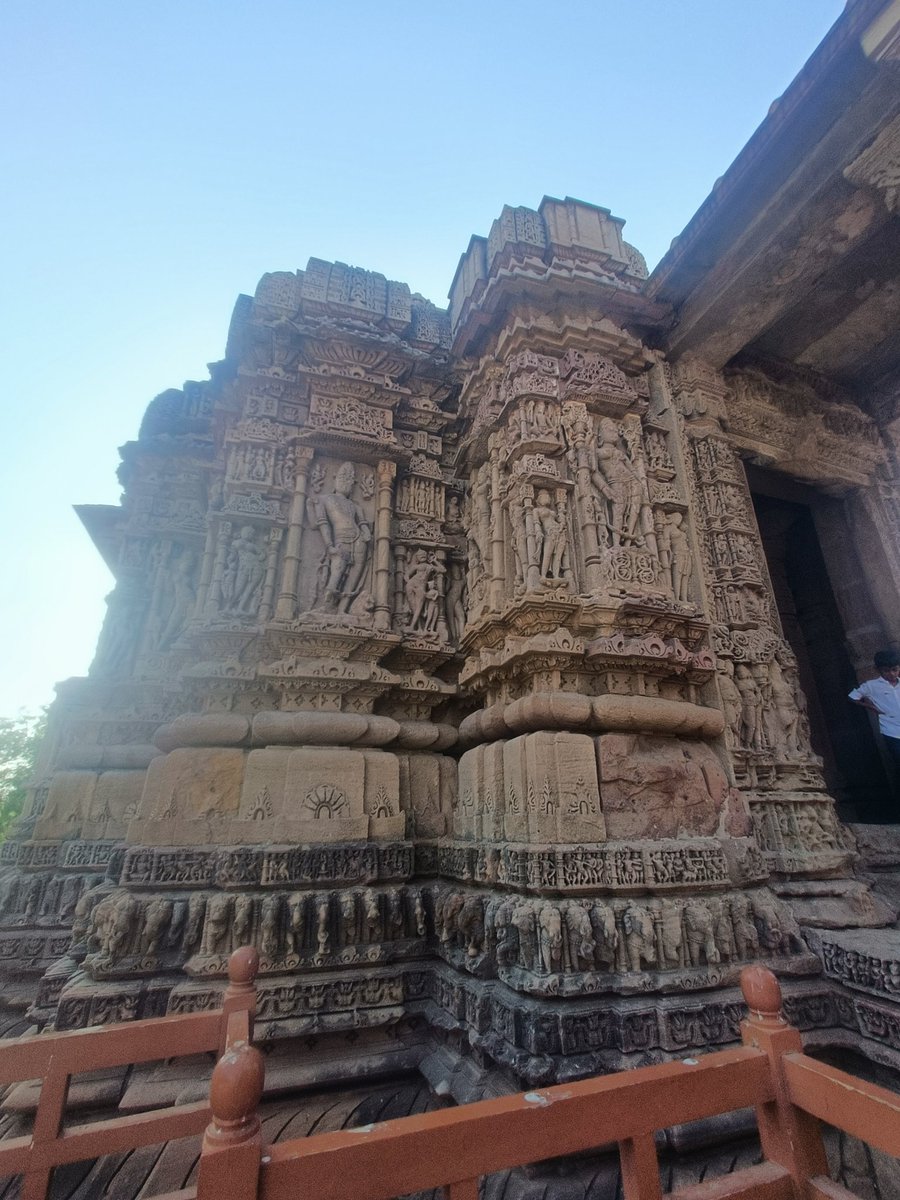
I recently visited the Modhera Sun Temple and saw some erotic sculptures modeled after those at Khajuraho. This may be a result of the exchange of art and culture at that time.
Built by Bhimdev I of the Solanki dynasty in 11th century, this temple dedicated to his deity, the Sun, is a remarkable example of art.

2
5
28
1,013
May 18
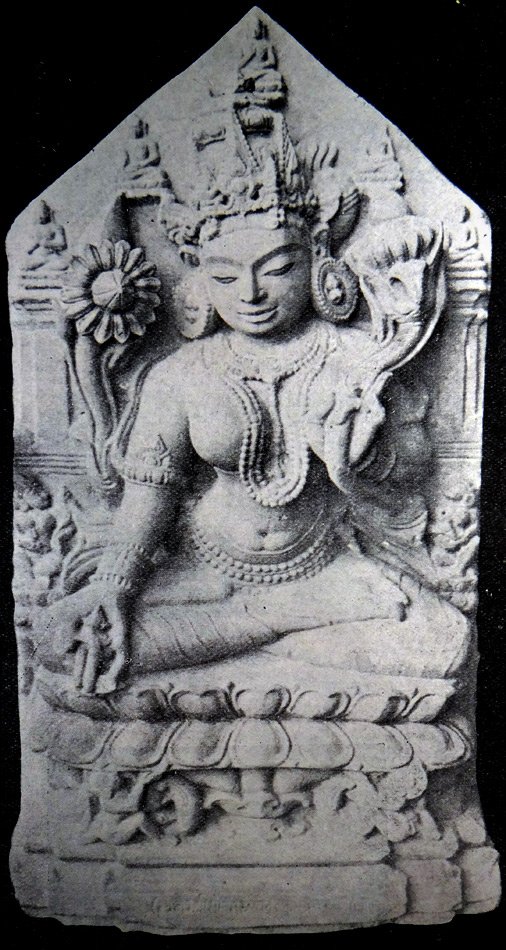
This statue of the Chandela-era Buddhist goddess Tara, found in Mahoba district in the Bundelkhand region, is made of red sandstone. It is currently on display at the Lucknow State Museum.
The statue is seated in the Padmasana posture on a lotus pedestal held by Gandharvas. The statue is seated in the Vajrasana posture, one leg crossed over the other. The left hand is in the Vitarka Mudra posture, and the right hand is in the Varada Mudra, holding a lotus, possibly a blue lotus. In the right hand, the statue is depicted holding an obscure object, possibly a Vajra.
The statue is adorned with ornaments commonly associated with Buddhist deities. The uppermost portion of the pedestal features five meditating Buddha figures in various postures. A woman is depicted seated to the goddess's left, but the identity of the statue on the other side remains unclear.
The pedestal bears an inscription from the 11th century. The goddess's physique is unparalleled, making Tara appear extremely beautiful and captivating.
This statue was gifted by Satan's daughter-in-law. This clearly shows that the Chandelas also provided opportunities for women to contribute as scientists in sculpture.
A brief inscription is inscribed on the statue's pedestal. Based on the use of the year patterns in the writing, the statue has been dated to the 11th century. The inscription reads as follows:
चित्रकर-श्री-सातनस्-तस्य व (') धूकस्य इयं (छ)।।

10
45
942
May 18
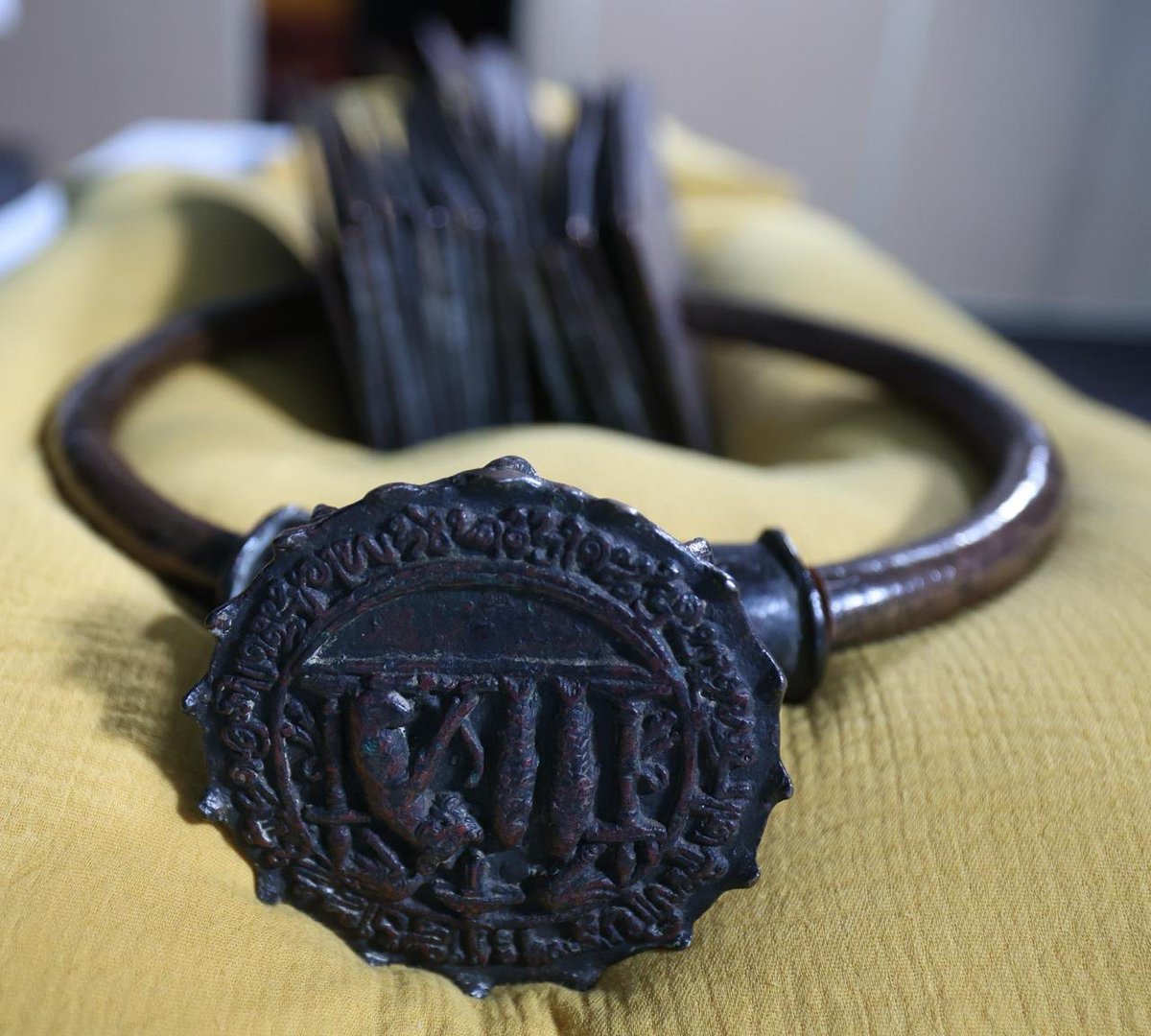
These 21 large and 3 small copper plates record land grants made by Rajaraja Chola I to the Chudamanivarma Buddhist Vihara in Nagapattinam, Tamil Nadu.
Rajaraja Chola verbally promised to give the income of the village of Anaimangalam to this monastery. His son, Rajendra Chola I, formally enshrined this on the copper plates. This Buddhist monastery was built in Nagapattinam by Sri Mara Vijayotunga Varman, king of the Srivijaya Empire (modern Indonesia/Malay).
The Chola kings supported the monastery, reflecting the religious tolerance of the time and maritime links with Southeast Asia.
The Sanskrit portion of the copper plates describes the Chola genealogy, while the Tamil portion mentions Rajaraja Chola's actions, specifically the granting of the village's income to the Buddhist monastery in his 21st year.
May 16

A joyous moment for every Indian!
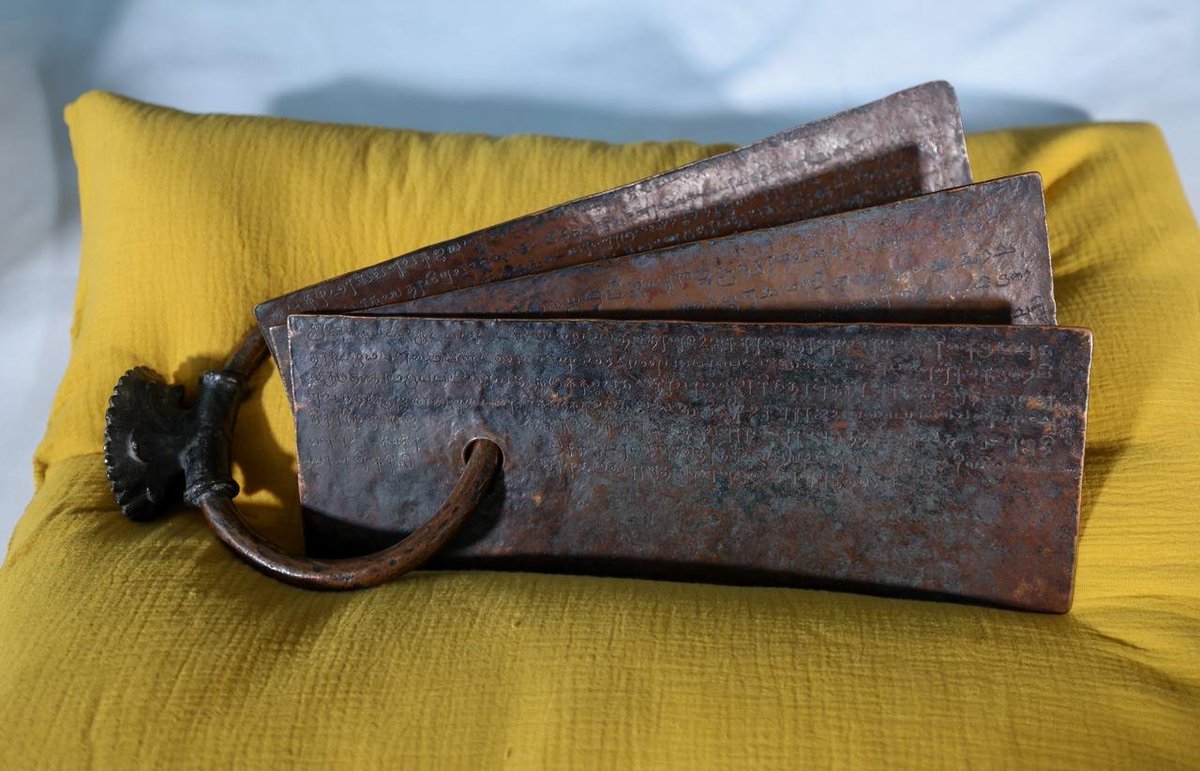
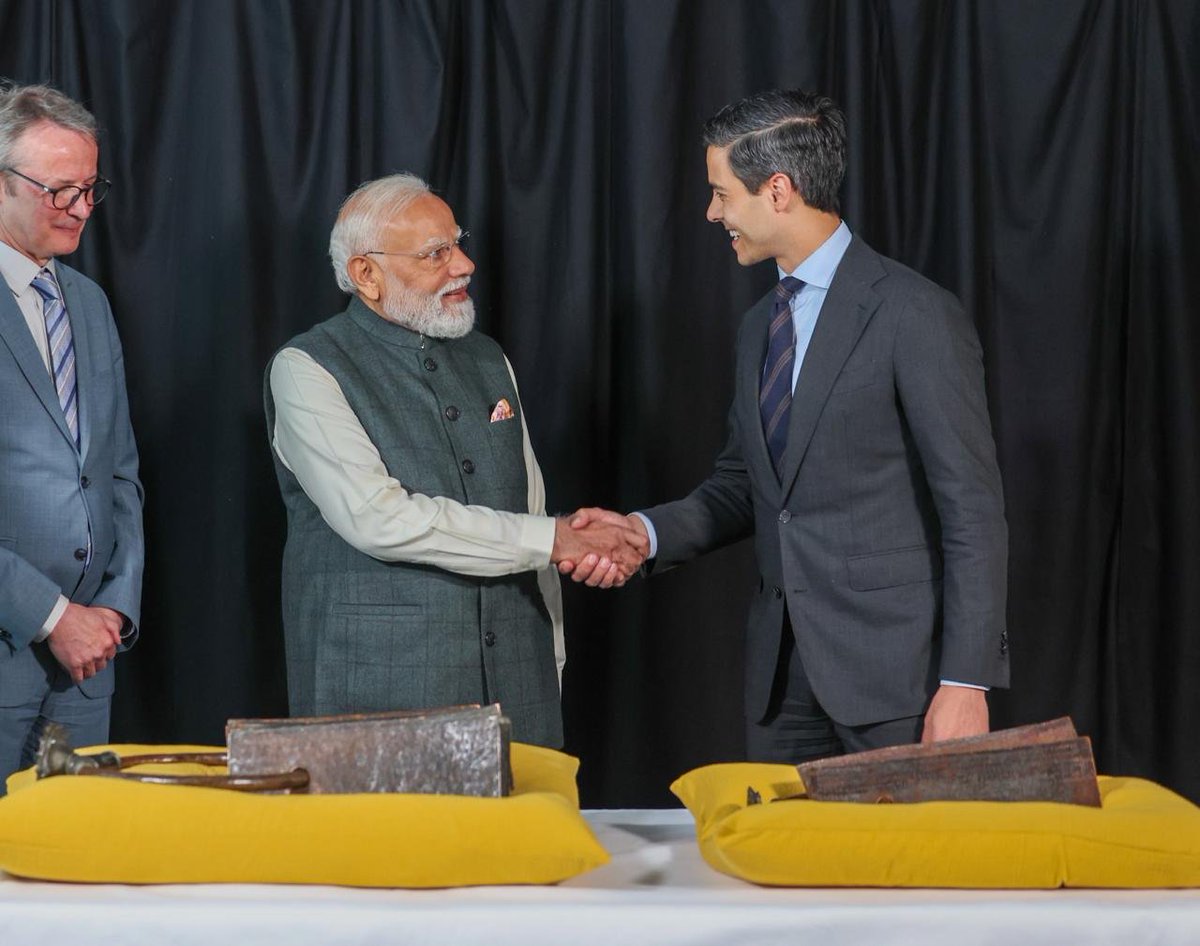
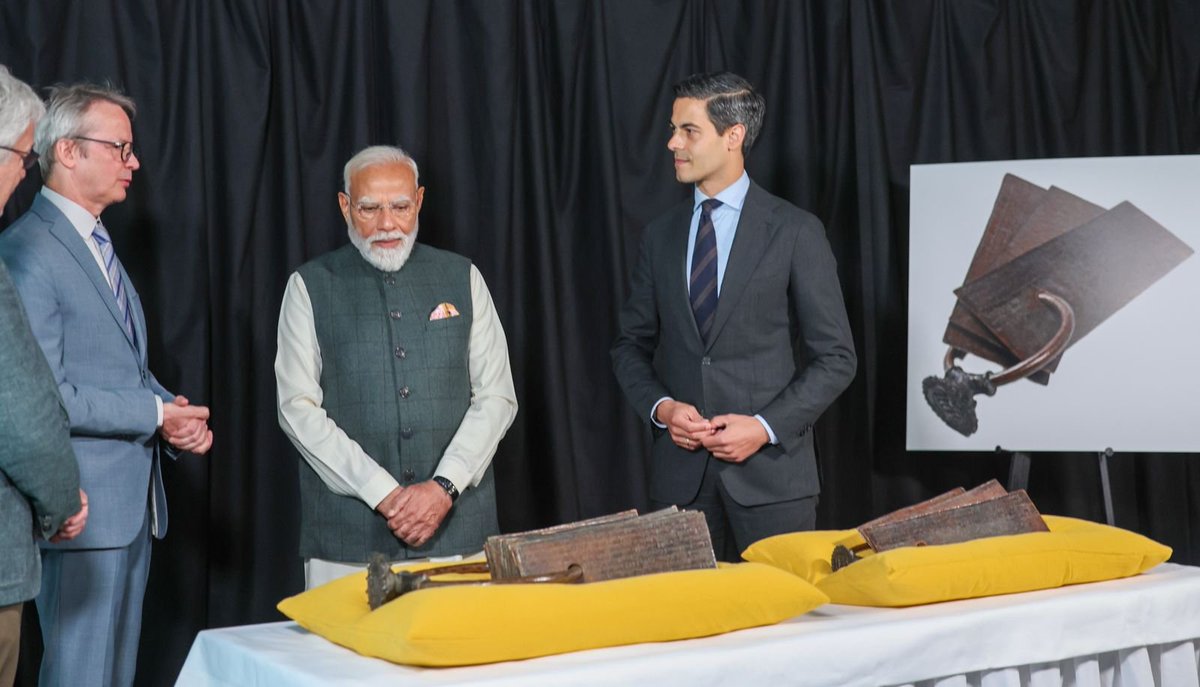
Chola Copper Plates dating back to the 11th Century will be repatriated to India from the Netherlands. Took part in the ceremony for the same in the presence of Prime Minister Rob Jetten.
The Chola Copper Plates are a set of 21 large plates and 3 small plates and largely contain texts in Tamil, one of the most beautiful languages of the world. They relate to the great Rajendra Chola I formalising an oral commitment made by his father, King Rajaraja I. They also showcase the greatness of the Cholas. We in India are immensely proud of the Cholas, their culture and their maritime prowess.
I thank the Government of the Netherlands and Leiden University in particular, where the Copper Plates were kept since the mid-19th century.
@MinPres
3
19
53
1,828
May 17
It's a tragic sight. Bhojshala is a purely Jain shrine, built by Parmar Bhoj, as evidenced by the inscription engraved on the base of the Goddess Vagdevi statue found there.
This place is a place of learning and knowledge, which will now be used by Pongas to profit from their own wealth. @Vishnu_Jain1 is betraying his own religion to become a hero to these Pongas.

मध्य प्रदेश हाई कोर्ट ने भोजशाला मंदिर और कमाल मौला मस्जिद विवाद में हिंदू पक्ष में फैसला सुनाया था. इस फैसले के बाद अब यह बात साबित हो चुकी है कि भोजशाला एक मंदिर है और ये मां वाग्देवी का मंदिर है. इसी के साथ भोजशाला की पहचान का एक लंबा संघर्ष भी खत्म हो गया है. इसके बाद से भोजशाला मंदिर लोग रोज पूजा पाठ और हवन करने आ रहे हैं.
#Dhar #MadhyaPradesh #bhojshala #abpnews
73
38
132
18,867
May 16
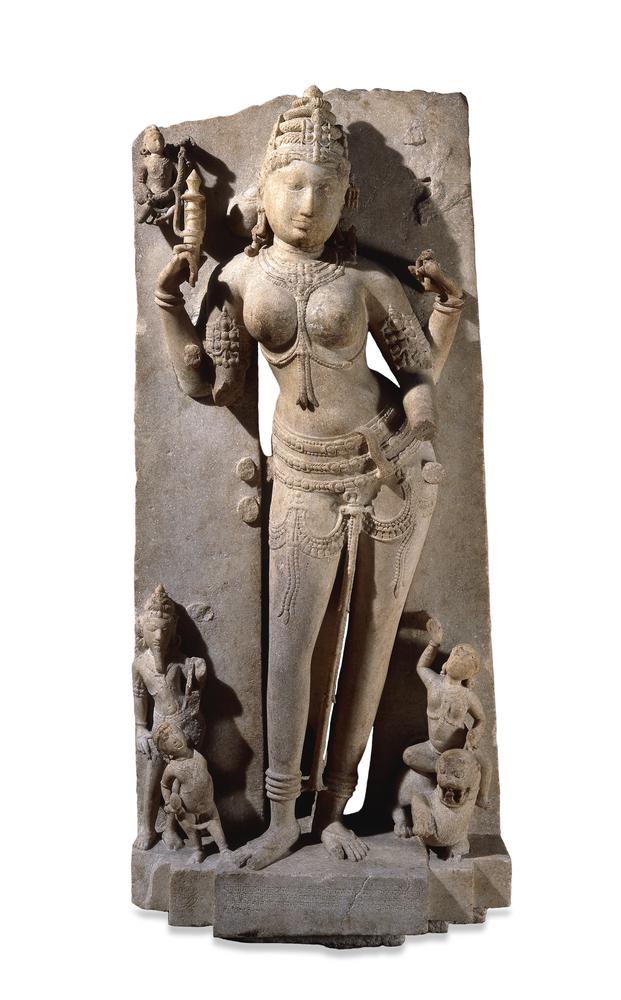
A statue in the British Museum, attributed to the Hindu goddess Saraswati from Bhojsala, originally belonged to the Jain Yakshini Amba. An inscription on the statue's base confirms this.
(1) auṃ। srīmadbhojanāreṃdracaṃdranagarīvidyādharī[dha]rmmadhīḥ yo [damaged portion] khalu sukhaprasthāpanā
(2) yāp(sa)rāḥ vāgdevī[ṃ] prathama[ṃ] vidhāya jananī[m] pas[c]āj jinānāṃtrayīm ambā[ṃ] nityaphalā(d)ikāṃ vararuciḥ (m)ūrttim subhā[ṃ] ni-
(3) rmmame [||] iti subhaṃ || sūtradhāra sahirasutamaṇathaleṇa ghaṭitaṃ || vi[jñā]nika sivadevena likhitam iti ||
(4) saṃvat 100 91 [||]
Auṃ. Vararuci, who is intent on the dharma of the Candranagarī and Vidyādharī [branches of the Jain religion] of srīmad Bhoja the king, the apsaras [as it were] for the easy removal [of ignorance? by...?], that Vararuci, having first fashioned Vāgdevī the mother [and] afterwards a triad of Jinas, made this beautiful image of Ambā, ever abundant in fruit. Blessings! It was executed by Maṇathala, son of the sūtradhāra Sahira. It was written by Śivadeva the proficient. Samvat: 1091.
The inscription demonstrates that the Vāgdevī at Dhārā was dedicated to the Jaina form of the goddess. Parmar Bhoja was a purely Jain patron.
5
24
72
3,571