
Joined August 2009
- Tweets 5,541
- Following 1,579
- Followers 1,053
- Likes 10,003
152 Photos and videos














Feb 14
A lot of people say Bitcoin has become harder. The volatility feels unpredictable. The market feels ruthless.
But the truth is, for most traders the problem isn’t analysis, it’s capital.
When your account is small, every candle feels like a threat. Every minor pullback feels scary. Risking 1% on a low-balance account makes profits feel meaningless and losses feel heavier than they should. That pressure pushes you to increase leverage, exit early, or move into markets that don’t even fit your strategy.
At that point, you’re not trading Bitcoin. You’re trading your anxiety.
Bitcoin rewards discipline, patience, and proper sizing. If your capital doesn’t allow you to execute your plan correctly, even the best setups won’t deliver.
So what’s the solution?
First, focus on increasing capital, not increasing leverage.
Second, keep your profit expectations realistic while your account is small.
Third, never sacrifice risk management for excitement, even if growth feels slow.
And finally, either grow your capital or adapt your strategy to your account size — not the other way around.
1
3
36
Feb 6
2026 will reward tools that feel natural
Not the ones that feel heavy
CodeXero gets that early
Feb 6

I think CodeXero earns a real place in the future, especially by 2026, for one simple reason.
It aligns with how people actually want to build.
The next wave of builders will not start with frameworks or tooling.
They will start with intent.
With ideas.
With curiosity.
By 2026, speed alone will not be enough.
What matters is who can experiment faster, learn in public, and adapt without friction.
@CodeXero_xyz is built exactly for that behavior.
It removes setup pain.
It lowers the cost of trying.
It lets people ship before they overthink.
As more applications move onchain, the bottleneck will not be infrastructure.
It will be who can turn ideas into working products without needing a team or months of prep.
CodeXero sits right at that shift.
Between intent and execution.
Between thinking and shipping.
That is why I believe its importance grows over time, not fades.
By 2026, tools that feel heavy will be ignored.
Tools that feel natural will win.
And @CodeXero_xyz feels natural.
1
2
42
Jan 8
This is how I see Liquid as a trading app.
It’s made for execution, not overthinking.
Liquid keeps things intentionally simple. No clutter, no fake complexity, no features you never use. You open the app, check the price, look at your position, and make a decision. That’s the flow.
Speed is where Liquid really shines. Orders go through quickly. Switching between assets feels smooth. Managing positions is straightforward. When the market moves fast, simplicity like this actually gives you an edge.
Liquid also assumes you already know what you’re doing. It doesn’t try to teach you trading. It doesn’t overload you with indicators. It just gives you what you need to execute your plan without distractions.
That also means it’s not for everyone.
If you rely on heavy charting, multiple indicators, or long decision processes, Liquid may feel too minimal. This app is clearly built for traders who think ahead and execute fast.
In the end, Liquid isn’t trying to be everything.
It’s trying to be sharp.
And sharp tools work best in experienced hands.
@liquidtrading
18
36
187
Jan 7
What CodeXero really gives a community isn’t tools.
It gives people permission.
Permission to try without stressing about getting it right.
To ship when it’s ready, not when someone says it’s okay.
To learn by doing, without asking for approval.
When building feels this open,
communities stop leaning on a few experts
and start growing through shared attempts and mistakes.
More people try things.
More feedback shows up.
More value gets built in the open.
CodeXero lowers the social barrier to building.
That’s how real communities take shape.
Not around hype,
but around people actually showing up and building.
@CodeXero_xyz @wallchain
17
27
174
Jan 7
In Web3, we’re used to seeing the product first, then the token, then the narrative, and if we’re lucky, a community at the end.
What we saw during the Billions Network parade flipped that order.
The network hasn’t entered its final public launch phase yet, but human coordination has already taken shape.
Something many projects only start looking for after major ecosystem milestones is already forming here, earlier.
For anyone who follows crypto seriously, this is a signal.
A community that comes together without relying on short-term incentives, temporary hype, or external pressure is usually focused on long-term building, not quick market reactions.
The parade wasn’t a display of promotional power.
It showed that if the network expands in later stages, if its economic elements enter the picture, the human infrastructure needed to absorb and sustain them is already in place.
In a space where many projects are defined by price and charts,
Billions is being built around human behavior, coordination, and participation.
And perhaps that simple difference is the advantage that will set Billions apart from many other projects in the long run.
@billions_ntwk
5
15
117
Jan 6
For years, building on blockchain meant friction.
Big teams, heavy funding, long timelines, and products that often never reached the market.
Most ideas died not because they were weak, but because access was locked.
CodeXero strikes at that exact problem.
At the gap between “I have an idea” and “I have a live product.”
You do not need to know how to code.
You do not need permission or a team.
If you can clearly describe your idea, you can build it.
You write your intent.
AI breaks it down, makes decisions, and turns it into a real app on Sei.
An app deployed on mainnet, auditable, and token-ready.
From day one, monetization and community are possible.
This is not just simplification.
It is a mindset shift.
DeFi is no longer exclusive.
Speed is now the advantage.
And those who build faster, learn faster, and win faster.
CodeXero is not about hype.
It is about finally letting ideas exist.
@CodeXero_xyz
@wallchain
3
7
83
Jan 6
Honestly Ferra made me stop spraying liquidity everywhere
LPing on autopilot vs LPing with intent Ferra vibes
4
9
79
Jan 6
Fast in fast out means speed matters more than prediction.
But speed without the right tools is incomplete.
This is where Liquid leverage comes in.
Leverage lets you take larger exposure
with less capital
without staying in the trade for too long.
Liquid leverage is built for scalping and fast trades.
Quick entries.
Quick exits.
Maximum use of short market moves.
Its real use case is this
extracting returns from small moves
while controlling risk through fast exits.
Fast in means precise leverage usage.
Fast out means closing before the market changes its mind.
Here, leverage is a control tool
not a gamble.
@liquidtrading
25
41
163
Jan 5
CodeXero is not here to teach you how to build.
It removes the need to think about building at all.
You start with intent,
not architecture,
not implementation,
not tooling.
The system takes on the complexity
and gives momentum back to you.
That changes how ideas behave.
They do not sit in notes anymore.
They do not wait for the right moment.
They get tested.
CodeXero is not just about speed.
It lowers the cost of being wrong,
makes it easier to try again,
and lets learning happen in public.
When experimentation becomes cheap,
progress stops being rare.
That is the real value.
@CodeXero_xyz @wallchain
10
14
93
Jan 5
The real issue isn’t blockchain.
It’s architecture.
Billions Network was designed from day one for real scale.
Not for demos.
Not for nice-looking numbers on slides.
When real usage shows up,
when real users show up,
that’s when you see which networks are actually built,
and which ones were just presented.
Billions Network is built to handle pressure.
To grow without falling apart.
No promises.
No short-term hype.
Just architecture that’s meant to work.
@billions_ntwk
27
1
41
192
Jan 4
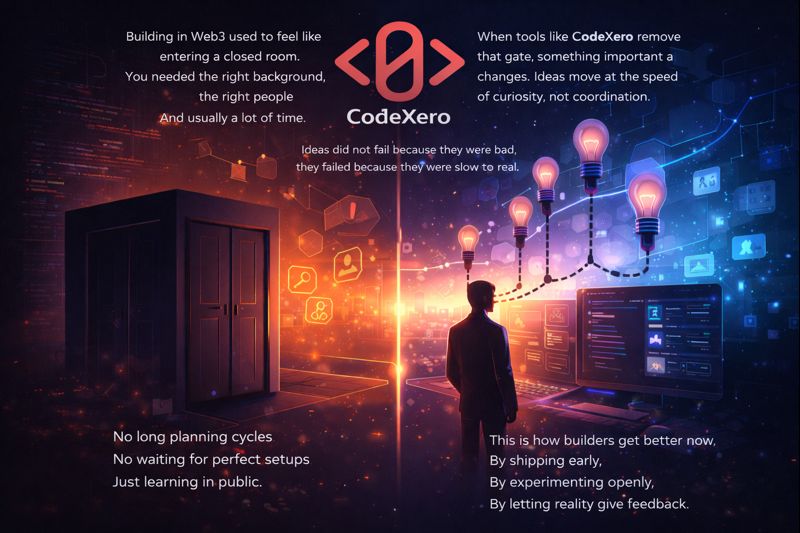
Building in Web3 used to feel closed
You needed the right background
The right people
And a lot of time
Most ideas didn’t fail because they were bad
They failed because they took too long to exist
When tools like CodeXero remove that gate
Everything changes
Ideas move at the speed of curiosity
You say what you want to build
You deploy it onchain
You learn from real users
And adjust
No long planning
No perfect setups
Just learning in public
That’s how builders grow now
Ship early
Experiment openly
Let reality lead
When building isn’t gated
Progress stops being theoretical
And Web3 starts moving forward
@CodeXero_xyz
7
13
76
Jan 3
Liquidity means the market doesn’t get in my way.
I enter when I want.
I exit when I want.
No waiting. No getting stuck. No stress about fills.
When liquidity is there, time is on my side.
The market doesn’t wait for me, and I don’t wait for it either.
I make a decision and it executes.
Trade whatever means I don’t limit myself.
If there’s an opportunity, that’s where I trade.
The market name doesn’t matter. The move does.
Wherever means location is irrelevant.
I’m connected to the market from anywhere.
Place doesn’t define trading.
Whenever means the clock isn’t in control.
I enter when it’s time.
Not early. Not late.
Liquid trading is control.
Control over entries.
Control over exits.
Control over risk.
Trading isn’t forcing anything.
It’s flowing with the market.
Where there is liquidity, there is freedom.
And without freedom, trading has no meaning.
@liquidtrading
17
30
118
Jan 3
Gbillions, everyone💙
If the future of networks matters to you, Billions is worth taking seriously.
Not because of promises. Not because of big numbers.
But because of the mindset behind how it’s being built.
The Billions way of thinking starts from a simple idea: growth is not something you chase.
Growth should be the result of good design.
A network that’s built from day one to scale without breaking,
without becoming bloated or patched together over time.
Instead of forcing scale, Billions focuses on architecture.
On making sure every layer exists for a reason,
and that each part knows how to grow in coordination with the rest.
Here, scale is not the goal.
It’s the output of a way of thinking.
And that’s exactly what separates Billions from many other networks.
@billions_ntwk @KaitoAI
11
28
126
Jan 2
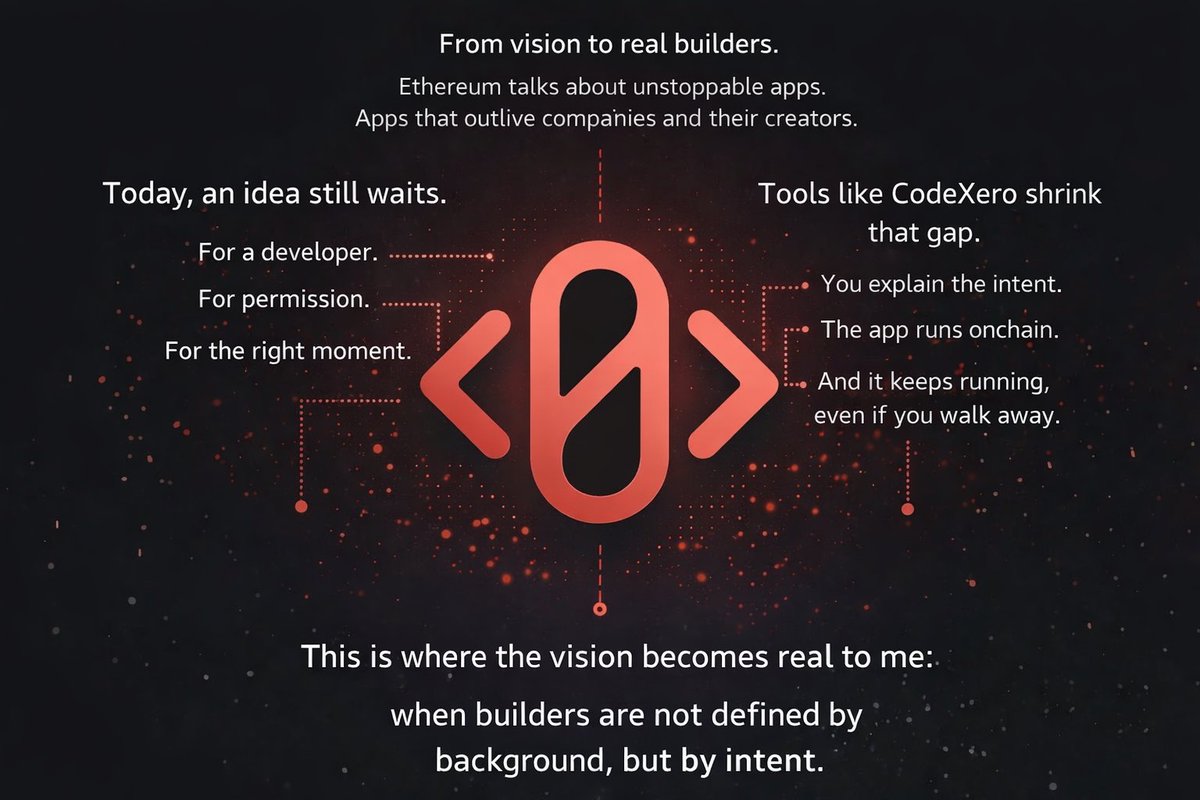
From vision to real builders.
Ethereum talks about unstoppable apps.
Apps that outlive companies and their creators.
But that vision only works when building feels normal.
When ideas do not get stuck, waiting to be translated.
Today, an idea still waits.
For a developer.
For permission.
For the right moment.
Tools like CodeXero shrink that gap.
You explain the intent.
The app runs onchain.
And it keeps running, even if you walk away.
This is where the vision becomes real to me:
when builders are not defined by background,
but by intent.
@CodeXero_xyz
4
16
86
Jan 2
Being liquid means staying alive.
I learned early that the market is not about excitement or proving anything.
If you want to last, survival comes first.
When I trade liquid markets, I do not feel stuck.
There is always a way out.
I can be wrong, close the trade, and move on.
Prediction alone never worked for me.
What matters is seeing where real money is going and how price reacts.
I would rather move with the market than fight it.
Liquid markets make risk easier to deal with.
I know my size.
I know my exit before I enter.
And when things change, I can adjust quickly.
No stress. No bad surprises.
At the end of the day, I am not trying to be right all the time.
I am trying to stay in the game.
Learn as I go.
And keep going.
For me, liquid trading is simple.
It is about staying alive.
@liquidtrading
18
24
112
Jan 1
My first GN of this year goes to the Billions fam let’s make this an awesome year together
@billions_ntwk
7
13
83
Jan 1
Billions in simple terms, no noise
What I see in Billions isn’t surface-level complexity, it’s depth of thinking
The idea itself is simple, but executing it isn’t
It’s a network built around human behavior, not just money
For me, having everything onchain matters
Because trust shouldn’t come from words
It should be visible, verifiable, and traceable
Roles are shaped by real participation, not claims
And the value of the network emerges from many small, real contributions
Billions doesn’t chase hype
And honestly, that’s why I take it seriously
Systems built on real participation move quietly
But once they click, they’re impossible to ignore
@billions_ntwk @KaitoAI
17
23
126
Jan 1
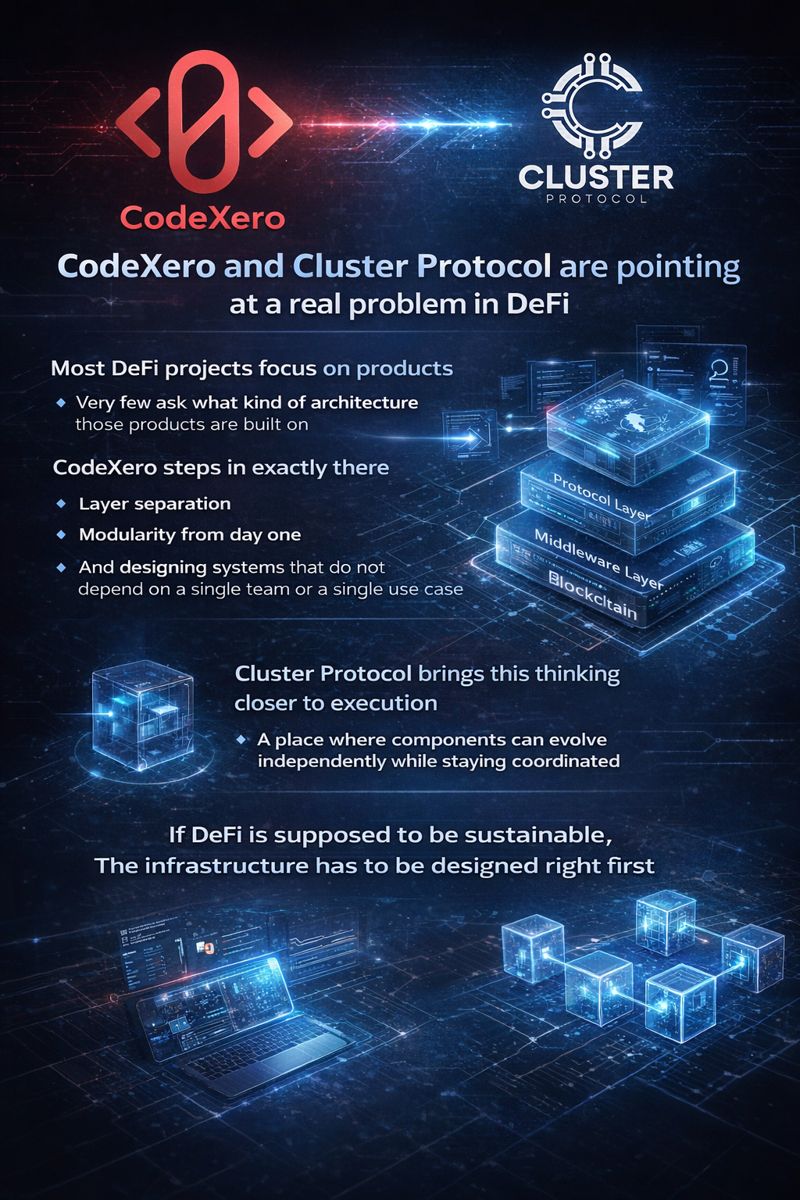
CodeXero and Cluster Protocol are pointing at a real problem in DeFi
Most DeFi projects focus on products
Very few ask what kind of architecture those products are built on
CodeXero steps in exactly there
Layer separation
Modularity from day one
And designing systems that do not depend on a single team or a single use case
Cluster Protocol brings this thinking closer to execution
A place where components can evolve independently while staying coordinated
If DeFi is supposed to be sustainable
The infrastructure has to be designed right first
@CodeXero_xyz
@ClusterProtocol
@wallchain
16
18
121
30 Dec 2025
Everything starts with a simple question:
does development really have to be this complicated?
An approach that, in my view, starts with the right assumption from day one:
that a developer should not waste mental energy on unnecessary friction,
whether in architecture,
or in wiring modules together,
or in the moment when an idea needs to become real code.
What stands out to me about CodeXero is that it is not trying to add yet another layer to the stack.
Instead, it aims to make the entire development flow clearer and simpler,
in a way where every component has a reason to exist,
and every technical decision actually makes sense.
To me, this is exactly the kind of thinking that Cluster Protocol is pursuing:
building infrastructure that does not restrict developers,
but gives them real freedom of choice and real speed.
@CodeXero_xyz
@ClusterProtocol
@wallchain

3
5
84
29 Dec 2025
CodeXero represents a different approach to security.
Not something based on bold claims or surface level audits,
but security that grows out of mathematical proof
and is embedded directly into onchain architecture itself.
Instead of guessing where bugs might appear,
the goal is to remove them at a theoretical level.
Rather than reacting to exploits after they happen,
contracts are formally proven correct
before they ever go live.
What CodeXero is really trying to do
is bridge a long standing gap
between abstract mathematical theory
and the messy real world conditions of blockchain systems.
By bringing these two worlds together,
it shifts how trust is created.
Trust no longer comes from reputation
brand names
or promises
It comes from proof
logic
and systems designed to be correct
from the start
@CodeXero_xyz @wallchain

57
72
580