Official account of the American Sociological Association's Global and Transnational Sociology Section
Joined November 2021
- Tweets 21
- Following 11
- Followers 198
- Likes 0
5 Photos and videos

Congratulations to Anju Paul who received an honorable mention for best publication by an international scholar for the book, "Asian Scientists on the Move: Changing Science in a Changing Asia" from @CambridgeCore
cambridge.org/core/books/asi…
1
9
1,041
Congratulations to Jieh-Min Wu for winning the best publication award by an international scholar for the book "Rival Partners: How Taiwanese Entrepreneurs and Guangdong Officials Forged the China Development Model" from @Harvard_Press
hup.harvard.edu/catalog.php?…
1
1
740
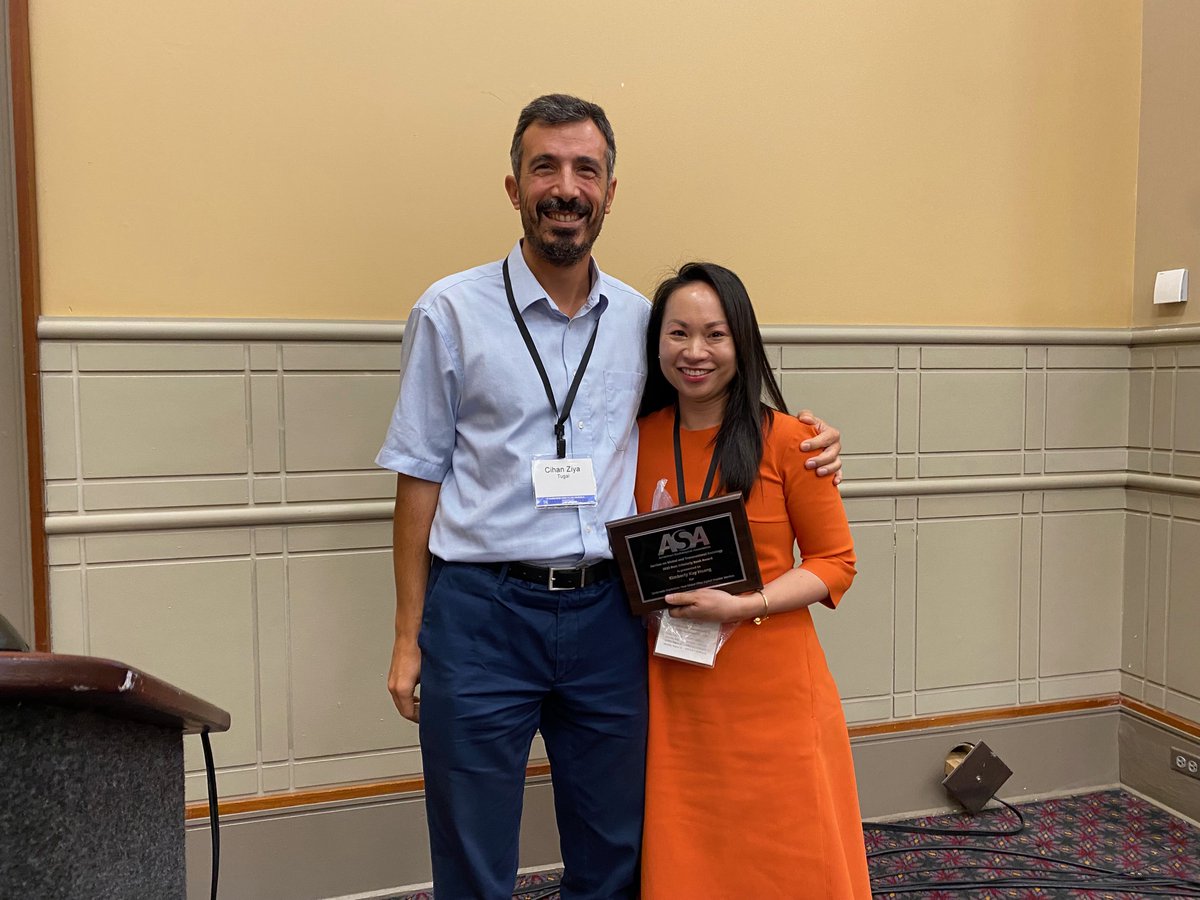
Congratulations to @kimberlykhoang, winner of the GATS Best Book award for "Spiderweb Capitalism: How Global Elites Exploit Frontier Markets," from @PrincetonUPress
press.princeton.edu/books/ha….
2
355
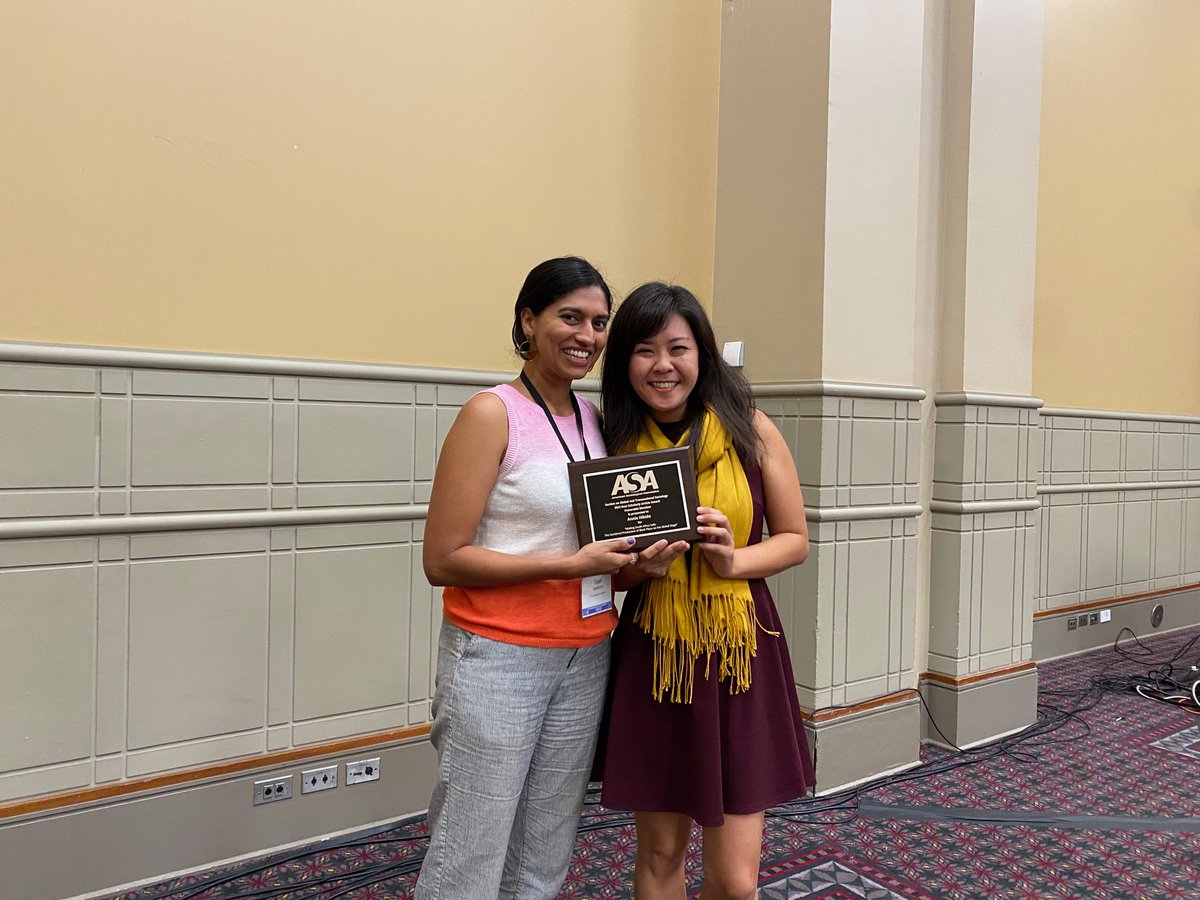
Congratulations to Annie Hikido who received an honorable mention for best scholarly article for "Making South Africa Safe: The Gendered Production of Black Place on the Global Stage" in @qualsoc
link.springer.com/article/10…
1
219
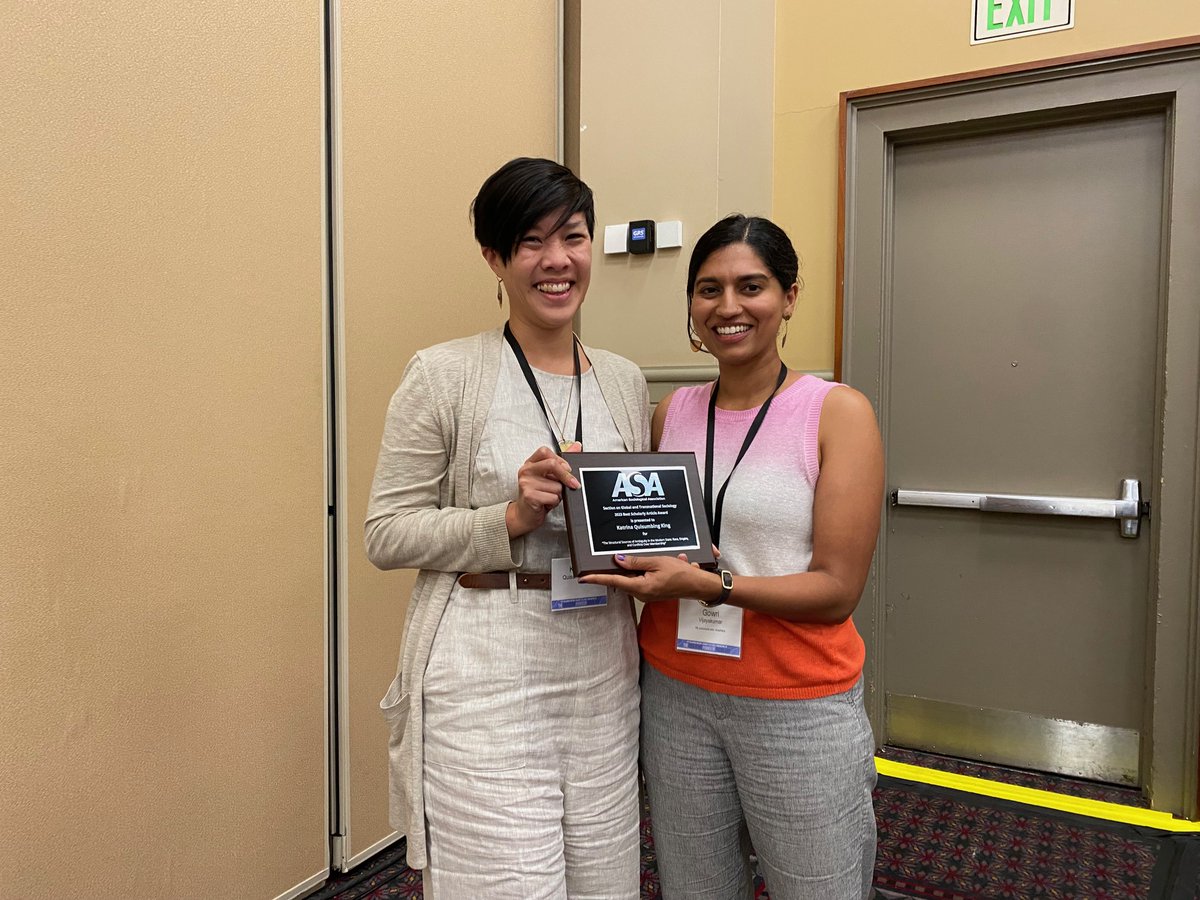
Congratulations to Katrina Quisumbing King for winning the GATS best scholarly article award for "The Structural Sources of Ambiguity in the Modern State: Race, Empire, and Conflicts Over Membership" in American Journal of Sociology.
journals.uchicago.edu/doi/ab…
2
192
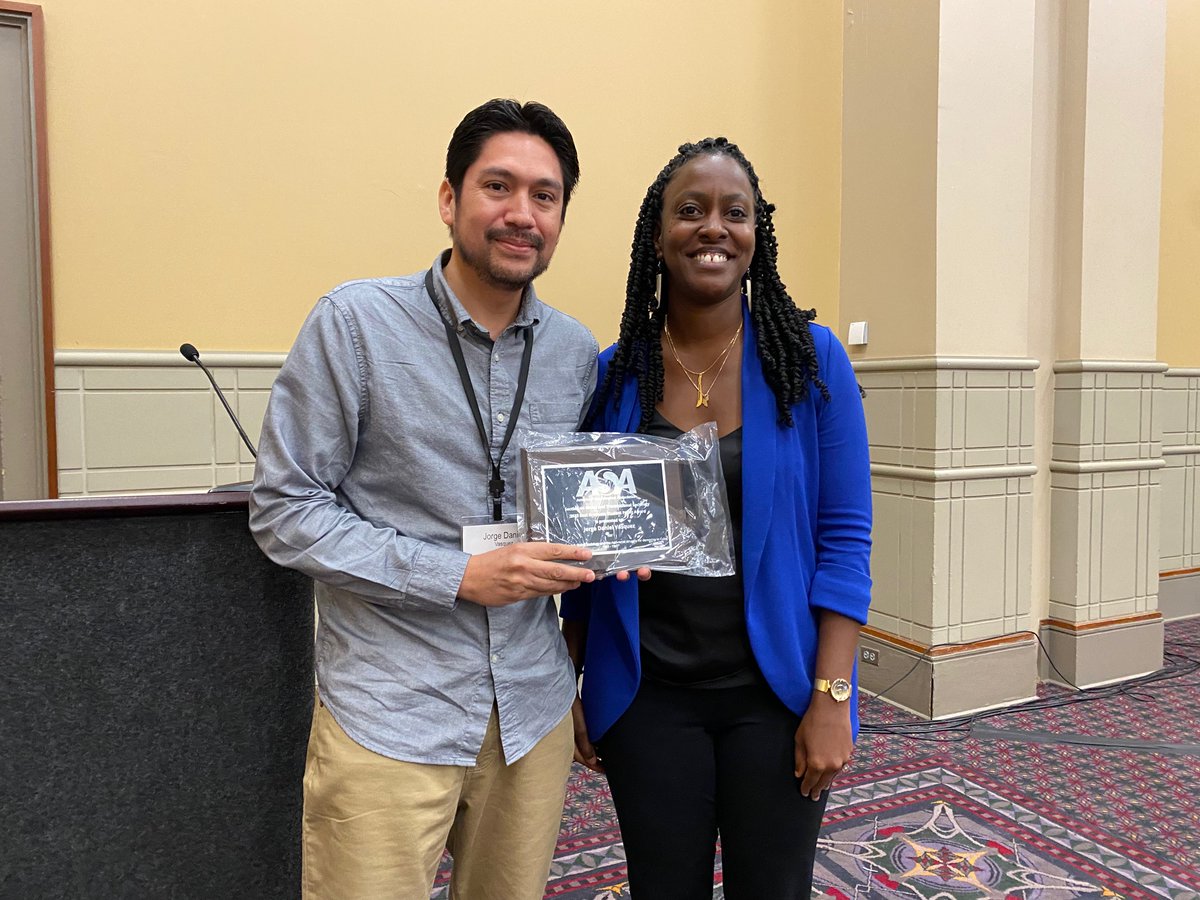
Congratulations to @jdvasqueza , for winning the GATS best graduate student paper for "WEB Du Bois’s Global Sociology and the Anti-Racist Struggle for Democracy in Cuba, 1931-1941" in @DuBoisReview
bit.ly/47FiVr1
2
6
2,256
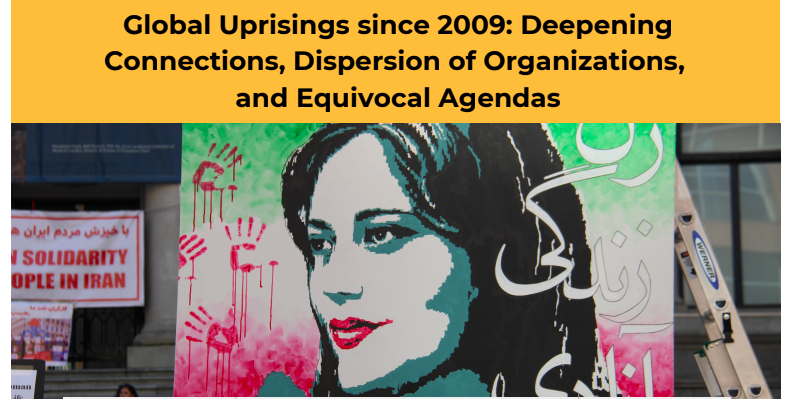
The GATS Virtual Event (Global Uprisings Since 2009) on March 1 has been rescheduled. We will post soon with a new date.
2
510
Congratulations @Mishal__K, for winning the GATS best scholarly article award for Abolition as a Racial Project: Erasures and Racializations on the Borders of British India.
1
1
1
The article mobilizes new and fascinating data to examine the racialization of an historical group in India, the Shidis. As part of an abolitionist project, the Shidis were demarcated as a homogenous racialized other, against the Indian subject,
1
who is constructed as “free” of the mark of slavery. Here, abolition itself is analyzed as a racial project that homogenizes and naturalizes race at the outskirts of a colonial regime.
Congratulations @KristinSurak, for winning the best publication award by an international scholar for "Millionaire Mobility and the Sale of Citizenship," a theoretically informed and empirically solid article that contributes to migration and citizenship studies,
1
1
namely by focusing on those on the top. In this contribution, Dr. Surak explores the mechanisms by which different countries around the world offer citizenship to wealthy individuals, as well as the motivations that drive wealthy individuals to buy citizenships across the world.
1
Congratulations Zeynep Ozgen and Matthias Koenig received an honorable mention for best scholarly article for their paper “When global scripts do not resonate: international minority rights and local repertoires of diversity in Southern Turkey,”
1
1
that illustrates how despite favorable conditions, global scripts of minority rights and multiculturalism fail to resonate among ethno-religious minorities because they conflict with people’s cultural schemas of perceiving and reproducing symbolic boundaries.
Congratulations @CoendersY, for winning the GATS best graduate student paper for “Colonial Recursion and State Categories of Race: The Emergence of the ‘Non-Western Alochthone.”
1
2
12
The paper asks how colonial conceptions of difference are rearticulated in contemporary racial categories. It offers a sophisticated and long-overdue theoretical contribution. Coenders explains how analyzing racial classification
1
1
without understanding the colonial binaries underlying it, risks reproducing racial groups as self-evident. With its use of "the global" not just as a substantive focus but as a framework for thinking, this paper represents the best of GATS scholarship.
Congratulations to @GowriV, co-winner of the GATS Best Book award for At Risk, Indian Sexual Politics and the Global AIDS Crisis. At Risk offers a nuanced and compelling account of the emergent global field of AIDS prevention. This global ethnography reveals multiple tensions,
1
2
6
including the temporal and transnational character of disease prevention. By expanding our analytical gaze beyond the nation state, the book makes a valuable contribution to our understanding of transnational dynamics around public health, gender and inequality.
Congratulations to @Dangermoss16, co-winner of the GATS Best Book award for her book, The Arab Spring Abroad, an exemplary study of how diasporic communities engage in transnational mobilization against authoritarian regimes in their countries of origin.
2
6
25
Drawing on interviews w/ members of the Libyan, Syrian and Yemeni diasporas in the US and Britain, Moss shows how the events known as the Arab Spring of 2010s fomented “exit after voice” among individuals and groups who had long kept silent due to fear of transnational repression
1
2