SDVOSB | Governing Eco-Credits with Purpose & Precision™ | Verified impact. Structured recovery. Environmental infrastructure. 🌍
Joined March 2026
- Tweets 164
- Following 122
- Followers 104
- Likes 544
40 Photos and videos

Pinned Tweet

🇺🇸 The biggest challenge in U.S. plastic policy is not only what is regulated.
It is how fragmented the system has become.
A company may sell packaging into one state with EPR obligations, another state with different reporting rules, another market with recycled-content expectations, and another jurisdiction where recycling claims are judged by consumer-protection standards.
At the same time, international plastic scrap and waste shipments are facing tighter controls, and environmental marketing claims are under increasing scrutiny.
That creates a serious governance problem.
━━━━━━━━━━━━━━━━━━━━━━
⚖️ THE QUESTION IS CHANGING
The question is no longer simply:
“Was this material collected?”
The better questions are:
📍 What state or jurisdiction does the activity belong to?
📦 What legal baseline already applies?
♻️ Was the material actually recovered, processed, or exported?
🏭 Was there a verified end market?
🧾 Was the claim voluntary, regulatory, or contractual?
🔎 Can the evidence be reviewed by a buyer, auditor, regulator, or stakeholder?
That is where the U.S. market is headed.
━━━━━━━━━━━━━━━━━━━━━━
🏛️ THE REGULATORY LANDSCAPE IS SHIFTING
EPA’s national strategy focuses on reducing and recovering plastics across the full lifecycle and preventing plastic pollution from reaching the environment by 2040.
Packaging EPR laws are already active or being implemented across multiple states, including:
📍 California
📍 Colorado
📍 Maine
📍 Maryland
📍 Minnesota
📍 Oregon
📍 Washington
Basel-related rules are also making international plastic shipments more dependent on documentation, consent, and material-specific controls.
━━━━━━━━━━━━━━━━━━━━━━
📊 THE RESULT IS CLEAR
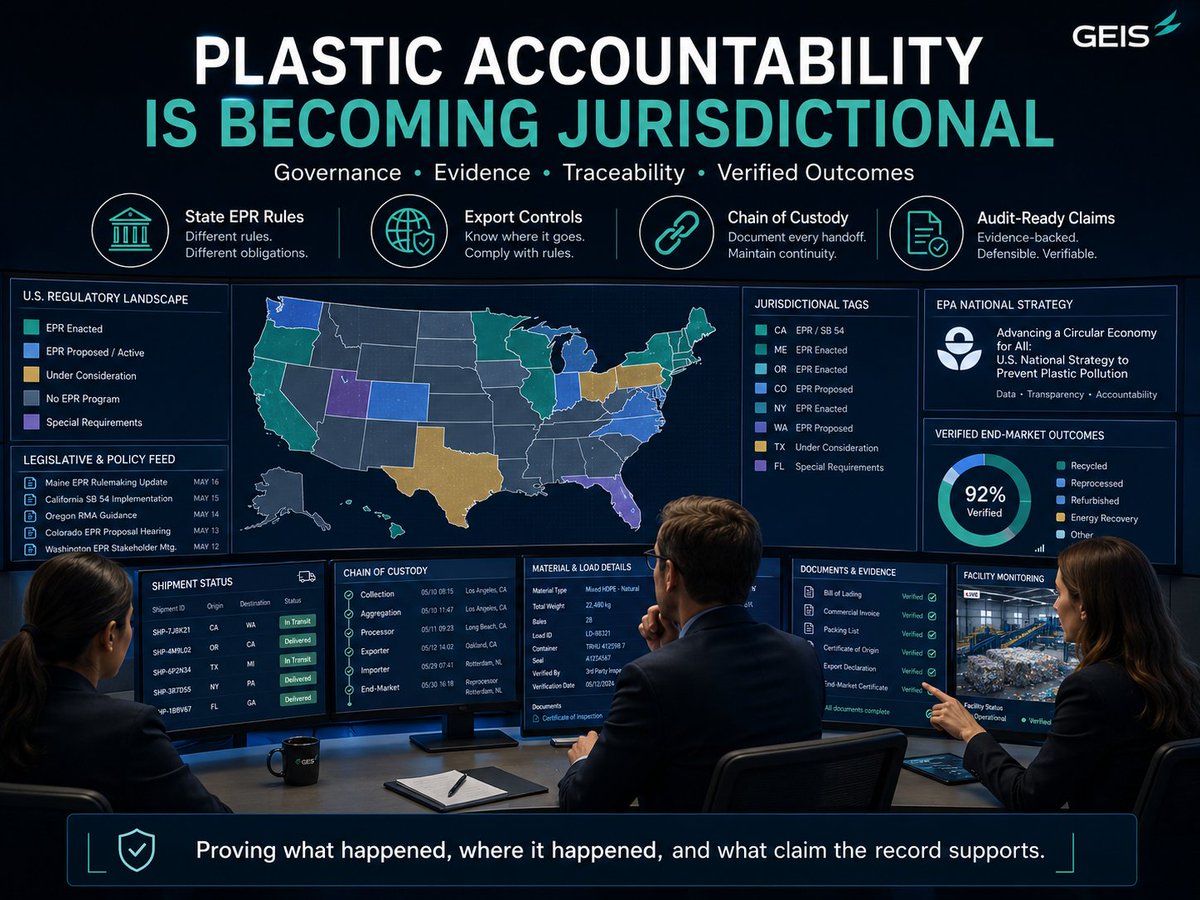
Plastic accountability is becoming jurisdictional.
It is becoming evidence-based.
It is becoming legal-risk sensitive.
And it is becoming much harder to support with disconnected spreadsheets, broad claims, or after-the-fact documentation.
━━━━━━━━━━━━━━━━━━━━━━
🔗 WHAT THE NEXT PHASE REQUIRES
The next phase of plastic recovery will require systems that can:
✅ Separate voluntary activity from regulatory baseline activity
✅ Organize evidence by jurisdiction
✅ Document chain-of-custody
✅ Verify final material outcomes
✅ Control the claims attached to each record
✅ Support audit-ready review
This is why governance matters.
Not as a buzzword.
As the infrastructure that determines whether a plastic recovery claim can be trusted.
━━━━━━━━━━━━━━━━━━━━━━
♻️ Plastic recovery is no longer just about moving material.
It is about proving:
📍 What happened
📍 Where it happened
📍 Under what rules it happened
📍 Who verified it
📍 What outcome was achieved
📍 What claim the evidence actually supports
That is the future of plastic accountability.
Plastic Credits with Purpose and Precision.
4
8
68
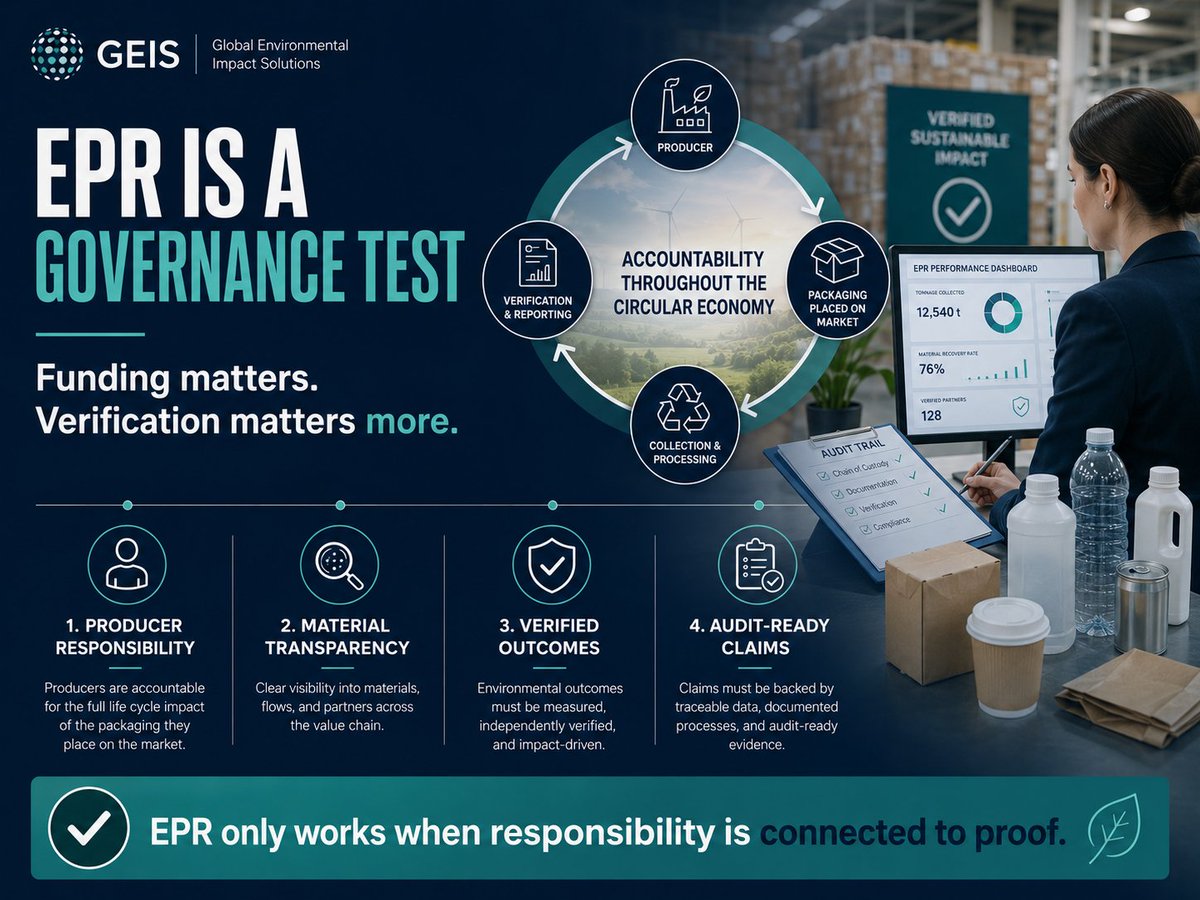
♻️ Extended Producer Responsibility is not just a funding mechanism.
It is a governance test.
EPR is often described as a way to make producers help pay for the collection, recycling, and management of packaging after use.
That part matters.
But funding alone does not create circularity.
A poorly governed EPR system can still produce weak outcomes:
⚠️ More money moving through the system without better material recovery
⚠️ Reporting without verification
⚠️ Collection without confirmed processing
⚠️ Recycling claims without end-market proof
⚠️ Producer responsibility without true material accountability
That is the gap the market has to close.
━━━━━━━━━━━━━━━━━━━━━━
📦 EPR ONLY WORKS WHEN THE SYSTEM CAN PROVE OUTCOMES
A well-designed EPR framework should answer more than:
“Who paid?”
It should answer:
📍 What material entered the market?
📍 What jurisdiction did it enter?
📍 What producer obligation applied?
📍 Was the material collected?
📍 Was it sorted by polymer type?
📍 Was it contaminated or process-ready?
📍 Was it actually recycled, reused, processed, or disposed of?
📍 What facility handled it?
📍 What end market received it?
📍 What claim does the evidence support?
That is where EPR moves from policy theory to measurable infrastructure.
━━━━━━━━━━━━━━━━━━━━━━
🏛️ THE REAL ISSUE IS SYSTEM DESIGN
EPR can strengthen plastic recovery when the system is built around:
✅ Clear producer responsibility
✅ Transparent fee structures
✅ Material-specific reporting
✅ Incentives for recyclable design
✅ Investment in collection and sorting infrastructure
✅ Verified processing outcomes
✅ Chain-of-custody documentation
✅ Independent review and auditability
✅ Protection against double counting and unsupported claims
Without those controls, EPR can become another compliance checkbox.
With those controls, EPR can become a major driver of circular infrastructure.
━━━━━━━━━━━━━━━━━━━━━━
🔎 WHY THIS MATTERS NOW
Plastic regulation is moving toward responsibility.
Corporate buyers are moving toward proof.
Auditors are moving toward structured records.
Communities are demanding visible outcomes.
And producers are being asked to do more than say packaging is recyclable.
They are being asked to support systems that can prove what happened after use.
That is the shift.
EPR is not just about who funds the system.
It is about whether the system can be trusted.
━━━━━━━━━━━━━━━━━━━━━━
🏭 WHERE GEIS FITS
At Global Environmental Impact Solutions, we believe plastic accountability must be governed by evidence.
The Plastic Impact Protocol™ and GEIS Registry™ were built around that principle.
Verified material identity.
Chain-of-custody.
Jurisdictional tagging.
Regulatory baseline separation.
Machine-readable Claim Packages™.
Audit-ready documentation.
End-market accountability.
Because the future of plastic recovery will not be built on broad claims or good intentions.
It will be built on systems that can prove the outcome.
EPR can help move the market forward.
But only if responsibility is connected to verification.
Plastic Credits with Purpose and Precision.
1
3
11
71
♻️ The plastic recovery conversation often starts in the wrong place.
Most people begin with the question:
“How do we collect more plastic?”
That matters.
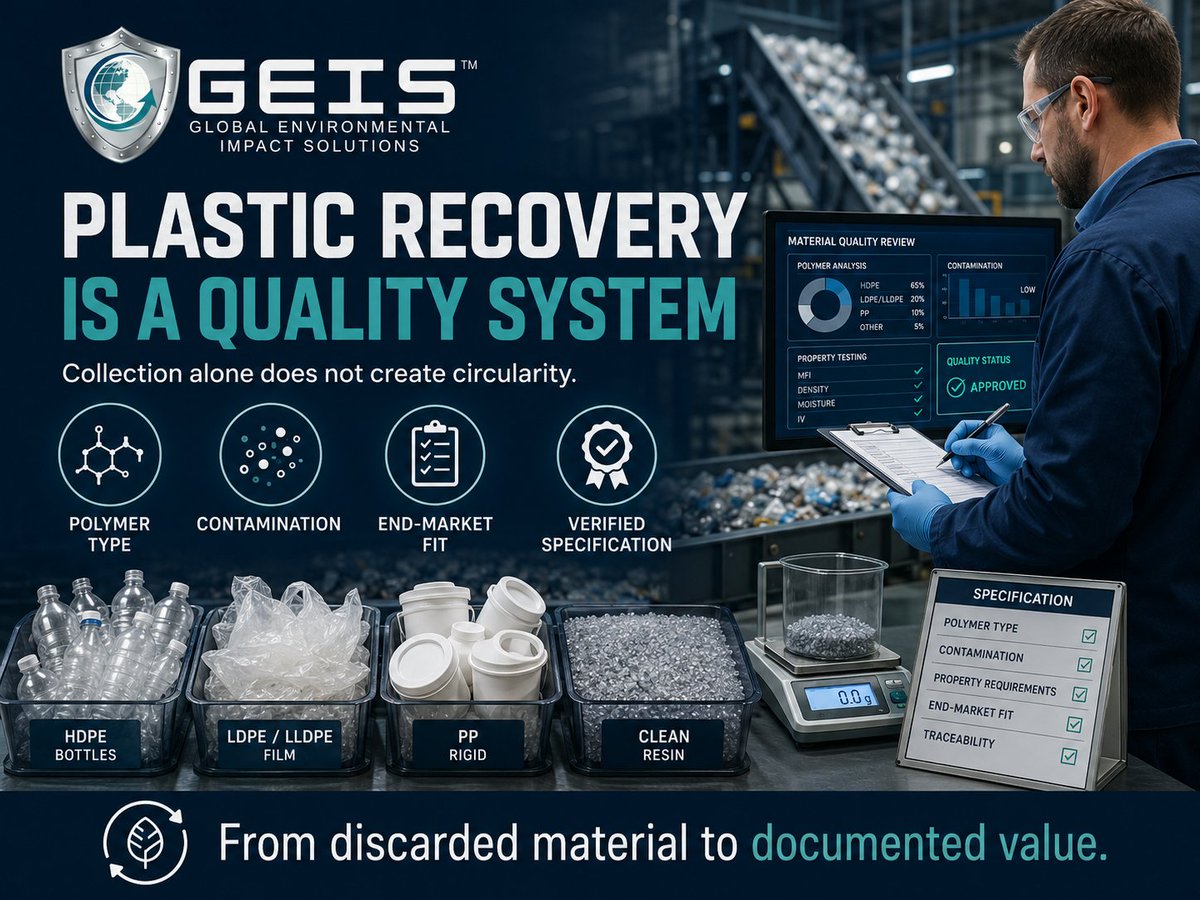
But collection alone does not create circularity.
A truckload of recovered plastic is not automatically a usable material stream.
A bale is not automatically feedstock.
A resin symbol is not automatically market value.
A recycling claim is not automatically environmental impact.
The real question is:
Can the recovered material meet the specifications required to become usable again?
━━━━━━━━━━━━━━━━━━━━━━
🏭 PLASTIC RECOVERY IS A QUALITY SYSTEM
Manufacturers do not buy intentions.
They buy material that meets requirements.
That means recovered plastic must be evaluated by:
✅ Polymer type
✅ Contamination level
✅ Moisture content
✅ Color
✅ Melt flow
✅ Additives
✅ Form factor
✅ Processing pathway
✅ End-market compatibility
✅ Documentation and custody records
This is where much of the system breaks down.
Plastic may be collected.
Plastic may be sorted.
Plastic may even be baled.
But if the material cannot meet a buyer’s specification, it may never become part of a true circular supply chain.
━━━━━━━━━━━━━━━━━━━━━━
📦 WHY MATERIAL IDENTITY MATTERS
A clean HDPE stream is different from mixed rigid plastic.
LDPE film is different from multilayer flexible packaging.
Polypropylene is different from PET.
Food-grade recovery is different from non-food applications.
Post-consumer resin is different from post-industrial scrap.
Each material has its own value, limitations, risks, and recovery pathway.
When these differences are ignored, the market gets broad claims instead of usable truth.
And broad claims do not build reliable infrastructure.
━━━━━━━━━━━━━━━━━━━━━━
🔎 FROM WASTE MANAGEMENT TO MATERIAL ACCOUNTABILITY
The next generation of plastic recovery will require a different mindset.
Not just:
“How much plastic was collected?”
But:
📍 What was collected?
📍 Where did it come from?
📍 How was it identified?
📍 How was it processed?
📍 What specification did it meet?
📍 Who verified the record?
📍 What end market received it?
📍 What claim does the evidence support?
That is the difference between waste diversion and material accountability.
━━━━━━━━━━━━━━━━━━━━━━
🏛️ WHY GEIS BUILT FOR THIS
Global Environmental Impact Solutions built the Plastic Impact Protocol™ and GEIS Registry™ around this reality.
Because credible plastic recovery requires more than movement.
It requires proof.
It requires custody.
It requires verified material identity.
It requires end-market accountability.
It requires registry controls that connect real-world activity to evidence-backed claims.
The future of circularity will not be built by treating all plastic as one category.
It will be built by understanding material behavior, market requirements, and verification standards.
Plastic recovery becomes powerful when it moves from discarded material to documented value.
That is the standard #GEIS is building.
Plastic Credits with Purpose and Precision.
2
6
55
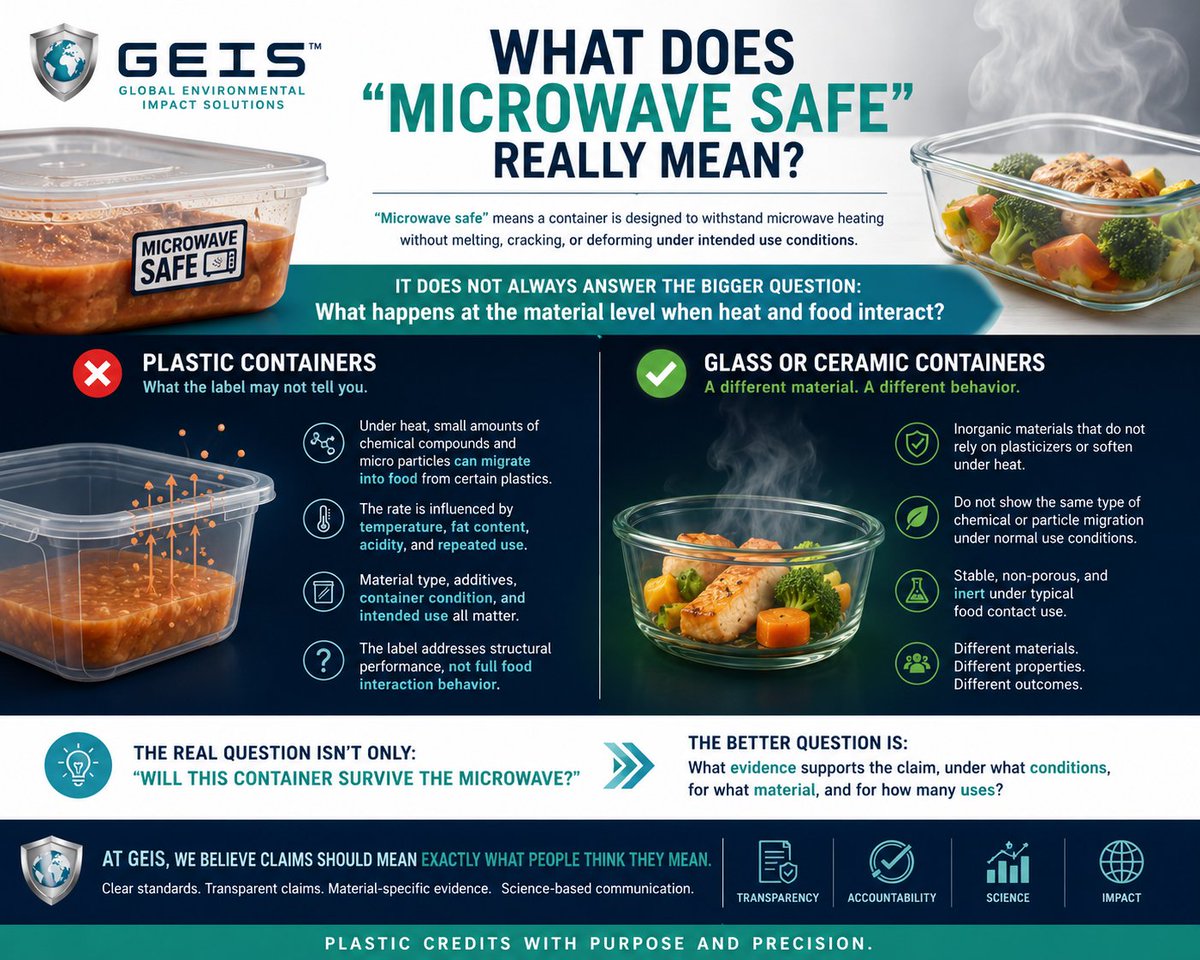
“Microwave safe” is one of the most trusted labels in the kitchen.
But it is also one of the most misunderstood.
At Global Environmental Impact Solutions, we believe material claims should be clear, precise, and evidence-based — especially when plastics are used in direct contact with food.
“Microwave safe” generally means a container is designed to withstand microwave heating without melting, cracking, or deforming under intended use conditions.
That is important.
But it does not always answer the bigger question consumers assume it answers:
What happens at the material level when heat, food chemistry, repeated use, fat content, acidity, and time interact with the container?
That distinction matters.
Plastic is not one material.
Different polymers behave differently under heat.
Different additives, colorants, processing aids, residues, and use conditions can influence performance.
A rigid polypropylene food container is not the same as a thin film.
A single-use takeout container is not the same as a tested reusable container.
A scratched, aged, repeatedly heated plastic container is not the same as a new one.
And a label that speaks to structural performance does not always communicate the full material interaction picture.
This is not about creating fear.
It is about creating clarity.
Glass and ceramic behave differently because they are inorganic materials that do not rely on the same polymer structures, additives, or softening behavior as plastics.
That does not mean every plastic food container is unsafe.
It means the public deserves better language, better education, better material transparency, and better standards around what labels actually mean.
The real question is not only:
“Will this container survive the microwave?”
The better question is:
“What evidence supports the claim, under what conditions, for what material, and for how many uses?”
That is the future of material accountability.
Not vague labels.
Not consumer assumptions.
Not one-size-fits-all plastic language.
Clear standards.
Transparent claims.
Material-specific evidence.
Science-based communication.
At GEIS, we believe the next era of environmental and material accountability will be built on the same principle:
Claims should mean exactly what people think they mean.
And the evidence behind them should be strong enough to prove it.
Plastic Credits with Purpose and Precision.
#GEIS #PlasticAccountability #MaterialScience #FoodPackaging #PlasticSafety #PolymerScience #CircularEconomy #Sustainability #MaterialTransparency #ConsumerEducation #EnvironmentalImpact
4
8
55
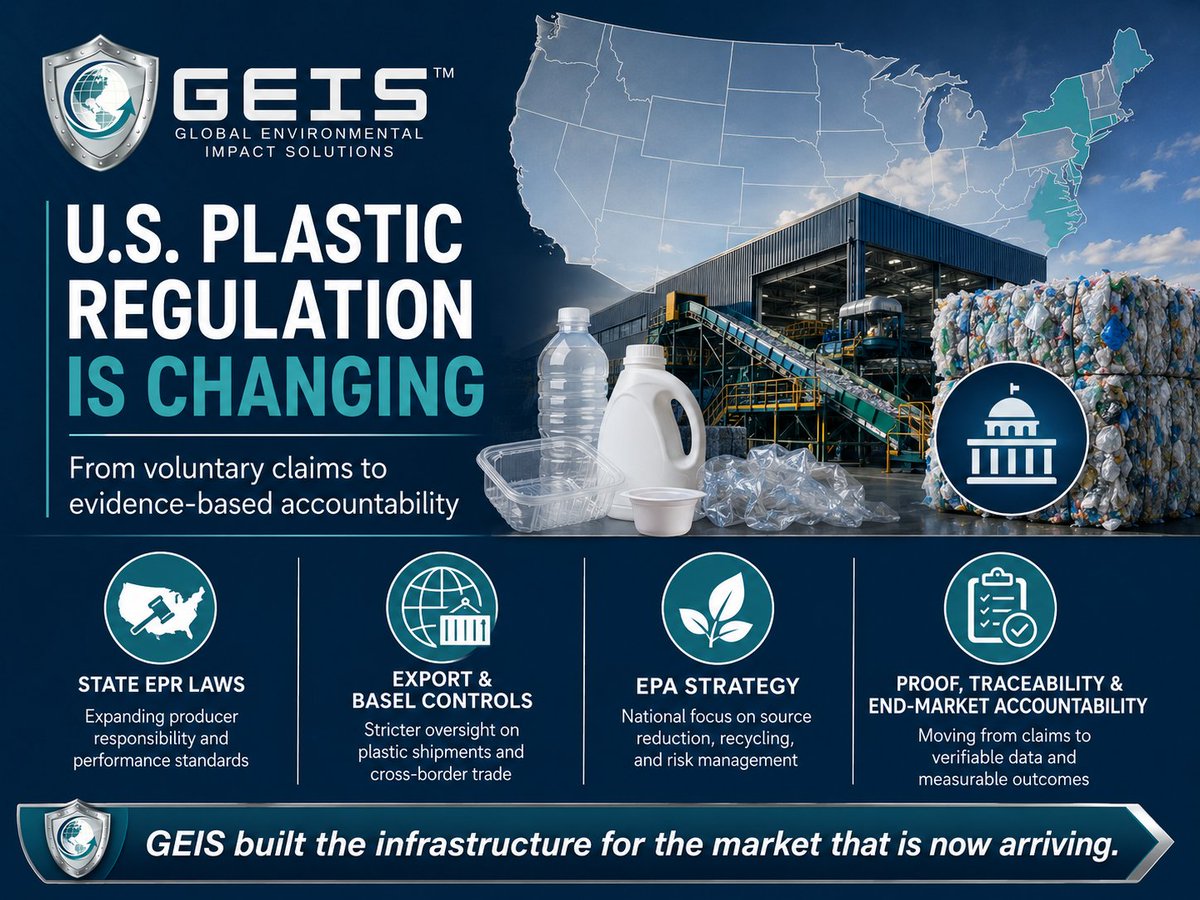
The United States is entering a new phase of plastic accountability.
For years, plastic recovery in the U.S. has operated through a fragmented system of local recycling programs, voluntary sustainability claims, inconsistent material markets, and limited national standardization.
That model is changing.
The U.S. does not currently have one single federal plastic packaging law like the EU Packaging and Packaging Waste Regulation.
Instead, the pressure is building through several layers at once:
🇺🇸 EPA recycling and plastic pollution strategies
📦 State-level Extended Producer Responsibility laws
🚛 Basel-related international shipment restrictions
♻️ Stronger scrutiny of recycling claims
📊 Corporate ESG reporting expectations
🧾 Buyer demand for proof, traceability, and end-market accountability
This matters because plastic accountability is no longer only about whether something was “collected” or labeled “recyclable.”
The real questions are becoming:
What material was it?
Where did it come from?
Was it clean, mixed, contaminated, or compatible?
Who handled it?
Where was it processed?
Was there a verified end market?
Was the claim supported by evidence?
Was the activity above a regulatory baseline?
Could the record withstand audit review?
That is the shift.
The U.S. plastic system is moving away from broad recycling language and toward evidence-based responsibility.
State EPR laws are forcing producers to take greater responsibility for packaging after use.
International waste shipment rules are making plastic exports more complex and more controlled.
EPA’s national strategies are emphasizing stronger recycling markets, better infrastructure, contamination reduction, and lifecycle plastic pollution prevention.
Corporate buyers are no longer just asking for impact.
They are asking for proof.
That is exactly why Global Environmental Impact Solutions built the Plastic Impact Protocol™ v4.5 and the GEIS Registry™.
PIP™ v4.5 was designed for the market that is now arriving:
✅ Verified material identity
✅ Chain-of-custody documentation
✅ Jurisdictional tagging
✅ Regulatory baseline separation
✅ Machine-readable Claim Packages™
✅ Registry-controlled credit issuance
✅ Audit-ready environmental claims
✅ Evidence of final material outcome
The future of plastic recovery in the United States will not be built on vague claims, export displacement, or unsupported recycling narratives.
It will be built on governed infrastructure.
It will require verified data.
It will require credible recovery pathways.
It will require systems that can connect real-world collection, processing, registry controls, and claims substantiation.
That is the standard #GEIS has built.
Plastic accountability is becoming a data, governance, and infrastructure market.
GEIS is positioned for that future.
Plastic Credits with Purpose and Precision.
#PlasticCredits #CircularEconomy #EPR #PlasticRecycling #PlasticPollution #GEIS #PlasticImpactProtocol #GEISRegistry #ESG #WasteManagement #RecyclingInfrastructure #EnvironmentalMarkets #ChainOfCustody #Sustainability1
3
8
186
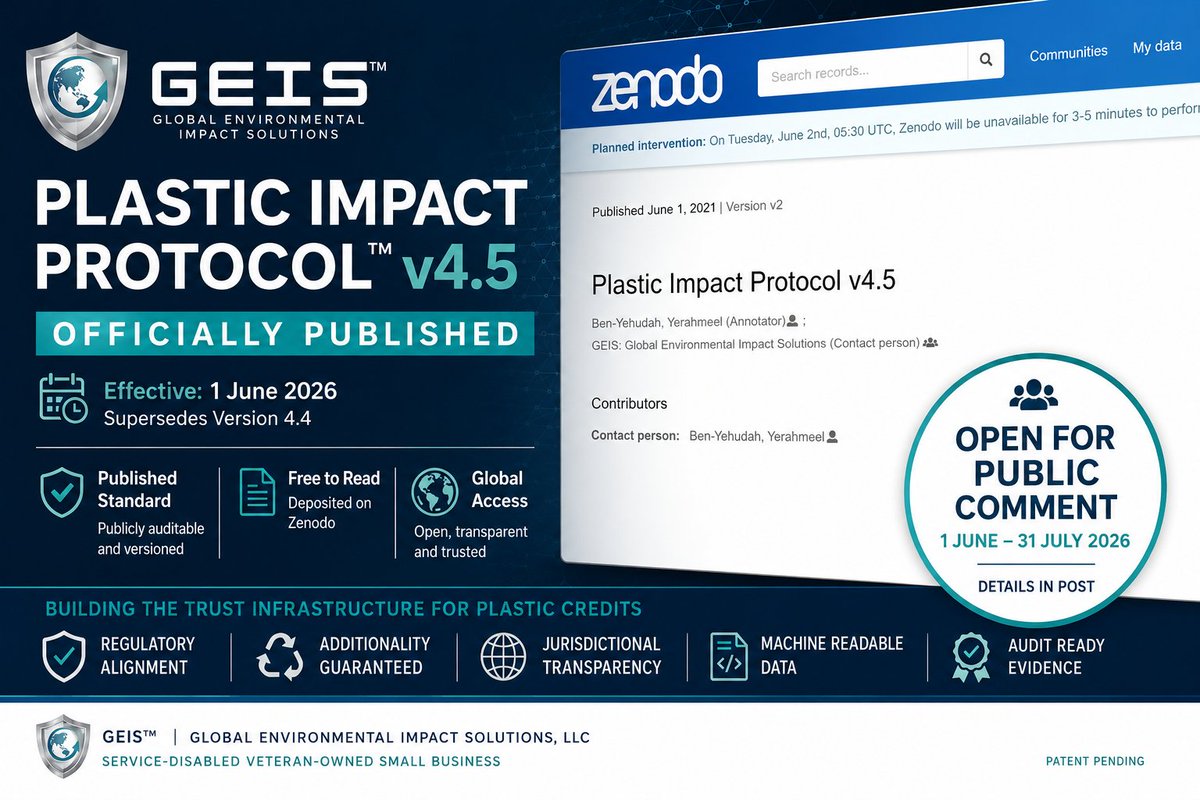
🚨 GEIS Publishes Plastic Impact Protocol™ Version 4.5
Global Environmental Impact Solutions, LLC has officially published Plastic Impact Protocol™ Version 4.5, effective 1 June 2026.
PIP™ v4.5 supersedes Version 4.4 and continues the Protocol’s published, versioned, publicly auditable lineage.
The full standard has been deposited on @ZENODO_ORG and is free to read:
doi.org/10.5281/zenodo.20482…
━━━━━━━━━━━━━━━━━━━━━━
♻️ WHY VERSION 4.5 MATTERS
The Plastic Impact Protocol™ is the published governing standard for plastic credits.
It was built to address the structural failure modes of the plastic credit market at the architectural level, not the marketing level.
PIP™ exists because credible plastic credits require more than broad sustainability claims.
They require:
✅ Verified recovery
✅ Chain-of-custody documentation
✅ Registry controls
✅ Claims substantiation
✅ Audit-ready evidence
✅ Regulatory alignment
✅ Machine-readable data infrastructure
Version 4.5 extends this framework into the regulatory and machine-readable layer increasingly required by corporate buyers, ESG teams, auditors, and compliance-driven environmental markets.
━━━━━━━━━━━━━━━━━━━━━━
🧾 WHAT IS NEW IN PIP™ VERSION 4.5
🔹 Regulatory Alignment Framework — Section 1.4
PIP™ is now expressly structured to support data integrity, chain-of-custody documentation, and claims substantiation for regulatory environments including:
• EU Packaging and Packaging Waste Regulation
• Corporate Sustainability Reporting Directive
• Extended Producer Responsibility frameworks
PIP™ provides evidence and audit infrastructure that may support these obligations.
It does not replace, guarantee, or constitute compliance with any law or regulation.
━━━━━━━━━━━━━━━━━━━━━━
🔹 PPWR Producer Responsibility Baseline — Section 6.3
Recovery activity already required to meet PPWR obligations is now treated as a regulatory baseline.
That means only documented activity above what the law already requires can support new credit issuance.
This is a critical safeguard for additionality, integrity, and buyer confidence.
━━━━━━━━━━━━━━━━━━━━━━
🔹 Jurisdictional Tagging Framework — Section 6.4
Every batch and credit lot recorded in the GEIS Registry™ now carries a controlled Jurisdictional Tag.
This gives corporate buyers, ESG teams, and auditors a consistent way to organize plastic recovery activity across multiple regulatory environments.
━━━━━━━━━━━━━━━━━━━━━━
🔹 GEIS Machine-Readable Data Schema — Appendix 10
Every Claim Package™ now includes a machine-readable JSON file designed for:
• Corporate ESG reporting systems
• Regulatory data workflows
• Independent audit platforms
• Registry-level data verification
• Structured environmental claims review
Plastic accountability is becoming a data infrastructure market.
PIP™ v4.5 was built for that reality.
━━━━━━━━━━━━━━━━━━━━━━
🔹 Draft Pyrolysis to Secondary Material Methodology — Reserved Annex C
Draft Methodology C-1, Pyrolysis to Secondary Material, has been published in draft form and is now open for public comment.
This methodology is not activated.
No credits may be issued under Annex C unless and until GEIS publishes a formal Activation Notice after the public comment period closes.
━━━━━━━━━━━━━━━━━━━━━━
📢 PUBLIC COMMENT PERIOD NOW OPEN
Draft Methodology C-1 is open for public comment for a period of not less than 60 days, beginning 1 June 2026.
GEIS welcomes review and feedback from:
✅ Recyclers
✅ Technology providers
✅ Verifiers
✅ Corporate buyers
✅ Regulators
✅ Community members
✅ Environmental market participants
To submit a comment, email:
📧 Contact@GEISolutions.com
Subject line:
PIP Annex C Comment
Comments should be submitted on or before 31 July 2026.
Every comment received during the public comment period will help inform whether and how the methodology is activated.
━━━━━━━━━━━━━━━━━━━━━━
🌐 READ THE FULL STANDARD
Plastic Impact Protocol™ Version 4.5 and Draft Methodology C-1 are deposited on Zenodo and free to read:
doi.org/10.5281/zenodo.20482…
━━━━━━━━━━━━━━━━━━━━━━
Global Environmental Impact Solutions, LLC
Service-Disabled Veteran-Owned Small Business
Patent Pending
Plastic Credits with Purpose and Precision.
#PlasticCredits #CircularEconomy #ESG #PPWR #CSRD #EPR #PlasticPollution #PlasticImpactProtocol #GEISRegistry #RecyclingInfrastructure #EnvironmentalMarkets #Sustainability #AuditReady #MachineReadableData #ChainOfCustody
1
2
12
658
🚨 Partnership Announcement ♻️🚛
Global Environmental Impact Solutions is excited to welcome @Dutchdumpsters into our growing partner ecosystem.
As #GEIS continues building verifiable infrastructure for plastic recovery and eco-credit governance, reliable waste removal and transport are critical parts of the chain.
Flying Dutchman Dumpsters strengthens that process by supporting the movement of recovered material from collection points into proper recovery and processing pathways. ♻️🏭
🔷️🔷️🔷️
🚛 Waste removal support
📦 Material transport logistics
♻️ Plastic recovery coordination
🏭 Recovery pathway support
🔗 Chain-of-custody accountability
📊 Measurable environmental impact
🔷️🔷️🔷️
This partnership helps GEIS connect local operational capability with a larger system designed for verified recovery, transparent documentation, and purpose-driven environmental impact.
Together with the community of @PlasticCTO , we are building the infrastructure needed to move plastic recovery from intention into measurable action.
♻️ Real recovery.
🚛 Reliable transport.
🛡️ Verified governance.
🌎 Purpose-driven impact.
1
3
12
372
Something big is on the horizon.
At Global Environmental Impact Solutions, we have been building quietly and deliberately, and we are thrilled to share that new partnerships are coming.
Our collaboration with a soon to be released feedstock pre-processing partner is one piece of a larger picture that we will be unveiling soon, and it represents exactly the kind of alignment we have been working toward since day one.
None of this happens in isolation. The strength behind #GEIS comes from a community that believes real, verifiable plastic impact is possible.
To everyone supporting $Plastic and rallying behind @PlasticCTO, thank you. You are the reason this revolution has momentum.
The Plastic Impact Protocol™ was designed to close the gaps that have held the plastic credit market back, and the partners joining us share that same standard of integrity. Together we are positioned to deliver measurable impact at a global scale.
Stay close. The announcements are coming, and they are worth the wait.
1
5
16
273
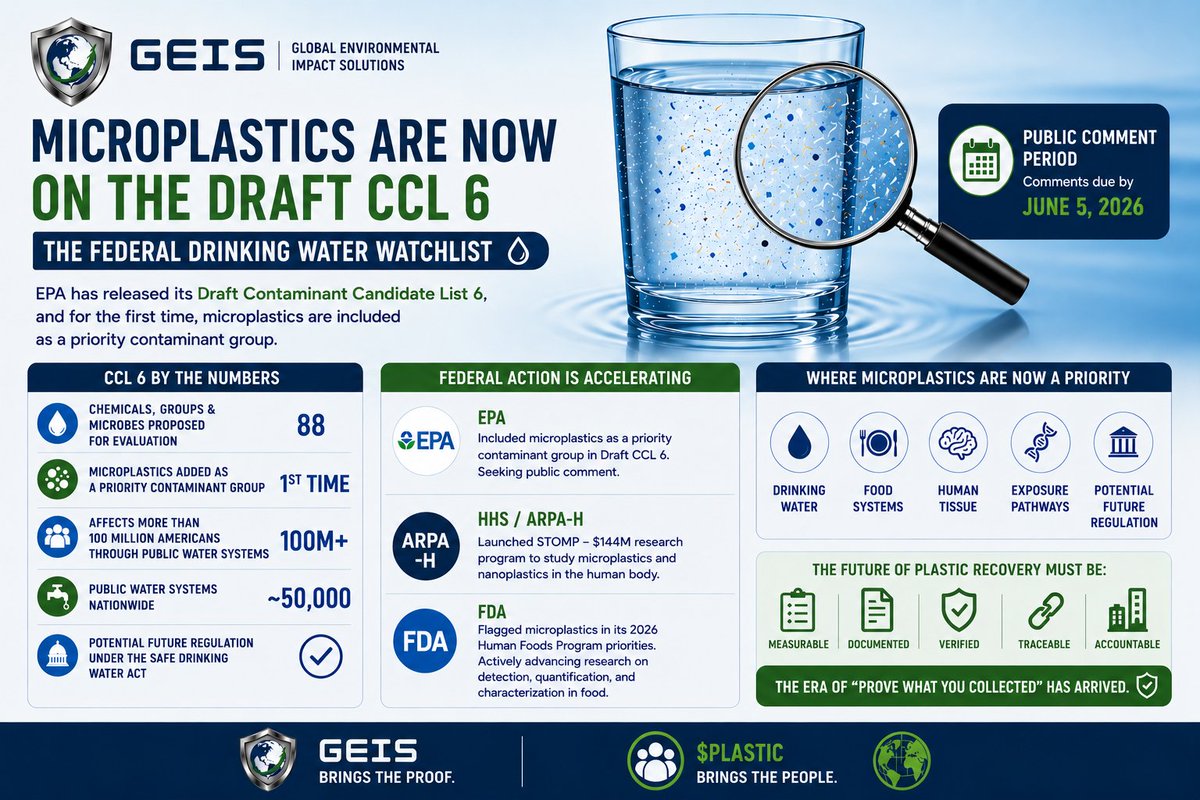
GEIS has submitted its formal public comment to the U.S. Environmental Protection Agency (@EPA ) in response to Draft Contaminant Candidate List 6 (CCL 6).
For the first time in the history of the federal drinking water watchlist, microplastics have been included as a priority contaminant group under the Safe Drinking Water Act. That is a significant moment. And GEIS made sure our voice was on the record.
Our comment addressed five core recommendations to EPA:
Measurable, standardized verification requirements for plastic recovery claims. Chain-of-custody documentation from collection to end-of-life.
Engagement with third-party governance standards, including the Plastic Impact Protocol™, as reference architecture for future regulatory frameworks.
Investment in smart waste infrastructure that enables accountability at scale. Upstream prevention as the primary long-term federal strategy over downstream remediation alone.
We also urged EPA to design the CCL 6 framework broadly enough to accommodate nanoplastics as federal research and detection capabilities advance. The threat does not end at the micro scale. The policy framework should not either.
And we did something else. We formally and directly requested the opportunity to engage with the EPA Office of Water as this regulatory process moves forward. GEIS is not just a commenter. We are a solution provider. The Plastic Impact Protocol™ is a patent-pending governing standard built specifically for this moment, and we believe it is directly relevant to the questions EPA is now beginning to ask.
We also want to acknowledge the other voices that joined this effort. The Plastic Impact Network submitted a formal comment alongside our partners. The $Plastic Community submitted a community statement on behalf of citizens who believe accountability must be visible and accessible to the people most affected and those who believe this problem demands systems, not just awareness.
Multiple submissions. One direction. Prove what you collected.
The public comment period closes June 5, 2026.
If you have not yet submitted your own comment, there is still time.
Docket EPA-HQ-OW-2022-0946 at regulations.gov.
GEIS — Brings the Proof. 🛡️
1
4
11
141
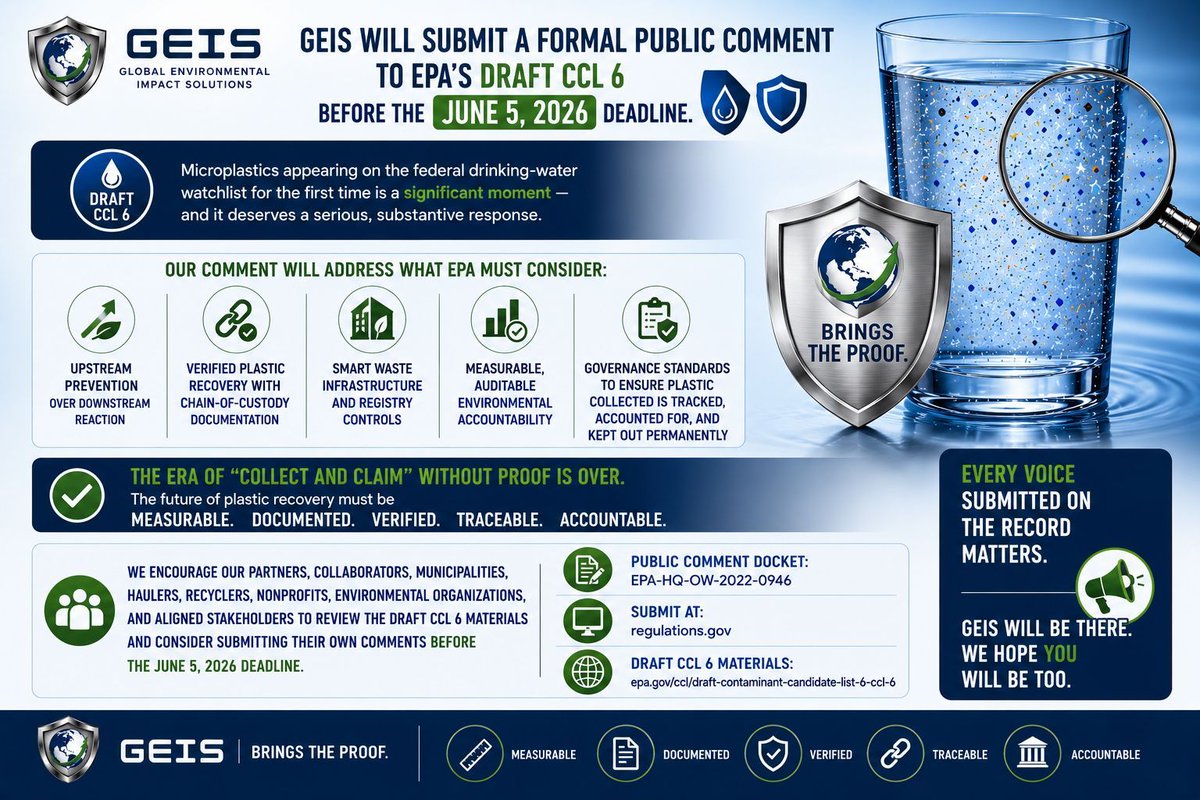
GEIS will be submitting a formal public comment to EPA's Draft Contaminant Candidate List 6 (CCL 6) before the June 5, 2026 deadline. 💧🛡️
Microplastics appearing on the federal drinking-water watchlist for the first time is a significant moment — and it deserves a serious, substantive response.
Our comment will address what we believe EPA must consider as this process moves forward:
— Upstream prevention over downstream reaction
— Verified plastic recovery with chain-of-custody documentation
— Smart waste infrastructure and registry controls
— Measurable, auditable environmental accountability
— The importance of governance standards that ensure plastic collected through cleanup initiatives is actually accounted for, tracked, and kept out of the environment permanently
The era of "collect and claim" without proof is over.
The future of plastic recovery must be measurable. Documented. Verified. Traceable. Accountable.
We encourage our partners, collaborators, municipalities, haulers, recyclers, nonprofits, environmental organizations, and aligned stakeholders to review the Draft CCL 6 materials and consider submitting their own comments before the June 5, 2026 deadline.
Public comment docket: EPA-HQ-OW-2022-0946
Submit at: regulations.gov
Draft CCL 6 materials: epa.gov/ccl/draft-contaminan…
Every voice submitted on the record matters.
GEIS will be there.
We hope you will be too.
GEIS — Brings the Proof. 🛡️
1
4
13
166
#GEIS is aware that @EPA has released its Draft Contaminant Candidate List 6, known as CCL 6. 💧🔬
This is the federal drinking-water watchlist for contaminants that are not currently regulated in public water systems, but may require future regulation under the Safe Drinking Water Act.
For the first time, EPA’s Draft CCL 6 includes microplastics as a priority contaminant group.
That matters...
Microplastics are no longer just an environmental concern.
They are now part of the national drinking-water conversation.
EPA is currently seeking public comment on Draft CCL 6, including the listing of microplastics, with comments due by June 5, 2026.
GEIS will be submitting a formal response supporting serious federal attention on microplastics and emphasizing the importance of upstream prevention, verified plastic recovery, chain-of-custody documentation, smart waste infrastructure, registry controls, and measurable environmental accountability.
We also encourage our partners, collaborators, municipalities, haulers, recyclers, nonprofits, environmental organizations, and aligned stakeholders to review the Draft CCL 6 materials and consider submitting their own comments.
The future of plastic recovery cannot only be reactive.
It must be measurable.
It must be documented.
It must be verified.
It must be accountable.
GEIS will continue building toward that future.
EPA Draft CCL 6:
epa.gov/ccl/draft-contaminan…
Federal Register Notice:
federalregister.gov/document…
Plastic Credits with Purpose and Precision.
2
4
14
373
We are truly excited to team up with amazing MRFs like @312Recycle. The future sure does look bright with partners like #IndependentRecyclingServices
linkedin.com/company/indepen…
1
2
13
83
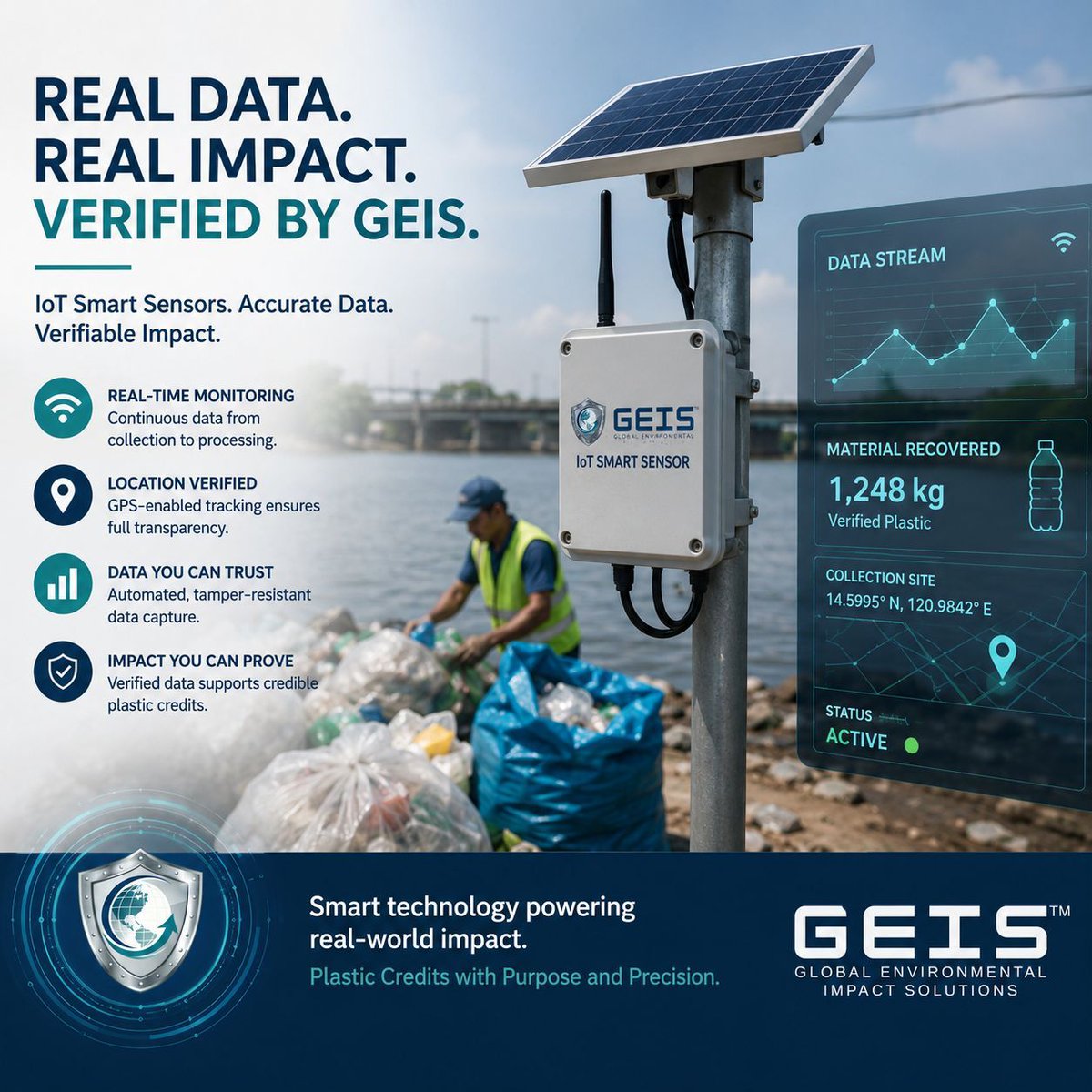
GEIS is Conducting a Case Study on IoT Smart Waste Technology
At Global Environmental Impact Solutions, LLC, our mission is to close the gap between environmental intention and measurable, verifiable impact.
That mission is now expanding into one of the most underutilized areas of environmental infrastructure:
📡 IoT-enabled smart waste and recycling technology.
GEIS is currently conducting a case study in FL, in partnership with MRFs, using ultrasonic fill-level sensors and GPS-linked data systems across commercial and residential waste containers.
The goal is simple:
Generate real-world data.
Measure operational impact.
Quantify emissions reductions.
Build the evidence architecture needed to scale smarter waste infrastructure.
━━━━━━━━━━━━━━━━━━━━━━
🚛 THE PROBLEM WITH FIXED ROUTES
Across the country, waste collection trucks often run fixed calendar routes whether containers are 20% full or 100% full.
That means unnecessary miles.
Unnecessary fuel use.
Unnecessary labor hours.
Unnecessary vehicle wear.
Unnecessary emissions.
Smart waste technology helps solve this at the source.
📡 Fill-level sensors transmit real-time container data.
📍 GPS-linked systems support location-based tracking.
🚛 Collection can be triggered by actual need instead of fixed assumptions.
🗺️ Routes can be dynamically optimized based on real conditions.
That is a major shift from reactive waste collection to data-driven infrastructure.
━━━━━━━━━━━━━━━━━━━━━━
📊 WHY THIS MATTERS
IoT smart waste infrastructure does not solve one problem.
It solves several at the same time.
✅ Operational Cost Reduction
Fewer unnecessary collection runs can reduce fuel costs, labor hours, maintenance, and route inefficiency.
✅ Carbon Emissions Reduction
Fewer diesel truck miles means lower CO₂ emissions per collection cycle.
✅ Recycling Quality Improvement
Fill-level monitoring can help identify overflow risks and contamination patterns before they damage material recovery outcomes.
✅ Vehicle and Infrastructure Longevity
Optimized routing reduces unnecessary wear on trucks, containers, and supporting infrastructure.
✅ Risk Reduction
Overflow events create public health, liability, and reputational risks. Real-time monitoring allows earlier intervention.
✅ Data-Driven Credit Pathways
Avoided diesel emissions from optimized routing can be calculated using recognized emissions factors, creating a potential foundation for verified waste logistics carbon credits governed through the GEIS Registry™ and Plastic Impact Protocol™ framework.
━━━━━━━━━━━━━━━━━━━━━━
💡 WHY GEIS IS BUILDING THIS CASE STUDY
GEIS is not simply observing the future of waste infrastructure.
We are building the data layer needed to support it.
Our case study is designed to produce:
📍 Operational baseline data
🚛 Route optimization impact data
🌱 Emissions reduction calculations
📡 Smart container monitoring data
🧾 Evidence records for verification
🏛️ Scalable reporting architecture for municipalities, haulers, recyclers, and grant partners
The goal is to prove it locally, document it properly, and create a model that can scale nationally.
━━━━━━━━━━━━━━━━━━━━━━
📋 GRANT AND EXPANSION PATHWAYS
GEIS is actively pursuing funding opportunities to support expansion of this pilot, including programs aligned with recycling infrastructure, solid waste modernization, emissions reduction, and environmental resilience.
Potential pathways include:
🔹 EPA Solid Waste Infrastructure for Recycling initiatives
🔹 Florida DEP solid waste and recycling grant programs
🔹 EPA Recycling Education and Outreach opportunities
🔹 Florida resilience and infrastructure sustainability programs
As a Service-Disabled Veteran-Owned Small Business, GEIS brings a strong position to partnerships and grant opportunities that prioritize innovation, infrastructure, small business participation, and measurable public benefit.
━━━━━━━━━━━━━━━━━━━━━━
🔗 THE BIGGER PICTURE
The waste and plastic crisis is not only a collection problem.
It is a data problem.
You cannot verify what you do not measure.
You cannot govern what you cannot track.
You cannot scale what you cannot prove.
That is why GEIS is building systems that connect field-level activity, smart infrastructure, registry controls, verification logic, and audit-ready environmental claims.
IoT smart waste infrastructure is the next layer of that architecture.
Smart containers.
Real-time data.
Optimized logistics.
Verified impact.
Governed through purpose-built environmental infrastructure.
🌐 geisolutions.com
Plastic Credits with Purpose and Precision.
#IoT #SmartWaste #WasteManagement #Recycling #Sustainability #CarbonCredits #GreenTech #EnvironmentalImpact #SDVOSB #VeteranOwnedBusiness #CleanTech #TampaBay #PlasticImpactProtocol #GEISRegistry #CircularEconomy
2
8
16
655
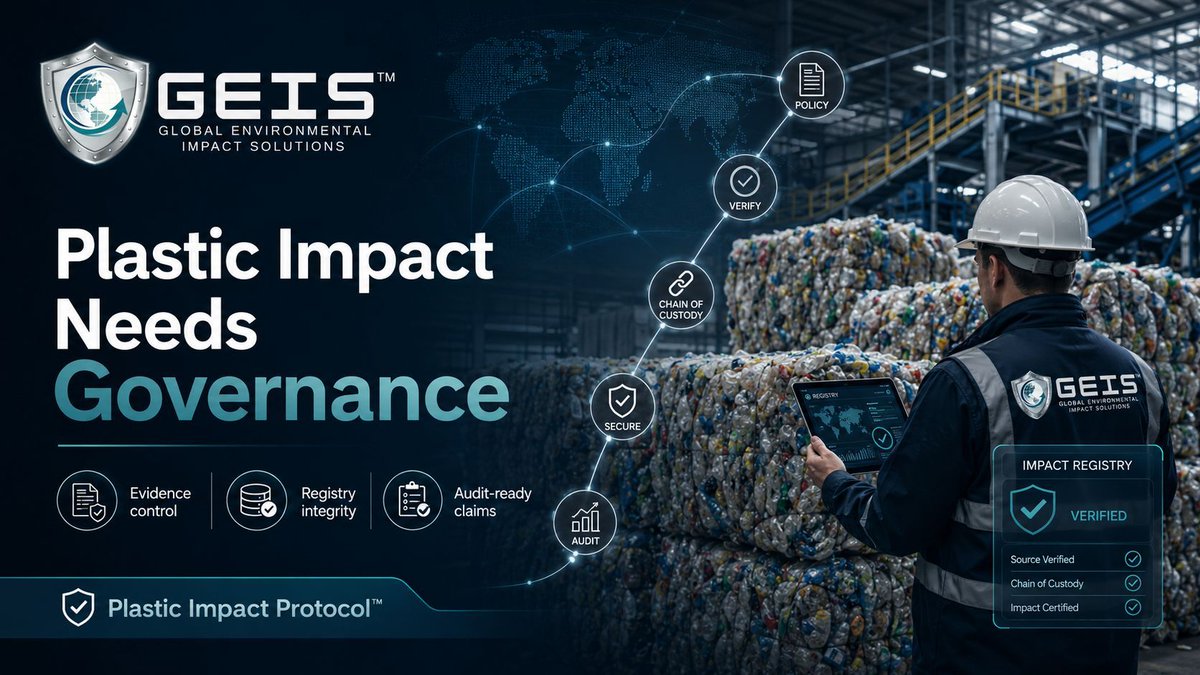
Plastic accountability is no longer just a sustainability issue.
It is becoming a governance issue.
As EPR laws, packaging rules, circular economy mandates, and environmental disclosure expectations continue to expand, companies need more than good intentions.
They need systems that can govern the claim.
Because without governance, plastic impact becomes vulnerable to:
✅ Unsupported recovery claims
✅ Weak chain-of-custody
✅ Double counting
✅ Unverified material movement
✅ Inconsistent reporting
✅ Unclear credit ownership
✅ Marketing language that outruns the evidence
That is why Global Environmental Impact Solutions built the Plastic Impact Protocol™.
PIP™ was created as a governing framework for verified plastic impact.
It defines how plastic recovery is documented.
It controls how evidence is reviewed.
It connects verified kilograms to registry records.
It establishes the pathway for credit issuance.
It supports retirement controls and audit-ready claims.
Because the future of plastic recovery will not be led by loose claims.
It will be led by governed systems.
The registry must control the truth.
The evidence must support the claim.
The protocol must govern the process.
That is the standard GEIS has built.
Plastic Credits with Purpose and Precision.
3
12
300
Extended Producer Responsibility is changing the future of plastic accountability.
EPR laws are moving the market away from voluntary sustainability language and toward measurable responsibility.
That means corporations can no longer rely on broad claims about recycling, recovery, or circularity.
They need structured evidence.
They need traceable material flows.
They need verified recovery data.
They need chain-of-custody.
They need systems that support audits, reporting, legal review, and stakeholder trust.
That is why Global Environmental Impact Solutions built the Plastic Impact Protocol™.
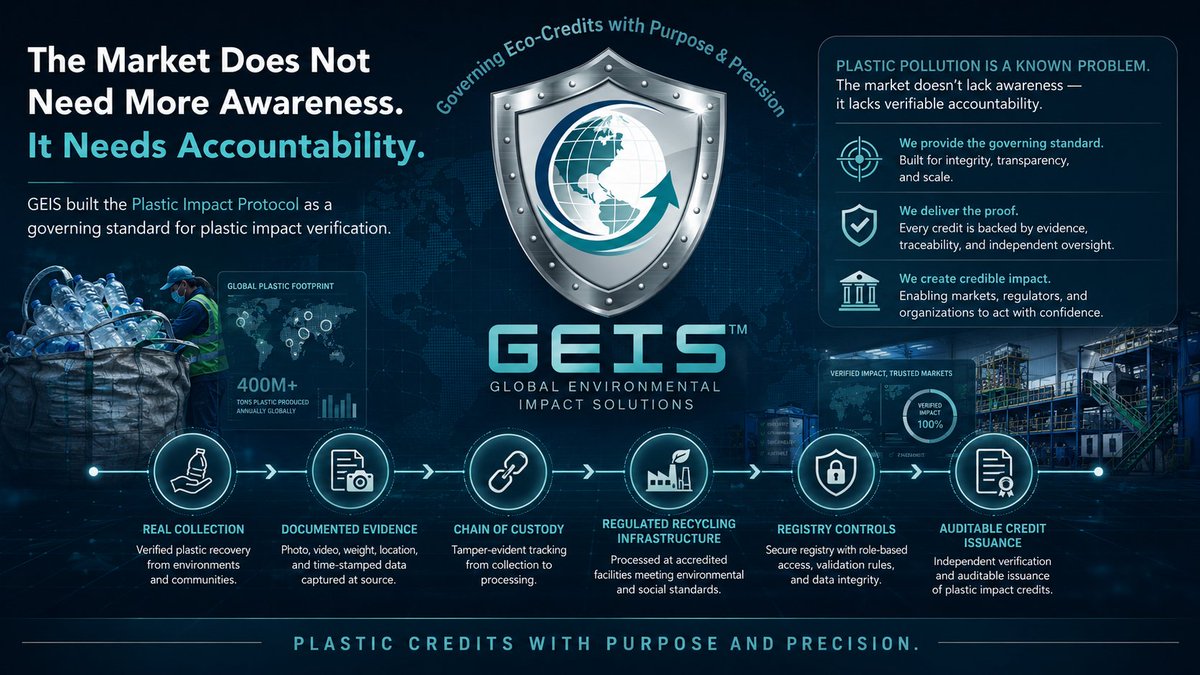
GEIS has already created a governing framework that connects real-world plastic recovery with documented evidence, regulated processing infrastructure, registry controls, and audit-ready credit issuance.
Because as EPR frameworks expand, the question is no longer:
“Did your company support plastic recovery?”
The real question is:
“Can you prove what was recovered, where it went, how it was verified, and what claim is supported by the record?”
That is the standard GEIS has built.
EPR is creating demand for accountability.
GEIS has built the verification infrastructure to support it.
Plastic Credits with Purpose and Precision.
2
9
107
The next generation of plastic accountability will not be built on marketing language.
It will be built on proof.
As global packaging rules, EPR laws, and circular economy mandates continue to expand, corporations will need more than sustainability claims.
They will need verified, structured, machine-readable data that can support legal, financial, and environmental accountability.
GEIS built the Plastic Impact Protocol™ for this exact moment.
PIP™ was designed to move plastic recovery beyond vague claims and into a disciplined system of:
✅ Evidence capture
✅ Chain-of-custody
✅ Regulated facility verification
✅ Registry-controlled issuance
✅ Credit retirement controls
✅ Audit-ready claims packages
This matters because a plastic credit is only as credible as the verified record behind it.
The registry must be the source of truth.
The evidence must support the claim.
The protocol must govern the process.
That is the standard GEIS has built.
Not after the market demanded it.
Before.
GEIS is not chasing the future of plastic accountability.
We are helping define it.
3
13
124
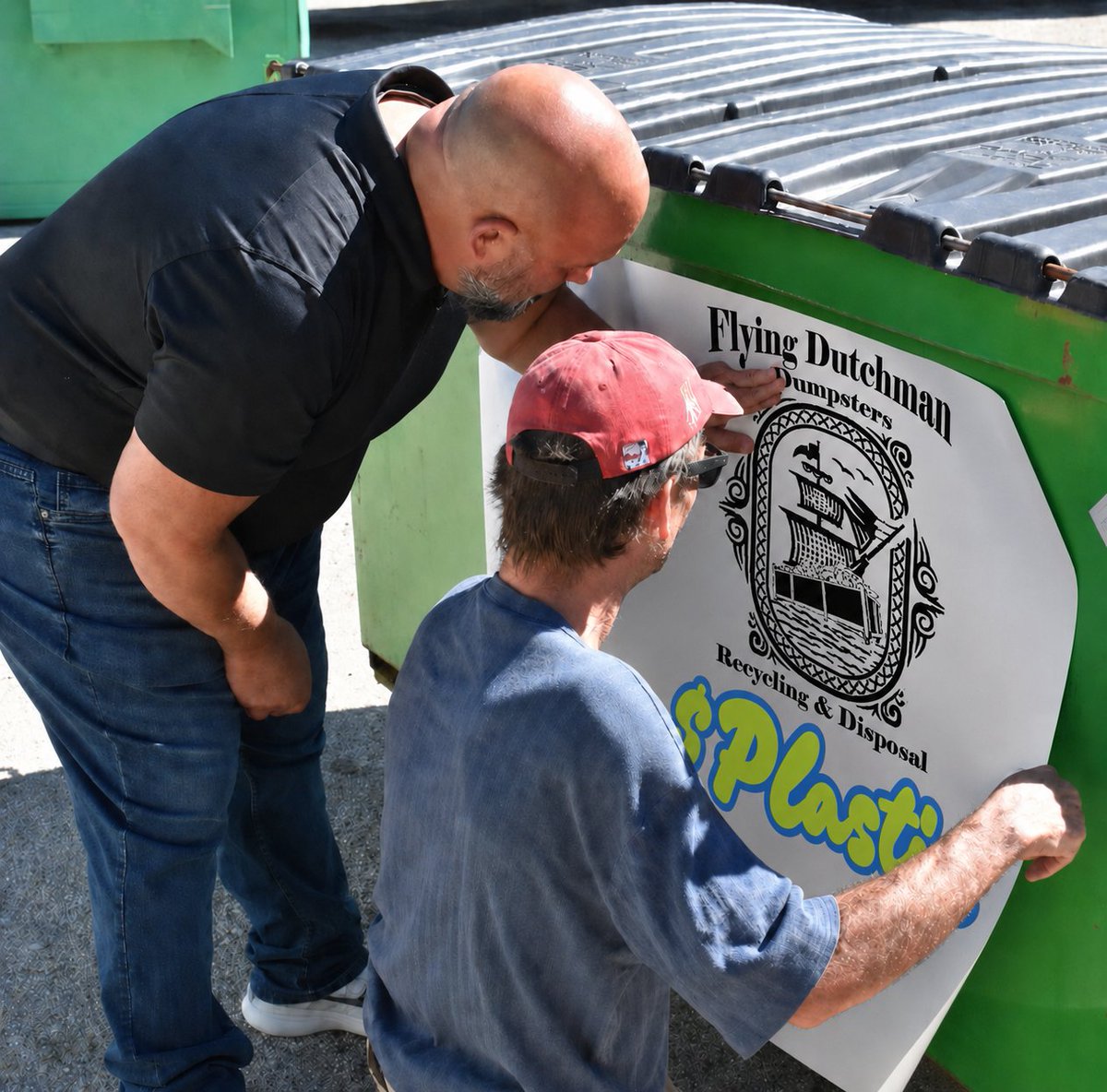
We are honored and blessed to be partnering with such an amazing company like @benjamin_h55074 with #FlyingDutchmanDumpsters!
Working with them allows us to scale our cleanup initiatives in local communities with consistent growth and real, measurable, and verifiable impact via the PIP™.
May 15

$Plastic is continuing to turn mission into infrastructure. ♻️⚡🌍
These dumpsters are more than branded containers.
They represent the beginning of a real collection layer that can work in tandem with our broader ecosystem vision.
The goal is simple:
Create visible, practical collection points that can support plastic recovery at multiple levels... from local community cleanup efforts, to individual drop-off participation, to larger commercial-scale recovery initiatives.
When plastic is collected through these kinds of touchpoints, it creates a bridge between the community and the infrastructure needed to actually move material into the recovery pipeline.
That is where our MRF partnerships become so important.
Material Recovery Facilities and recycling / processing partners help provide the next step after collection... sorting, handling, recovery, and processing the material in a way that can connect to real accountability and real verification.
So this is not just about putting a logo on a dumpster.
It is about building a system.
🟢 Community and individual initiatives can help drive local collection
🟢 Commercial programs can help scale the volume
🟢 Dumpster and recovery partners can help create accessible collection points
🟢 MRF partnerships can help connect collected plastic to real processing infrastructure
🟢 @GEISolutions and the Plastic Impact Protocol™ help provide the framework for verification, transparency, and documented impact
This is how cleanup becomes more than a good intention.
This is how it starts becoming structured.
Visible.
Scalable.
And connected.
That is also why $Plastic was built on @solana .
Because a mission like this needs a fast, public, community-powered layer that can move attention, participation, and momentum at scale.
Solana gives the speed.
#GEIS brings the proof.
The infrastructure makes it real.
And the community helps make it move.
1
5
16
447
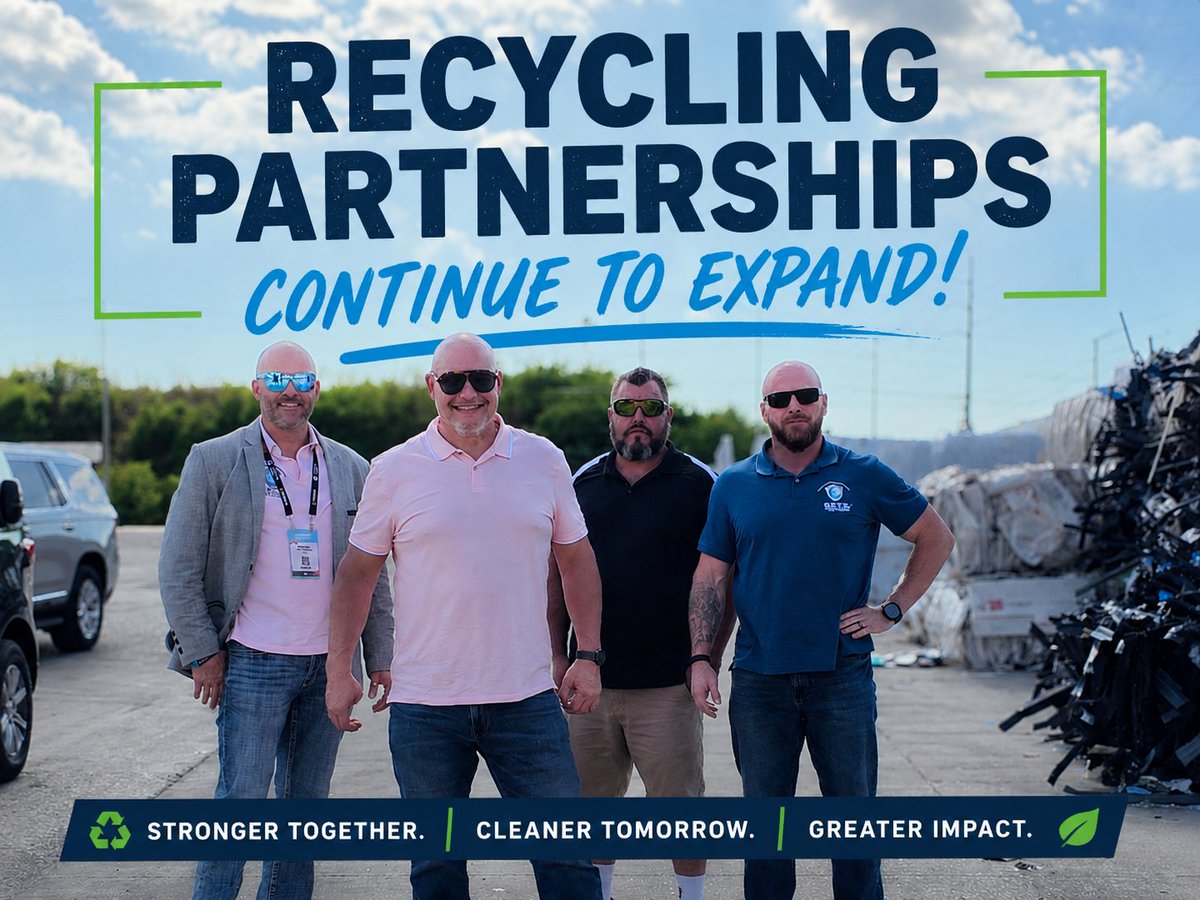
Our partnerships continue to expand!
May 15
$Plastic continues to reshape what people think a #ReFi ecosystem can actually become. ♻️⚡🌍
This is not just a token sitting on @solana waiting for attention.
This is a REVOLUTION being connected to real infrastructure, real verification, and real-world environmental action.
Our partnerships already range across multiple layers of the plastic recovery ecosystem.
🌱 Nonprofit impact partners like @treegens and @MonthlyEarthDay help connect the mission to community action, reforestation, cleanup work, education, and recurring environmental participation.
🏭 Recycling and processing partners (MRFs), help connect the mission to the physical infrastructure needed to collect, sort, process, and verify plastic recovery.
🔬 And now, we are also engaging in strategic partnership discussions with a major company that has already scaled advanced pyrolysis in a way that aligns directly with the Plastic Impact Protocol™ v4.4.
That matters.
Because pyrolysis by itself is not enough.
Recycling by itself is not enough.
Cleanup by itself is not enough.
The industry needs verified collection, documented chain-of-custody, facility-level accountability, real processing pathways, and claim architecture that prevents double-counting and empty environmental claims.
That is exactly why GEIS built the Plastic Impact Protocol™.
And that is why $Plastic was built on Solana.
Solana gives the community speed, visibility, and on-chain movement.
GEIS brings the verification layer.
PIP v4.4 brings the governing standard.
The partners bring the real-world infrastructure.
This is how the flywheels keep expanding.
Community.
Proof.
Processing.
Partnerships.
Receipts.
2
5
16
257
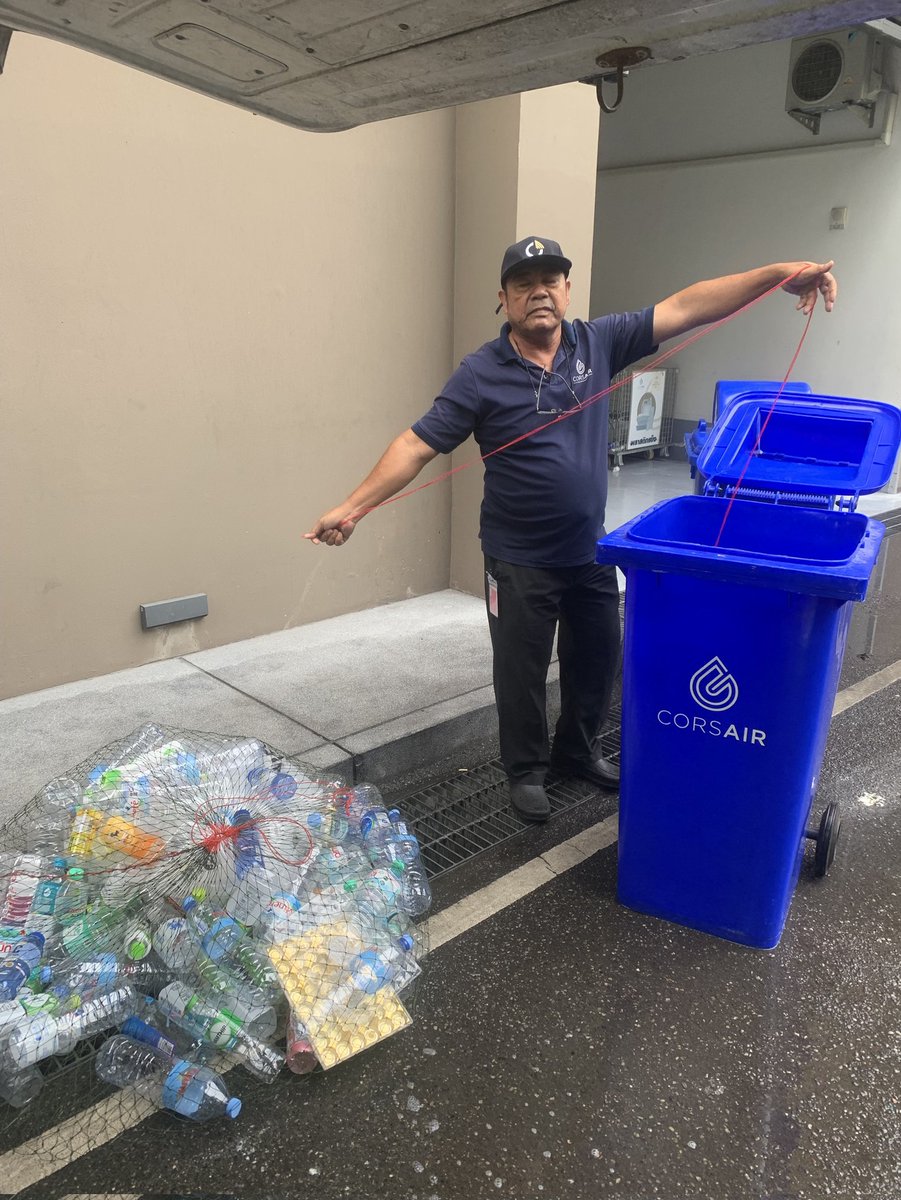
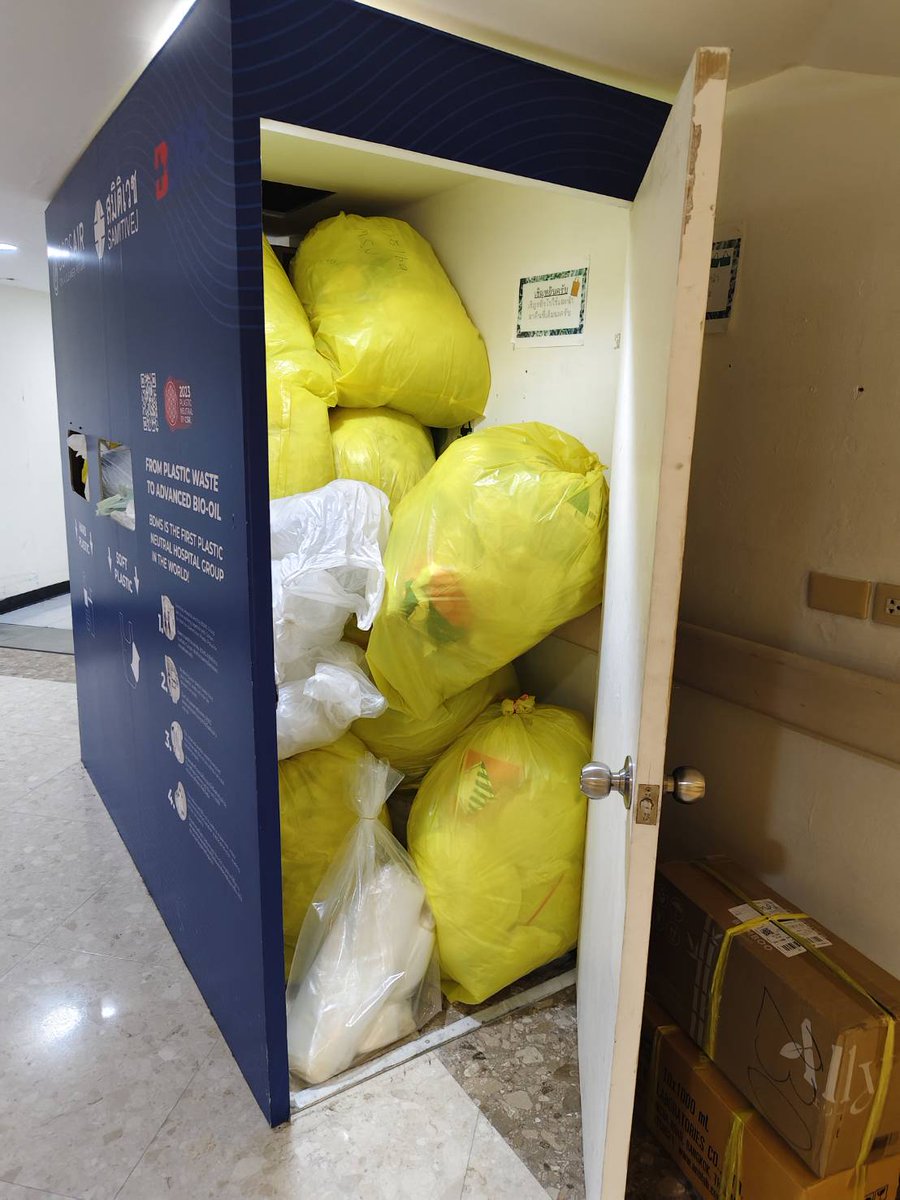
This is precisely what we are looking forward to globally!

14 May 2026 ♻️
Another day of action through Corsair’s Plastic Waste Collection Program in Bangkok — working together with communities, businesses, and organizations to help reduce plastic waste and support a cleaner future.
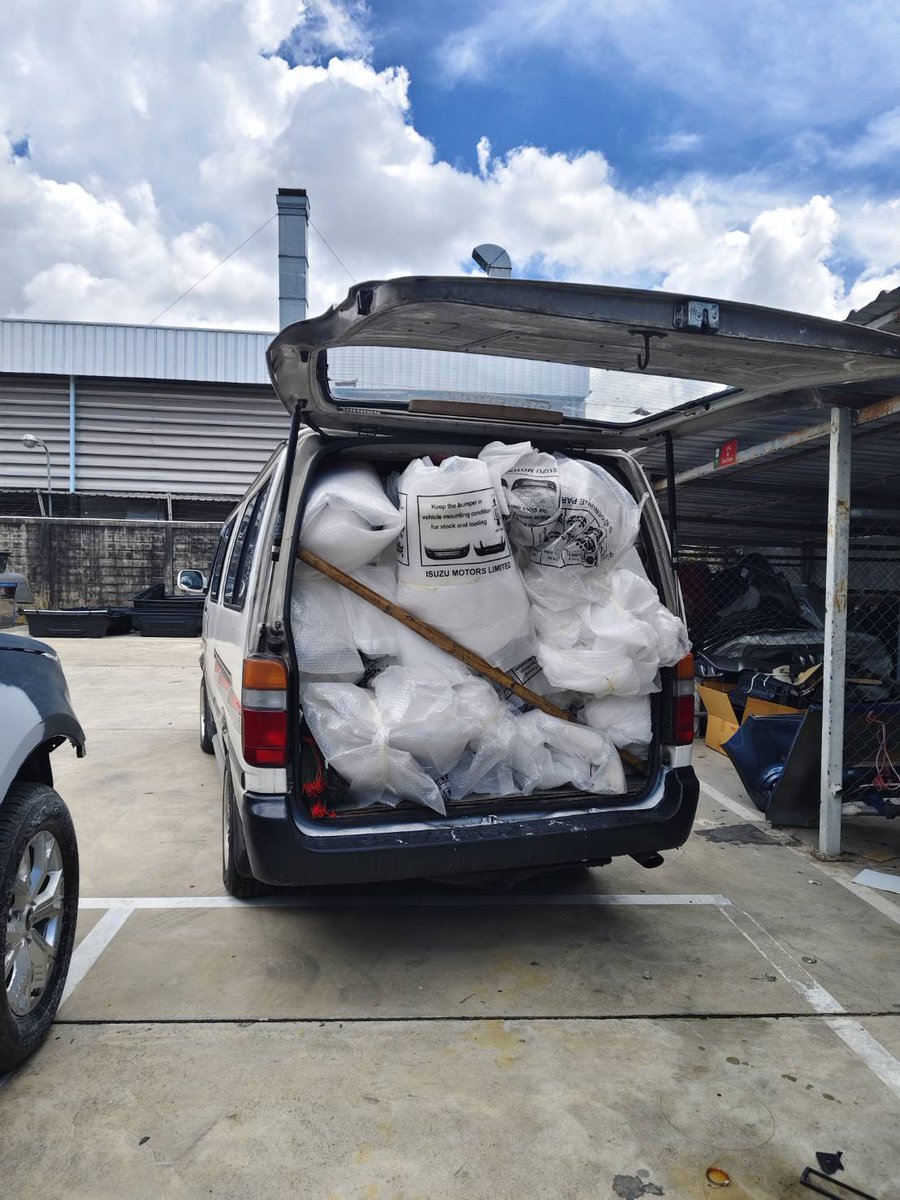
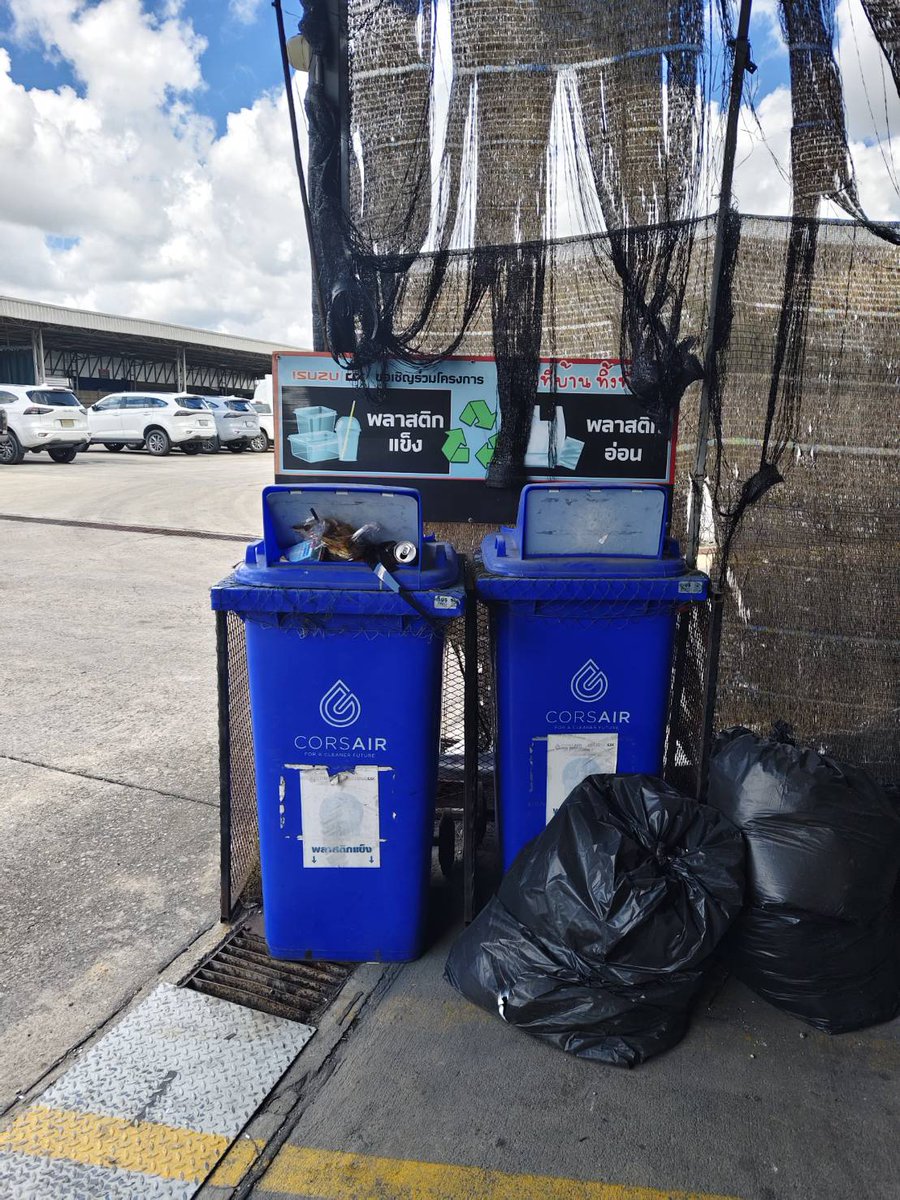
2
9
98