
Good Governance Africa is a research and advocacy organisation that improves government performance. RT≠ endorsement
Joined February 2012
- Tweets 8,436
- Following 1,962
- Followers 12,613
- Likes 2,763
3,453 Photos and videos











The fight for food security in Sub-Saharan Africa is deeply entangled with the rights and futures of its youth, presenting a painful paradox: the agricultural sector, which serves as the backbone of African economies and nutrition, remains the largest driver of child exploitation. Globally, agriculture accounts for a staggering 61% of child labour, a reality felt most acutely in Sub-Saharan Africa, which carries the world’s heaviest burden with 87 million children trapped in work—often in the very fields meant to feed the continent. As the global community observes World Day Against Child Labour today, the 2026 campaign champions the newly adopted Marrakech Global Framework for Action, even as we confront the reality that current progress must accelerate 11 times faster to eliminate this crisis.
In this issue, Africa in Fact connects the dots between agricultural supply chains, climate-driven food scarcity, and the stagnation of child labour numbers across the continent. Flashing a "red card" to exploitation is impossible without first filling empty plates; systemic food insecurity and extreme poverty force vulnerable households to substitute schoolbooks for farming tools. True, sustainable food security cannot be built on the backs of children. By analysing the intersection of responsible supply chains, universal child benefits, and resilient farming practices, this edition dissects how the Marrakesh commitments can be operationalised on African soil. To secure Africa's food supply without compromising its future, policies must pivot toward providing decent work, adequate livelihoods for adults, and robust social safety nets that allow children to return to classrooms where they belong: africainfact.com/category/ai…
63
GGA retweeted

Rigorous research. Fearless advocacy. No political agenda.
Good Governance Africa joins the Nedbank Top Empowerment Conference 2026 as a partner because accountability isn't optional in the next phase of transformation.

1
2
3
74
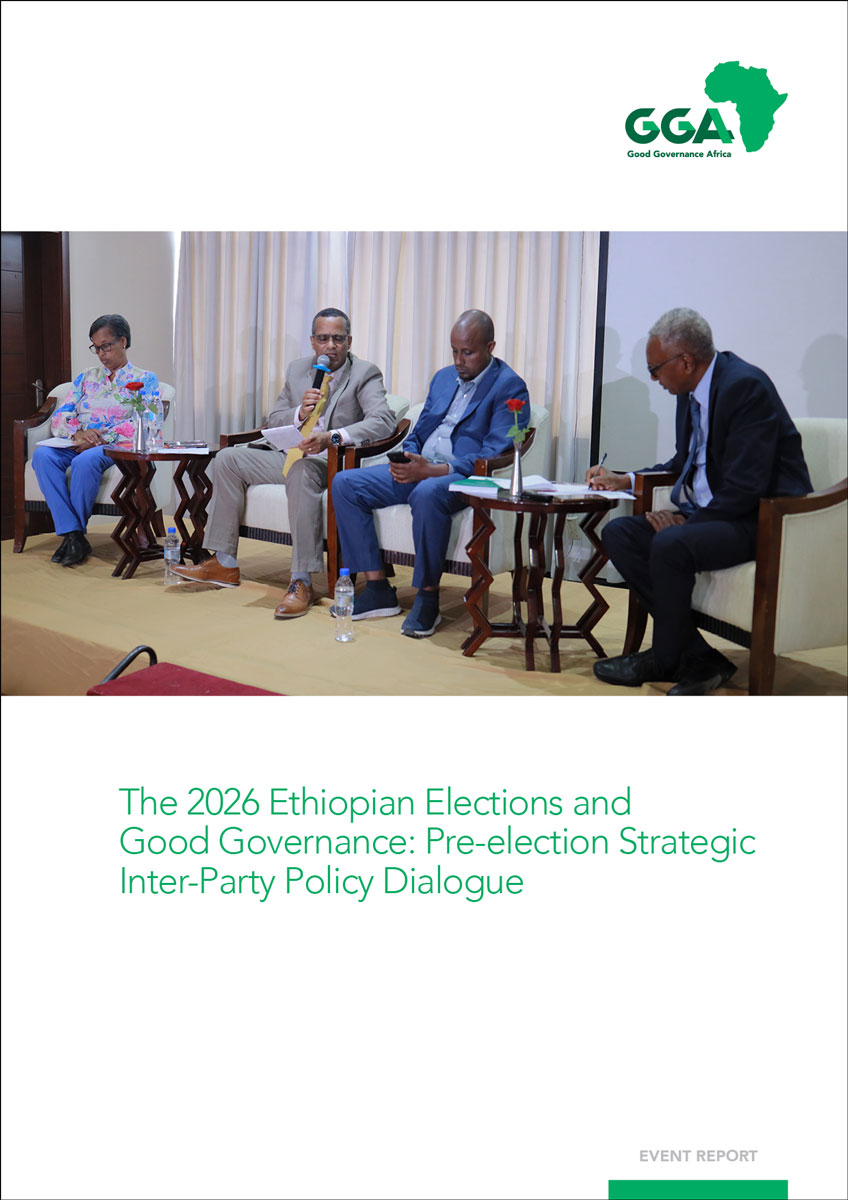
Real stability is built on the inclusion of diverse perspectives. This report captures a landmark collaboration between Good Governance Africa HARO, senior academics, and a broad spectrum of Ethiopia’s political landscape. By inviting parties to defend their manifestos against empirical evidence and civil society scrutiny, the dialogue series moved beyond the "ruling vs. opposition" binary. Instead, it created a collaborative environment where the Prosperity Party and various opposition leaders addressed the critical challenges of youth empowerment and administrative reform. This document serves as a blueprint for how inclusive, evidence-led debate can bridge the gap between political theory and national practice: gga.org/the-2026-ethiopian-e…
66
GGA retweeted

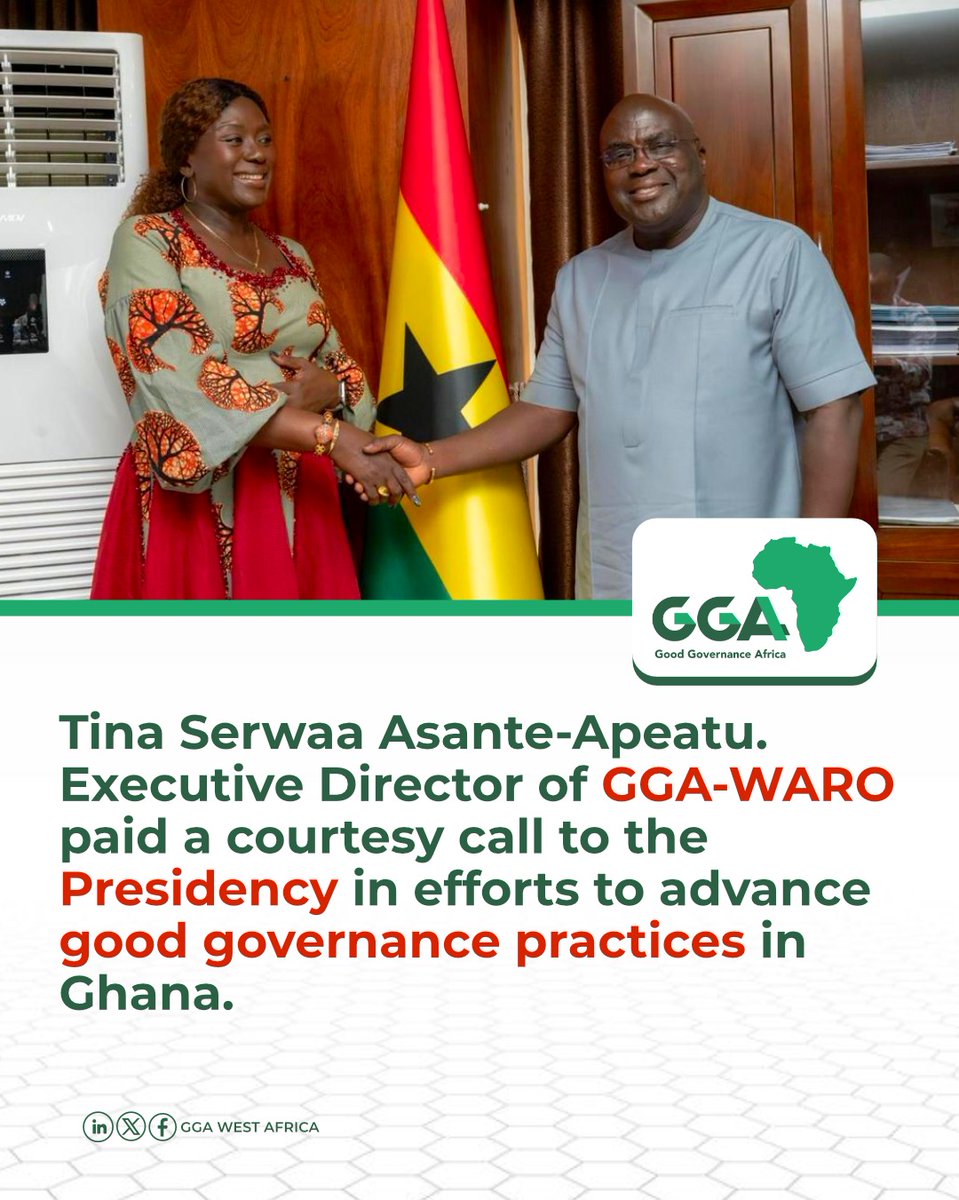
GGA-WARO Executive Director, Tina Serwaa Asante-Apeatu, paid a courtesy call on the Presidency and engaged Chief of Staff, Hon. Julius Debrah, on advancing good governance, accountability, transparency, and stronger collaboration for sustainable development.
#GoodGovernance.
1
2
83
Institutional presence doesn't automatically equal policy impact. While the African Union’s permanent seat at the G20 signals a massive shift in diplomatic weight, internal structural hurdles (like rising debt and an estimated $89 billion lost annually to illicit financial flows) remain. Dr Ruth Kolevsohn’s article tackles these governance realities head-on. From the operational challenges of the @AfCFTA to the growing case for an International Anti-Corruption Court (IACCourt), she maps out why local value-adding manufacturing and robust accountability are the only real shields against external resource exploitation. Read the full piece here: gga.org/africa-the-only-cont…
1
60
GGA retweeted

"The geography of the township is apartheid engineering working as designed."
Dr Mmabatho Mongae challenges us to look at the subtle violence of what's missing in urban spaces and ask how we redesign our cities for human dignity.
Read more: africainfact.com/the-subtle-…
2
2
120
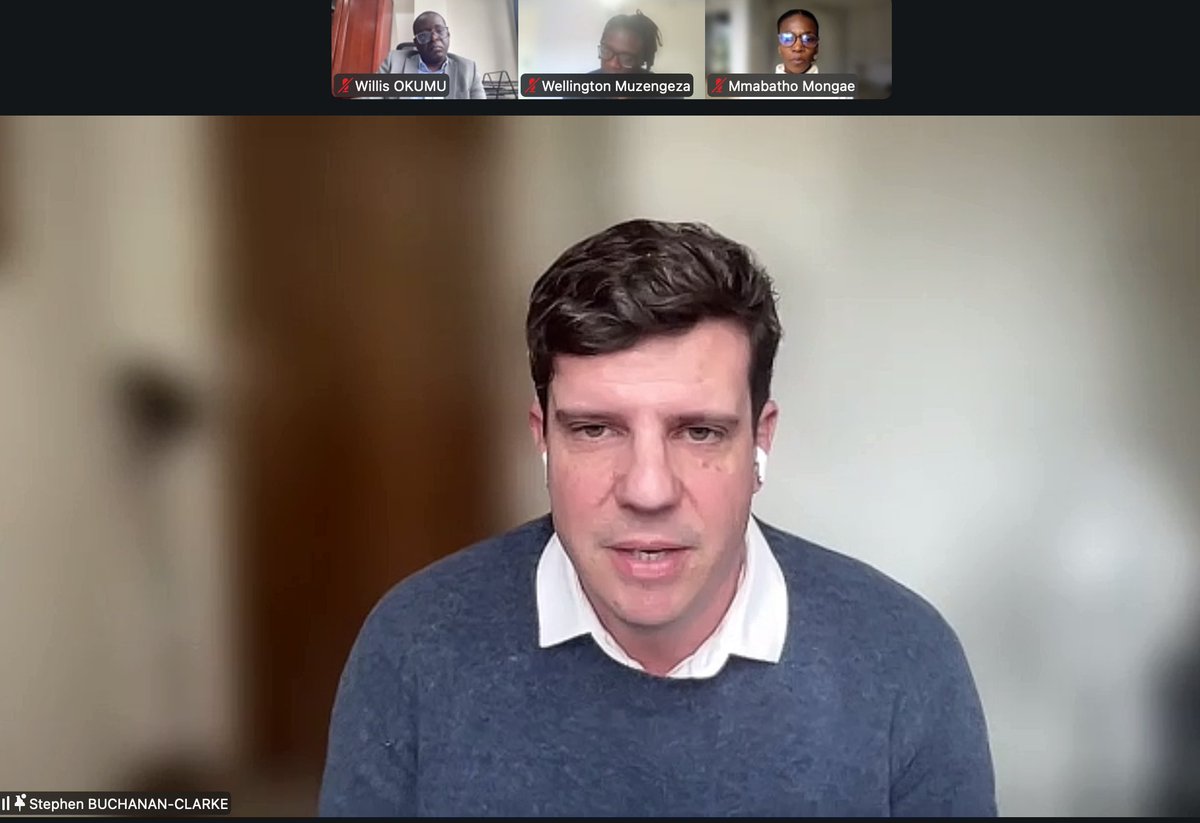
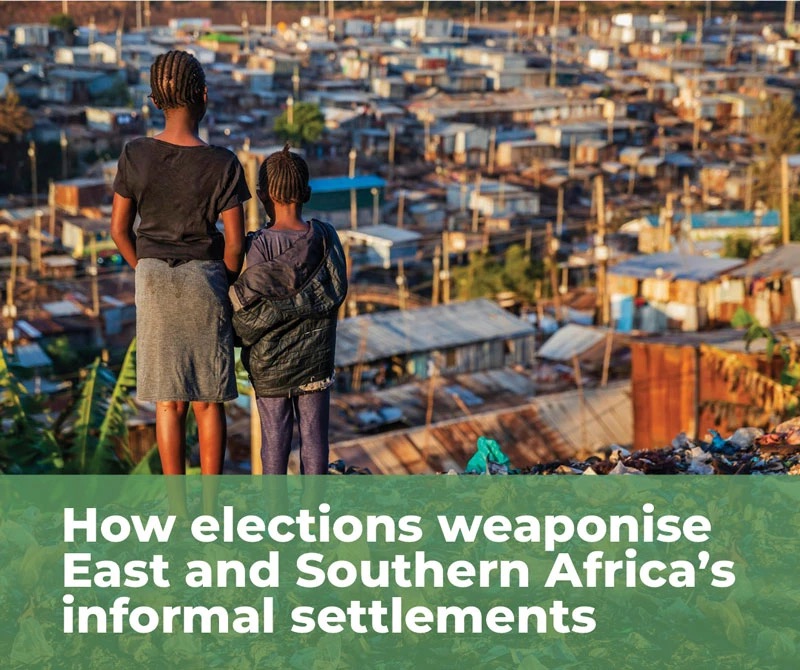
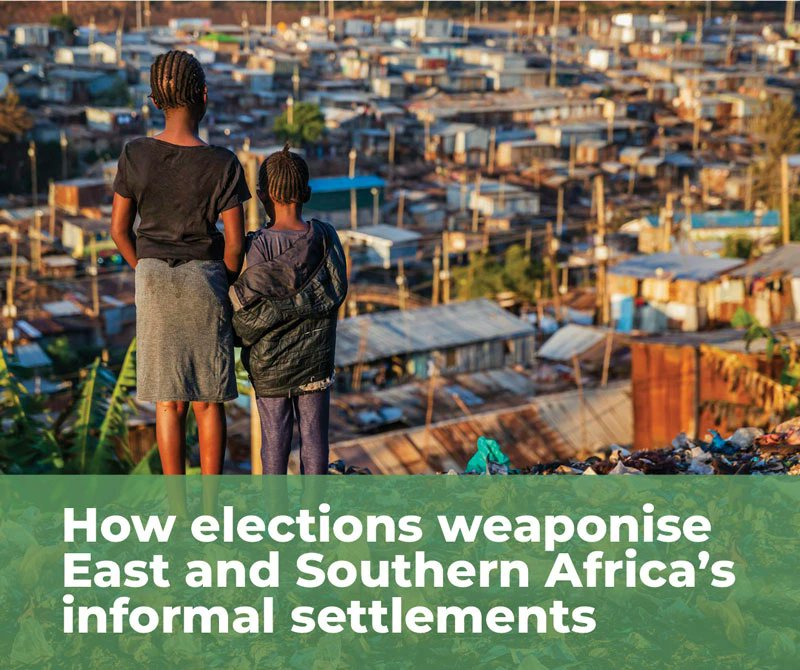
Happening Now: How do elections weaponise informal settlements?
We are co-hosting a vital webinar with the Institute for Security Studies (@issafrica) to unpack the complex political economies of East and Southern Africa's urban settlements, and how they become focal points for vote mobilisation and political violence.
Stay tuned for live insights.
1
1
2
356
Despite their political value during election cycles, places like Kibera endure deplorable infrastructure. Housing is limited to mud structures and corrugated iron sheets.
Worse, a non-existent sewage system has institutionalised the indignity of "flying toilets." - Dr Willis Okumu @issafrica
1
1
401
When open riverbeds become the default disposal system for human waste, it proves that informality is a deliberate political economy of dependency.
To break the cycle of urban violence and fragility, we must stop treating slums as voter farms and start treating them as a governance priority. - Dr Willis Okumu @issafrica
1
1
669
Because of this massive population density, informal settlements have systematically been transformed into "political food baskets."
Politicians treat these concentrated areas as reliable voter banks, leveraging deep-seated socio-economic vulnerabilities for electoral gain. - Dr Willis Okumu
@issafrica
1
258
Next panelist is @WellyMuzengeza, an independent political risk analyst and urban strategist. His presentation will examine the complex dynamics of tenure insecurity and electoral fragility in the informal settlements of East and Southern Africa. These rapidly growing areas sit at the critical intersection of urban governance, social stability, and contested political power.
32
Is the @SAHRCommission to blame for South Africa's migration and border security challenges? Speaking with @CathyMohlahlana on @SAfmRadio, Good Governance Africa’s Karam Singh challenged the logic behind a recent petition calling for the dissolution of the Commission. Singh argued that placing the blame for unlawful migration and syndicated organised crime at the doorstep of the SAHRC is a badly misplaced analysis. South Africa is grappling with profound rule-of-law failures and porous borders—challenges that belong to law enforcement and state administration, not an institution designed to uphold fundamental human rights: omny.fm/shows/thenationalbri…
1
89