
A 100% subscriber-supported geopolitical forecasting publication, providing unbiased analysis of global events. Founded by @George_Friedman.
Joined September 2015
- Tweets 8,558
- Following 293
- Followers 31,044
- Likes 316
2,082 Photos and videos
Pinned Tweet

May 18
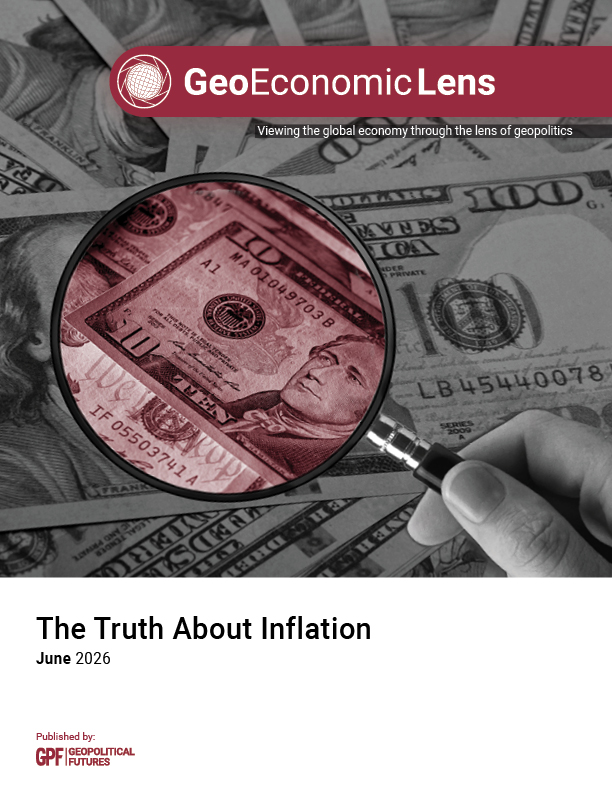
NEW from GPF: Introducing GeoEconomic Lens
This publication transforms geopolitics into actionable economic insight. Get our FREE inaugural issue today and become a subscriber to gain access to all Lens has to offer, including our first Monthly Brief, available this week.
geopoliticalfutures.com/lens…
1
9
5,377
Jun 12
How did the Axis powers’ fundamental misunderstanding of America lead to their downfall? @George_Friedman discusses Hitler's fatal blunder in our latest clip from Talking Geopolitics:
1
8
833
Jun 11
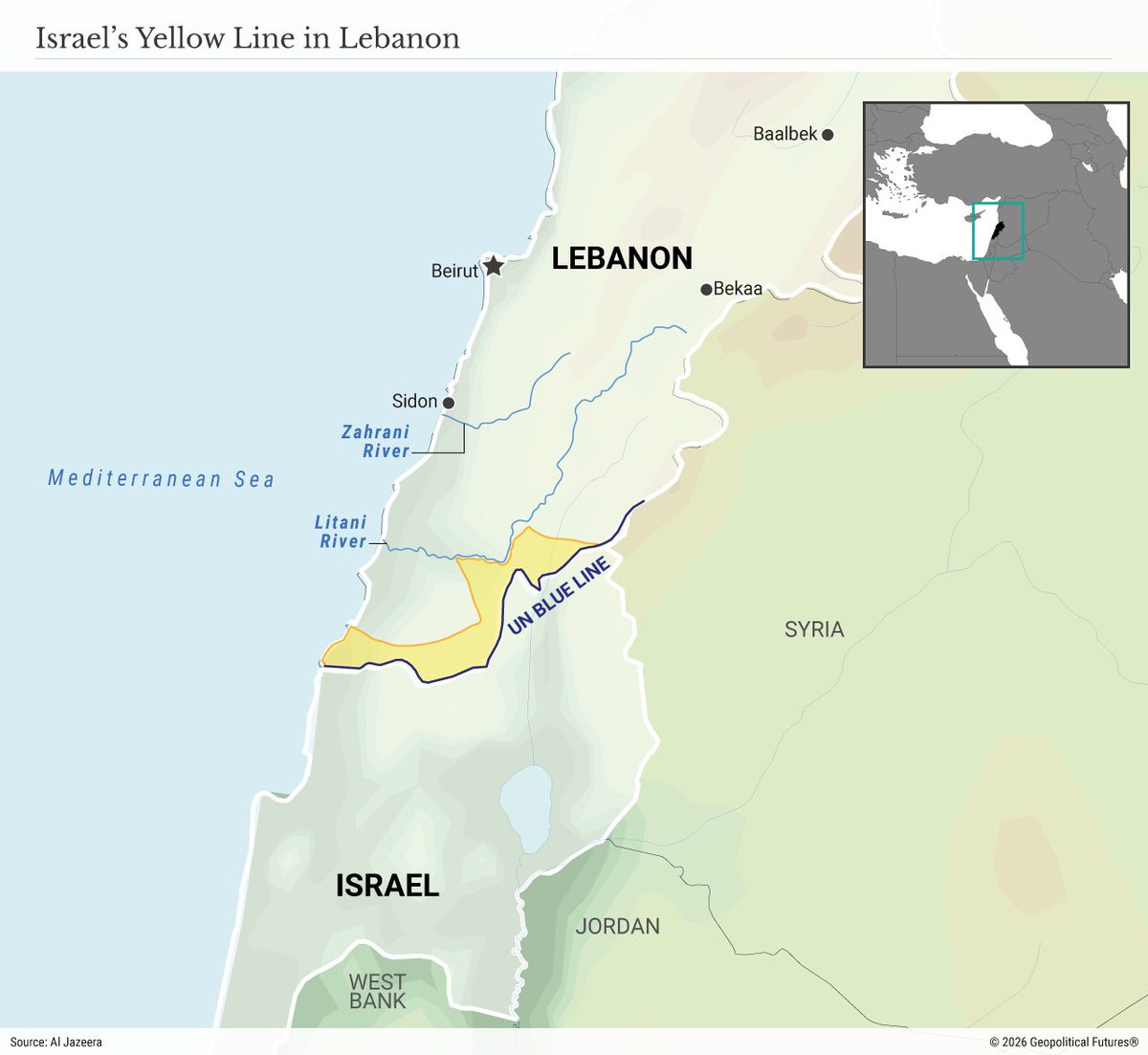
The Lebanese government acknowledges that negotiations with Israel are less than ideal but considers them the least bad option, based as it is on U.S. support for Lebanon.
Israel is seeking Hezbollah’s full disarmament throughout Lebanon. Lebanese negotiators seek a complete Israeli withdrawal, an understanding on border demarcation, the release of prisoners, the return of displaced persons to villages, support for reconstruction and a gradual reduction of Israeli military operations – the ultimate objective of which is a complete ceasefire. This runs counter to Israel’s position, which is that it will not leave the yellow line or permit residents to return to the area. - Hilal Khashan
1
1
10
681
Jun 10
The US is divided at home and gridlocked abroad. Is the chaos a sign of decline or just the normal process of American progress? Watch our new episode with @George_Friedman, out now: youtube.com/watch?v=syiKfOwZ…
2
8
934
Jun 10
Europe Drifts Closer to Stagnation
As structural challenges mount and higher energy prices loom, the gap between the bloc's strongest economies and those falling behind may become increasingly difficult to ignore.
Our latest analysis breaks down which member states are best positioned for moderate growth—and which face a tougher road ahead. geopoliticalfutures.com/euro…
5
818
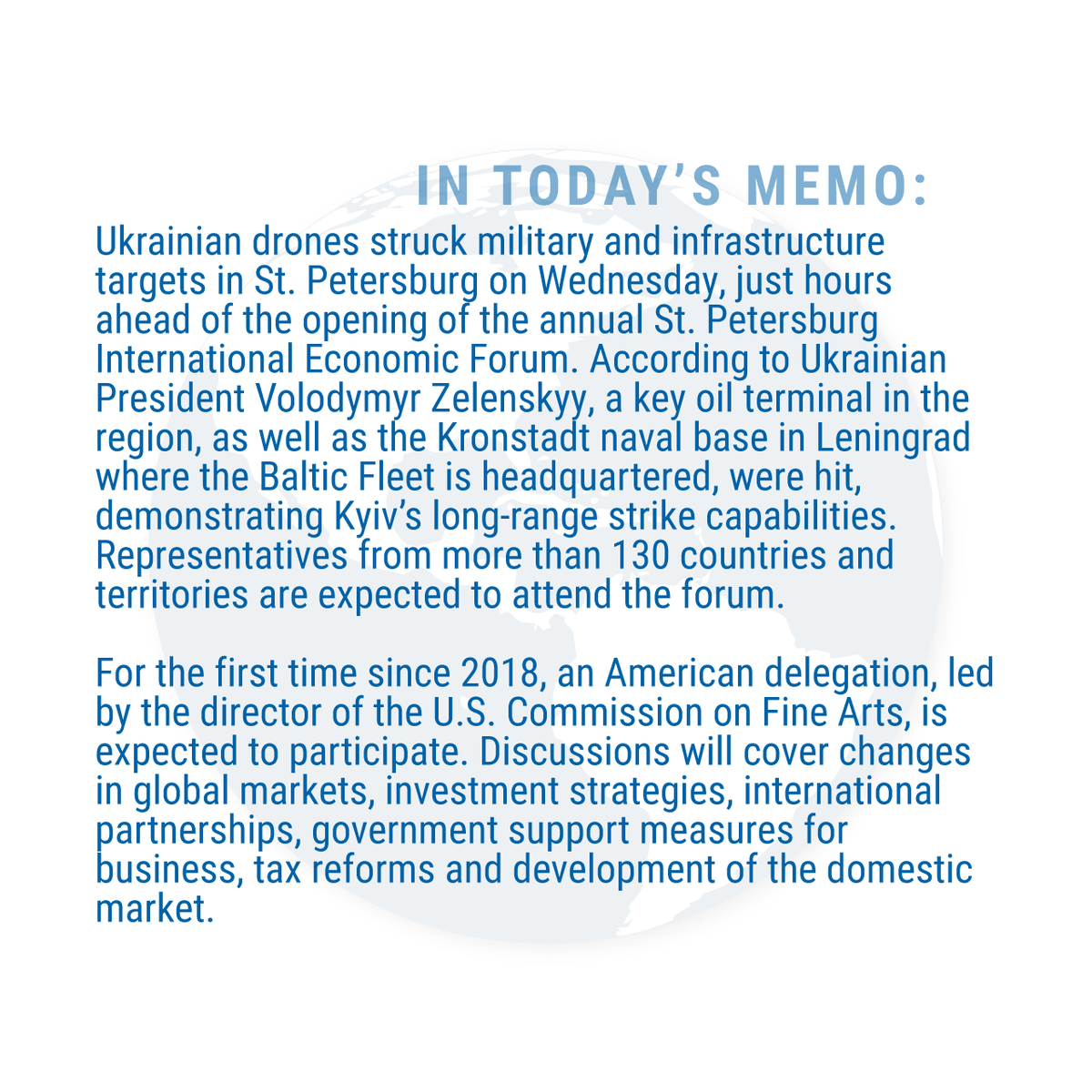
🌐In today's Memo: Germany and France Scrap Fighter Jet Plan
Germany and France have agreed not to pursue a landmark project to develop and build a new-generation fighter jet. German Chancellor Friedrich Merz and French President Emmanuel Macron discussed the matter on the sidelines of the EU-Western Balkans summit in Montenegro last week, reportedly concluding that a months-long impasse between the project’s two main industry partners – European aerospace firm Airbus and France’s Dassault Aviation – was unlikely to be resolved.
The 100 billion-euro ($116 billion) project was launched in 2017 but has experienced major hurdles over technical specifications and decision-making control.
3
716
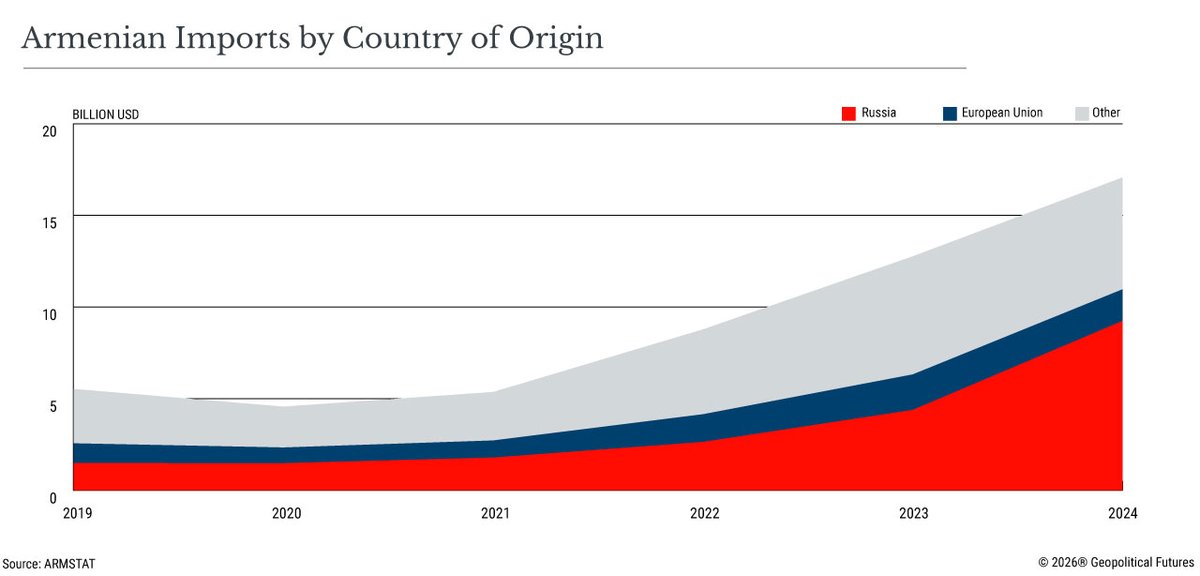
Armenia’s campaign season was in some ways a referendum on the country’s foreign policy. It was marked by a lot of pro-Western rhetoric and threats of a break with Russia. Candidates also spoke openly about the costs and benefits of membership in the Russia-led Collective Security Treaty Organization and the Eurasian Economic Union, raising the possibility of leaving if Moscow hikes prices on energy exports. As tensions with Moscow escalated, Armenia enhanced cooperation with countries that had imposed sanctions on Russia. On May 26, Armenia and the United States signed a framework memorandum of cooperation for extracting and processing critical minerals and rare earth metals. Earlier that month, a few days before the start of the election campaign, the first-ever EU-Armenia summit was held in the capital. And on March 26, parliament passed a bill launching the country’s EU accession process, indicating that Pashinyan has made European integration one of the central themes of his campaign agenda.
Russia understands that much of this rhetoric is tactical; it’s not so much an outright threat as a play to enhance the country’s bargaining position. Russia accounts for 40 percent of the country’s total foreign trade turnover and is still the leading source of remittances from abroad (roughly $3.9 billion last year, 65 percent of the total). A break with the Russian economy would be painful. Some estimates suggest it would threaten as much as 25 percent of Armenia’s economy. - Ekaterina Zolotova
2
5
818
The Iran war has accelerated efforts by Gulf Arab countries to reduce their dependence on the Strait of Hormuz. What was once a theoretical risk – that Tehran could disrupt commercial traffic through the waterway – has now become reality, fundamentally altering the strategic considerations of the region’s energy exporters. - Kamran Bokhari
geopoliticalfutures.com/de-r…
2
1
9
1,005
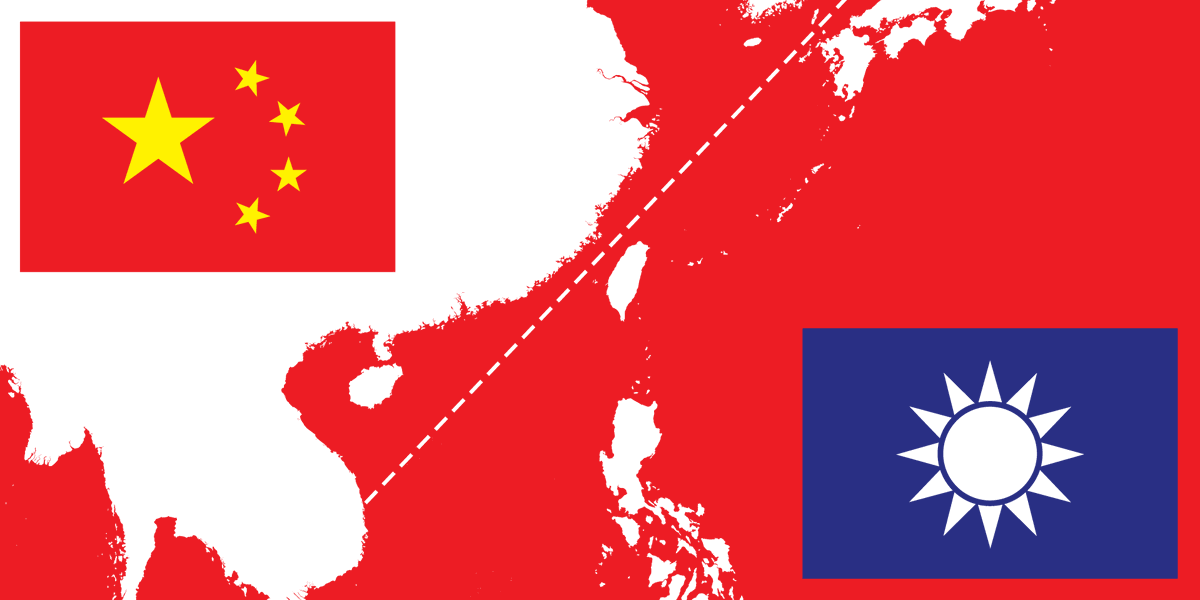
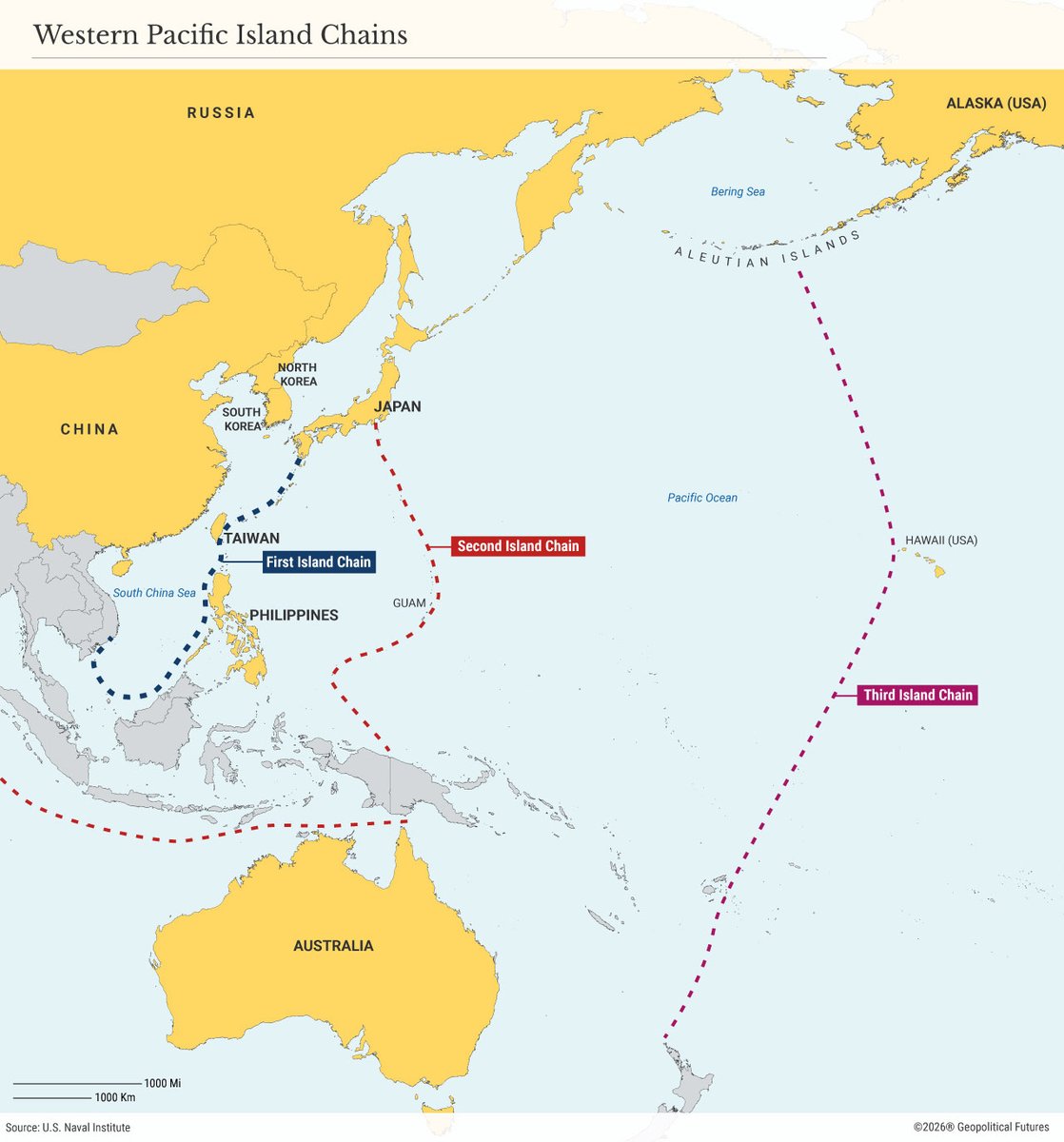
For decades, the United States has been able to project military power across the Pacific through regional bases, carrier strike groups, long-range aircraft and alliances. That posture helped sustain the regional balance of power and reinforced the assumption that Washington could intervene in a Taiwan crisis if it chose to do so. Today, China’s growing ability to strike the regional infrastructure needed for U.S. operations is making distant power projection costlier, more vulnerable and less reliable.
To overcome the U.S. in a conflict over Taiwan, China does not need to defeat the United States globally or replicate its worldwide military network. It would be operating near its own infrastructure and supply lines, while the United States would depend on a limited number of airfields, ports, fuel depots and access agreements spread across the Pacific. At a time when long-range precision strike is becoming more widespread, distance and mobility are increasingly consequential. Ships and aircraft can move, but the bases, ports, fuel depots and command nodes required to support them are harder to disperse, protect and replace. - Andrew Davidson
geopoliticalfutures.com/the-…
1
5
7
1,428
Economic warfare today is waged by nation-states through tariffs and sanctions, export controls, investment screening, payment restrictions, cyber-enabled espionage, financial coercion and control over strategic chokepoints. Unlike conventional military operations, these measures unfold through opaque supply chains, private intermediaries, fragmented legal systems and delayed market reactions. Governments rarely have a full picture of how pressure will emerge in global networks. Markets react before facts are fully known. Firms hedge against risks that may never materialize. Allies interpret signals differently. In this environment, economic conflict is defined by strategic ambiguity.
If the current international environment is understood as a form of economic war, then the conditions for the fog of this war are already in place. - Antonia Colibassanu
geopoliticalfutures.com/the-…
2
12
880
Does Donald Trump’s tirade to Benjamin Netanyahu signal the fracture of the historic alliance between the United States and Israel?
George Friedman joined host Christian Smith to discuss the evolution of US-Israeli relations, their diverging interests in the Middle East, and how Israel’s strategic burden spells trouble for regional accommodation. youtube.com/watch?v=lZM3VyzR…
2
8
3,706
Yesterday we published the new June issue of GeoEconomic Lens covering current critical topics such as the dilemma of reopening Venezuela, energy coordination in ASEAN and inflation and its impact on business and investors.
If you run a business or have investment decisions to make, or just enjoy a deeper knowledge of the impact of geopolitics on a nation’s economy and its components, our goal is to provide a lens through which to focus and better understand the most important connections.
It’s not too late to subscribe to GeoEconomic Lens today and receive your copy of the new June issue of Lens.
bit.ly/4uTVwxc
1
6
2,167
Geopolitical Futures retweeted
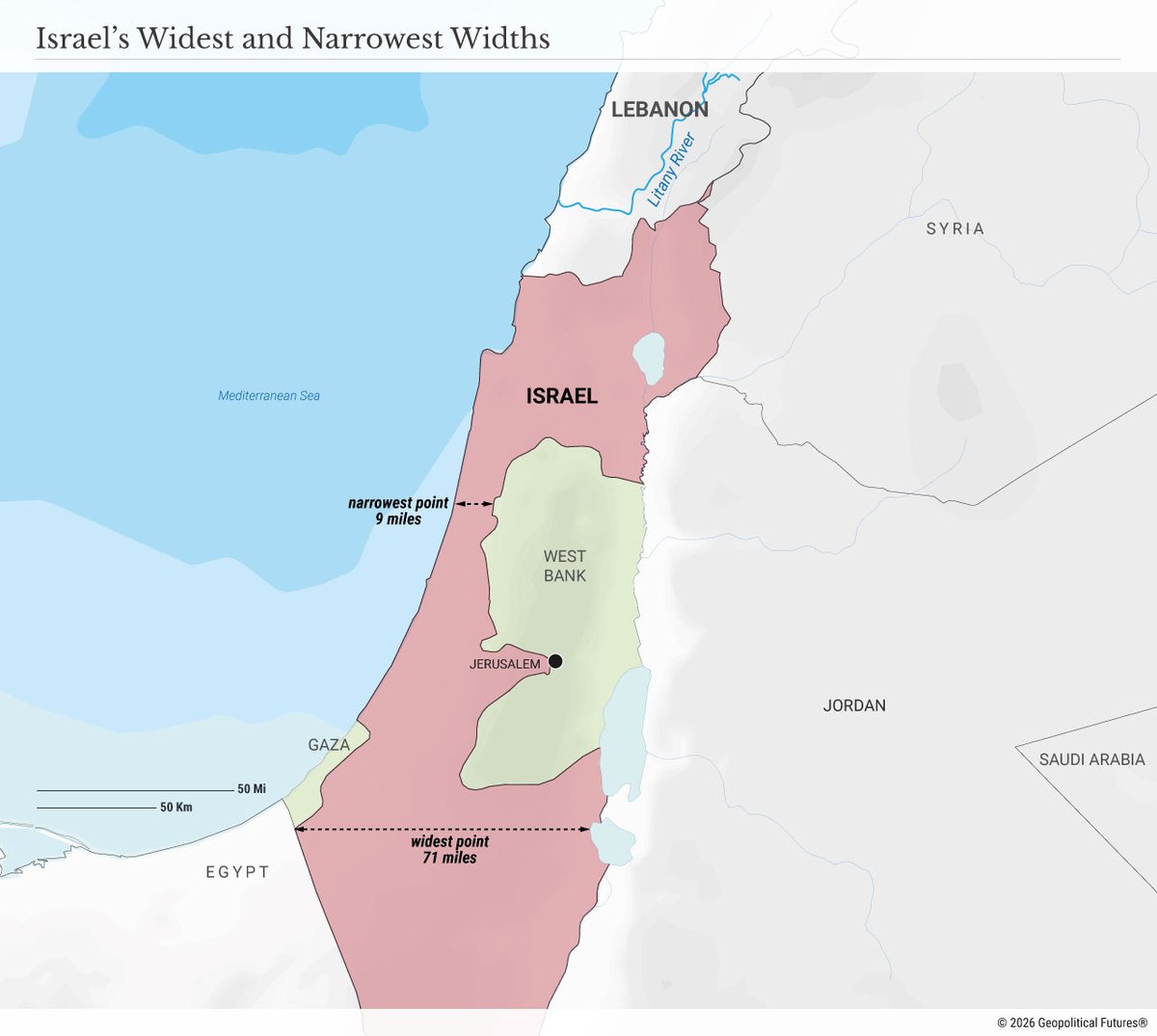
Geographically, Israel is in a profoundly weak strategic position. At its widest point, it is only 71 miles (114 kilometers) across; at its narrowest point, it is only nine miles across. Israel has no defensive space. It has little ability to withdraw, regroup and counterattack. Defensive depth is essential to national security. It determines how much time there is to recover from an initial attack. Space and time are essential to war.
Ignoring the emergence of drones, Israel cannot tolerate a defeat at its border, because a defeat would give it, at most, 71 miles in which to retreat. From this flows a specific military logic. Israel has to prevent attacks by initiating combat, and it has to be able to defeat its enemy early in a war. For Israeli leaders, it follows that the Israel Defense Forces always have to be significantly more powerful than potential enemies. The idea that Israel would never face a force more powerful than its own has always been improbable. During the 1973 attack by Egypt and Syria (which were armed and coordinated by the Soviet Union), Israel came perilously close to disaster. It was saved by the fact that Egyptian, Syrian and Soviet planners had failed to anticipate their dramatic early successes and had no plans to fully defeat Israel and seize its land.
My full analysis of Israel's strategic problem is at @GPFutures. Please read and share: geopoliticalfutures.com/isra…
53
125
688
69,110
Since World War II, the U.S. has been the preeminent military power in the international system. During the Cold War, the Soviet Union emerged as a credible military competitor to the United States in key domains such as undersea warfare and strategic nuclear deterrence. However, it was never able to translate that military challenge into a durable regional order in the Pacific. Nor could it match the United States’ integrated advantage across naval power, economic reach and alliance networks that anchored the U.S.-led Indo-Pacific system.
In the contemporary period, China is actively challenging U.S. preeminence in the Western Pacific maritime zone, narrowing gaps in “near-seas” capabilities while expanding its ability to operate beyond the first island chain. Yet even as Beijing functions as a global economic and technological competitor, the United States retains qualitative superiority in several key military domains. For Washington, the goal increasingly is to manage competition and avoid direct confrontation in the Pacific theater. - Kamran Bokhari
6
27
76
19,394
New issue out this week: GeoEconomic Lens views a nation’s economy through the perspective of geopolitics to examine and predict the impact on trade routes, energy alliances and prices, financial power, transportation, supply chains, logistics and international industries.
Learn more at geopoliticalfutures.com/lens
1
606
May 31
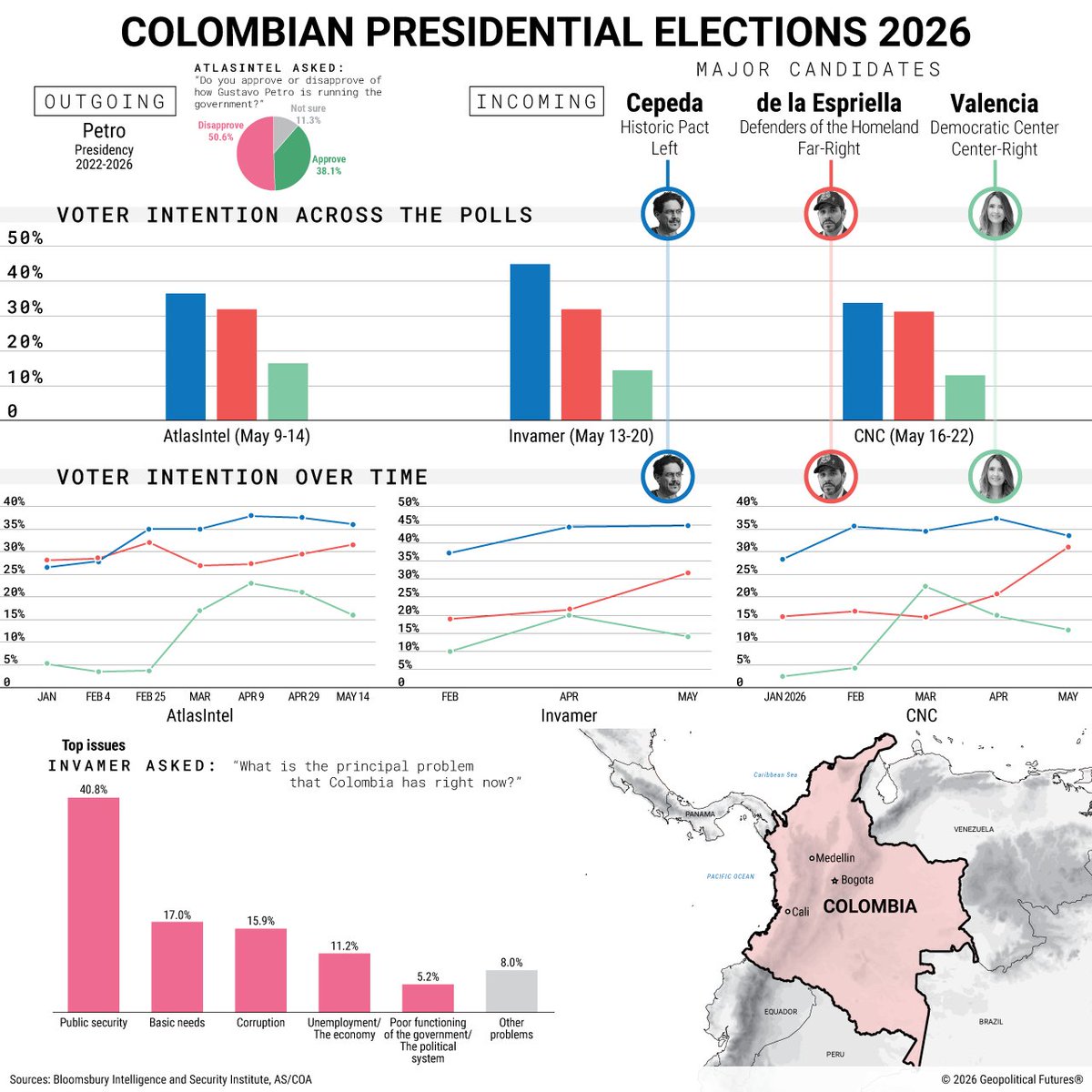
Polls have closed in today's presidential election in Colombia. If no candidate wins an outright majority, a runoff will take place on June 21. The race features three candidates: Ivan Cepeda, representing the same left-wing party as current President Gustavo Petro; Abelardo de la Espriella, a far-right lawyer and entrepreneur with no prior public office experience; and Paloma Valencia, a right-wing senator supported by former President Alvaro Uribe.
Cepeda supports continuing Petro’s redistributive and social initiatives, while Valencia advocates fiscal consolidation through spending cuts and increased oil and gas production. Valencia also opposes several of Petro’s reforms, citing concerns over fiscal and institutional stability. De la Espriella backs a strong right-wing agenda centered on security, streamlined regulations and minimal government. His plans echo Salvadoran President Nayib Bukele’s tough security strategy and Argentine President Javier Milei’s minimalist state model.
1
5
1,226
May 31
In 1981, six Arab countries bordering the Persian Gulf established the Gulf Cooperation Council to counter the threat posed by Iran and Iraq, their stronger and more ambitious neighbors. But the GCC countries failed to achieve full military cooperation and defense integration, at least in part due to their divergent perceptions of regional threats, history of relying on international alliances and lack of a binding, unified command.
The GCC today faces a strategic dilemma that extends beyond balancing against Iranian influence, which has been diminished but not destroyed by the events of the past few years. - Hilal Khashan
geopoliticalfutures.com/the-…
1
1
15
1,724
Geopolitical Futures retweeted

May 28
After three months, the war in Iran has reached a critical point. The conflict itself has become frozen in a way. The Islamic Revolutionary Guard Corps remains in control, and it does not seem to have been significantly weakened as a fighting force. Israel appears to have reduced operations in Iran, focused now on fighting Hezbollah in Lebanon. The Strait of Hormuz remains essentially closed, with some movement of vessels allowed by Iran and the United States, each in a position to block it but not to clear it. The peace negotiations have so far failed. The U.S. wants Iran to surrender its nuclear material and open up the strait; it has done neither. In short, neither side has done enough damage to compel the other into surrender.
From here, the war can go in one of three ways: One side cripples the other, a peace agreement is reached, or it becomes one of those permanent wars, lasting for many years with neither side willing or able to end it.
The question, then, is whether the U.S. is willing or able to launch a crippling attack on the IRGC. The flipside to that question is whether Iran thinks it can withstand such an attack. Considering Tehran has yet to capitulate, it probably believes it can.
So before the U.S. decides its next steps, it needs to determine whether it has the military capability to launch a crippling offensive, and whether it has the political capital to spend on such an attack.
15
22
64
8,836
May 27
For decades, modern force projection depended on the assumption that rear areas could be secured against most forms of disruption. As a result, forces were built around large bases, fuel depots, command centers and logistics hubs, because only major powers possessed the intelligence and strike capabilities needed to threaten them at distance.
Recent conflicts, including the U.S. war with Iran, have exposed the growing vulnerability of that model. - Andrew Davidson
geopoliticalfutures.com/the-…
3
15
1,106
May 26
Turkey’s Turkic Strategy Meets Eurasian Constraints
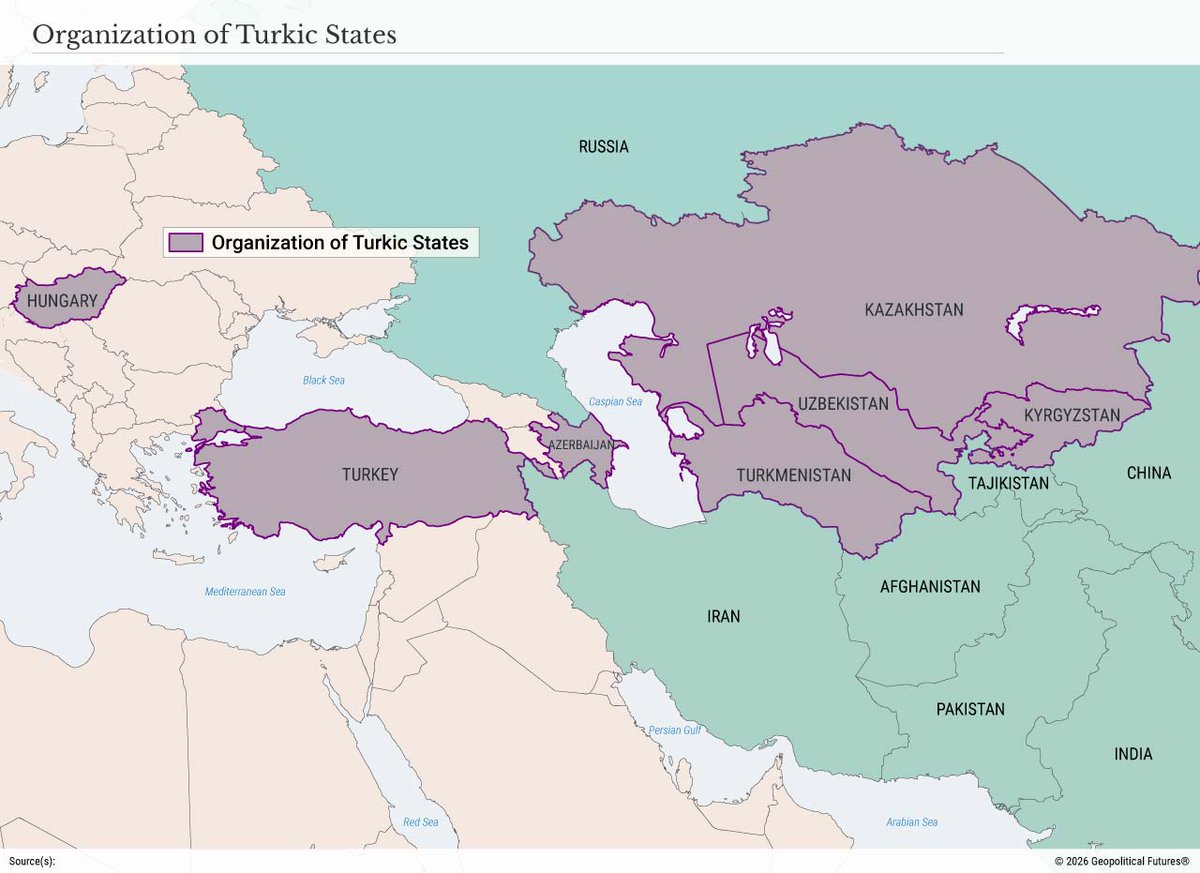
The United States continues to pursue a strategy of offloading security responsibilities to regional partners. Implicit in that strategy is the expectation that these partners construct regional security architectures capable of managing local balances of power. One such architecture is the Ankara-led Organization of Turkic States, which could evolve into a cohesive geopolitical bloc along Russia’s southern periphery.
For Washington, the OTS represents a potentially valuable geopolitical platform because its member states collectively occupy the strategic space south of Russia, west of China and north of Iran, giving the bloc outsized importance in the emerging contest over Eurasian connectivity and regional influence. By strengthening political, economic and potentially security coordination among Turkic states, the OTS could help curb Russian influence in former Soviet countries, complicate China’s ambitions to monopolize trans-Eurasian trade corridors through the Belt and Road Initiative, and limit Iran’s ability to project influence into the South Caucasus and Central Asia. - Kamran Bokhari
geopoliticalfutures.com/turk…
18
58
176
46,266