Research group working on the development of hybrid metal-DNA systems with potential applications in nanoscience, led by Dr. Miguel A. Galindo at UGR @canalUGR
Joined September 2016
- Tweets 129
- Following 195
- Followers 334
- Likes 601
17 Photos and videos
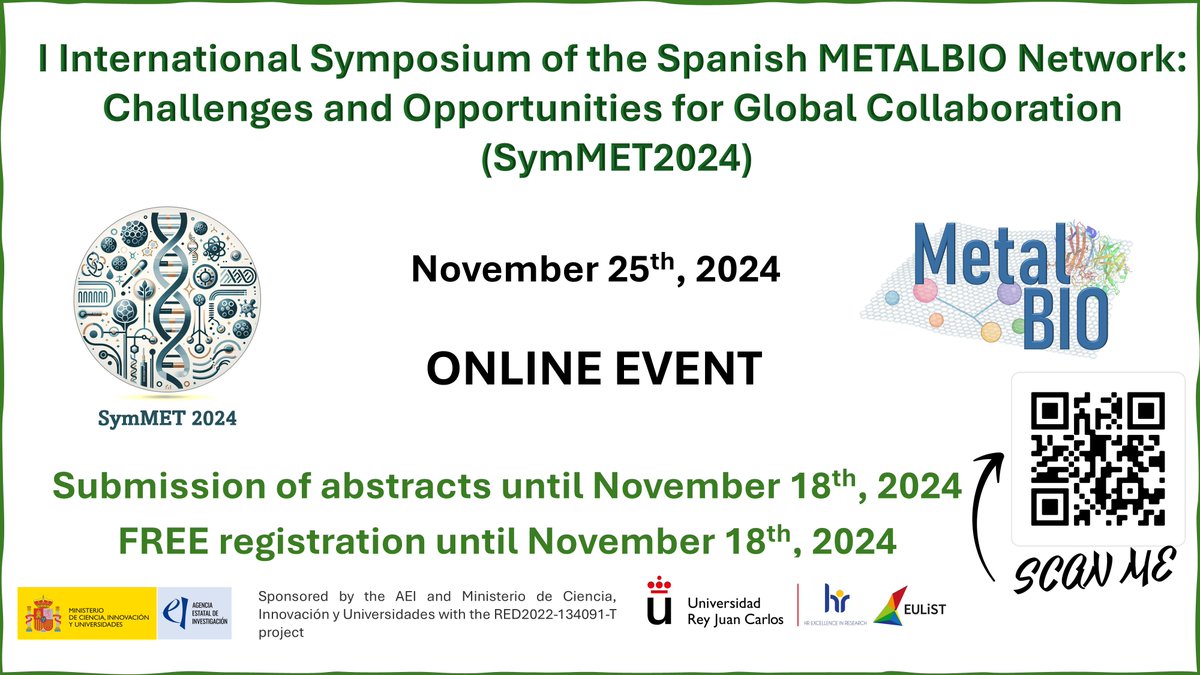
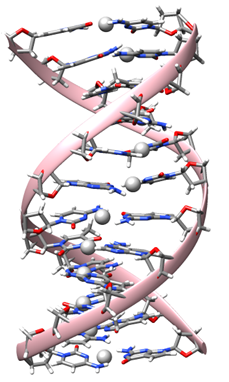
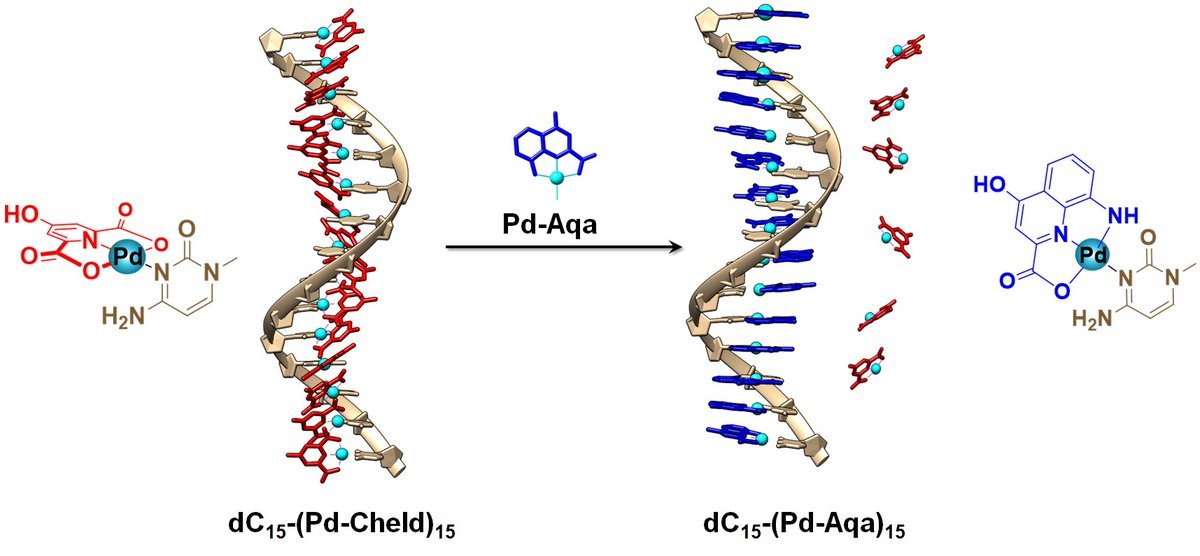
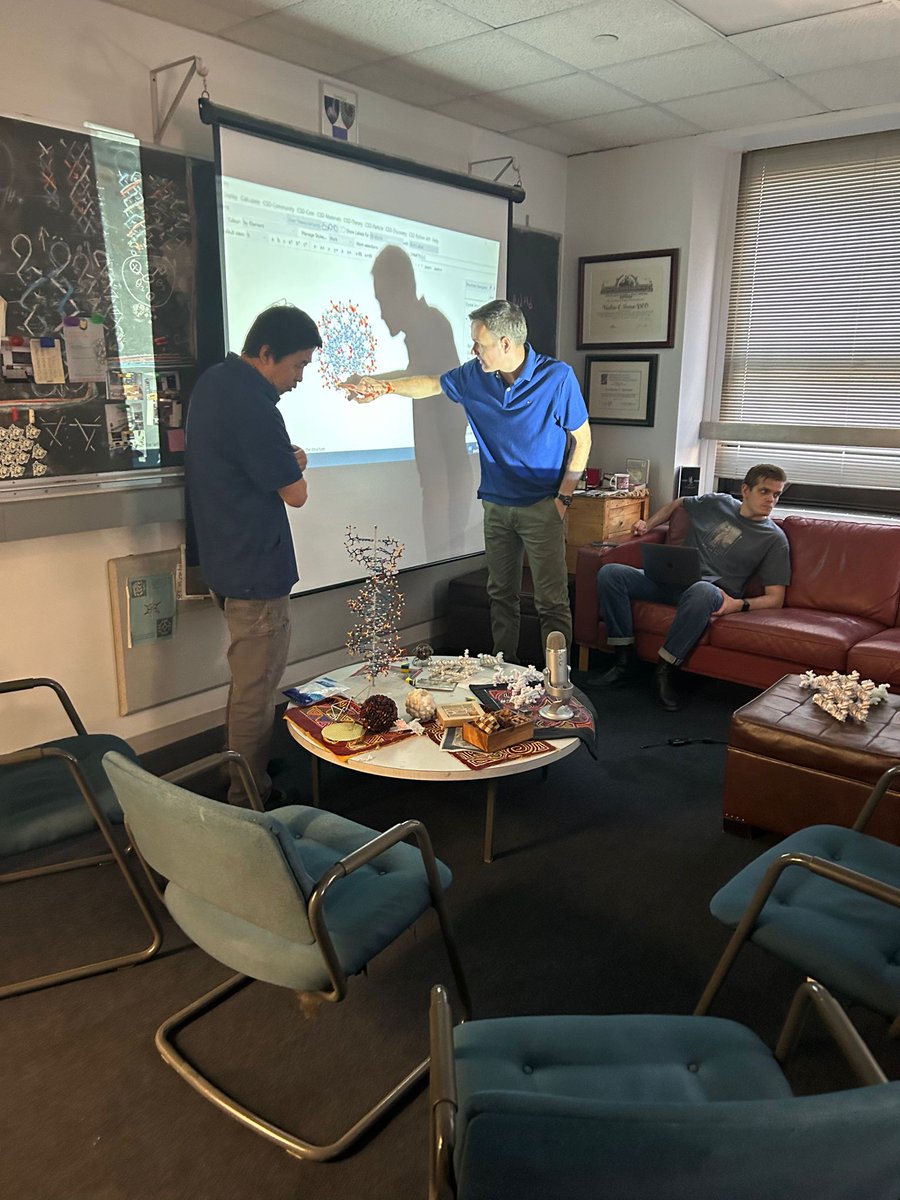

Jan 21
📢Excited to share our latest research!🧬
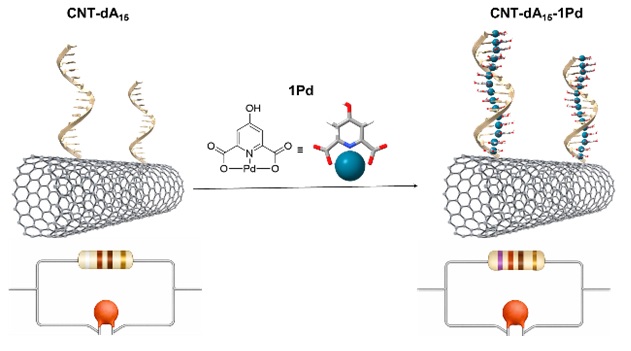
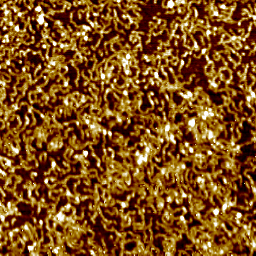
We show a DNA-templated strategy to organize Pd complexes on carbon nanotubes with atomic precision, yielding CNT-DNA-Pd hybrids with tunable dielectric properties. Full study at: pubs.rsc.org/en/content/arti… @CanalUGR
2
10
617
Metal_DNA Lab retweeted
Enzyme Biomineralization in MOFs not only protects enzymes but modulates crystal surface reactivity and biocompatibility. Amazing work in @JACS by @eborrego_phd @RebeccaVismara @FalcaroGroup @JorgeAR_Navarro et al. See: pubs.acs.org/doi/10.1021/jac…
2
9
27
1,175
20 Nov 2025
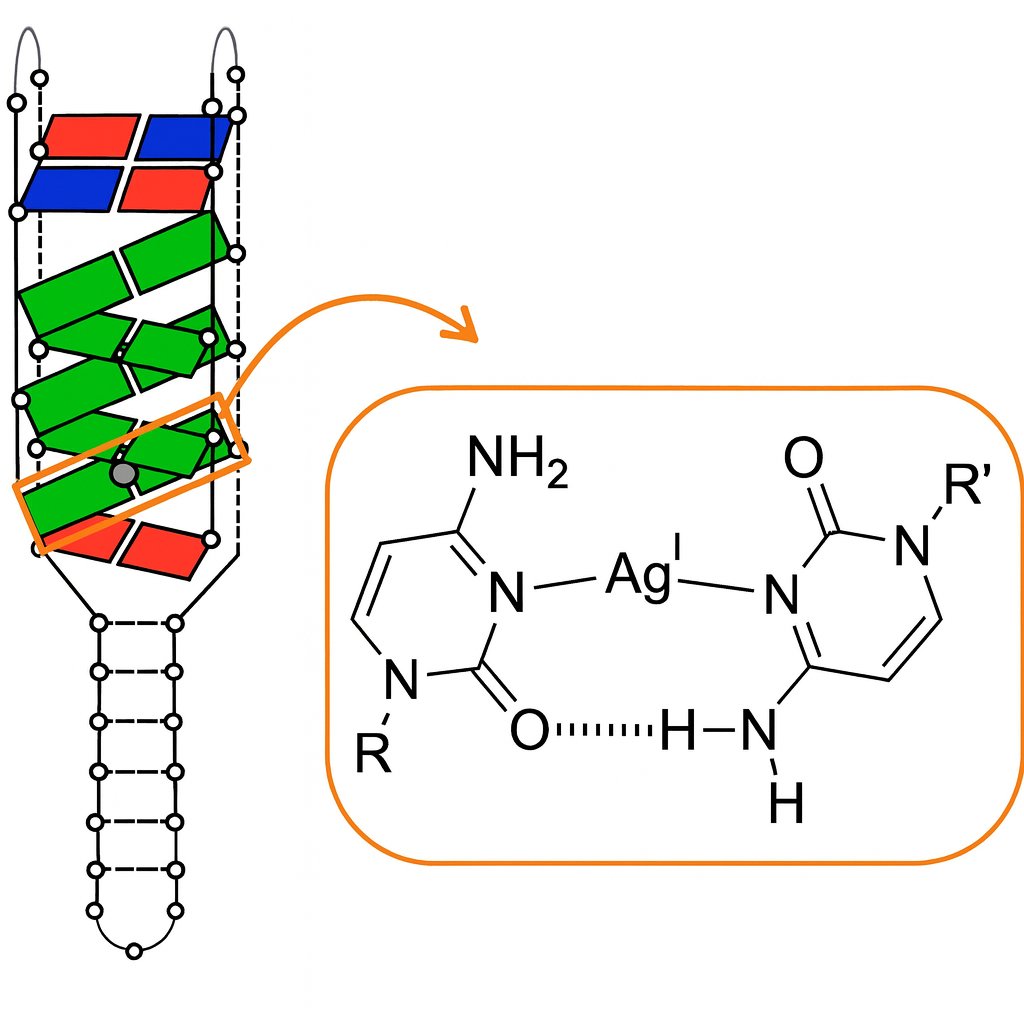
📢Latest results challenging long-standing assumptions: Proud collaboration with @MuellerChem showing that i-motif DNA is not compatible with forming multiple contiguous C–Ag(I)–C base pairs.🧬Angew. Chem. Int. Ed.: onlinelibrary.wiley.com/doi/…
1
3
13
1,010
Metal_DNA Lab retweeted

16 Nov 2025
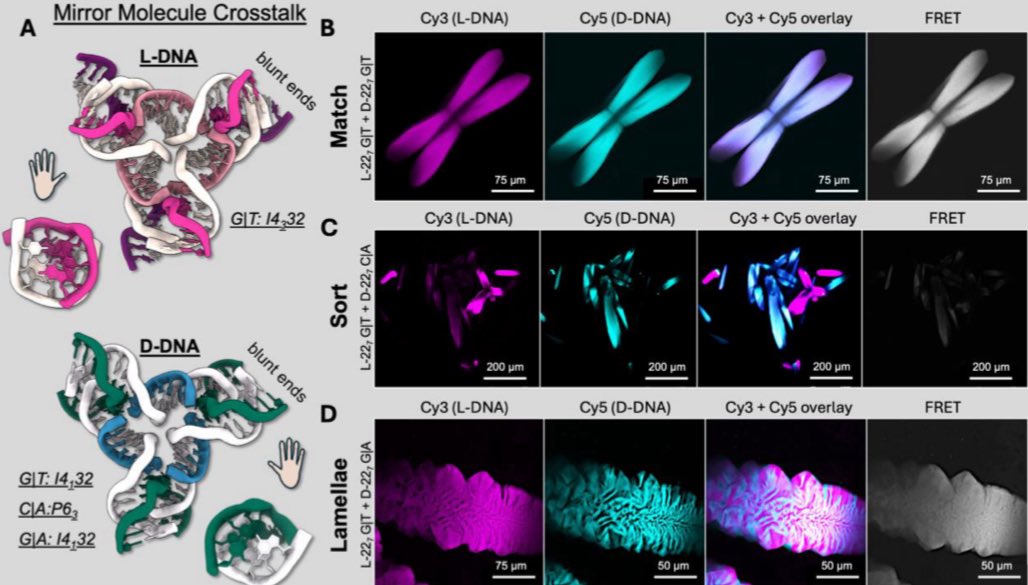
Blunt-Force Assembly: Programmable DNA Architectures using π–π Stacking chemrxiv.org/engage/api-gate…
We established the ability of mixtures of L- and D-DNA motifs to perform programmable co-assembly, demonstrating molecular recognition and coexistence between mirror molecular systems.
3
6
502
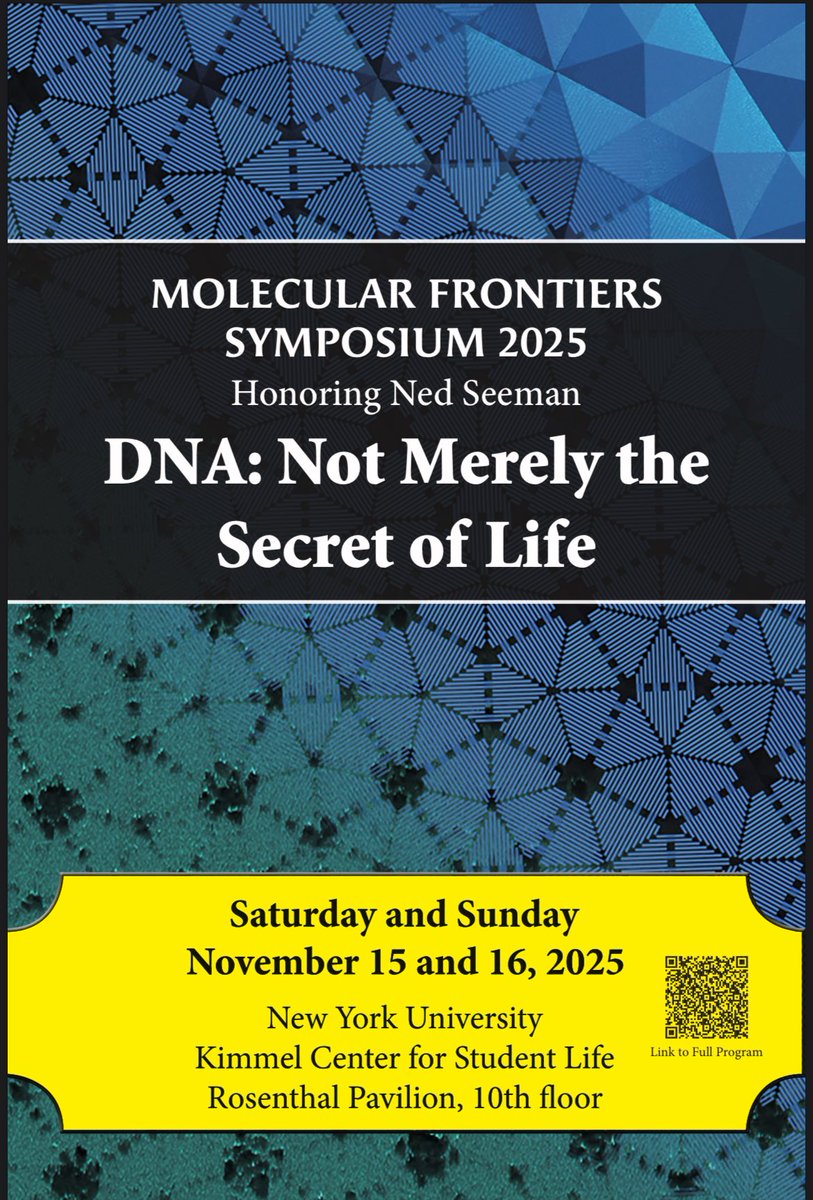

DNA-AgNCs can interact with silver carrying DNA stands and affect the photophysical response. collaboration with @nano4light
#DNA #silver #DNAAgNC
pubs.acs.org/doi/10.1021/acs…
2
4
193
11 Jul 2025
Our paper in Inorganic Chemistry shows Ag⁺ prefers Watson–Crick over homobase pairing in 7-deazaadenine/thymine DNA. A new look at silver–base interactions!🔎🧬 #DNA #UGR @InorgChem See publication: pubs.acs.org/doi/10.1021/acs…
3
7
42
1,890
New fs-TA paper investigating excited state processes in DNA-AgNCs with different geometries. Collaboration with Junsheng Chen @CHEMUCPH
#silver #DNA #DNAAgNCs
pubs.acs.org/doi/10.1021/acs…
1
5
357
13 Jun 2025
It was a pleasure meeting Tom @VoschLab during his visit to UGR; great conversations, including on silver-DNA systems and how they can lead to fluorescent nanoclusters🧬
1
11
429
5 Jun 2025
Impressive research from Prof A. Houlton at @UniofNewcastle: "24-karat DNA: Integrating tunable electronically delocalized coordination chains into discrete DNA duplexes." (cell.com/chem/fulltext/S2451…)
2
13
578
Metal_DNA Lab retweeted

2 Jun 2025
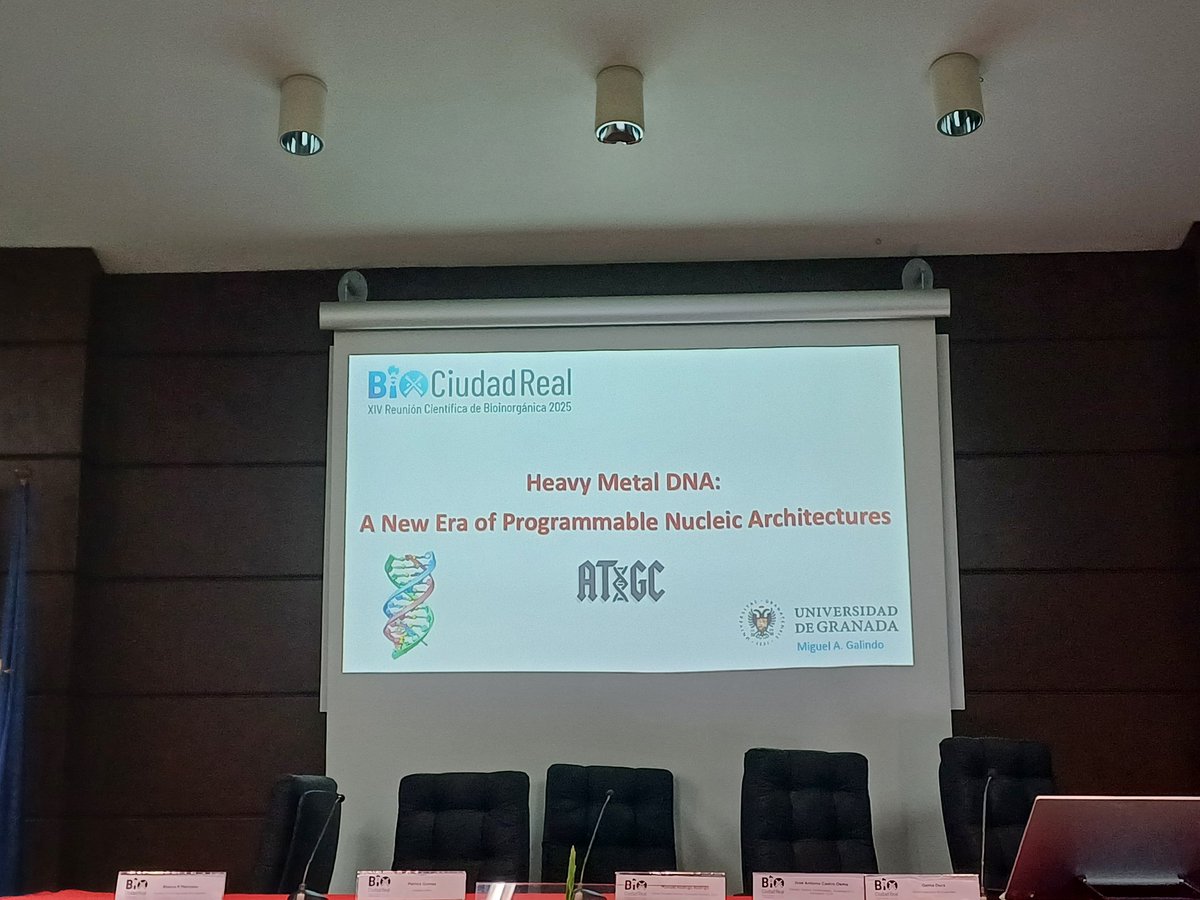
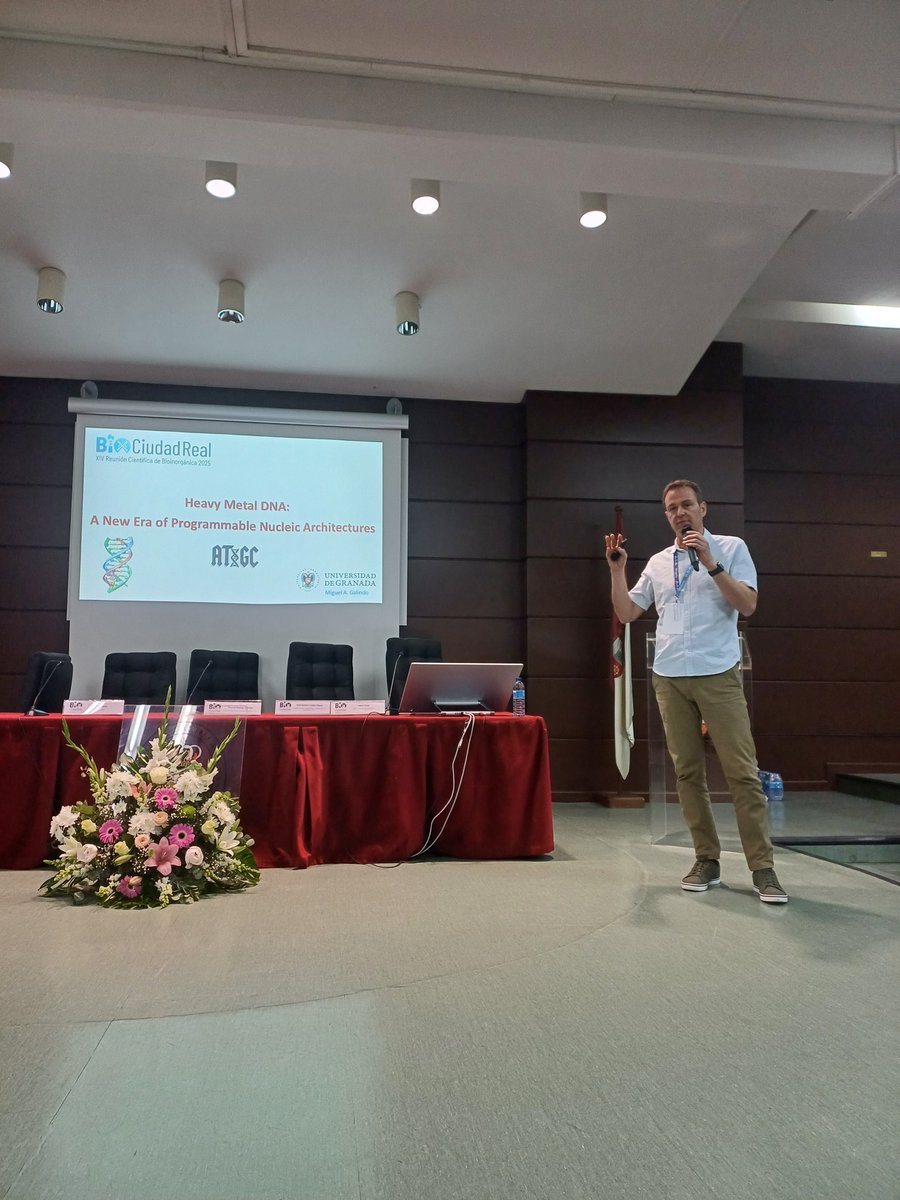
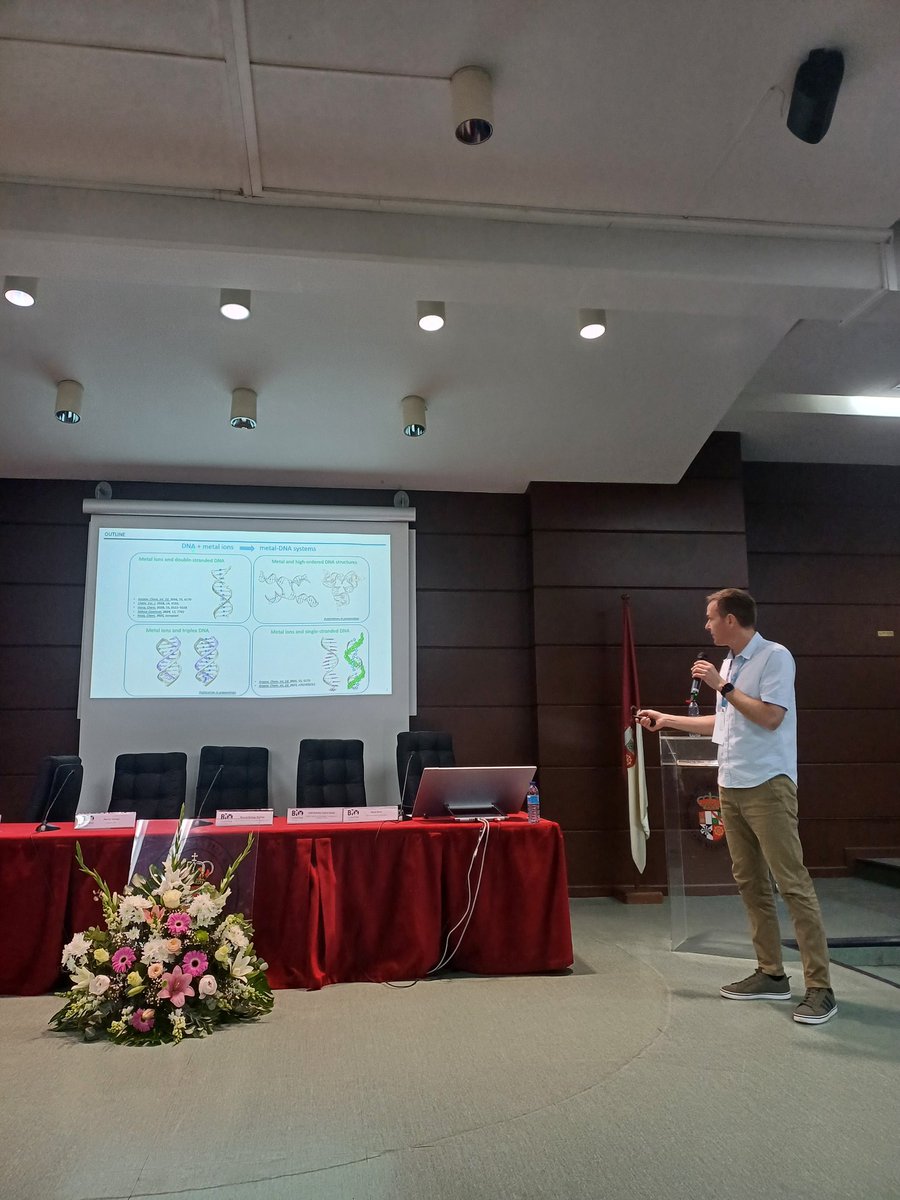
Now, we are delighted to announce the first invited lecture that is given by Dr. Miguel A. Galindo, presenting "Heavy metal DNA: a new era of programmable nucleic architectures" @AEBIN5 @FCTQ_uclm @uclm_es #BioCiudadReal
1
6
15
680
Metal_DNA Lab retweeted
3 Jun 2025
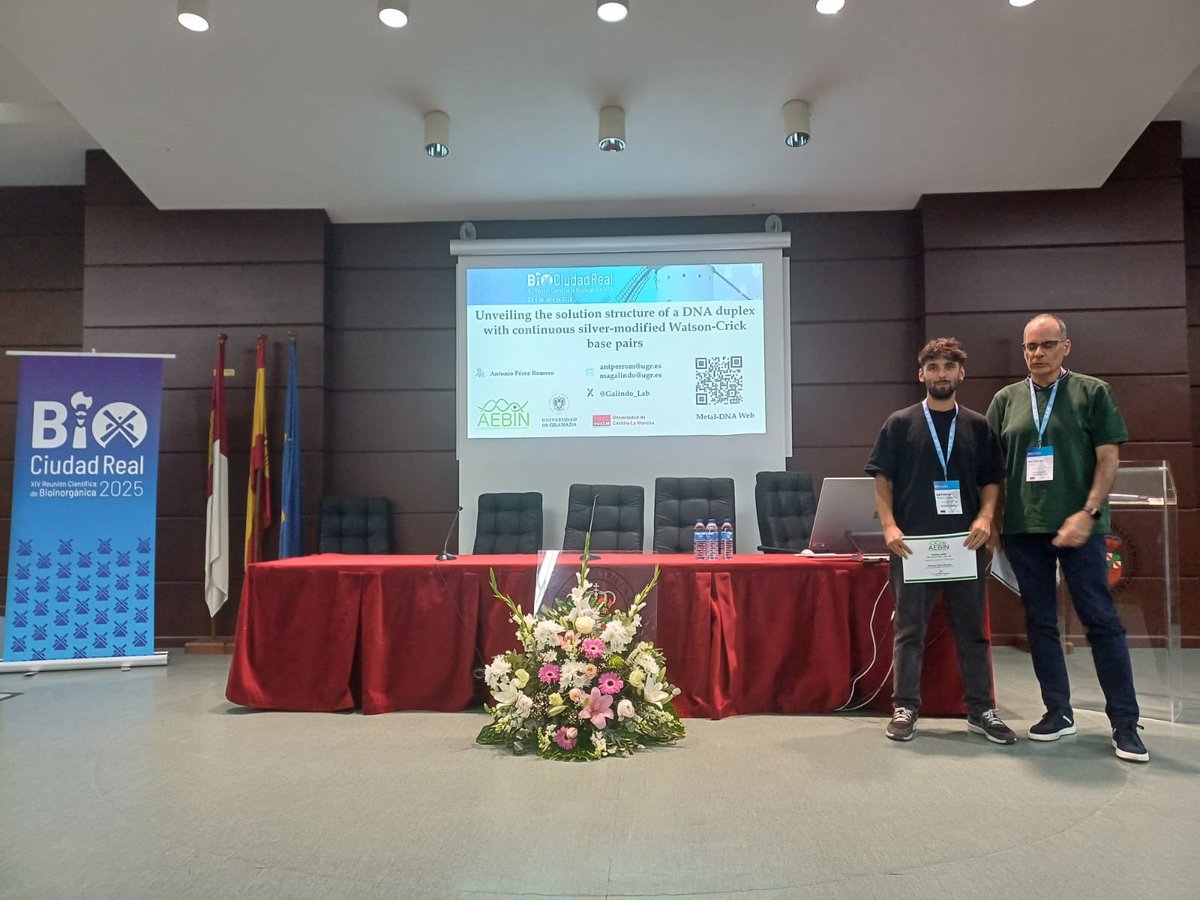
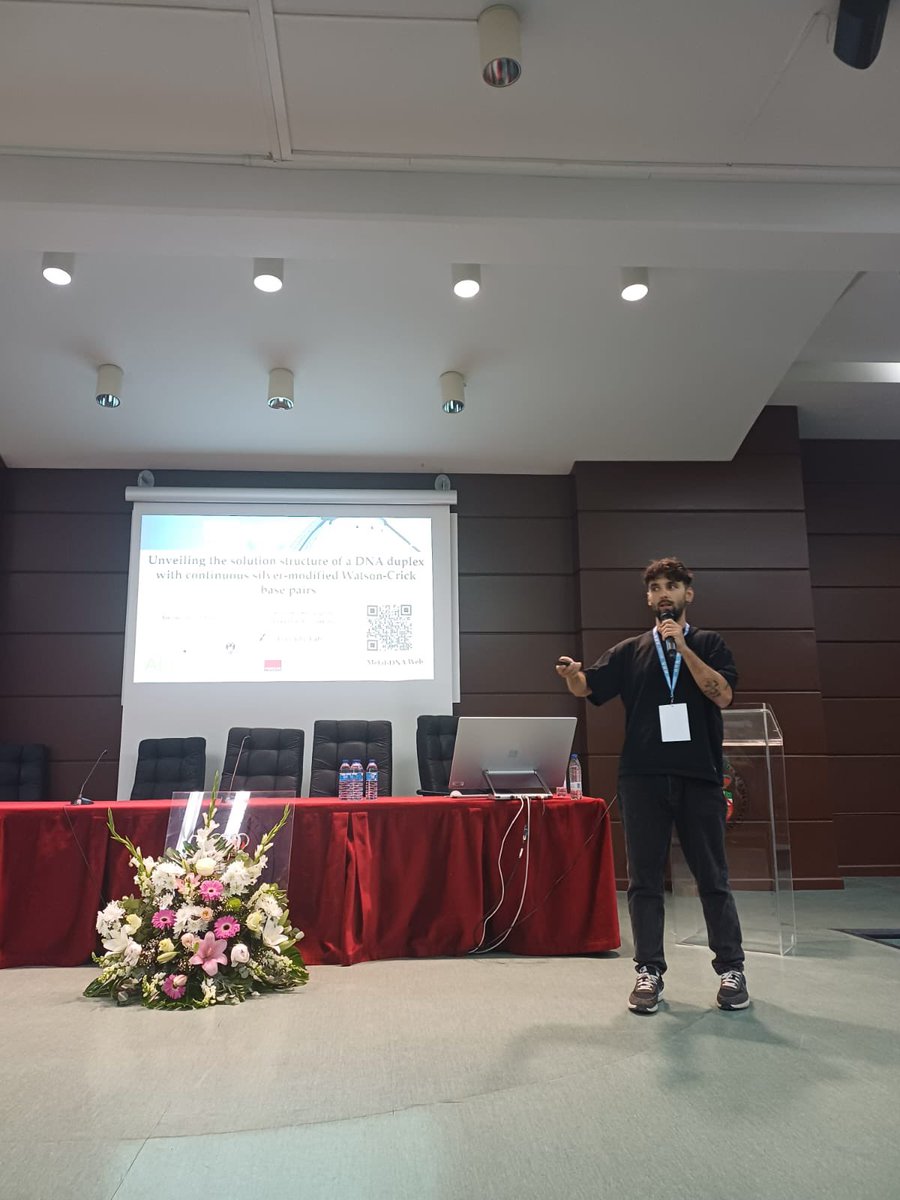
Now, we have Antonio Pérez-Romero as postdoc awarded with the presentation "Unveiling the solution structure of a DNA duplex with continuous silver-modified Watson-Crick base pairs". Congratulations! @AEBIN5 @FCTQ_uclm @uclm_es #BioCiudadReal
3
12
471
Metal_DNA Lab retweeted

17 Apr 2025
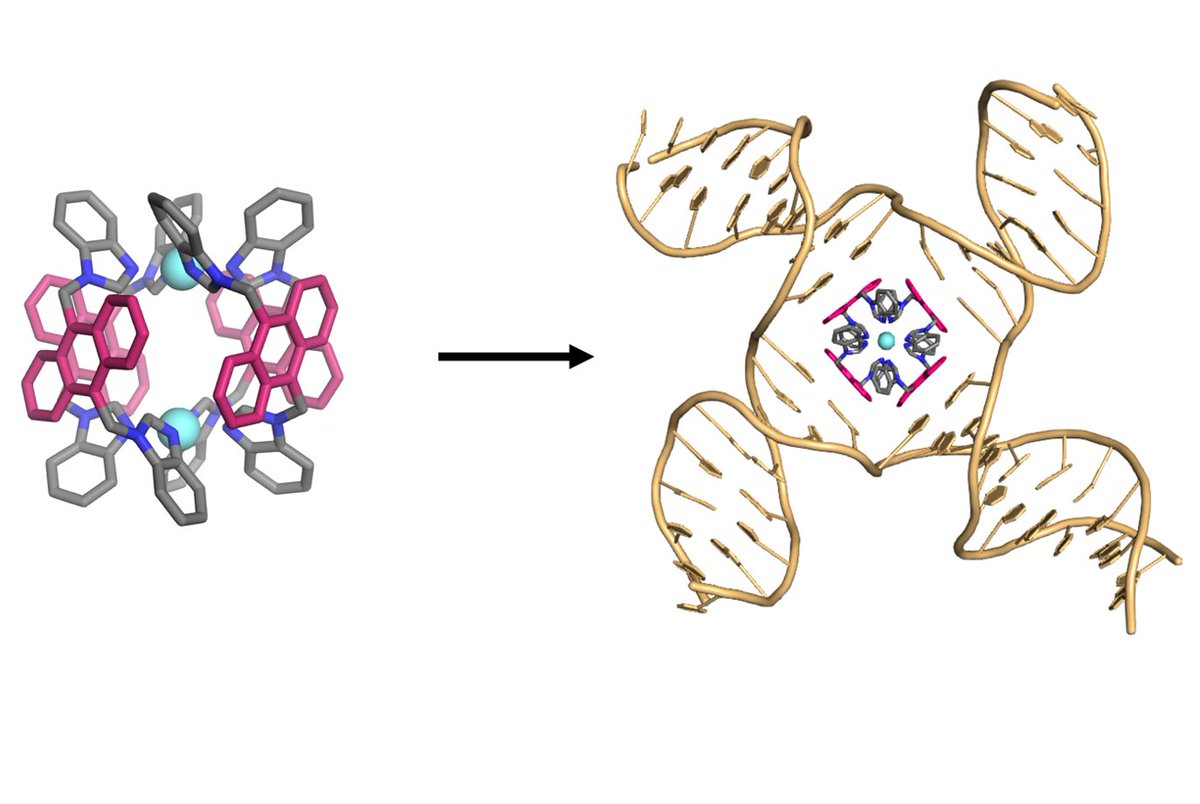
Delighted to see this accepted in @angew_chem. Pt metallo-cage binds very strongly to DNA 4-way junctions. Congratulations to @samdettmer99 and Hugo. Great to work with @Craggs_Lab @sheffielduni , Joe Beames @UoBChemistry Richard Napier @uniofwarwick doi.org/10.1002/anie.2025048…
4
5
73
3,897
Metal_DNA Lab retweeted
26 Mar 2025
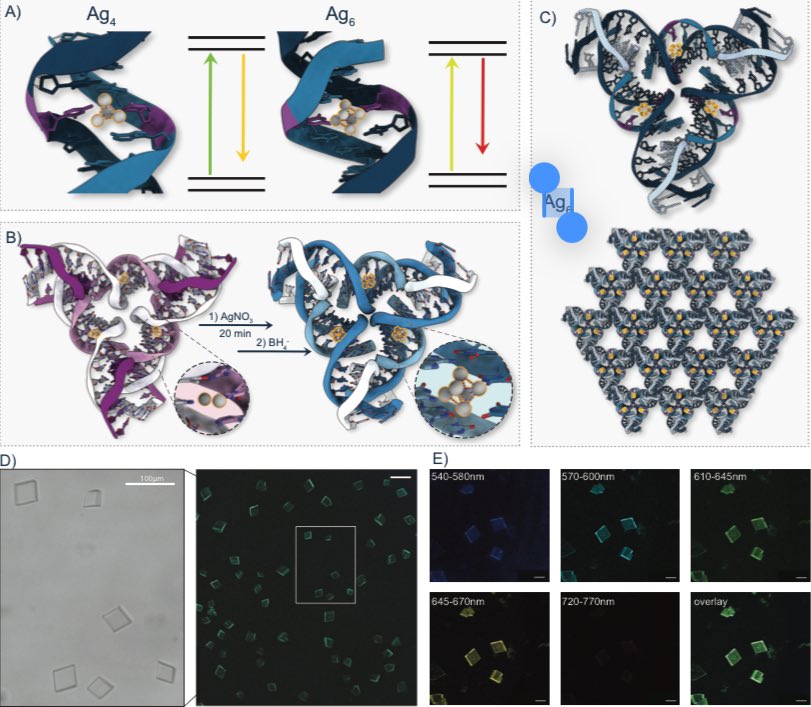
Topology-Enforced Synthesis of Atomically-Precise Silver Nanoclusters in 3D DNA Lattices
chemrxiv.org/engage/chemrxiv…
We developed a method using 3D DNA crystals to employ silver-ion-mediated base pairs as nucleation sites for atomically-precise nanocluster growth.
5
22
1,350
Metal_DNA Lab retweeted

26 Mar 2025
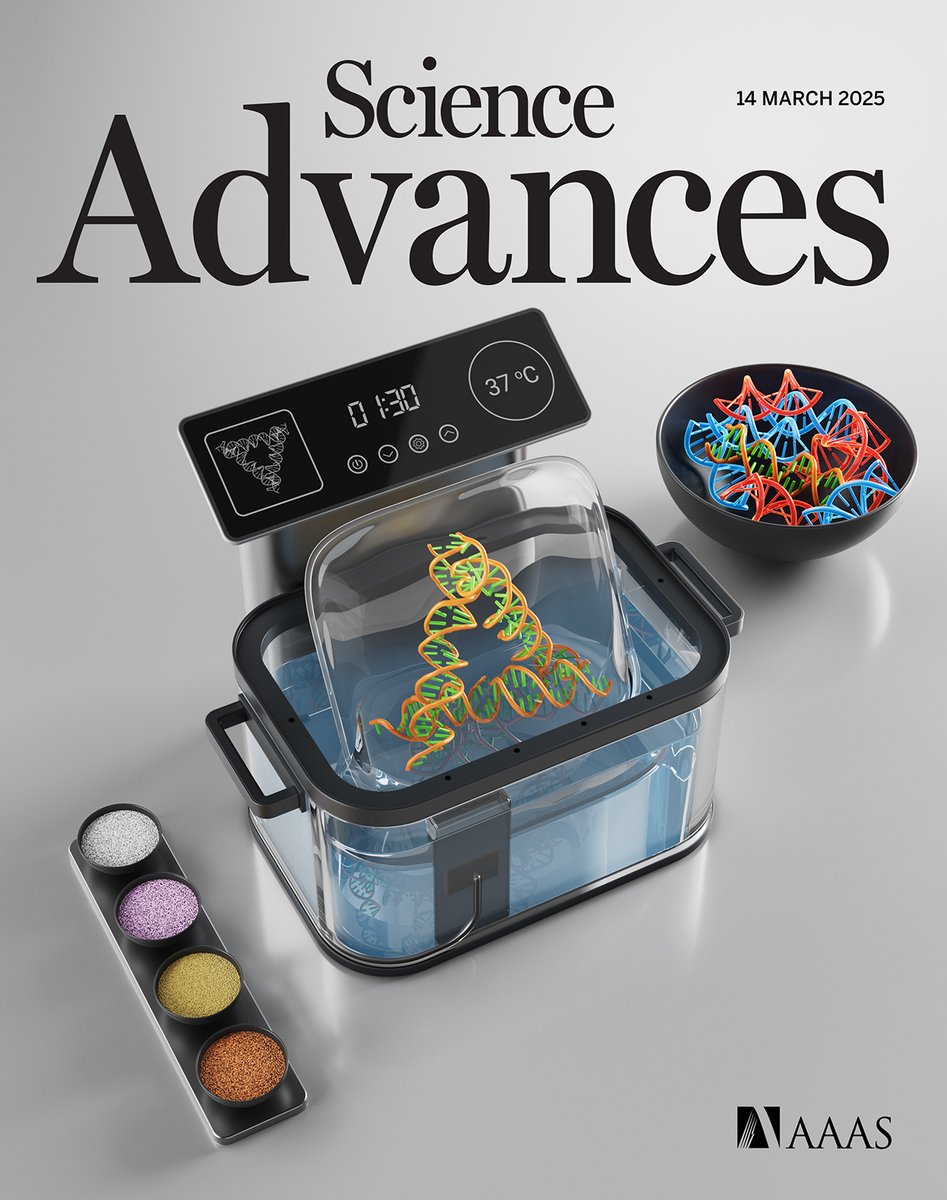
ICYMI: Check out our recent work on the isothermal assembly of DNA nanostructures featured on the cover of @ScienceAdvances.
12 Mar 2025

In a new study, researchers show that specific metal ions and moderate temperatures enable self-assembly DNA nanostructures not achievable by traditional thermal annealing.
Learn more in this week’s issue of Science Advances: scim.ag/41ZyPvl
1
25
821

Chemistry friends who are still here, if @angew_chem asks you if you want your article promoted to Novit, that's a good thing and your answer should be 🎉🎉🎉🎉
17 Mar 2025

We are excited to announce the launch of Angewandte Chemie Novit - An #OpenAccess journal dedicated to elevating the most significant advances in chemistry. For more information, visit angewandte.org/novit. #AngewandteChemieNovit @GDCh_aktuell
1
7
585
Metal_DNA Lab retweeted

11 Mar 2025
Everything is on the Crystal Surface! Organophosphorous Degradation and Acetylcholinesterase Reactivation on ZIF-L Crystal Face | Journal of the American Chemical Society pubs.acs.org/doi/full/10.102…
2
2
29
1,281
Metal_DNA Lab retweeted
3 Mar 2025
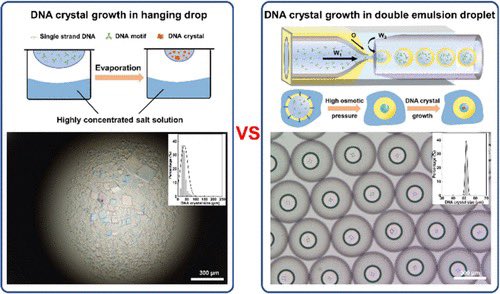
Precision Self-assembly of 3D DNA Crystals Using Microfluidics
pubs.acs.org/doi/10.1021/jac…
We present a novel strategy for synthesizing monodisperse 3D DNA single crystals using microfluidic double-emulsion droplets as nanoliter-scale microreactors.
1
6
23
1,614
Metal_DNA Lab retweeted

24 Jan 2025
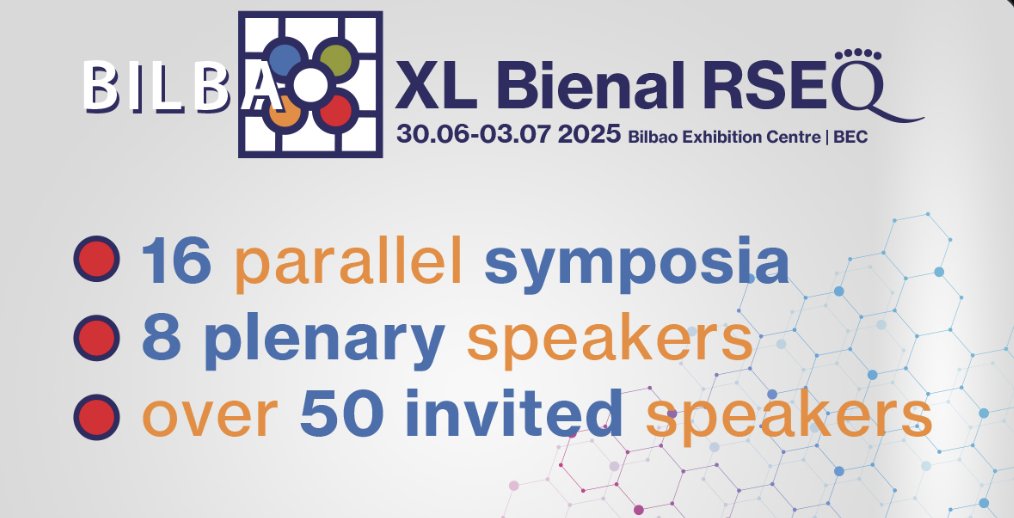
📢 El plazo para el envío de comunicaciones a la @BienalRSEQ2025 ya está abierto
💡Comparte tus avances en #química y conecta con la comunidad científica.
🗓️ Hasta el 28/02
👉 Info aquí: acortar.link/rbX7nL
Nos vemos en Bilbao (30/06-03/07) 🎉
#RSEQ #ReuniónBienal #BQB2025
11
19
1,384

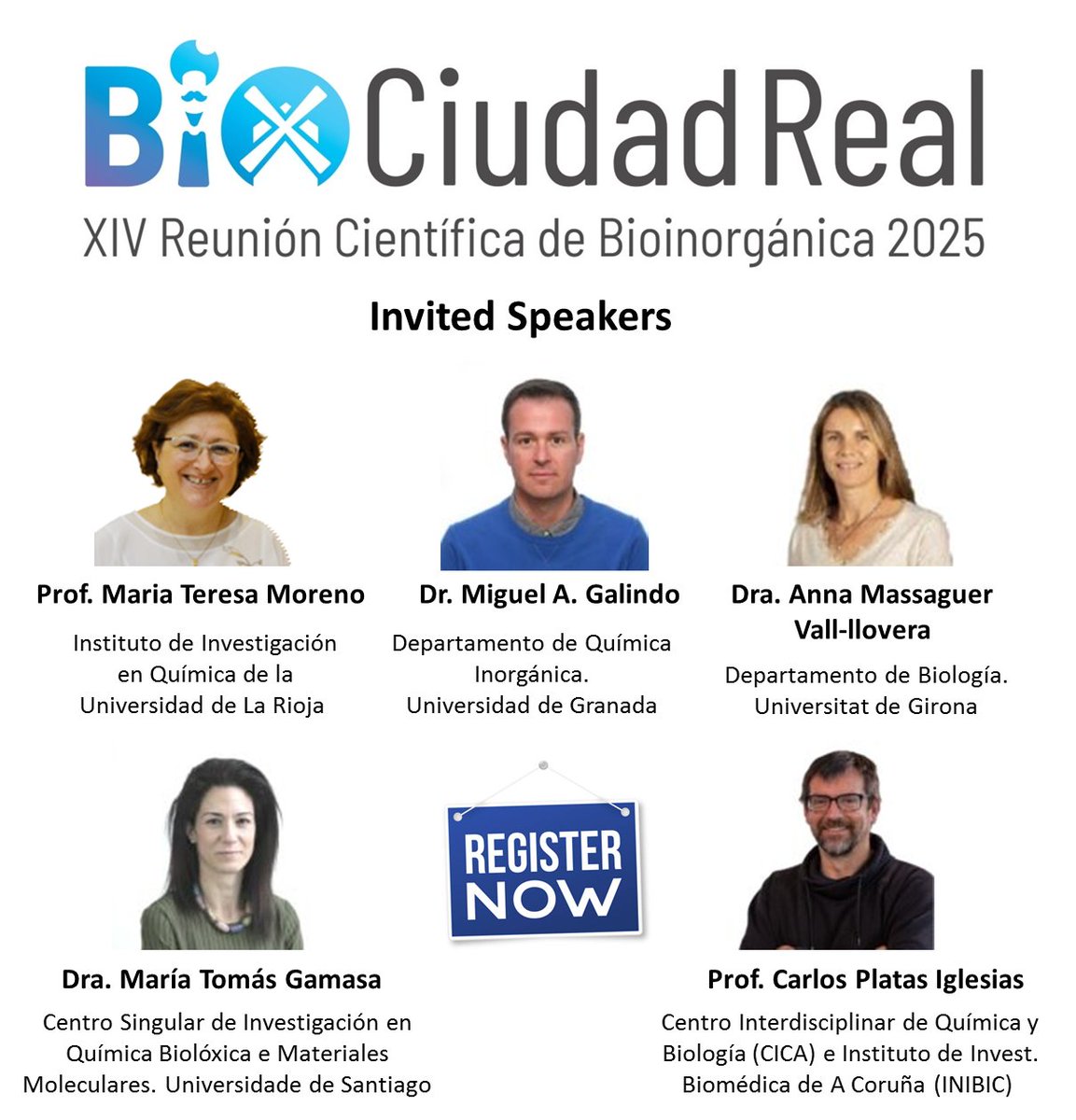
📢 Exciting news! Join us in🌟@BioCuidadReal25 for an incredible conference on #BioinorganicChemistry featuring amazing INVITED SPEAKERS! @_Temoreno, @Galindo_Lab, @amassaguerv, María Tomás Gamasa and Carlos Platas Iglesias
Registration is NOW OPEN at biociudadreal.es/inscripcion…
12
22
1,248