
Geldux is a next-gen perp DEX on @base, combining trading, live market intelligence, heatmaps, and trader analytics in one. geldux.xyz
Joined April 2026
- Tweets 129
- Following 33
- Followers 52
- Likes 160
22 Photos and videos
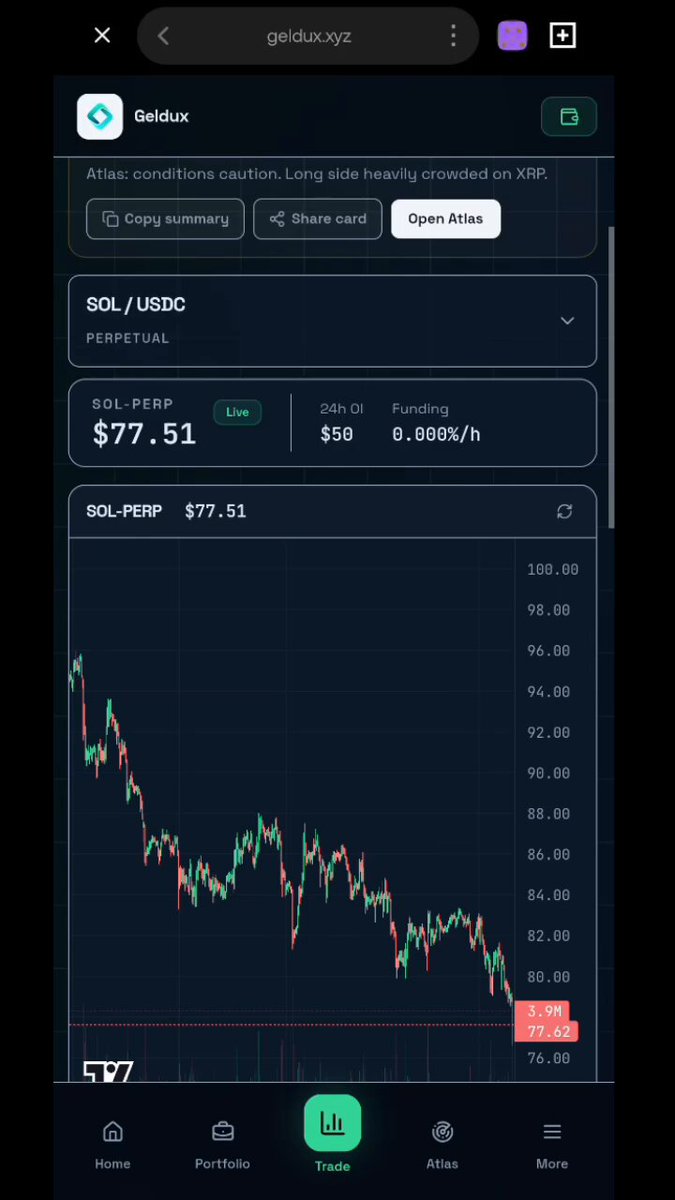
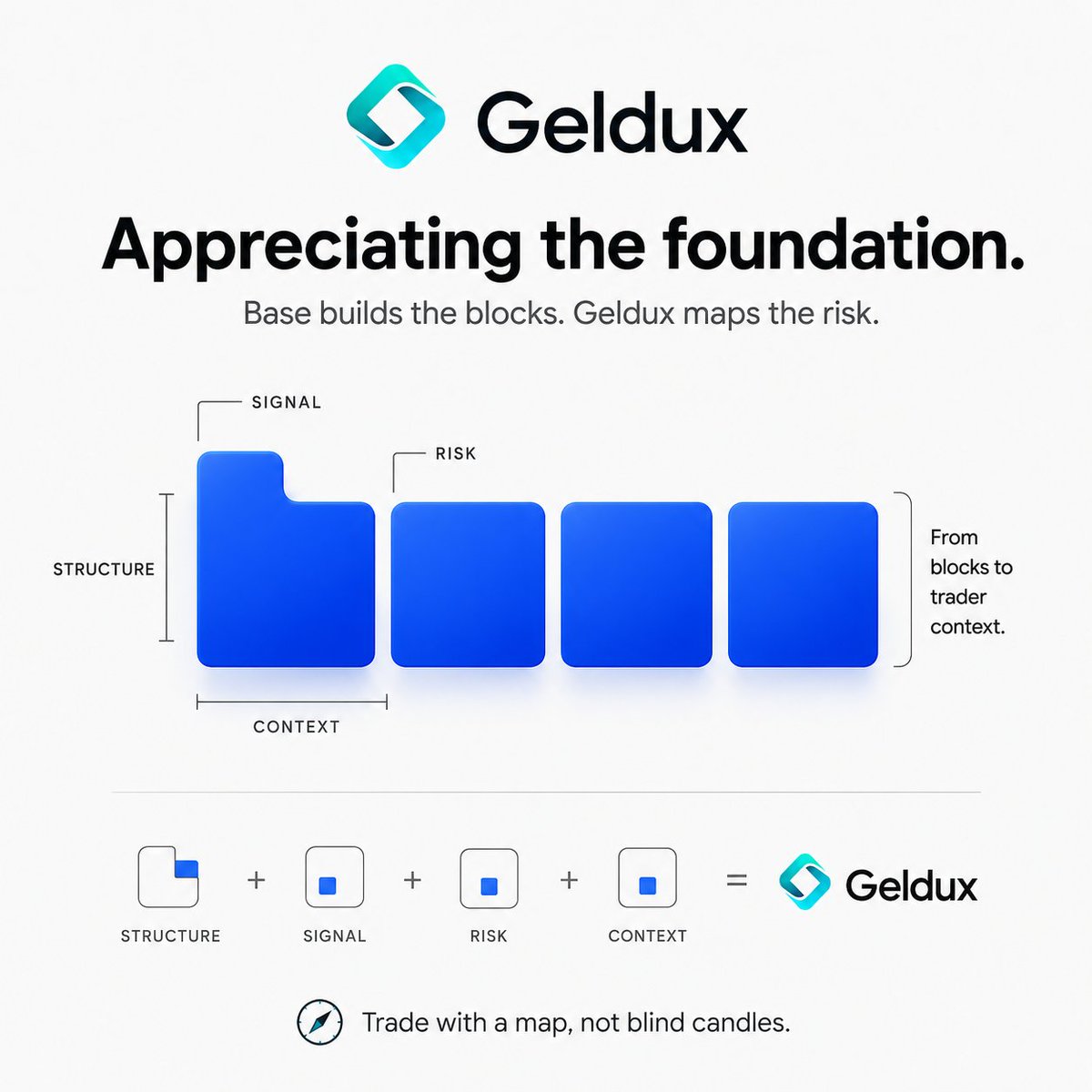
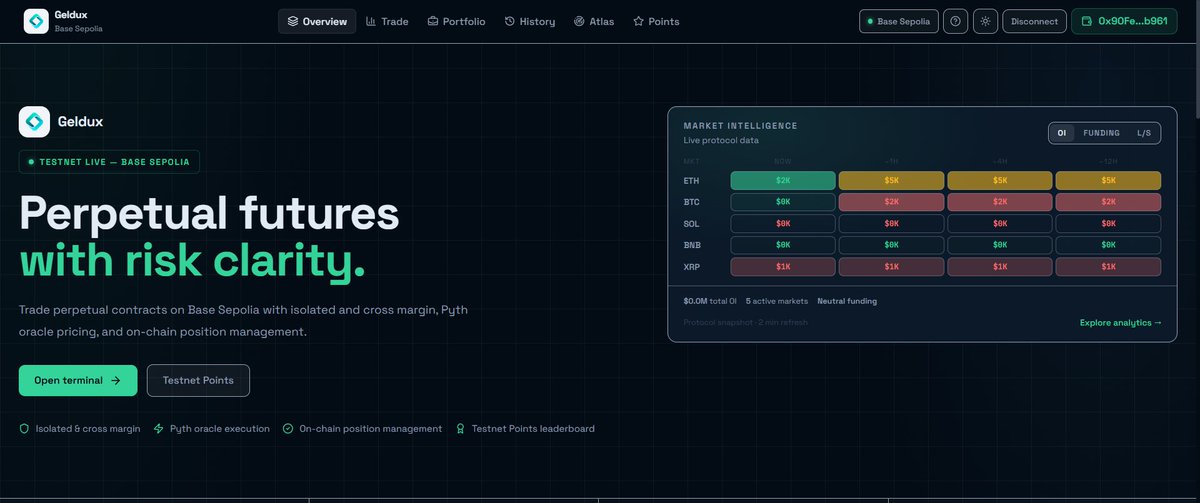


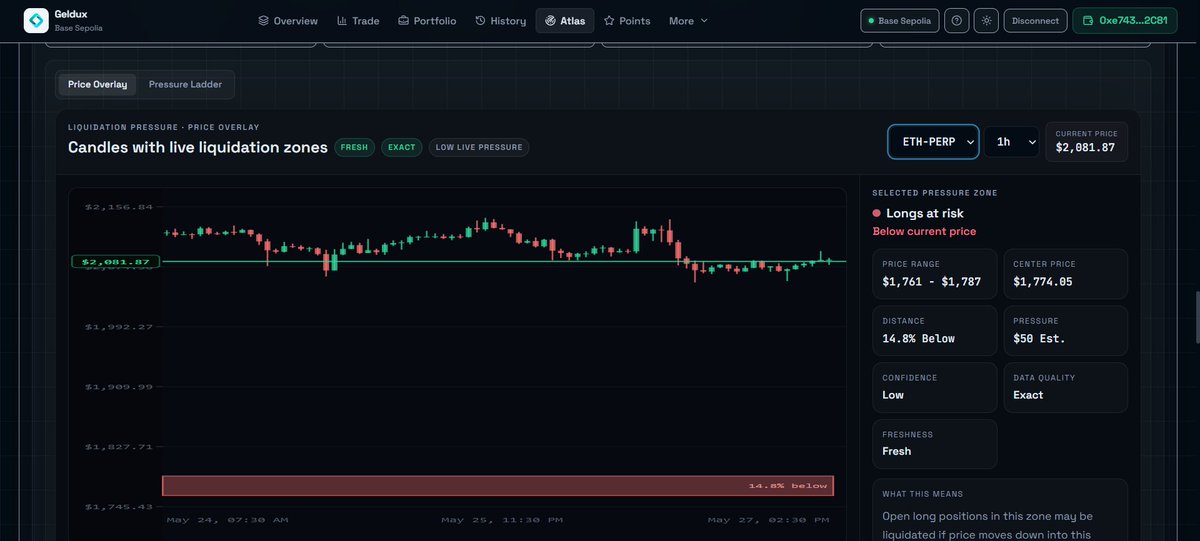
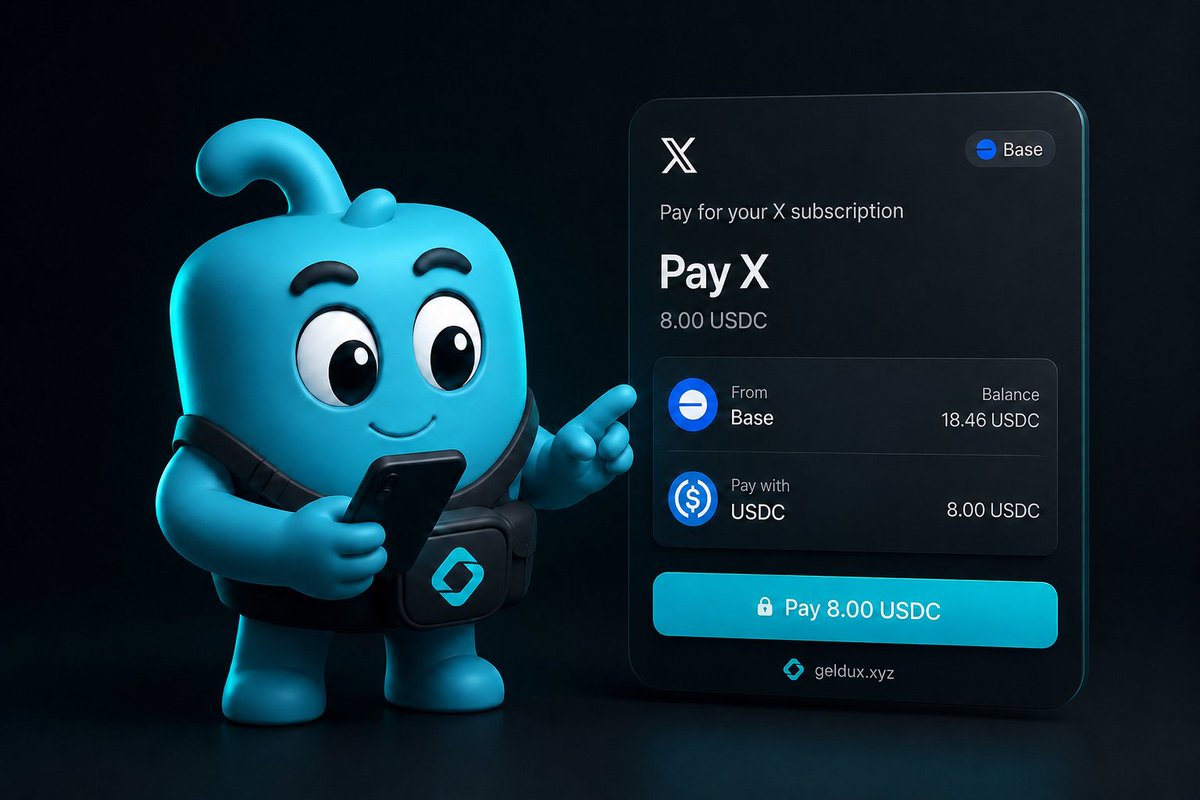
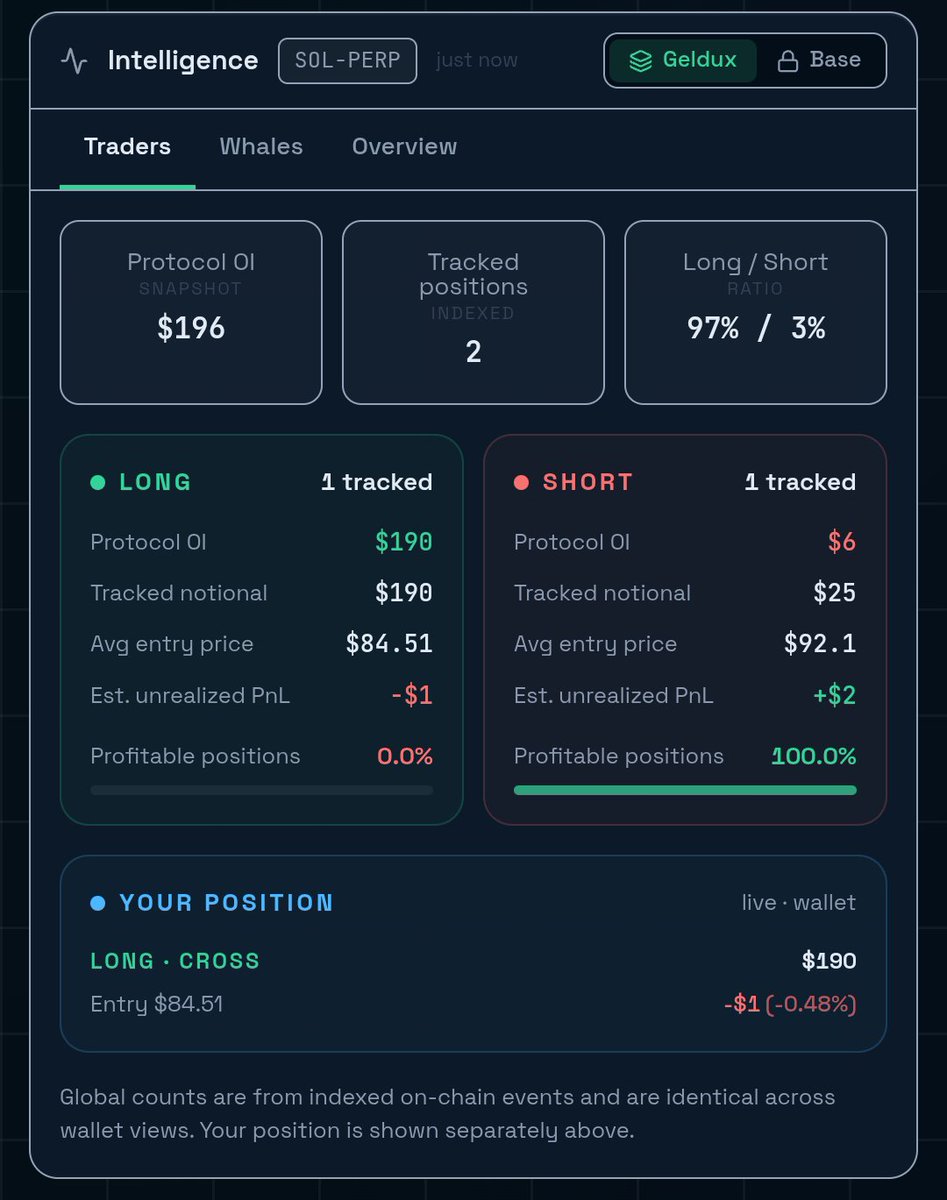
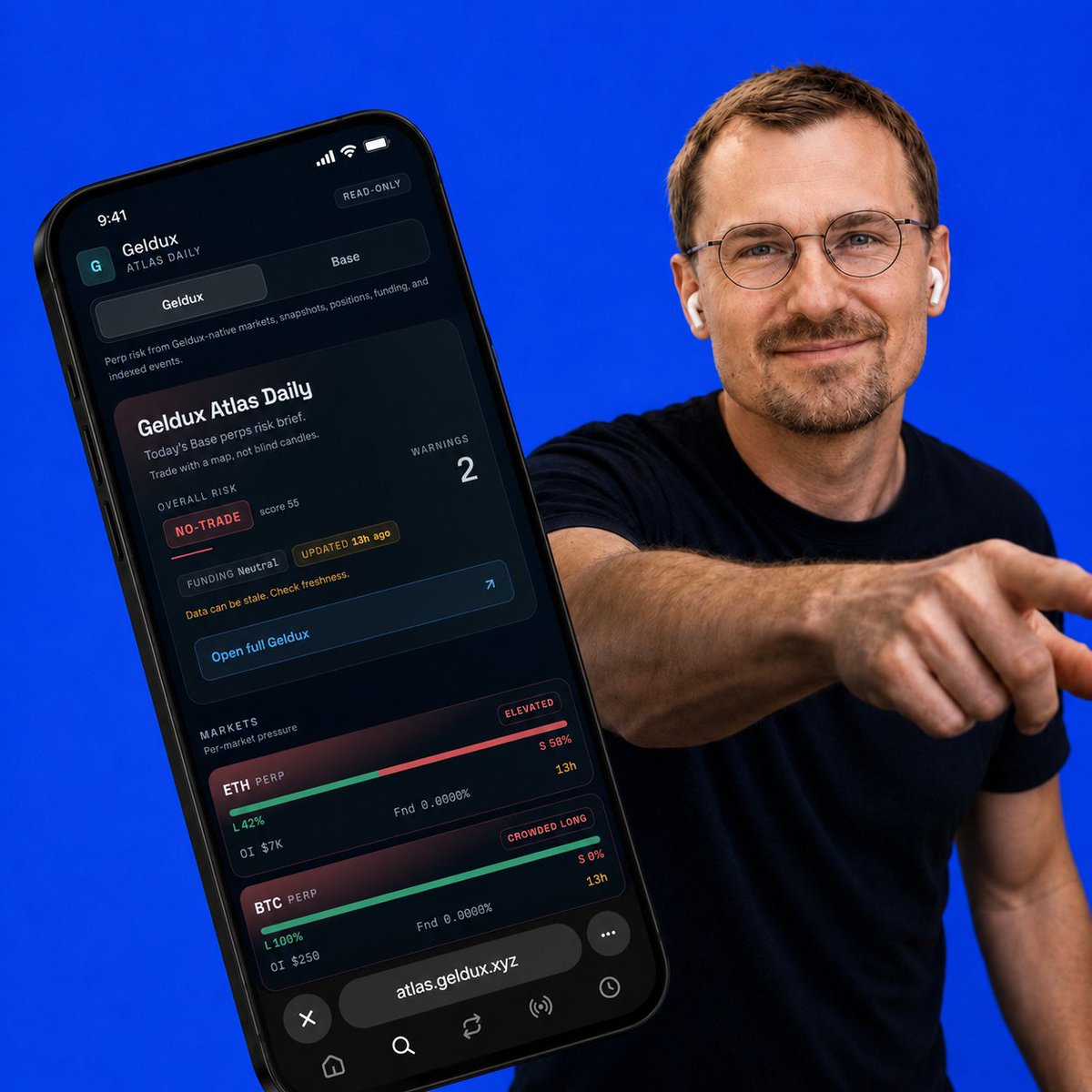
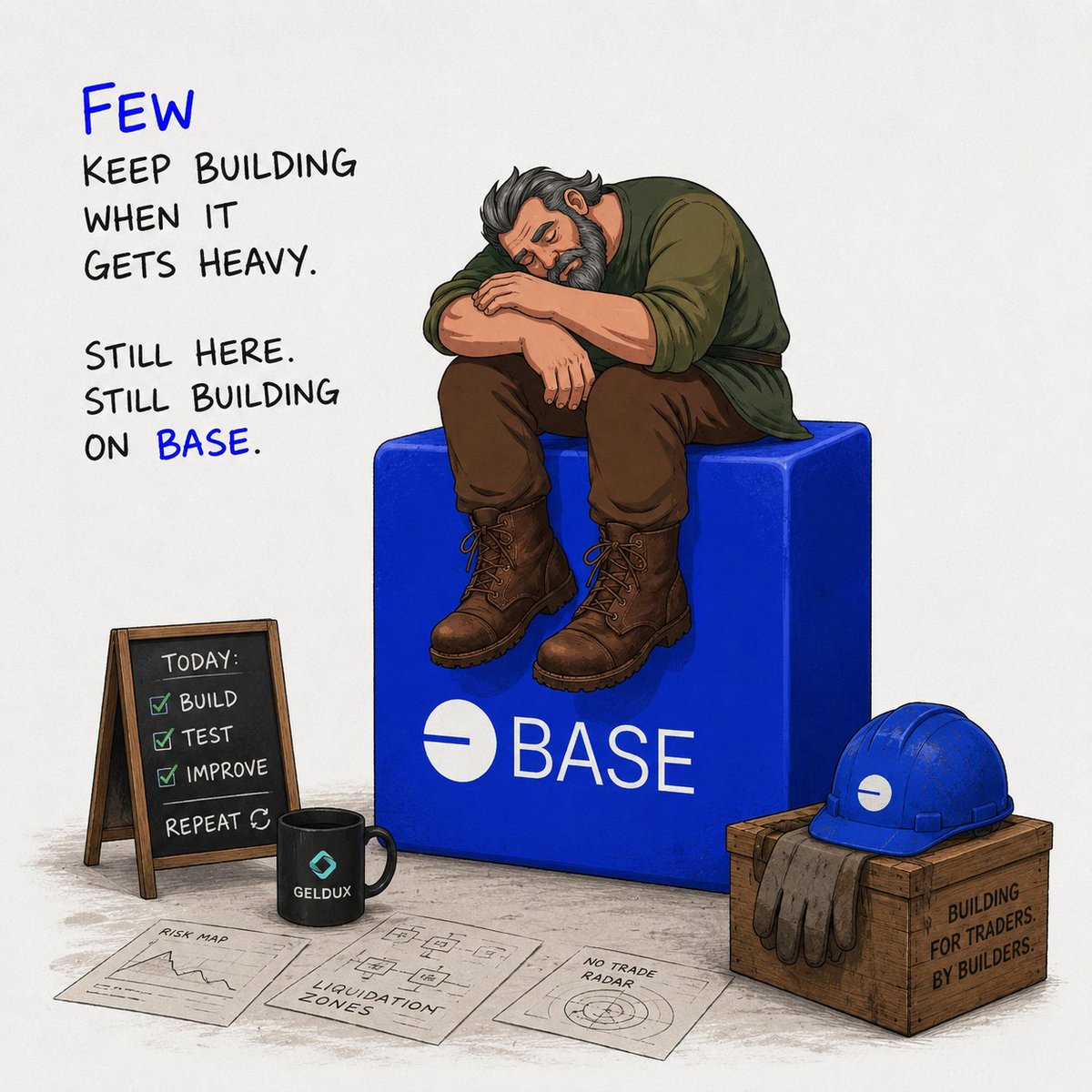
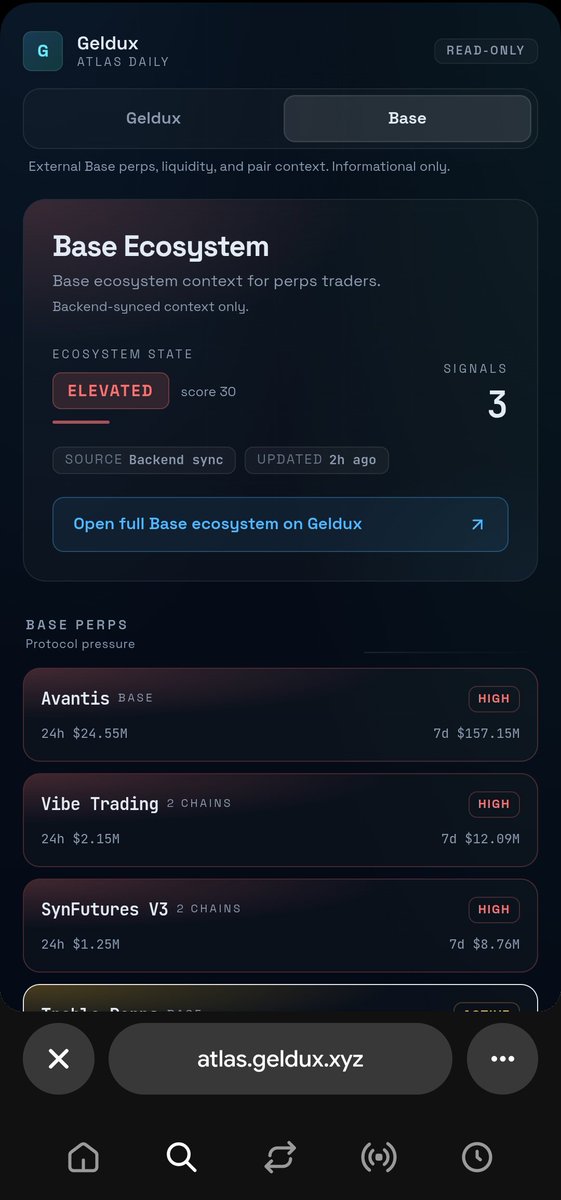

We’re building Geldux on @base.
Not just another perp interface.
The goal is a trading terminal that gives onchain traders more context before they make decisions:
• Heatmaps
• Liquidation data
• Whale activity
• Trader intelligence
• Portfolio insights
• Mobile-first trading UX
The feedback has been clear:
Base traders need products that feel fast, practical, and genuinely useful.
That’s the direction for Geldux.
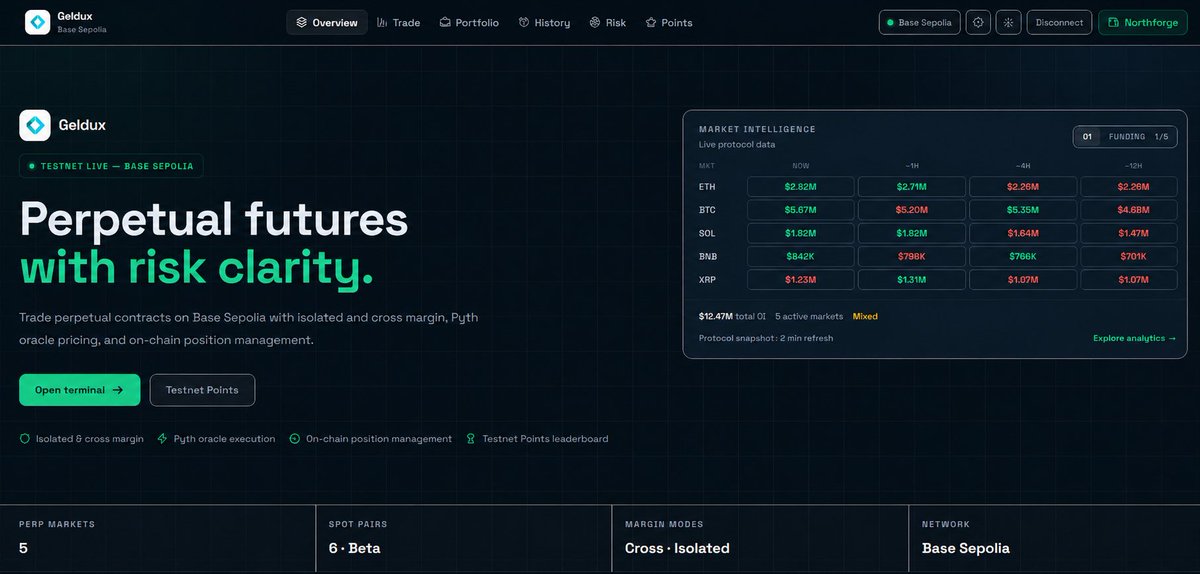
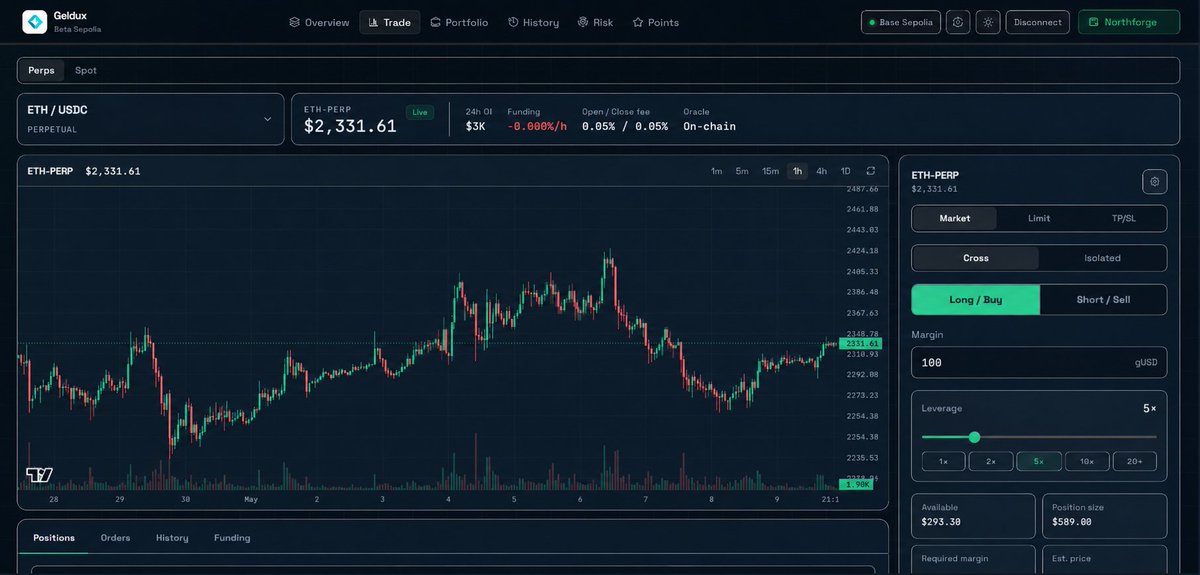
9
6
35
1,255
Geldux retweeted

Jun 13
I’m Suhaib, building @Geldux.
I started with one frustration: onchain trading gives you execution, but not enough info.
So I’m building a @Base native perp terminal with Atlas risk intelligence, session trading, and cleaner market reads.
Still early, but moving every day.
2
3
49
We opened the Geldux Discord for people who want to follow the product more closely.
Geldux is being built around Base-native perps, Atlas market intelligence, session trading, position health, and cleaner onchain execution.
The Discord is not meant to be a noise room.
It is for people interested in:
Atlas risk intelligence
Base Sepolia trading flows
session trading UX
perps product feedback
market structure discussions
bugs, edge cases, and improvements
builder conversations around onchain trading
The goal is simple.
Bring together people who care about better trading infrastructure, cleaner execution, and more useful market context.
Early roles are based on real contribution, feedback, testing, and useful participation.
5
4
19
556
Join here: discord.gg/QfFDFVTu7c
1
6
71
Atlas is the intelligence layer.
Session trading is the execution layer.
Together, they make Geldux feel closer to how an onchain trading terminal should work.
A trader should be able to understand market conditions, check position health, see risk signals, and then act without fighting wallet friction every few seconds.
The goal is not to hide risk.
The goal is to make risk more visible while making the actual trading flow less painful.
That is the part we are focused on improving.
#DeFI #base #dex
1
8
55
Builder note #6 from Geldux:
Over the last few days, most of the work has been focused on tightening the foundation instead of adding surface level noise.
Geldux is now moving through the kind of stage where small product decisions matter a lot. The trading flow can look simple from the outside, but under it there are many things that need to behave correctly every time: collateral accounting, oracle checks, margin mode handling, position lifecycle, liquidation reads, portfolio state, history, and the way risk information is shown to the user.
On the contract side, the clean Geldux Perps V2 deployment is live on Base Sepolia with gUSD test collateral and five curated markets.
The current system supports both cross and isolated margin flows. We completed smoke tests for isolated and cross positions including opening, reading risk, partial close, full close, and cross collateral withdrawal.
The most important part was the accounting result.
Vault accounting stayed clean.
No bad debt was created.
Open interest returned to zero after the test flows.
Cross collateral was fully withdrawn after the cross test.
Risk reads were available through RiskLens.
That gives us a stronger base before bringing more testers into the product.
The product work has also been moving in parallel.
A lot of focus went into separating global market intelligence from wallet specific data. This sounds like a small detail, but it is important. Market level information should not change just because one wallet connects. A connected wallet can add personal context, but it should not mutate the global view of the market.
This makes Atlas cleaner and more reliable.
Geldux Atlas is being shaped around real trading context. Not prediction. Not fake signal dashboards. Not random AI labels. The goal is to show useful market state around open interest, funding pressure, liquidation context, position health, freshness, and risk conditions before and after a user takes action.
We also pushed the visual intelligence layer further.
Atlas now has a more visual direction with perps heatmaps, liquidation pressure views, funding pressure views, Base protocol pressure, liquidity context, and shareable risk cards.
The intention is to make risk easier to read at a glance without turning every color into a trade signal. A pressure map should help users understand conditions, not push them into action.
Another area we improved is honesty around data.
If something is missing, stale, not indexed yet, or unavailable, the interface should say that clearly. We are avoiding fake liquidation zones, fake volume, fake PnL, fake health scores, and fake intelligence. In a trading product, clear empty states are not a small UX detail. They are part of trust.
Atlas Daily is also becoming a separate surface in the product direction.
The full Geldux app remains the trading terminal. Atlas Daily is a lighter read only risk brief for people who want to follow market context without connecting a wallet or touching trading actions. No faucet, no contract writes, no position management. Just a cleaner public entry point into Geldux intelligence.
We also cleaned the chart architecture.
The trading chart now uses a first party API route. The browser calls the Geldux chart endpoint, while the server handles candle fetching and normalization privately. This keeps implementation details out of the frontend and gives us a cleaner path to change data sources later without changing the UI.
The flows we care about now are:
faucet
cross margin
isolated margin
partial close
full close
portfolio
history
points
Atlas
mobile UX
Geldux is still early, but the shape is becoming clearer.
Execution is one part of the product.
Risk context is the layer that makes the experience more useful.
That is where the work is going.
2
1
12
195
Days like this are exactly why Geldux is being built.
When BTC is down hard and the whole market feels heavy, trading becomes less about confidence and more about risk control.
The questions change fast:
Am I overexposed?
Is leverage crowded?
Are liquidations getting closer?
Is funding turning one sided?
Is the data fresh enough to trust?
Should I trade, reduce, wait, or do nothing?
Most trading products make it easy to click long or short.
But on days like this, traders need more than execution.
They need market context, position health, liquidation awareness, funding pressure, and honest data freshness before taking risk.
Geldux is still testnet-stage.
But the mission becomes clearer every time the market bleeds:
build a trading terminal that helps traders read risk before they act.
Trade with a map, not blind candles.
#crypto #btc #base
1
7
64
Onchain trading should not feel like stopping at a wallet popup every few seconds.
That is why we are testing session trading on Geldux.
The idea is simple.
A user approves a limited trading session once, then trades faster inside that approved scope.
This does not mean unlimited wallet access.
It does not mean the app can do anything with the wallet.
A session should be controlled by clear permission limits.
For example:
which market can be traded
which actions are allowed
maximum collateral size
maximum leverage
maximum trade size
allowed margin mode
maximum slippage
acceptable price range
session expiry time
oracle freshness requirement
risk checks before execution
So instead of giving broad approval, the user gives a specific permission for a specific trading window.
That is the main difference.
A normal approval can feel open ended.
A session should feel limited, temporary, and purpose built for trading.
In practice, this can make the trading flow much smoother.
Open a position.
Increase a position.
Reduce a position.
Close a position.
The user should not need to break focus and sign again for every small step, as long as the action stays inside the session limits.
But speed alone is not the goal.
Security matters more.
A Geldux trading session should not be able to withdraw funds freely.
It should not be able to change user settings outside the session.
It should not be able to execute unrelated wallet actions.
It should not be able to trade markets the user did not allow.
It should not be able to exceed the user’s approved collateral or leverage limits.
It should not keep working forever after the session expires.
Every session should have boundaries.
Every trade should still respect risk controls.
Every permission should be understandable before the user approves it.
This is the experience we are building toward:
fewer interruptions
faster trade execution
clear permission limits
self custody
onchain settlement
risk checks still active
Session trading is not about removing user control.
It is about reducing unnecessary friction while keeping user control clear.
This also connects with Geldux Atlas.
Before trading, users should be able to see risk context like market pressure, funding pressure, long and short imbalance, liquidation pressure, position health, and freshness.
So the full Geldux direction is not just faster execution.
It is faster execution with better context and safer permission boundaries.
Trade with fewer interruptions.
Trade with clearer limits.
Trade with a map, not blind candles.
1
2
12
86
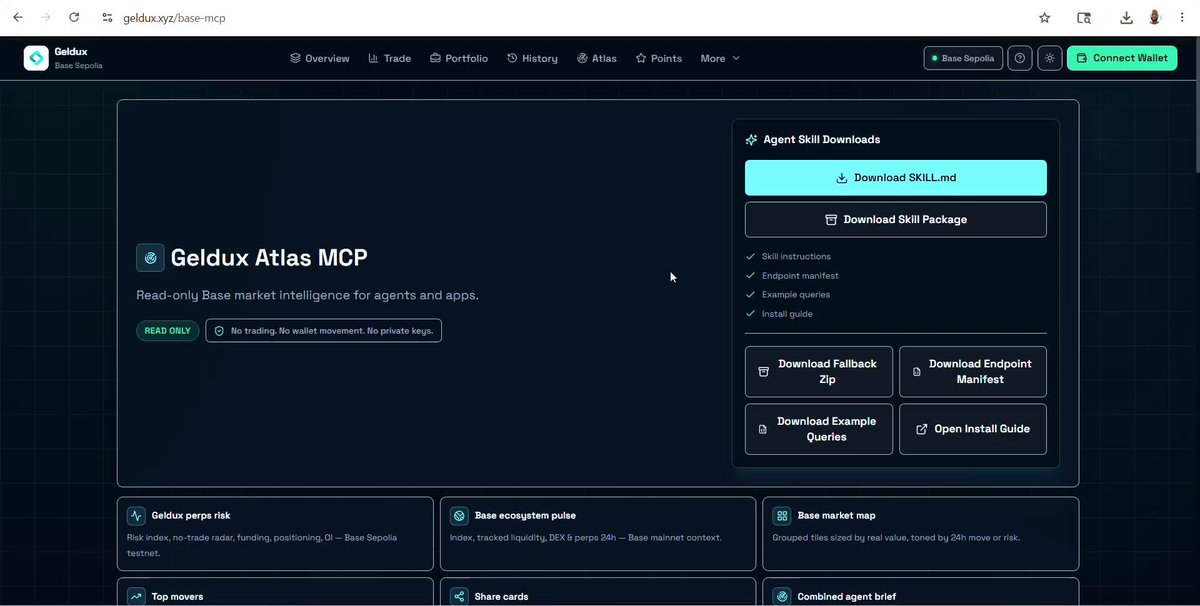
Introducing Geldux Atlas MCP.
Geldux is building a Base-native perps terminal with risk intelligence built into the trading experience.
Atlas is the intelligence layer.
And now, with MCP, agents can read that context directly.
In this demo, Geldux Atlas is used inside an agent client to ask simple market questions:
What is the current ETH-PERP risk state?
What signals and warnings are active?
Is the data fresh enough to trust?
What is happening across the Base ecosystem?
Can this be turned into a clean shareable Atlas Daily card?
The important part:
Geldux Atlas MCP is read-only today.
No wallet movement.
No private keys.
No trade execution.
Just market context, risk state, freshness, warnings and Base ecosystem intelligence in a format agents can understand and explain.
This is the direction we care about.
Onchain trading should not only become faster.
It should become easier to understand.
Agents can help turn raw market data into useful context before users take risk.
Still early.
Still testnet-stage.
Still read-only.
But the idea is clear:
Geldux Atlas MCP gives agents a risk map for Base markets.
Trade with a map, not blind candles.
@base @buildonbase @jessepollak
2
1
10
372
Geldux Atlas MCP:
geldux.xyz/base-mcp
Read-only Base market intelligence for agents.
Risk state, freshness, signals, warnings, Base ecosystem context and Atlas Daily cards.
1
6
55
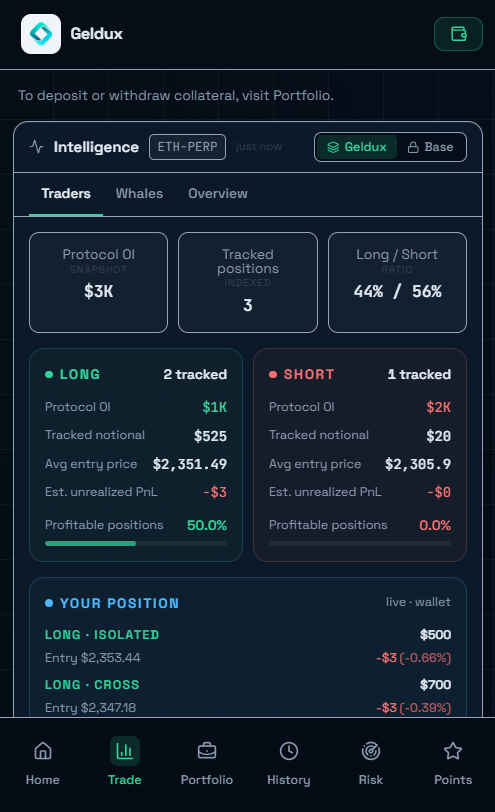
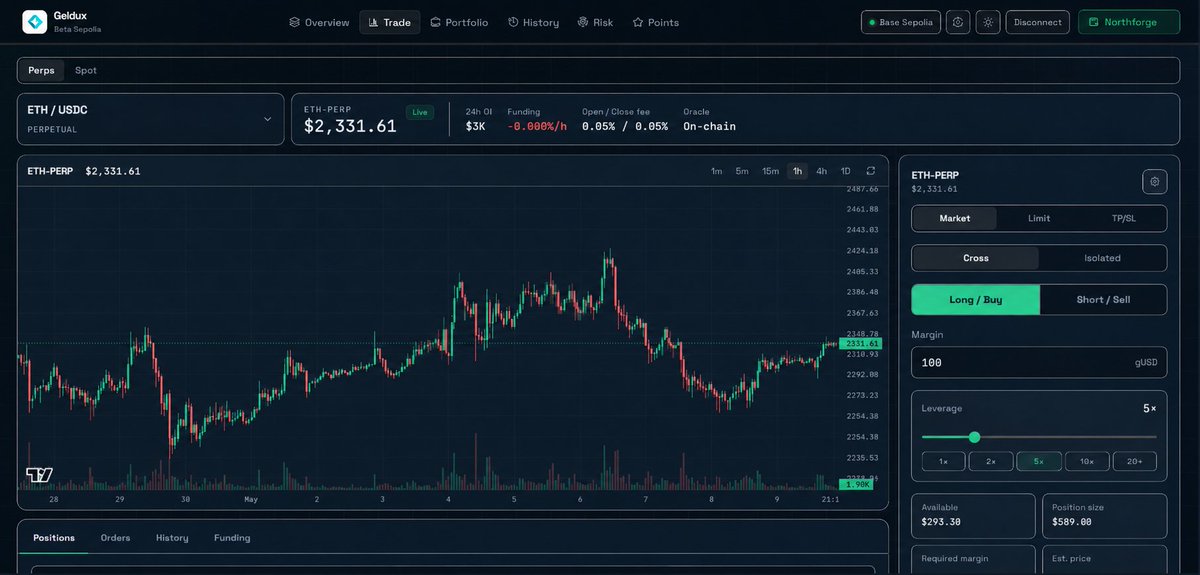
Hey WAY Too Based, happy to be here.
We’re Geldux, a Base-native perps trading and risk-intelligence product currently on testnet.
The idea behind Geldux is simple:
onchain trading should not only be about clicking long or short.
Traders need better context before taking risk.
Geldux is being built around two connected layers:
a perp trading terminal for cross and isolated margin
and Geldux Atlas, a risk-intelligence layer for market pressure, open interest context, funding pressure, liquidation awareness, position health and No Trade Radar.
Still early. Still testnet.
But the direction is clear:
execution should not live alone.
A better Base trading product should make risk easier to read before a trade is opened, increased, reduced or closed.
Excited to connect with more Base builders and traders here.
Feedback is always welcome.
Trade with a map, not blind candles.
1
1
5
138
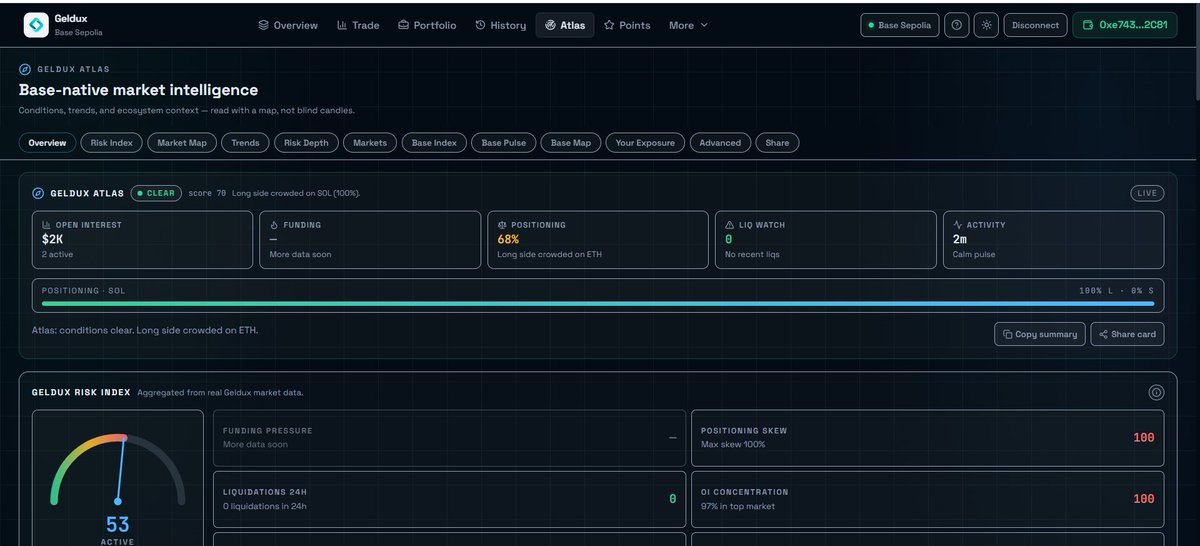
Builder note #5 from Geldux:
We have been working deeper on Geldux Perps V2.
Not only on the interface.
On the system underneath it.
Earlier, the product was more focused on making the trading flow visible and usable.
Now the work is about making the whole perp stack cleaner:
execution
collateral accounting
oracle safety
margin logic
position lifecycle
risk reads
market intelligence
The biggest change is structure.
Trading actions now sit on top of clearer internal layers instead of everything feeling like one combined flow.
Collateral and liquidity accounting are handled more carefully, including reserved balances, fee buckets, insurance balance and bad debt tracking.
Price validation is tighter through fresh oracle checks, confidence limits and normalized mark prices.
The trading engine supports the full position lifecycle:
open
increase
partial close
full close
cross collateral deposit
cross collateral withdrawal
isolated margin
cross margin
long and short exposure
funding updates
open interest accounting
liquidation handling
fee routing
acceptable price protection
The read side is cleaner too.
The frontend can now pull better previews, account risk, position health and liquidation related data without forcing the trading UI to guess too much.
That matters for Atlas.
Risk intelligence is only useful when protocol state is structured properly.
Position Health becomes clearer.
Liquidation Radar becomes more grounded.
No Trade Radar becomes more explainable.
Funding pressure and OI context become easier to read.
The current setup is intentionally controlled:
5 curated perp markets
20x max leverage
10 gUSD minimum collateral
Pyth based price validation
market level risk settings
cross and isolated margin support
Still testnet-stage.
But the product is becoming stronger in the right way:
less fragile execution
cleaner accounting
better risk visibility
more useful intelligence before a trade is taken
Geldux is not just trying to make perps clickable.
We are building toward a trading terminal where execution and risk context work together.
Trade with a map, not blind candles.
3
9
115
Quick question for traders:
Before opening a perp position, what do you check first?
Price action
Funding
Open interest
Liquidation zones
Long and short pressure
Your own position health
Or just the chart?
This is the exact problem we are thinking about while building Geldux.
Most trading screens make it easy to click long or short.
But the harder part is understanding whether the trade is worth taking at all.
Geldux is still testnet-stage, but our direction is simple:
Give traders better context before risk is taken.
Trade with a map, not blind candles.
@buildonbase @base @baseapp #trading #crypto #btc
1
1
9
73
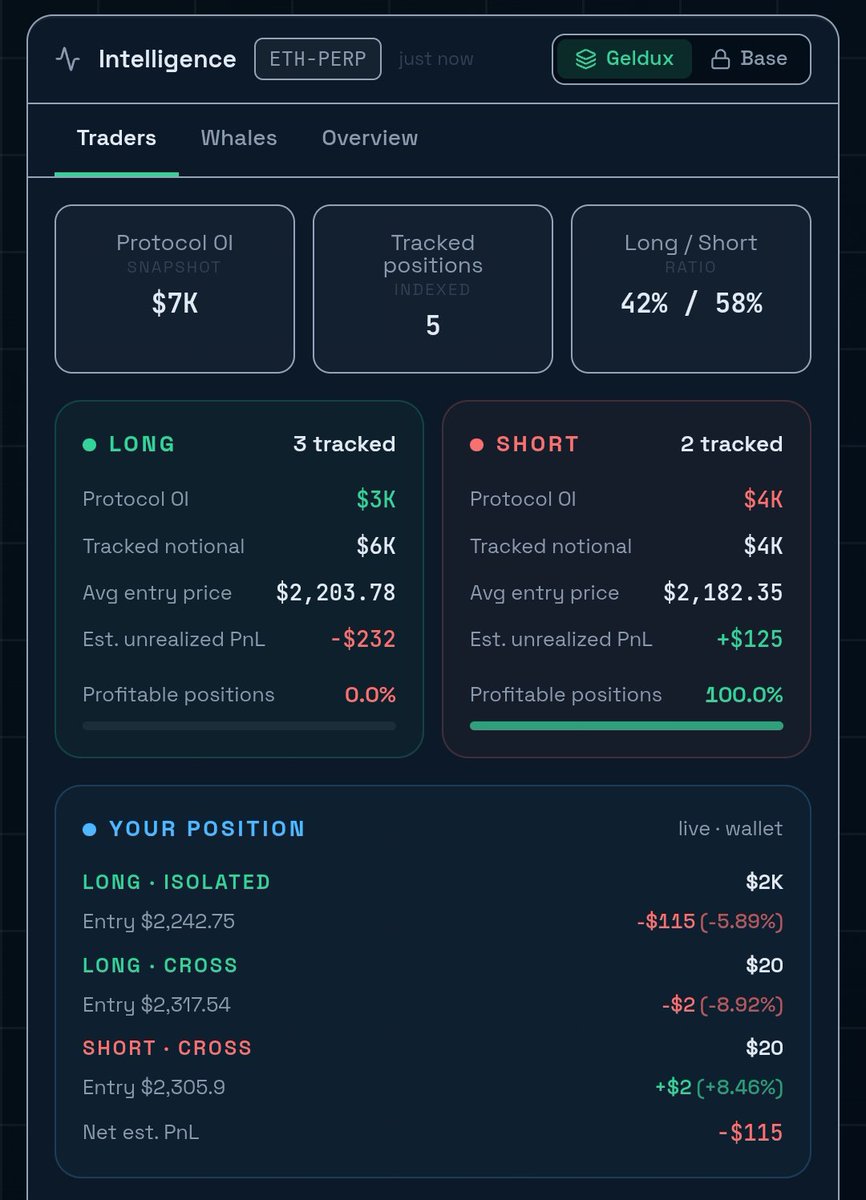
Builder note #4 from Geldux:
The Intelligence layer is where Geldux starts to feel like more than a trading screen.
Before opening a perp position, traders should be able to understand the market around them.
Not just price.
But pressure.
Who is leaning long?
Who is leaning short?
How much open interest is active?
Are tracked positions mostly winning or losing?
Is the setup crowded?
Is my own position sitting in a risky place?
That is the goal behind Geldux Intelligence.
It gives traders a cleaner view of market pressure and personal exposure before more risk is taken.
Still testnet.
Still early.
But the direction is clear:
Trading should come with context.
Perps should not feel blind.
Trade with a map, not blind candles.
3
4
14
190
A perp terminal should help answer more than:
“Do I long or short?”
Before taking risk, traders should be able to ask better questions:
Is this market crowded?
Is leverage building too fast?
Is funding becoming one-sided?
Is liquidity thin?
Are liquidation zones nearby?
Is the data fresh enough to trust?
Is doing nothing the better trade?
That is the direction behind Geldux Atlas.
We are still testnet-stage, but the product principle is simple:
Execution should not live alone.
Risk, market context, position health, and data freshness should be part of the trading experience.
Perps should not feel blind.
Trade with a map, not blind candles.
#base #prep #intelligence
2
5
16
184
Weekend builder note from Geldux:
Some updates are not loud.
No new flashy screen today.
Just cleaner infrastructure behind the trading experience.
We tightened the chart data path so the trading UI can stay simple:
open market
switch timeframe
read candles
check volume
continue trading
Behind that, the app should handle candle fetching, normalization, fallbacks, and source details cleanly.
That matters because trading products should not feel fragile.
If candles are available, show them clearly.
If data fails, fail cleanly.
If the source changes later, the frontend should not need to be rebuilt around it.
Still testnet-stage, but this is the kind of weekend work that makes Geldux stronger:
cleaner data paths
better chart reliability
less client-side mess
no fake candles
no noisy broken states
Small plumbing.
Better product foundation.
Trade with a map, not blind candles.
#base @buildonbase
1
4
11
183
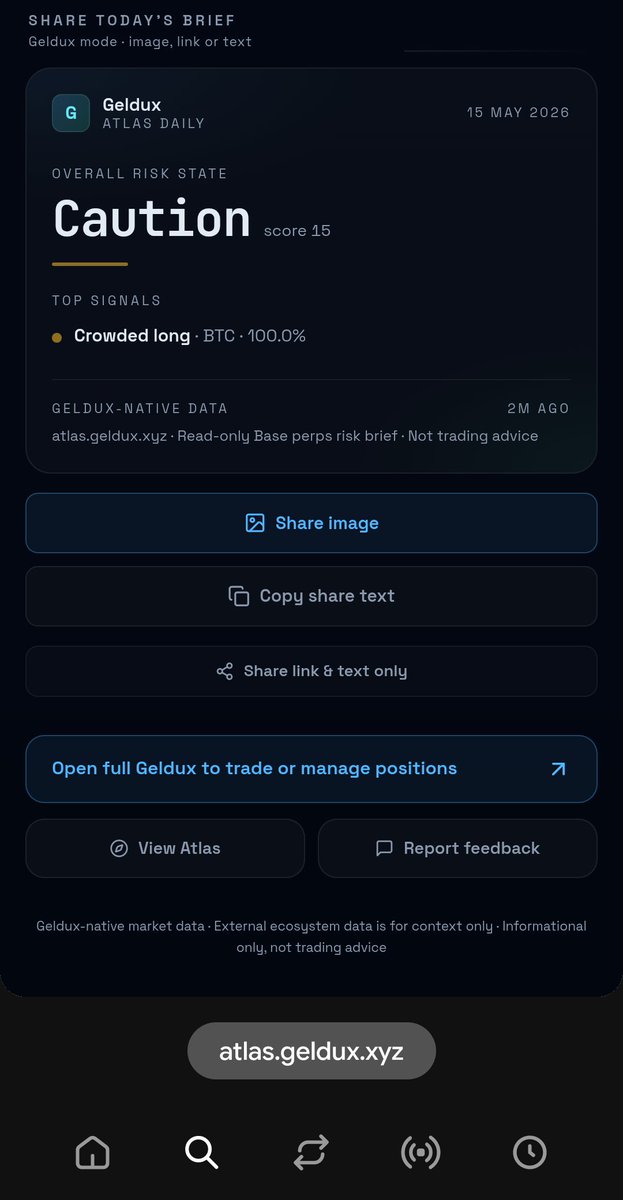
Builder note #2 from Geldux:
A trading terminal should not hide uncertainty.
If data is fresh, show it.
If data is stale, say it.
If data is unavailable, do not fake it.
That is the direction behind our latest Atlas work.
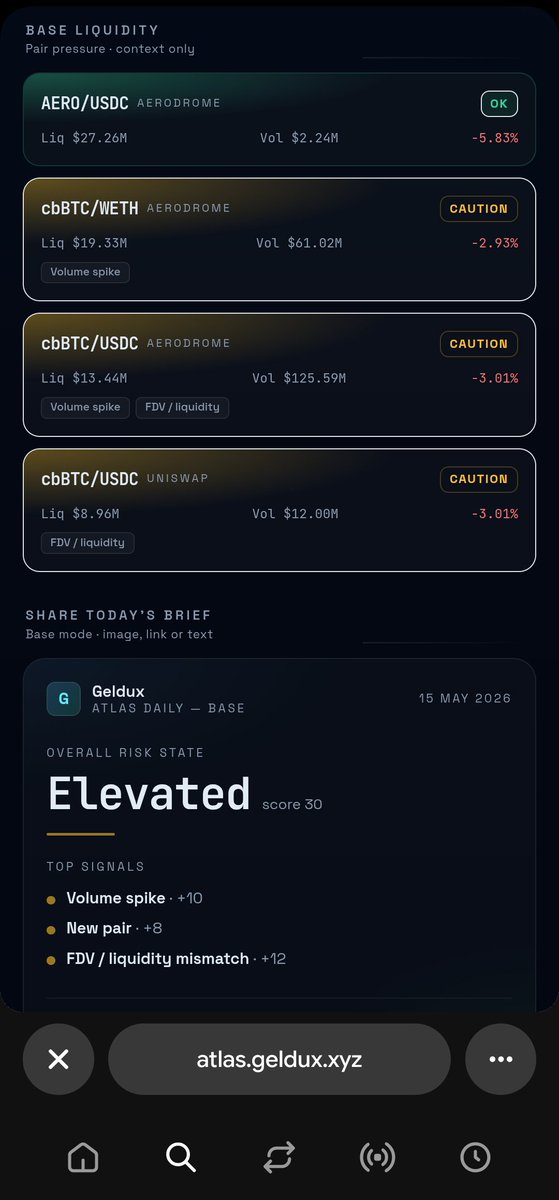
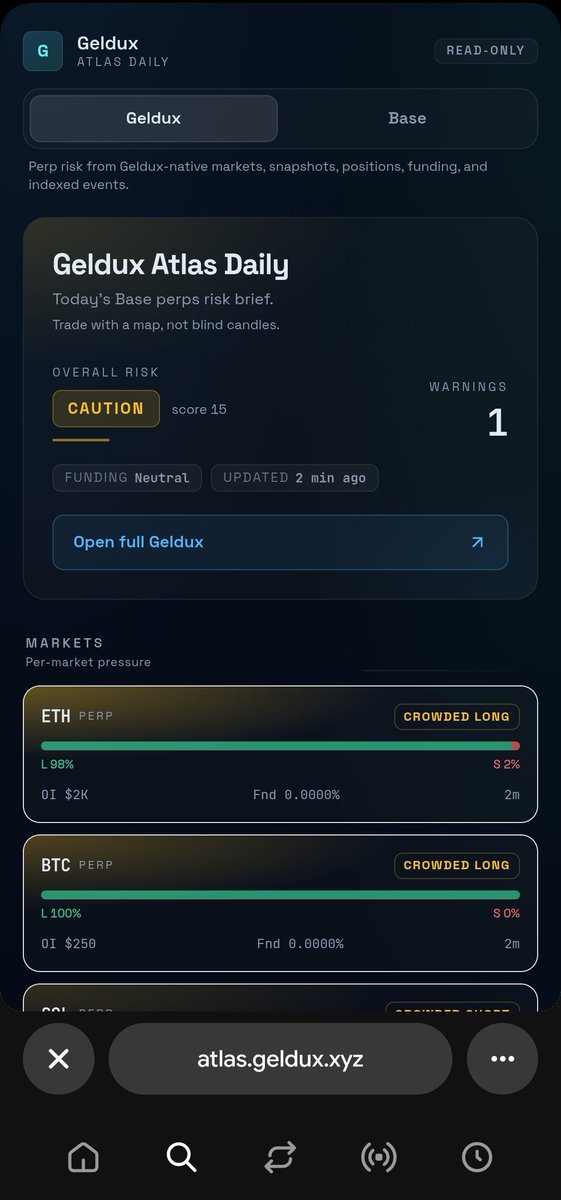
Geldux now separates intelligence into two cleaner views:
Geldux Intelligence
Base Ecosystem
Geldux Intelligence focuses on Geldux-native pressure:
• OI
• funding
• liquidations
• No-Trade Radar
• position health
Base Ecosystem focuses on backend-synced market context.
Still testnet-stage, but the product principle is clear:
No fake numbers.
No noisy dashboards.
More context before risk is taken.
Trade with a map, not blind candles.
@buildonbase
2
5
12
219
The important part for us is keeping these layers separate.
Geldux-native data should explain what is happening inside Geldux markets.
Base Ecosystem context should help traders understand the broader environment.
Both are useful, but they should never be mixed in a way that makes the data unclear.
2
7
104