
Crypto Enthusiast since 2017, PhD Candidate in Marketing
Joined June 2021
- Tweets 5,055
- Following 532
- Followers 4,163
- Likes 34,179
136 Photos and videos








Some of them suffered badly designed tokenomics or lost their hypes however some of them were intentionally designed to rug their investors such as Crabada on Avalanche Network.
For your information, Avalanche Foundation just funded them because they were launching a subnet called as Swimmer Network. They launched it and few months later, scammer team of Crabada vanished.
Avalanche Network is good but they need proper management by the means of business.
Apr 24

LATEST: ⚡ Roughly 93% of Web3 gaming projects are now "effectively dead," according to Caladan, with token values down 95% from 2022 peaks and studio funding collapsing 93% by 2025.

4
4
2,265
Intent-based UX is quietly replacing transactions lately.
Protocols like Anoma and UniswapX are shifting the model significantly. Now you don’t submit a transaction but kinda submitting an intent.
→ “Swap at best price”
→ “Bridge with lowest cost”
Solvers compete to fulfill it.
Sounds clean. But you’re no longer interacting with the chain instead you’re trusting whoever fulfills your intent.
Execution is outsourced. What do you think about it?🤔
3
32
2,183
Ethereum didn’t scale. It fragmented.
The rise of Layer 2s like Arbitrum and Optimism solved fees but introduced a new problem:
→ Liquidity is scattered
→ Users are siloed
→ Bridging adds friction (and risk)
We replaced one bottleneck with many smaller ones.
Yes, transactions are cheaper.
But the user experience? Still messy.
Scaling isn’t just about speed. It’s about coherence.
Until that’s solved, mass adoption remains “almost there.”
2,340
Oracles are the most fragile pillar in crypto.
Blockchains don’t know anything, instead they rely on external data.
That’s where systems like Chainlink come in.
But here’s the uncomfortable truth:
→ If the data is wrong, the contract is wrong
→ If the feed is delayed, the system is exploitable
→ If the oracle is compromised, everything built on it breaks
Smart contracts aren’t trustless. They just outsource trust.
1,637
MEV didn’t disappear. It just got more sophisticated.
With MEV-Boost and proposer-builder separation, Ethereum tried to contain extraction.
But instead of removing MEV…
it outsourced it.
Now:
→ Builders compete in private auctions
→ Order flow gets fragmented
→ Transparency drops
The chain is public. The game isn’t.
1,475
This is an encouragement rather than "being sentenced".
Apr 24

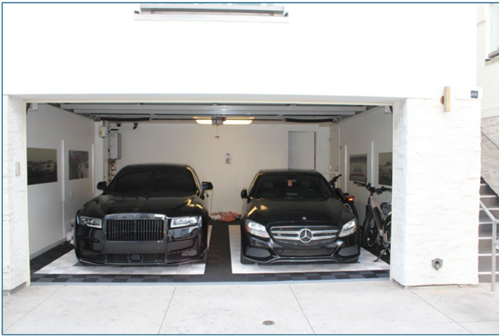
California Man Sentenced to 70 Months in Prison for Role in $263 Million Cryptocurrency Scam: The defendant laundered millions of dollars for members of the scheme and received luxury goods, including expensive vehicles, in exchange for his illicit services. He also converted stolen cryptocurrency into fiat cash to procure mansions for his co-conspirators. justice.gov/usao-dc/pr/calif…
@FBILosAngeles @IRS_CI @USAO_DC


2
1,462
Wallets are about to disappear.
With EIP-4337, crypto UX is quietly being rewritten:
→ No more seed phrases
→ No more manual gas handling
→ Wallets behave like apps
Smart accounts can batch transactions, sponsor gas, even recover access. May sound simple but isn't.
Abstraction shifts power from users to infrastructure thereby.
Are we improving UX or rebuilding Web2 inside Web3?
3
3
1,236
Ethereum blobs changed the game but not as how people expected.
After EIP-4844 (proto-danksharding), L2 fees dropped hard.
But here’s the twist:
Cheaper data doesn't always come along with sustainable economics.
Many L2s are now ultra-dependent on blob pricing staying low. That's a burden.
If demand spikes, costs snap back and thus margins vanish.
Scalability is here. Stability isn’t.
2
4
1,925
It’s encouraging to see names like Aave, Arbitrum, Mantle, and LayerZero now involved in the KelpDAO fallout—capital, coordination, and emergency action matter. Lido just stepped in and announced a proposal to allocate up to 5.8 M USD worth of ETH.
However support is not the substitute for accountability: backstops can steady the system, yet DeFi only grows up when risk decisions are owned before the rescue starts. A few crypto tech people had warned them about Iona DVNs.
3
3
1,541
The recent rsETH / LayerZero exploit exposed something critical to everyone.
Reusing the same ETH across multiple layers doesn’t just amplify yield, but also amplifies attack surfaces. Bridges along with restaking brings composability risk.
One weak link results in system-wide impact.
We’re building leverage on top of leverage. However it may not be very reliable.
5
7
2,402
Ethereum isn’t slow. It’s layered.
Layer 1 = security
Layer 2 = speed
Therefore apps are moving to L2s like Arbitrum and Optimism for one reason:
→ cheaper
→ faster
→ scalable
Ethereum is becoming the backbone - not the bottleneck.
💬 Will a few L2s dominate, or will liquidity fragment to other L1 options rather than Ethereum Network?
1,281
With the current level of your fees? No thanks.
Apr 20

please pay.
with your ai agent,
using metamask card,
on @solana
831
$292M gone. In 24 hours. Here's how North Korea just shook the entire DeFi ecosystem, and why LayerZero, KelpDAO, and Aave all share the blame. 🧵
On April 18, attackers drained 116,500 rsETH (~$292M) from KelpDAO's cross-chain bridge, built on LayerZero infrastructure. Unbacked rsETH tokens were minted through a misconfigured LayerZero cross-chain bridge, creating fake liquidity that triggered a massive crunch across DeFi.
The attack carried markings of a "highly sophisticated state actor", LayerZero pointed to North Korea's Lazarus Group, specifically the TraderTraitor subunit, previously linked to the Axie Infinity Ronin Bridge and WazirX hacks. Pattern? Very much so.
The root flaw: KelpDAO ran rsETH with a 1-of-1 DVN setup, LayerZero Labs as the sole verifier, directly contradicting the multi-DVN redundancy model LayerZero had consistently recommended. One compromised node. $292M gone. KelpDAO counters that the 1/1 setup was LayerZero's own GitHub default, currently used by ~40% of protocols. The blame game is real.
Aave froze rsETH markets on V3 and V4, and saw $10B in outflows — its total supply dropping from $45.8B to $35.7B. Total DeFi TVL tanked to $85.6B in 24 hours.
The message is clear: interconnected DeFi is only as strong as its weakest single point of failure.
1
1,049
This is actually a double-edged sword situation. The aforementioned action is against the nature of decentralization but yet a security measurement. It is hard to draw the line between these though. Tough times for us all...

The Arbitrum Security Council has taken emergency action to freeze the 30,766 ETH being held in the address on Arbitrum One that is connected to the KelpDAO exploit. The Security Council acted with input from law enforcement as to the exploiter’s identity, and, at all times, weighed its commitment to the security and integrity of the Arbitrum community without impacting any Arbitrum users or applications.
After significant technical diligence and deliberation, the Security Council identified and executed a technical approach to move funds to safety without affecting any other chain state or Arbitrum users.
As of April 20 11:26pm ET the funds have been successfully transferred to an intermediary frozen wallet. They are no longer accessible to the address that originally held the funds, and can only be moved by further action by Arbitrum governance, which will be coordinated with relevant parties.
1,336
Privacy in crypto isn’t optional. It’s inevitable.
Right now, most blockchains are radically transparent — every transaction, every wallet, fully visible.
That sounds great… until it isn’t.
Would you want:
→ Your salary visible to anyone?
→ Your investments tracked in real time?
→ Your financial behavior permanently recorded?
That’s where Zero-Knowledge Proofs (ZKPs) change the game.
They allow one party to prove something is true…
without revealing the underlying data.
In practice:
→ Transactions get verified without exposing amounts
→ Identities stay private while remaining compliant
→ Applications become both secure and confidential
This isn’t theory anymore.
From zk-rollups to privacy-focused protocols, ZK is quickly becoming core infrastructure, not a niche feature.
Transparency built crypto.
Privacy will scale it.
💬 The real tension: Can crypto balance privacy with regulation — or will one break the other?
#crypto #blockchain #privacy #ZK #zeroknowledge #web3
1
1,029
I am not happy to be right about the fate of crypto in 2026 and incidents in April like KelpDAO and Lovable unfortunately exceeded my forecast of an incoming storm.😩
Stay safe fellas.🙏🏻 There are lessons to be taken from these.😉

Seems like there is a lack of gems in the market. People are sick of losing money and getting robbed.
I am therefore paying more attention to newcomers as they need to be alert to red flags. 2026 is not gonna be an easy year for crypto but there is still hope.
899
Apparently no cause smarter models were not meant to be less secure to be able to be called as "smarter".😏
Moreover, DeFi couldn't keep up with the recent advances in the area. Borrowing and lending processes should be improved accordingly.
Apr 20

Is there any reason to believe recent DeFi hacks are directly a result of smarter models?
945