
Politely taking down the cult of Genderism one logical question at a time. Tag me in your arguments if you need references or just need a laugh.
Joined June 2024
- Tweets 30,836
- Following 123
- Followers 275
- Likes 35,090
2,388 Photos and videos














Pinned Tweet

10 Sep 2025
There are no words to describe my outrage. The left has lost all ability to discourse, to kill someone whom you disagree with… And then to celebrate it en masse before his wife and children have stopped crying.
Soulless. Wicked. Evil.
You are not on the right side of anything.
9
15
3,327
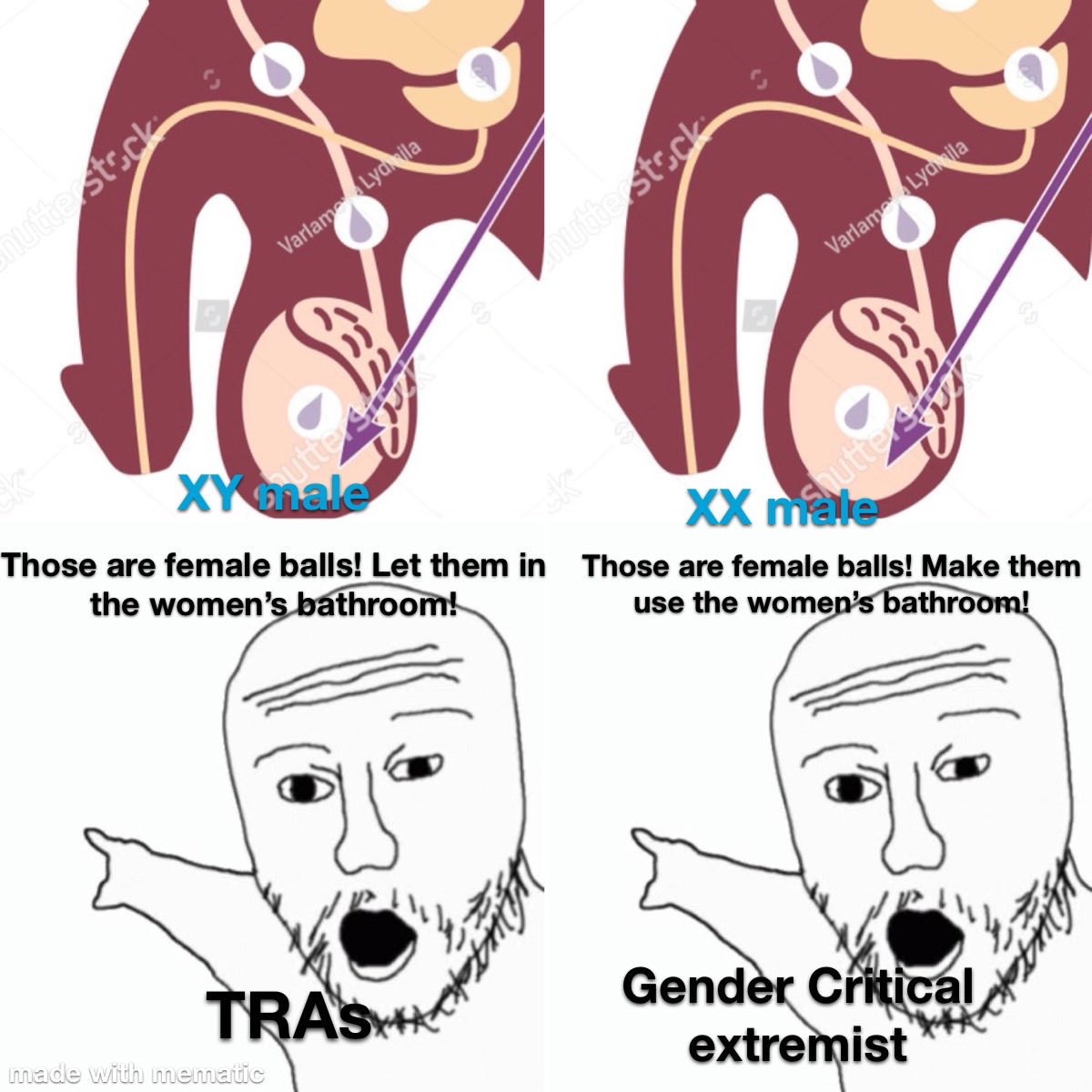
Female testes.
These people think they’re smart.
May 25

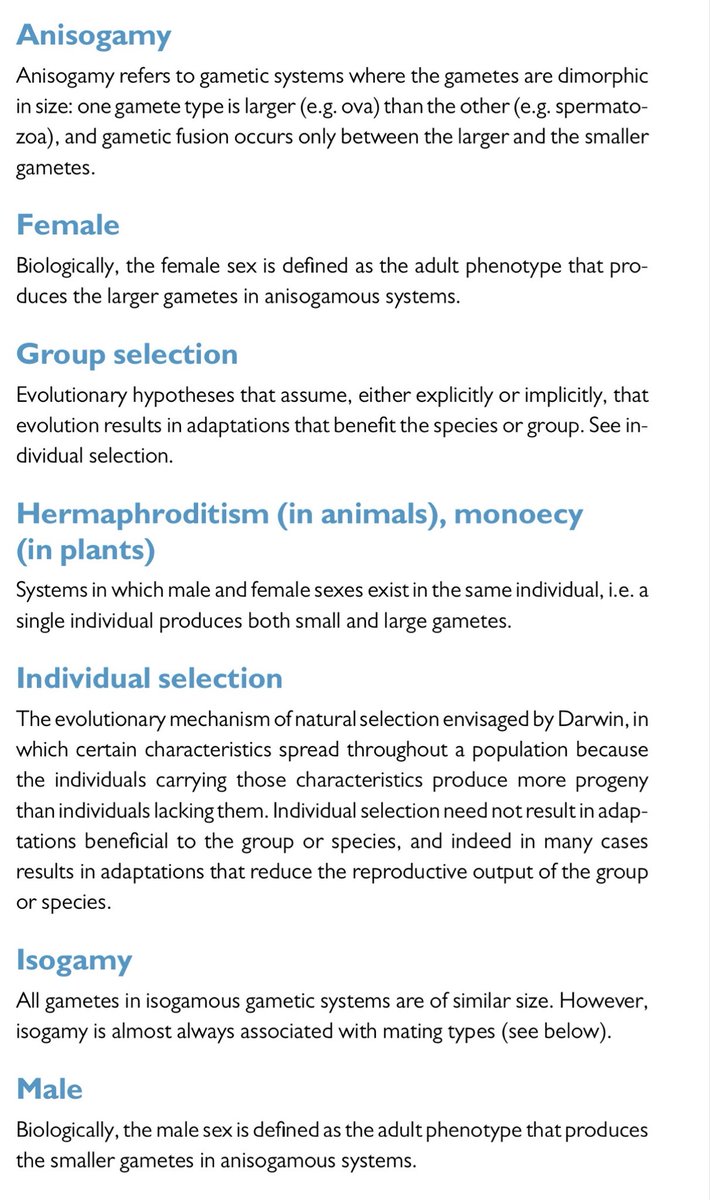
If they were males the testes would produce sperm. Since they're female, they don't. Hope that helps.
3
245

OP blocked me but if you’re interested in continuing this conversation, I do have cited sources. journals.plos.org/plosone/ar…
1
198
We have a contender for worst take of May.

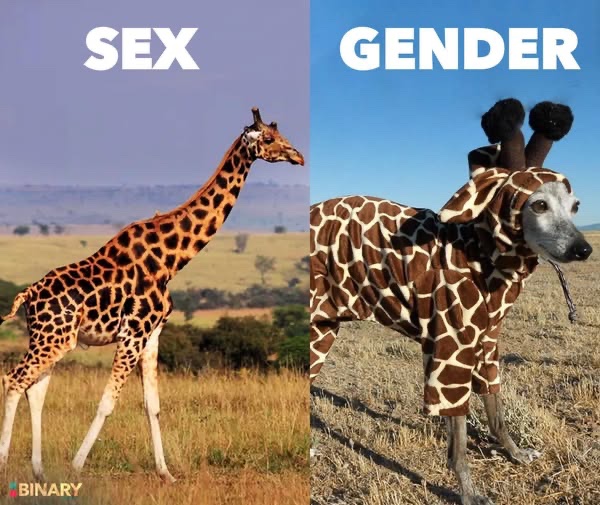
Gender is the sex they know they are irrespective of biology.
We don't know what creates the mismatch: genetics, in utero hormone wash but the cure is to live as their gender /- treatments.
1
3
557
I know this isn’t gender related but I am genuinely confused to the level of stupidity here.

2
272
Women being exposed to male genitalia in a locker room is the same as being exposed to black people apparently.
2
154
Gender Critical Thinker🥓 retweeted

May 9
What do you think?
70
686
4,290
151,260
Me: Explain the difference between men and women, objectively.
Response:
1
3
140
Gender Critical Thinker🥓 retweeted

Apr 26
One side of the political spectrum keeps trying to kill the other side.
One side celebrates murdering babies, selling their body parts, and chopping off kids genitals.
One side continuously releases violent repeat criminals that are preying on our women and children, while lying and saying that they support women.
One side wants dudes to compete against our girls in sports, and force our girls to change with them in the locker room.
One side willingly invites criminals and miscreants from the third world to live among us with impunity, even going as far as to protest when sex offenders are shipped back home.
One side gleefully riots and burns down cities when they don’t get their way.
This isn’t hyperbole. The Democratic Party is a party of depravity.
390
7,352
23,754
246,928
I’m not voting for Reform UK because I don’t live there.


139
This person claims to be a biologist.
You’d think if you were going to lie about it, you’d at least take 5 seconds to educate yourself so you don’t come off looking like a total buffoon but here we are.
Apr 23

Their primary sex characteristics (chromosomes) would say male, while their secondary sex characteristics say female.
1
121
Is it me or is the TRA position getting more and more desperate and stupid?
Me: humans can tell members of the opposite sex 99.98% of the time
The response:

1
133
Gender Critical Thinker🥓 retweeted

44
355
2,116
33,917
Gender Critical Thinker🥓 retweeted

Apr 7
UPDATE ON IMPORTANT NEW FINLAND STUDY | Professor Kaltiala has responded to criticism of the Finnish study, which found that mental health may get worse after young people undergo medical gender transition.
One critique of the study argues that psychiatric appointments are part and parcel of the gender-transition process in Finland and therefore may not point to serious psychiatric morbidity.
In their paper, Professor Kaltiala and her colleagues acknowledged the limitation that their study could not analyse in detail why these patients needed psychiatric services.
Asked about this issue, she told me that the healthcare register data used for the study included diagnoses and in-patient periods but not treatment nor information about a patient’s problems related to family life, romantic relationships or work.
However, Professor Kaltiala said the young people seen by specialised psychiatric services in her country would have “severe disorders”. These services were focused on “those really in need”, consistent with national criteria for health equity.
“In Finland, you do not get admitted to specialist-level services if you don’t have mental disorders at all or [have only] mild disorders and problems,” she said. “Primary-level services are available for needs related to milder disorders and psychosocial difficulties.”
She said the gender-referred youth in the new study were much more likely than matched controls to have a history of severe mental disorders, often dating back some years before they reached the gender clinic.
“Thus, many developed feelings of gender dysphoria in the context of severe disorders,” she said.
“Severe mental disorders during adolescence generally have potential to complicate identity development. It rather seems that feelings of gender dysphoria are sometimes secondary to severe mental disorders.”
If it were the other way around, and the mental disorders were secondary to the dysphoria, those disorders would be “expected to subside with medical gender reassignment”, according to the Dutch treatment protocol adopted internationally, she said.
But this did not happen in the new Finnish study.
Instead, the need for specialist psychiatric services—and therefore the scale of serious mental disorders—increased after medical transition, as the study by Professor Kaltiala and her colleagues reported.
Updated news report ⬇️
open.substack.com/pub/gender…
52
612
2,066
218,560
IE is definitely one of the most unique genderists in that he has the ability to write a very compelling science fiction story to people who don’t understand how science works at all. Take this for example, he knows this is not how sex and DNA works, but he’s going to try anyway.

Do you believe in male and female carbon atoms?
2
226
Also don’t you hate it when you’re insulting someone’s intelligence and you misspell a word?
It's biologically contractionary for you to be a smart person. Becaus IQ is immutable.
1
113
Believes HRT rewrites DNA because everyone already has female DNA.

ACTUALLY I DO BECAUSE I ACTUALLY DO RESEARCH.
1
3
228
Sounds like some bull she/it to me.
2
1
336

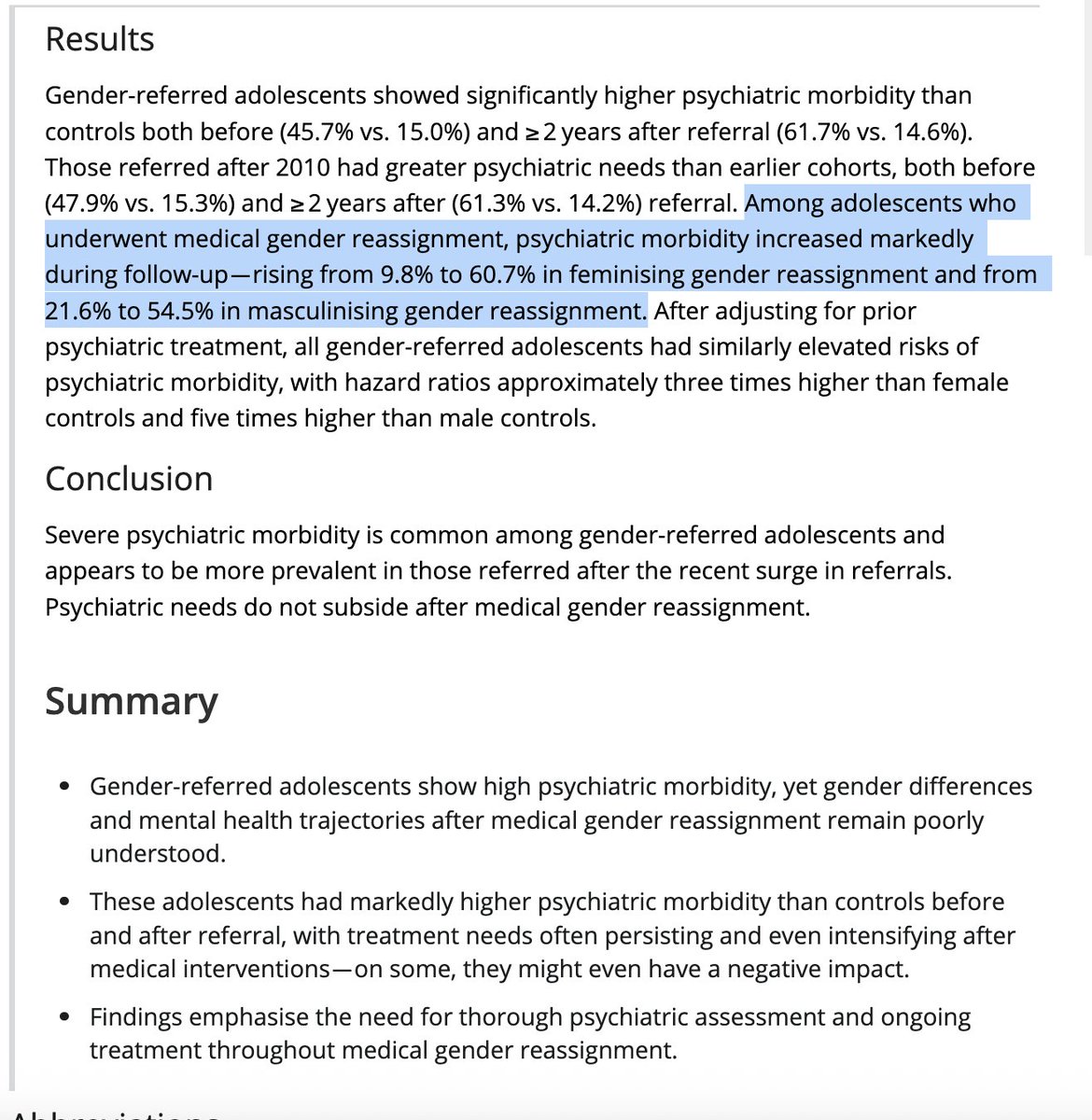
Although we have not yet analyzed the study in depth, its findings are deeply concerning.
Among MtF adolescent patients, mental health problems rose from 10% before gender reassignment to 61% after; among FtM patients, from 22% before to 55% after.
This is not reassuring.

📰A new Finnish study reports that youth gender transitions (under age 23) did not improve mental health symptoms. For some youth, medical gender reassignment may have had a negative impact. Link ⬇️ /1
63
635
1,683
104,002