Letting the data tell the story.📊
Joined June 2020
- Tweets 6,376
- Following 2,524
- Followers 2,918
- Likes 5,207
118 Photos and videos


Why Do Some Countries Attract More Investment Than Others?
Foreign direct investment (FDI) plays a major role in economic growth. Every year, hundreds of billions of dollars flow across borders, but only a handful of countries attract the largest share. What makes these nations so appealing to investors?
Singapore consistently ranks among Asia's top investment destinations despite its small size. Its low taxes, strong legal system, political stability, and world-class infrastructure have transformed the city-state into a regional headquarters for thousands of multinational companies.
China remains one of the world's biggest magnets for foreign capital thanks to its vast domestic market, advanced manufacturing ecosystem, and highly developed infrastructure. Even as labor costs rise, its supply chains and industrial capacity continue to attract investors.
India has emerged as one of the fastest-growing investment destinations. A young population, expanding middle class, rapid digitalization, and a thriving technology sector have made the country increasingly attractive to global businesses.
Indonesia benefits from abundant natural resources and a market of nearly 300 million people. Strong commodity exports and growing manufacturing industries have boosted investor confidence in recent years.
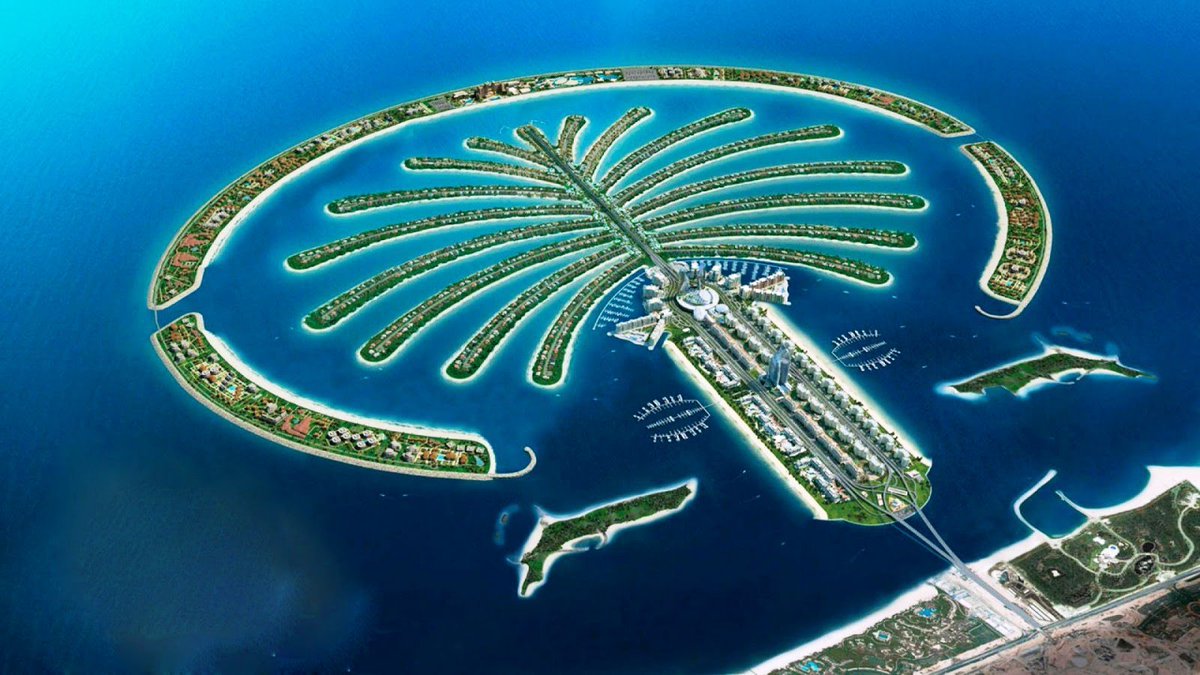
The United Arab Emirates has built itself into a global business hub. Low taxes, modern infrastructure, strategic geography, and business-friendly regulations have made Dubai and Abu Dhabi major destinations for international capital.
Vietnam has become one of Asia's rising stars. Competitive labor costs, political stability, and supply chain diversification have encouraged manufacturers to shift operations there, resulting in a surge of foreign investment.
In general, countries that attract the most investment share several characteristics: political stability, strong institutions, modern infrastructure, access to large markets, skilled labor, favorable tax policies, and strategic geographic locations. While natural resources can provide an advantage, long-term success usually depends on creating a stable and predictable environment for businesses.
Ultimately, capital tends to flow where opportunities are greatest and risks are manageable. Countries that successfully combine these factors are likely to remain global investment magnets for years to come.
Sources: UNCTAD, World Bank, IMF, OECD.
20

Jun 12
💸 Asian Investment Magnets 🌏
1️⃣ 🇸🇬 Singapore — ~$143B
2️⃣ 🇨🇳 China — ~$116B
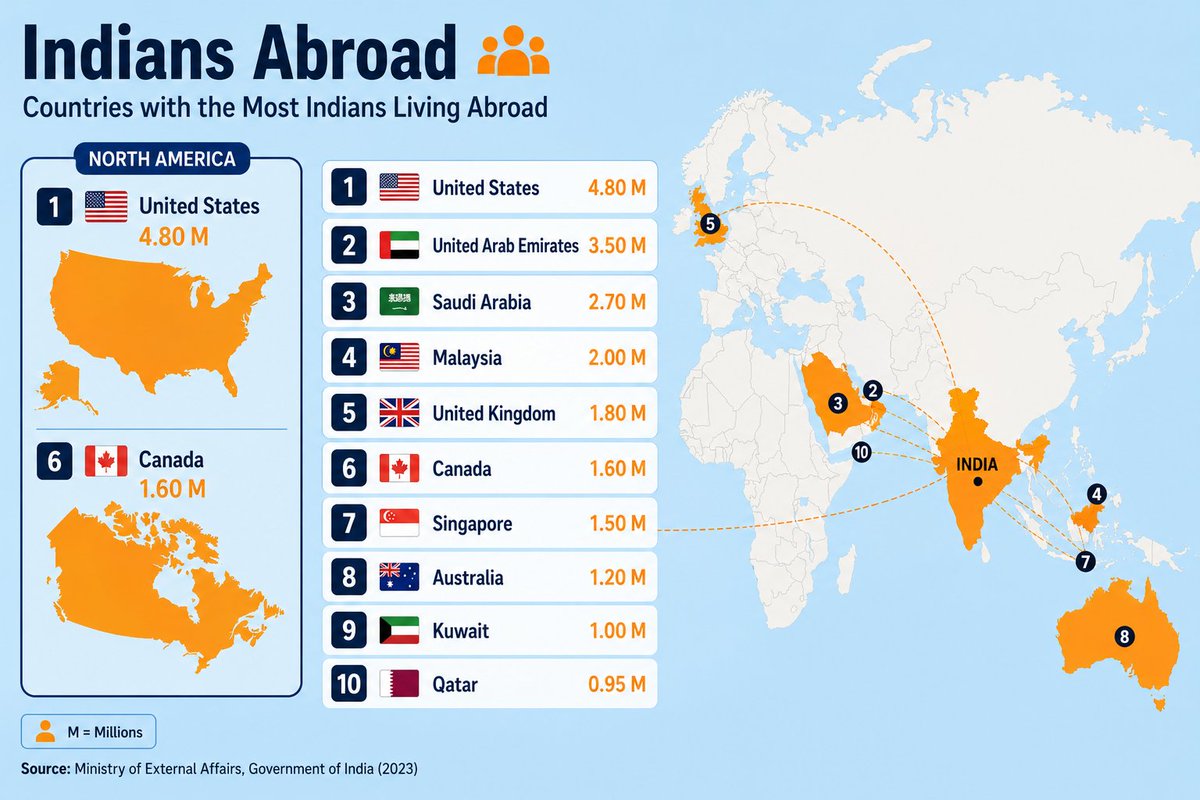
3️⃣ 🇮🇳 India — ~$81B
4️⃣ 🇮🇩 Indonesia — ~$55B
5️⃣ 🇦🇪 United Arab Emirates — ~$45B
6️⃣ 🇻🇳 Vietnam — ~$38B
7️⃣ 🇸🇦 Saudi Arabia — ~$26B
8️⃣ 🇲🇾 Malaysia — ~$21B
9️⃣ 🇹🇭 Thailand — ~$10B
🔟 🇵🇭 Philippines — ~$8B
Annual foreign direct investment (FDI) inflows.
📚 Source:
UNCTAD World Investment Report 2025
2
76
Jun 11
☀️ Sunniest Countries 🌍
1️⃣ 🇪🇬 Egypt — ~3,800 hours/year
2️⃣ 🇸🇩 Sudan — ~3,700 hours
3️⃣ 🇳🇦 Namibia — ~3,650 hours
4️⃣ 🇱🇾 Libya — ~3,600 hours
5️⃣ 🇦🇺 Australia — ~3,500 hours
6️⃣ 🇨🇱 Chile — ~3,450 hours
7️⃣ 🇿🇦 South Africa — ~3,400 hours
8️⃣ 🇲🇽 Mexico — ~3,350 hours
9️⃣ 🇸🇦 Saudi Arabia — ~3,300 hours
🔟 🇺🇸 United States — ~3,200 hours
☀️ Egypt is one of the sunniest countries on Earth, receiving more than 10 hours of sunshine per day on average.
📚 Source:
World Meteorological Organization, NOAA, World Bank
98
Jun 10
🌊 Longest Coastlines
1️⃣ 🇨🇦 Canada — 202,080 km
2️⃣ 🇳🇴 Norway — 83,281 km
3️⃣ 🇮🇩 Indonesia — 54,716 km
4️⃣ 🇷🇺 Russia — 37,653 km
5️⃣ 🇵🇭 Philippines — 36,289 km
6️⃣ 🇯🇵 Japan — 29,751 km
7️⃣ 🇦🇺 Australia — 25,760 km
8️⃣ 🇺🇸 United States — 19,924 km
9️⃣ 🇳🇿 New Zealand — 15,134 km
🔟 🇨🇳 China — 14,500 km
🌊 Canada has the longest coastline in the world — longer than the next three countries combined.
📚 Source:
CIA World Factbook, World Atlas
4
84
Jun 10
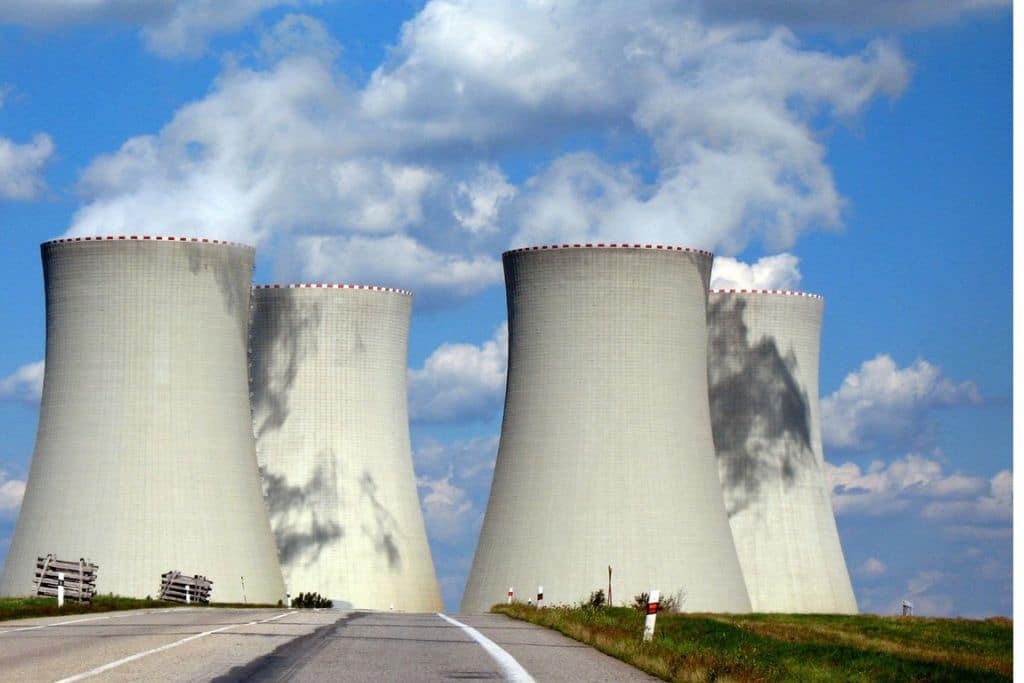
☢️Who Has the Most Reactors?🌎
1️⃣ 🇺🇸 United States — 94 reactors
2️⃣ 🇨🇳 China — 58 reactors
3️⃣ 🇫🇷 France — 57 reactors
4️⃣ 🇷🇺 Russia — 36 reactors
5️⃣ 🇯🇵 Japan — 33 reactors
6️⃣ 🇮🇳 India — 24 reactors
7️⃣ 🇰🇷 South Korea — 26 reactors
8️⃣ 🇨🇦 Canada — 19 reactors
9️⃣ 🇺🇦 Ukraine — 15 reactors
🔟 🇬🇧 United Kingdom — 9 reactors
☢️ The United States has more operating nuclear reactors than any other country.
📚 Source:
IAEA, World Nuclear Association
3
87
Jun 10
🐟Top Fish Consumers 🌎
1️⃣ 🇲🇻 Maldives — ~90 kg/year
2️⃣ 🇮🇸 Iceland — ~87 kg
3️⃣ 🇰🇮 Kiribati — ~72 kg
4️⃣ 🇵🇹 Portugal — ~57 kg
5️⃣ 🇲🇾 Malaysia — ~56 kg
6️⃣ 🇳🇴 Norway — ~51 kg
7️⃣ 🇯🇵 Japan — ~47 kg
8️⃣ 🇰🇷 South Korea — ~45 kg
9️⃣ 🇪🇸 Spain — ~42 kg
🔟 🇫🇮 Finland — ~36 kg
🐟 Island nations and coastal countries dominate the list.
📚 Source:
FAO, OECD, World Population Review
3
67
Jun 9
🍺 Who Drinks the Most Beer? 🍻
1️⃣ 🇨🇿 Czechia — ~188 liters/year
2️⃣ 🇦🇹 Austria — ~107 liters
3️⃣ 🇷🇴 Romania — ~100 liters
4️⃣ 🇵🇱 Poland — ~99 liters
5️⃣ 🇱🇹 Lithuania — ~97 liters
6️⃣ 🇪🇸 Spain — ~95 liters
7️⃣ 🇩🇪 Germany — ~92 liters
8️⃣ 🇪🇪 Estonia — ~91 liters
9️⃣ 🇳🇦 Namibia — ~90 liters
🔟 🇮🇪 Ireland — ~89 liters
🍺 Czechia has been the world's top beer consumer for more than 30 years.
📚 Source:
Kirin Beer University Report, World Population Review, WHO
4
64
Jun 9
🚢Largest Merchant Fleets 🌎
1️⃣🇵🇦 Panama — ~8,900 ships
2️⃣🇱🇷 Liberia — ~5,600 ships
3️⃣🇲🇭 Marshall Islands — ~5,100 ships
4️⃣🇭🇰 Hong Kong — ~2,400 ships
5️⃣🇸🇬 Singapore — ~2,200 ships
6️⃣🇨🇳 China — ~2,100 ships
7️⃣🇲🇹 Malta — ~1,900 ships
8️⃣🇧🇸 Bahamas — ~1,500 ships
9️⃣🇬🇷 Greece — ~1,300 ships
🔟🇯🇵 Japan — ~1,100 ships
📌 Includes cargo ships, tankers, bulk carriers, container ships, and other commercial vessels registered under each country's flag.
🇵🇦 Panama has the world's largest merchant fleet thanks to its popular "flag of convenience" registry.
Which country surprised you the most?
Source 📚
UNCTAD, Clarksons Research, World Bank
51
Jun 8
🐟 Oceans Ranked by Fish Species 🌊
1️⃣Pacific Ocean — ~15,000 species
2️⃣Atlantic Ocean — ~10,000 species
3️⃣Indian Ocean — ~8,500 species
4️⃣Southern Ocean — ~1,500 species
5️⃣Arctic Ocean — ~900 species
📚 Source:
FishBase, NOAA
1
1
1
113
Jun 7
🌲👥 Countries With More Trees Than People
🇷🇺 Russia — ~640 billion trees / 144 million people
≈ 4,400 trees per person
🇨🇦 Canada — ~318 billion trees / 41 million people
≈ 7,700 trees per person
🇧🇷 Brazil — ~302 billion trees / 212 million people
≈ 1,400 trees per person
🇺🇸 United States — ~228 billion trees / 341 million people
≈ 670 trees per person
🇸🇪 Sweden — ~30 billion trees / 10.6 million people
≈ 2,800 trees per person
🇫🇮 Finland — ~22 billion trees / 5.6 million people
≈ 3,900 trees per person
🇳🇴 Norway — ~8 billion trees / 5.6 million people
≈ 1,400 trees per person
🇦🇺 Australia — ~30 billion trees / 27 million people
≈ 1,100 trees per person
🇳🇿 New Zealand — ~4 billion trees / 5.3 million people
≈ 750 trees per person
🇨🇱 Chile — ~13 billion trees / 20 million people
≈ 650 trees per person
🌍 Earth is home to an estimated 3 trillion trees — about 375 trees for every person on the planet.
Which country surprised you the most?
Source 📚
Nature (Crowther et al.), FAO, World Bank
3
1
2
112
Jun 7
🌵🏜️ Countries With Virtually No Trees 👀
🇶🇦 Qatar — <1% forest cover
🇰🇼 Kuwait — <1%
🇧🇭 Bahrain — <1%
🇱🇾 Libya — <1%
🇪🇬 Egypt — <1%
🇴🇲 Oman — ~0.1%
🇸🇦 Saudi Arabia — ~0.5%
🇦🇪 United Arab Emirates — ~0.3%
🌍 In contrast, countries like Canada and Russia have thousands of trees per person.
Nature can vary dramatically across the planet 🌲➡️🏜️
Source 📚
FAO Global Forest Resources Assessment, World Bank
61
Jun 5
💨 The World's Wind Power Giants 🌍⚡
🇨🇳 China — ~990 TWh
🇺🇸 United States — ~460 TWh
🇩🇪 Germany — ~140 TWh
🇮🇳 India — ~115 TWh
🇧🇷 Brazil — ~108 TWh
🇬🇧 United Kingdom — ~84 TWh
🇪🇸 Spain — ~65 TWh
🇫🇷 France — ~50 TWh
🇸🇪 Sweden — ~41 TWh
🇨🇦 Canada — ~40 TWh
🇹🇷 Türkiye — ~37 TWh
🇳🇱 Netherlands — ~35 TWh
🇦🇺 Australia — ~34 TWh
🇵🇱 Poland — ~28 TWh
🇩🇰 Denmark — ~22 TWh
📌 Annual electricity generation from wind power (terawatt-hours, TWh).
💨 China generates more wind electricity than the next several countries combined.
🇩🇰 Denmark remains the global leader in the share of electricity coming from wind, even though its total production is much lower than China or the United States.
📚 Sources:
Global Wind Energy Council (GWEC), Ember, IEA, Our World in Data
2
78
Jun 5
Countries With Fighter Jets (Largest Fleets)
🇺🇸 United States — ~2,700
🇨🇳 China — ~1,600
🇷🇺 Russia — ~1,200
🇮🇳 India — ~600
🇰🇵 North Korea — ~500
🇵🇰 Pakistan — ~450
🇪🇬 Egypt — ~330
🇰🇷 South Korea — ~320
🇹🇼 Taiwan — ~280
🇹🇷 Türkiye — ~270
🇸🇦 Saudi Arabia — ~250
🇫🇷 France — ~220
🇯🇵 Japan — ~210
🇮🇱 Israel — ~200
🇬🇷 Greece — ~190
🇮🇹 Italy — ~180
🇬🇧 United Kingdom — ~160
🇩🇪 Germany — ~140
🇪🇸 Spain — ~130
🇦🇪 United Arab Emirates — ~130
📌 Includes active combat aircraft such as F-16s, F-15s, Rafales, Eurofighters, Su-27/30/35s, J-10s, J-20s, MiGs, and similar fighter/interceptor aircraft.
📚 Source:
International Institute for Strategic Studies (IISS), FlightGlobal World Air Forces, SIPRI
1
2
72
Jun 4
💵 Countries with No Income Tax 🌎
1️⃣🇦🇪 United Arab Emirates
2️⃣🇶🇦 Qatar
3️⃣🇧🇭 Bahrain
4️⃣🇰🇼 Kuwait
5️⃣🇴🇲 Oman*
6️⃣🇸🇦 Saudi Arabia
7️⃣🇧🇳 Brunei
8️⃣🇧🇸 Bahamas
9️⃣🇲🇨 Monaco
🔟🇻🇺 Vanuatu
(*Oman has introduced limited personal income tax plans, but historically has had no broad personal income tax.)
🏝️ Many of these countries rely on oil, gas, tourism, or financial services instead of taxing personal income.
🇦🇪 The UAE has become one of the world's most popular destinations for entrepreneurs and high-income professionals because of its tax policies.
Would you move to a country with no income tax?
Source 📚
PwC Worldwide Tax Summaries, Deloitte & national tax authorities
1
55