
The ESRF geosciences group @esrfsynchrotron addresses fundamental open questions in Earth and Planetary sciences using world-class beamlines.
Joined May 2021
- Tweets 186
- Following 168
- Followers 241
- Likes 180
37 Photos and videos
Geo_ESRF retweeted

6 Feb 2024
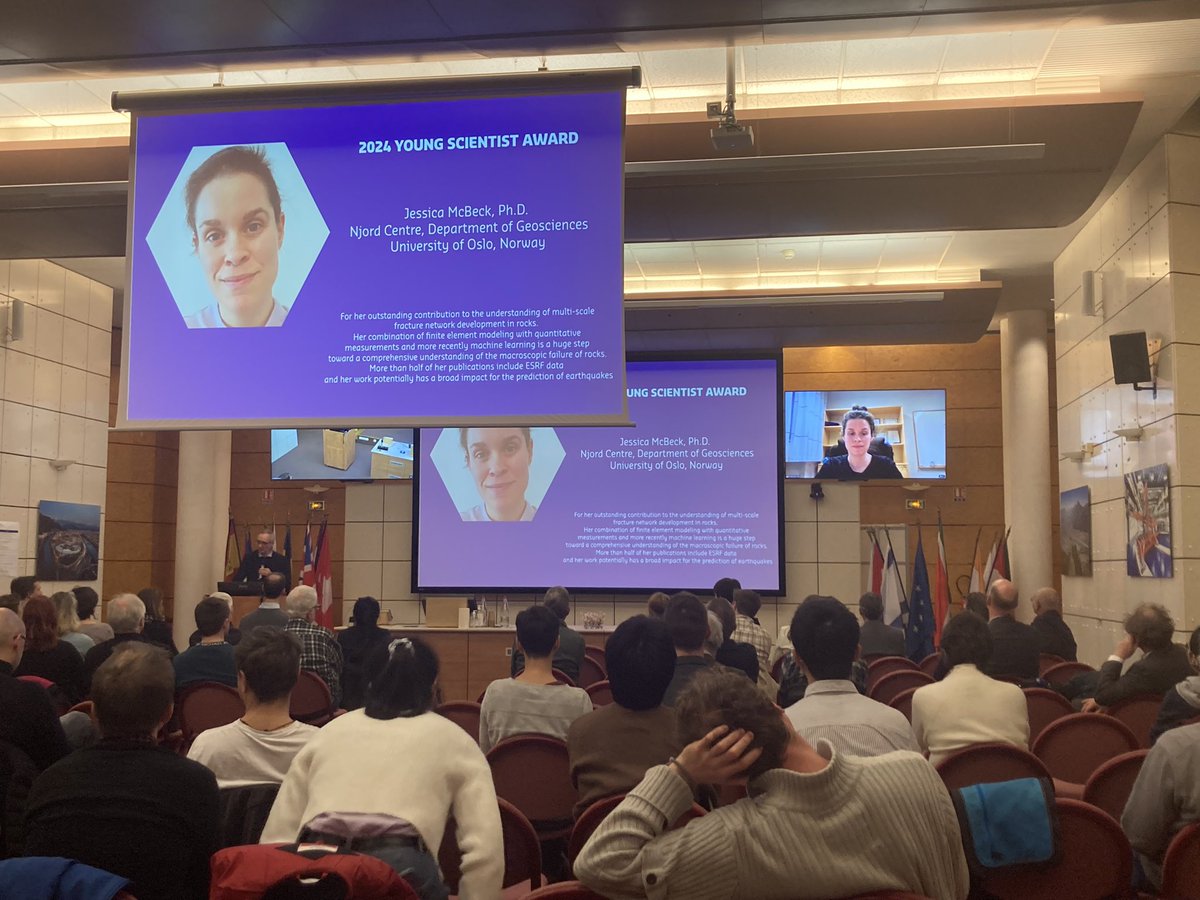
Young Scientist Award @esrfsynchrotron this year awarded to Jessica McBeck @UniOslo user of beamline ID19 @SoM_esrf !!!
4
21
1,221

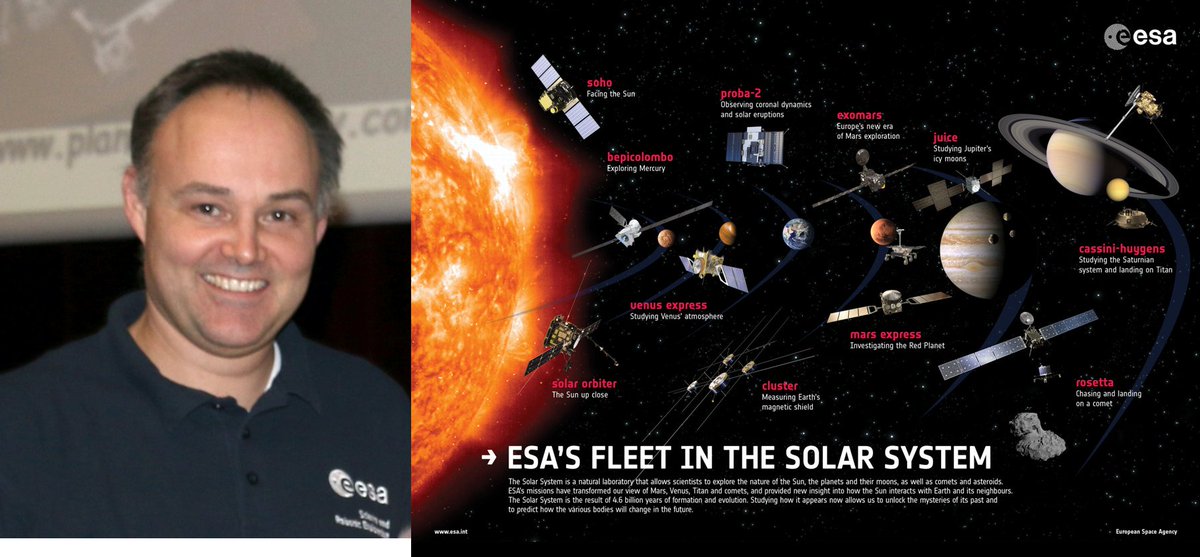
Save the date for the next geoscience webinar @esrfsynchrotron by Olivier Witasse @esa
"Solar system exploration with the European Space Agency missions"
To join the webinar by Zoom: esrf.zoom.us/j/94370148567?p…
more info :esrf.fr/home/events/Seminars…
@EuroGeosciences
1
4
253
Geo_ESRF retweeted

23 Jan 2024
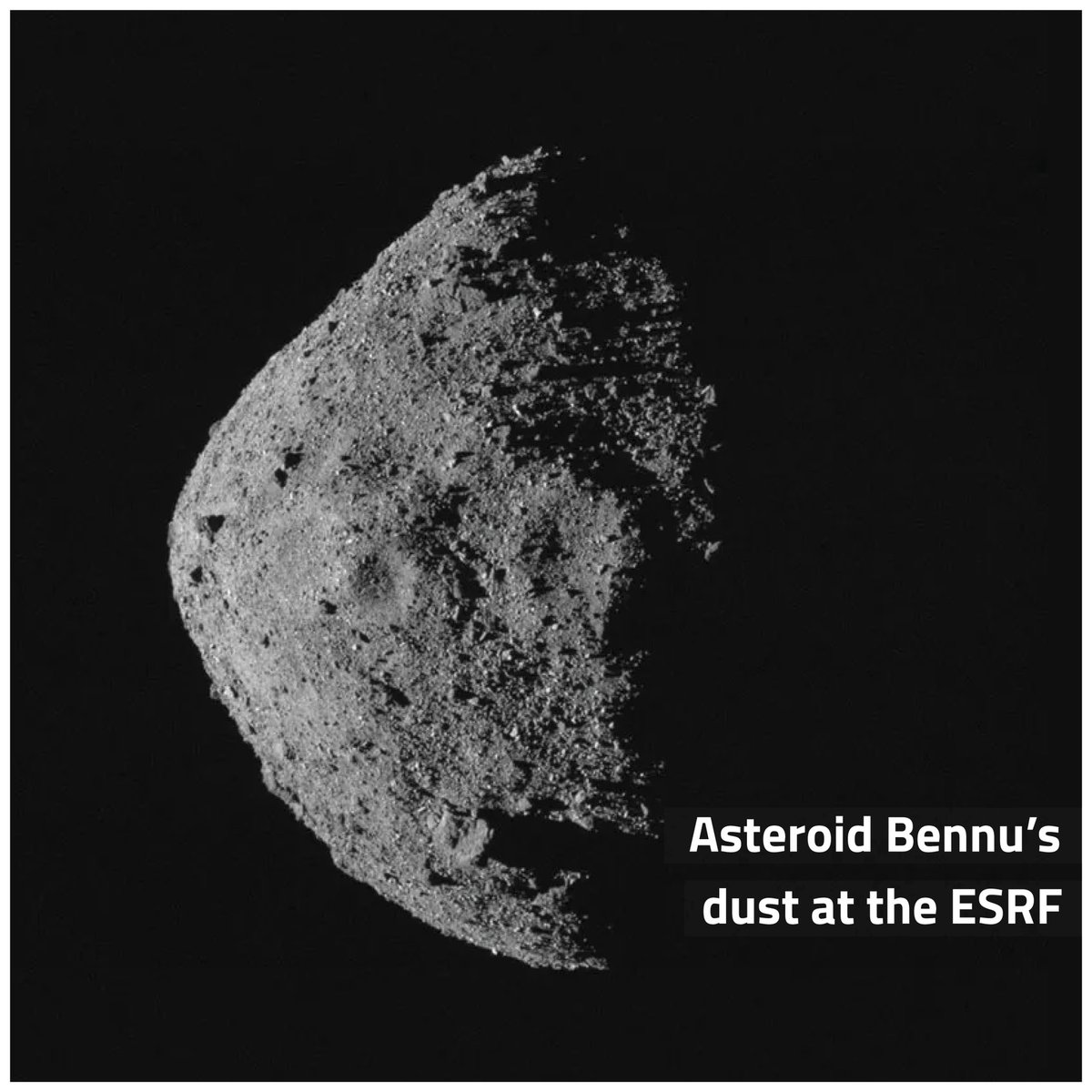
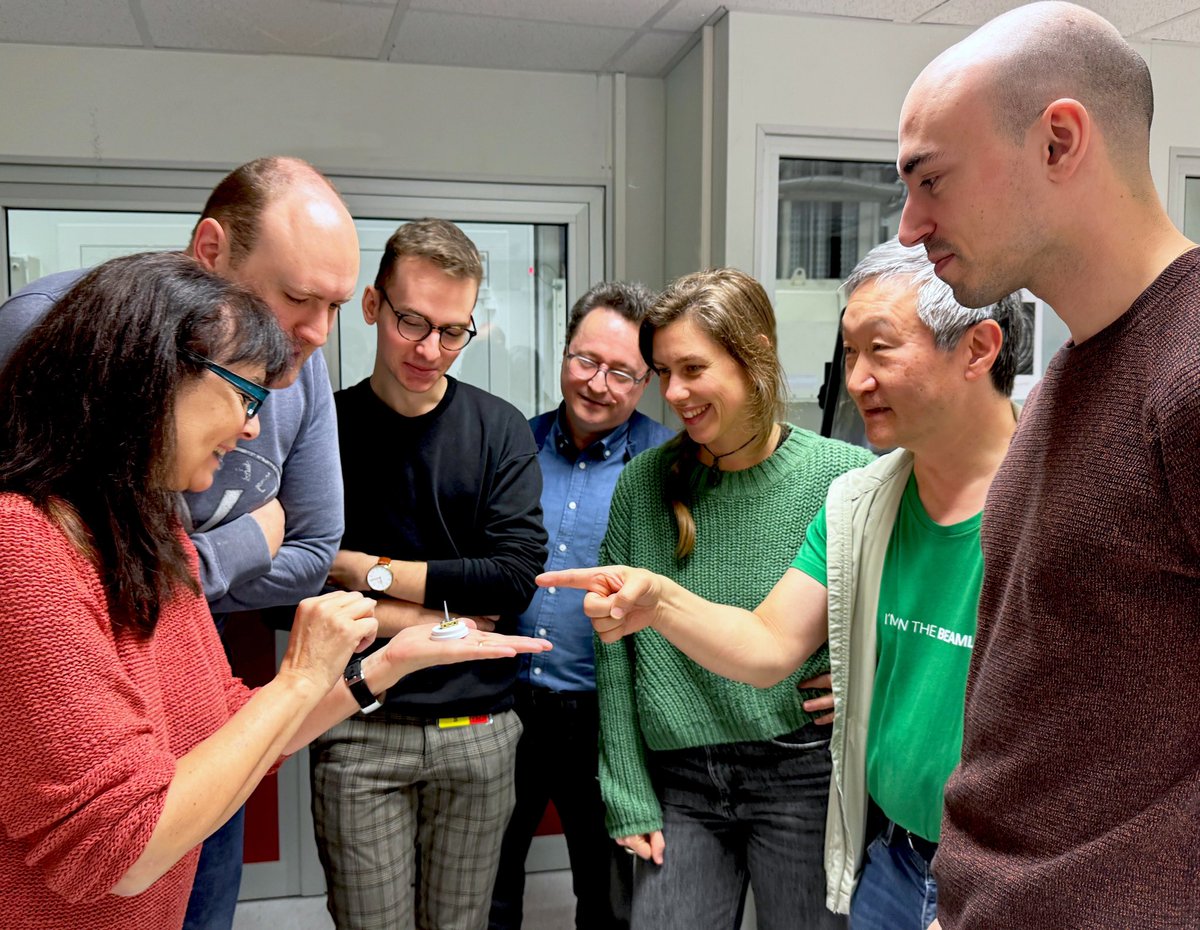
Asteroid Benny’s samples investigated at @esrfsynchrotron
Looking towards new insight about the beginning of the Solar System and the origin of life.
esrf.fr/home/news/general/co…
4
13
1,183
Geo_ESRF retweeted
23 Jan 2024
Beautiful!
3
10
1,167
Check out our latest ESRF geobridge webinar @esrfsynchrotron on youtube:
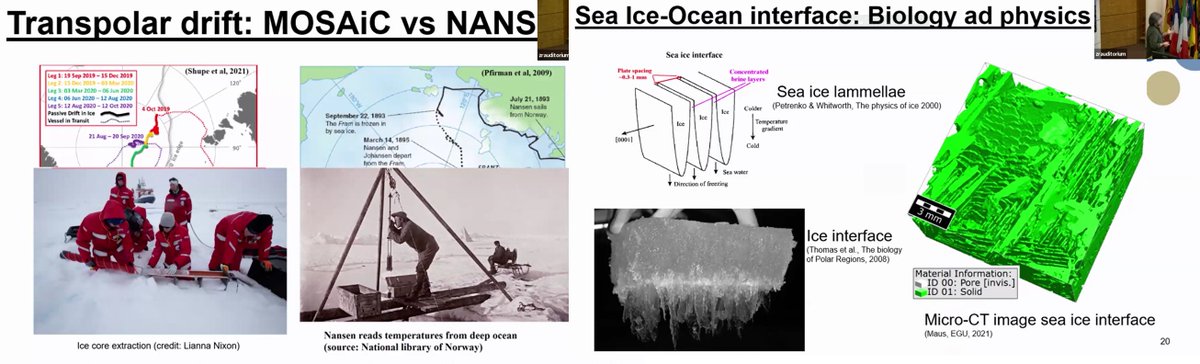
"X-ray #microtomograpy of Arctic Sea ice cores from the MOSAiC expedition: Can #synchrotron-based imaging improve #climate modeling?"
by Prof. Sonke Maus
youtube.com/watch?v=F0vf3y7D…
@EuroGeosciences
1
4
386
Geo_ESRF retweeted
1 Sep 2023
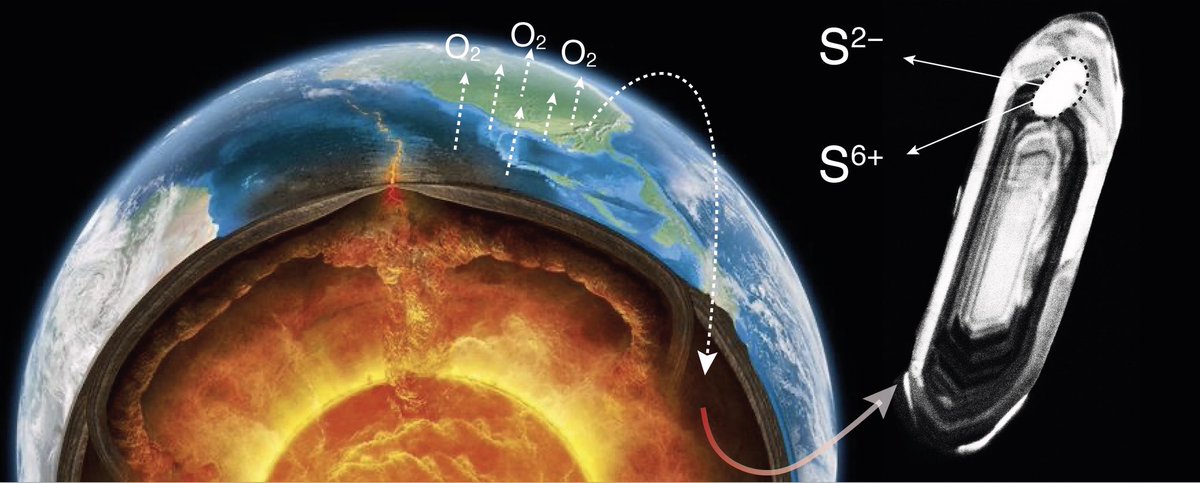
New research reveals Earth's ancient ‘breath’
Using synchrotron techniques at @esrfsynchrotron scientists have unveiled important information on The Great Oxidation Event by studying apatite inclusions in zircon crystals from old magmas.
@NatureGeosci
esrf.fr/home/news/general/co…
3
15
2,893
Geo_ESRF retweeted

27 Jun 2023
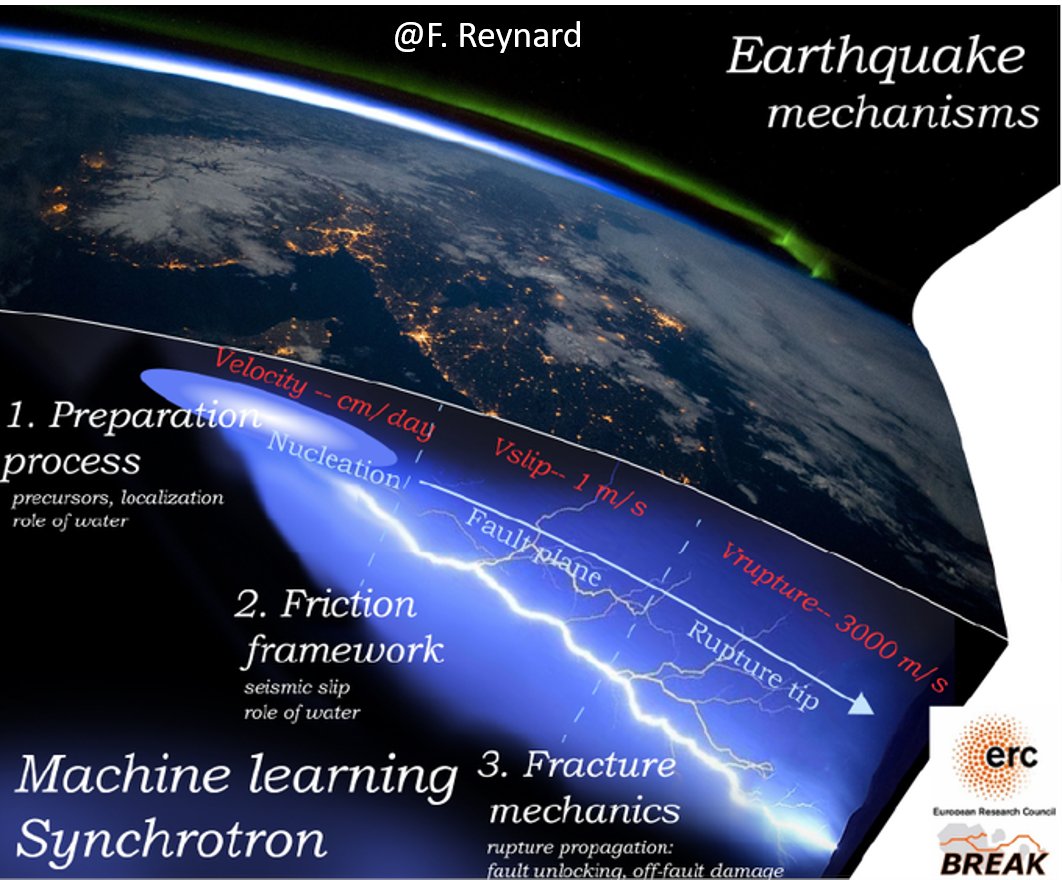
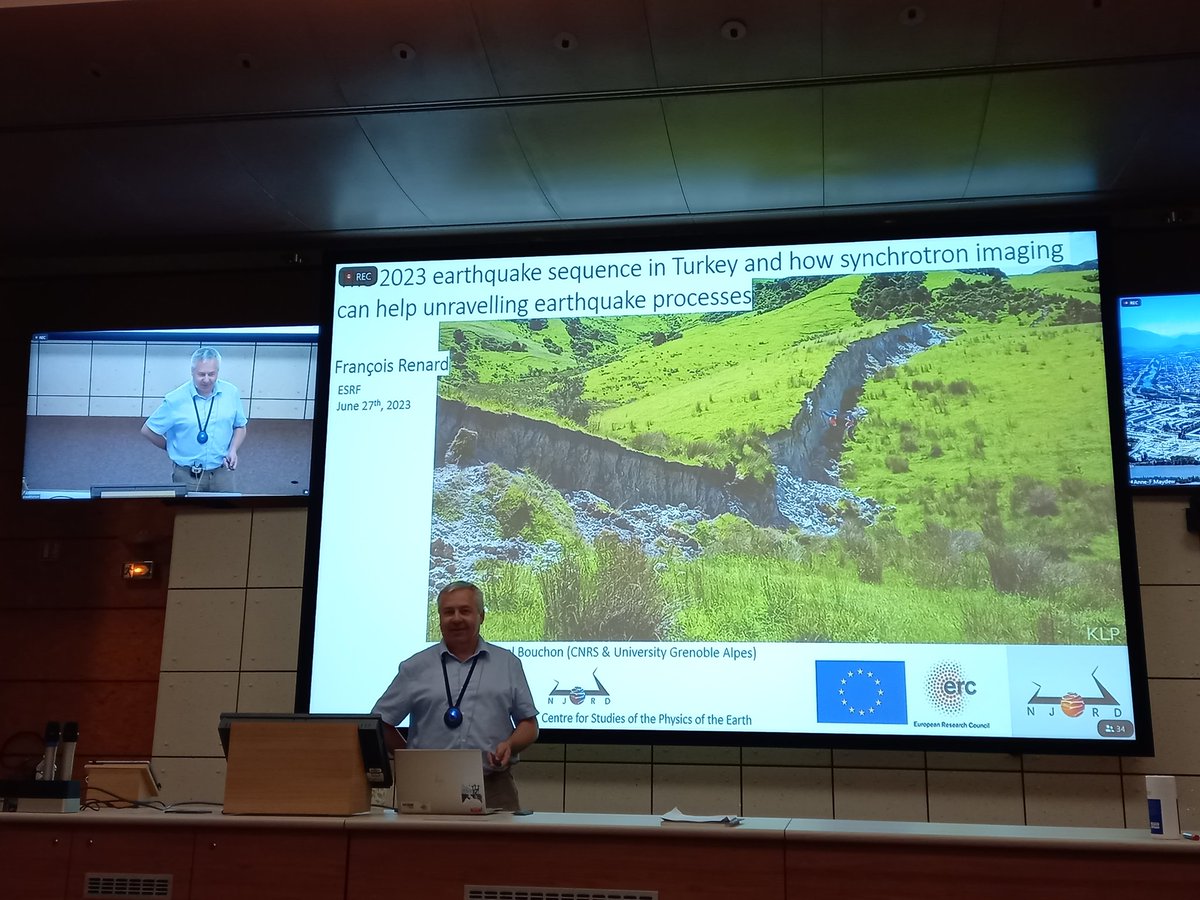
My supervisor, Prof. François Renard from @NjordUiO is giving a talk at @esrfsynchrotron @Geo_ESRF about the 2023 earthquake sequence in Turkey and how synchrotron imaging can help unravelling earthquake processes.
4
6
950
Join our next geoscience webinar tomorrow at 2 pm!
THE 2023 EARTHQUAKE SEQUENCE IN TURKEY AND HOW SYNCHROTRON IMAGING CAN HELP UNRAVELLING EARTHQUAKE PROCESSES
Prof. François RENARD @esrfsynchrotron
esrf.zoom.us/j/99739636737?p…
@AGU_MRP @SEDI_AGU @EuroGeosciences @WWU_HighPress
3
4
2,120
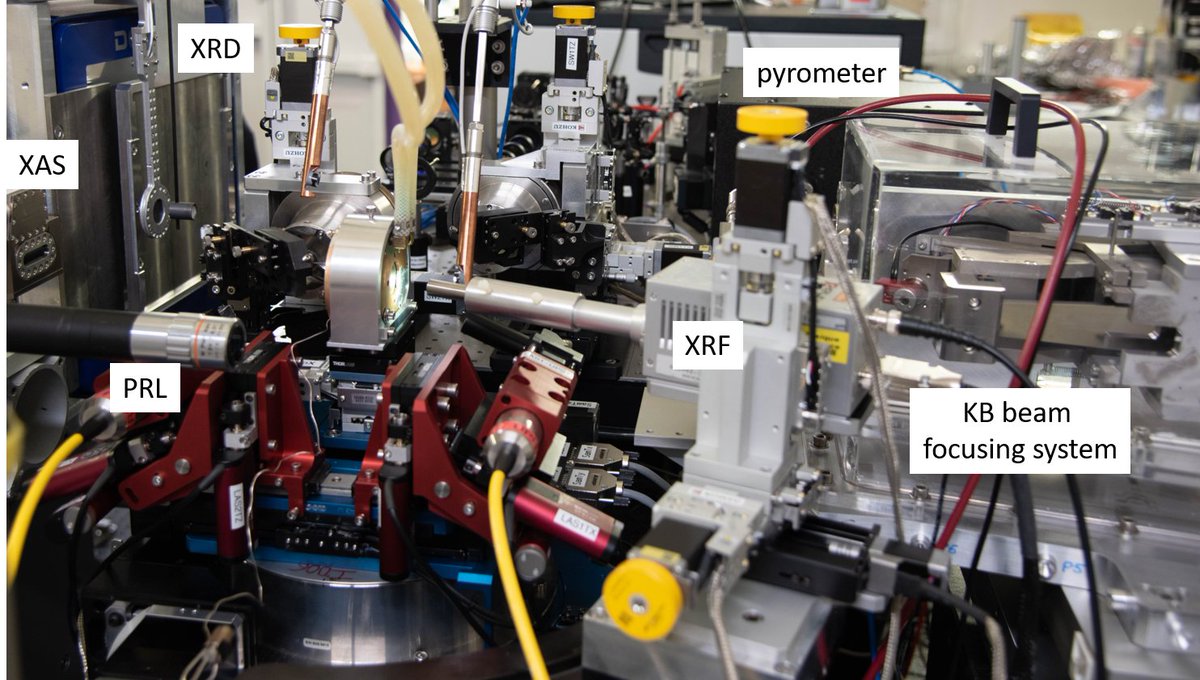
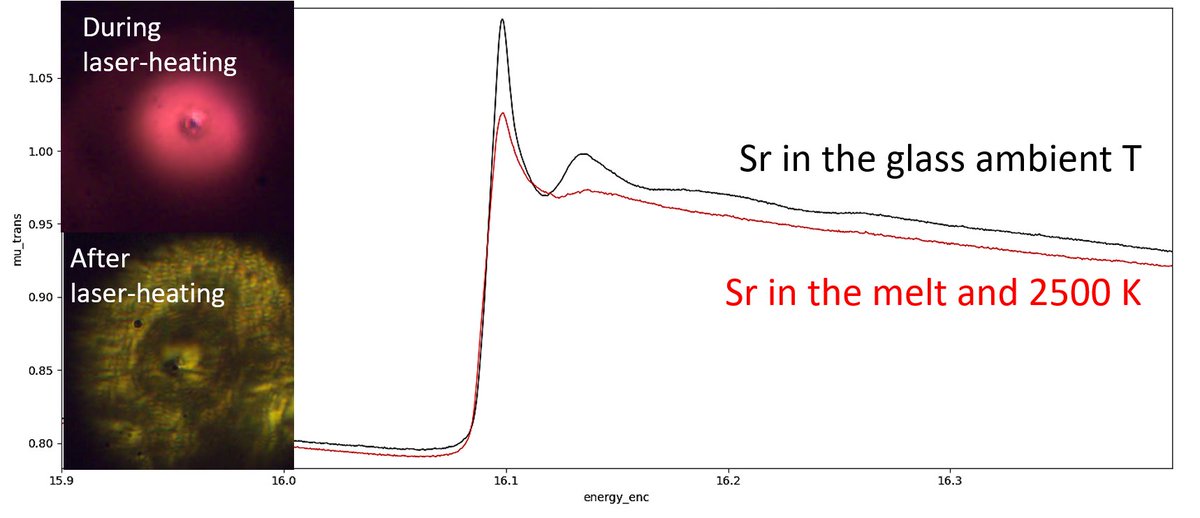
So happy to see the new laser-heating DAC system at ID24-DCM @esrfsynchrotron @MEx_ESRF working and ready for users!
We coupled nano-XAS, XRF and XRD. The first experiment on trace element speciation in #deepsilicate #melts finished successfully.
@SEDI_AGU @WWU_HighPress
4
18
1,235
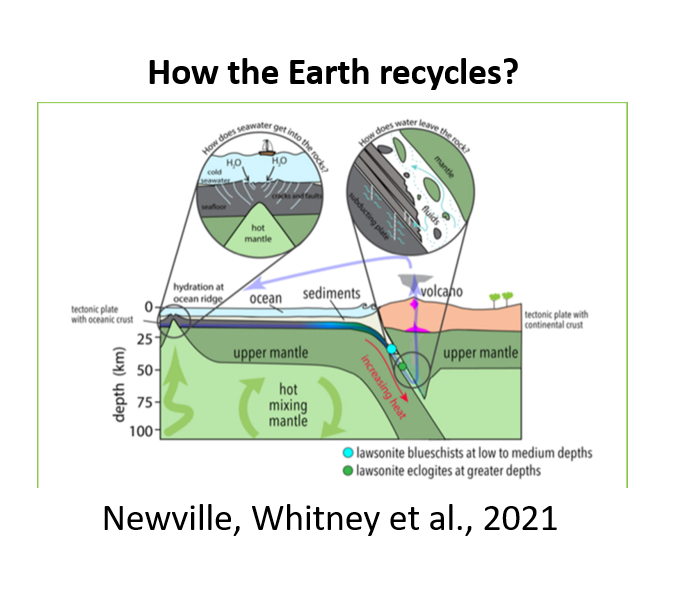
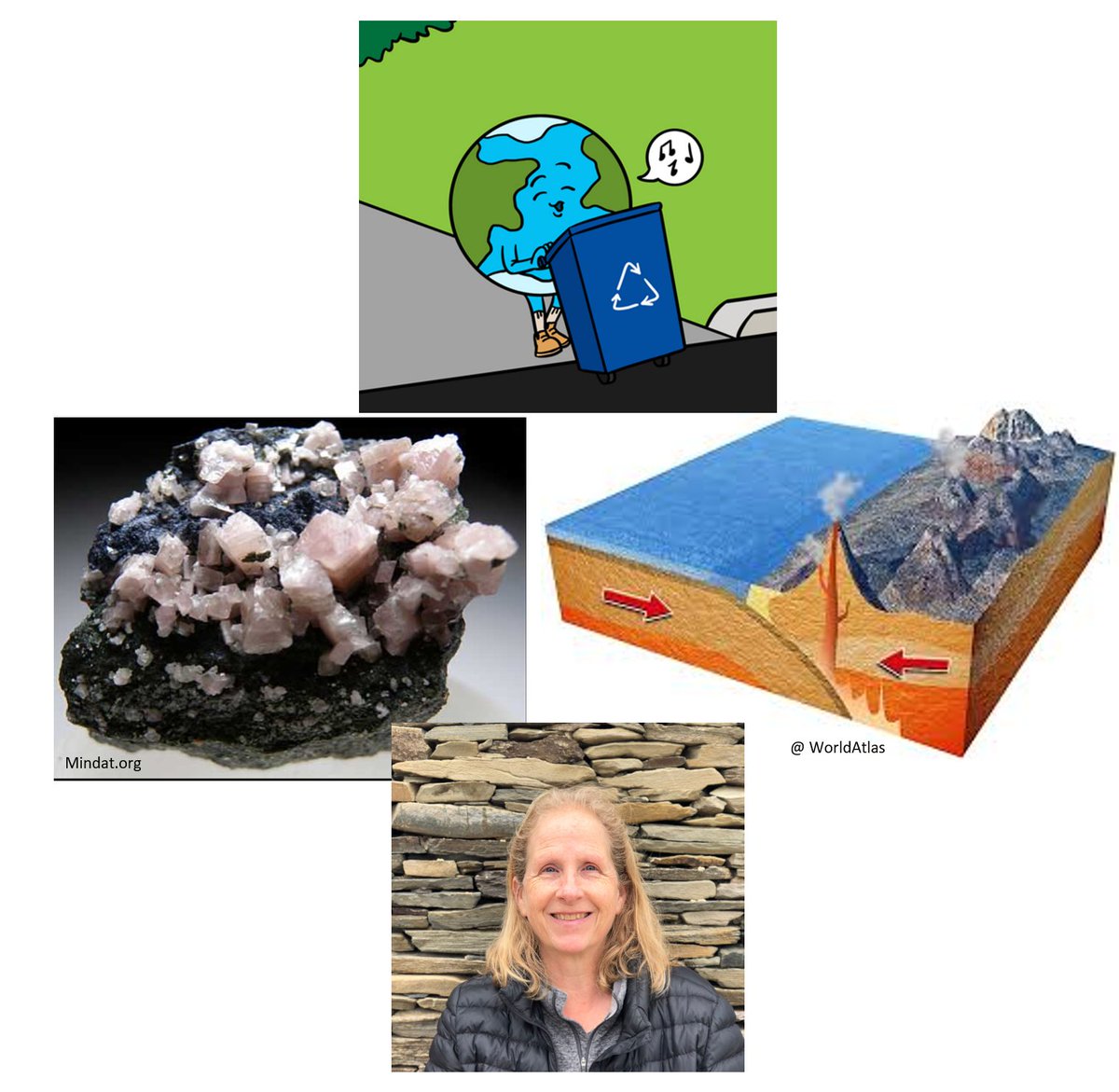
Join the next ESRF webinar tomorrow 2 pm!
Fluid-rock interaction in #subduction zones: #lawsonite composition as a tracer of fluid sources
Prof. Donna Whitney @UMNEarthScience @unipotsdam @esrfsynchrotron
Zoom:
esrf.zoom.us/j/99299366534?p……
More info:
esrf.fr/home/events/webinars…
4
10
1,533
Geo_ESRF retweeted
24 May 2023
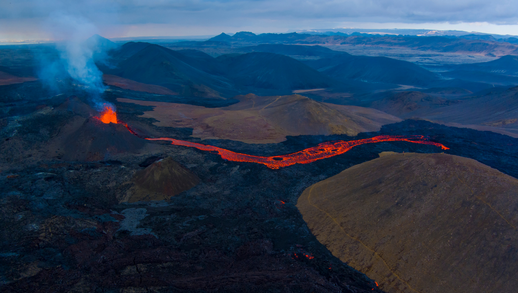
Scientists can now reproduce the eruption of a volcano 🌋live at the ESRF to gain insight into its mechanism.
The experiment is a proof-of-concept and users in the field are welcome to apply for beamtime.
▶️bit.ly/433lnEP
@Geo_ESRF @ESRF_Streamline @lightsources
12
55
6,293
Geo_ESRF retweeted
20 May 2023
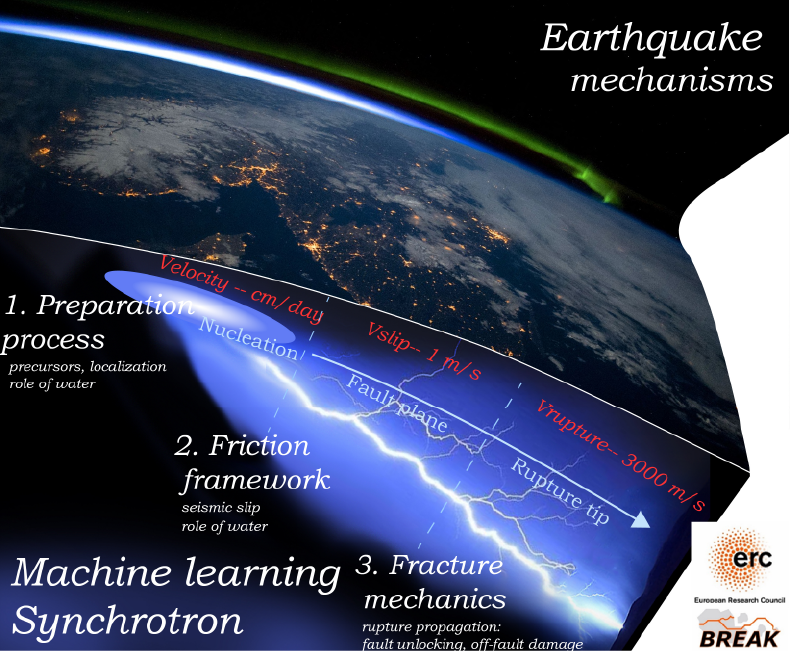
New #postdocjobs position in the frame of the @ERC_Research project BREAK tinyurl.com/2nn54kse opened @esrfsynchrotron to study failure in #rocks to understand #earthquake mechanisms using #experimental installations @SoM_esrf beamlines. More info here tinyurl.com/ems2azt2
2
11
2,204
Do you wan to learn more about "How the Earth recycles"?
Join the next ESRF webinar @Geo_ESRF @esrfsynchrotron with Prof. Donna L. Whitney @UMNEarthScience @unipotsdam!
25th of May 2 pm (Paris time): esrf.zoom.us/j/99299366534?p…
@EuroGeosciences @theAGU @SEDI_AGU
1
3
256
Geo_ESRF retweeted
17 Mar 2023
Carbonates in amorphous materials, such as viscous silicate melts, become stable at extreme depths of the Earth🌍, scientists have found using 3 beamlines at ESRF.
The results can shed light on hotspot volcanism.🌋
They are published in @CommsEarth .
▶️bit.ly/40d6GND
6
13
1,614
Geo_ESRF retweeted

21 Mar 2023
A pressure-induced change in hybridization of carbon from sp2 to sp3 occurs between 40 GPa and 112 GPa, which could increase the potential for storage of carbon in lower mantle silicate melts.
@CerantolaV @unimib @EuropeanXFEL @esrfsynchrotron @deepcarb
nature.com/articles/s43247-0…
2
10
1,266
Geo_ESRF retweeted
27 Mar 2023
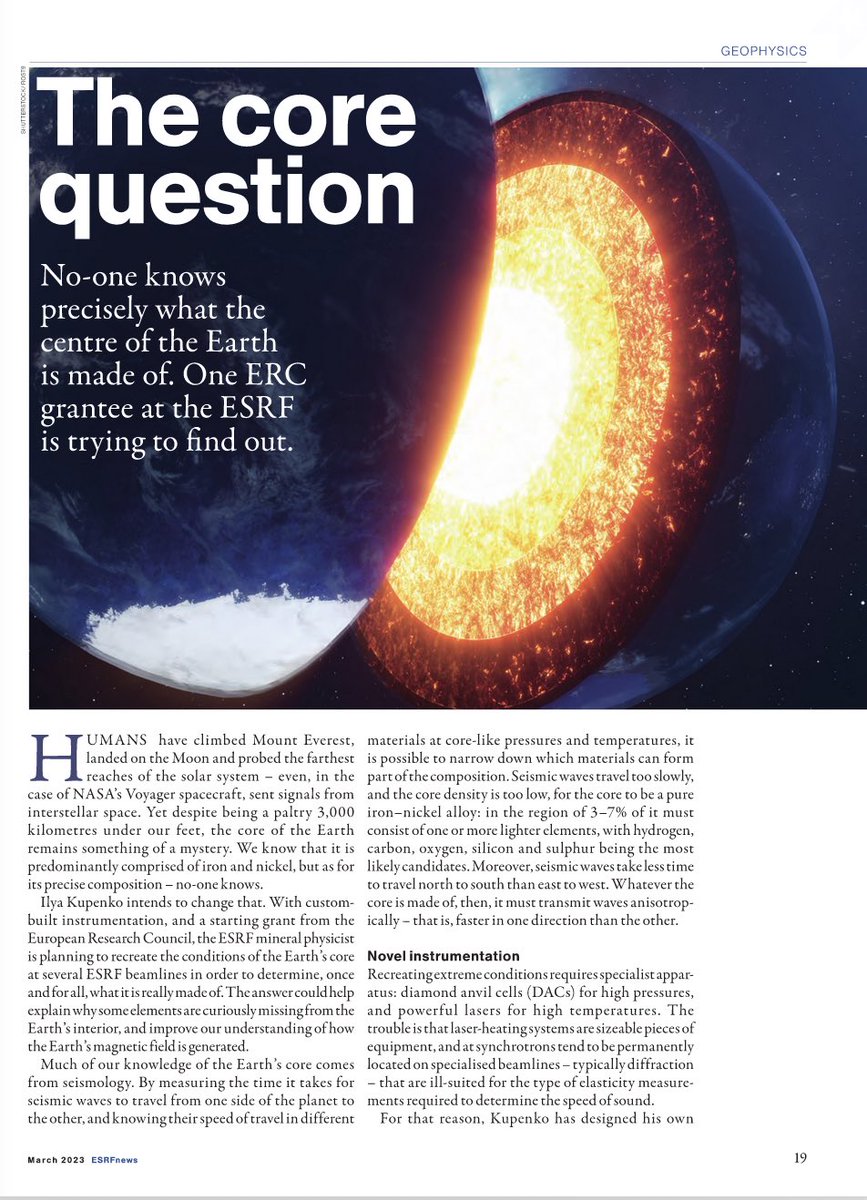
#geophysics The core question 🌍
Check out the article related to @ERC_Research Kupenko’s research @ERC_LECOR
#ERCgrant #ERCresearch #EUscience
@Geo_ESRF
1
2
443
Geo_ESRF retweeted
5 Apr 2023
Rare Earth Elements and trace metals are abundant on the seafloor, but their enrichment process is unknown.
Meet Alain Manceau, @ERC_Research grantee, who will use the ESRF-EBS to find the geochemical processes take place on the seafloor.
▶️bit.ly/3K8eIkv
@ESFRI_eu
3
7
1,580
Geo_ESRF retweeted
16 May 2023
Check out this article in Le Monde
How researchers use the bright light of @esrfsynchrotron to decipher the secrets of #dinosaur fossils
#LightDay2023 @IDLofficial @lightsources
16 May 2023

Des dinosaures autopsiés par le synchrotron de Grenoble ift.tt/xL6kyTP
3
8
1,346
Geo_ESRF retweeted
15 Mar 2023
The core of the🌍is mainly composed of iron and nickel, along with 5-10% of unknown lighter elements.
Meet Ilya Kupenko @ERC_LECOR , @ERC_Research grantee trying to identify these elements using high pressure and temperature at the ESRF.
▶️bit.ly/3lfzHJK
@EUScienceInnov
3
7
2,786
Check out the new opportunities for Earth Science at the Extremely Brilliant Source @esrfsynchrotron at the refurbished and upgraded beamlines ID18 (future ID14) , ID24-DCM, ID24-HPLF and ID27.
tandfonline.com/doi/full/10.…
@WWU_HighPress @EuroGeosciences @SEDI_AGU
1
2
13
1,066