ˈsɛm.pɛr fɪˈdeː.lɪs The gods do not deduct from man's allotted span the hours spent in fishing. “Not my will, but Thine be done.” Etiam si omnes, ego non
Joined September 2012
- Tweets 68,878
- Following 5,840
- Followers 4,203
- Likes 67,950
12,309 Photos and videos





Pinned Tweet

29 May 2019
Chewore Lodge-Zambezi River-Zimbabwe

12
25
181
Gerald John Smith retweeted

Jun 15
To all you fcuken idiots that vote for this useless cnut: we deserve better than this!!!! Cabinet members that waste this kind of money need to be charged and fired!!!!!! Vote better next time morons!!!!

32
241
497
7,792

The Hero That Destroys Their Lie, Is The Hero Who Served With Afrikaners.
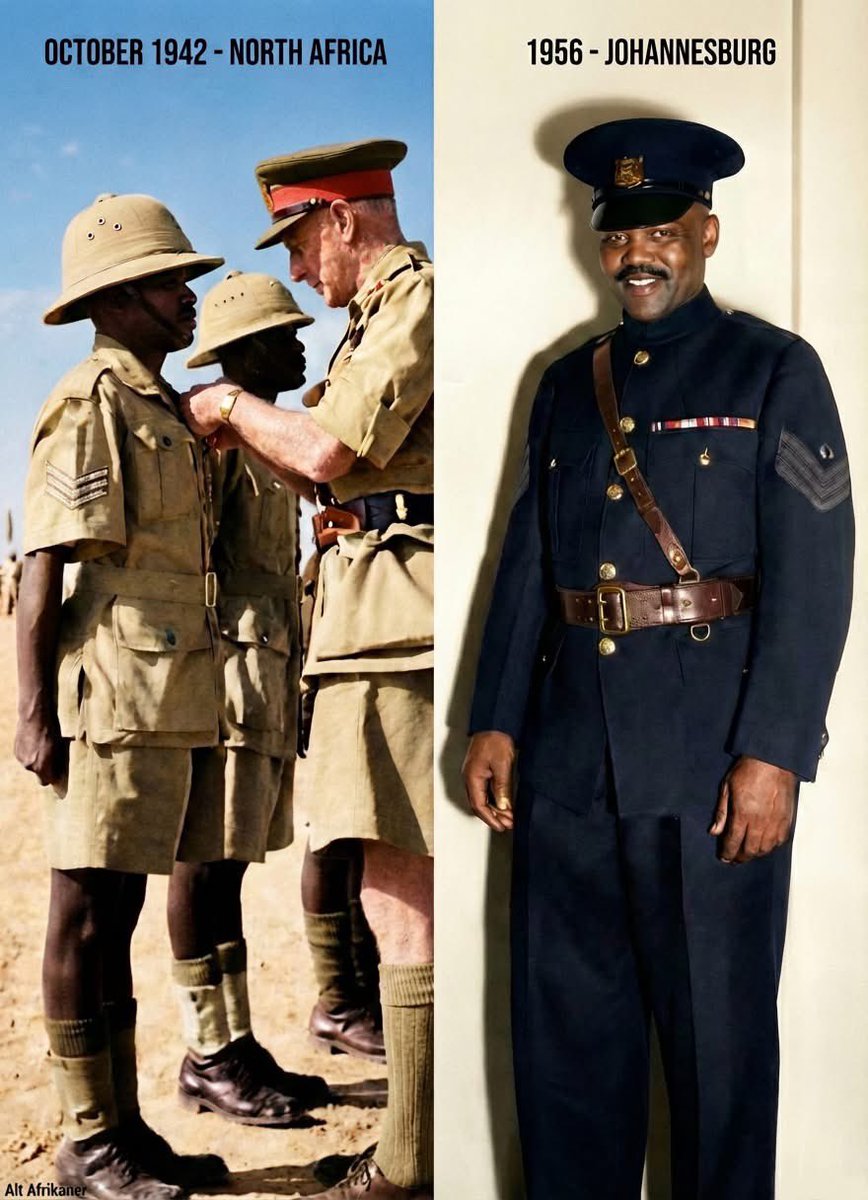
During World War Two, June 1942, when Tobruk fell to Rommel's German Afrika Korps, over 10,000 South African soldiers were taken prisoner together. Black and white, Afrikaner and English, they had fought side by side. The Germans separated, shipping white prisoners to Europe while forcing black soldiers to labour in North Africa. Sergeant Reuben Moloi of the 11th Field Ambulance was put to work unloading German ammunition at Mersa Matruh.
He had other plans.
Moloi escaped through a gap in the fence and began walking. Two hundred kilometres across open North African desert. Through active minefields. No map. No compass. No food. No water. For seventeen days and nights, he navigated by instinct and iron will, scavenging from burnt-out vehicles littering the battlefield. A local risked his life to give him water and point him toward Allied lines.
He made it. He brought back intelligence about German operations. On 31 October 1942, Afrikaner, Major General Frank Theron pinned the Military Medal to his chest.
War artist Neville Lewis painted Moloi's portrait alongside fellow heroes Lucas Majosi and Job Maseko. These men served under Afrikaner and English-speaking officers who recognised their courage, recommended them for medals, and served beside them in the desert heat.
After the war, Moloi joined the Johannesburg Municipal Police. By 1956, he had risen to Sergeant Major, the highest rank a black policeman had achieved in that city. The Rand Daily Mail photographed him in uniform. He built a life of dignity and service under an Afrikaner-led government that promoted him on merit. He earned their respect like many others like him.
In March 1985, an elderly Moloi attended a military history society meeting in Johannesburg. When introduced, he received appreciative applause. One of the last documented moments of a man who walked through minefields into freedom.
Now ask yourself the hard question.
Why don't South African children know his name? Why isn't Reuben Moloi taught in schools? Over 123,000 non-white South Africans served alongside their white countrymen in World War II. They earned 119 medals for gallantry. They buried 1,519 of their own. Where are their statues? The much needed roles models for our youth? Where are the schools named after these heroes?
Under the command of Afrikaner Prime Minister the bigger hospital in the Southern Hemisphere was built for black South Africans, which started as a hospital for black Soldiers who served in WW2.
The ANC regime that claims to honour heroes has buried these men in silence. They buried a history, to promote a revisioned history. A half truth. No Reuben Moloi Primary School. No Hermans Chaka and Private Springkaan Masemula streets. No Job Maseko Avenue until recently. No place in the national curriculum. Our heroes of all races and history deleted by a morally corrupt organisation.
Why?
Because their stories destroy the narrative. Moloi served under Afrikaner officers who valued him. He was decorated by Afrikaner generals. He was promoted by an Afrikaner government. He wore a police uniform with pride and served his community for decades.
This is the history they don't want you to see. Not because Afrikaners hid it, but because those who hate Afrikaners needed it hidden. The anti-Afrikaner narrative required erasing every friendship, every alliance, every moment of mutual respect between Afrikaners and their fellow Africans.
If you were told Afrikaners had no black allies, no African friends, no history of shared sacrifice and recognition, you were told a lie. You were fed propaganda. And it worked.
Sergeant Reuben Moloi MM walked 200 kilometres through hell. He earned his medal. He earned his rank. He earned his place in history. And he earned respect from the Afrikaners he served with.
20
132
345
7,560
Gerald John Smith retweeted

THE UK’S UTTER DISGRACE! PARLIAMENT EXPLODES AS BILLIONS IN MASSIVE STATE FRAUD MANIFESTLY VANISH INTO THIN AIR! 🚨🇬🇧💸👇
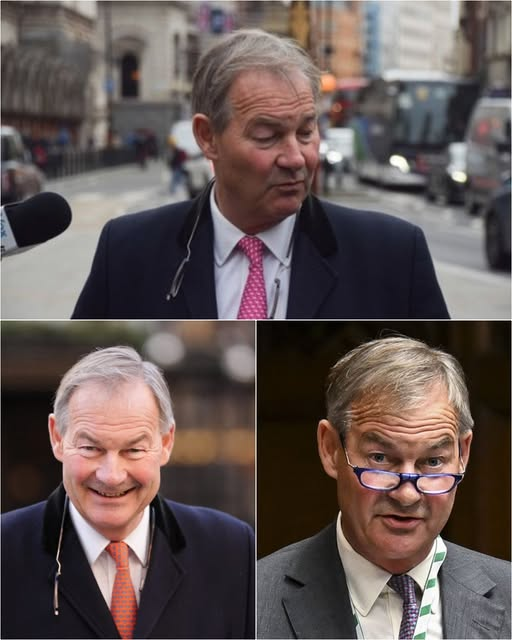
Member of Parliament Rupert Lowe completely lost his temper during a fiery House of Commons showdown, blowing the lid off a massive state fraud where missing millions were allegedly funneled into personal pockets as hefty bonuses. This explosive confrontation has exposed deep, institutional rot that ruined thousands of innocent lives, sparking widespread panic among high-ranking individuals as investigators threaten to reveal who is truly headed for a prison cell.
6
148
309
4,635
Gerald John Smith retweeted

In the last 24 Hours at the G7:-
Trump has completely ignored Keir Starmer again
Trump has turned his back on Zelensky
Trump has abused both Mr & Mr Macron with a simple handshake
Trump knows who the traitors are.
35
382
1,076
10,066
Gerald John Smith retweeted

How can anyone who classes themselves a true Australian be against this bill 🤔

96
368
1,575
9,522
Gerald John Smith retweeted

We think we have it rough today. 126 years ago, things were extremely difficult in South Africa for the Boers. That they rose to fight the most powerful empire to ever exist in history and drove them to extremes is the stuff of legends. Lest we forget. Salute 🫡

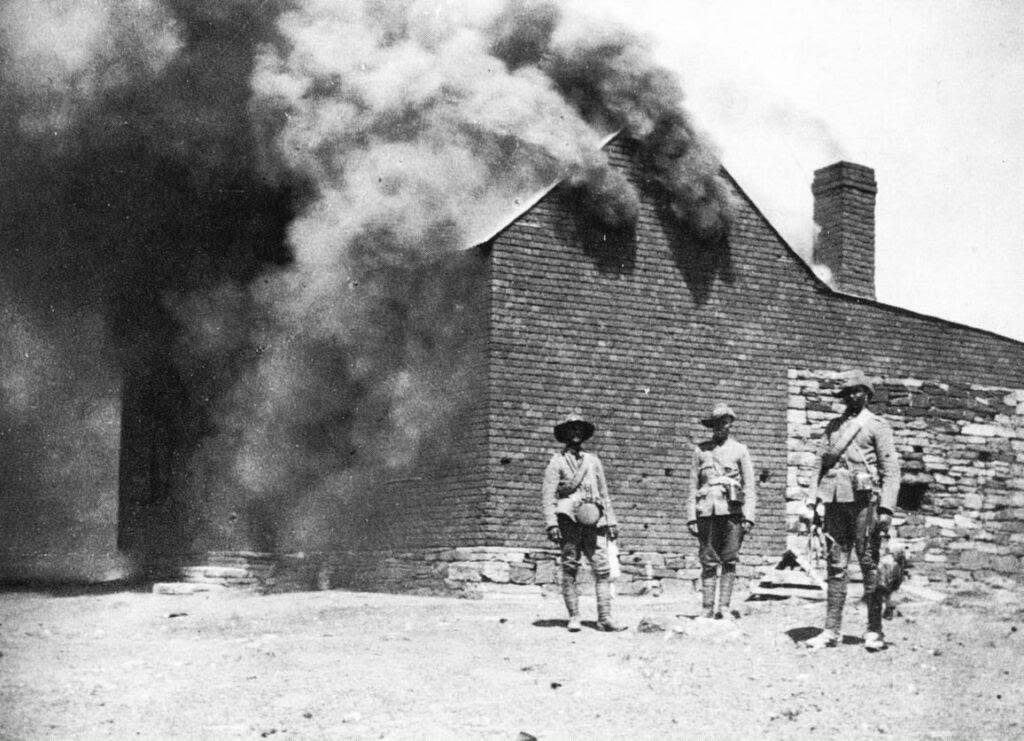
16 June 1900 | On this day, Field Marshal Lord Frederick Roberts issued Proclamation No. 5, a resolution that would usher in one of the most controversial and devastating policies of the Anglo-Peasant War. The so-called scrapped land policy was aimed at ending the Farmers' guerrilla war by destroying their ability to benefit from farms, food and civic support.
By mid 1900, the British army had occupied the capitals of the two Farmer's Republics, but the war was long from over. Farmer commandos under leaders like General Christiaan de Wet have frustrated the British forces with surprise attacks, railway sabotage and guerrilla tactics. After De Wet's successful attack at Roodewal on June 7, 1900, Roberts decided to act harder. His proclamation stipulated that houses near places where railways, bridges or telegraph lines were damaged could be burned down and that locals would be held accountable.
What was initially intended as a penal measure against alleged supporters of the commandos quickly escalated into a systematic campaign of destruction. Farmhouses burned down, crops destroyed, livestock confiscated or killed and food supplies destroyed. When Lord Horatio Kitchener succeeded Roberts at the end of 1900, he expanded the policy further.
The burning of farms has left thousands of women and children homeless. To house them, the British government has set up concentration camps. However, the camps were overcrowded and poorly managed, with insufficient food, poor sanitation and poor medical care. By the end of the war, more than 26,000 farmer women and children died in the camps, most of them children. There were also separate camps for black South Africans, where thousands of people perished at once.
The policy has caused great suffering, but at the same time has seriously undermined the Farmers' ability to continue the war. British critics, including Sir Henry Campbell-Bannerman, described the action as "methods of barbarism". Today, the scrapped land policy is remembered as one of the darkest chapters of the war and an event that left deep imprints on South African history.
12
57
256
5,460

Gerald John Smith retweeted

46 MILLION Muslims now live in Europe.
In 2000 there were fewer than 500,000 Muslims.
26 years later 45.5 MILLION MUSLIMS.
Europe is being CONQUERED.
IT’S ALREADY HAPPENED.
You are & have in many places been ethnically replaced.
This is GENOCIDE.
The EU & European governments have completely destroyed an entire civilisation.
They must be held accountable.
This is TREASON & the worst Treason recorded in all of European History.
Resist, reclaim & restore your homelands.
112
778
1,825
30,752


Gerald John Smith retweeted

This! 👇

310
4,930
14,770
93,528
Gerald John Smith retweeted

Restore Britain has been labelled as ‘extremist’ by Zack Polanski, ‘racist’ by endless Labour MPs, ‘repulsive’ by Jeremy Corbyn and ‘neo-nazis’ by Reform.
Our immigration policy has certainly ruffled a few feathers. Take a read, and let me know if you think it’s as unacceptable as the British establishment wants you to believe...
Step number one, straightforward.
Illegal migrants gone. Every man, woman and child. Deported. I don’t care about the consequences. This is the most pressing issue, and a Restore Britain Government will tackle it with the enthusiasm it deserves.
We are the only party to lay out in excruciating detail exactly how we do it. 110 policy pages of pure deportation joy.
Mass deportations. Real mass deportations. And we mean it.
Step two? Legal immigration.
Criminal migrants? Don’t even need to discuss. Gone. Day one.
If a migrant living in Britain can’t speak English, we will deport them.
How on earth can they contribute when they can’t speak English. They can’t, so they will be removed.
The only foreign language translation a Restore Britain Government will provide is the seatbelt instructions on their flight home.
Foreign nationals living in social housing? We will deport them.
British social housing should be for British families. Evidently, they can’t financially support themselves so they will be removed.
There is a pattern here.
If a foreign national is claiming benefits, they too will be removed.
Pay your way, and then some, or you will be sent packing.
Foreign Islamists spreading hate? We will remove them. Gladly. Those mosques found to be harbouring these extremists will be shut down, and those foreign nationals enabling it will also be removed.
And of course, moving on to the reason Farage tried to put me in prison. Because he thought my position was so very extreme...
If a Pakistani wife is aware that her husband has been gang-raping English children but fails to report it? She will be deported back to Pakistan. I hope her husband isn’t as fortunate.
Dual nationals involved in this filth will have their British citizenship stripped, and they will be removed.
Incoming immigration.
There will be significant net negative immigration - FAR more will leave than arrive. FAR more. Those who do will contribute and integrate, providing high skills. Spouses of British men and women from non-red list countries will be welcome - that is positive immigration and should be encouraged.
A Restore Britain Government will end immigration from Red List countries.
Somalia, Sudan, Pakistan, Eritrea. A full list is being drafted.
We will discriminate.
Immigration from Sudan is not the same as immigration from Australia.
OBVIOUSLY.
We will get called racist for saying that, but honestly I could not care less anymore.
Restore Britain is willing to do what needs to be done.
We will implement an immigration system that puts one group of people first.
The British people.
That is what a Restore Britain Government will do.
Without apology, compromise or backtracking.
739
3,199
19,613
265,561
Gerald John Smith retweeted

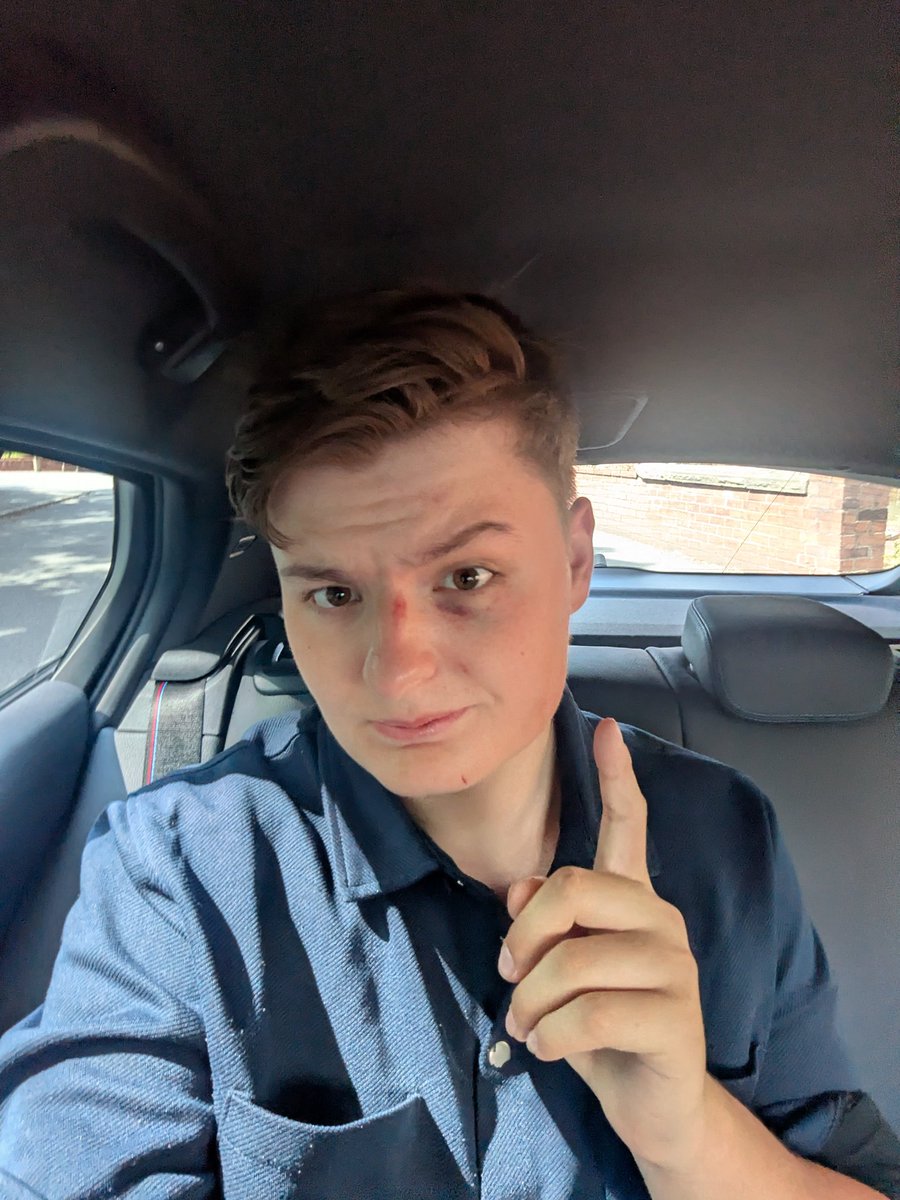
Back in Makerfeild, after my vicious attack in Manchester, just came out of a 30-minute phone call with the police.
They said that this is by far the most high-profile assault case they've seen.
They've identified the stand up to racism activist as the transgender ponytail lefty that some of us have been able to identify.
After reviewing the entire situation,
• Both of the cameras I had on the day have been broken or stolen.
• My phone has been smashed.
• They stole some of my stand equipment, including a banner and a chair.
But we're doubling down.
I've been able to, hopefully by the end of the day, get a team of lads for security.
I'll be organizing a massive day of action for a stand on remigration in the exact same location in Manchester.
This is England. I do not want to become a demographically replaced hellhole.
What I saw that day was a group of migrant lads being egged on by left-wing agitators.
1,817
4,175
28,005
616,811
Gerald John Smith retweeted

Oh thank god. I thought you were going to say he was the mayor of a town in the uk. Keep going IDF!!!
2
7
121
1,122
Gerald John Smith retweeted

Jun 15
He is Hussein Abd Sabbagh alias Jihad Ali.
He killed 4 Israelis including a 4 year old boy.
He raped a 7 year old Christian girl till death.
He changed his identity and became a carpenter.
But Mossad was searching for him.
He has been eliminated in a targeted strike of IDF.
1,524
8,174
45,965
646,870
Gerald John Smith retweeted

16 June: Today is not only Youth Day, but also Concentration Camp Day. On 16 June 1900, 126 years ago, British imperialists officially proclaimed the scorched earth policy during the Anglo-Boer War. This policy led to the burning of Afrikaners’ farmhouses and farms, the destruction of infrastructure and supplies, and the establishment of concentration camps. More than 30 000 women and children died in these camps. Today, we also remember them.
@AfriForum also honours our forebears who, after this devastation, had to start again from scratch and rebuild with determination. Their example inspires us to work with the same dedication to build a better present and future for our communities and future generations.
afrikanergeskiedenis.co.za/1…
14
103
284
4,244
Gerald John Smith retweeted

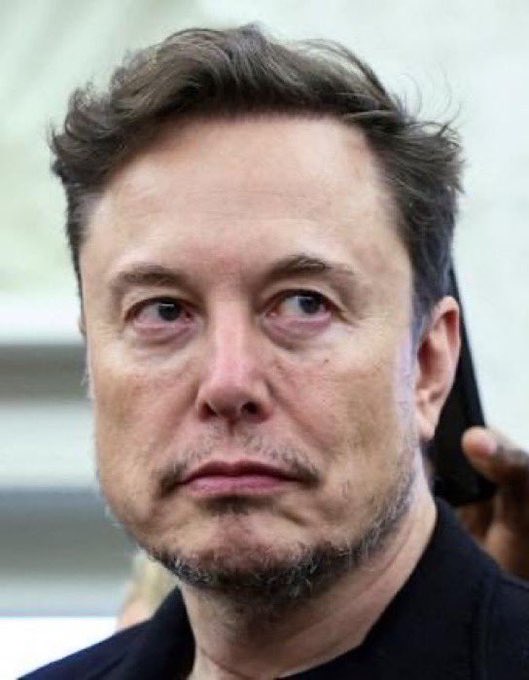
🚨 Elon Musk is examining legal routes to REMOVE Keir Starmer as the British Prime Minister.
Starmer has destroyed trust, enabled two-tier policing, and pushed Britain toward totalitarianism.
Do you support this?
YES or NO

240
294
1,002
8,101
Gerald John Smith retweeted

12h
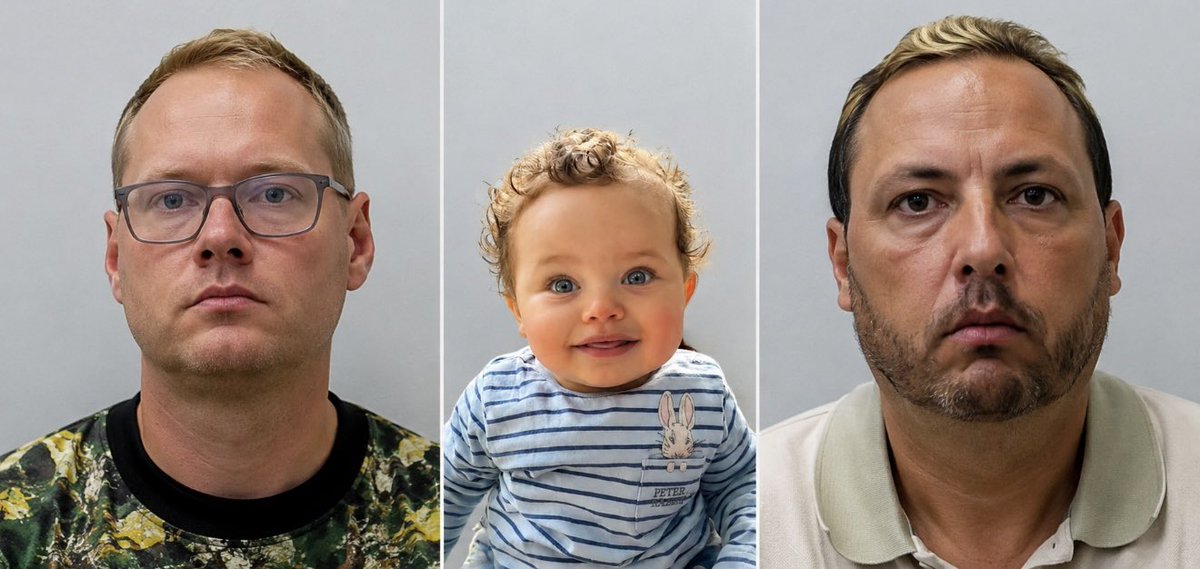
If someone is found guilty of abusing or murdering a child, what do you believe the punishment should be?
3,187
589
1,930
151,104
Gerald John Smith retweeted

Jun 15
“was thrown out after the judge ruled the stop unlawful and reportedly said Robinson had been targeted because of his political views.”
Shocking!
There’s actually a decent judge left in Britain.
7
48
542
6,882