
Joined April 2025
- Tweets 538
- Following 38
- Followers 59,480
- Likes 601
111 Photos and videos









Gimo Finance (Ø,G) retweeted

Question we keep getting: why does 0G use TEEs for compute instead of ZK?
Short answer: AI workloads don't tolerate ZK overhead, and TEEs give you privacy for free.
Longer answer below. 👇🏼
3
4
21
4,825

May 18
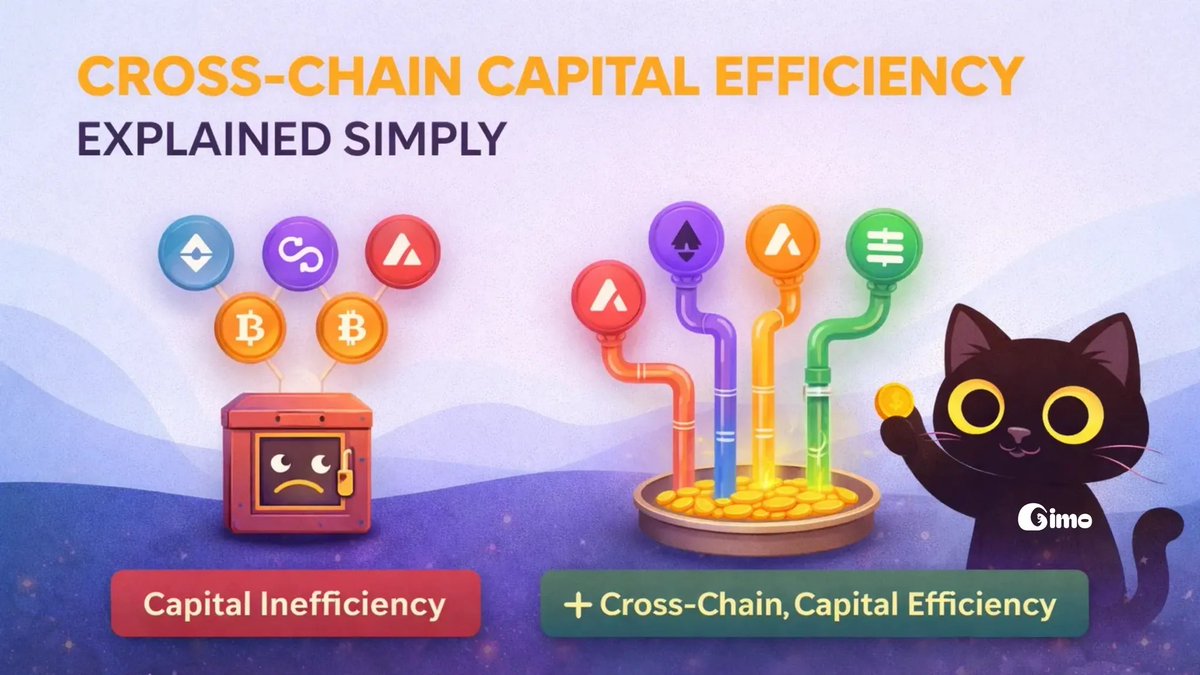
Use in DeFi:
• Access liquidity
• Participate across the ecosystem
• While maintaining staking exposure
That’s capital efficiency.
Your OG, but working everywhere 🐾
1
105
Gimo Finance (Ø,G) retweeted

Introducing 0GM-1.0-35B-A3B.
Our first proprietary AI model. Mixture of Experts (MoE), 35B parameters, 3B active per token.
Trained on our own decentralized GPU network. Open source under Apache 2.0.
21
26
117
48,583
Apr 29
Hot take 🔥
Most "liquid staking" isn't actually liquid.
If the LST has thin LPs, no lending markets, and zero integrations, it's just a receipt — not a usable asset.
Liquid staking is only as liquid as the DeFi layer around it. That's the work.
4
9
10
2,193
Apr 27
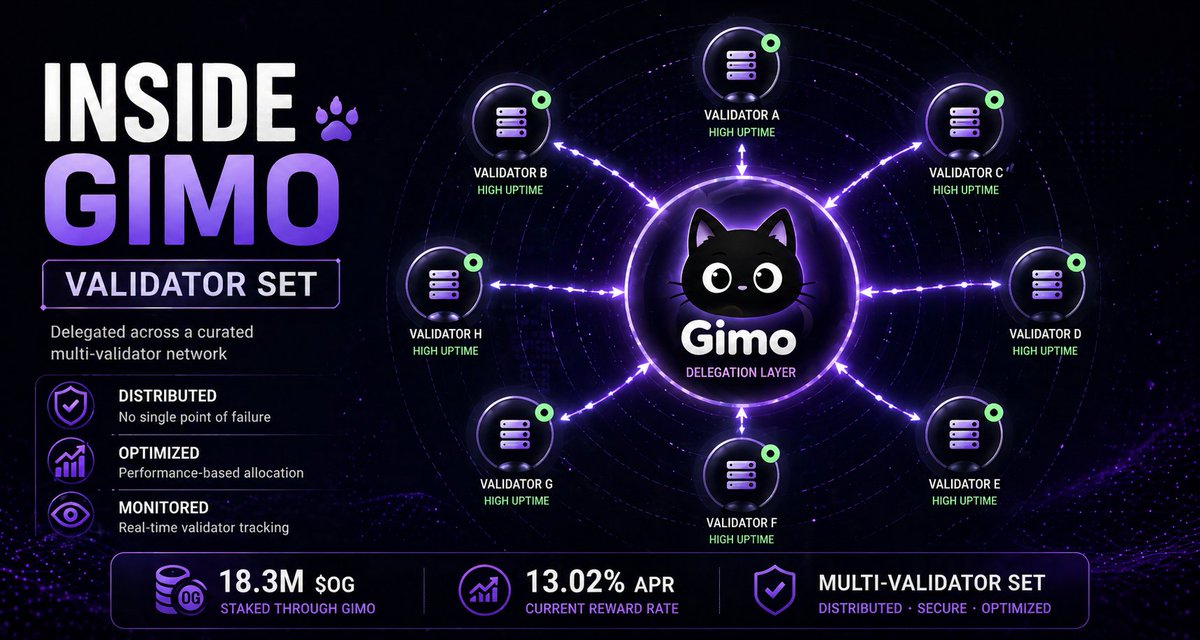
Ever wondered what actually happens when you stake your $0G through Gimo?
Quick behind-the-scenes on our validator setup 🧵
11
41
54
1,131
Apr 27
The numbers right now:
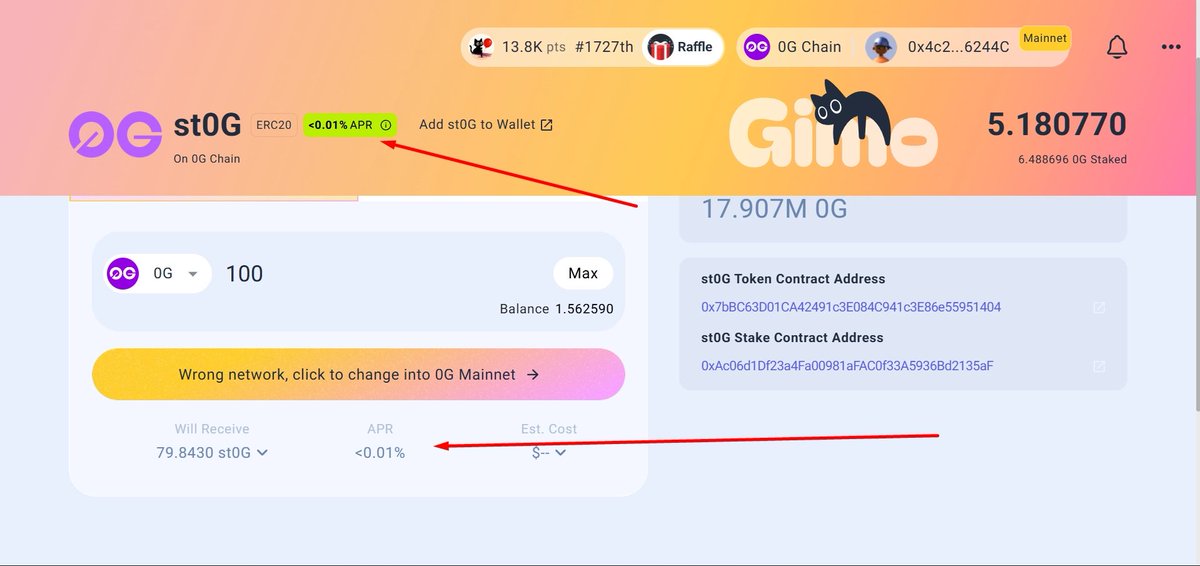
▸ 18.3M $OG staked through Gimo
▸ 13.02% APR
▸ Multi-validator delegation set (distributed across curated SVs on 0G)
▸ Real-time monitoring for uptime & block proposal success rate
We rebalance based on performance. Underperforming validators get rotated out.
1
2
273
Apr 27
Transparency is the whole point. If you want to dig into our validator methodology, the docs are open 👇
docs.gimofinance.xyz/docs/ar…
Stake with confidence → app.gimofinance.xyz
2
161
Apr 24
Staking rewards: ~reliable base yield, locks your capital.
DeFi yields: higher upside, requires liquid assets.
Most people pick one.
$stOG lets you stack both. That's it. That's the tweet.
5
7
4
1,364
Apr 22
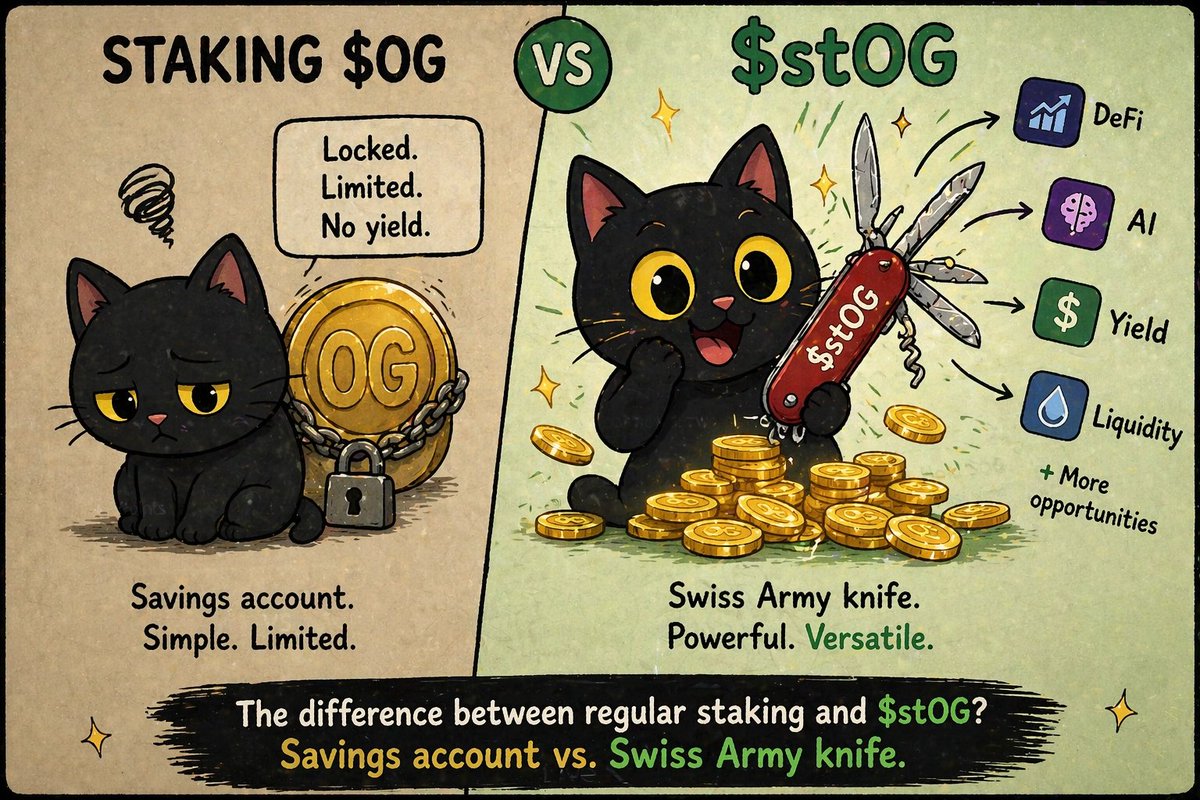
The difference between regular staking and $stOG is the difference between a savings account and a Swiss Army knife.
2
8
6
1,925
Apr 20
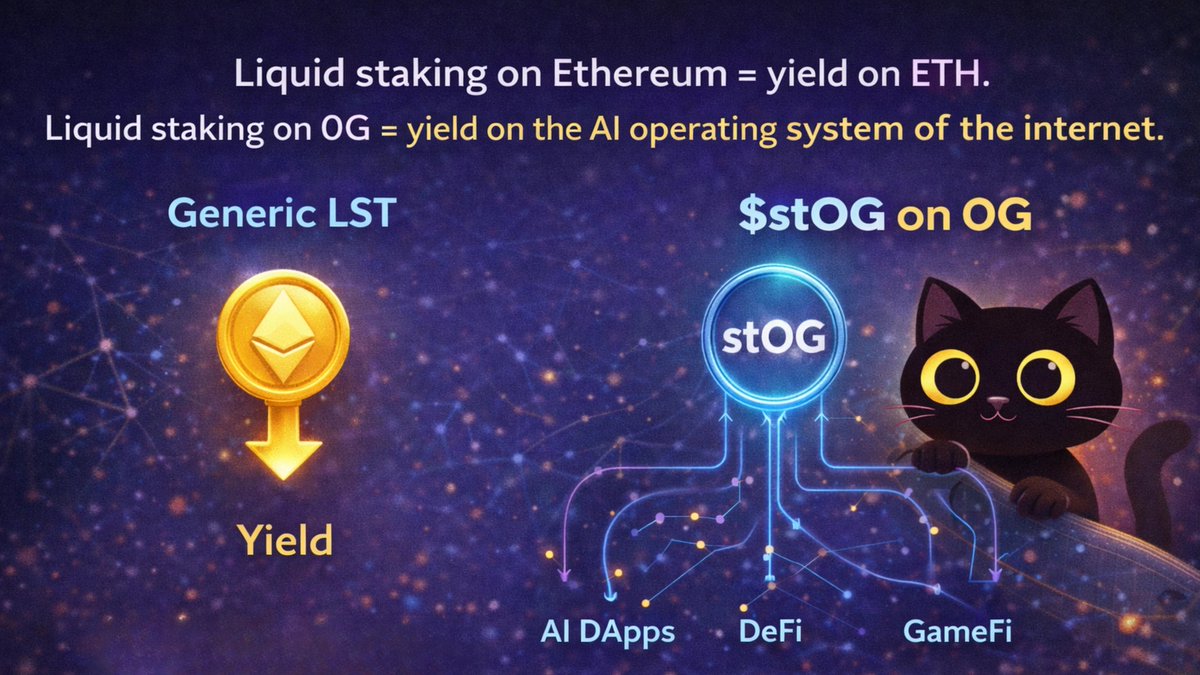
Every L1 wants liquid staking.
But AI chains need it more than anyone. Here's why 0G Gimo is the setup to watch 🧵
6
8
5
1,358
Apr 20
The more $0G that flows into $st0G, the more resilient 0G becomes — and the more capital unlocks for builders to build against.
Liquid staking isn't just a DeFi primitive here. It's infrastructure.
1
142
Apr 20
This is why we keep saying Gimo is built for 0G — not just on it.
Stake your $0G → gimofinance.xyz/
#0G #LST #Liquidity #AI
190