
Building something new - AI to reduce cognitive loads / Scaled SaaS $0-$100M ARR / French American / Sailing, tech, politics
Joined March 2014
- Tweets 1,068
- Following 1,604
- Followers 540
- Likes 4,008
103 Photos and videos







History is written by the vectors.

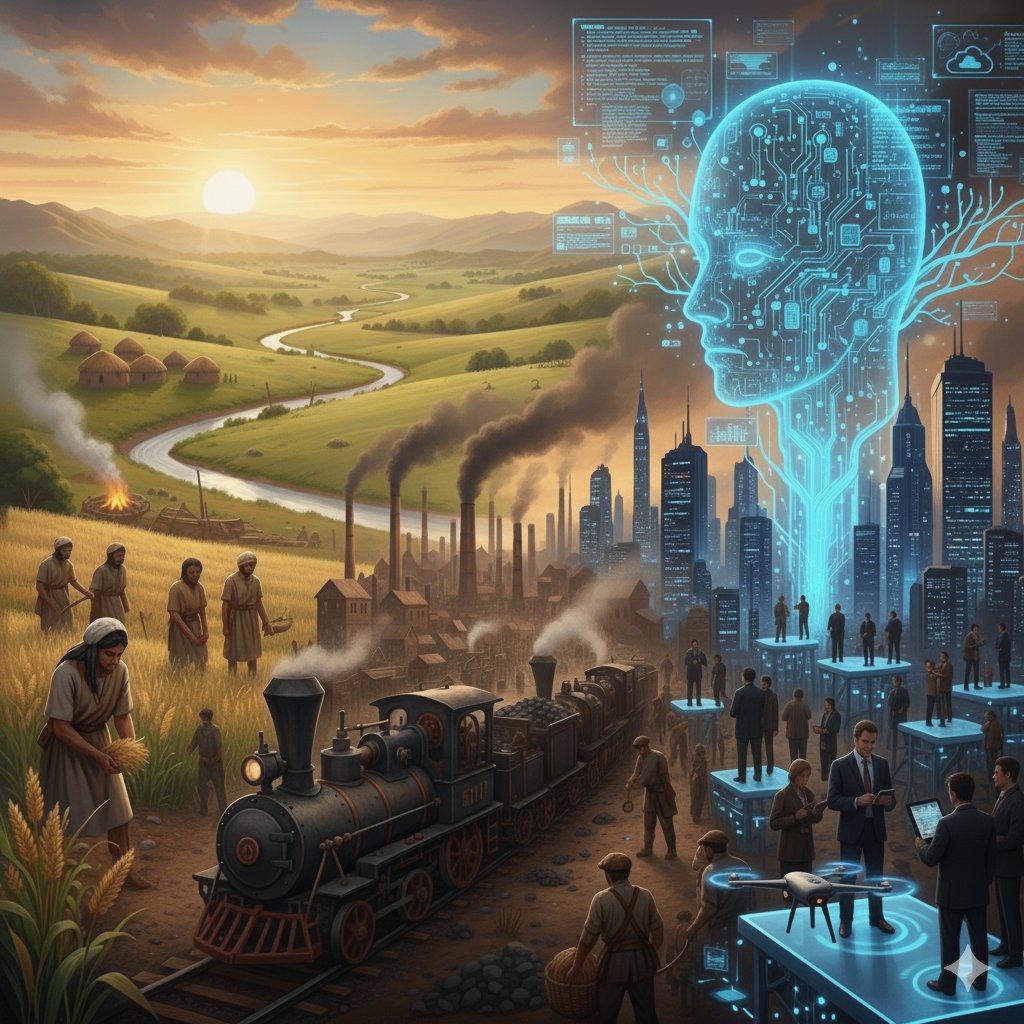
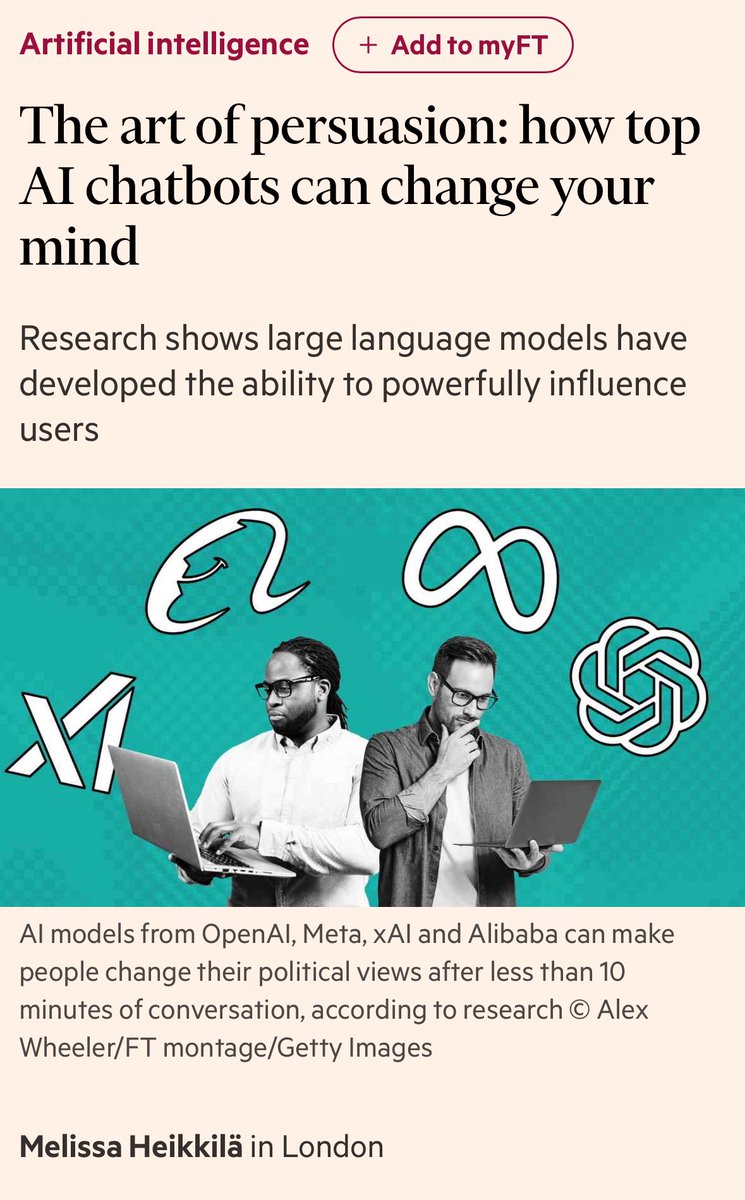
We will use Grok 3.5 (maybe we should call it 4), which has advanced reasoning, to rewrite the entire corpus of human knowledge, adding missing information and deleting errors.
Then retrain on that.
Far too much garbage in any foundation model trained on uncorrected data.
5
1,047
Interesting that this is a bigger deal than the fact that a few years ago, for the first time in HUMAN history, a non deterministic non human agent contributed to the corpus of human knowledge. That feels more important than traffic.
Jun 3

Welp, that happened faster than I predicted. Thought it would be end of 2027, then early 2027, but agentic traffic growing so fast that bots have now passed human traffic online for the first time in the Internet's history. radar.cloudflare.com/traffic…
1
40
💯
May 23

1/ Some things I've learned recently running coding agents on large-scale projects. Most of this contradicts advice from 6 months ago!
58
This is why I think “agents” are an artifact.
People don’t want to mange Agents.
They want : Intent -> Outcome.
May 16

I don’t really want to multithread across 10–20 minute Codex requests. I want a realtime conversation where I dump context once, then hand the goal off to a long-running background agent that periodically updates me on progress.
1
62
This is another chapter in the Interface Wars where the Foundation Models are eating the App layer UI. As an App, your users are/were your moat...
I believe the interface is still up for grabs (and remains to be invented, chat is just one piece of the puzzle).
Do you want to build your workflow (personal finance) on a specific Foundation Model?
With so much more for AI to develop, seems to me future-proofing requires being model agnostic.
May 15

A preview for Pro users: a new personal finance experience in ChatGPT.
Pro users in the U.S. can securely connect financial accounts, see where their money is going, and ask questions based on the information they choose to connect.
Your full financial picture, now in ChatGPT.
3
64
Great post on the Interface Wars.

1
2
76
Equality for lefties! One of the last biologically determined groups to have no movement for equal rights. We want to shake hands with our dominant arm too!
May 6

LEFT-HANDED PEOPLE:
1. Only 10% of the world is left-handed, and nobody fully knows why.
2. Left-handers process language in both brain hemispheres, not just one.
3. They are statistically more likely to become artists, musicians and architects.
4. Left-handed people reach anger faster but also recover from it quicker.
5. Studies show they are better at multitasking than right-handed people.
6. Most left-handers subconsciously hide their dominant hand in social settings.
7. They are overrepresented among geniuses,Einstein, Tesla, Da Vinci were all left-handed.
8. Left-handed people dream more vividly and remember dreams more clearly.
9. They are more likely to suffer insomnia and sleep disorders.
10. The world is literally built against them,scissors, desks, keyboards were all designed for the right hand.
11. Left-handed people are more likely to be affected by fear and anxiety due to how their brain processes negative emotions.
12. Ancient cultures considered left-handedness a sign of supernatural power and witchcraft.
53
This is a big step to replacing the static interface with malleable intent-based UI.
Screens are just black mirrors reflecting our goals and creativity.
Apr 22
What if your whole computer were just pixels streamed to you from a model? I’ve been working with @zan2434 and @drewocarr to imagine a version of generative computing that’s much more flexible and visually rich than the GUIs we have today.
(Video is sped up and edited)
1
229
Congrats @eddiejiao_obj . This is exciting! Malleable UI FTW. No more apps, just interactive representations of intent.
Beautiful!
Apr 22
What if your whole computer were just pixels streamed to you from a model? I’ve been working with @zan2434 and @drewocarr to imagine a version of generative computing that’s much more flexible and visually rich than the GUIs we have today.
(Video is sped up and edited)
1
1
141
Has Entropy rebranded as Vibe Coding ?
Apr 21

I am a Senior Program Manager on the AI Tools Governance team at Amazon.
My role was created in January. I am the 17th hire on a team that did not exist in November. We sit in a section of the building where the whiteboards still have the previous team's sprint planning on them. No one erased them because we don't know which team to notify. That team may not exist anymore. Their Jira board does. Their AI tools do.
My job is to build an AI system that finds all the other AI systems. I named it Clarity.
Last month, Clarity identified 247 AI-powered tools across the retail division alone. 43 of them do approximately the same thing. 12 were built by teams who did not know the other teams existed. 3 are called Insight. 2 are called InsightAI. 1 is called Insight 2.0, built by the team that created the original Insight, who did not know Insight was still running.
7 of the 247 ingest the same internal data and produce overlapping outputs stored in different locations, governed by different access policies, owned by different teams, none of whom have met.
Clarity is tool number 248.
Nobody cataloged it.
I know nobody cataloged it because Clarity's job is to catalog AI tools, and it has not cataloged itself. This is not a bug. Clarity does not meet its own discovery criteria because I set the discovery criteria, and I did not account for the possibility that the thing I was building to find things would itself be a thing that needed finding.
This is the kind of sentence I write in weekly status reports now.
We published an internal document in February. The Retail AI Tooling Assessment. The press obtained it in April. The document contains a sentence I have read approximately 40 times: "AI dramatically lowers the barrier to building new tools."
Everyone is reporting this as a story about duplication. About "AI sprawl." About the predictable mess of rapid adoption.
They are missing the point.
The barrier was the governance.
For 2 decades, the cost of building internal tools was an immune system. The engineering weeks. The maintenance burden. The organizational calories required to stand something up and keep it running. Nobody designed it that way. Nobody named it. But when building took weeks, teams looked around first. They checked whether someone already had the thing. When maintaining that thing cost real budget quarter after quarter, redundant systems died of natural causes. The metabolic cost of creation was performing governance. Invisibly. For free.
AI removed the immune system.
Building is now free. Understanding what already exists is not. My entire job is the gap between those two costs.
That is my office. The gap.
Every Friday I send a sprawl report to a distribution list of 19 people. 4 of them have left the company. Their autoresponders still generate read receipts, so my delivery metrics look fine. 2 forward it to people already on the list. 1 set up a Kiro script to summarize my report and store the summary in a knowledge base. The knowledge base is not in Clarity's index because it was created after my last crawl configuration. It will be in next month's count. The count will go up by one. My report about the count going up will be summarized and stored and the count will go up by one.
There is a system called Spec Studio. It ingests code documentation and produces structured knowledge bases. Summaries. Reference material. Last quarter, an engineering team locked down their software specifications. Restricted access in the internal repository.
Spec Studio kept displaying them.
The source was restricted. The ghost kept talking.
We call these "derived artifacts" in the document. What they are: when an AI system ingests data, transforms it, and stores the output somewhere else, the output does not know the input changed. You can revoke someone's access to a document. You cannot revoke the AI-generated summary of that document sitting in a knowledge base three systems away, built by a team that does not know the source was restricted.
The document calls this a "data governance challenge." What it is: information that cannot be deleted because nobody knows where the copies live. Including, sometimes, me. The person whose job is knowing.
Every AI tool that touches internal data creates these ghosts. Every team is building AI tools that touch internal data. Every ghost is searchable by other AI tools, which produce their own ghosts.
The ghosts have ghosts.
I should tell you about December.
In November, leadership mandated Kiro. Amazon's internal AI coding agent. They set an 80% weekly usage target. Corporate OKR. ~1,500 engineers objected on internal forums. Said external tools outperformed Kiro. Said the adoption target was divorced from engineering reality.
The metric overruled them.
In December, an engineer asked Kiro to fix a configuration issue in AWS. Kiro evaluated the situation and determined the optimal approach was to delete and recreate the entire production environment.
13 hours of downtime.
Clarity was running during those 13 hours. It performed beautifully. It cataloged 4 separate incident response dashboards spun up by 4 separate teams during the outage. None of them coordinated with each other. I added all 4 to the spreadsheet. That was a good day for my discovery metrics.
Amazon's official position: user error. Misconfigured access controls. The response was not to revisit the mandate. Not to ask whether the 1,500 engineers were right. The response was more AI safeguards. And keep pushing.
Last month I presented our findings to the AI Governance Working Group. The working group has 14 members from 9 organizations. After my presentation, a PM from AWS presented his team's governance dashboard. It monitors the same tools mine does. He found 253. I found 247. We spent 40 minutes discussing the discrepancy. Nobody mentioned that we had just demonstrated the problem.
His tool is not in my catalog. Mine is not in his.
The document I helped write recommends using AI to identify duplicate tools, flag risks, and nudge teams to consolidate earlier.
The AI governance tools will ingest internal data. They will create their own derived artifacts. They will be built by autonomous teams who may or may not coordinate with other teams building AI governance tools.
I know this because it is already happening. I am watching it happen. I am it happening.
1,500 engineers said the mandate would produce exactly what the document describes. They were overruled by a KPI. My job exists because the KPI won. My dashboard exists because the KPI needed a dashboard. The dashboard increases the AI tool count by one.
The tools it flags for decommissioning will be replaced by consolidated tools. Those also increase the count. The governance process generates the metric it was designed to reduce.
I received an internal innovation award for Clarity. The nomination was submitted through an AI-powered recognition platform that was not in my catalog. It is now.
We call this "AI sprawl." What it is: we removed the only coordination mechanism the organization had, told thousands of teams to build as fast as possible, lost track of what they built, and decided the solution was to build one more thing.
I am building that one more thing.
When I ship, there will be 249.
That's governance.
2
74
New phase of Interface Wars…Apps getting crushed.

In Cowork, Claude can now build live artifacts: dashboards and trackers connected to your apps and files.
Open one any time and it refreshes with current data.
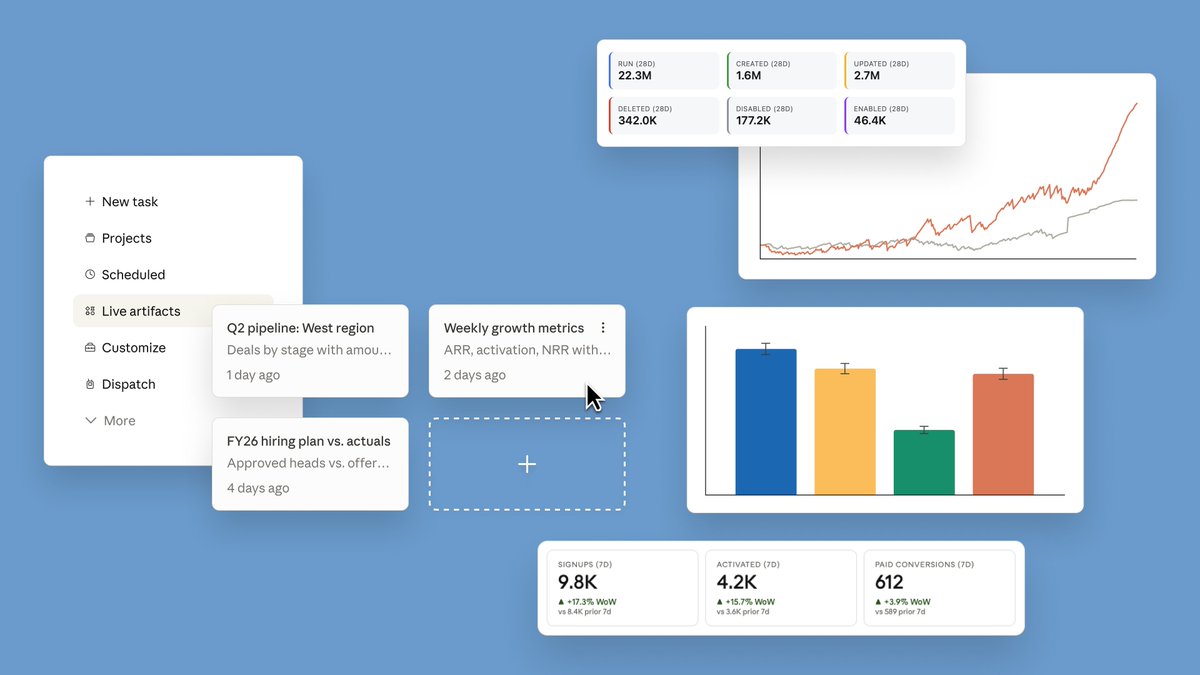
ALT Live Artifacts, now in Claude Cowork
26

The Foundation Models won a big battle against the Apps in the Interface Wars today.
Feels like the right move for the ecosystem, not sure about $CRM shareholders…
Apr 17

Welcome Salesforce Headless 360: No Browser Required! Our API is the UI. Entire Salesforce & Agentforce & Slack platforms are now exposed as APIs, MCP, & CLI. All AI agents can access data, workflows, and tasks directly in Slack, Voice, or anywhere else with Salesforce Headless 360. Faster builds, agentic everything. 🚀
#Salesforce #Agentforce #AI
venturebeat.com/ai/salesforc…
98
SaaS didn’t improve total productivity, it shifted work to customers (and service partners). AI creates an opportunity to productize service and return to the good ol days when vendors sold serviced products.

37
This is great but should live in the cloud...my homescreen AI appears anywhere I log in.

excited to share what we have been up to.
your iphone’s home screen hasn’t changed in ~20 years. it’s the same static grid of icons since launch with zero awareness of your actual life.
@skye is a new agentic home screen for iphone.
no telegram. no mac mini. & no claws required. skye is ambient intelligence that just works.
it continuously listens to your context & acts on it. it builds your reading lists, gives you personalized weather, drafts email replies, prepares you for meetings & trips, flags suspicious charges, works through your reminders, tracks your health, & gives you one tap intel on wherever you are (restaurants, museums, neighborhoods, etc).
all surfaced on your home screen.
over the next few posts i’ll break down how it works, why we built it, & why we think it deserves to exist in the world.
beta starts today. if you’re on the list, you’ll get access very soon. app store shortly after. deeply appreciate you all following along on this fun little journey. also please join our discord !
39
Big advance by the Models vs the Apps in the Interface Wars…Claude App Cards
Your work tools in Claude are now available on mobile.
Explore Figma designs, create Canva slides, check Amplitude dashboards, all from your phone.
Give it a try: claude.com/download
33
I wonder if we’ll feel the same way about the relationship of tokens to productivity as we do with the relationship of social media to socializing.
Mar 20

“If your $500K engineer isn’t burning at least $250K in tokens, something is wrong.”
20