
Speaking truth to power. Watching politics with clear eyes. Pro-democracy, pro-alliance, anti-authoritarian 🇬🇧🇪🇺⚒
Joined January 2013
- Tweets 24,082
- Following 494
- Followers 5,206
- Likes 4,960
1,079 Photos and videos
Do want Burnham lose or win the by-election on the 18th June?
100%
Lose
0%
Win
1 votes • 1 day
1
1
42
The most striking thing about this image is not who is in it, but what is missing from it.
Where is the Labour Party?
There are "Vote Andy" signs everywhere. There are references to hope. There is a campaign built around one individual. Yet there appears to be no visible Labour Party branding, no Labour message and no sense that this is a campaign for the party rather than for a personality.
That should concern every Labour member.
The Labour Party has never been about one individual. It is a collective movement built by millions of members, supporters, trade unionists and elected representatives over more than a century.
What this image portrays is something very different. It portrays a campaign centred entirely on Andy Burnham.
The difficulty with personal movements is that they often assume everyone else will simply fall into line afterwards. Politics rarely works that way. Hundreds of thousands of Labour members have invested years of their lives campaigning for the party, defending its values and supporting its manifesto. They did not join an Andy Burnham party.
Many MPs are only a short time into their parliamentary careers, elected on a Labour manifesto under Keir Starmer's leadership. If they choose to place personal ambition above that mandate, they should not assume there will be no consequences.
This could prove to be a defining moment for the Labour Party. Because if members conclude that the party has become about personalities rather than principles, many may simply walk away.
And history teaches us that when mainstream democratic parties become divided and consumed by internal struggles, the beneficiaries are rarely those involved in the dispute. They are the movements waiting outside, ready to exploit division and public frustration for their own ends.
That is a lesson politics should never forget.

Squeaky Burnham time: it’s too close for comfort for Labour in Makerfield
The man who would be PM appears to have a lead in byelection polls, but does he have what it takes to hold onto it, asks @CeriThomas01
bit.ly/4g3rqD1
6
39
93
2,272
The most striking thing about this image is not who is in it, but what is missing from it.
Where is the Labour Party?
There are "Vote Andy" signs everywhere. There are references to hope. There is a campaign built around one individual. Yet there appears to be no visible Labour Party branding, no Labour message and no sense that this is a campaign for the party rather than for a personality.
That should concern every Labour member.
The Labour Party has never been about one individual. It is a collective movement built by millions of members, supporters, trade unionists and elected representatives over more than a century.
What this image portrays is something very different. It portrays a campaign centred entirely on Andy Burnham.
The difficulty with personal movements is that they often assume everyone else will simply fall into line afterwards. Politics rarely works that way. Hundreds of thousands of Labour members have invested years of their lives campaigning for the party, defending its values and supporting its manifesto. They did not join an Andy Burnham party.
Many MPs are only a short time into their parliamentary careers, elected on a Labour manifesto under Keir Starmer's leadership. If they choose to place personal ambition above that mandate, they should not assume there will be no consequences.
This could prove to be a defining moment for the Labour Party. Because if members conclude that the party has become about personalities rather than principles, many may simply walk away.
And history teaches us that when mainstream democratic parties become divided and consumed by internal struggles, the beneficiaries are rarely those involved in the dispute. They are the movements waiting outside, ready to exploit division and public frustration for their own ends.
That is a lesson politics should never forget.
1
4
14
222
A defence debacle? That seems a rather dramatic description of events.
The Government has already committed to a substantial increase in defence spending over the coming years, at a time when public finances remain under considerable pressure and every department is competing for resources. The argument was never about whether defence should receive more funding, but about how quickly that funding could be delivered and how it would be paid for.
What we have seen is a political disagreement within government, followed by resignations. That is not unprecedented, nor is it evidence that a Prime Minister is facing his final act.
The more interesting question is why some commentators appear determined to portray every disagreement, resignation or policy debate as an existential crisis for Starmer's leadership. We have heard predictions of his downfall almost continuously since he became Labour leader, yet he went on to win a landslide General Election and remains Prime Minister with a substantial parliamentary majority.
There is also a wider issue being ignored. Modern warfare is changing at an extraordinary pace. The challenge is not simply spending more money, but ensuring that procurement, strategy and military doctrine are fit for the threats of the future. Britain cannot afford to spend billions using the assumptions of the past.
Perhaps those writing Starmer's political obituary every week should first explain who is waiting in the wings with a better plan, a stronger mandate and a credible way of paying for it. So far, the answers to those questions appear remarkably thin.

Is Keir Starmer’s defence debacle a prelude to his final act? thetimes.com/uk/politics/art…
6
26
81
1,661

Jun 12
Sir Keir Starmer now faces a defining moment. He should call these resignations out for what they appear to be: ministers who no longer support the Government choosing to walk away rather than remain and make their case around the Cabinet table.
The answer is not panic, nor is it to spend days engaging in Westminster gossip. The answer is to appoint strong replacements immediately, people who are committed to the Government's programme and prepared to see it through. Once that is done, the focus should return straight away to the issue that sparked this row: defence.
The British public understand that the world is becoming more dangerous. From war in Europe to growing instability elsewhere, national security is not an abstract concept. It is one of the first duties of any government. If additional investment is genuinely required to keep the country safe, then ministers should make that case honestly and directly to the public.
Speaking personally, I would have little objection to paying more in taxation if it were clearly and transparently dedicated to the defence of the United Kingdom and the protection of our armed forces. I suspect many others would take a similar view. People may disagree about the exact level of spending, but few would argue that the security of the nation should not be a priority.
Leadership is tested not when everything is going well, but when difficult decisions have to be made. This is one of those moments. The country needs clarity, resolve and unity, not further political manoeuvring.
Jun 11

Keir Starmer weakened by John Healey’s scathing resignation ft.trib.al/FLRZX8T
117
90
305
17,263
Jun 11
Pippa, with respect, you appear to have moved well beyond reporting and into advocacy. For months now, the Guardian has seemed determined to promote Andy Burnham as the answer to every question while simultaneously publishing a steady stream of stories predicting the imminent demise of Sir Keir Starmer.
The problem is that much of this narrative relies on unnamed sources, anonymous briefings and political gossip rather than hard evidence. The reality is that Labour remains in government with a substantial parliamentary majority, and there has been no convincing case made as to why a sitting Prime Minister should be replaced by someone who has yet to present a detailed programme, explain how it would be funded, or demonstrate that he commands support beyond a vocal section of the commentariat.
What is particularly striking is that many of the same journalists who spent years criticising Labour for internal division now seem eager to encourage it. Rather than reporting events as they unfold, there is an increasing impression that some are attempting to create a leadership contest through repetition alone.
The British public expect governments to govern, not journalists to act as political kingmakers. Until there is evidence of an actual challenge, rather than another round of anonymous briefings, this looks more like a campaign being waged in newspaper columns than one taking place in the Labour Party itself.
Jun 10

Keir Starmer’s fight for survival…
“He might be increasingly defiant, but it is like a dog barking in an empty room,” one insider said. “Eventually its owner is going to come back home and kick it out.”
My read with @jessicaelgot & @kiranstacey
theguardian.com/politics/202…
31
141
522
35,676
Gordon Fielden retweeted

Jun 9
This is not about personalities.
It is not about factions.
It is not about who can generate the loudest headline.
It is about leadership.
A government cannot govern if ministers speak with two voices. It cannot deliver if loyalty is conditional. It cannot succeed if ambition comes before responsibility.
Keir Starmer has drawn a line, and rightly so.
Not because he fears a challenge, but because he understands a simple truth: the British people elected a government, not a permanent leadership contest.
What is leadership if not clarity in moments of uncertainty?
What is duty if not standing by the mandate you were elected to deliver?
What is integrity if not saying openly what you believe, rather than playing both sides?
In an age of noise, Starmer offers focus.
In an age of division, he offers discipline.
In an age of short-term politics, he offers purpose.
The choice is not between one politician and another.
The choice is between government and distraction.
Between delivery and drama.
Between responsibility and self-interest.
That is why this moment matters.
#KeirStarmer #LabourGovernment #UKPolitics
7
45
109
3,486
Jun 9
EXCL: BBC News, a public service broadcaster funded by licence fee payers, is restricting who can reply to some of its posts on X.
If a publicly funded organisation chooses to publish content on a public discussion platform, then it should expect criticism, challenge and scrutiny from the public it serves. That is not an inconvenience. It is part of democratic accountability.
The BBC frequently reports on public bodies, politicians, businesses and institutions, often demanding transparency and openness from others. It is therefore entirely reasonable for licence fee payers to expect the same standards from the BBC itself.
This is about more than a social media setting. It raises important questions about openness, accountability and whether a publicly funded broadcaster should be limiting participation in public discussion.
We will now be examining this issue in greater detail. Licence fee payers have a right to know why a broadcaster funded by them appears increasingly reluctant to engage with the very people who pay for its existence.
Jun 9

What now for West Ham after Sullivan allegations? bbc.in/4e7DyBz
7
36
89
3,643
Jun 9
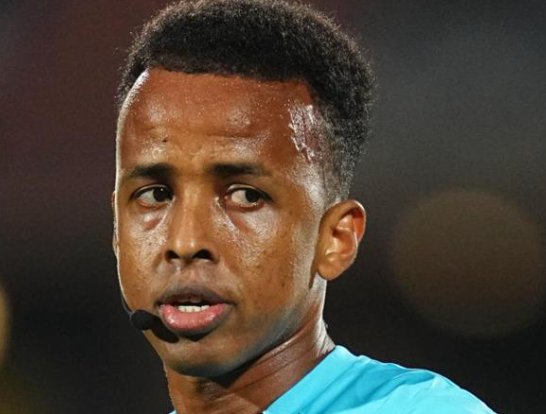
This is the largest sporting event on the planet, despite what some Americans may believe, and the decision to prevent Africa's leading referee from participating in the World Cup sends an extraordinarily damaging message about the United States and the direction in which it is heading.
I am genuinely astonished that FIFA has not lodged a formal protest with the United States Government and sought intervention to ensure that this referee, who is held in the highest regard within the international refereeing community, is granted a visa to undertake one of the most important roles in world football. For any referee, appointment to a World Cup is among the greatest honours the sport can bestow.
A person's country of birth should never be the sole reason for preventing them from entering a country to carry out a specific professional duty at a specific international event. Particularly when the President of the United States publicly assured the world that participants would be welcomed.
If nationality alone has been the determining factor, then this is a serious stain upon both the tournament and the host nation. It raises profound questions about fairness, equality of treatment and whether political considerations are now taking precedence over sporting merit.
The World Cup is supposed to bring nations together. Decisions such as this achieve precisely the opposite.
317
1,284
4,912
221,372
Jun 9
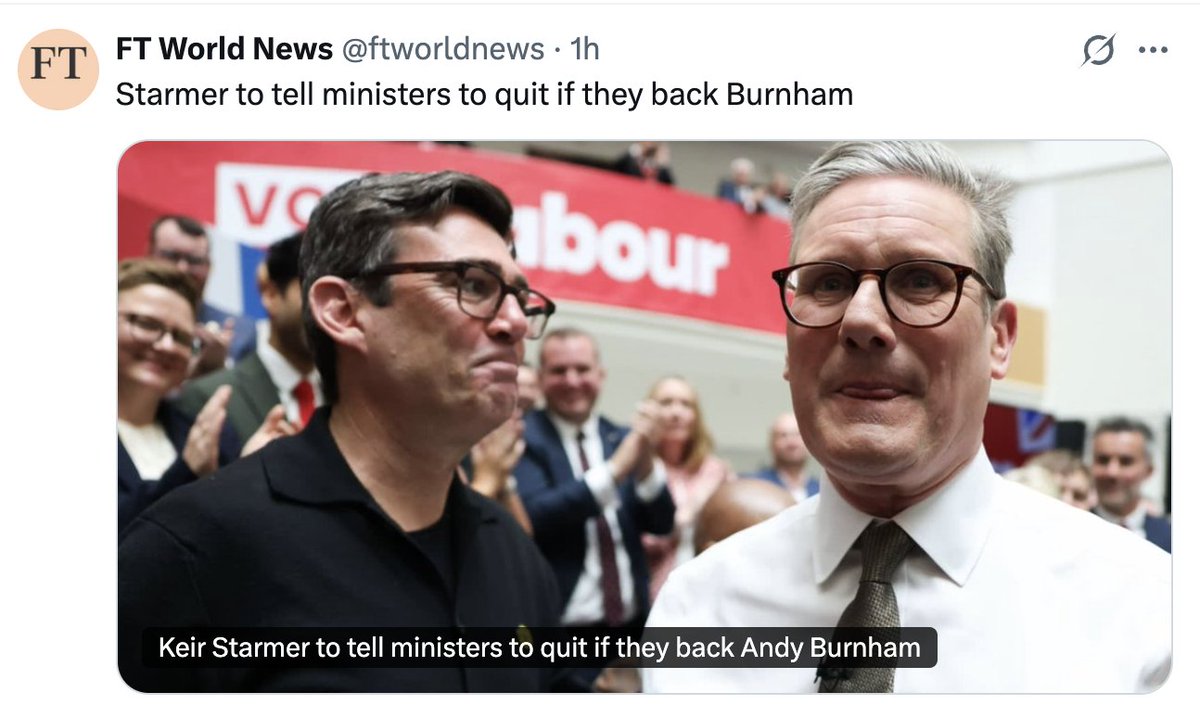
This story is about far more than ministers being told to resign if they back Andy Burnham.
If the Financial Times report is accurate, Sir Keir Starmer has effectively drawn a line in the sand. Ministers now have a clear choice. Back Burnham and leave the government, or remain in government and accept collective responsibility under Starmer's leadership.
That means any minister who stays in Cabinet after this warning is, by their actions, signalling support for the Prime Minister. The option of quietly backing Burnham whilst remaining in government has effectively disappeared.
For those ministers who may have been trying to keep a foot in both camps, the political cliff edge has arrived. They must now choose between loyalty to the government they serve or support for a rival leadership candidate. To attempt both would inevitably invite accusations of double dealing and undermine the principle of collective responsibility.
56
111
375
29,031
Jun 9
Does this change the optics in Starmer's favour?
I think it probably does.
Last Friday, Andy Burnham appeared on Newsnight and, for someone presenting himself as a potential Prime Minister, it was hardly a convincing performance.
He struggled when questioned about Rachel Reeves's fiscal rules and, more importantly, did not appear to understand what those fiscal rules actually were. For a politician seeking the highest office in the land, that was a significant moment.
Fast forward a few days and Newsnight is now reporting that, during a Cabinet meeting, Keir Starmer made it abundantly clear to his ministers that he is going nowhere. If a leadership contest is triggered, he intends to fight it and intends to win it. The fact that this was said directly to Cabinet is important. It was not a briefing, a rumour or a comment from an ally. It was the Prime Minister setting out his position to his government.
There are also reports that some Labour MPs who had previously been sympathetic to Burnham are now becoming more cautious following his recent media appearances and the growing scrutiny of his policy positions. Whether that is a reaction to his Newsnight interview, concerns about the practicalities of a leadership challenge, pressure from constituents, or a combination of all three, the assumption that support for Burnham is growing inexorably appears far less certain than some commentators would have us believe.
At the same time, Burnham now appears to be stepping back from the idea of an immediate leadership challenge. We are told that, should he win the by-election, he intends to focus first on helping Labour retain the Greater Manchester mayoralty before considering any move against Starmer.
That raises a number of interesting questions. Burnham has repeatedly described being Mayor of Greater Manchester as the job he loved and the role he wanted. Yet if Labour struggles to retain that mayoralty after his departure, and Reform emerges as the main beneficiary, what does that say about his record and leadership credentials?
Meanwhile, Burnham has not won the by-election. No leadership contest has been called. Labour members have not cast a single vote. Yet parts of the media continue to write as though the outcome is already known.
Politics can change quickly. What looked inevitable a few weeks ago suddenly looks far less certain. The more scrutiny Burnham receives, the more Labour members, MPs and voters may begin asking whether he is really the answer to a question many of them were not asking in the first place.
Jun 8

"If there is a contest then I'm going to fight it. I'm not going to walk away. I am going to fight to win."
@nicholaswatt reveals that Keir Starmer told a meeting of government ministers that he will be "in it to win it" if a leadership contest is triggered.
#Newsnight
20
167
462
36,808
Jun 8
I think we should all welcome the Prime Minister's announcement today that technology companies must do more to prevent children under the age of 16 from being exposed to images of people in a naked state online.
As for Jess's comments, I think they reveal a misunderstanding of who actually controls what. Apple and Google primarily provide operating systems and, in some cases, hardware. They do not own most of the social media platforms where this material is shared. Those platforms are operated by companies such as Meta, X, TikTok and others.
Of course, Apple and Google have responsibilities. They can impose rules through their app stores and operating systems, and they already have tools designed to verify age and protect younger users. However, the real responsibility lies with the social media companies whose platforms host, distribute and recommend this content in the first place.
The government is right to send a clear message. Give the platforms the opportunity to comply voluntarily, but if they fail to do so, stronger measures should follow. There must be consequences for companies that put profit and engagement ahead of the safety of children.
No system will ever be perfect. Determined individuals will always look for ways around restrictions. But that is not an excuse for doing nothing. The objective should be to make access significantly harder, reduce exposure and create meaningful safeguards.
Personally, I think the Australian approach deserves serious consideration. The burden should rest on the platforms, not on parents alone, and children should be protected from material that no reasonable person would consider appropriate for their age.

14
29
98
3,147
Jun 8
The more interesting question is why some on the Left, together with sections of the media, appear so determined to present one outcome as inevitable whilst giving little or no consideration to the alternative.
Every article seems to proceed on the assumption that Andy Burnham's return to Westminster automatically leads to Keir Starmer's departure. Yet there is one rather significant detail being overlooked: Burnham has not even won the by-election yet. The voters have not delivered their verdict, no leadership contest has taken place, and Labour members have not voted on anything.
Despite this, some commentators already write as though Burnham's victory is assured, Starmer's removal is inevitable and the future direction of the Labour Party has been settled. That is not analysis. It is speculation.
Where are the articles examining what happens if Starmer remains leader? What happens to those who have spent months predicting his downfall? What becomes of the factions, commentators and publications that have invested so heavily in a narrative built around his removal?
If Starmer were to remain in place, the story would not be one of leadership intrigue but of a Prime Minister who had secured a renewed mandate and several years in which to continue delivering Labour's programme in government. The focus would return to economic growth, public services, housing, defence, Britain's relationship with Europe and the wider challenges facing the country.
More importantly, stability itself has value. Financial markets, international investors and businesses generally favour certainty over political turmoil. A settled government with a clear mandate is more likely to attract investment, support economic confidence and provide the long term stability that both businesses and households require. Those are factors that rarely feature in articles focused solely on Westminster manoeuvring.
A balanced assessment would examine both possible outcomes. Instead, some appear more interested in advancing a preferred narrative than exploring the full range of political realities. That raises a legitimate question: are we witnessing objective political reporting, or political advocacy presented as journalism?

Starmer 'Getting On With The Job' As Andy Burnham Prepares To Oust Him As PM
huffingtonpost.co.uk/entry/s…
10
45
135
3,250
Jun 8
This appears to be yet another attempt by The Guardian to influence the Labour leadership debate. The reality is that Andy Burnham is not polling particularly well and is facing a far more difficult path than many expected. At the same time, thousands of Labour members are making their views known and a growing number are signalling their intention to keep Keir Starmer in place.
The more important question is what happens to the Labour Party and the Parliamentary Labour Party if the membership gets its way and backs the current leadership. The trade unions and sections of the Left need to recognise that there is a significant difference between online noise and the wider mood of both the public and Labour members.
Yes, there is plenty of drivel, abuse and constant commentary from the Right, but volume does not equal majority opinion. The loudest voices are often the smallest groups. What matters is where Labour members and the wider electorate stand, and increasingly there is evidence that many are choosing stability, unity and a government focused on delivering results rather than returning to internal ideological battles.
If Labour is to win again, it will be because it listens to the mainstream of its membership and the country, not because it chases the demands of a vocal minority on either side of the political divide.
Jun 8
🚨Is Keir Starmer in his ‘legacy’ era?
In our latest #PoliticsWeekly podcast, @kiranstacey & I discuss PM’s plans for
📱social media ban for under 16s
💷billions extra for defence spending
🇪🇺 next EU reset summit
And ask whether this is a reset - or the end of an era
theguardian.com/politics/aud…
20
163
448
18,322
Jun 7
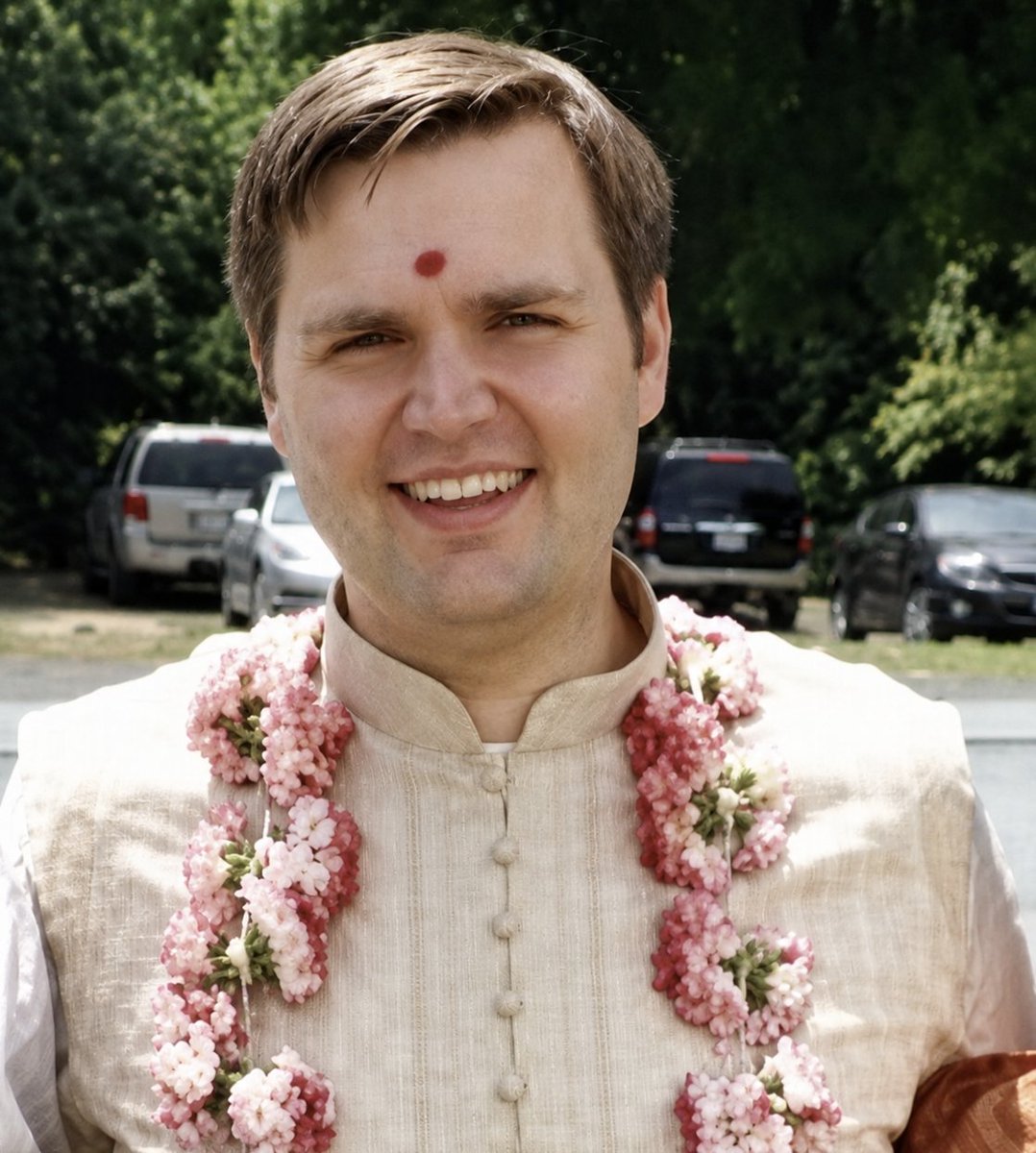
Hi JD Vance here some good old home truth's from the UK

22
49
948
Gordon Fielden retweeted

Jun 7
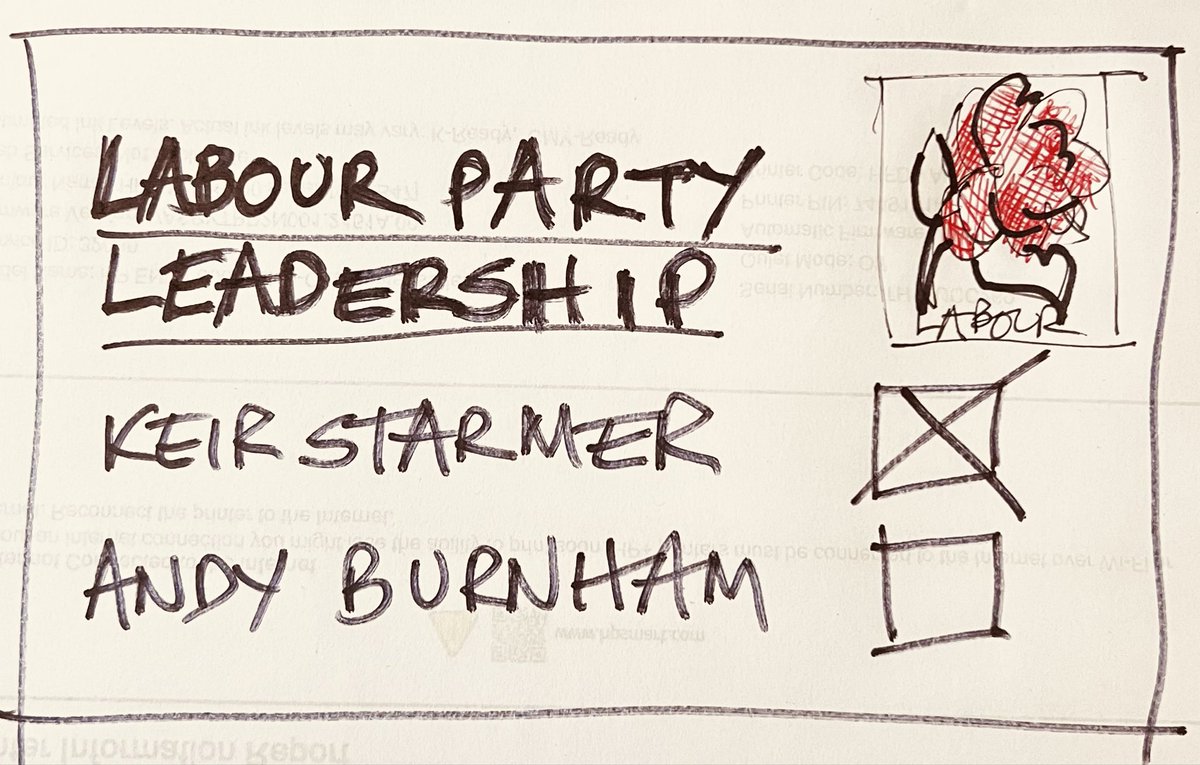
If, and only if, Burnham wins in Makersfield and challenges Starmer for the leadership of the Labour Party, then, as a member, here is my immutable vote.
Are you with me?
I’d be interested to hear.
@UKLabour
@AndyBurnhamGM
@Keir_Starmer
198
164
757
13,410
Jun 7
Whilst the delay is clearly frustrating, there is a degree of nuance missing from some of the criticism. Defence is undoubtedly one of the most important priorities facing the country, particularly given the ongoing conflict in Ukraine and increasing global instability. However, governments do not operate in isolation from wider economic realities.
Labour inherited a range of competing demands on the public finances, from the NHS and social care to housing, infrastructure, policing and economic growth. At the same time, it was elected on a manifesto containing commitments that it is expected to deliver. Balancing those obligations whilst developing a credible long term defence strategy is not a straightforward task.
A Defence Investment Plan that is fully funded and deliverable is ultimately more valuable than one published quickly but lacking the financial certainty required to achieve its objectives. The real test will not be the publication date of the plan, but whether it provides the Armed Forces with the capabilities, personnel and equipment needed for the challenges of the next decade.
Britain's allies will judge us by the strength of our commitments and our ability to deliver them, not simply by the speed at which a document reaches publication.
Jun 7
Delays to defence plan undermine UK credibility, MPs say bbc.in/3Q3RIu8
6
23
66
1,537
Jun 6
JD Vance stands ready to lecture the United Kingdom about democracy and how we conduct our affairs. Yet Britain has a democratic history stretching back centuries before the United States even existed as a nation.
More importantly, Mr Vance appears to overlook a fundamental truth. With the exception of its indigenous peoples, the United States was built by successive generations of immigrants. Immigration is woven into the very fabric of the American story.
Even President Trump is only two generations removed from immigration. His mother was born in Scotland and his paternal grandparents were German immigrants who settled in the United States.
Given some of the rhetoric and policies that have emerged during President Trump's latest term, it is difficult to understand why there is so little recognition of that reality.
The United Kingdom has fought for, defended and strengthened democratic values over many generations. We have paid a heavy price in blood and sacrifice to preserve those freedoms, not only for ourselves but for our allies as well.
By all means engage in debate and discussion, but do not lecture a democracy that has existed longer than your own, has endured more, and has sacrificed so much to help secure the freedoms that Americans enjoy today.
29
171
397
8,917