Joined January 2012
- Tweets 2,490
- Following 744
- Followers 3,118
- Likes 1,936
197 Photos and videos
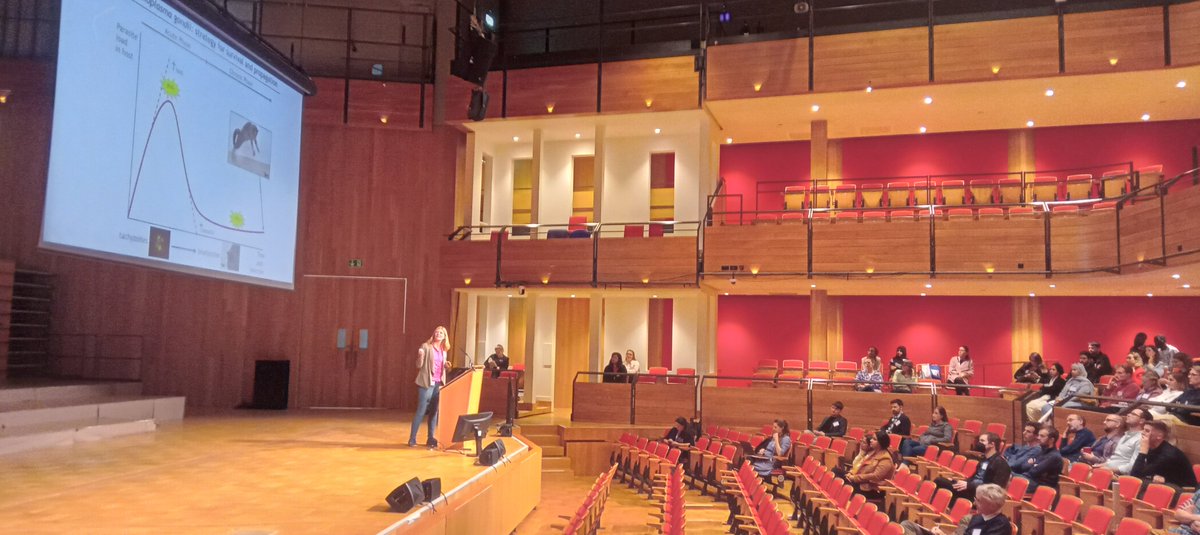
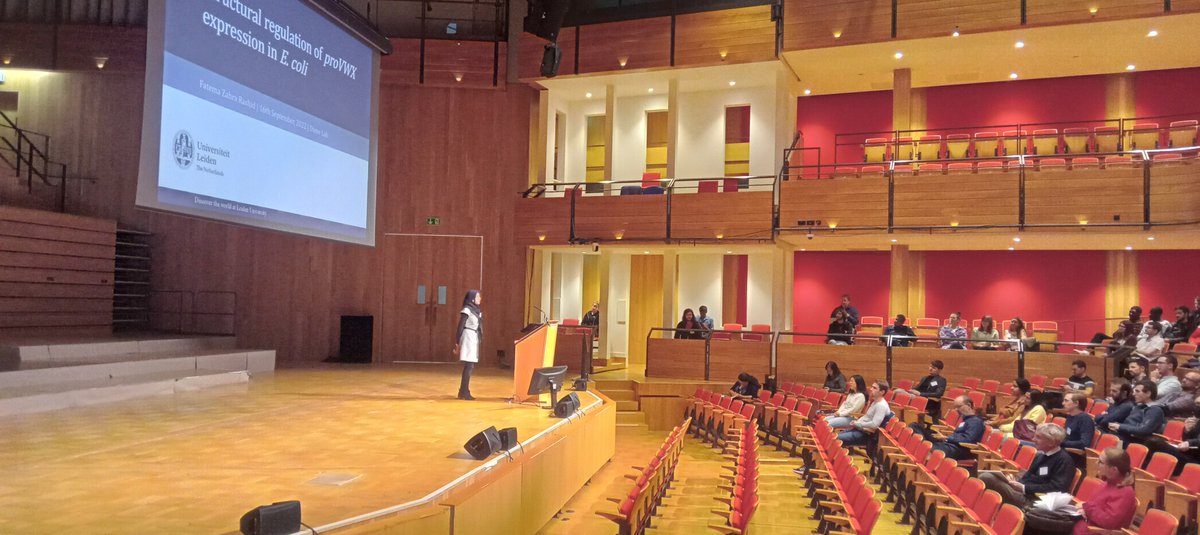

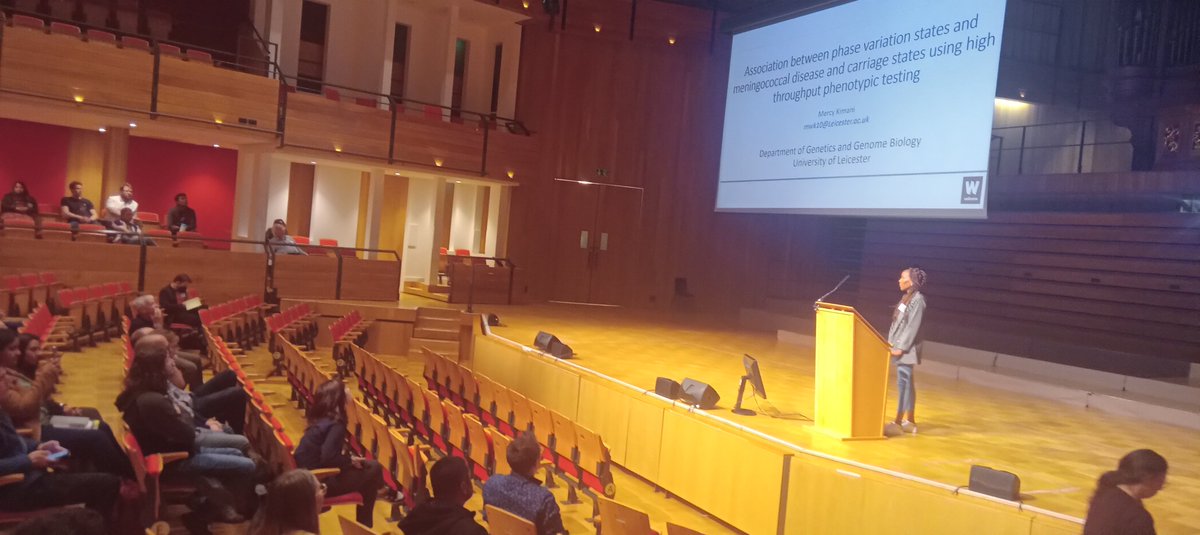
Bidirectional promoters in Escherichia coli: regulatory rules and implications for gene expression noise academic.oup.com/nar/article…
1
6
42
3,094
In our most recent work David Forrest has discovered a widespread mechanisms linking transcription initiation to DNA supercoiling...
nature.com/articles/s41467-0…
6
26
3,527
A busy few weeks for the lab 🥵... three new stories published. The first describes activation of transcription by DNA distortion
academic.oup.com/nar/article…
2
13
49
3,785

7 Oct 2025
Our lab is offering 3 PhD projects this year across 3 different topics: antibiotic resistance mechanisms, evolution of pathogenic bacteria, and fundamental mechanisms of gene regulation.
findaphd.com/phds/?Keywords=…
5
3
344
25 Jul 2025
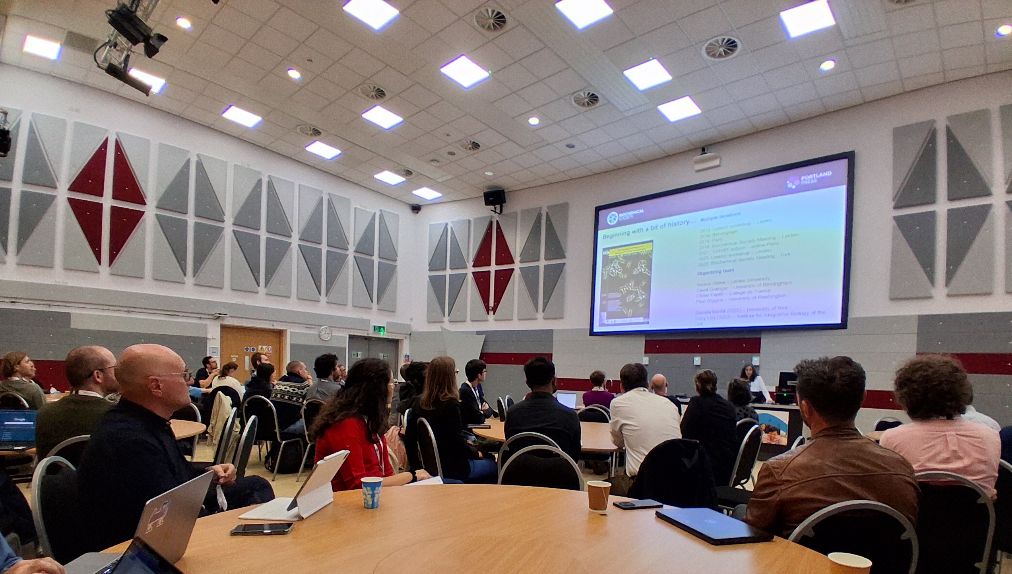
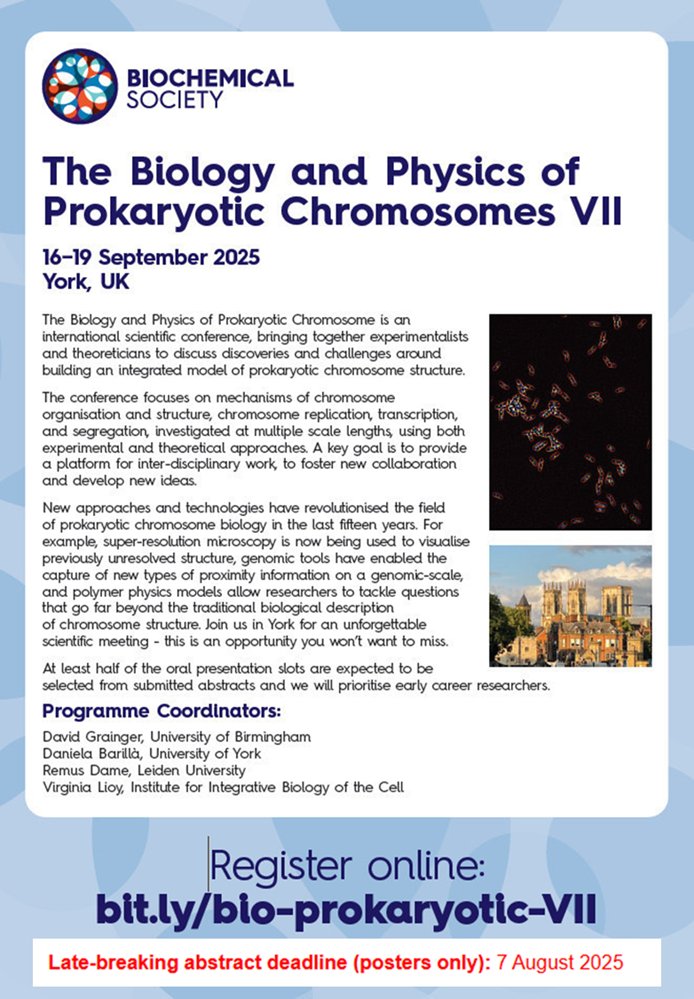
Talk slots full but we can take late breaking poster abstracts until August 7th. Hope to see you in York to hear about your chromosome story 🧬🦠🧫
eventsforce.net/biochemsoc/f...
3
286
21 Jan 2025
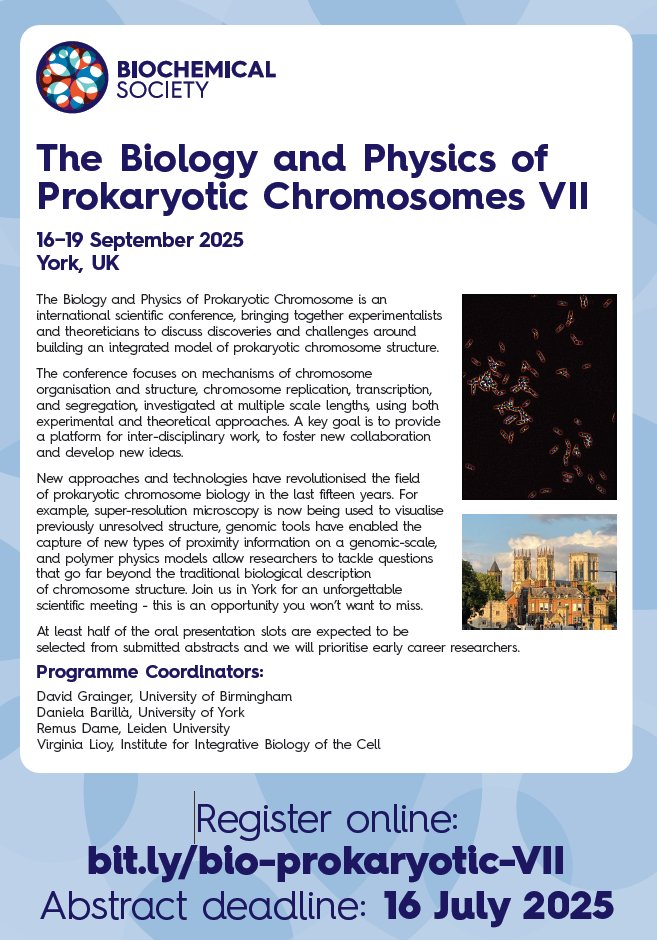
If you're interested in chromosome biology (DNA folding, gene regulation, replication, polymer modelling and more) we're organising the below this autumn. It'd be great to see you there. Please share if you can. :-)
8
18
2,258
David Grainger retweeted

2 Dec 2024
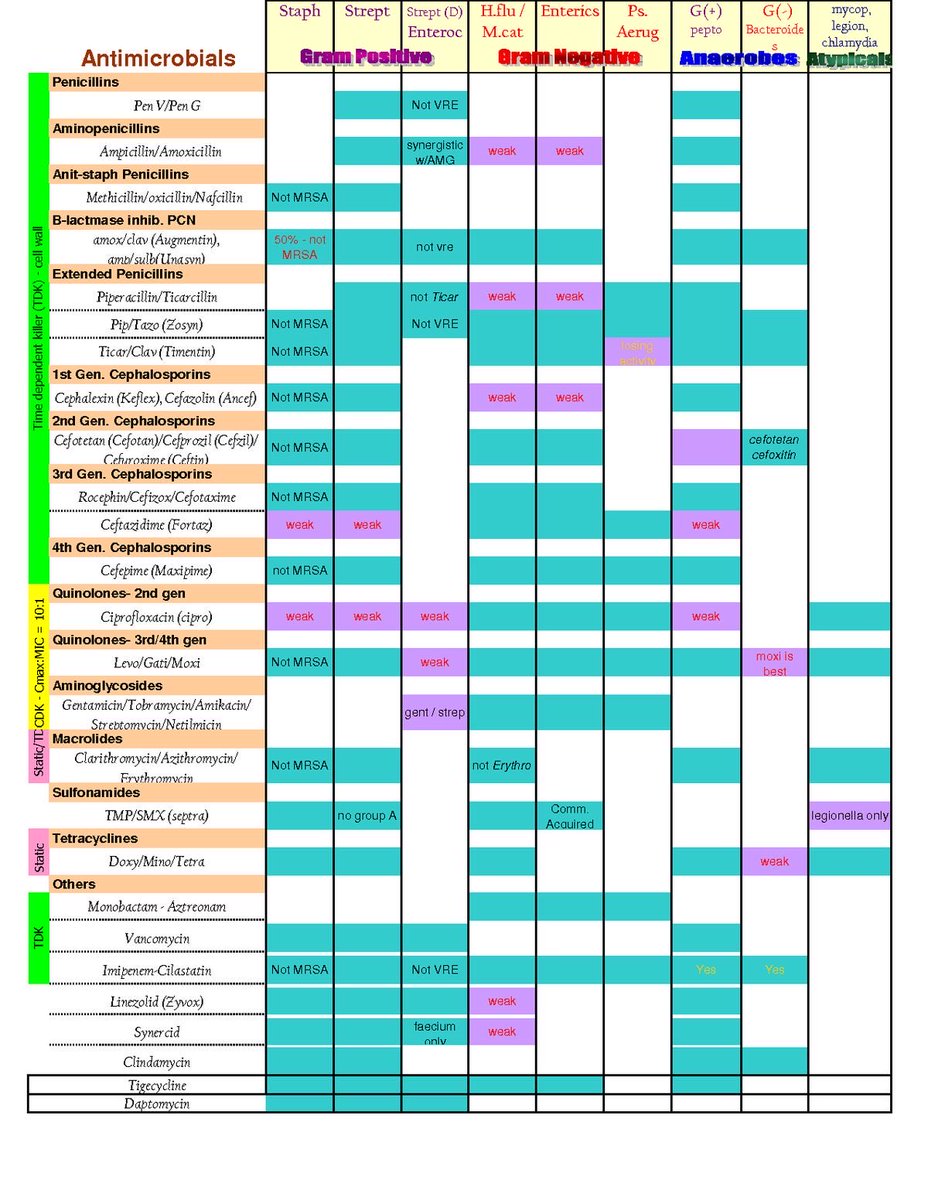
This infographic highlights the extreme lack of antibiotics available for treating mycoplasma infections compared to many other bacterial pathogens.

2
5
1,380
David Grainger retweeted

2 Dec 2024
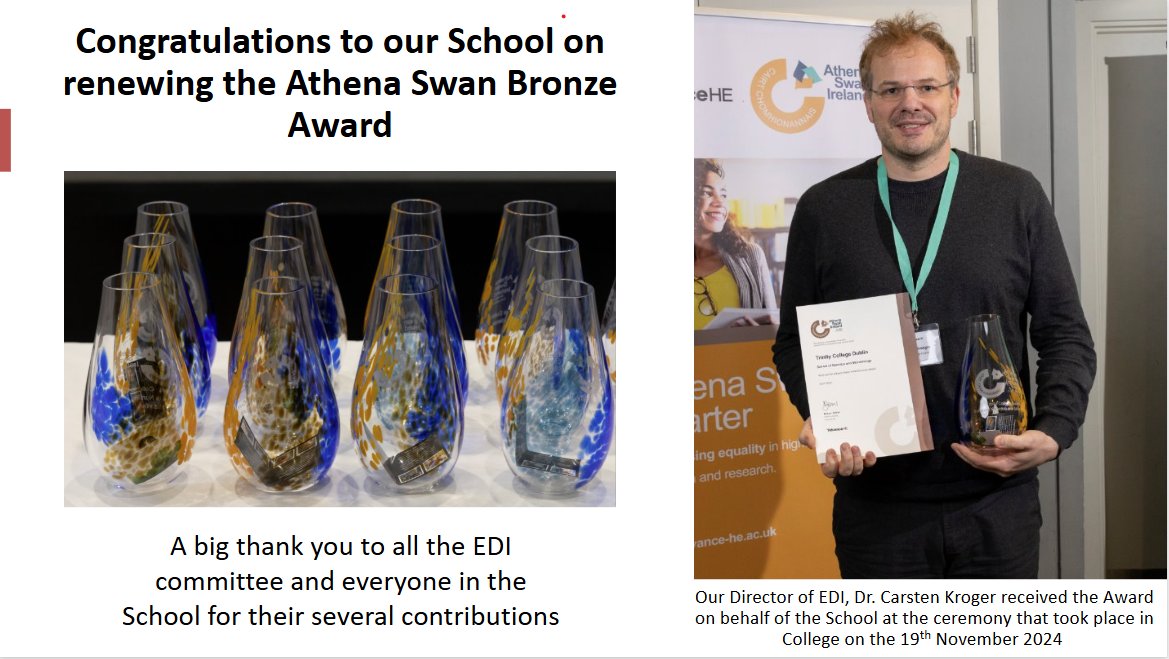
Congrats to all who make our School a great place to work and study, and to Carsten Kroger @KroegerLab and our EDI Committee for working on our successful submission. 👏👏👏😀 @tcddublin @TCDEquality #AthenaSWANIreland
4
8
1,215
David Grainger retweeted

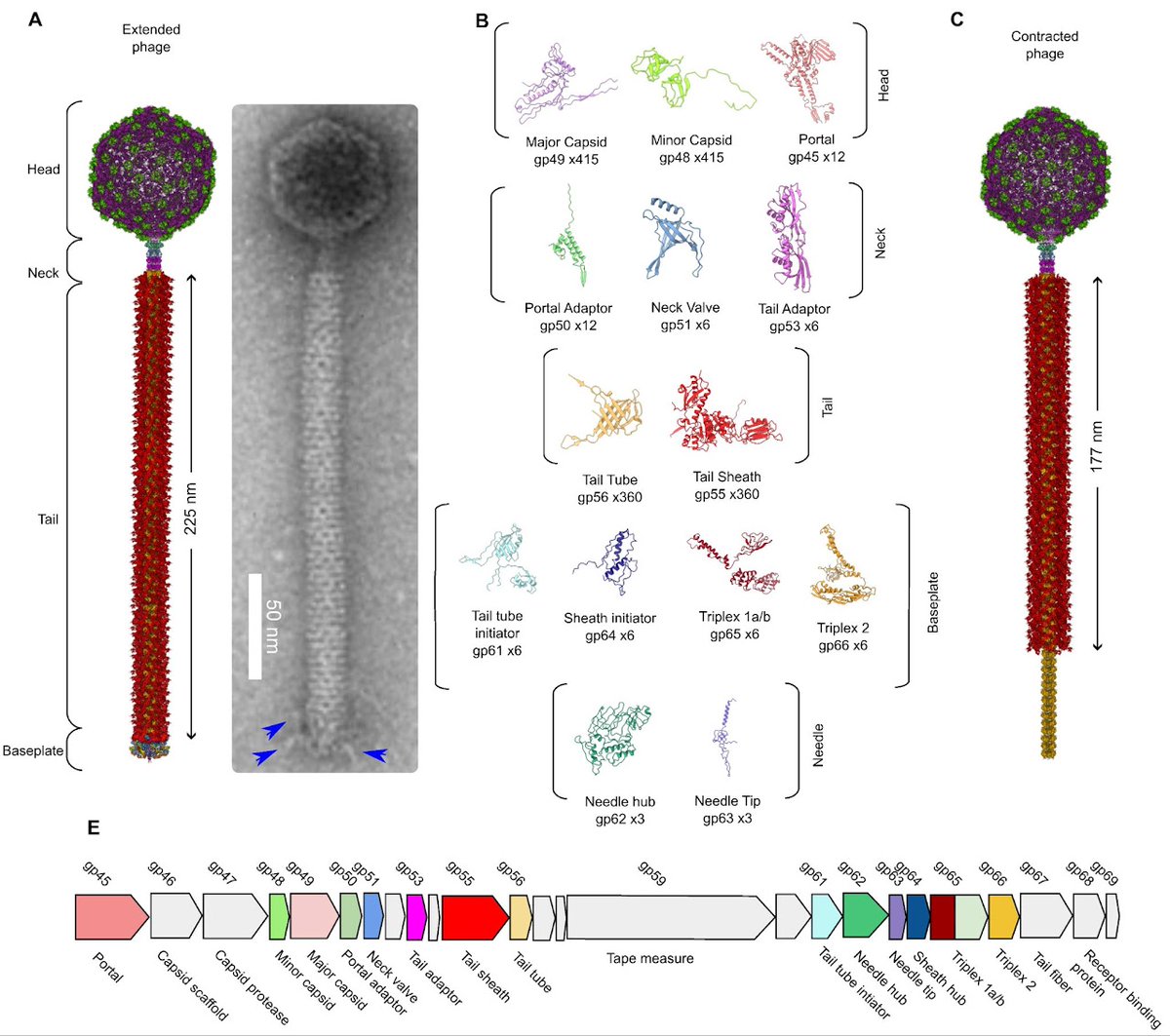
We have 2 fully funded PhD studentships available through the new Yorkshire Biosciences DTP (starting Oct 25) - please share! Both projects are focussed on #phage that infect #Cdifficile
2
40
119
17,513
David Grainger retweeted

2 Dec 2024
We're looking for an Assitant Professor in Microbiology to join us @tcdgenmicro! Come and join our growing team.
tcd.ie/microbiology/research…
tcd.ie/hr/vacancies/ Job ID: 037876. Closes 31st January
1
42
54
8,303
3 Dec 2024
Giving these another airing... projects on bacterial pathogens, antimicrobial resistance, and basic mechanisms... all with a hint of gene regulation #PhD #opportunities
15 Nov 2024

PhD projects available in our lab all listed in the below link. All focus on bacterial gene regulation, in the context of basic understanding, disease, or anitbiotic resistance. Deadlines in January...
findaphd.com/phds/?Keywords=…
1
18
16
3,647
28 Nov 2024
I can highly recommend Paul's lab's stuff... and I bet a lot of you didn't know GTAs existed (I didn't).
27 Nov 2024

We have a fascinating preprint just out, revealing the widespread packaging of bacterial genomic DNA into capsids in the human gut:bit.ly/3B2ajza. Major denizens of the #microbiome implicated with broad potential impact on bacterial evolution and horizontal gene transfer
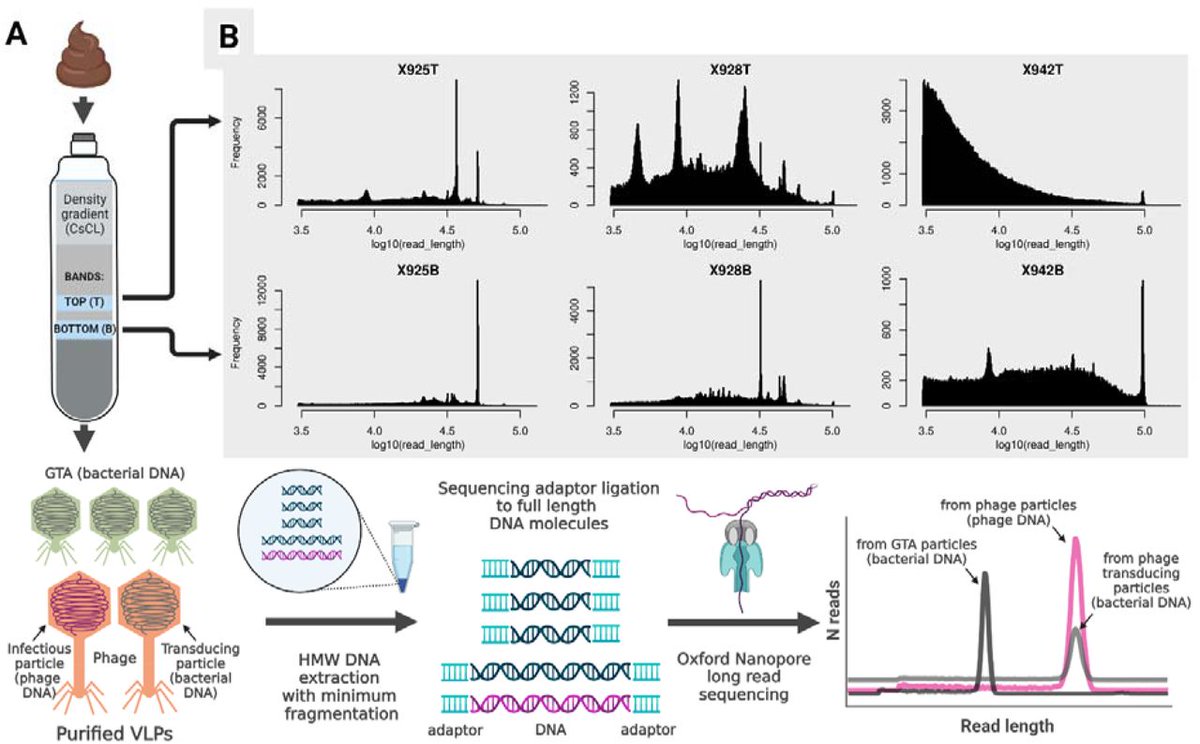
ALT Concept summary of the approach used in the present study. A. Diagram of a caesium chloride gradient tube of VLPs purified from human faecal samples. Two bands of different densities are illustrated, followed by a flow chart of the Oxford Nanopore sequencing process and an illustrative chart showing read length distributions typical of phage, transducing phage particles and gene transfer agents. B. Distributions of read lengths obtained from six faecal VLP fractions.
1
7
1,161
15 Nov 2024
PhD projects available in our lab all listed in the below link. All focus on bacterial gene regulation, in the context of basic understanding, disease, or anitbiotic resistance. Deadlines in January...
findaphd.com/phds/?Keywords=…
1
14
22
7,057
29 Oct 2024
We have a post-doc opportunity for a molecular microbiologist available. Please contact directly for an informal discussion.
jobs.ac.uk/job/DKH037/resear…
3
55
60
9,469
17 Oct 2024
Well done Ksenia, it's been a pleasure, let's get your paper written now 🙂
16 Oct 2024

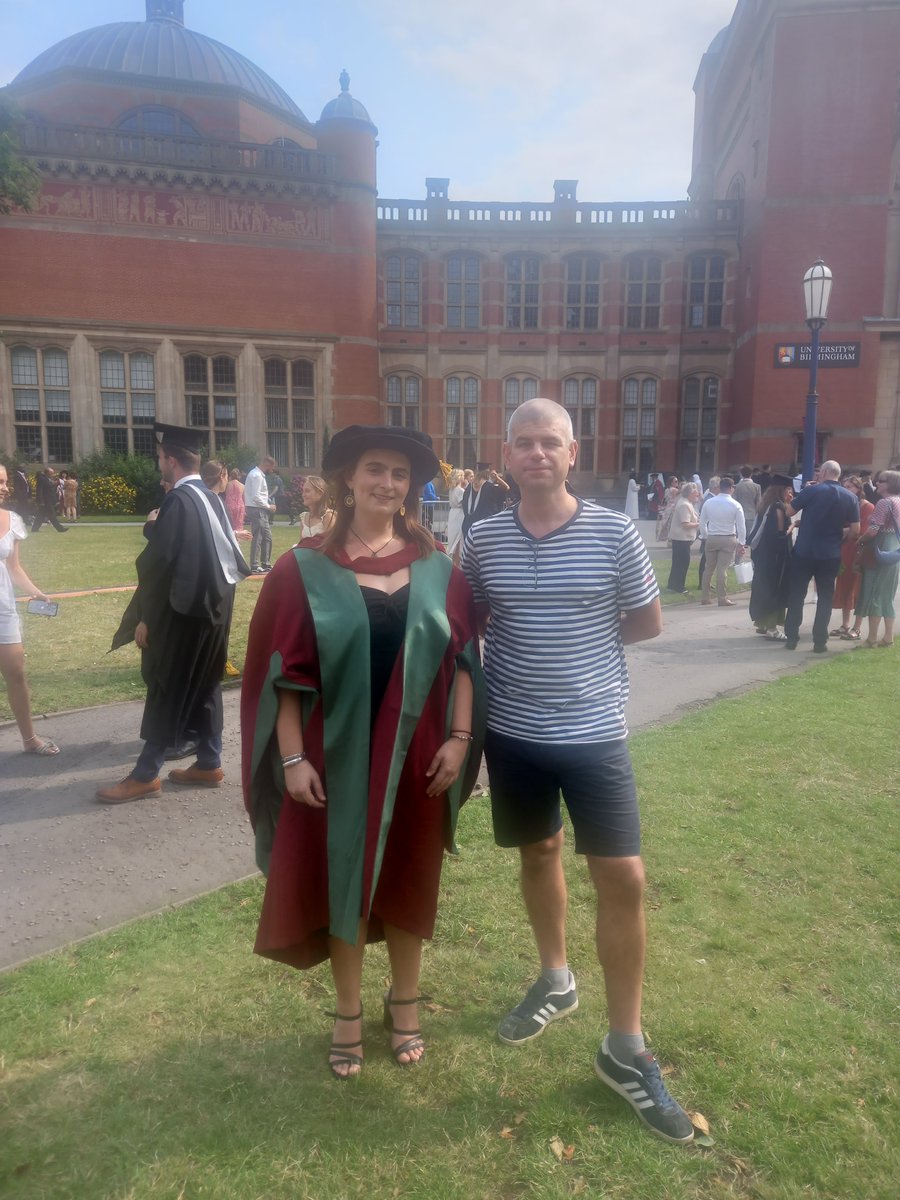
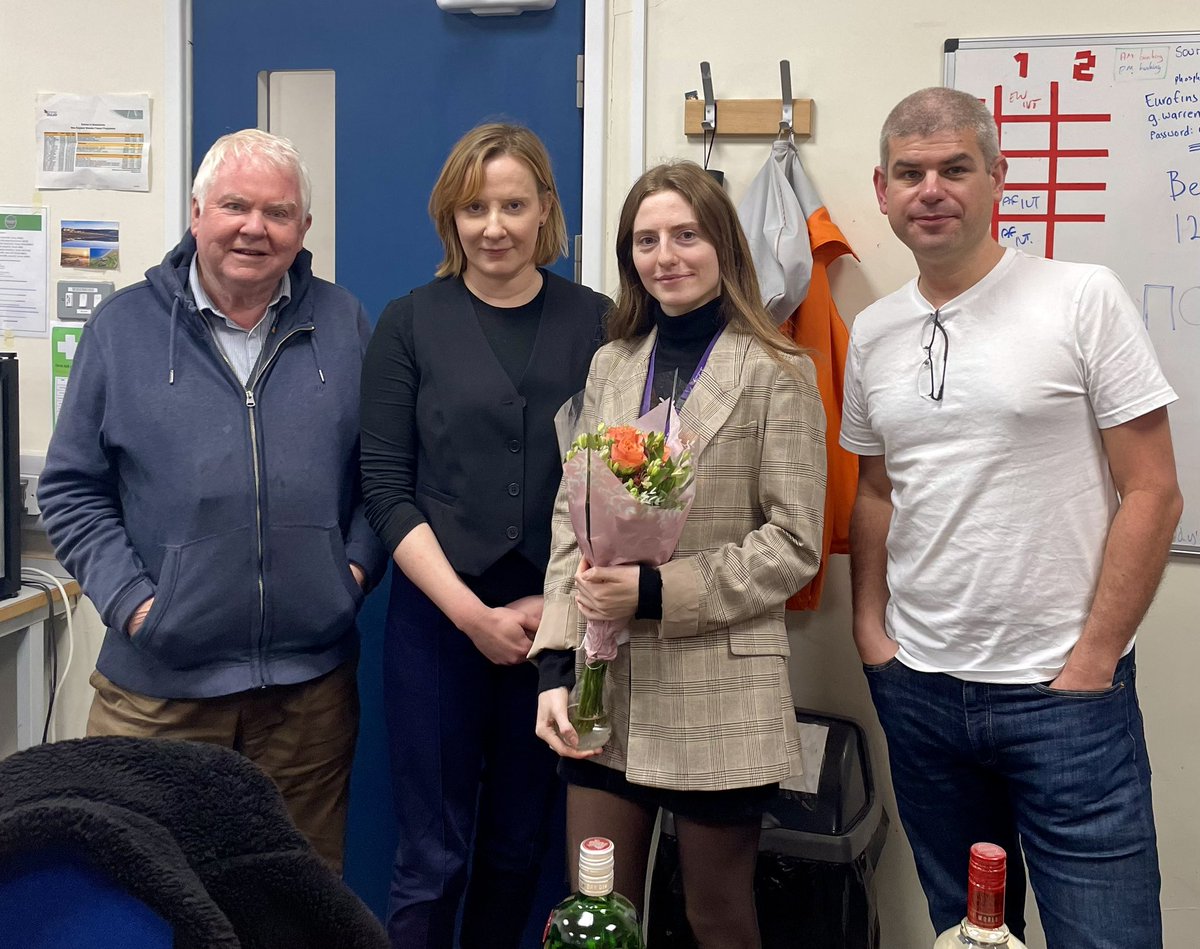
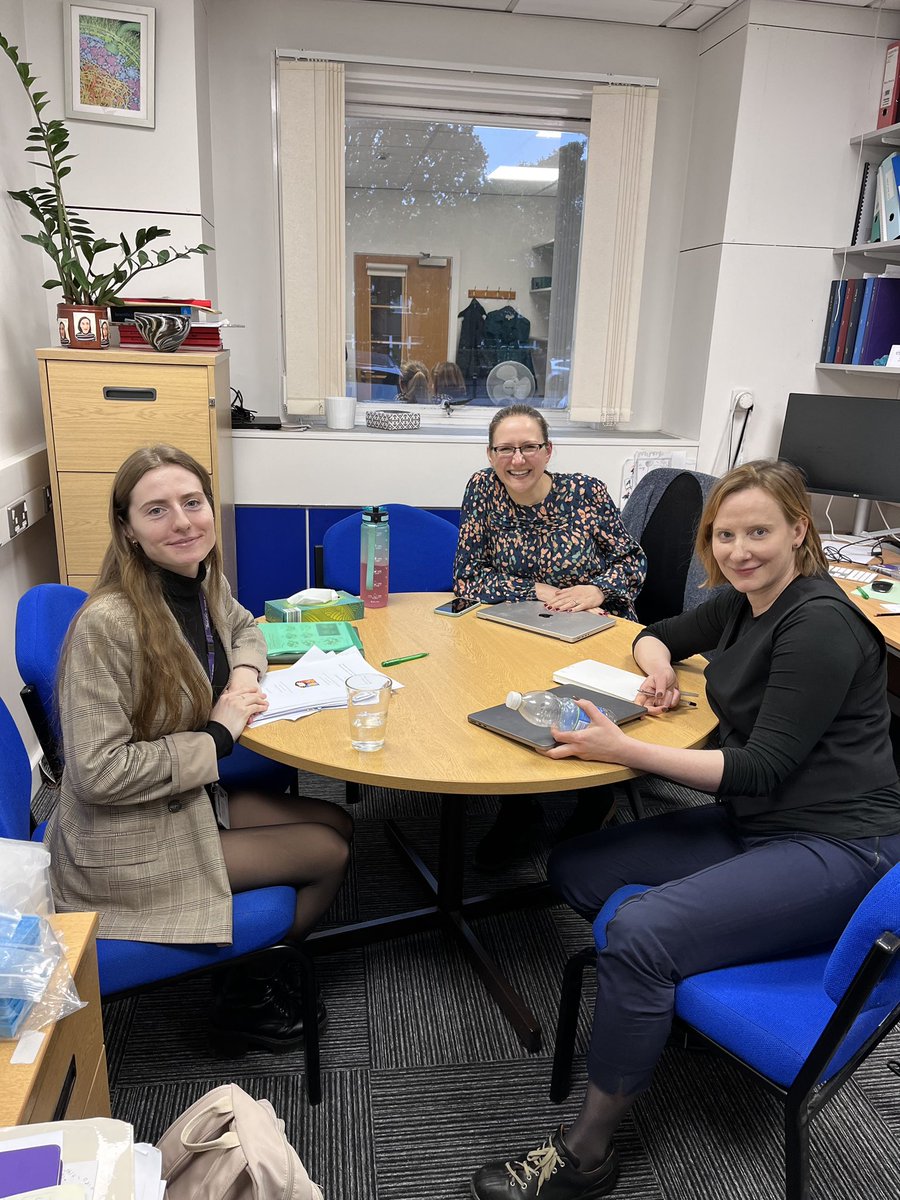
Today I became Dr. Ksenia! 🥳
Thanks a lot to my PI Dave Grainger, Steve Busby and all Grainger group @GraingerLab
It was awesome experience, best 4 years of PhD I could ever imagine 💫
And thanks to @JessicaMABlair and Yulia Yuzenkova for a wonderful viva 🙌🏻
@IMIBirmingham
8
1,126
21 Aug 2024
Well done @mulecc - your PhD work just published 😀nature.com/articles/s41467-0…
I think we've only scratched the surface with this... H-NS allowing bacteria to direct their own evolution. Exciting times ahead...
5
34
132
13,043
David Grainger retweeted

30 May 2024
I am running in the Microbiology Society Prokaryotic Division elections for "Any Microbiologist", "Genetics and Genomics" or "Molecular Microbiologist". I would love to give back to the society, please consider voting for me using the link you were emailed (members). closes 11/06
3
4
11
2,089
1 May 2024
If you haven't been to this before please consider coming along. The meeting has been running since 2012 and has been continually excellent.
1 May 2024

#BioPhyChrom 2025 details announced
biochemistry.org/events-and-…
4
7
3,080