Joined November 2019
- Tweets 185
- Following 267
- Followers 53
- Likes 654
28 Photos and videos











Indeed he does. Every generation gets its test. This one is ours. I'm standing with Christ.

Leo demands assent to apostasy.
36
Calling it like it is, plainly and simply.
All I can think of is Our Lord's words in Matthew: "Well done, good and faithful servant. You have been faithful over a little; I will set you over much. Enter into the joy of your master."
youtu.be/ilY4ud5U_U0?si=z9gu…
44

Jun 13
Fascinating and is indeed a call for hope. 🙏 Fr. Robert Brucciani has a new fan.
youtu.be/bVWmi1hhfd0?si=Lir5…
2
53
Jun 13
"It's not a numbers game. It's a grace game." & "It's all about the doctrine."
21
Jun 13
Tradition teaches that dialogue serves truth.
Much of the post-conciliar debate seems to assume that truth emerges from dialogue.
Those are two very different starting points. One is rooted in Revelation and Tradition; the other leads toward modernism.
The former orders souls toward salvation. The latter places souls in grave spiritual danger.
19
Jun 13
"Have you ever wondered why it's so hard to understand post-Vatican II Magisterium? You read it and it's like a slippery eel."
16
Jun 12
Humility sandwich.


30
Jun 12
Once again, something I didn't know I needed to read turns out to be exactly what I needed to be reminded of. Thank you! 🙏
Jun 12

The devil will try to upset you by accusing you of being unworthy of the blessings that you have received. Simply remain cheerful and do your best to ignore the devil's nagging. If need be even laugh at the absurdity of the situation. Satan, the epitome of sin itself, accuses you of unworthiness! When the devil reminds you of your past, remind him of his future! -St. Theresa of Avila

1
1
33
Jun 12
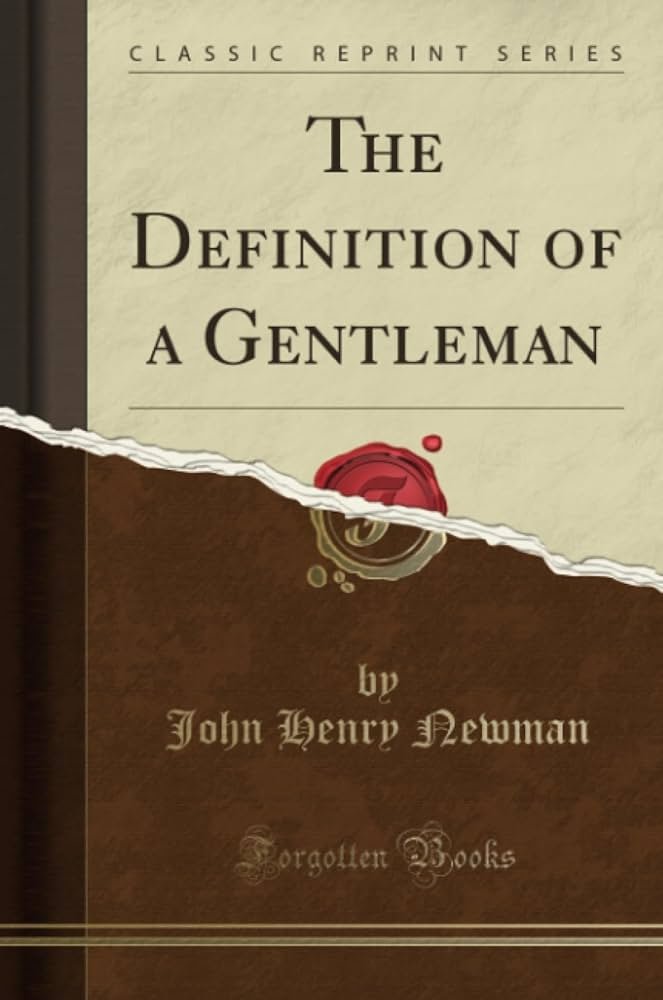
As I get older, I find myself asking whether it is possible to be both a gentleman and a staunch defender of the Faith, Tradition, and Catholic truth.
Newman's answer seems to be yes.
A gentleman does not avoid controversy. He avoids unnecessary cruelty. He speaks the truth without malice, corrects without humiliating, and refuses to confuse winning arguments with winning souls.
Truth and charity are not enemies.
12
Jun 11
In my incorrigible youth, there were, thankfully, some great priests who took the time to direct and temper all that angst and anger and help form me into the man I am today. Not least among them was Fr. Anderson.
His favorite corrective was to have me write out St. John Henry Newman's Portrait of a Gentleman. I have mercifully lost count of how many times I copied it by hand, but its lessons stayed with me.
Watching the world around me today, I cannot help but feel that we need more Fr. Andersons. We also need more young men (and perhaps a few older ones) to write this out a few hundred times.
"It is almost a definition of a gentleman to say he is one who never inflicts pain. This description is both refined and, as far as it goes, accurate. He is mainly occupied in merely removing the obstacles which hinder the free and unembarrassed action of those about him; and he concurs with their movements rather than takes the initiative himself. His benefits may be considered as parallel to what are called comforts or conveniences in arrangements of a personal nature: like an easy chair or a good fire, which do their part in dispelling cold and fatigue, though nature provides both means of rest and animal heat without them. The true gentleman in like manner carefully avoids whatever may cause a jar or a jolt in the minds of those with whom he is cast; — all clashing of opinion, or collision of feeling, all restraint, or suspicion, or gloom, or resentment; his great concern being to make every one at their ease and at home. He has his eyes on all his company; he is tender towards the bashful, gentle towards the distant, and merciful towards the absurd; he can recollect to whom he is speaking; he guards against unseasonable allusions, or topics which may irritate; he is seldom prominent in conversation, and never wearisome. He makes light of favours while he does them, and seems to be receiving when he is conferring. He never speaks of himself except when compelled, never defends himself by a mere retort, he has no ears for slander or gossip, is scrupulous in imputing motives to those who interfere with him, and interprets every thing for the best. He is never mean or little in his disputes, never takes unfair advantage, never mistakes personalities or sharp sayings for arguments, or insinuates evil which he dare not say out. From a long-sighted prudence, he observes the maxim of the ancient sage, that we should ever conduct ourselves towards our enemy as if he were one day to be our friend. He has too much good sense to be affronted at insults, he is too well employed to remember injuries, and too indolent to bear malice. He is patient, forbearing, and resigned, on philosophical principles; he submits to pain, because it is inevitable, to bereavement, because it is irreparable, and to death, because it is his destiny. If he engages in controversy of any kind, his disciplined intellect preserves him from the blunder."
83


Jun 10
Long, but fascinating and much-needed conversation.
The salvation of souls is the supreme law of the Church, and it seems evident that this has always been the mission and sincere intention of the SSPX.
This is exactly the kind of honest dialogue the Church needs.
Let us hope that the Holy See recognizes the depth of the current crisis and responds with a renewed commitment to Catholic doctrine, Sacred Tradition, and reverent worship.
youtu.be/3ulFHIKFgd8?si=jDwN…
1
1
32
The older I get, the more I realize humility is not achieved by becoming perfect.
It's achieved by becoming honest.
1
17
The biggest winners of today's Karmelo Anthony verdict might be Mormons.
For the first time all week, nobody is arguing about Joseph Smith.
1
21
I don't attend the Traditional Latin Mass because I hate the Novus Ordo. I love it because it constantly reminds me that the Mass isn't about me. It's about God. Seeing so many young Catholics discovering that same truth gives me great hope.

Bishop Agüer: The Rise of the Traditional Mass and Its Guarantee of the Church’s Future
complicitclergy.com/2026/06/…
1
28
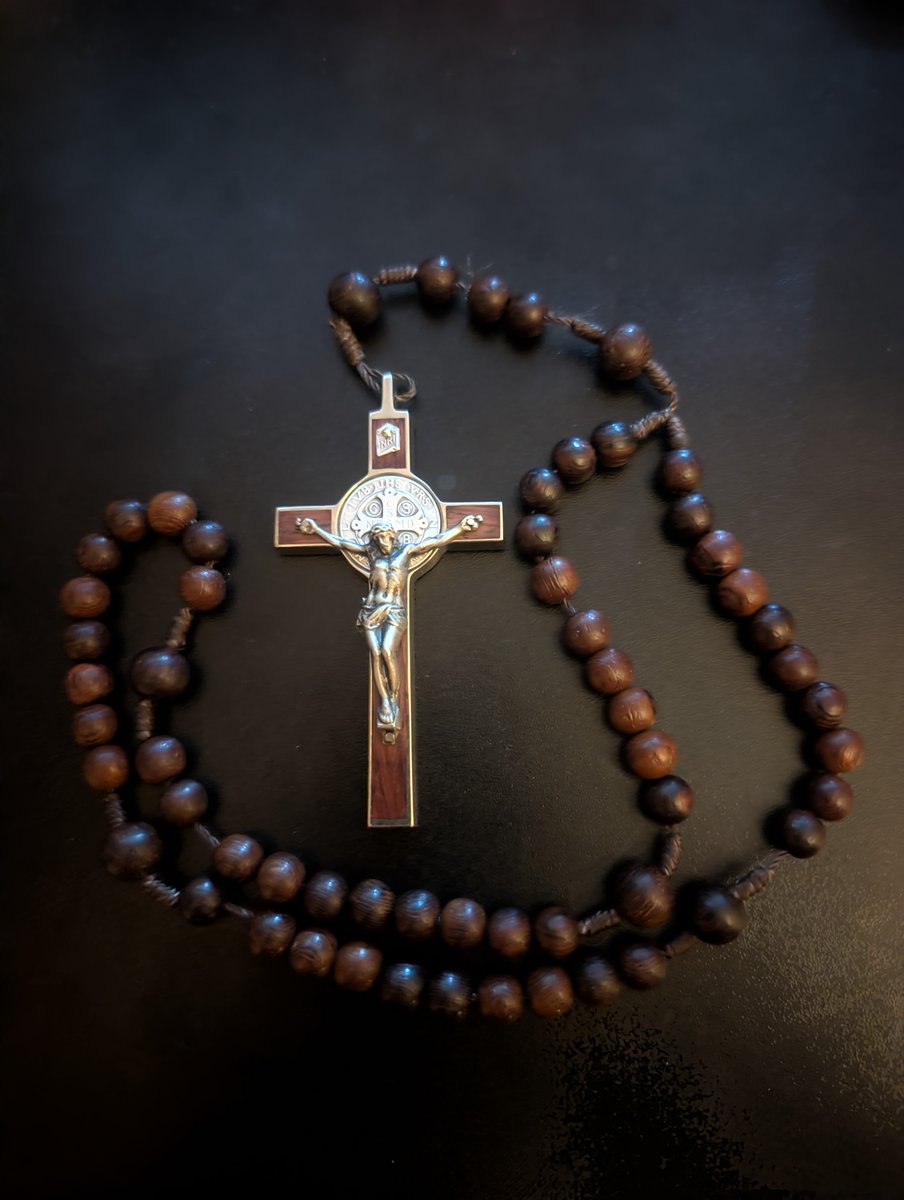
My weapon against pride, fear, and temptation.
Ave Maria, gratia plena, Dominus tecum.
Benedicta tu in mulieribus,
et benedictus fructus ventris tui, Iesus.
Sancta Maria, Mater Dei,
ora pro nobis peccatoribus,
nunc et in hora mortis nostrae. Amen.
Made by Carmelite nuns and I carry it every day, everywhere.
Not a lucky charm.
Not a statement piece.
Just a reminder that I am a sinner in need of grace, and that prayer is often the difference between relying on God and relying on myself.
1
20
As someone raised steeped in shame, I've learned that some forms of shame are really just pride refusing to accept imperfection.
There was only one perfect Person, and I'm not Him.
I make messes. I'm not a mess.
I make mistakes. I'm not a mistake.
He loves me in ways I'm still struggling to understand.
Lord, have mercy on this poor, ignorant, and stubborn sinner.
13
I love this. The only thing I'd add is
Mercy says: you are loved more than your worst mistake.
🙏

Pride says: hide it.
Fear says: delay it.
Grace says: confess it.

16
Thinking more about pride this morning, specifically how shame and pride sometimes wear the same clothes. That's uncomfortable, honestly.
Pride says:
"I shouldn't have weaknesses."
Shame says the same thing.
Pride says:
"I shouldn't need help."
Again, shame echoes the same thought.
Both reject reality.
Humility accepts it.
God already knows my weaknesses. I don't have to hide from Him. He knows I'm going to need help. I just need to be open to his help.
The exhausting part is pretending I don't have weakness and needs. The hard part is not hiding and allowing myself to be seen and loved unconditionally by the one who truly loves me.
There they are again: humility, grace, and mercy. The antidotes to pride & shame.
12