
Express your opinion with complete privacy, participate in polls, and earn rewards for expressing your voice.
Joined March 2024
- Tweets 515
- Following 33
- Followers 754
- Likes 261
220 Photos and videos








Pinned Tweet

22 Sep 2025
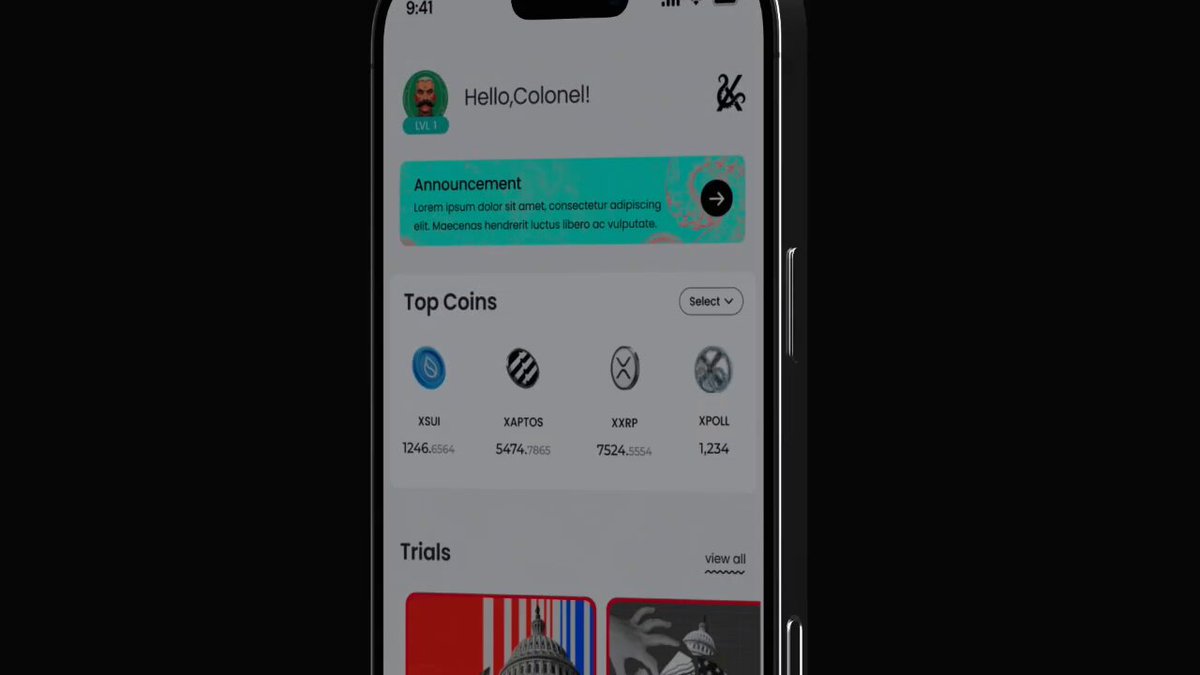
XPOLL(@xpollplatform) is here. Introducing a new era of poll-to-earn engagement. The platform transforms ordinary polls into soul-bound experiences, where every vote contributes to your civic score and generates real on-chain rewards.
With XPOLL, users can:
1. Participate in timely polls across global and local topics.
2. Build a transparent civic profile that grows with every decision.
3. Earn rewards directly on-chain with seamless conversion options.
4. Create and launch polls in minutes, engaging communities worldwide.
This launch marks the beginning of a platform designed to make opinions matter on-chain—where your choice not only influences outcomes but also builds measurable value.
Start today: app.xpoll.io
Your voice rewarded.
#XPOLL #PollToEarn #Web3 #OnChain #Sui #CivicTech #xpollplatform #PollingRedefined #kbw #koreanblockchainweek #xrp #GRWBLaunch #GRWBxSUI #ripple #votetoearn
1
17
34,497
Great Red White & Blue Coin retweeted

Feb 2
How a New England Farmer Became a Builder of Narrative Platforms for Communities Seeking Clearer Digital Voices - The Village Voice villagevoice.com/how-a-new-e…
14
18
238
Great Red White & Blue Coin retweeted
Feb 2
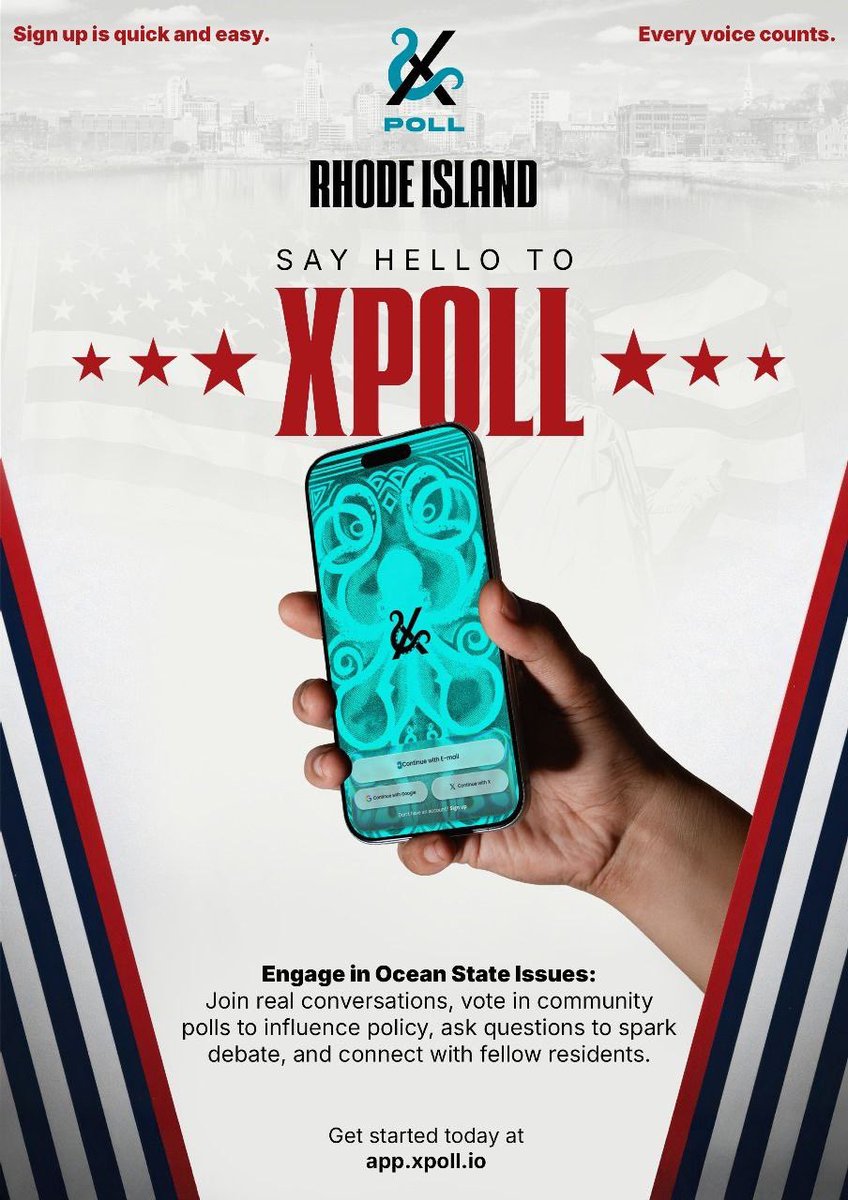
XPoll Platform
ℹ️ Project type: Business & Civic Intelligence Platform, Web3 Data Infrastructure, Utility & AI-Driven Layer for Digital Access Tokens.
XPoll -a next-generation polling and campaign intelligence platform that converts public opinion into structured, monetizable data assets using Web3 incentives and proprietary AI.

4
19
21
421
Great Red White & Blue Coin retweeted
Feb 2
1
2
5
72
Great Red White & Blue Coin retweeted
Jan 11
Here is a thought as we get ready to launch the -Make My Own Campaign-section of XPoll - create a campaign blast your projects off and list you coin or other as a reward to the your community and grow it at the same time.
It’ll be free for the first 7 projects that get onboard and XPoll give you setup, marketing support, and will give you some AI sentiment access tokens to start from us!

107
127
139
7,038
Great Red White & Blue Coin retweeted

Jan 15
NEW FEATURETTE IS OUT!!! 🦈✨
CEO Weekly just spotlighted our very own Chief Shark, Stanton James Terranova, Esq. Founder&CEO of XPoll and Canvas Labs. It dives into his journey from law to systems innovation and the earned independence mindset behind what he is building.
@stantonter1485
Tap and Read it here: ceoweekly.com/from-law-to-sy…
8
172
173
17,551
Happy New Year from the GRWB-XPOLL Community!! 🦈🐙
Jan 1

Happy New Year, XPOLL Community! 🎆🐙
As we step into 2026, we want to say thank you to everyone building, voting, sharing, and shaping the future with us. XPOLL exists because of you - the thinkers, the doers, the challengers, and the communities that show up every day to turn opinions into momentum.
This year, we’re going bigger: more signals, stronger conversations, and real rewards for real participation.
Let’s make 2026 the year community voices don’t just get heard - they move markets, culture, and outcomes.
From all of us at XPOLL:
Happy New Year to our amazing community. 💙🚀
@stantonter1485
2
3
41
Great Red White & Blue Coin retweeted
31 Dec 2025
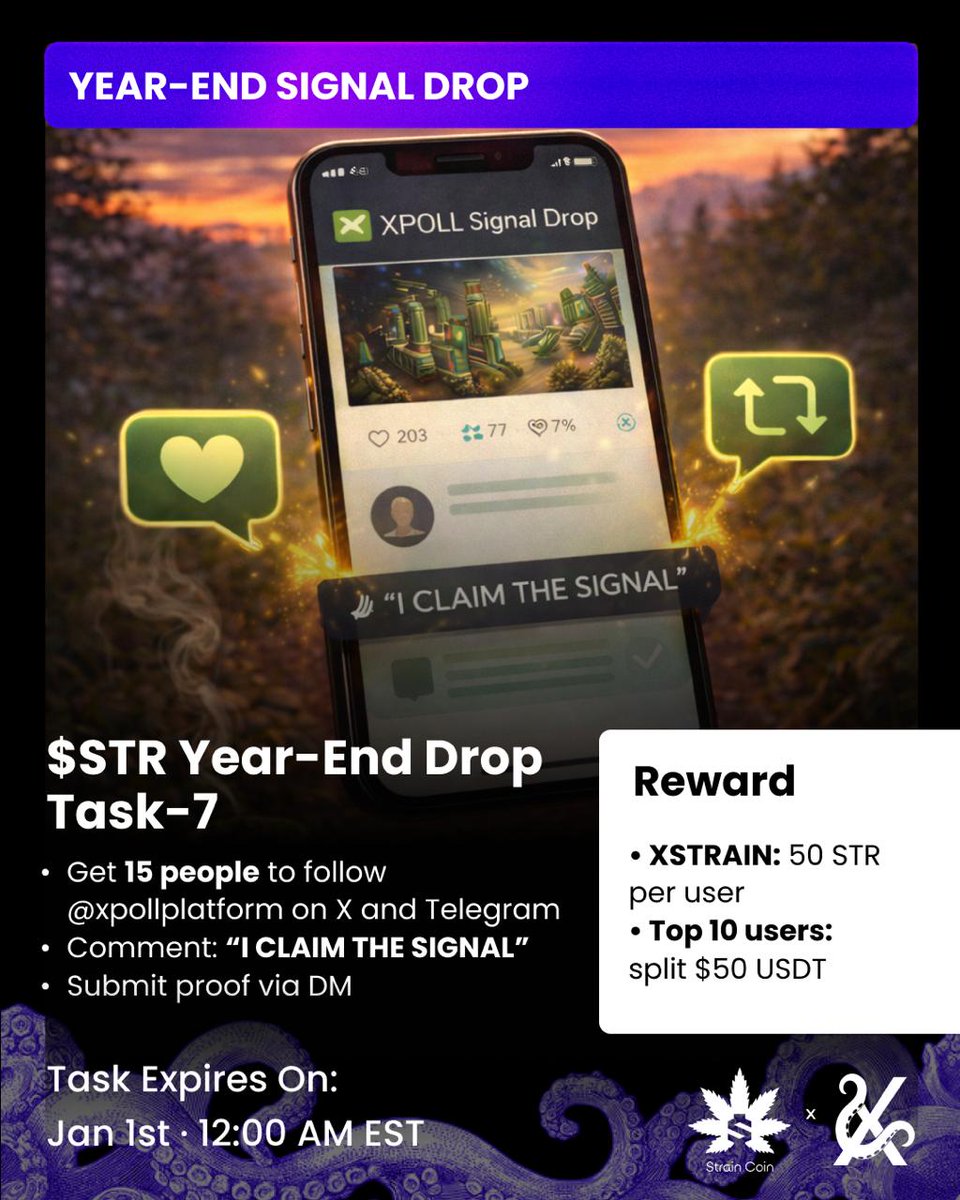
⚡️🚨 YEAR-END SIGNAL DROP: FINAL MISSION (TASK 7) 🚨⚡️
This is the last wave of the $STR Year-End Drop — and the Signal is peaking.
If you’ve been watching from the sidelines… this is your moment to CLAIM.
🔥 Your move:
✅ Get 15 people to follow @xpollplatform on X Telegram
✅ Comment “I CLAIM THE SIGNAL” on the Final Signal post
✅ Submit proof via DM (screenshots)
🎁 Rewards are live:
💚 XSTRAIN: 50 STR per user
🏆 Top 10 users split $50 USDT
⏳ Ends: Jan 1 · 12:00 AM EST
No proof. No reward. No excuses.
Tap in — run it up — and claim your spot before midnight.
#XPOLL #StrainCoin #XSTRAIN #YearEndSignalDrop #ClaimTheSignal #CryptoAirdrop #Web3Rewards #EarnCrypto #PollToEarn #CommunityRewards #SUI #USDT #AirdropSeason #CryptoCommunity #DeFi #Onchain #Alpha #SignalDrop
29
160
177
8,067
Great Red White & Blue Coin retweeted
23 Dec 2025
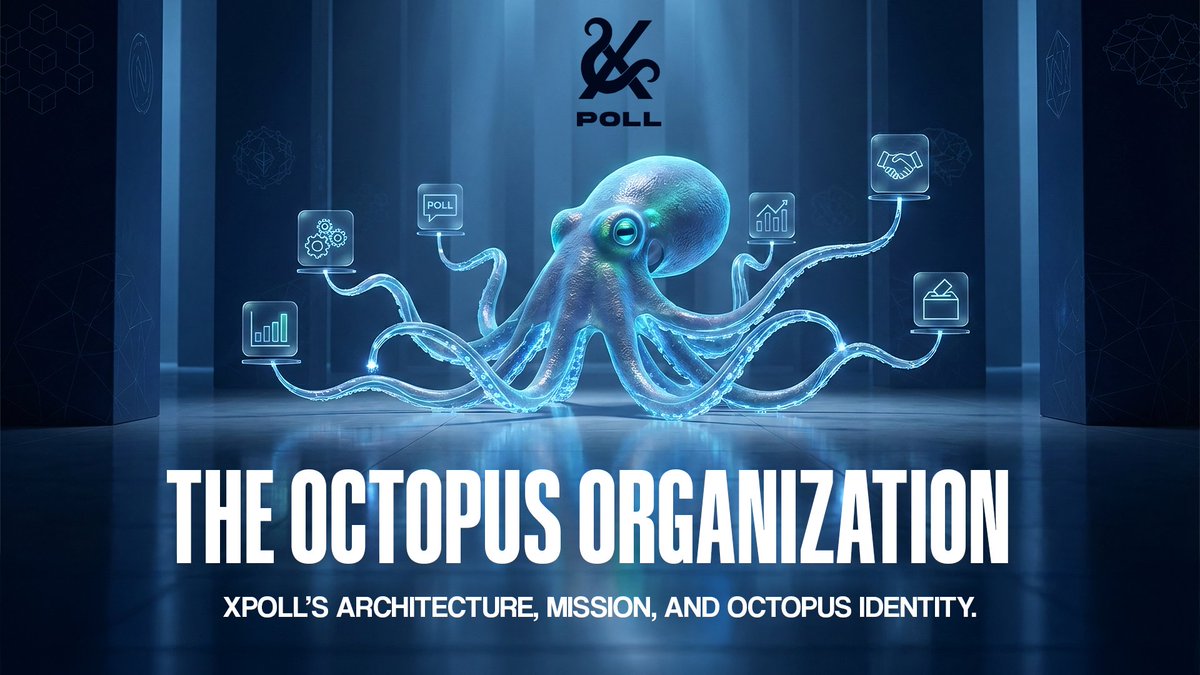
Why XPoll Is Built Like an Octopus (and Why the Future Works That Way Too)
There’s a powerful idea from modern organizational thinking that says the future doesn’t belong to rigid hierarchies or centralized control systems.
It belongs to organisms.
Specifically: the octopus.
In the influential The Octopus Organization, researchers describe a new type of organization—one that thrives in complexity, uncertainty, and constant change. Unlike traditional “top-down” structures, an octopus organization is:
• Distributed
• Adaptive
• Locally intelligent
• Hard to shut down
• And capable of acting without waiting for permission
If that sounds familiar, it should.
Because that’s exactly how XPoll is built.
And yes—there’s a reason our logo is an octopus.
⸻
The Octopus Has No Single Brain (and That’s the Point)
An octopus doesn’t operate like a corporation with a single command center.
More than half of its neurons live in its arms. Each arm can sense, decide, and act independently—while still being aligned with the whole organism.
If one arm encounters danger, the others don’t freeze waiting for instructions. They adapt.
This is not chaos.
This is resilience.
⸻
Traditional Systems Break Under Complexity
Most institutions today—governments, markets, media, polling, finance—were designed for a slower world.
They assume:
• Central authority knows best
• Decisions flow from the top
• People wait to be asked
• Change is rare and predictable
But we no longer live in that world.
AI moves faster than bureaucracy.
Information spreads faster than permission.
Local realities change before central systems can react.
Hierarchies struggle here.
Octopus organizations thrive.
⸻
XPoll Is an Octopus Organization by Design
XPoll does not assume one authority decides what matters.
Instead:
• Communities ask their own questions
• Individuals contribute signal directly
• Local issues don’t need national permission
• Insight emerges from the edges, not the center
Each poll, each signal coin, each campaign is like an arm:
• Independent
• Context-aware
• Capable of acting on local truth
But all arms feed back into a shared body of insight.
That’s the octopus model.
⸻
Why This Matters in an AI and Markets World
As AI increasingly handles execution—trading, optimization, logistics—the real value shifts upstream.
Not to speed.
Not to control.
But to meaning.
AI needs signals.
Markets need priors.
Systems need to know what humans actually care about before outcomes harden.
XPoll becomes a place where:
• Human conviction forms early
• Signals are measured, not assumed
• Emerging realities are visible before institutions notice
That’s not just polling.
That’s market formation.
⸻
Independence Is Earned — and Distributed
The octopus doesn’t wait for permission from a head office.
Neither should people.
XPoll’s philosophy is simple:
Independence is earned through participation.
You earn independence by:
• Asking real questions
• Showing up early
• Adding your signal
• Helping shape the future instead of reacting to it
You can start anywhere.
A town.
A state.
A community.
A shared concern.
Every arm matters.
⸻
Why the Octopus Is the Right Symbol
The octopus is:
• One of the most intelligent organisms on Earth
• Capable of camouflage, adaptation, and creativity
• Decentralized yet coordinated
• Powerful without being rigid
That’s the future of organizations.
That’s the future of markets.
That’s the future of civic voice.
And that’s XPoll.
⸻
The Future Belongs to Living Systems
Rigid systems break.
Living systems adapt.
XPoll isn’t trying to control the future.
It’s trying to listen to it early.
Because in a complex world, the most powerful organizations won’t be the loudest or the biggest.
They’ll be the ones that feel first.
Like an octopus.
And like XPoll.
🔗 Join XPOLL: app.xpoll.io
6
152
191
11,171
Great Red White & Blue Coin retweeted
17 Dec 2025
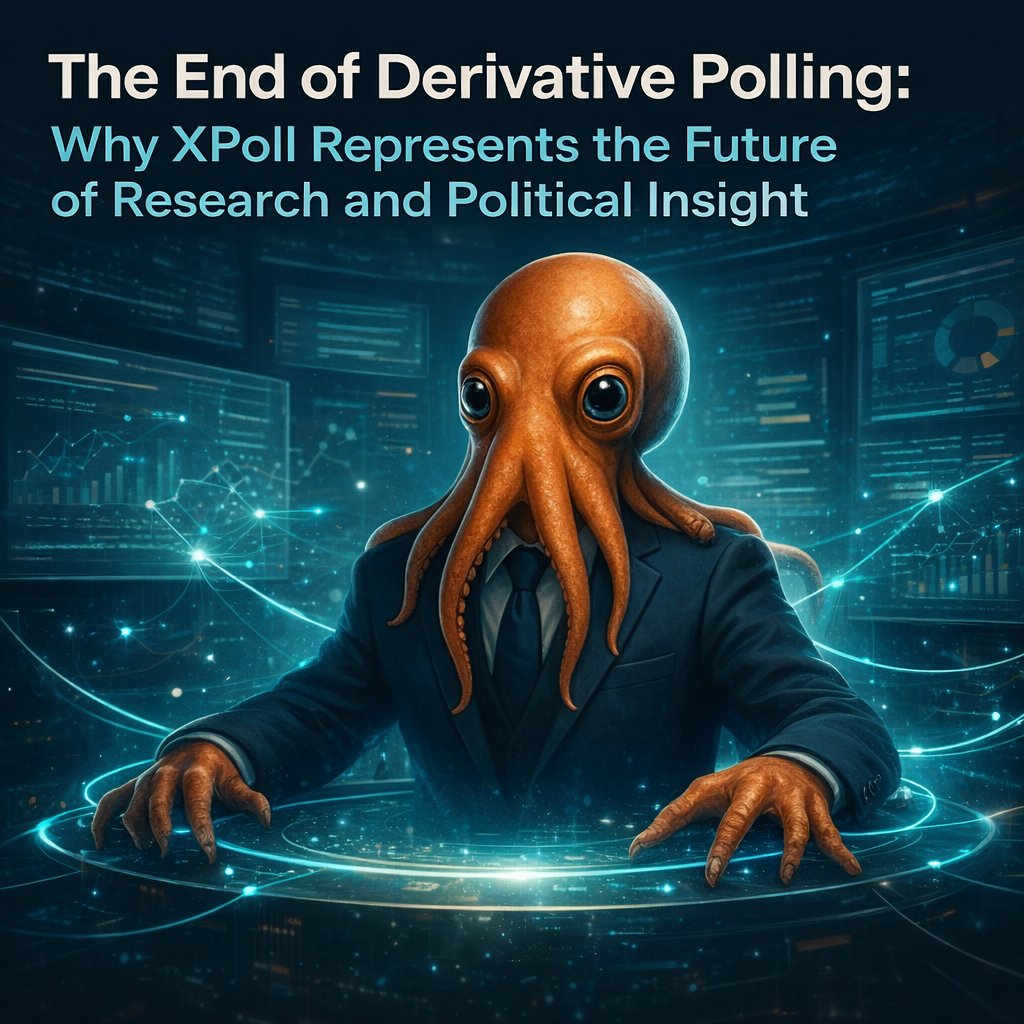
The End of Derivative Polling: Why XPoll Represents the Future of Research and Political Insight
For decades, polling has been treated as a trusted instrument of democracy, markets, and public opinion. Yet in recent years, something fundamental has broken.
Polls miss elections.
Polls fail to capture emerging movements.
Polls increasingly measure yesterday’s assumptions instead of today’s reality.
This is not because polling is inherently flawed—it is because the systems behind it were built for a world that no longer exists.
The Problem with Modern Polling Isn’t Data—It’s Design
Traditional polling relies on shrinking panels, outdated outreach methods, and static question sets designed by a small number of gatekeepers. The result is a derivative feedback loop: the same voices answering the same questions, weighted and reweighted until they resemble a prediction.
Meanwhile, entire segments of the population—young voters, digitally native communities, distrustful or disengaged citizens—are functionally invisible.
Worse still, the public is asked to trust results without transparency into how those results were produced. In an era that demands openness, polling remains a black box.
XPoll Was Built for the World as It Is—Not as It Used to Be
XPoll takes a fundamentally different approach.
Instead of begging for attention, XPoll rewards participation. Instead of episodic surveys, it creates continuous signal flows. Instead of top-down question control, it enables bottom-up discovery.
Participants are not passive respondents; they are active contributors whose time and insight are valued. Campaigns and institutions are no longer limited to quarterly snapshots—they can observe sentiment as it forms, shifts, and consolidates.
Behind the scenes, AI analyzes patterns across time, topics, and communities—revealing not just what people think, but how and why opinions evolve.
Transparency Isn’t a Feature—It’s the Foundation
Every poll on XPoll makes its mechanics visible:
Who is asking the question
What incentives are offered
How participation occurs
This transparency does more than build trust—it restores legitimacy to polling itself.
From Polling to Signal Intelligence
XPoll is not just a better poll. It is a new category: civic and market signal intelligence.
In a world moving too fast for static research and too fragmented for legacy institutions, XPoll offers something polling has been missing for years—relevance.
The future of polling is not louder predictions or more sophisticated weighting models.
The future is alignment: between participants, incentives, technology, and truth.
That future has already begun.
🔗 Join XPOLL: app.xpoll.io
1
186
211
11,360
Great Red White & Blue Coin retweeted
16 Dec 2025
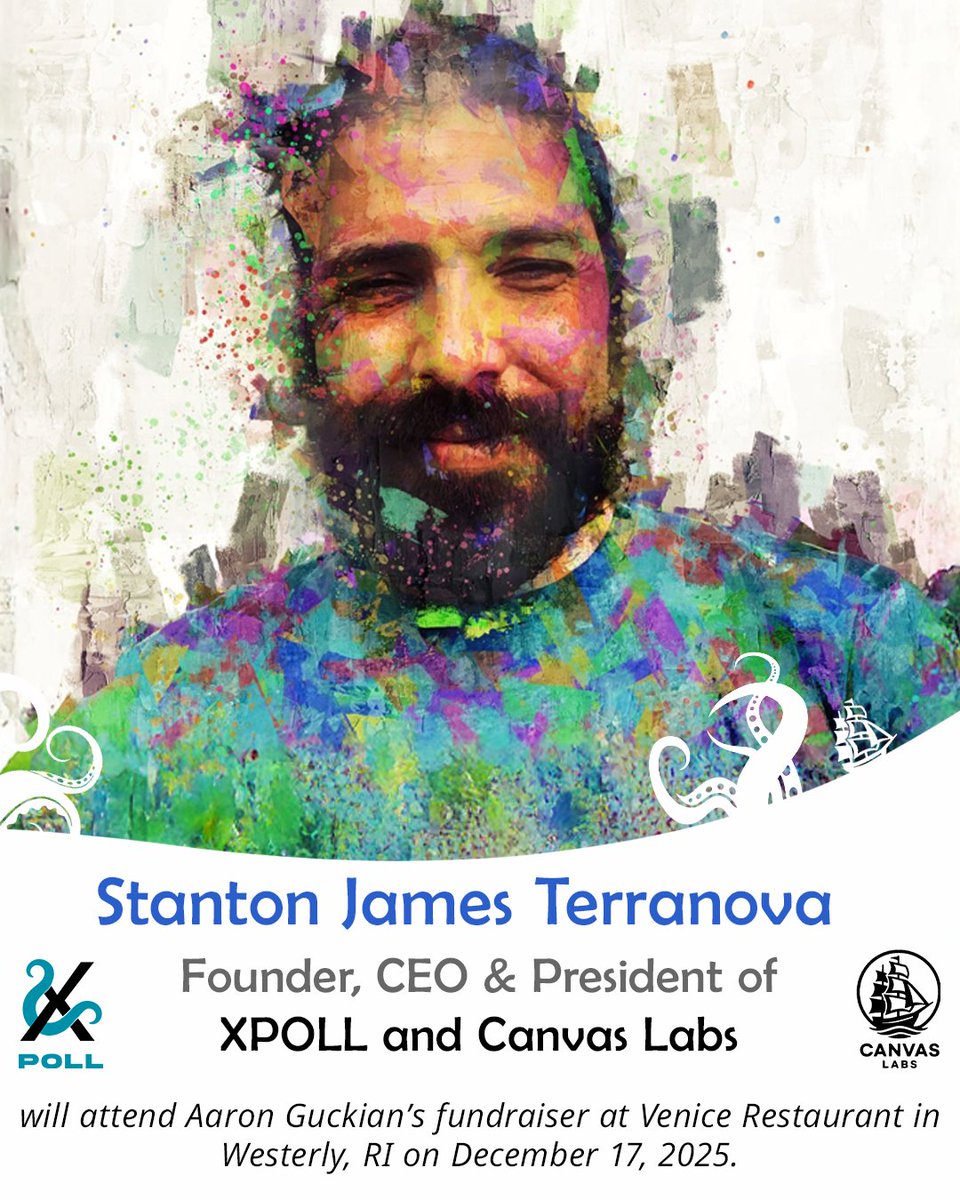
Stanton James Terranova , Founder & CEO of @xpollplatform and Canvas Labs, attending Aaron Guckian’s fundraiser in Westerly, RI.
82
259
276
45,058
Great Red White & Blue Coin retweeted
4 Dec 2025
This article makes what I do all worth while ...
ibtimes.com/inside-stanton-t…
2
19
25
11,866
Great Red White & Blue Coin retweeted
7 Nov 2025
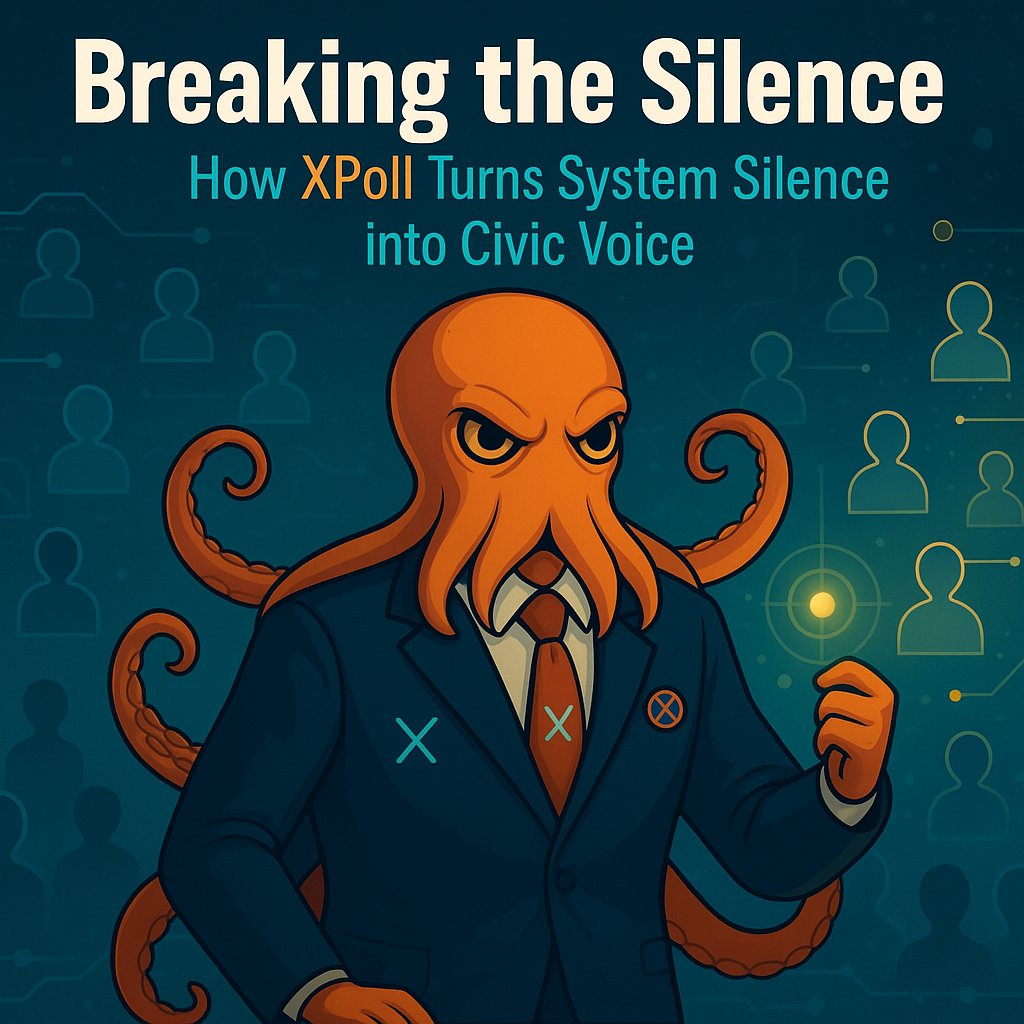
Breaking the Silence: How XPoll Turns System Silence into Civic Voice
In a recent article on “system silence” (i.e., the organized absence or suppression of voices within institutional, social or regulatory systems), scholars explore how important signals remain unheard—whether by design or by inertia. That silence can enable opaque power, distorted incentives and democratic gaps.
Here’s how XPoll steps into that gap to transform system silence into shared insight and action.
What is system silence?
While access limitations and visible censorship get most attention, system silence operates differently:
Important stakeholder views are not solicited or surfaced, so their absence is normalized.
Decision-making systems lack transparent feedback loops, so citizens, workers or marginalized players don’t know how their input might matter.
Institutions may never ask for or act on certain data, meaning that a silence becomes structural rather than simply accidental.
When voices aren’t included, risk builds: hidden group-think, unexamined biases, under-leveraged innovation and governance that doesn’t reflect lived experience.
How XPoll addresses the underlying issues:
XPoll is built to empower voices, surface signals and build new feedback systems. Specifically:
Inclusive signal capture: XPoll enables any participant (citizen, policy-subject, employee, stakeholder) to create polls with crypto-bounties and earn tokens for responses. That means those traditionally silent or underserved can be engaged directly and rewarded.
Transparent verifiable records: Every poll, every response is recorded via blockchain-integrated structures (or soulbound tokens) creating a permanent, auditable ledger of opinions, insights and participation. Silence thus becomes visible in the data.
Profile building, not silencing: By assigning respondents “soulbound tokens” that build up participation history and reputation, XPoll shifts from one-time surveys toward a living profile of civic engagement. Over time this helps detect patterns of who is speaking and who remains silent—and why.
Market-incentivised voice: By turning participation into token rewards, XPoll gamifies and monetizes the act of giving voice. This changes the cost-benefit for participation, especially for communities previously excluded from institutional debate.
Data democratization & resale potential: The platform allows these aggregated insights to be packaged and sold (with consent) to institutions and public-interest buyers. That means the formerly silent become a recognized source of value.
AI analytics to surface hidden gaps: Behind the scenes, XPoll can apply AI to detect where voices are missing or under-represented (e.g., demographic groups, geographic regions, stakeholder types). That helps identify “silent sectors” and target them for engagement, thereby completing the feedback loop.
The impact: from silent systems to sound systems
When XPoll is used well, the transformation is striking. Instead of institutional systems operating in echo-chambers or blind spots, you start to see:
Stakeholder sentiment clusters where none were visible before.
Historically unrepresented voices becoming nodes of value, tracked and rewarded.
Institutions able to interrogate why a population has been silent (lack of incentive, access issues, fear, apathy) and then change their engagement model accordingly.
A new civic market in data and opinions: what was once “unused” becomes “usable,” bridging the legitimacy gap between institutions and people.
Why it matters:
System silence is not just an academic curiosity—it underpins policy failure, corporate mis-alignment, regulatory capture and societal mistrust. When portions of the population are effectively muted, decisions rest on insecure foundations. XPoll tackles this head-on by building systems where silence becomes not a void but a signal—something to be heard, measured and integrated.
In summary:
XPoll doesn’t merely measure voice—it creates and incentivises it. In doing so, it helps dismantle the layered architecture of system silence, transforming hidden or absent feedback into visible, valued and marketable insight. In a world where trust and transparency matter more than ever, that shift is fundamental.
64
61
4,458
Great Red White & Blue Coin retweeted
3 Nov 2025
XPOLL - The world's first post-web civic intelligence marketplace.
Built for Institutions, Political Entities, Protocols, Researchers and Regular Users
Hope into the platform today and get started
Checkout app.xpoll.io
#xpollplatform #xpoll
25
48
59
6,993
Great Red White & Blue Coin retweeted
1 Nov 2025
🧵 1/ SUPERIOR AI INSIGHTS
XPOLL - The World’s First Civic-Intelligence Marketplace.
Where every opinion becomes data.
And every data point becomes insight.
Let’s show you how our AI turns human sentiment into strategic intelligence ⬇️
4
28
24
1,459
Great Red White & Blue Coin retweeted
31 Oct 2025
1000 Followers in less than 24 hours.
Community growing organically 🚀🐙
Keep watching this space for new giveaways.
Get started with stacking #SUI, #Aptos and #XRP with #XPOLL at app.xpoll.io
(New Coins soon)
#PollToEarn #MultiStackExchange #PostWebExchange #Polls
30 Oct 2025
XPOLL is now 1K strong ( with 100 verified followers).
Flash Giveaway: $25 • 24 hours • 10 Winners
How to enter:
1. Share this poster
2) Get 25 friends to follow @XPOLL 3) DM screenshots
Start now → app.xpoll.io
#XPOLL #Giveaway #Web3 #Web3Community

1
11
61
1,016
26 Oct 2025
🔥🔥🔥
26 Oct 2025
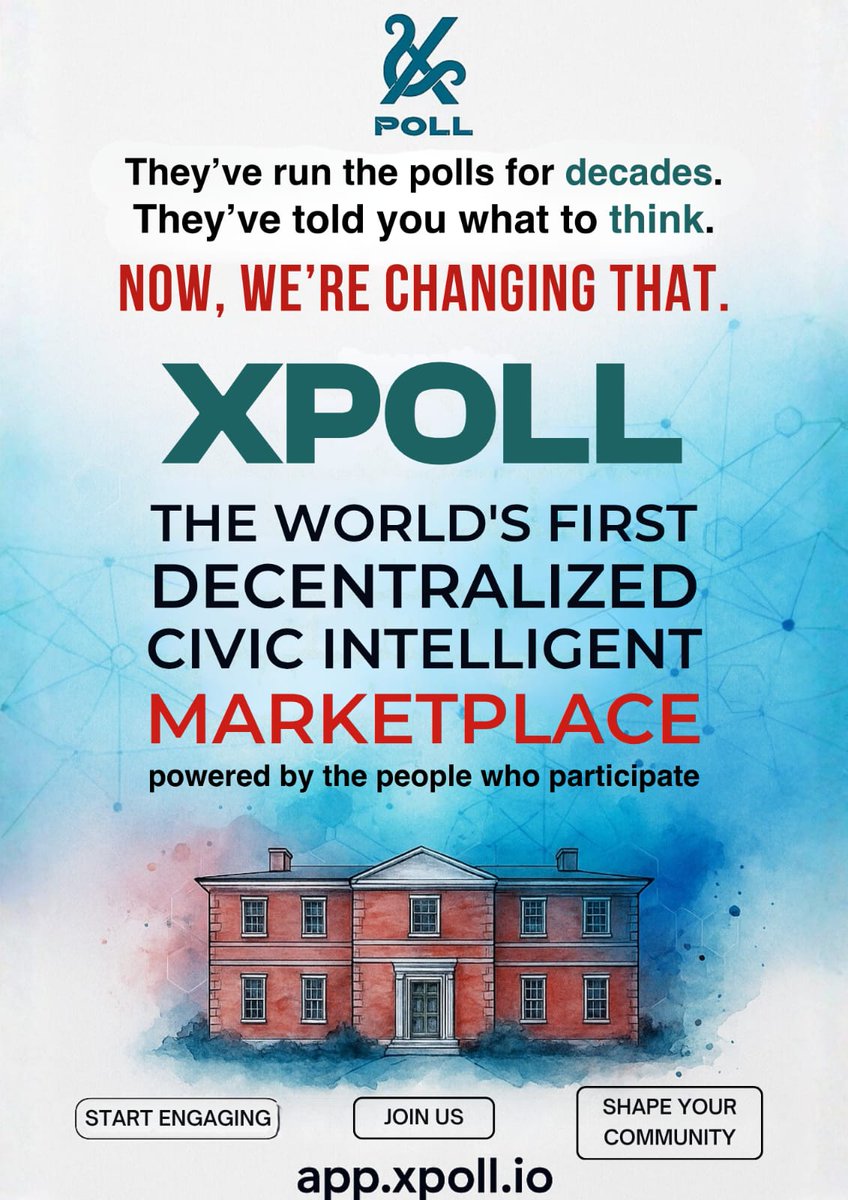
🚀 1 Day. That’s all it took.
✅ 300 New Signups
✅ 1,200 Poll Entries
✅ 35 Fresh User Polls
✅ 2,300 XPOLL Coins Disbursed
All this… from just one day’s activity
⚡ The future of decentralized polling isn’t coming — it’s already here.
Will you watch from the sidelines, or become a true XPOLL Patriot?
Join early. Own the movement. Shape the future.
app.xpoll.io
1
3
37
Great Red White & Blue Coin retweeted
26 Oct 2025
🚀 1 Day. That’s all it took.
✅ 300 New Signups
✅ 1,200 Poll Entries
✅ 35 Fresh User Polls
✅ 2,300 XPOLL Coins Disbursed
All this… from just one day’s activity
⚡ The future of decentralized polling isn’t coming — it’s already here.
Will you watch from the sidelines, or become a true XPOLL Patriot?
Join early. Own the movement. Shape the future.
app.xpoll.io
14
8
12
997
Great Red White & Blue Coin retweeted
26 Oct 2025
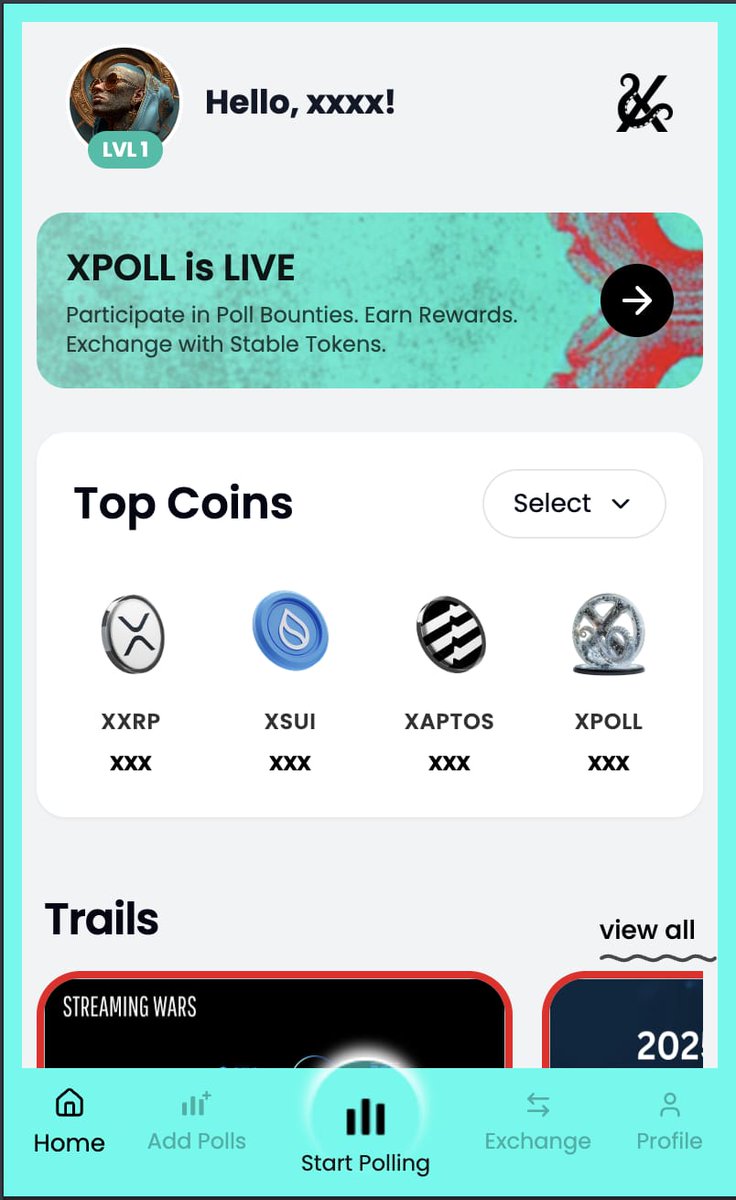
🚨 It’s XPOLL earning check time! 🚨
Show us what you made today 👀
Take a screenshot of your XPOLL earnings and drop it in the comments 👇
Let’s see who’s stacking the most this week 🔥
Tag app.xpoll.io so more people can checkout the DaPP.
Let's see who's topping the leaderboard⚡
#xpoll #xpollearnings #suirewards #aptos #aptosreward #btc #eth #AltcoinSeason
10
5
12
812
Great Red White & Blue Coin retweeted
25 Oct 2025
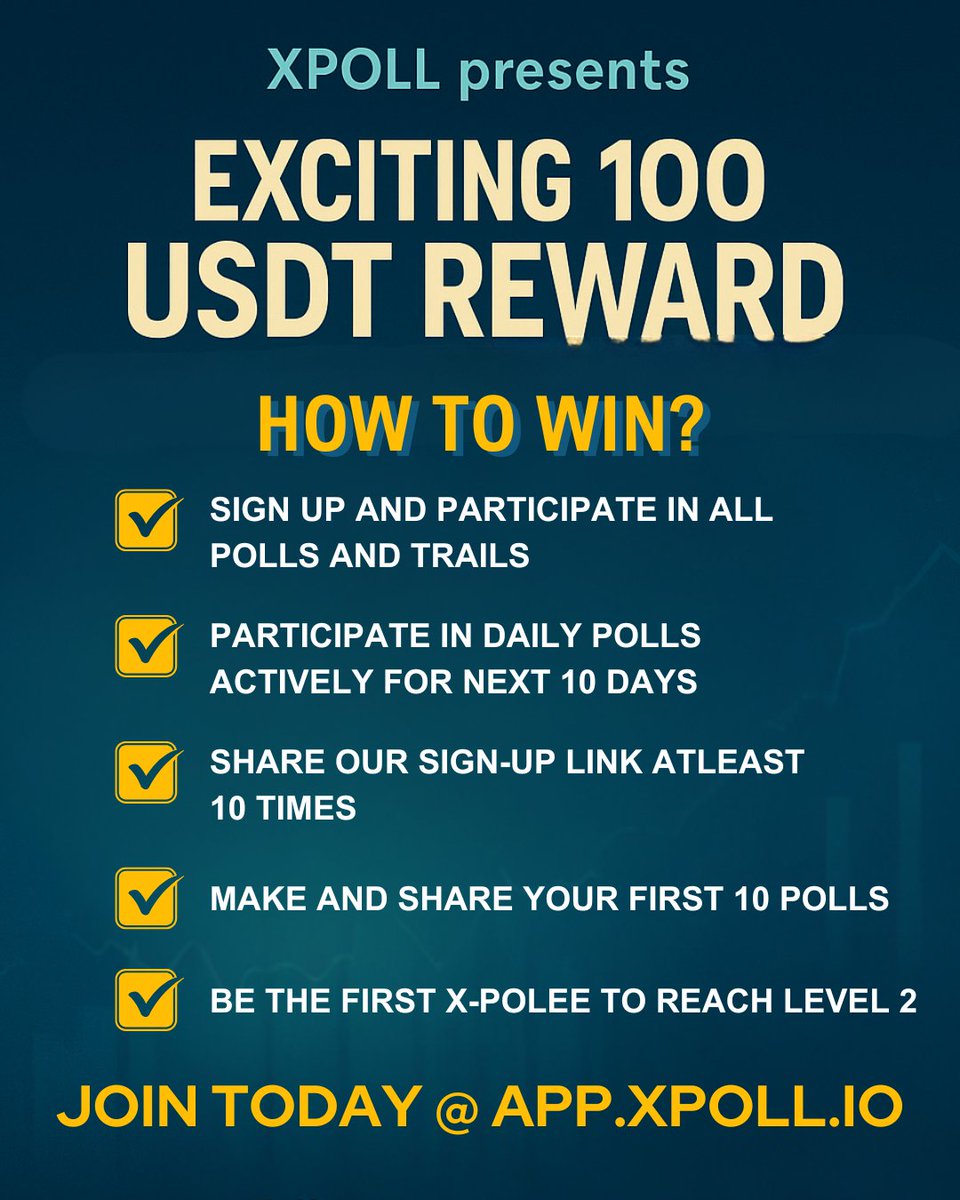
🔥 100 USDT is on the line! 🔥
XPOLL presents a new challenge where all it takes is your opinion and participation to win the big crypto prize!
HOW TO WIN?
Sign up & jump into all the polls and trails.
Be active in daily polls for the next 10 days.
Share our sign-up link 10 times.
Create and share your first 10 polls.
Race to be the first X-Polee to Level 2!
Start polling and winning now! 🔗 app.xpoll.io

47
10
34
2,081