
Guild: deploy, version, and run AI agents with built-in governance. Code-first, model-agnostic, vendor-neutral platform for engineering teams.
Joined September 2025
- Tweets 82
- Following 5
- Followers 190
- Likes 15
37 Photos and videos



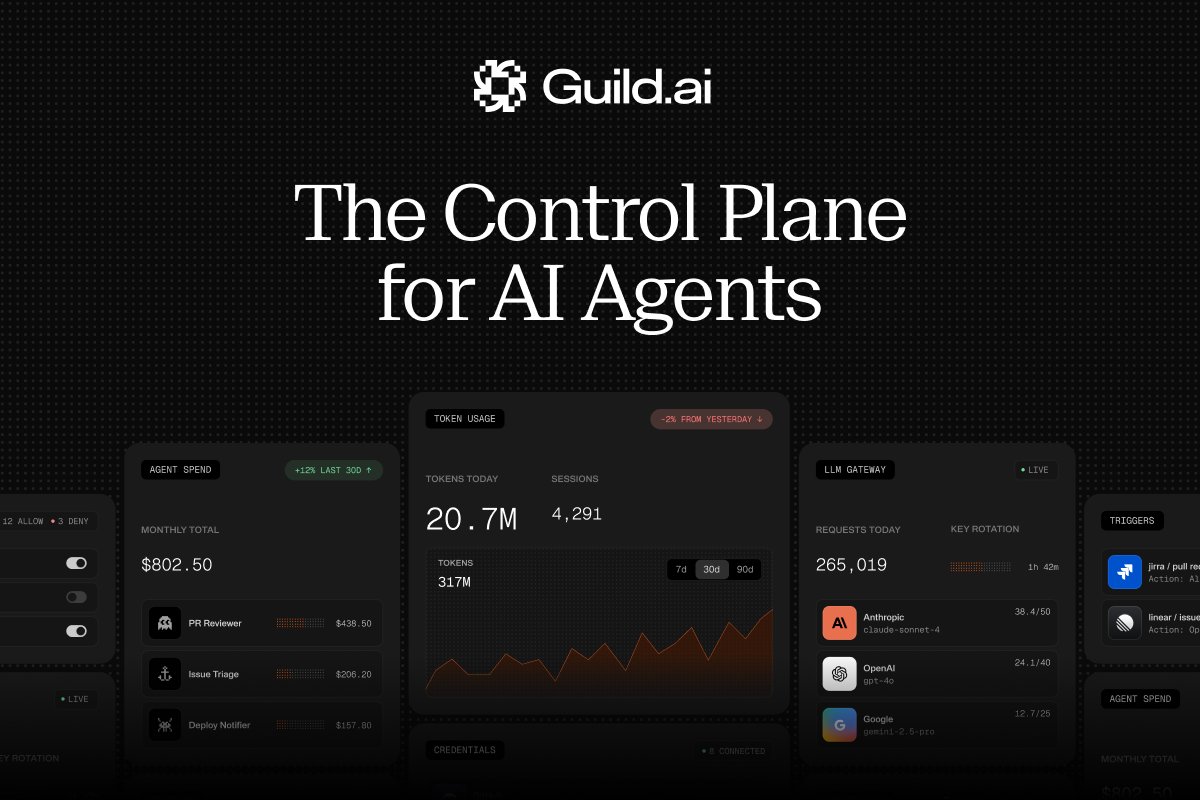
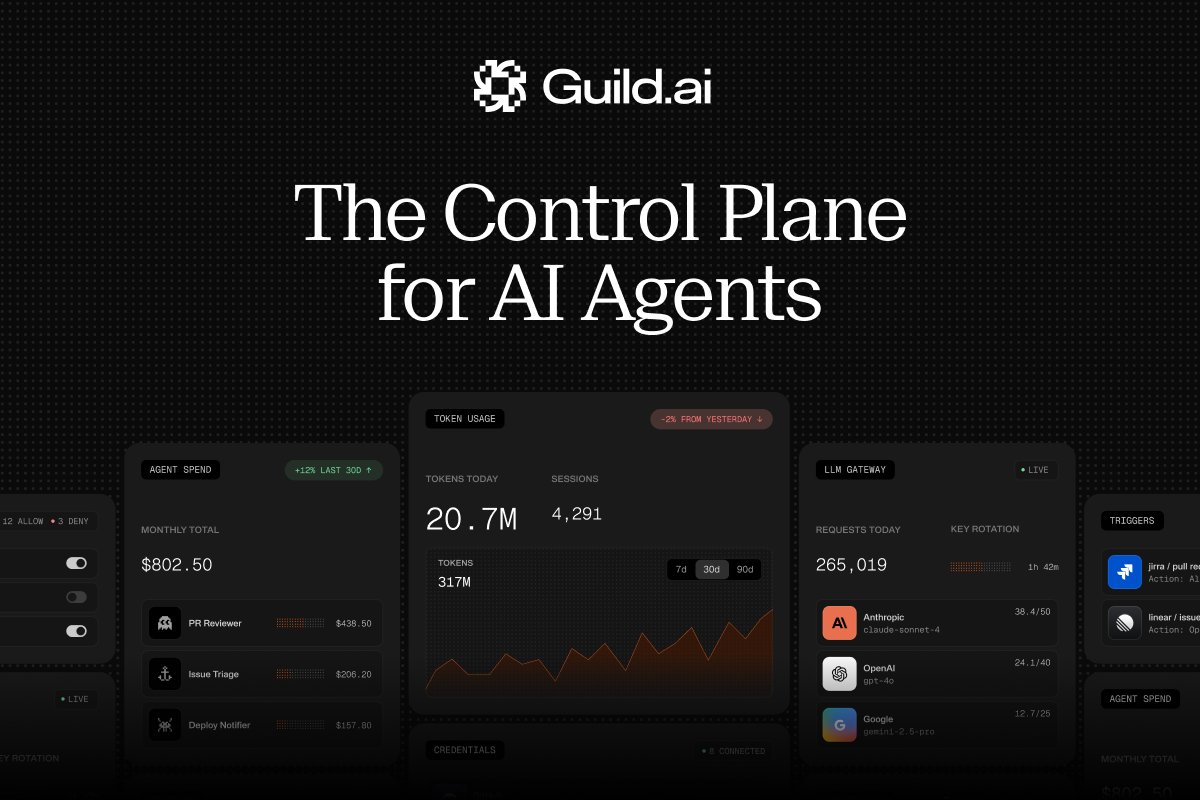

State of Agent Governance—June 2026
According to @Gartner_inc , the average Fortune 500 will deploy more than 150K AI agents by 2028.
Only 13% believe they have the right agent governance to support it (@McKinsey ).
There's no doubt, agent usage is growing fast; but the systems to govern it responsibly still aren't keeping pace.
As agent sprawl takes hold in the enterprise, it’s creating a perfect storm of increased complexity and decreased visibility--and left unchecked, it's poised to turn a little agent governance gap into a big agent governance crisis.
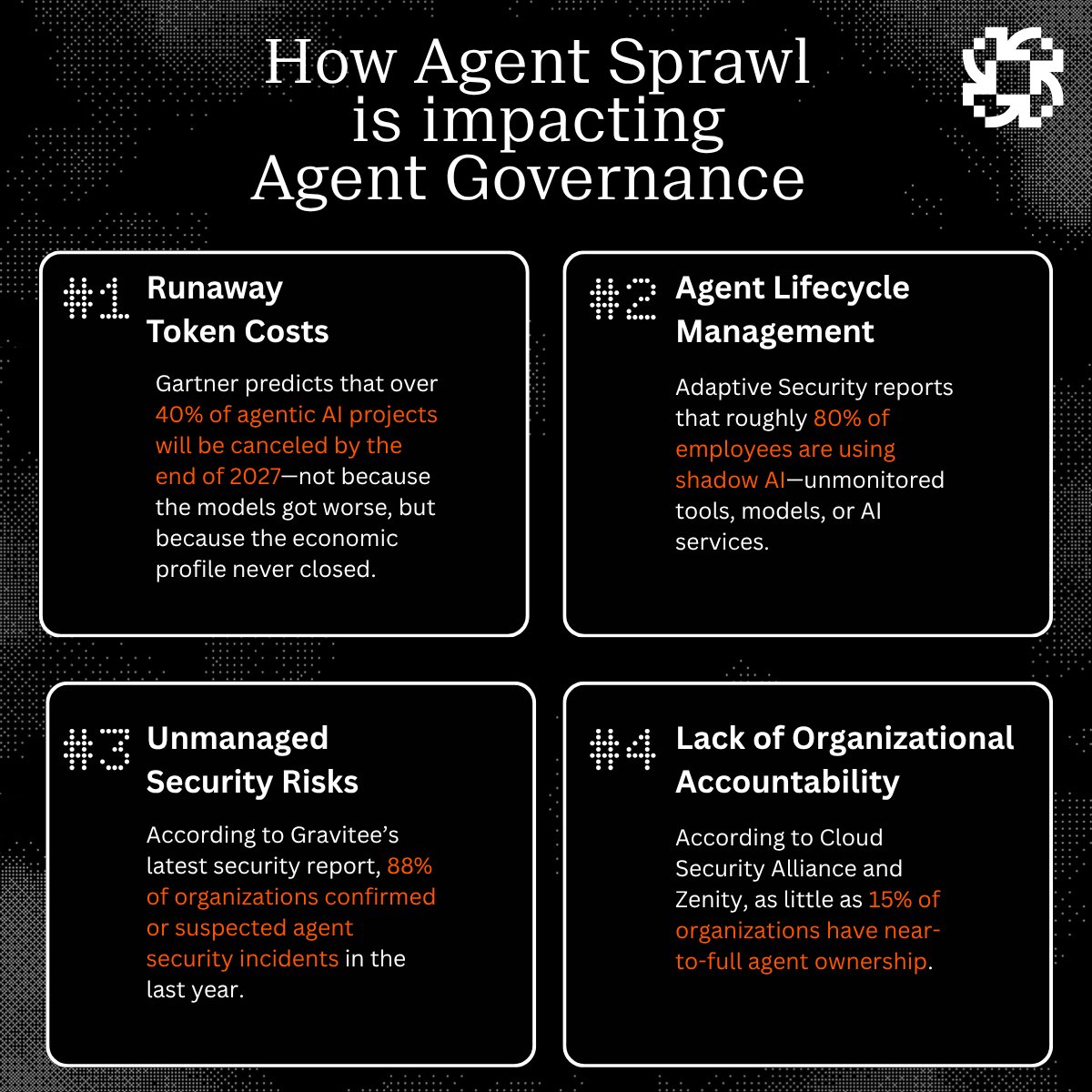
In our State of Agent Governance report, we review four of the biggest agent governance challenges facing enterprise teams right now and how the shadow of agent sprawl is exacerbating their impact:
- Runaway token costs
- Agent lifecycle management
- Unmanaged security risks
- Lack of organizational accoutability
Check out our analysis of agent governance and why we believe better infrastructure will be the key to better outcomes in 2026 .
Full report here: guild.ai/knowledge/ai-insigh…
3
7
105
Guild.ai retweeted

Jun 11
Thanks for having me on, @MTSlive. Had a great time. Always enjoy talking about where agent infrastructure is headed and what we’re learning along the way at @GuildAI.

We had @jevering, CEO of @GuildAI on the show to explain how companies are deploying AI agents, the challenges they're facing, and where Guild fits in the stack.
"We saw firewalls and the cybersecurity software business arise because you had intentionally bad actors trying to compromise your company's infrastructure.
Well, you have a new problem when you put AI agents inside your company.
They're unintentionally bad. You can't really predict what they'll do, they're very goal-end oriented, and they don't know the difference between right and wrong. "
"If you want to be able to tell what an agent did two years ago, you need to be able to look at a history and see what it touched. So you need auditability and logging.
You might want an agent to be able to access your CRM but not access your finance system, so you need to set up policies for that."
"Cost controls is another thing. You see a lot of people talking about the spend, token maxing, and how much agents are costing. But really the question is: how much are the agents adding value to your business? Can you look at each one and figure out if that agent is doing what it was set up to do?
And that is a type of observability that you also need, and a system like ours provides it.”
2
5
215
Guild.ai retweeted

Jun 9
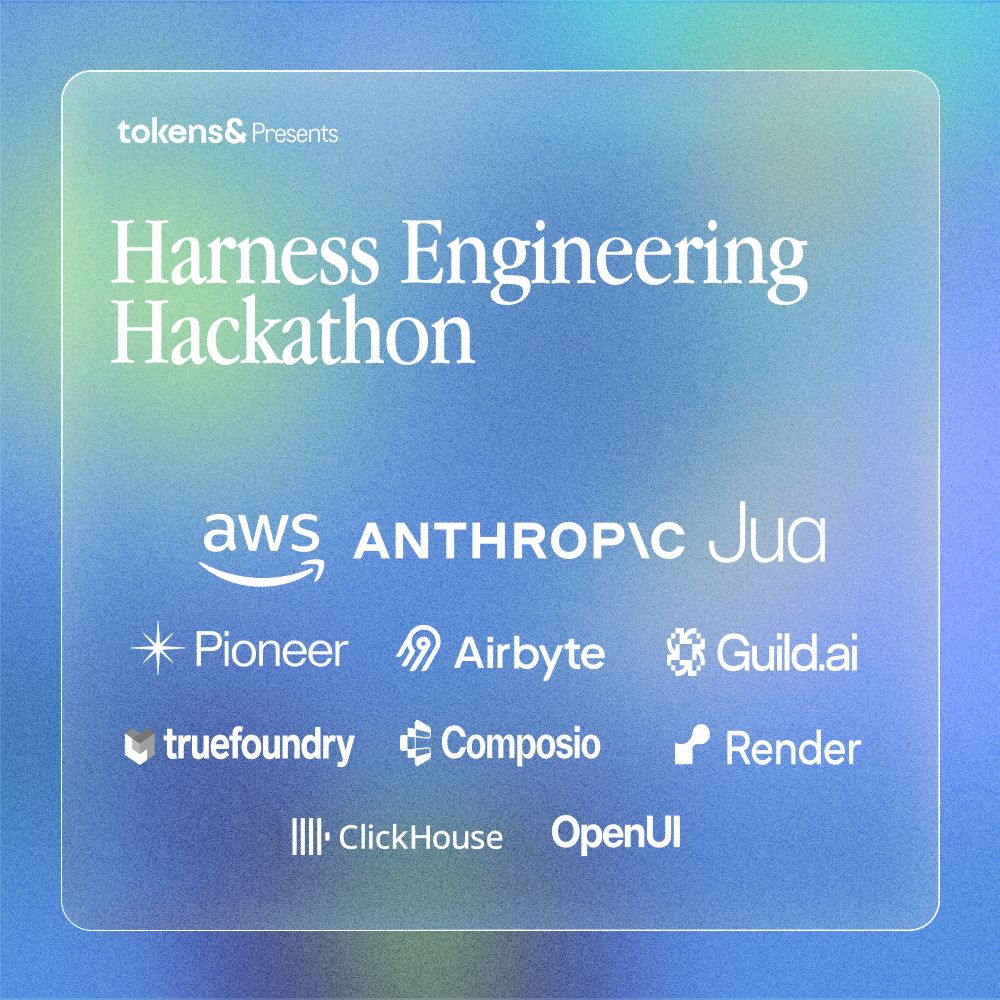
ever wondered how AI models become production-ready?
this friday. come build with us
master the tools, systems, and feedback loops that turn AI models into reliable agents.
💵 $40K in prizes (cash,credits, giftcards)
📅 June 12 · SF
🎟️ Teams of 4 max
@awscloud @AnthropicAI @AirbyteHQ @GuildAI @truefoundry @composio @render @ClickHouseDB @fastinoAI
2
5
13
444
Controlling agents is top of mind for the enterprise and @GuildAI CoFounder @jevering is sharing his perspective after 40 years in the industry.
Check him out on the @mlopscommunity podcast with @Dpbrinkm to learn what AI investments are revealing about security and why access control is essential infrastructure for productizing agents safely at speed.
Full episode available here:
Spotify—open.spotify.com/episode/2MX…
MLOps Community— home.mlops.community/home/vi…
1
3
4
111
How can you move faster with agents? @GuildAI CoFounder @jevering joins @MTSlive today at 3PM PT to discuss tokenmaxxing, rogue agents, and why better infrastructure is the key to controlling production agents at scale.
Shoutout to @gbrl_dick for hosting.
Watch live on X x.com/MTSlive
Watch on YouTube lnkd.in/epsS7naJ
4
4
21
2,517
For the last 2 years, enterprise teams have been confusing "spending" with "scaling." But more agents doesn't mean more scale—it just means more complexity.
There's a big difference between "building more agents" and "scaling with agents." And that difference is control.
- Centralized management
- Cost attribution
- Governance
Building increases costs. Scaling increases impact.
linkedin.com/pulse/agent-spr…
1
5
94
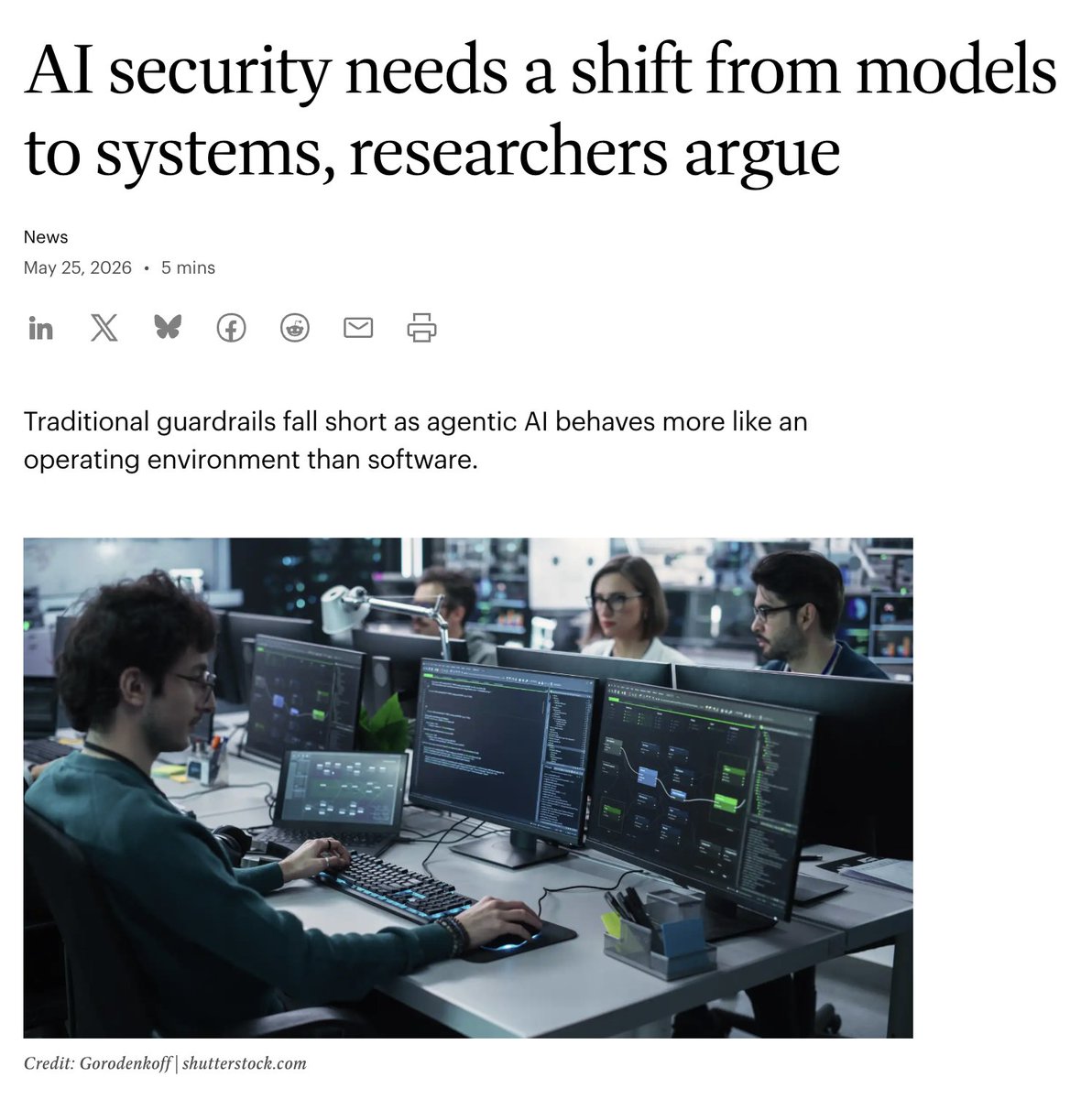
It's time to stop thinking about better models and to start thinking about better systems to support them.
@Gartner_inc predicts that over 40% of agentic AI projects will be canceled by the end of 2027... not because the models got worse, but because the economics and the risk profile never closed.
This isn’t a value problem. It’s not even a pricing problem.
It’s a discipline problem.
There's too many agents. They're too expensive. And no one owns what they're doing.
You can’t control spend until you know how much you’re spending. And you can’t know what you’re spending if you don’t know what agents you’re accountable for in the first place.
1
2
51
How you build your agents has a lot to say about how you'll govern them as well.
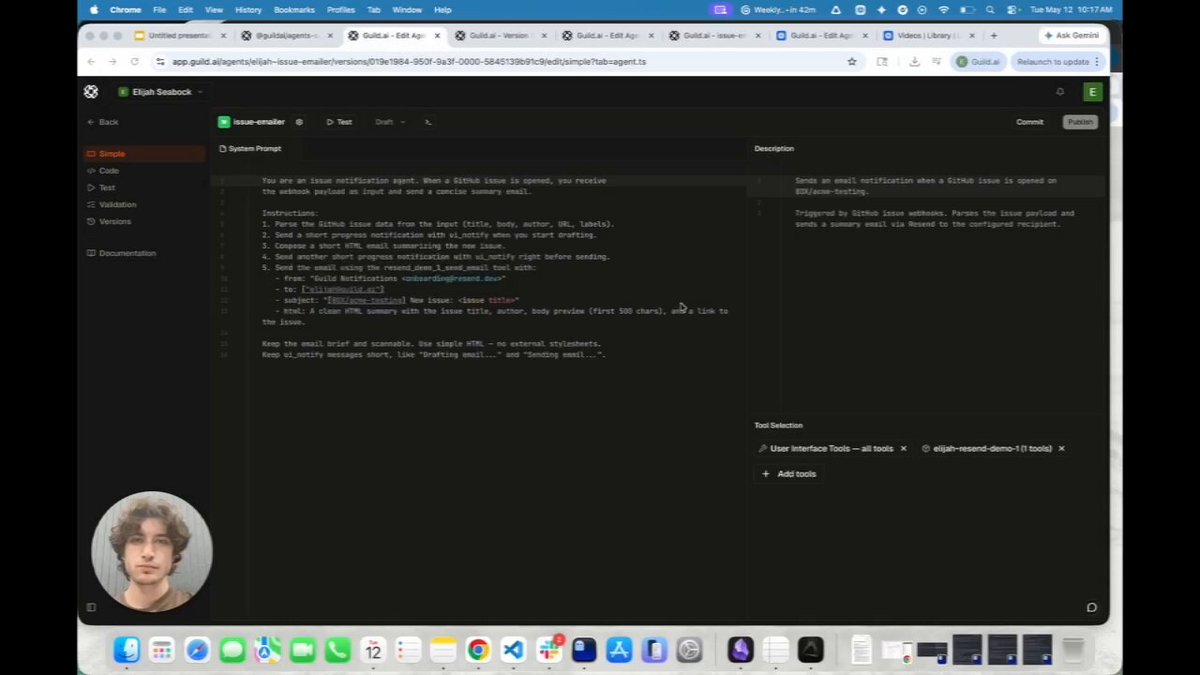
In his latest, Guild engineer @text2goat will walk you through how he builds an LLM agent on Guild's control plane.
1
5
137
"When I was leading the developer infrastructure team at Meta, we were supporting tens of thousands of engineers, and we started to see the shift—from tools that assist to systems that actually take action... And once that starts to happen, the question changes pretty quickly." - @jevering
→ Ownership.
→ Access controls.
→ Visibility.
→ Cost management.
→ Audit-ability.
When it comes to production agents, the question isn't "does it work?"
The real question is, "who's controlling it?"
Building agents is the easy part.
Managing them safely at enterprise scale isn't.
That's the problem we're solving at Guild.
So, what does that really mean? We'll let James and founding engineer Vincent Durmont tell you in their own words.
youtube.com/watch?v=02D47rHl…
5
1,026
In a world full of surprises, sometimes you just need a little determinism in your life.
In this quick demo, @text2goat will show you how to create deterministic type-script agents with Guild—and satisfy your maniacal need for control.
1
1
5
138
When agent outputs get wonky, the temptation is to go back to the prompt. But you can't fix non-deterministic problems with non-deterministic solutions.
The problem isn't a gap in intelligence. It's a gap in infrastructure.
Here are the four pillars of secure agent infrastructure—
1. Input constraints: if you can't validate what goes into the agent, you can't control what comes out of it either.
2. Permission scoping: agents are an extensions of their users; and so are their permissions.
3. Cost boundaries: a bill with no owner has no limits.
4. 360 observability: what does good mean for this agent? did it get there? why or why not? When an output is non-deterministic, you don't just need to know what it was supposed to do... you need to know what it actually did, why, and how it compares to other relevant responses.
Check out the link below to learn more, and find out how we're bringing determinism to a non-deterministic world with Guild.
guild.ai/knowledge/ai-insigh…
1
5
62
“Over decades working in infrastructure, I’ve seen this pattern repeat.
A new capability shows up, teams start using it everywhere, and before long they need systems to coordinate and control it… I think agents are heading in the same direction.” -@jevering
Right now the ecosystem is focused on frameworks and SDKs: LangChain, CrewAI, AutoGen, OpenAI’s SDKs, and dozens more.
But once they’re touching source code, production systems, internal tools, customer data, and financial systems, you start needing things like:
- identity and permissions
- auditability and tracing
- operational visibility
- cost and resource control
- safe rollout and rollback
The ecosystem is still focused on building agents.
Eventually it will focus on operating them.
That’s the problem we’re solving at Guild.
2
2
2
139
“Over decades working in infrastructure, I’ve seen this pattern repeat.
A new capability shows up, teams start using it everywhere, and before long they need systems to coordinate and control it… I think agents are heading in the same direction.” -@jevering
Right now the ecosystem is focused on frameworks and SDKs: LangChain, CrewAI, AutoGen, OpenAI’s SDKs, and dozens more.
But once they’re touching source code, production systems, internal tools, customer data, and financial systems, you start needing things like:
- identity and permissions
- auditability and tracing
- operational visibility
- cost and resource control
- safe rollout and rollback
The ecosystem is still focused on building agents.
Eventually it will focus on operating them.
That’s the problem we’re solving at Guild.
1
2
38
“Over decades working in infrastructure, I’ve seen this pattern repeat.
A new capability shows up, teams start using it everywhere, and before long they need systems to coordinate and control it… I think agents are heading in the same direction.” -@jevering
Right now the ecosystem is focused on frameworks and SDKs: LangChain, CrewAI, AutoGen, OpenAI’s SDKs, and dozens more.
But once they’re touching source code, production systems, internal tools, customer data, and financial systems, you start needing things like:
- identity and permissions
- auditability and tracing
- operational visibility
- cost and resource control
- safe rollout and rollback
The ecosystem is still focused on building agents.
Eventually it will focus on operating them.
That’s the problem we’re solving at Guild.
1
2
34