
Psychological Scientist | Lecturer of Research Methods | Fourth Year Psychology (Honours) Program Coordinator at @ISNPsych | guyprochilo.com
Joined January 2013
- Tweets 2,778
- Following 189
- Followers 2,906
- Likes 3,431
1,230 Photos and videos

Pinned Tweet

10 Aug 2020
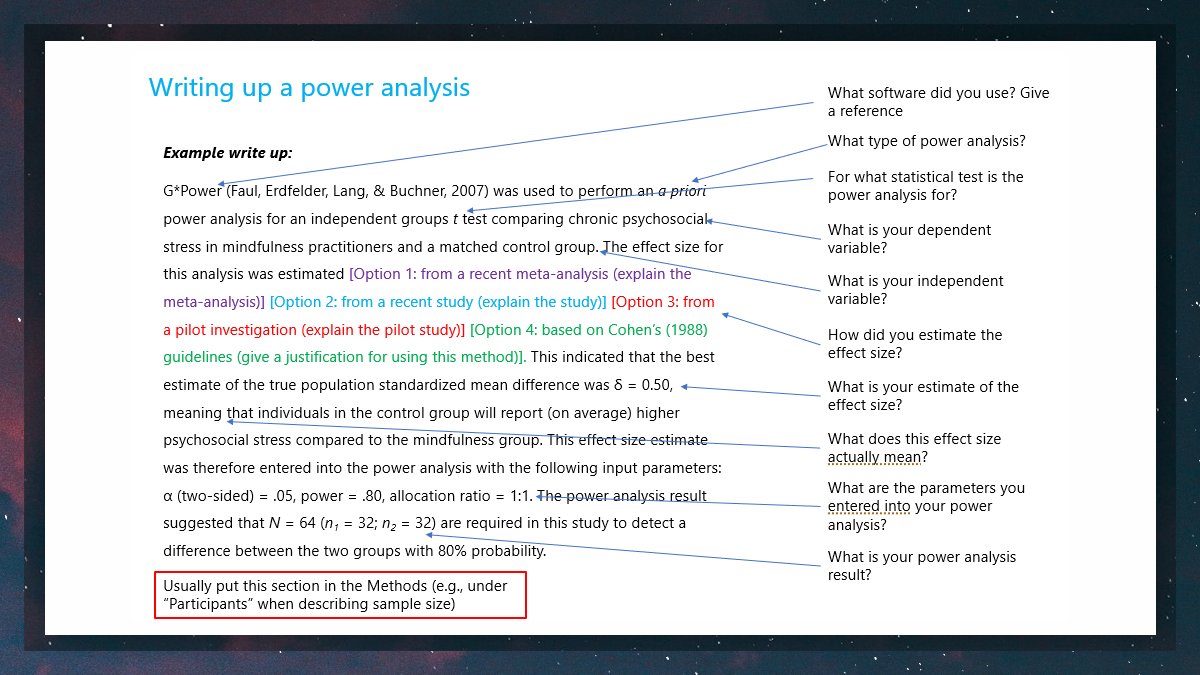
Many power analyses I read in published manuscripts are not reported with sufficient transparency to understand what on earth they are doing! What is the effect estimate? Where did it come from? For what test does it apply? Etc. Here is a reporting guide I give students
#phdchat
18
201
812
9 Apr 2025
On the lookout for academics who want to pick up some psychology marking work at ISN Psychology—research proposals, theses, and reports—at $72/hour. Must hold a PhD in Psychology and be based in Australia. DM for details.
#PsychologyJobs #PhDJobs #PhDChat #RemoteWork
1
513
18 Sep 2024
🧵 Little's MCAR test is often used to check if missing data is "Missing Completely at Random" (MCAR).
However, it might not actually do what many researchers think it does. Let's look at the details!
#phdchat #statstwitter
1
1
1
646
18 Sep 2024
To sum it up: Missing data is complicated.
Little’s test probably isn’t doing what you think it is, and MCAR is often unlikely.
Don’t rely on Little's test as an excuse to avoid properly handling your missing data.
1
372
18 Sep 2024
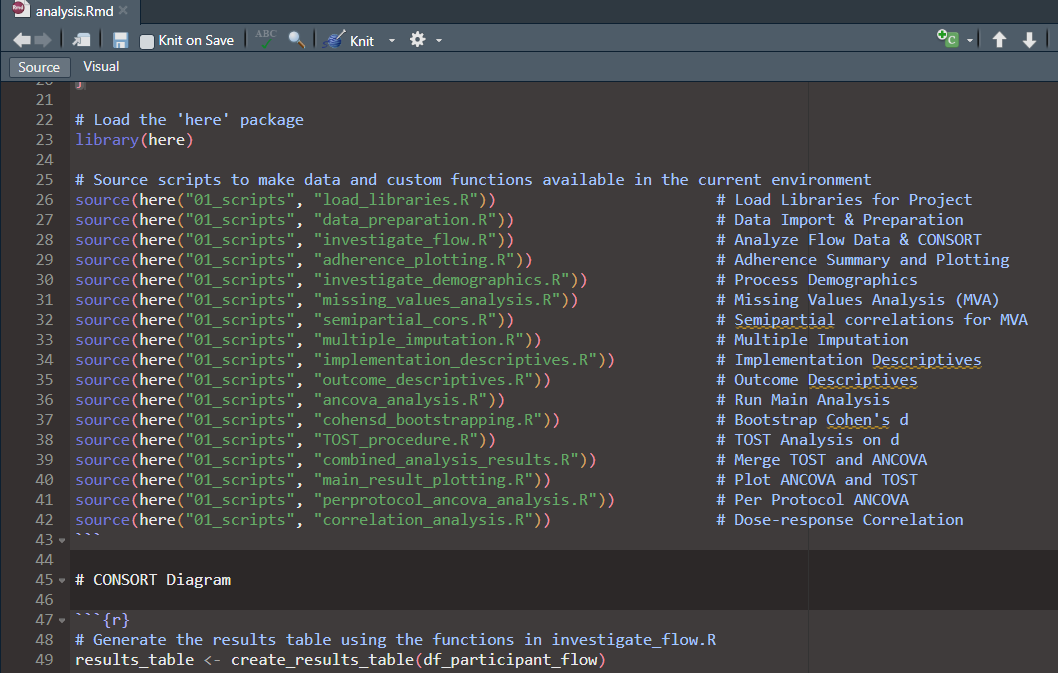
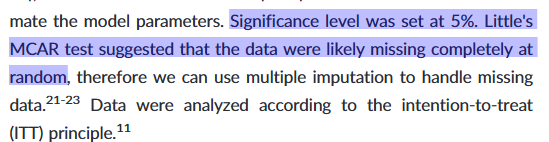
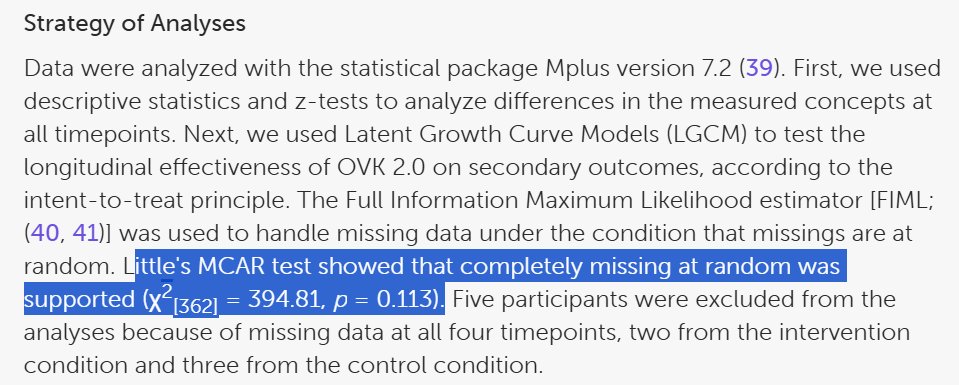
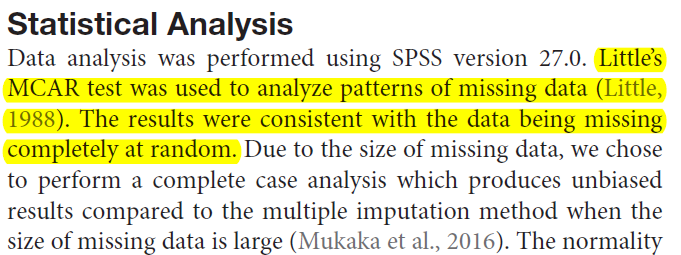
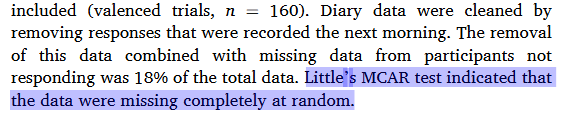
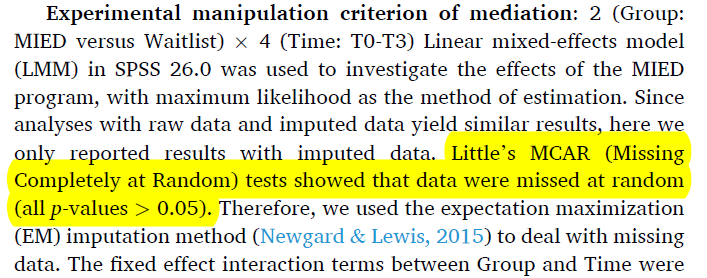
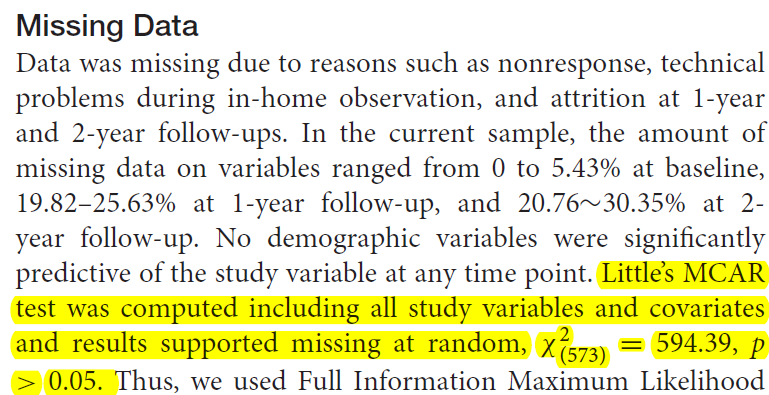
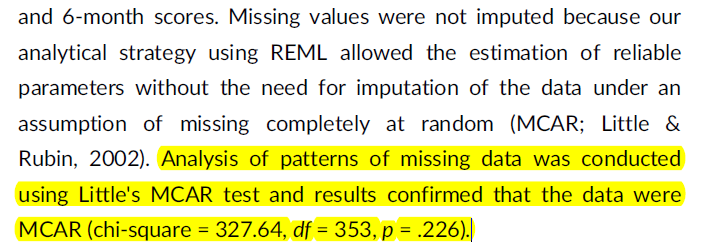
note: all these images are just random screenshots of papers where the methods section makes claims about Little's test that it doesn't actually provide.
Some even claim it provides support for MAR...
1
285
15 Sep 2024
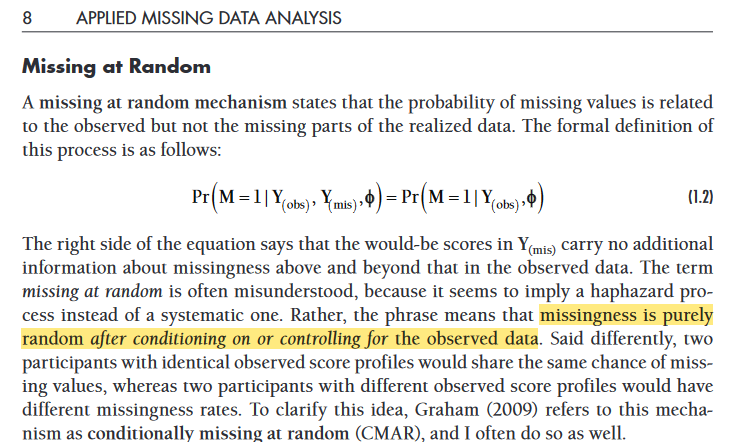
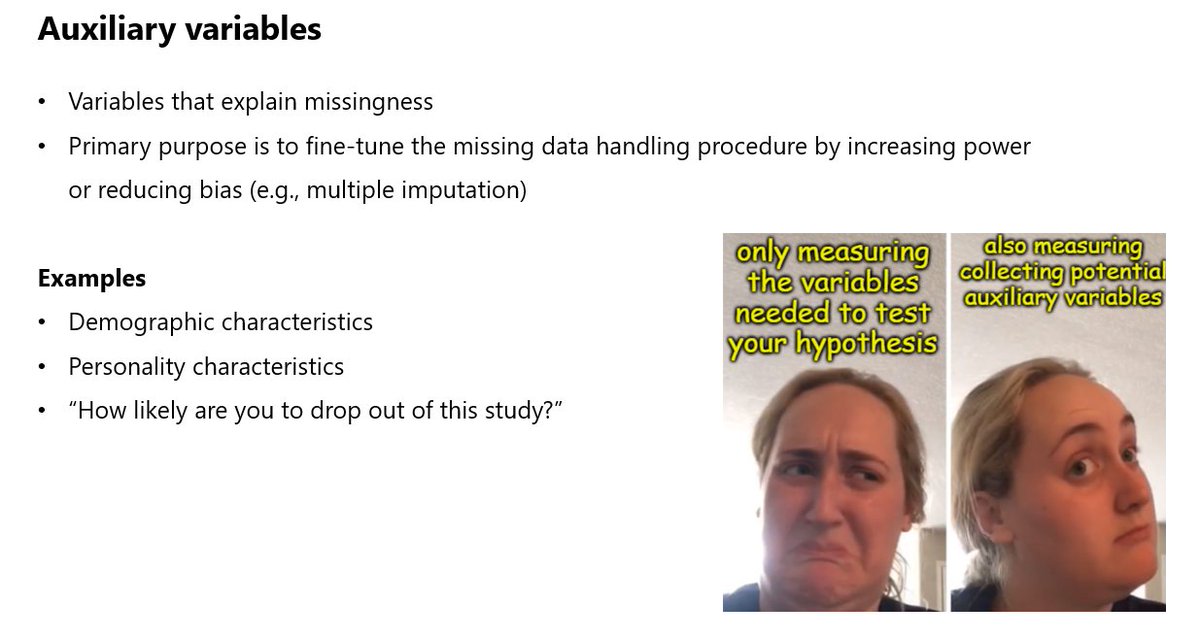
Missing at Random (MAR) means that the probability of data being missing is purely random after conditioning on observed data (e.g., in multiple imputation). That is to say, it depends only on the observed data, not the missing values themselves.
#phdchat #statstwitter
1
5
875
15 Sep 2024
Enders, C. K. (2022). Applied Missing Data Analysis, Second Edition (2nd ed.). The Guilford Press.
238
12 Sep 2024
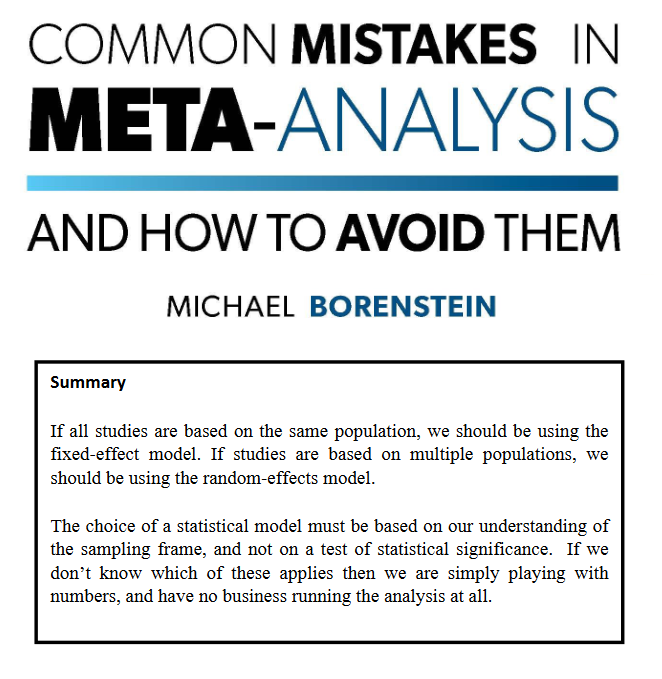
Don't use a significance test of heterogeneity (eg Cochran's Q) to choose between fixed or random effects meta-analysis. If studies estimate a single common effect size, use fixed effects. If studies differ in populations, measures, or protocols, opt for random effects.
#phdchat
1
2
354
12 Sep 2024
Borenstein, M. (2019). Common Mistakes in Meta-Analysis and How to Avoid Them. Biostat Inc.
182
11 Sep 2024
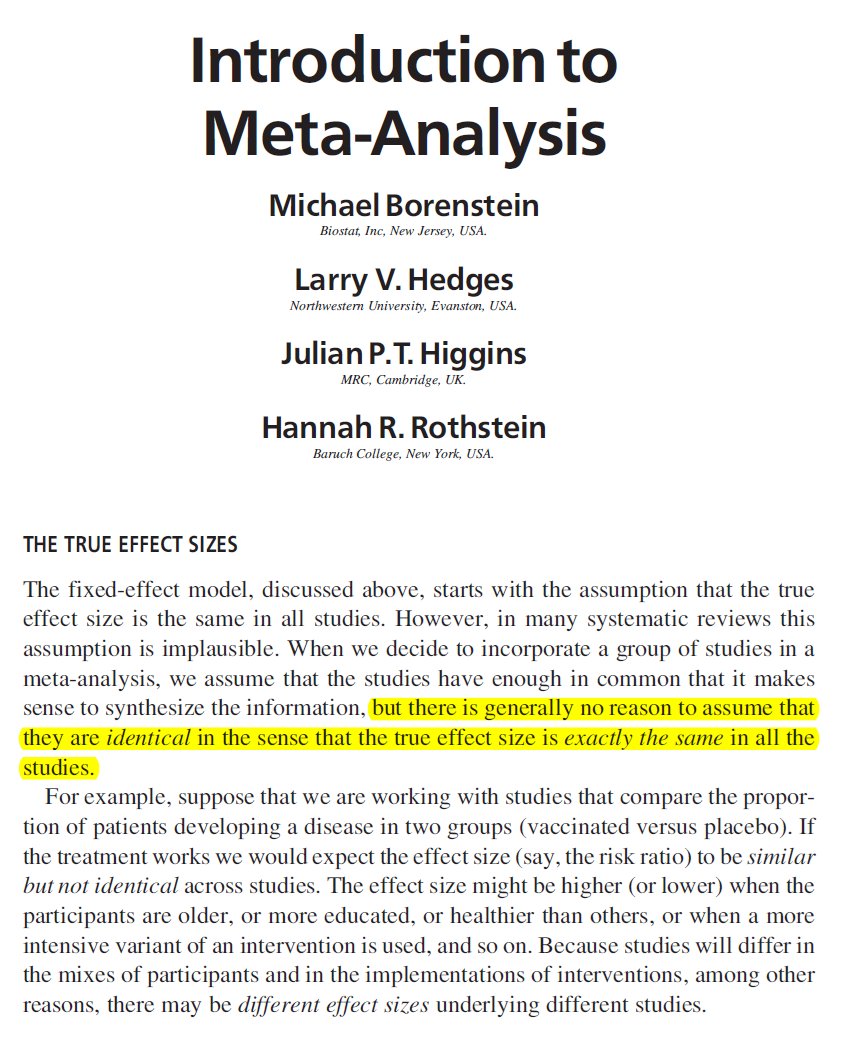
A fixed effects meta-analysis assumes a single common effect size across all studies, which is often unrealistic given differences in interventions, populations, and measurements. In psychology especially, a random effects meta-analysis is usually the more plausible
#phdchat
2
4
22
2,473
11 Sep 2024
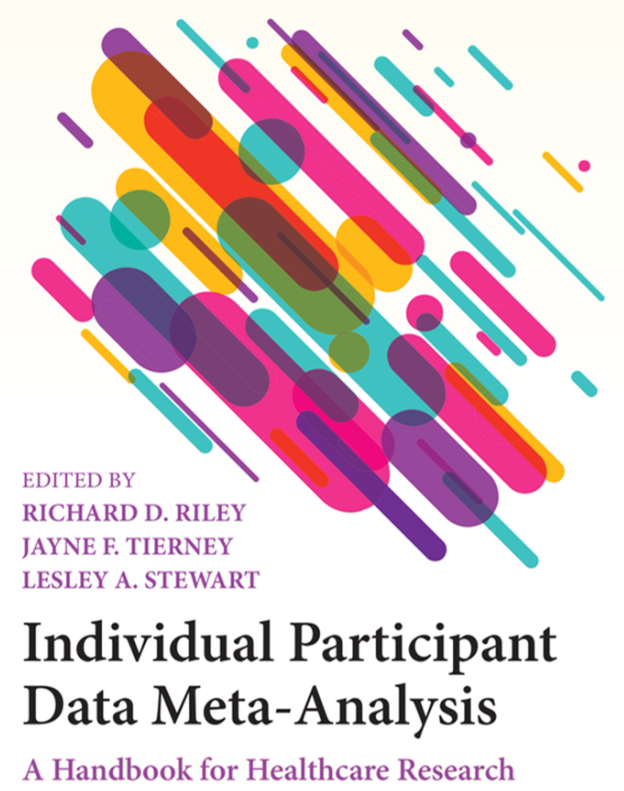
Borenstein, M., Hedges, L. V., Higgins, J. P. T., & Rothstein, H. R. (2009). Introduction to Meta-Analysis (1st ed.). Wiley.
203
10 Sep 2024
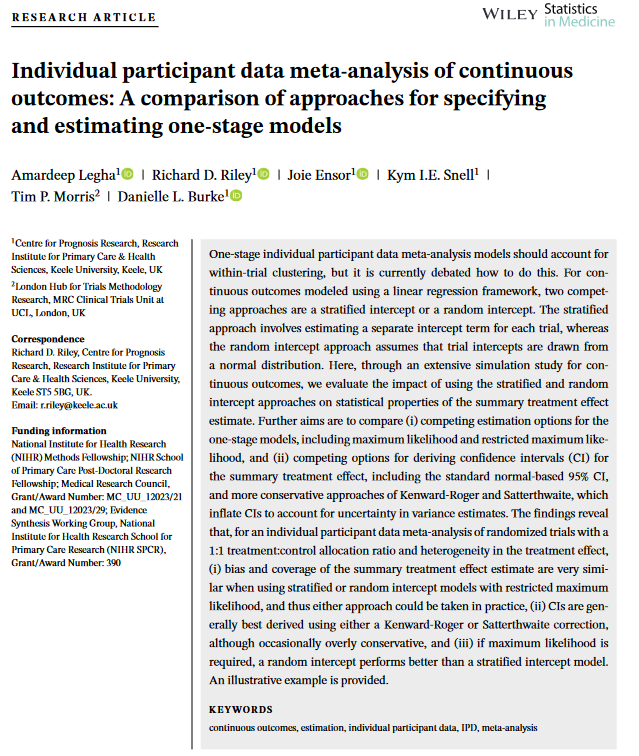
A one-stage IPD meta-analysis aggregates data across all studies and can be analyzed using a linear mixed model with the study ID as a random effect. This aligns with a random effects meta-analysis where we assume the true effect size differs across studies #phdchat #statstwitter
1
4
35
10,952
10 Sep 2024
Legha, A., Riley, R. D., Ensor, J., Snell, K. I. E., Morris, T. P., & Burke, D. L. (2018). Individual participant data meta‐analysis of continuous outcomes: A comparison of approaches for specifying and estimating one‐stage models. Statistics in Medicine, 37(29), 4404–4420.
3
324