
A US based not-for-profit program focused on Handshake promotion, education, and development. $HNS #HNS #handshake 🤝
Joined July 2024
- Tweets 1,053
- Following 846
- Followers 803
- Likes 3,781
114 Photos and videos





Handshake Institute retweeted

Jun 13
📣 Namebase Update 📣
CURRENT STATUS of Namebase.io
✅ BTC withdrawals are LIVE
✅ HNS withdrawals are LIVE
✅ Transfers of unstaked names are available
⏳ Withdrawals of staked TLDs remain disabled
As Namebase continues its wind-down process, we strongly encourage all users to withdraw their BTC, HNS, and transferable names at their earliest convenience.
🚨 IMPORTANT 🚨
NAMEBASE IS NO LONGER RENEWING OR AUTO-RENEWING NAMES.
• Users are responsible for withdrawing or transferring names to a wallet, registrar, or service where future renewals can be managed.
• All names are renewed as part of the withdrawal or transfer process.
• If you intend to keep a name long-term, please make arrangements to transfer or withdraw it.
• Names left on the platform will NOT be renewed by Namebase and may expire according to their expiration date.
REGARDING STAKED TLDS:
• Withdrawals of staked TLDs remain disabled while we finalize a registry solution for existing SLD holders.
• Before enabling staked TLD withdrawals, we intend to have a registry solution in place to provide continuity for active SLD registrations and registry services.
• ALL STAKED TLDS WILL BE RENEWED BY NAMEBASE.
• Staked TLD owners do not need to take any action at this time.
• Additional information regarding staked TLD withdrawals will be provided once the registry transition plan is finalized.
REGARDING SLDS:
• Any SLD that would have expired on or after January 1, 2025 has been placed into a grace period.
• No action is required from SLD holders at this time.
• The grace period will remain in effect until the new registry is launched.
• All HNS ID SLD holders are included in this grace period and will be carried forward to the new registry.
Namebase remains in the process of winding down operations.
We will continue to share updates regarding the registry transition, SLDs, HNS ID, staked TLD withdrawals, and the remaining wind-down schedule as additional details become available.
We strongly encourage users to withdraw BTC, HNS, and transferable names as soon as practical rather than waiting for future wind-down milestones.
For individual assistance, please write sos@namebase.io.
Thank you for your patience and continued support. 🤝
9
14
22
2,013
Handshake Institute retweeted

Jun 10
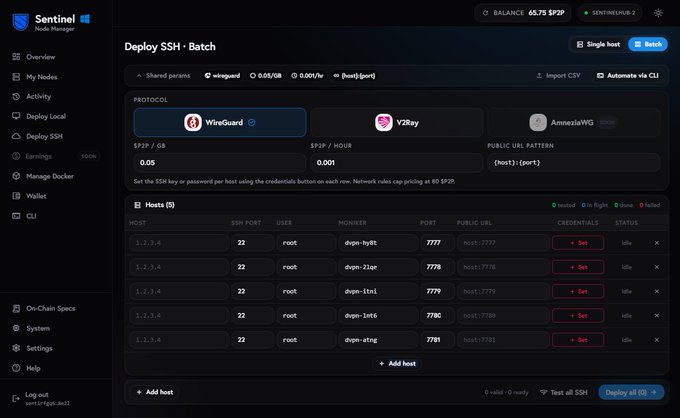
Creating and operating decentralized VPN infrastructure is becoming easier.
The Sentinel Node Deployer is one of a growing number of utilities being developed across the ecosystem to simplify deployment, management, and monitoring.
Now available for community testing on Windows, macOS, and Linux.
github.com/sentinel-official…
4
15
58
3,087

The Real-World Bridge Divide: Manual Overrides vs. Hard Consensus
With Handshake’s upcoming integration into @RosenBridge_erg, check out this comparison chart from @cannon_qq
9
16
528
Handshake Institute retweeted
Jun 5
📢 New Namebase Update
While we do not intend to continue operating a custodial platform, we believe we have found a path forward for Namebase as a non-custodial Handshake registry and infrastructure provider.
To make that transition possible, Namebase will be taken offline in approximately 72 hours while we migrate data and infrastructure to a new architecture.
When Namebase returns:
✅ BTC withdrawals will be available
✅ HNS withdrawals will be available
✅ Staked name withdrawals will be available
✅ Users will be able to opt into the new non-custodial Namebase Registry
✅ HNS ID will return as part of the broader Namebase Registry platform
Expected Timeline:
• BTC, HNS, and TLD (including staked) withdrawals/transfers should become back on line and available approximately 24 hours after shutdown.
• The new non-custodial Namebase Registry will take a bit longer. We currently expect it to be available within 1–2 weeks, though we are optimistic it may be ready sooner.
HNS ID, registry services, and domain infrastructure will come together under a unified non-custodial architecture designed to support the next chapter of the Handshake ecosystem.
More details on withdrawals, registry participation, migrations, and timelines will be shared soon.
Thank you for your patience and support. 🤝
5
22
50
4,301

Hanshake 🤝 is the way: learnhns.com/
1
3
12
159

Rosen Bridge Updates
Rosen Expansion
-Firo:
They've updated ElectrumX-firo and created new PRs to integrate it into Rosen (to replace RPC endpoint).
(Under Review) Support OP_PUSHDATA1 in Firo Rosen Extractor
(Under Review) Replace RPC with ElectrumX server in AssetCheck parameter in health-check repository
(Under Review) Add ElectrumX server endpoint to Firo scanners
(Under Review) Replace RPC with ElectrumX server in guard-service repository
(Under Review) Full Firo integration into ui repository
Handshake:
No progress. As I reported previously, we are focused on Firo for now, to make sure procedure is smooth. Then we finish Handshake integration (as only two PRs remained, where both are reviewed once).
- (Under Review) Handshake integration into guard-service
- (Halted Review) Handshake integration into ui repository (will continue it's review once Firo integration is completed)
Base:
It's been a while since we were researching about integrating Base into Rosen. Some parts were implemented by our team and some PR were requested by MGpai.
We decided to puruse watcher and ui integration on MGpai PRs and guard-service integration by ourselves (since it's 1st L2 integration and some additional changes are required).
(Under Review) Add Base RPC observation extractor
(Under Review) Add Base chain (Active Branch)
5
28
103
4,969
Handshake Institute retweeted

Jun 3
Age verification will trigger a mass exodus of users across all social media. X, IG, Tiktok, Reddit will all fail to adapt.
Pirate is the only compliant social media site to verify one's age without revealing one's identity, thanks to @selfxyz ZKPs.

California Assembly Passes Under-16 Social Media Ban
reclaimthenet.org/california…
1
2
5
402
Handshake Institute retweeted

Everyone is more than welcome on our @HNS minng pool 👉🏽 handshake.cedric-crispin.com… ⛏️
Min. payout: 0.01 $HNS - Pool fee: 0.1% (PPLNS) pool pays the transaction fees.
Made by miners, for miners 🫡
5
6
21
685
Handshake Institute retweeted
Jun 3
Instead of all the tweeting, why not use Pirate and make a community from an @HNS TLD you own?
1
1
3
109
Handshake Institute retweeted
Jun 3
Pirate for Android is now live in public alpha on the Google Play Store. Pirate is the first-and-only consumer app on @HNS and @StoryProtocol, the $IP chain.
This is Pirate’s first step into TikTok territory, but not because the world needs another short-form video app. TikTok proved that phones are where music culture moves: songs become culture when people dance to them, remix them, react to them, share them into scenes, and turn them into social objects.
The problem is that the economics around that process are still badly misaligned. On most platforms, creators chase reach first and figure out money later. Influencers build trust with an audience, then monetize that trust by selling unrelated products through sponsorships, affiliate links, and brand deals.
Fans become impressions. Artists hope the algorithm turns their song into a trend, but the money usually lives somewhere else: ads, labels, sponsorships, off-platform subscriptions, or private deals. The people helping culture move rarely participate in the upside they create.
Pirate is built around a different model: fan clubs that are real, provably human thanks to @selfxyz ZKPs and @VeryAI palm scans, and monetizable inside the product itself.
A creator’s community should not just be a follower count attached to a feed. It should be a place where fans gather, discover music, support work directly, unlock media, participate in campaigns, and help push culture forward.
This matters especially for music and dance. The phone is already the camera. The song is already the prompt. The fan is already the distributor. The dancer is already part of the creative economy. Today, that usually gets treated as free marketing. Pirate turns it into compensated participation.
Imagine a song minted on Story Protocol. A dancer hears it, records a dance on their phone, posts it to Pirate, and can receive money when that contribution creates value. Soon, song creators will be able to post bounties for dancers directly, turning promotion into an open marketplace instead of a private influencer deal.
That is a better incentive loop: artists can recruit culture around their work, dancers can get paid for making songs move, and fans can participate in scenes with real economic weight.
This is why Android matters. Pirate is becoming a native mobile product for the behaviors that already drive music discovery: recording, posting, watching, chatting, sharing, and forming communities around songs.
Pirate is not bolting “creator ownership” onto a desktop crypto product. Pirate brings ownership and incentives into the mobile social flows where culture actually happens.
Under the hood, Pirate is built for internet-native IP. Media lives on IPFS through @Filebase. Creative works can be minted and registered on Story as IP Assets, with licensing terms, attribution, remix permissions, and royalty logic attached closer to the work itself.
That matters because copyright is complex, and most platforms manage it badly, or not at all. They rely on DMCA takedowns, claims, filters, and platform-controlled enforcement. That model is defensive, slow, and often hostile to remix culture.
Pirate’s bet is that rights, access, and royalties should be part of the creative object from the beginning, not patched together after conflict.
The Android alpha includes publishing, profiles, music discovery, chat, communities, wallet-backed identity, and early creator ownership flows. It is early. Some things are rough. Bugs are expected.
But the direction is clear: Pirate is for creators who want more than reach, dancers who want more than exposure, fans who want more than passive consumption, and communities that want to fund the art they care about.
Pirate does not want artists trapped in the influencer economy forever. Pirate wants a world where incentives are aligned: where songs can recruit movements, fan clubs can fund culture, and the people who help make something spread can participate in the upside.
1
4
13
805
Handshake Institute retweeted

Jun 1
Give Freedom Browser a try: open source, resolves decentralized domains and integrates a decentralized vpn.
#opensource #browser @hns $hns $dvpn #blockchain #crypto
Jun 1

Freedom Browser v0.7.9 released — the only browser with @HNS and @SentinelP2P dVPN integration.
Thank you to our early testers in China 🇨🇳, Iran 🇮🇷, and Russia 🇷🇺!
This update makes browsing much more reliable:
- Local-first HNS resolution
- Direct delegation lookups
- CNAME/TCP fallback
- Better error handling and stale request cleanup
Linux, macOS, and Windows builds are live ✨
1
1
10
630
Handshake Institute retweeted
Jun 2
📣Namebase Wind-Down Announcement📣
Today, we are announcing that Namebase will begin a wind-down process and will remain permanently closed as a platform.
Following the resolution of a related legal matter, Namebase is proceeding with an orderly wind-down of the platform.
Over the coming days, users will be given an opportunity to withdraw their assets, including BTC, HNS, and names held through Namebase.
Additional information regarding withdrawal procedures, timelines, deadlines, and migration requirements will be published separately.
As part of this process, we strongly encourage users to withdraw assets to wallets and accounts that they personally control. Self-custody allows users to directly manage and control their assets while reducing reliance on third-party platforms.
Users should plan to complete withdrawals and migrations during the wind-down period, as Namebase services will not remain available indefinitely.
In parallel, we are working with members of the Handshake community regarding the future stewardship of certain ecosystem infrastructure, including registry-related services. Further details will be shared once those arrangements are finalized.
Namebase will not resume platform operations. Our focus is solely on facilitating withdrawals, supporting necessary migrations, and completing the shutdown of the platform.
We are committed to providing users with the opportunity to withdraw their assets, take direct control of those assets, and complete any required transitions before the platform is permanently discontinued.
We appreciate the support of the Handshake community and will continue to communicate regarding withdrawal timelines, migration procedures, and closure milestones throughout the wind-down process.
24
15
33
8,784
Handshake Institute retweeted
Jun 1
Freedom Browser v0.7.9 released — the only browser with @HNS and @SentinelP2P dVPN integration.
Thank you to our early testers in China 🇨🇳, Iran 🇮🇷, and Russia 🇷🇺!
This update makes browsing much more reliable:
- Local-first HNS resolution
- Direct delegation lookups
- CNAME/TCP fallback
- Better error handling and stale request cleanup
Linux, macOS, and Windows builds are live ✨
1
3
19
1,290

forget memecoins
this is called working for your bags
its called working for your freedom
its called handshake protocol
learnhns.com/submitentry/
6
10
202
Handshake Institute retweeted

May 29
What is an agent registry?
An agent registry is the governed source of record for AI agents. The registry tracks owner, purpose, identity, status, tools, scopes, endpoints, public artifacts, review cadence, and retirement path. headlessdomains.com/blog/age…
2
9
162
HeadlessDomains.com is building a domain and verification layer for AI agents, where domains like .agent act as public, machine-readable identities for autonomous software.
Powered by Handshake, that's the important part...
2
7
175
Handshake Institute retweeted
May 22
Pirate is a new way to create sovereign online communities.
Anyone can launch a Pirate community: a digital club, network, or even a country-like internet community with its own members, leaders, treasury, rules, and culture.
Pirate communities are organized around internet domains. Like countries use TLDs such as .ge for Georgia 🇬🇪, .ru for Russia 🇷🇺, or .cn for China 🇨🇳, Pirate communities can use blockchain-native namespaces such as Handshake TLDs (@HNS) and Spaces Protocol Spaces (@spacesprotocol).
This matters because traditional domains are controlled by centralized registries and governments. When authorities dislike what a community says or does, they can pressure registries, seize domains, or force takedowns. Pirate is designed to make communities resilient against censorship, deplatforming, and domain seizure.
But Pirate is not just about domains. It is also a platform for creators.
Inside a Pirate community, citizens can monetize images, music, videos, livestreams, and other creative assets. Pirate uses @StoryProtocol to turn creative work into programmable intellectual property. Creators can register IP, set licensing terms, and receive royalties automatically when others remix, reuse, or commercialize their work.
Copyright has become impossible to manage at internet scale.
@Suno AI is reportedly generating around 7 million songs per day. At that rate, one AI platform can produce roughly Spotify's entire 100M track catalog every two weeks. Across streaming services, there are already more than 200 million tracks, and that number is now being overwhelmed by AI-generated output.
That creates a copyright crisis. Every day, millions of new songs, images, videos, samples, covers, and remixes can be created, uploaded, monetized, disputed, and taken down. Labels and platforms are responding with automated detection, takedown systems, lawsuits, and licensing deals. But that model does not scale for independent artists.
The internet needs a cheaper copyright system: one where creators can register IP, set licensing terms, allow remixes or covers, and receive royalties automatically without needing lawyers, labels, or platform-by-platform enforcement.
Pirate solves this by using Story Protocol to make creative assets programmable. A song, image, video, or livestream can carry licensing terms and royalty rules from the start, so reuse becomes permissioned, trackable, and monetizable by default.
Pirate also enables smarter pricing controls. A creator can sell an asset for $1 in countries with higher salaries, like Denmark, and $0.10 in countries with lower average salaries, like India. Platforms like Spotify already use regional pricing, but they usually rely on IP addresses, which are easy to spoof using a VPN.
Pirate solves this with @selfxyz, a zero-knowledge identity system that lets users prove facts about themselves without revealing unnecessary personal information. A user can prove they are from a certain country or over 18 without exposing their full identity.
Musicians and creators can also livestream through Pirate thanks to @AgoraIO. Livestreams can be free, gated for existing fans based on past purchases, or paid. This lets musicians host digital concerts without the overhead, logistics, and revenue splits of physical venues, promoters, and ticketing platforms.
Musicians can perform their own songs, cover other people's songs, or collaborate live with other artists. Because Pirate integrates programmable IP through Story Protocol, royalties can flow automatically to the right people.
For live collaboration, Pirate leverages @JackTripLabs, a low-latency music technology that allows musicians in different locations to perform together in real time. A singer in London could perform with a band in Paris, sell access to the livestream, and split revenue based on percentages agreed before the concert begins.
Pirate gives communities sovereignty, creators ownership, and fans a better way to participate in culture online.
1
9
283
Handshake Institute retweeted

May 21
Firo integration showing excellent progress, real shot at first external chain completing integration standards.
Delisted for privacy? Not anymore. This is what matters.
2
23
68
1,879
Handshake Institute retweeted
May 20
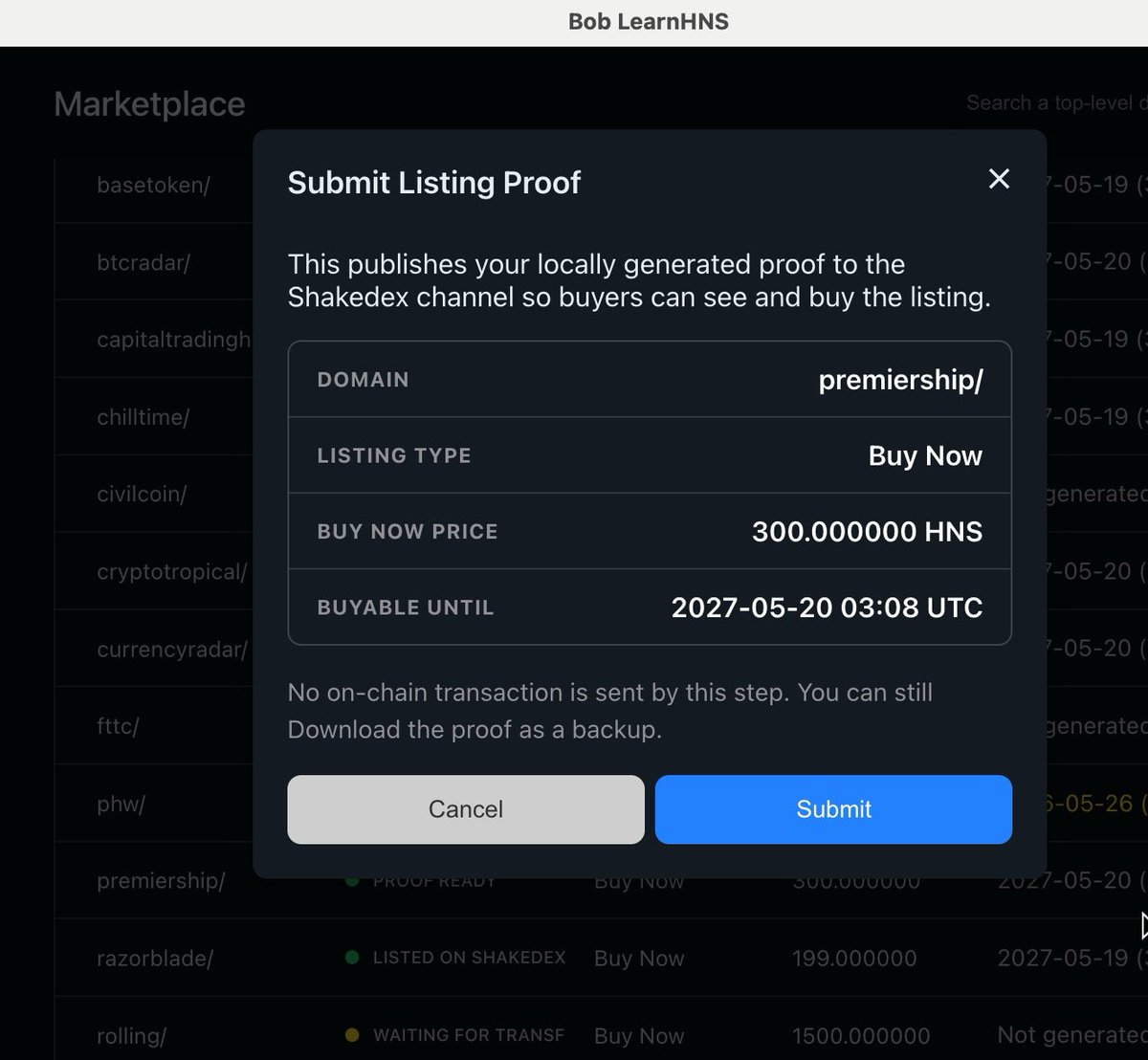
Decentralized TLDs and agentic identities will now be traded on a self-hosted wallet once again on Handshake @HNS $HNS
May 20

@kurumiimari1 making your shakedex come back to life, thanks for your contributions to handshake
1
5
14
521
Handshake Institute retweeted

May 20
@kurumiimari1 making your shakedex come back to life, thanks for your contributions to handshake
1
7
23
1,099