
Health policy/politics. “Invaluable, insightful, funny: excellent value for money. Subscribe!" - @NicholasTimmins “The worst journalist!” - @wesstreeting
Joined July 2010
- Tweets 171,606
- Following 3,734
- Followers 19,713
- Likes 58,365
2,828 Photos and videos





Pinned Tweet

28 Mar 2019
British media went to shit first. British politics followed.
23
61
278
Andy Cowper retweeted

3 Jul 2025
@HPIAndyCowper i think you are in fact "The Marina Hyde of Health Policy"
1
2
667
Andy Cowper retweeted

26 Jun 2025
Oh, another day of Matt Hancock getting prodded by m'learned friend....
@HPIAndyCowper
26 Jun 2025

We have published the timetable for week #1 of hearings for our investigation into the Care Sector (Module 6).
🗓️Week #1 begins on Monday 30 to Thursday 3 July 2025 in #London, with 9 witnesses scheduled to give evidence.
Find out more 👇 covid19.public-inquiry.uk/mo…

ALT UK covid-19 hearing room
1
1
907
Andy Cowper retweeted

9 Jan 2025
It's NHS Data Dump Day, Super Stats Day
You won't see it in the press releases or most media coverage...
...But figures on community services are published, as well as hospital stats, today covering up to Nov 24
Here's a summary analysis I'll try to repeat each month 🧵
7
43
79
30,750
Andy Cowper retweeted

6 Jan 2025
Blogged: the question is not just: "what should the government do?" It is rather: "how can we create pressures that force governments into positive change?" stumblingandmumbling.typepad…
4
19
38
18,255
Andy Cowper retweeted

6 Jan 2025
When trying to interpret medical news on Twitter, remember the expression “If it sounds too good to be true, it probably isn't”. Advances in medicine are often incremental and it's rare to find an intervention that has a large effect on health outcomes or on health care costs.
3
5
19
2,128

Andy Cowper retweeted

1 Jan 2025
By the middle of December, only 37% of those eligible for a flu jab - including the over-65s, under- 17s, NHS workers, carers, pregnant women and people with long-term health conditions such as asthma and diabetes - had been vaccinated.
170
185
531
78,496
Andy Cowper retweeted

1 Jan 2025
Important post here on other types of workforce substitution occurring across the NHS.
Excellent work from @UKFCOT!
@parthaskar @iDrSunny @ExplosiveEnema2 @medi

1/13 First Contact Practitioners: a fallacy @NHSWTE workforce policy in primary care?
Can 1/2 master modules and 75 hours of supervised workplace practice prepare allied health professionals to ‘assess and manage patients with undifferentiated and undiagnosed presentations’?
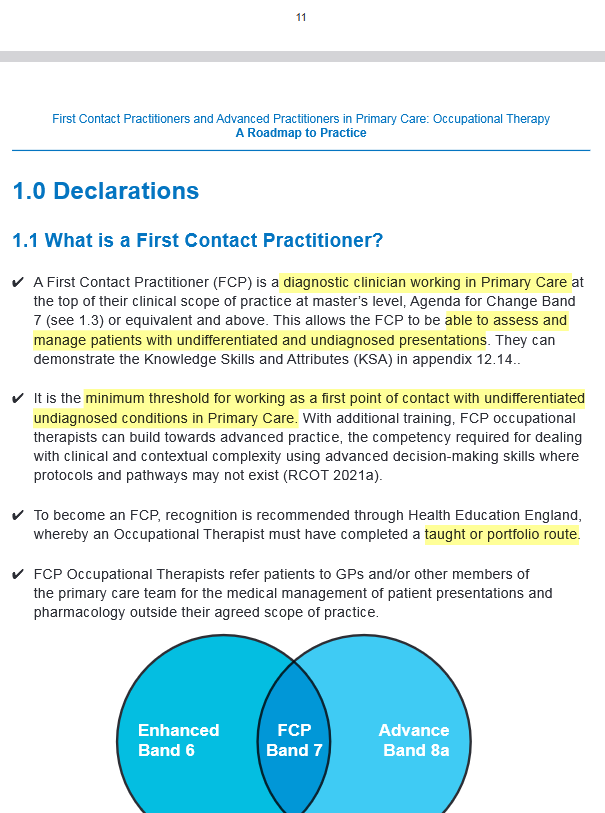
ALT Definition of a First Contract Practitioners taken from NHSE 2021 Roadmap to Practice. Contain 'minimum threshold for working as a first point of contact with undifferentiated undiagnosed conditions in Primary Care' (p12).
5
51
109
33,383

@NHS England is an ornamental meeting-cum-talking shop, and a recycling centre for the hard of delivery
healthpolicyinsight.com/cowp… via @HPIAndyCowper
5
4
775
2 Dec 2024
In the future, everybody will be French prime minister for 15 minutes.
2
8
700
2 Dec 2024
This should probably mention that Countess Of Chester chair Sir Duncan Nichol also used to be chief executive of the NHS 1989-1994.
bbc.co.uk/news/live/cvg022nz…
1
2
7
801
2 Dec 2024
After his time in charge, Sir Duncan Nichol created a thinktank ‘Healthcare 2000’, which predicted NHS user charges and service reductions.
independent.co.uk/news/uk/nh…
1
1
3
518
2 Dec 2024
‘Healthcare 2000’ was perceived at the time to be not un-influential hansard.parliament.uk/Lords/…, but as we now know, its predictions didn’t happen.
1
2
421

Andy Cowper retweeted

13 Nov 2024
League tables are a simplistic and ineffective way to pursue better public availability of important performance information.
3
1
2
701
Andy Cowper retweeted
13 Nov 2024
Far more attention is merited on making detailed information on outcome and performance variability available. But the NHS has not invested in that (eg the neglect of the NHS Atlas of Variation)...
1
2
7
728
Andy Cowper retweeted
13 Nov 2024
Studying variation in outcomes and performance is hugely important for driving the insights needed to improve. But, when the system wants to pretend performance is adequate, it is very uncomfortable.
1
2
2
577
Andy Cowper retweeted

13 Nov 2024
...cue 70's Led Zep Top of the Pops theme music...
1
3
427
Andy Cowper retweeted

13 Nov 2024
And no guarantee that 3 stars is representative of performance - RUH Bath hidden waiting lists comes to mind
1
4
408