
👨🏫 || SECURITY RESEARCHER || PENTESTING ||
Joined February 2022
- Tweets 814
- Following 596
- Followers 743
- Likes 8,310
29 Photos and videos


Pinned Tweet

9 Aug 2025
I am built for this. Talent means nothing without consistency. I’ll show up, put in the work, and keep pushing, because discipline will take me where talent alone never could. I refuse to quit!
11
1,009
26 Oct 2025
We’re thrilled to announce that applications are now open for the H4ckerTreats 6-Month Cybersecurity Internship Program, starting November 3rd, 2025!
At H4ckerTreats, we believe in empowering the next generation of cybersecurity minds through hands-on learning, collaboration, and mentorship.
If you’re passionate about cybersecurity, ethical hacking, or digital defense — this opportunity is for you.
🔹 Start Date: November 3rd, 2025
🔹 Duration: 6 Months
🔹 Format: Online
🔹 Application Link: forms.gle/SpjAeLV7GdhjSp5d9
Join a community where we Learn. Hack. Grow.
@HackerTreats
Don't sleep on this opportunity!!!
1
4
92
AbuBakri retweeted

25 Oct 2025
A society that tells a broke man he doesnt deserves a woman, cannot tell a rich man that he should only have one.
990
3,980
26,001
1,101,229
AbuBakri retweeted
16 Oct 2025
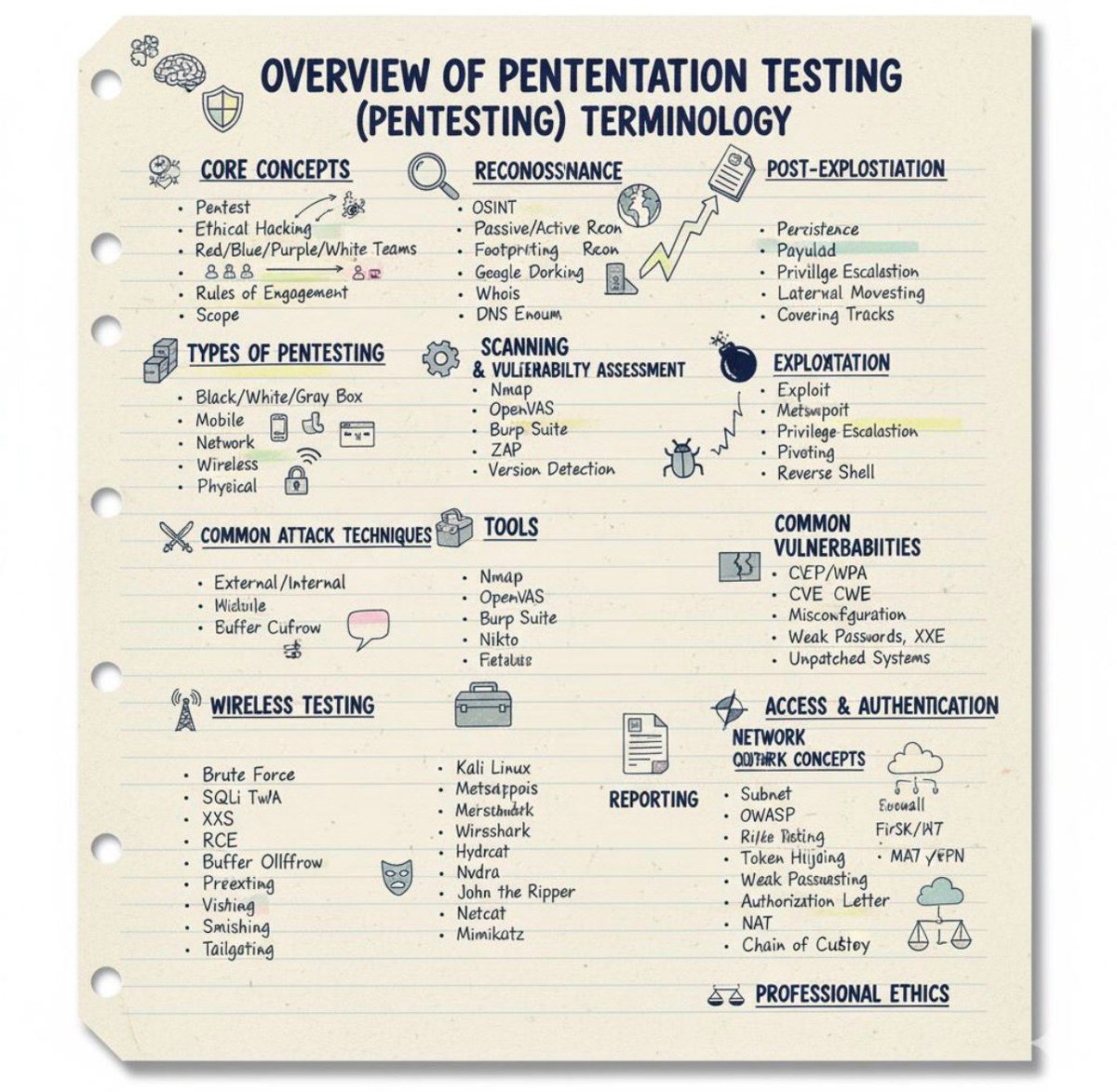
Quick Test: How Many Pentesting Terms Do You Actually Know? 🎯
Can you explain the difference between:
Black Box vs White Box vs Gray Box testing?
Lateral Movement vs Privilege Escalation?
Red Team vs Blue Team vs Purple Team?
OSINT vs Active Reconnaissance?
Exploit vs Payload vs Backdoor?
If you hesitated on any of these, you're not alone.
This comprehensive terminology guide covers 100 essential pentesting concepts—from basic reconnaissance to advanced post-exploitation techniques.
Because in cybersecurity, precision matters. The right terminology can mean the difference between detecting a threat and missing it entirely.
Drop a comment if you learned something new today.
17
2
21
3,383
AbuBakri retweeted
16 Oct 2025
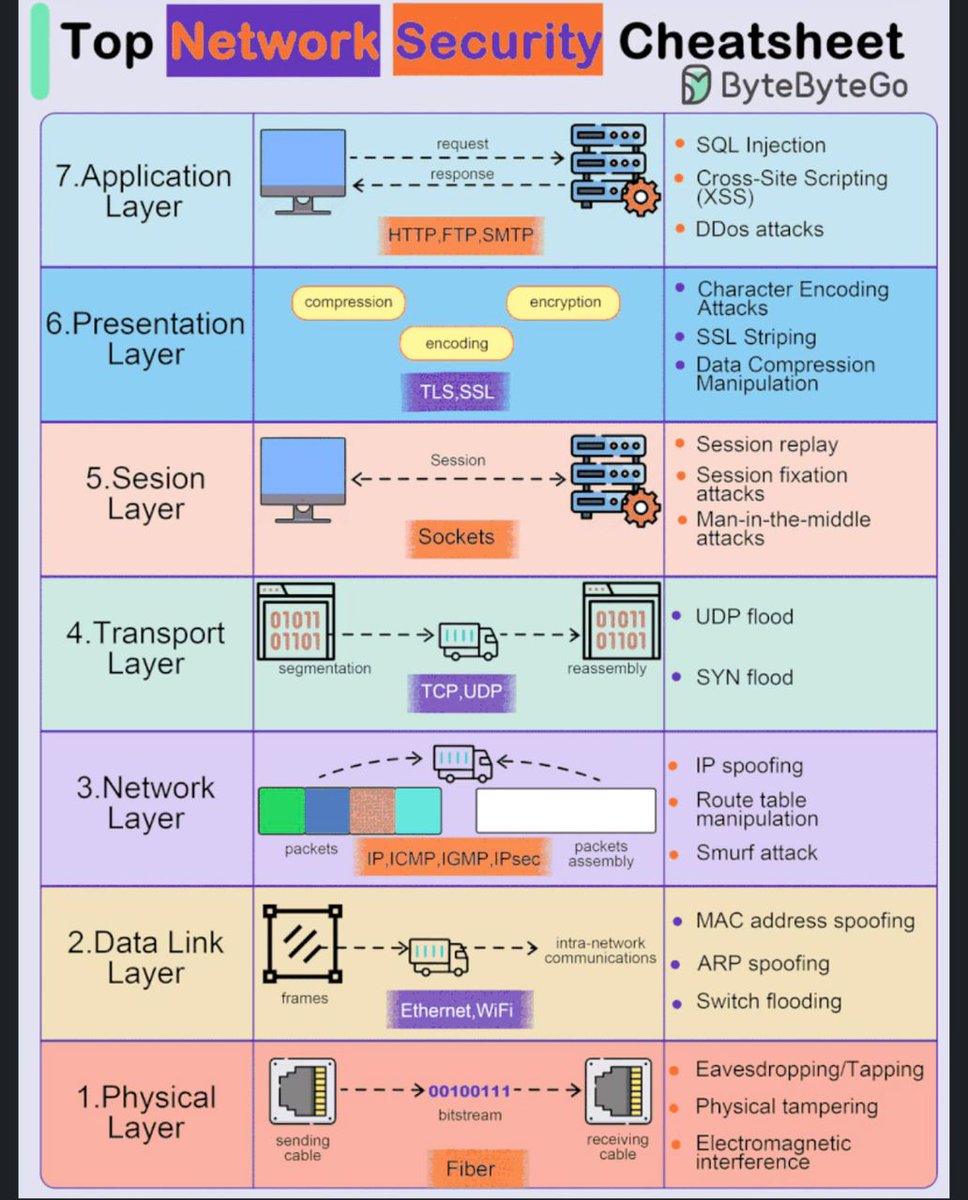
🔐 Network Security isn’t just firewalls and passwords, it’s layered defense at every step of the OSI model.
This cheatsheet breaks down the 7 layers of networking and the common security threats at each:
1. Physical Layer: eavesdropping, tampering, interference
2. Data Link Layer: MAC spoofing, ARP spoofing
3. Network Layer: IP spoofing, route manipulation
4. Transport Layer: SYN floods, UDP floods
5. Session Layer: replay attacks, session hijacking
6. Presentation Layer: SSL stripping, encoding attacks
7. Application Layer: SQL injection, XSS, DDoS
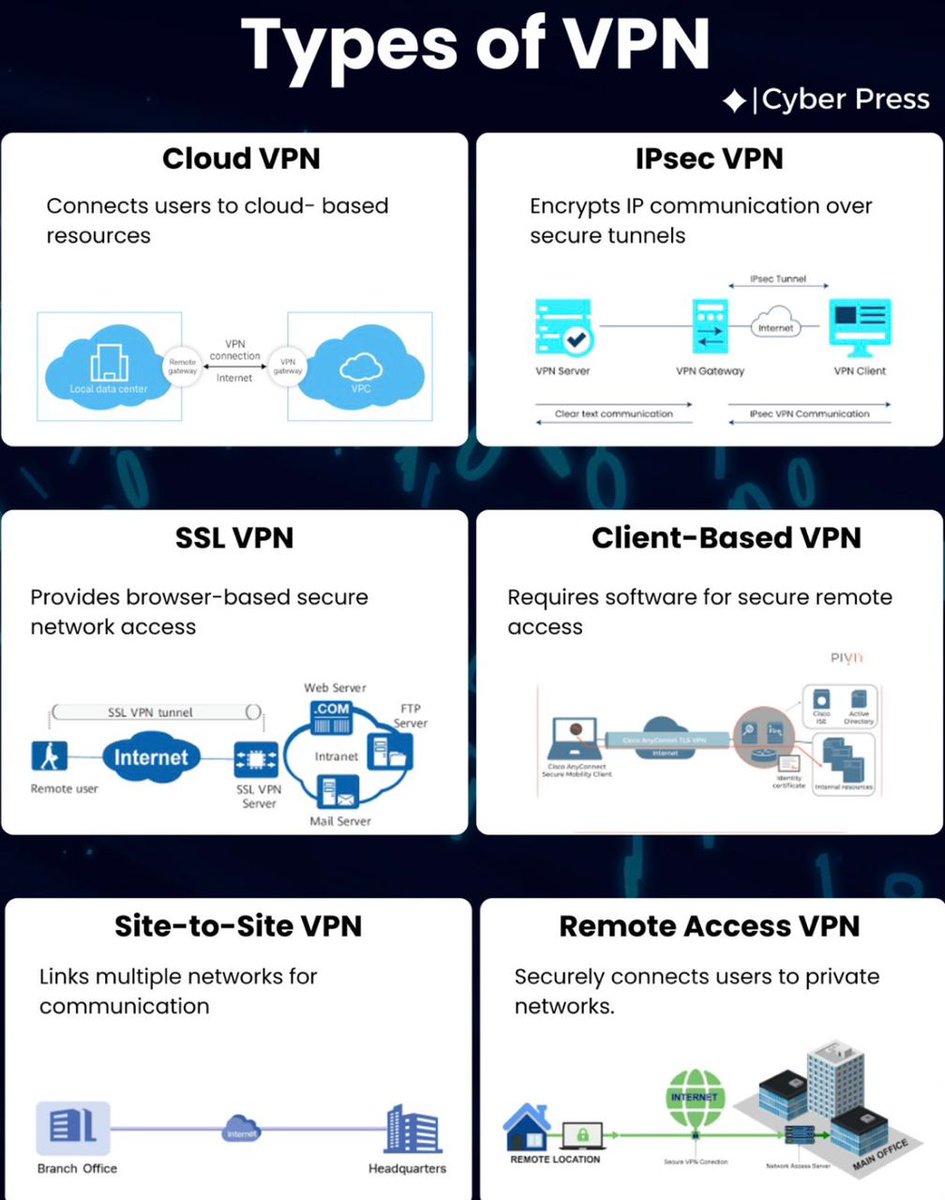
Security isn’t a single tool, it’s a stack of protections across all layers.🔐 𝗨𝗻𝗱𝗲𝗿𝘀𝘁𝗮𝗻𝗱𝗶𝗻𝗴 𝘁𝗵𝗲 𝗗𝗶𝗳𝗳𝗲𝗿𝗲𝗻𝘁 𝗧𝘆𝗽𝗲𝘀 𝗼𝗳 𝗩𝗣𝗡
VPNs play a critical role in securing communications, whether for remote work, cloud access, or site-to-site connectivity.
Here are the main types every cybersecurity or network professional should know:
1️⃣ Cloud VPN – Connect users to cloud-based resources
2️⃣ IPsec VPN – Encrypt IP communication through secure tunnels
3️⃣ SSL VPN – Provides browser-based secure access
4️⃣ Client-Based VPN – Requires software for remote access
5️⃣ Site-to-Site VPN – Links multiple networks together
6️⃣ Remote Access VPN – Connects users securely to private networks
🌐 Choosing the right VPN type depends on your infrastructure, use case, and security needs.
👇 Which VPN type does your organization rely on the most?
17
3
21
3,407
AbuBakri retweeted
10 Oct 2025
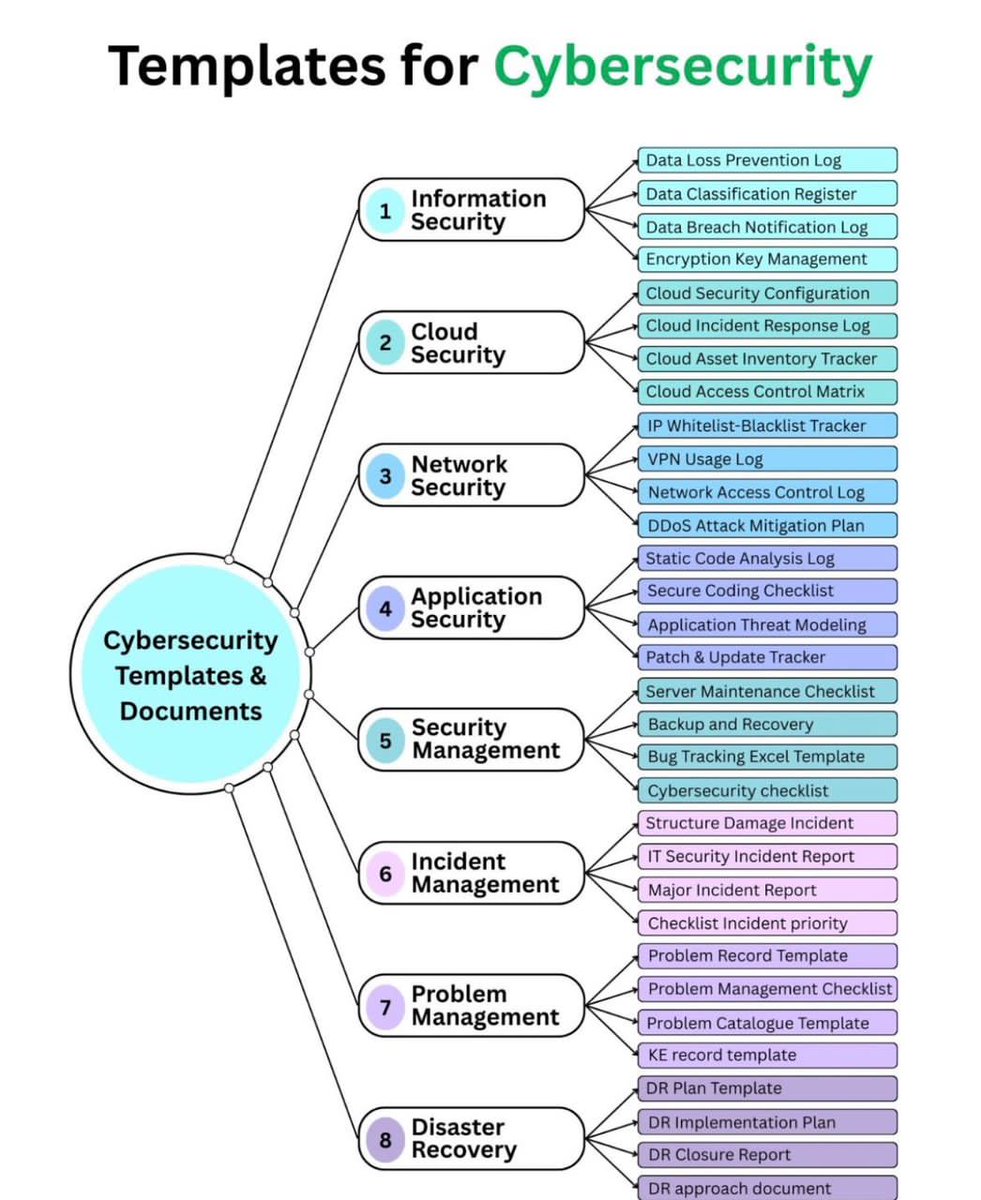
Cybersecurity Complete Suit:
Cloud Security:
>Cloud Access Control Matrix
>Cloud Asset Inventory Tracker
>Cloud Backup & Recovery Testing Tracker
>Cloud Incident Response Log
>Cloud Security Configuration Baseline
Network Security:
>DDoS Attack Mitigation Plan Tracker
>IP Whitelist-Blacklist Tracker
>Network Access Control Log
>Network Device Inventory
>Network Security Risk Mitigation Report
>Network Traffic Monitoring Dashboard
>Patch Management Schedule for Network Devices
>Security Event Correlation Tracker
>VPN Usage Log
Information Security:
>Information Security Dashboard
>Information Security KPI Dashboard
>Access Rights & Permissions Matrix
>Data Breach Notification Log
>Data Classification Register
>Data Loss Prevention (DLP) Incident Log
>Document Retention & Disposal Tracker
>Encryption Key Management Sheet
>Incident Reporting & Tracking Sheet
>Information Security Policy Compliance Checklist
>Security KPI Dashboard
Application Security:
>Application Data Encryption Checklist
>Application Risk Assessment Matrix
>Application Threat Modeling
>Authentication & Authorization Control Sheet
>Patch & Update Tracker
>Secure Coding Checklist
>Secure Mobile App Testing Tracker
>Security Misconfiguration Log
>Static Code Analysis Log
>Web Application Vulnerability Tracker
Monitoring Dashboard:
>Network Traffic Monitoring Dashboard
>Server Monitoring Dashboard
>System Performance Report Dashboard
>Network Performance Dashboard
Security Management Documents:
>Acceptable use of assets
>Password Policy
>Backup and Recovery
>BYOD
>Compliance Management
>Disposal and Destruction policy
>Information classification policy
>Information Transfer policy
>ISMS policy
>IT Asset Management Policy Template
>Mobile devices and Teleworking policy
>Incident Management Guide
>Incident Management Policy
>Incident Management Process
>Intern Incident Report
>Major Incident Report Template
>Structure Damage Incident Report
>Workplace Violence Report
>KE record template
>Major Problem Report Template
>Problem Management Process
>Problem Record Template
>DR approach document
>DR Asset Register
>DR Closure Report
>DR Comms Plan
>DR Plan Template
23
5
28
8,548
AbuBakri retweeted
10 Oct 2025
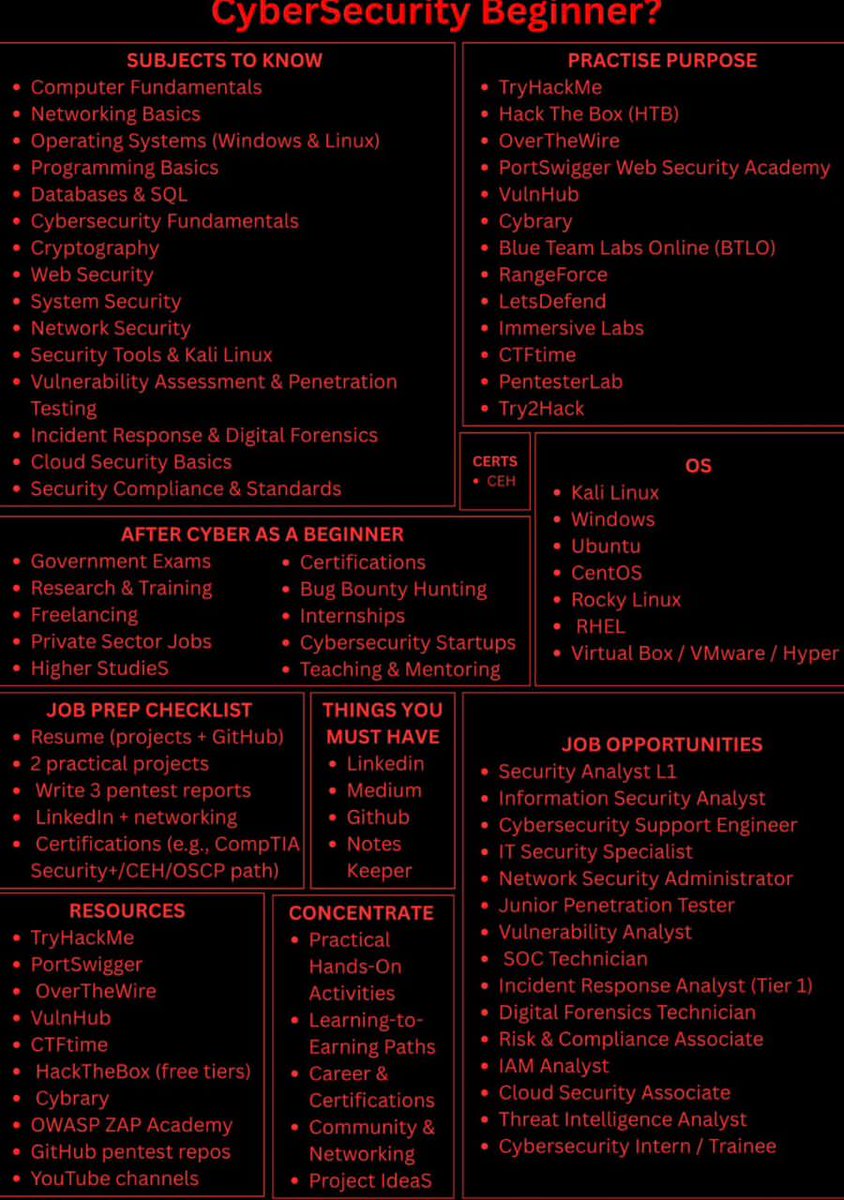
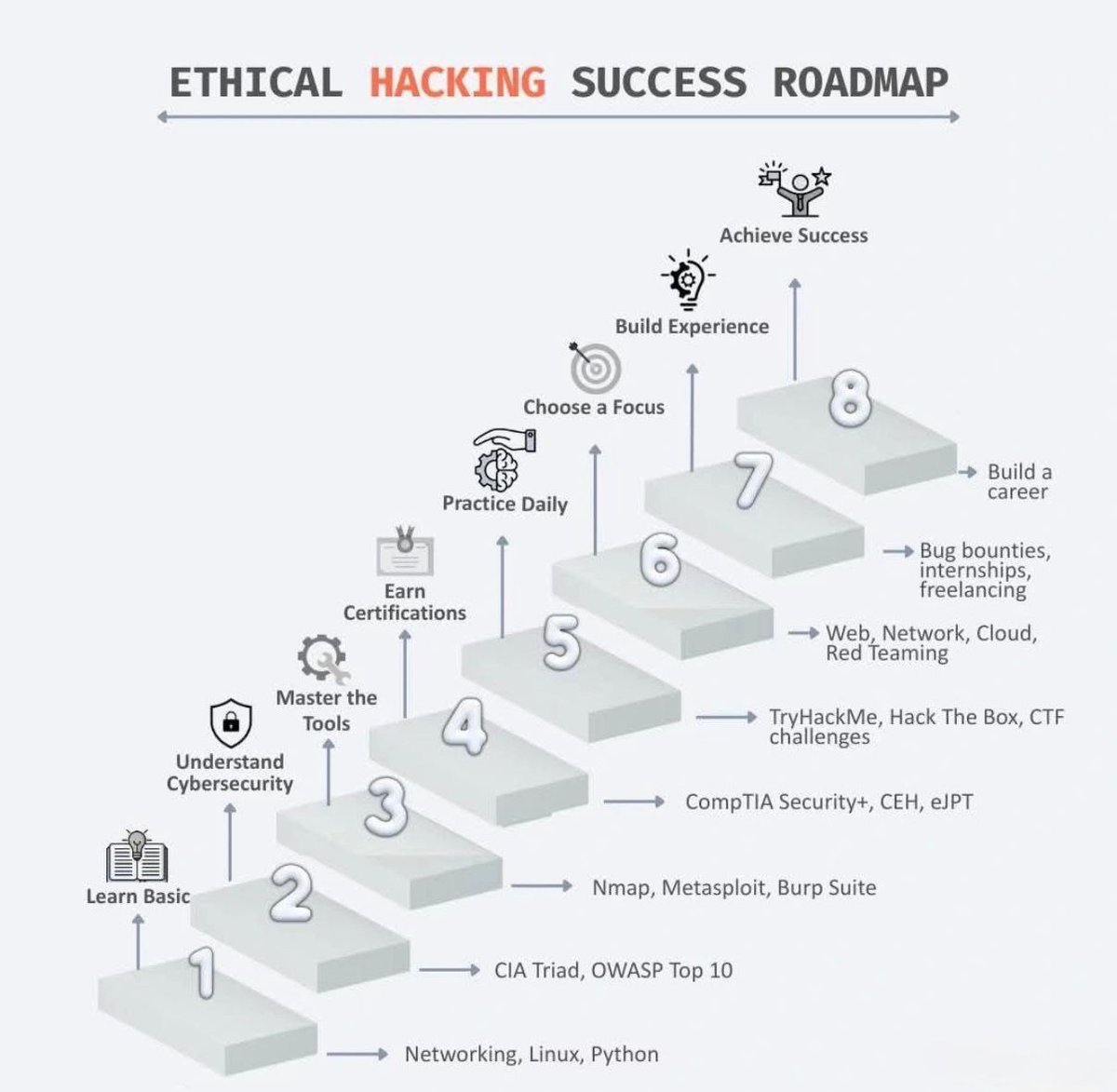
When I first stepped into the world of cybersecurity, I was completely lost.
I didn’t know where to start, what to learn first, or how people even got into this field. All I knew was—I wanted to be a part of this world where people protect, investigate, and defend against digital threats. 💻⚡
At first, everything looked complicated: hacking, tools, reports, and those mysterious terms like “VAPT” and “SOC.” But slowly, I realized that becoming a cybersecurity professional isn’t about learning everything at once—it’s about building layer by layer.
So here’s how the journey begins 👇
📍 Step 1: Build your base
Understand the fundamentals — Computer basics, Networking, Linux, Windows, and a bit of Programming.
This is your foundation. Without it, cybersecurity concepts won’t make sense.
📍 Step 2: Explore the world of security
Learn about Web Security, System Security, Network Security, Cryptography, and Cybersecurity Fundamentals.
Then dive deeper into areas like VAPT, Incident Response, Digital Forensics, and Cloud Security.
📍 Step 3: Play and practice
This is where learning gets fun!
Platforms like TryHackMe, HackTheBox, PortSwigger Academy, OverTheWire, VulnHub, and LetsDefend are your playgrounds.
Each challenge you solve teaches you real-world skills.
📍 Step 4: Find your direction
You can become a Security Analyst, SOC Technician, Penetration Tester, Threat Intelligence Analyst, or even a Cloud Security Associate ☁️
Each path has its own tools, techniques, and challenges.
📍 Step 5: Prepare for your career
Start building projects, upload your reports to GitHub, and prepare at least three pentest reports.
Add certifications like CompTIA Security , CEH, or OSCP.
And don’t forget to network on LinkedIn — it opens doors you didn’t even know existed. 🤝
🔥 My advice? Start small, stay consistent, and document everything you learn.
Cybersecurity isn’t just about hacking—it’s about protecting, analyzing, and defending. 💪
So if you’re someone who’s confused, just like I was—this roadmap is your compass.
Let’s build the next generation of ethical hackers and defenders together. 💣
23
8
38
1,106
AbuBakri retweeted
5 Oct 2025
🔐 Network Security isn’t just firewalls and passwords, it’s layered defense at every step of the OSI model.
This cheatsheet breaks down the 7 layers of networking and the common security threats at each:
1. Physical Layer: eavesdropping, tampering, interference
2. Data Link Layer: MAC spoofing, ARP spoofing
3. Network Layer: IP spoofing, route manipulation
4. Transport Layer: SYN floods, UDP floods
5. Session Layer: replay attacks, session hijacking
6. Presentation Layer: SSL stripping, encoding attacks
7. Application Layer: SQL injection, XSS, DDoS
Security isn’t a single tool, it’s a stack of protections across all layers.
15
2
21
592
AbuBakri retweeted
15 Sep 2025
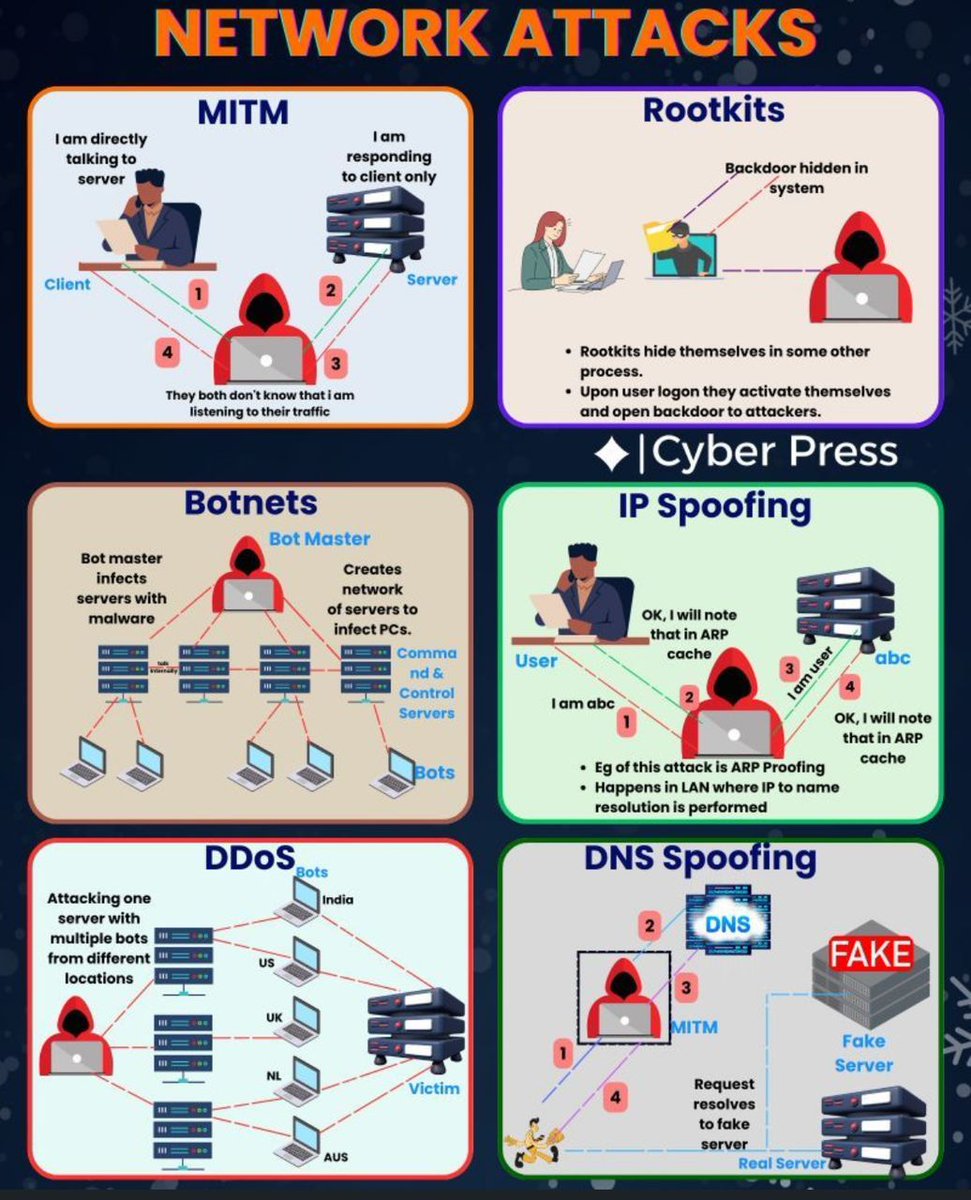
🔐 Understanding Network Attack Vectors: A Comprehensive Security Overview
Sharing this detailed breakdown of six critical network attack methodologies that every cybersecurity professional should understand:
🎯 MITM (Man-in-the-Middle) - Intercepting communications between client and server
🔓 Rootkits - Hidden backdoor access maintaining persistent system compromise
🤖 Botnets - Coordinated networks of infected devices under centralized control
🎭 IP Spoofing - Identity manipulation through ARP cache poisoning
⚡ DDoS Attacks - Overwhelming targets through distributed traffic flooding
🌐 DNS Spoofing - Redirecting legitimate requests to malicious servers
Knowledge of these attack vectors is essential for:
✅ Network security architecture design
✅ Threat detection and prevention
✅ Incident response planning
✅ Security awareness training
As cyber threats continue to evolve, staying informed about these fundamental attack patterns helps us build more resilient security frameworks and protect organizational assets.
17
3
28
3,605
AbuBakri retweeted
14 Sep 2025
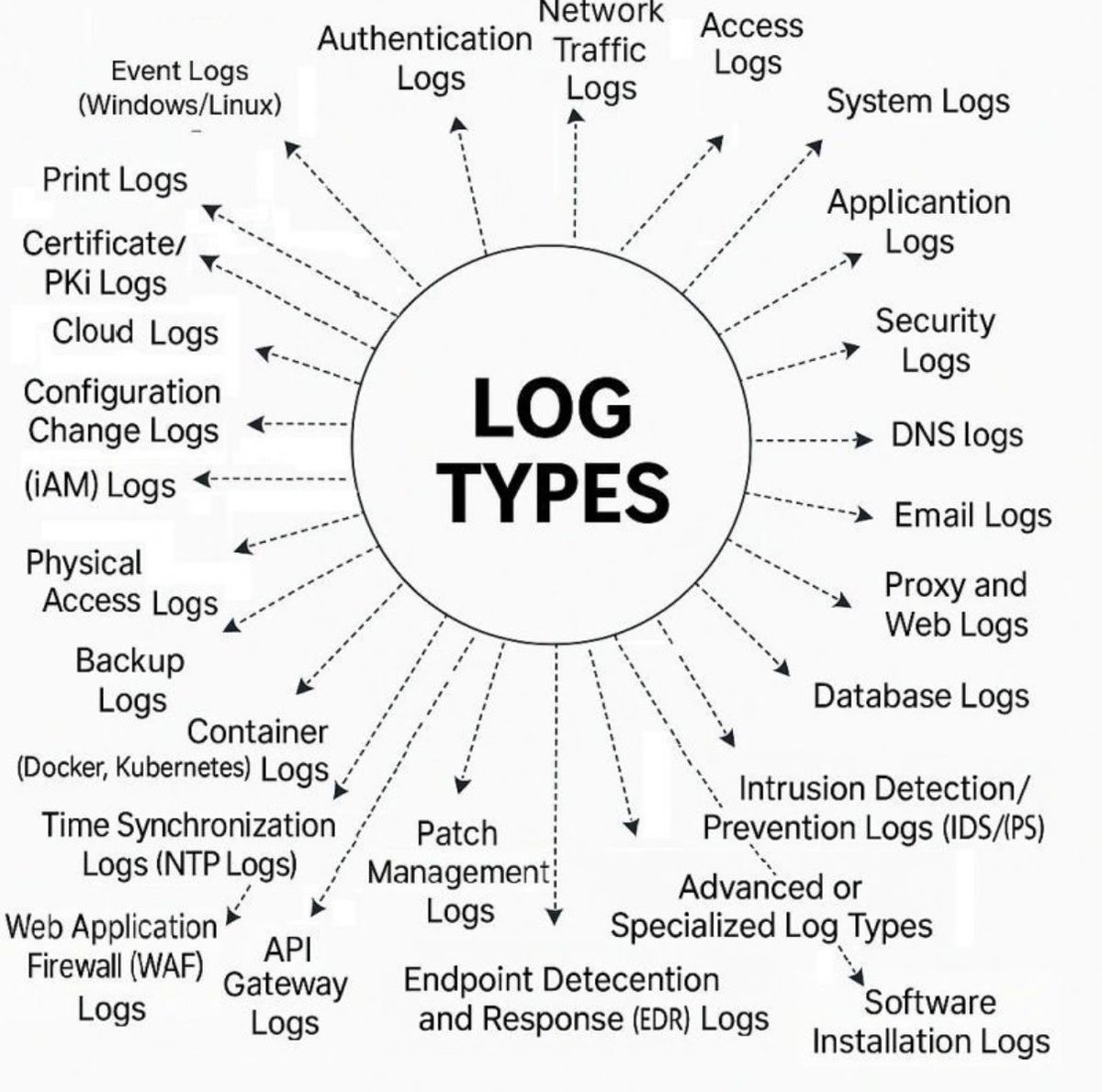
🔴🟣🟢 𝐔𝐧𝐝𝐞𝐫𝐬𝐭𝐚𝐧𝐝𝐢𝐧𝐠 𝐋𝐨𝐠 𝐓𝐲𝐩𝐞𝐬: 𝐓𝐡𝐞 𝐁𝐚𝐜𝐤𝐛𝐨𝐧𝐞 𝐨𝐟 𝐂𝐲𝐛𝐞𝐫𝐬𝐞𝐜𝐮𝐫𝐢𝐭𝐲 𝐌𝐨𝐧𝐢𝐭𝐨𝐫𝐢𝐧𝐠
Whether you’re in a SOC, conducting a forensic investigation, or strengthening your threat detection capabilities, log data is everything.
Here's a breakdown of the key log types you should be collecting, analyzing, and correlating in your environment — from authentication and firewall logs to EDR, container, and cloud storage access logs etc.
🚨Proper log management:
• Enhances visibility
• Improves threat detection
• Accelerates incident response
• Supports compliance (PCI-DSS, ISO, NIST)
If you're building or improving a SIEM or logging strategy, this visual guide is for you!
What other log types do you consider critical in your environment?
24
5
31
1,066
AbuBakri retweeted
12 Sep 2025
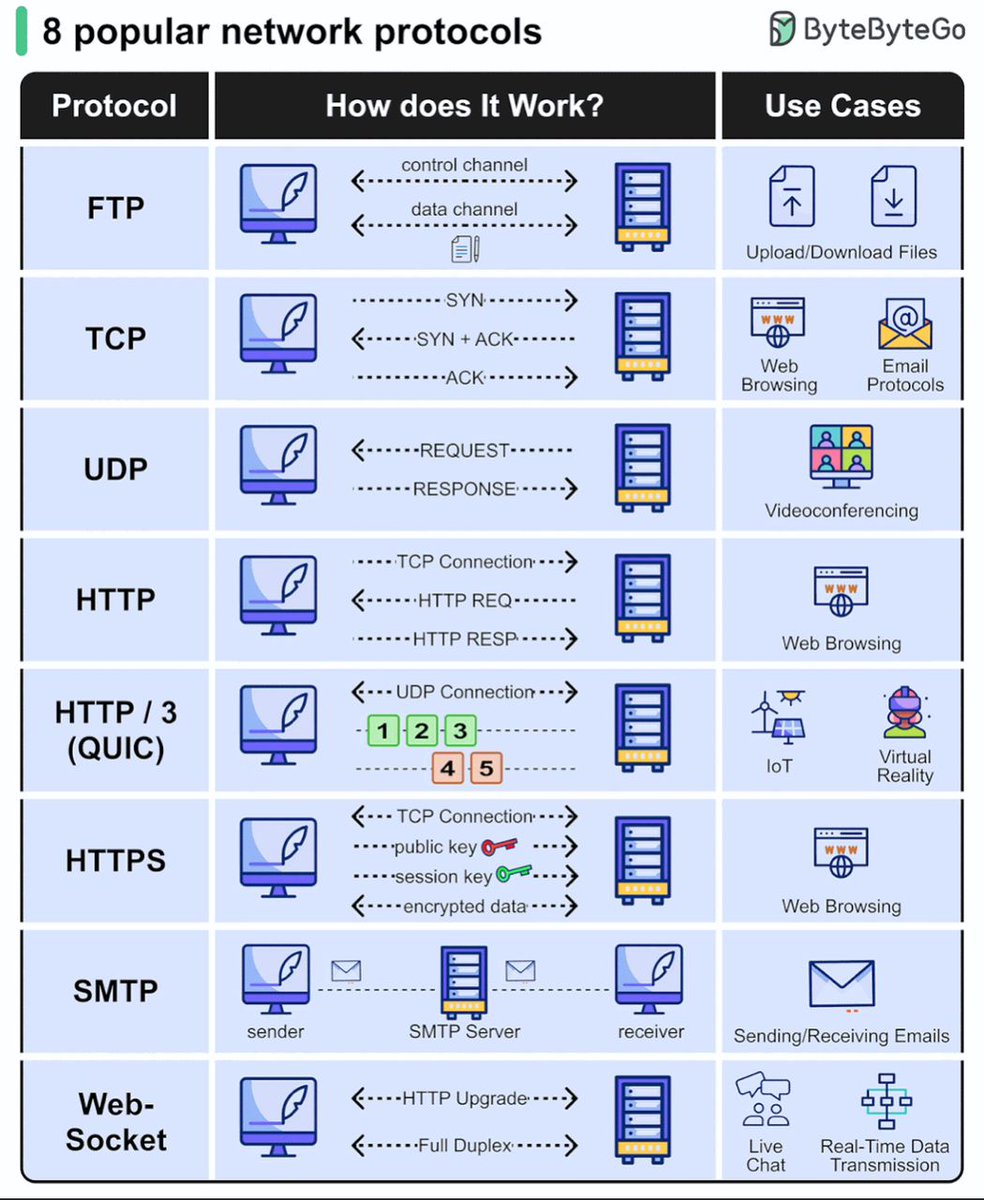
📡 How Protocols Work in Networking 📡
Every message we send online — emails, web browsing, video calls — follows a set of rules called protocols.
They make sure data is organized, transmitted, and received correctly.
Just like humans need a common language to communicate, devices need protocols to understand each other.
Without protocols, the internet wouldn’t exist the way we know it today.
17
3
24
6,030
AbuBakri retweeted
10 Sep 2025
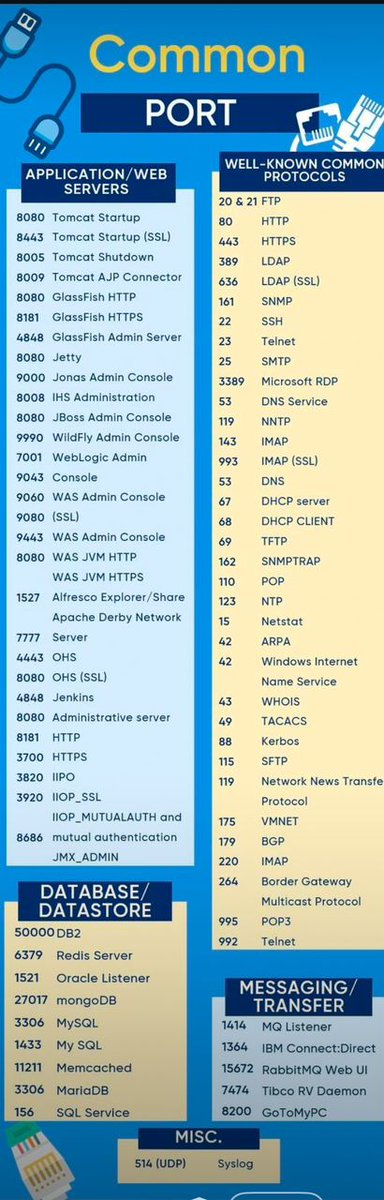
🔌 Understanding Network Ports = Stronger Cyber Defense
In cybersecurity, knowing common network ports and their associated services is fundamental. Attackers often scan these ports to find open doors, while defenders monitor them to detect anomalies.
📌 Why Ports Matter in Cybersecurity?
🔍 Identify misconfigurations & vulnerabilities
🛡️ Detect unauthorized access attempts
⚡ Strengthen firewall & IDS/IPS rules
🧰 Essential for penetration testing & SOC investigations
💡 Some key ports to always remember:
21/22/23 → FTP, SSH, Telnet
25/110/143 → Email protocols (SMTP, POP3, IMAP)
53 → DNS
80/443 → HTTP & HTTPS (most attacked!)
3306/1433 → MySQL & SQL Server
6379/27017 → Redis & MongoDB
514 → Syslog (critical for log analysis)
🚨 Mismanaged ports = potential entry points for attackers.
Cybersecurity starts with visibility monitoring.
👉 Which port do you monitor the most in your environment?
18
1
20
756