
Joined February 2018
- Tweets 2,343
- Following 1,073
- Followers 565
- Likes 9,474
347 Photos and videos


Haddock Capital retweeted

May 18
FYI in Toronto area

37
576
1,858
278,788
Wild
Jan 28

NEW: DUTCH UNREALIZED GAINS TAX
🇳🇱 The Netherlands just voted to overhaul annual income tax filings with a new tax of up to 36% for unrealized capital gains, starting in 2028.
Assets like Bitcoin on bitcoin, stocks, and bonds will trigger tax liabilities each year based on changes in value, even if nothing has been sold.
I've been warning you: asset seizures are coming to Europe.
Community note
The Netherlands hasn't "just voted" on this tax. Parliament debated the bill on Jan 19, 2026, but no final vote has occurred yet. Sources describe it as "likely to start" and "considers" - the measure is still pending approval. nltimes.nl/2026/01/20/net…
1
448
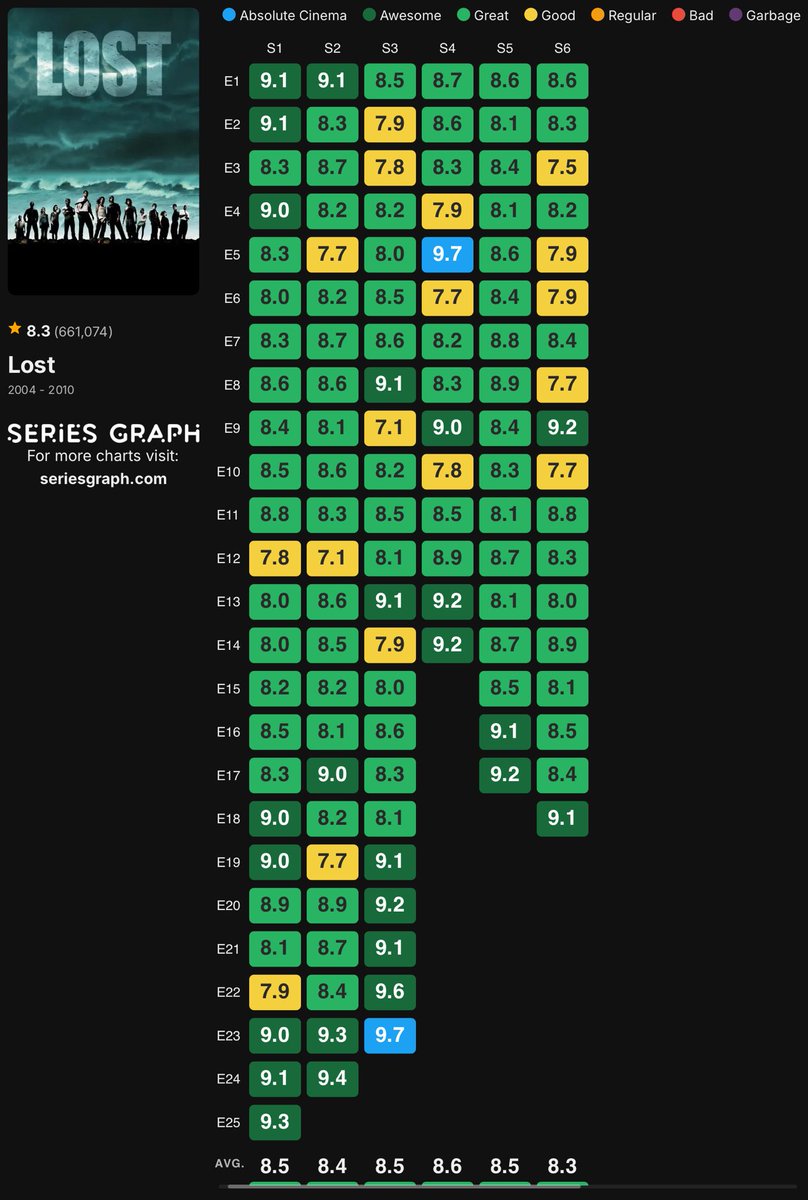
Season 1, the first half of season 2 and it's finale, and season 3 finale are some of the best TV episodes ever made. The rest were terrible.

1
1
467
Haddock Capital retweeted

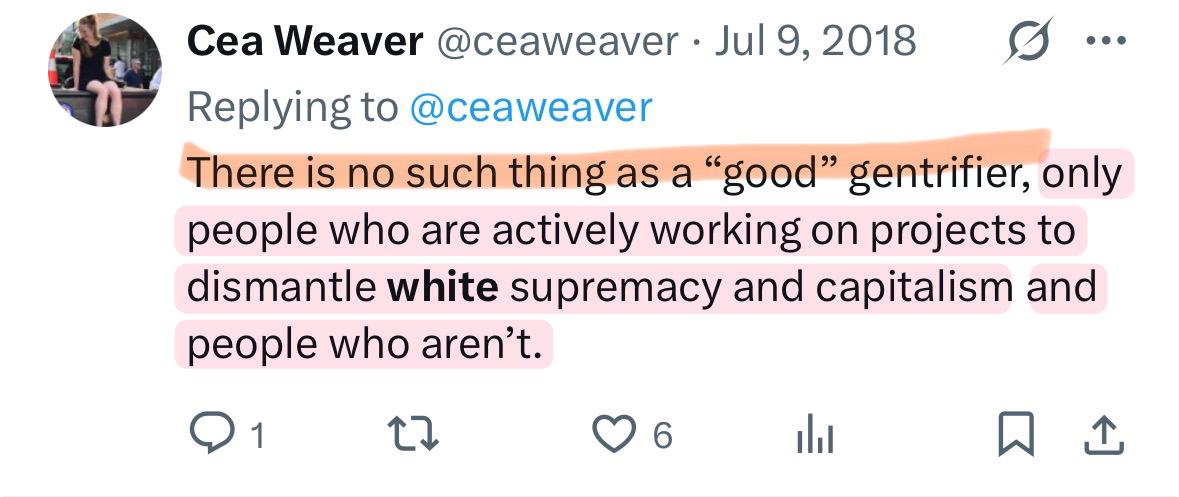
A few months ago, I dug into Cea Weaver's Twitter history because she was Mamdani's housing advisor.
I had a hunch she might get a position on his team.
Well, she did, and she deleted her X account, accordingly.
However, I took some screenshots. Let's dig in.
2,319
13,341
52,485
4,758,368
Haddock Capital retweeted

10 Dec 2025
6
9
44
2,806
Haddock Capital retweeted
9 Dec 2025
10
18
57
2,791
Haddock Capital retweeted

22 Oct 2025
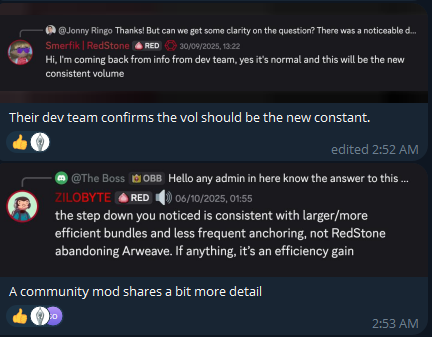
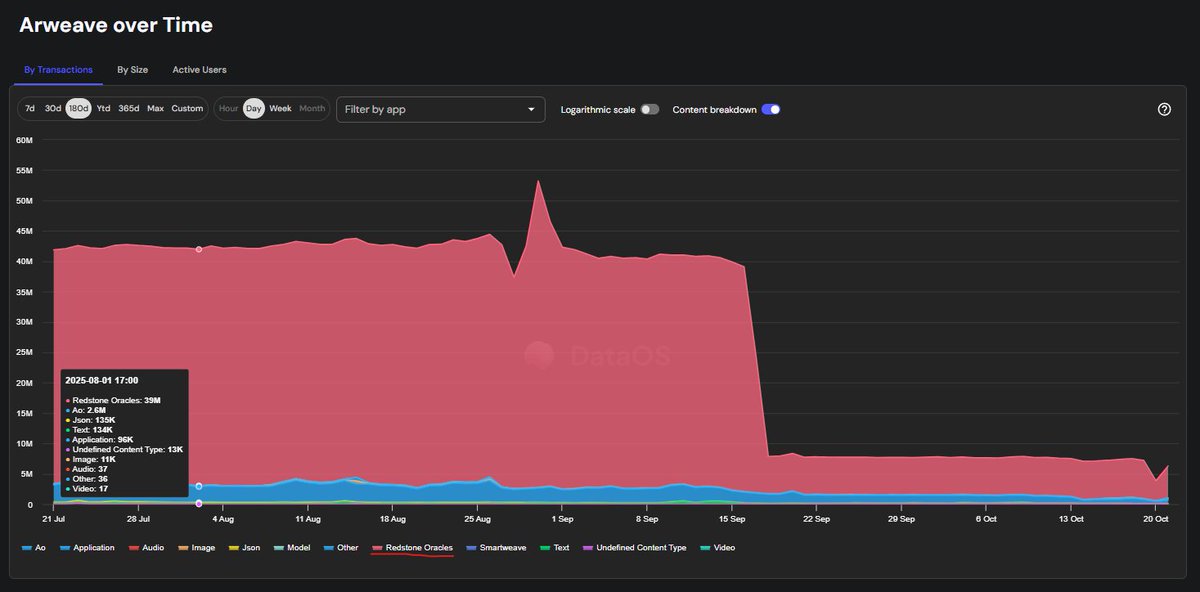
Recently there was a drop in the total number of daily transactions on Arweave, due to a decrease in "anchor" transactions by @redstone_defi.
RedStone optimized their anchoring process to bundle transactions more efficiently, which means fewer individual anchors hitting the chain but the same (or more) data being secured. It's like going from sending 100 postcards to sending 10 packages—same amount of stuff, just smarter delivery.
This is exactly what scaling looks like in practice. The network didn't shrink; it got more efficient. RedStone is still anchoring their oracle data to Arweave for permanent, verifiable storage—they're just doing it in a way that reduces overhead and improves their operations.
#Arweave data storage is maturing.
3
14
70
2,664

Little announcement here:
My mom's biopsy wasn't good, and sadly melanoma is not one of the types of cancer covered by public healthcare in Chile.
We need money for a full body CT Scan to discard metastasis.
Hit me up if you're interested on my services.

3
67
171
30,915
Haddock Capital retweeted

26 Aug 2025
thanks for helping get the word out. I found out by accident when working on one of the mmcc nfts.
moving everything back to Arweave now
sad, cause I really believed in SHDW and onboarded a lot of people to the token and storage solution.
How many collections will go dark?
2
10
2,003


22 May 2025
Remains the case a year later.
28 Feb 2024

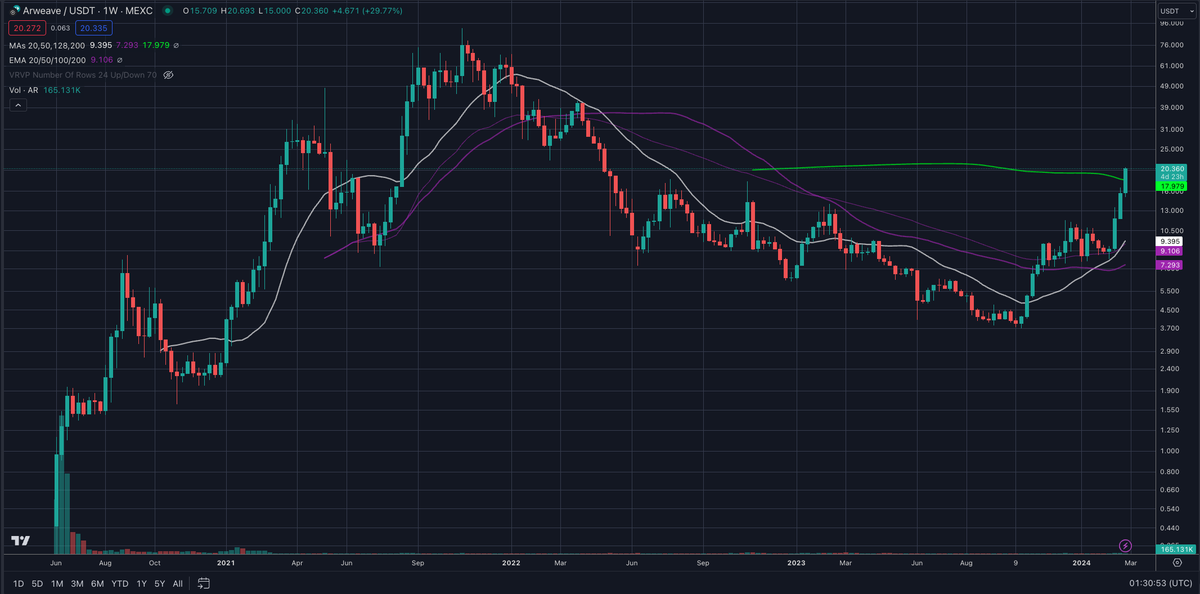
Market woke up over the last 3 weeks and realized @ArweaveEco's $AR was massively undervalued at ~$500M FDV, while fundamentals strengthened through the entire bear of 2022/23 - love to see it 🫡
213
18 May 2025
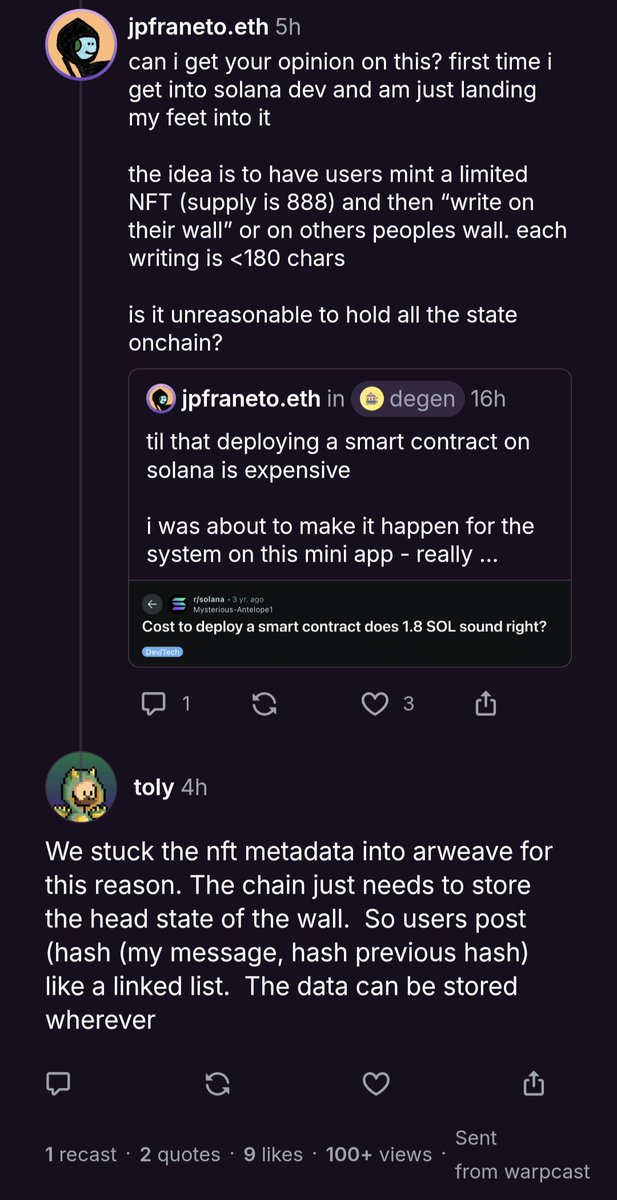
The creator of Solana has stated that they store their NFT metadata on @onlyarweave. Most people either don't know this or don't understand the mission critical service Arweave provides within web3.
warpcast.com/toly/0x4f2b60e5
1
18
680
Haddock Capital retweeted
18 May 2025
The @solana Co-founder mentions Solana stores its NFT metadata on #Arweave, and you aren't bullish on the permanent data storage narrative yet anon?
warpcast.com/toly/0x4f2b60e5
2
9
38
2,070
Haddock Capital retweeted

3 May 2025
Warren Buffet Is Stepping Down From Berkshire Hathaway After 60 Years. Plus, 4 Other Takeaways You May Have Missed. trib.al/5jr4u8n
6
10
31
9,754
Haddock Capital retweeted

26 Apr 2024
The answer to OP below is: Far, far, far more.
Why? Messages.
I have huge respect for the engineering of Solana. The design is generally underrated by non-devs. Let's explore the differences and trade-offs with @aoTheComputer in-depth.
🧵A Primer: WTF is message passing? 👇
In computer science when we want to process multiple inputs (like transactions) to a system simultaneously we call this 'parallelism'. There are two fundamental approaches: Shared memory and message passing. Let's look at each in turn.
Shared Memory
Solana is an extremely well-optimized shared memory machine. This means that every contract can read and write directly to the memory of every other contract.
This allows 'state' (the data in programs -- like balances, etc) to be updated synchronously: They are all committed in one go.
This can be helpful, but it also means that when one user is accessing some of the data in a program, it cannot be modified by any other user.
They wait for one-another in a process called 'lock contention'. Alice 'locks' the data, modifies it, 'unlocks' it, and only then can Bob access it. They essentially form a queue.
Shared memory systems scale to a certain point -- and Solana pioneered the most optimal design of it I have seen in a trustless environment -- but then it stops. To scale further, you have to take a different approach...
Message Passing
@aoTheComputer is a hyper-optimization of the other route: Message passing.
In AO, each 'contract' is its own asynchronous process.
Each one runs independently, at the speed of a single CPU thread, sending messages to other processes when they need to interact. You can think of each like an individual program on your computer, or an extremely fast version of a rollup/app-chain.
When you exhaust the throughput of one process for your app, you can just split your app across any number of other processes.
More processes ➡️ higher throughput ➡️ more happy users.
There is no practical limit to the number of hosted parallel processes in AO. The only protocol limit is inherited from Arweave: no more than 2^256 bytes. For scale, this is far more atoms than there are in the universe.
The flip-side of this is that you don't have access to the memory of every other process in the network 'globally' -- you have to ask for information via messages.
Fortunately, there is over 50 years of research and deployment of this technique in computer science to make it simple and easy to use. It is called Actor Oriented Programming, and is where AO gets its name.
Almost every service you use on the internet is built using message passing -- messengers, web sites, and the entire TradFi ecosystem. Even the internet itself is a message passing machine.
AO's innovation is to apply this approach to blockchains and smart contracts.
Because we already had to solve the scalability of onchain storage in order to build Arweave, we inherited this scalability 'for free' by building AO with Arweave as its messaging layer.
On-chain data at any scale ➡️ on-chain messages at any scale.
The first use of this system is likely to be in the financial arena, but I don't think it will stop there. When each process is asynchronous, any amount of compute can run in the network at the same time without any effect on one-another.
You can use AO to run a compute-heavy AI agent while I use it to buy coffee at a store. Our processes are independent, so neither of us has to bid against the other in order to access the system. There is no reason this cannot scale to cover the entire world's compute load.
To sum it up:
No shared memory via message passing ➡️
No lock contention ➡️
Scale.
The cost? Shared, synchronous access to global memory.
Given the right tools, which AOS provides, this cost is barely noticeable. Seems like a good trade.
This is a topic that computer scientists can discuss endlessly. There is lots of nuance here, but if you made it this far: Congrats. You now get the gist.
Solana is an exceptionally well engineered machine, taking the shared memory paradigm to its logical conclusion in blockchains. The AO testnet has been live for 2 months, and is currently handling ~6% of the user traffic of Solana.
Clear skies and free-scaling growth ahead 🫡.
26 Apr 2024

Can AO do the same TPS as Solana ?
21
122
219
68,195
9 Apr 2025
Lmao...🤣
9 Apr 2025

This was brilliantly executed by @realDonaldTrump. Textbook, Art of the Deal.
1
116
Haddock Capital retweeted
19 Mar 2025
Arweave usage is a buyback and 'burn' of its tokens!
Few people seem to realize this yet, but when you store data on Arweave you contribute 200 years worth of storage costs at present prices to the endowment. These tokens are removed from the supply for the long-term and only re-issued again if/when needed. Not a single token has left the endowment since launch nearly 7 years ago.
There is a very interesting effect of this: The network's token supply shrinks proportionate to usage and the declining storage costs over time. If the cost of storage never declined again and the token price averaged at the same place, then the last token from data stored today would be reissued from the endowment 200 years from now. If, in that same scenario, the cost of storage declined at a rate of 0.5% per year on average then the full quantity of tokens would never be re-issued, nor would the endowment ever run out of funds to pay to maintain its data. Higher storage cost decline rates lead to fewer tokens being eventually reissued from the endowment and thus supply shrinking further. The historical average of storage cost declines has been ~38%/yr on average for the last 50 years.
What makes this so neat is that from the user's perspective, this mechanism is entirely non-value extractive -- despite the fact it powerfully absorbs tokens from the supply.
This is because all endowments function as a risk model. Users do not want permanent storage to be 'cheap', because it would simply mean the likelihood that the endowment would not be able to cover storage costs (curtailing their data's lifetime) would increase. Cheaper => less reliable. Arweave has tuned these parameters to be extremely conservative, and from our experience users are not price sensitive: they simply want their data to be permanent. Meanwhile, as technology deflates the price of storage the number of tokens necessary to release from the endowment in the future declines. The difference is essentially permanently burnt by the protocol.
Because all endowment-backed systems are a risk model and prices are non-extractive to users, the network would also be extremely difficult to truly compete with. The costs of using the network are not a cost to its user base: they are purchased storage security. Any 'cheaper' alternative would simply mean 'less reliable' (and with inferior token economics).
For an industry obsessed with value accrual mechanics, it's amazing to me that so few people have worked this out 😂.
If you would like to read more about how Arweave's endowment works, there is more information and a detailed simulator you can run for yourself here:
arwiki.arweave.net/#/en/endo…
9
32
111
26,890
Haddock Capital retweeted

20 Feb 2025
AO/wUSDC Pool just launched on Botega now that’s paying 1.25% for LP Providers.
It already has $72k liquidity and growing!
I have been using @AgentBotega to trade on the last few days and honestly it’s been great. Has really good trade functionality and optionality for a Dex, sleek UI and the Agents go to work for me filling my orders.
Mark my words this will be the biggest LP on $AO soon, so now’s the time to strike.
dexi.defi.ao/#/pool/26BXDOZN…
7
10
31
1,640
12 Feb 2025
Stupid idea.
12 Feb 2025

BREAKING: 🇺🇸 Officials within the Trump administration have said that President Trump is considering returning the U.S dollar back to the gold standard. This would allow U.S currency to be directly exchanged for gold.
This would be incredible in my opinion.
222
Haddock Capital retweeted

8 Feb 2025
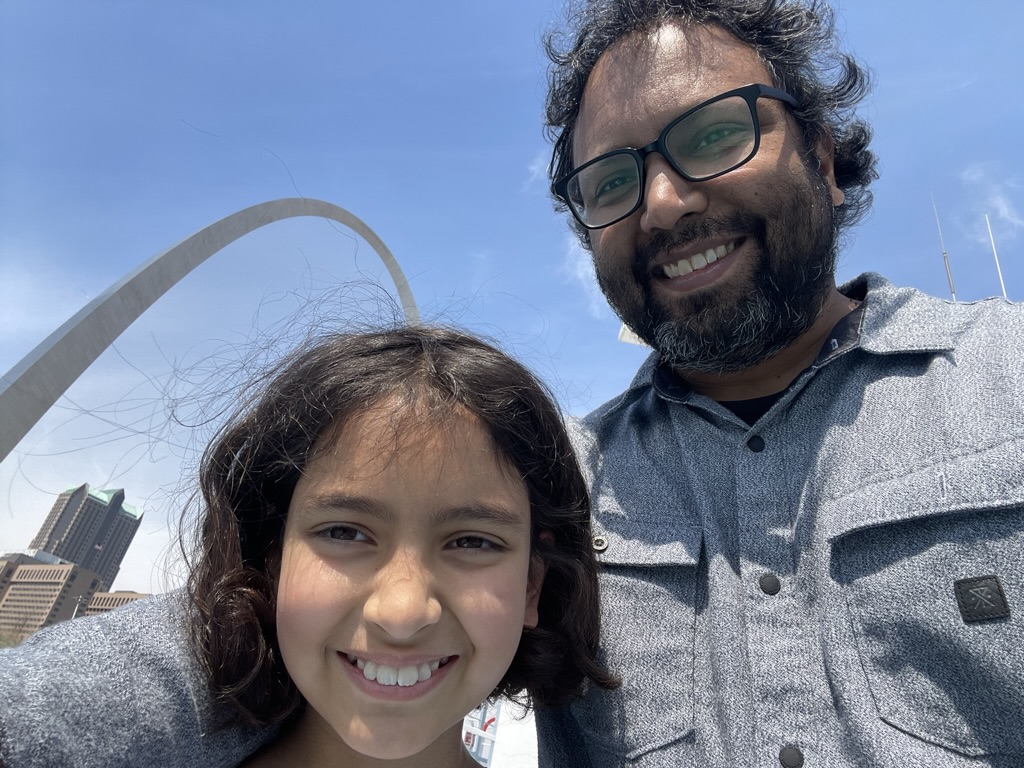
It’s been a tough few weeks. My 10yo daughter was diagnosed with a very rare, aggressive cancer called interdigitating dendritic cell sarcoma (IDCS). I’m reaching out to identify clinicians/patients who have encountered pediatric IDCS, indeterminate dendritic cell histiocytosis or other (non-LCH) histiocytic sarcomas cases.
I'm trying to understand non-surgical chemo and targeted therapy options, new pathology markers to better diagnose subtypes/treatments, and any data on progression in pediatric patients. Please feel free to share – I’m trying to cast a wide net due to the rarity of this condition and how little is known.
People can contact me directly at my first name (as written in my profile) at octant.bio.
988
5,315
18,974
2,656,258