
Ahmadiyya Muslim Community of Central Pennsylvania - Harrisburg Chapter. Love for All, Hatred for None.
Joined July 2012
- Tweets 1,903
- Following 324
- Followers 468
- Likes 1,115
231 Photos and videos

RT @TrueIslamUSA: Statement from Ahmadiyya Muslim Community USA on Anti-Islam Remarks by Indiana Lt. Governor Micah Beckwith x.com/adlleong…
50
RT @AhmadiyyaUSA: Ahmadiyya Muslim Community in Rochester celebrates Eid al-Adha, known as ‘Festival of Sacrifice’ whec.com/top-news/ahmadiyya-…
5
RT @TrueIslamUSA: Ahmadiyya Muslim Community USA wishes you #EidMubarak on the occasion of #EidUlAdha
13
As Muslims around the world celebrate Eid ul-Adha, there is an important message within this sacred occasion that humanity desperately needs today: peace through unity, humility, sacrifice, and devotion to our creator.
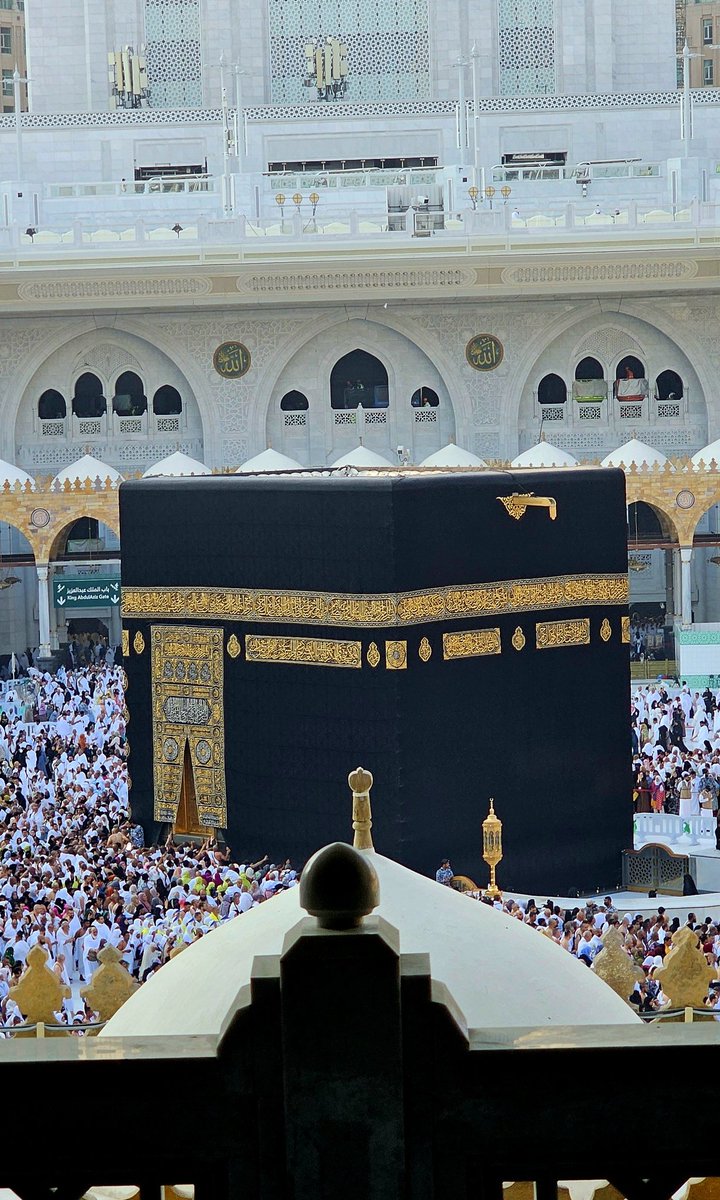
Eid ul-Adha commemorates the spirit of obedience, sacrifice, and compassion demonstrated by Prophet Abraham (peace be upon him). Yet beyond the celebration itself lies one of the most remarkable annual gatherings in human history — the Hajj pilgrimage in Mecca. Millions of people from every race, nationality, language, and social class travel from every corner of the earth to stand together in worship before one God.
The powerful beauty of Hajj is that worldly status disappears. Kings and laborers, wealthy and poor, educated and uneducated all dress alike in two simple white sheets. No designer labels, no displays of wealth, and no distinctions of race or nationality remain. Humanity stands equal before its Creator.
In a world increasingly divided by hatred, nationalism, war, racism, economic inequality, and political polarization, the lessons of Eid ul-Adha and Hajj offer a pathway toward healing. They remind us that peace cannot be achieved merely through political slogans or military force. True peace begins when people recognize their shared humanity and their accountability before God.
The Ahmadiyya Muslim Community’s motto, “Love for All, Hatred for None,” beautifully captures this spirit. It teaches that faith should inspire compassion, service, justice, and reconciliation — not division or extremism. The principles demonstrated during Hajj show that people of every background can gather peacefully, respect one another, and unite around higher moral values.
At a time when the world faces conflict in many regions and growing social tensions at home and abroad, Eid ul-Adha serves as a timely reminder that humility, sacrifice, forgiveness, and love are essential for lasting world peace.
Perhaps if humanity adopted even a fraction of the spirit displayed during Hajj — seeing one another not through the lens of race, wealth, or nationality, but as fellow human beings created by God — our world would become far more peaceful and just.
25
'The world is sleepwalking into the grip of WW3' reviewofreligions.org/48048/… #trueislam
1
1
64
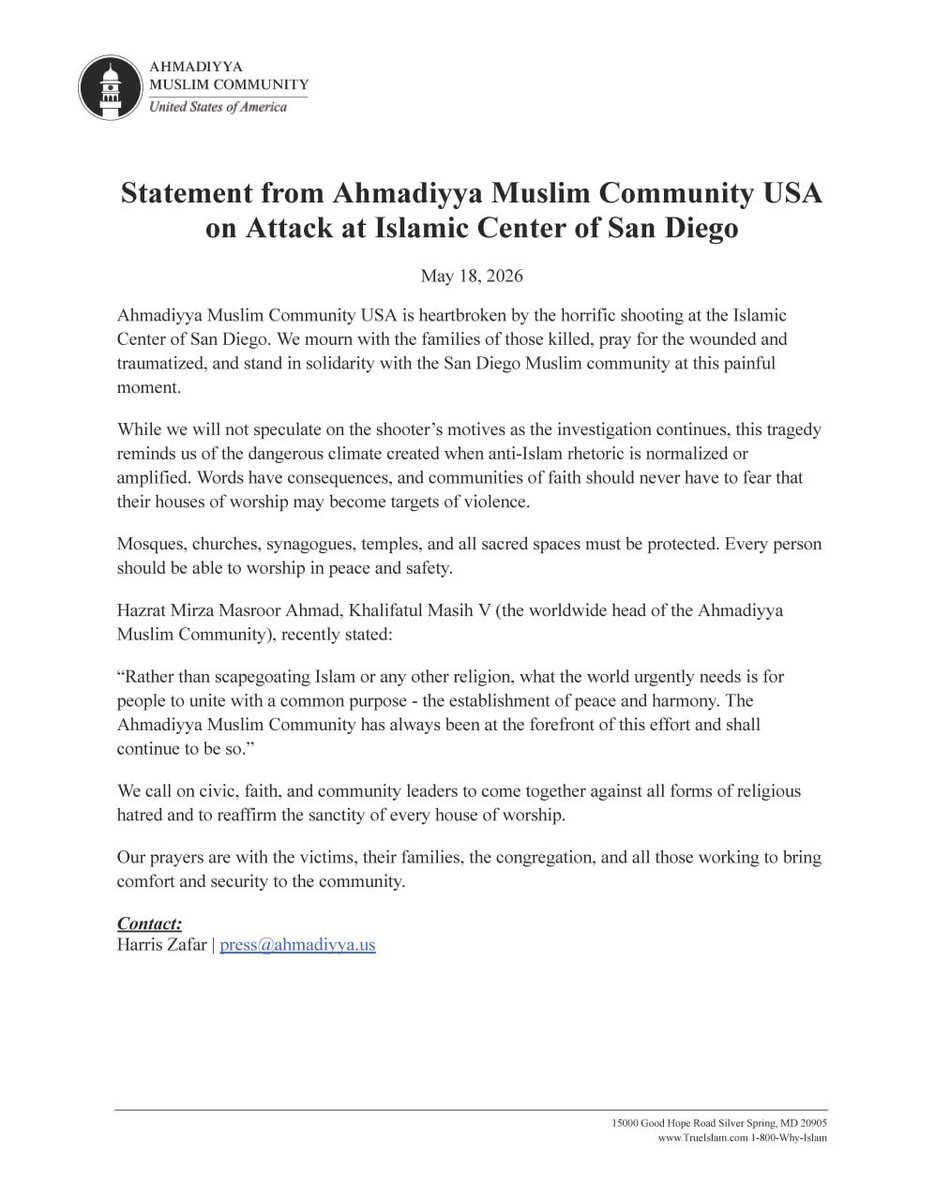
RT @AhmadiyyaUSA: Statement from Ahmadiyya Muslim Community USA on Attack at Islamic Center of San Diego
135
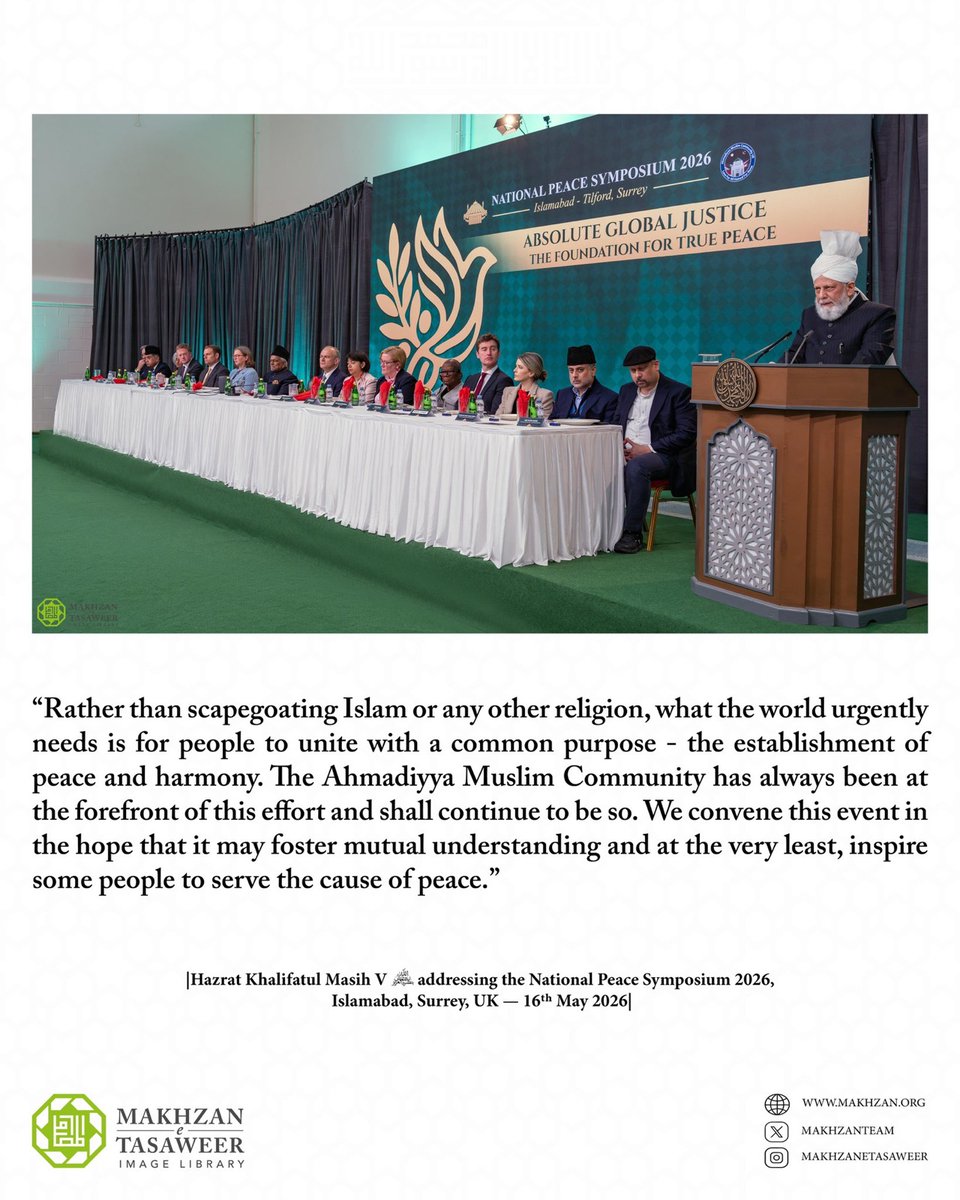
2026 UK Peace Symposium
2
2
73
Ahmadiyya Muslim Community of Central Pennsylvania retweeted

May 16
'The world is sleepwalking into the grip of WW3'
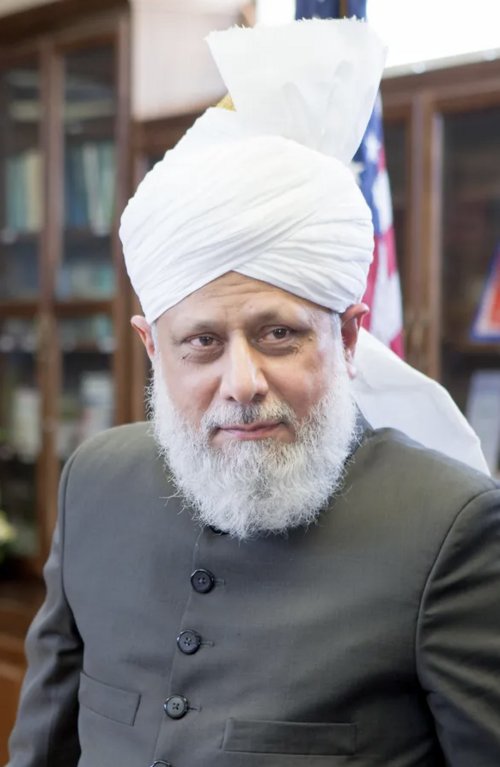
Addressing an audience of 600 people, including lawmakers, charities, journalists and diplomats, His Holiness Hazrat Mirza Masroor Ahmad reiterates his warning that the world is on the brink of a catastrophe due to the unjust actions of world leaders
4
171
248
5,136
Ahmadiyya Muslim Community of Central Pennsylvania retweeted

May 16
Advancing Peace Through Service
His Holiness, Hazrat Mirza Masroor Ahmad (aba), presented the Ahmadiyya Muslim Prize for the Advancement of Peace to Grégoire Ahongbonon of Benin.
Grégoire Ahongbonon is a humanitarian who has revolutionised care for people with mental illness in West Africa. Through the St. Camille Association, he has helped rescue and treat vulnerable individuals who were often abandoned, chained or abused due to stigma surrounding mental health.
His grassroots network has established 11 psychiatric hospitals, 63 clinics and 21 rehabilitation centres across Benin, Côte d’Ivoire, Togo and Burkina Faso. Every month, more than 20,000 patients receive free medication and care.
(National Peace Symposium 2026)
#MTAi
46
96
1,343

Hazrat Mirza Masroor Ahmad (aba) awards the Ahmadiyya Muslim Prize for the Advancement of Peace 2025 to Mr Gregoire Ahongbonon, Founder of St Camille Association.
“I’m without words. I don’t know what to say. My joy is so great.”
11
187
399
6,703
Ahmadiyya Muslim Community of Central Pennsylvania retweeted
May 16
"What greater good could there be than striving to save humanity from self-destruction?"
While His Holiness acknowledged that it is fair to ask whether there was any benefit of holding peace events, given that these messages have often gone unheeded, he reiterated that "Islam teaches us to relentlessly strive for peace and never give up."
2
100
156
2,143
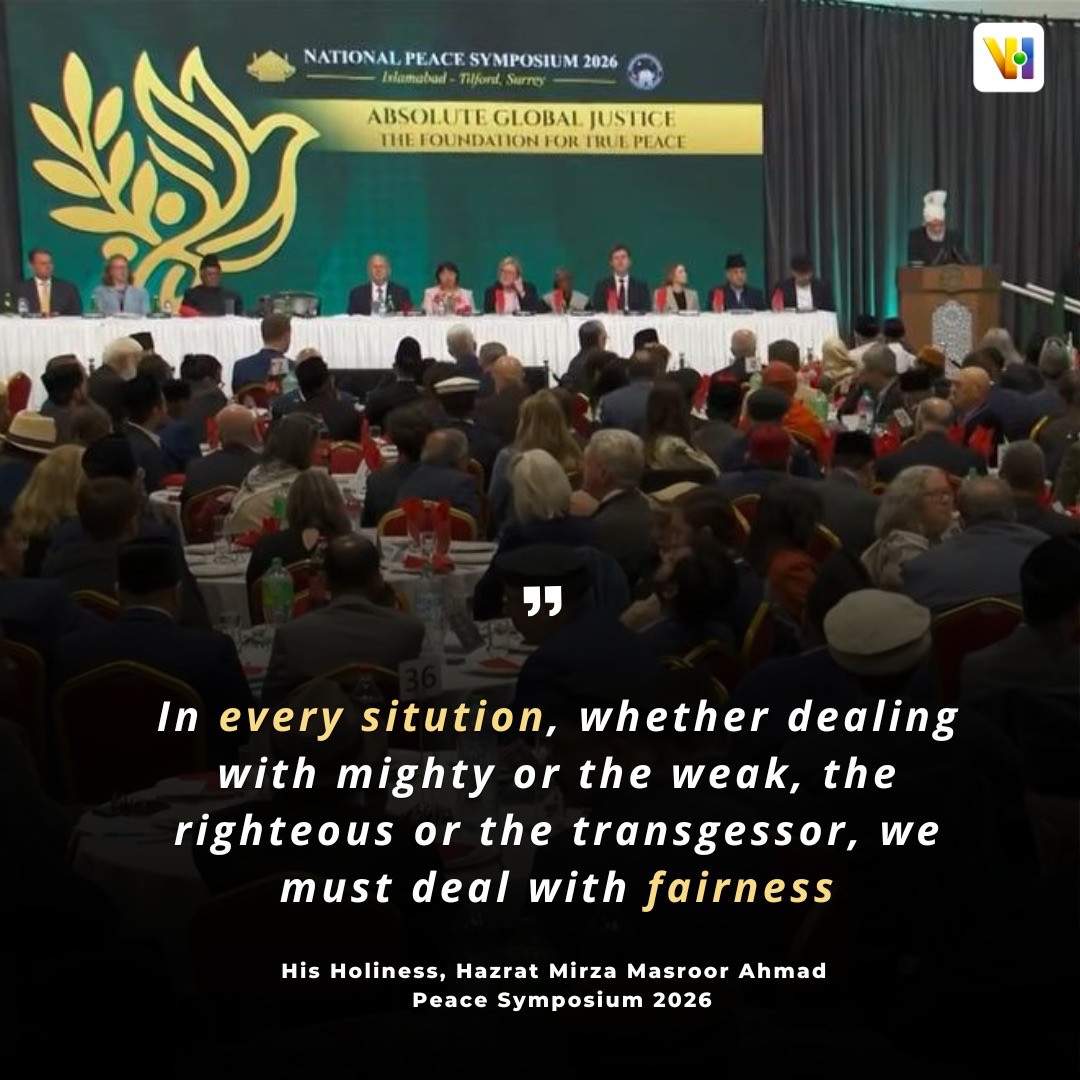
His Holiness, Mirza Masroor Ahmad, Head of the Ahmadiyya Muslim Community, admonished the audience on the need for Just Relations and Equity in all our dealings during the UK Peace Symposium 2026 in Islamabad, UK. #trueislam
1
76
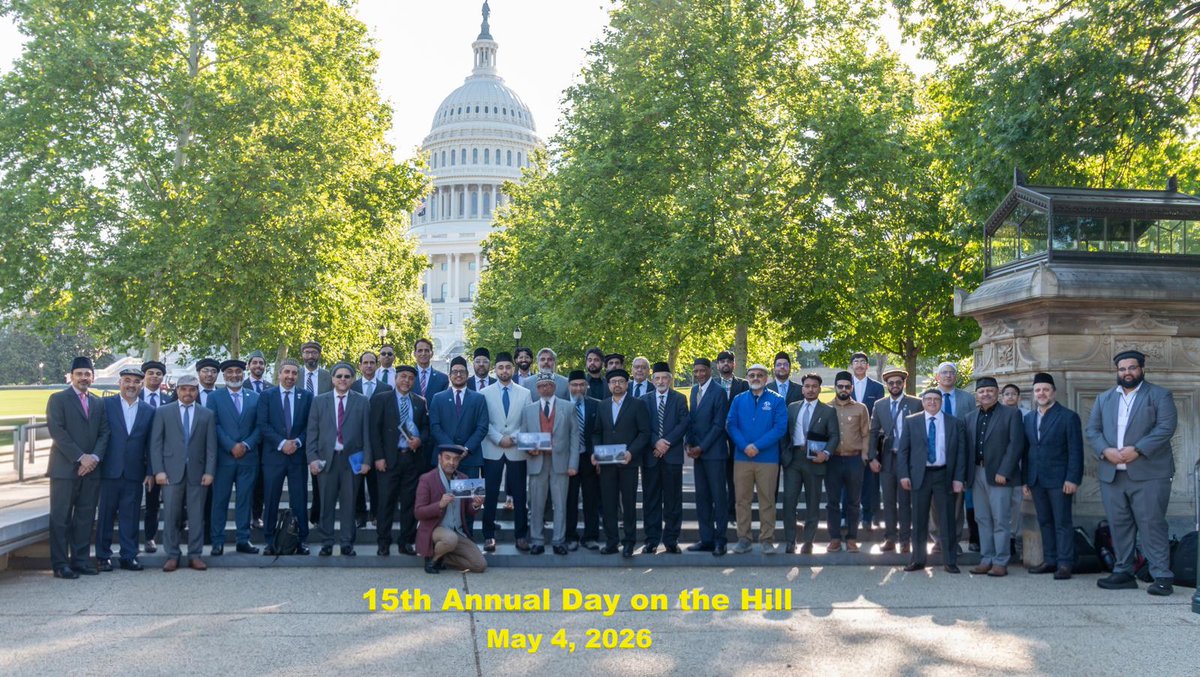
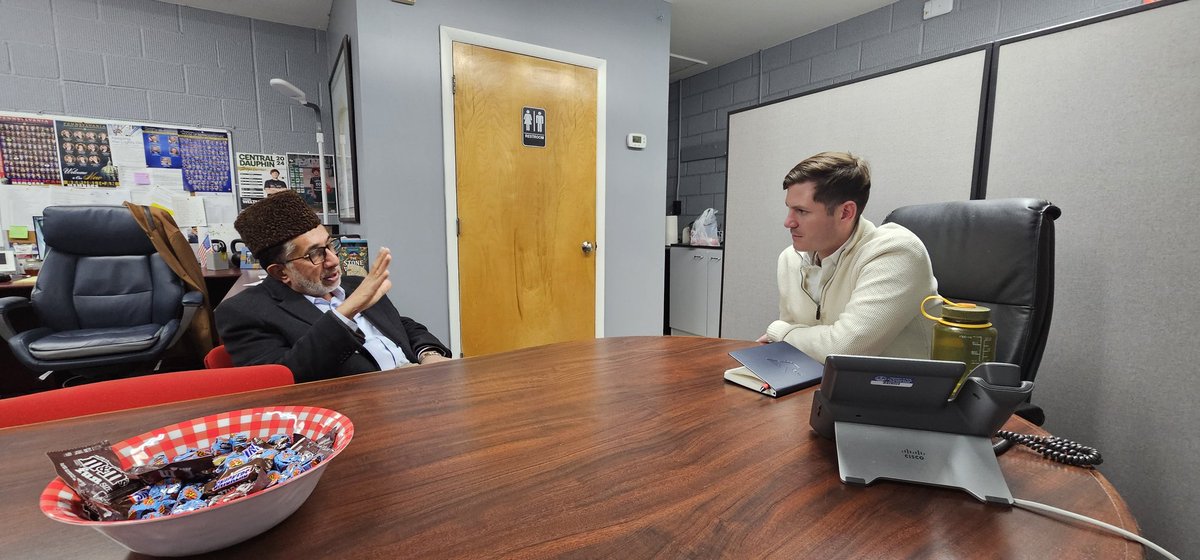
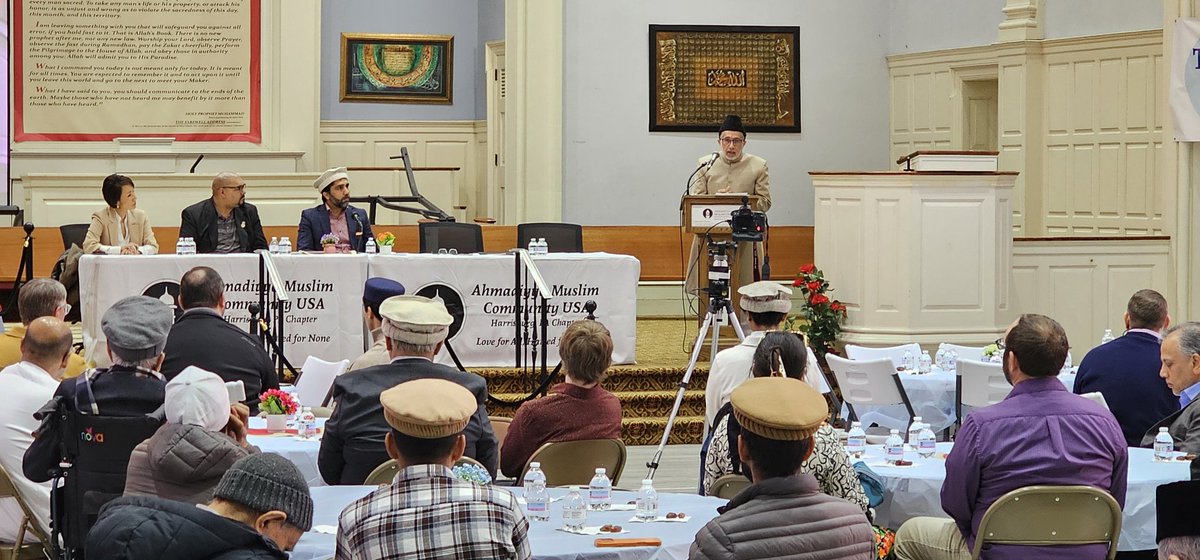
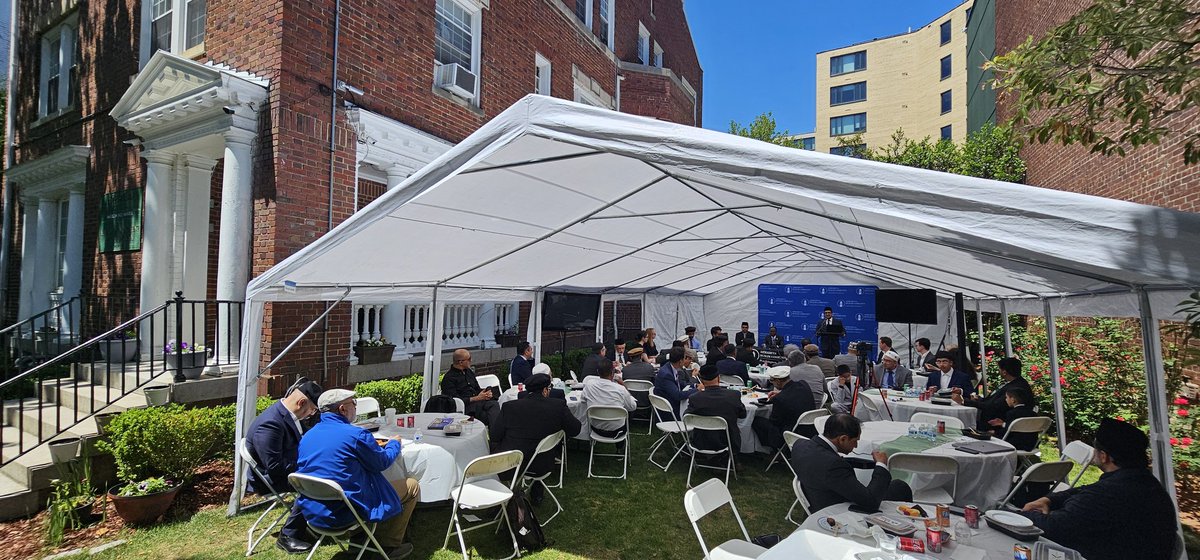
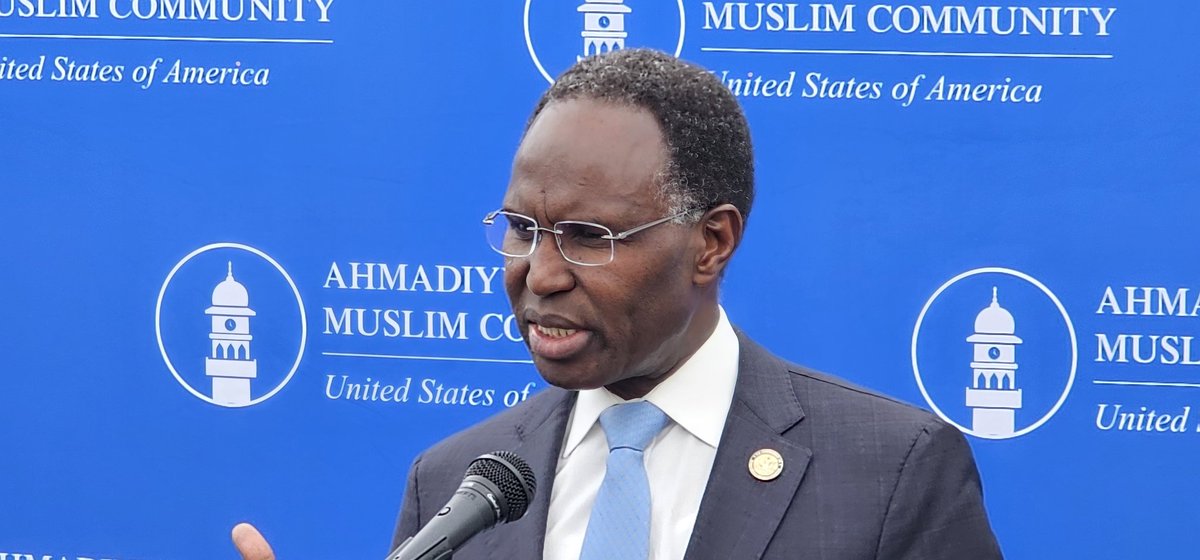
The Harrisburg Chapter of the Ahmadiyya Muslim Community was honored to join fellow advocates at Day on the Hill, championing religious freedom, raising awareness about the persecution of Ahmadis, and calling for a permanent ceasefire in Lebanon, Gaza, and Iran. The day included with a program and lunch at the historic Fazl Mosque. #trueislam Thank you @MikeKellyPA @RepMackenzie @RepSmucker for your wonderful staff taking the time to meet with us.
5
9
356
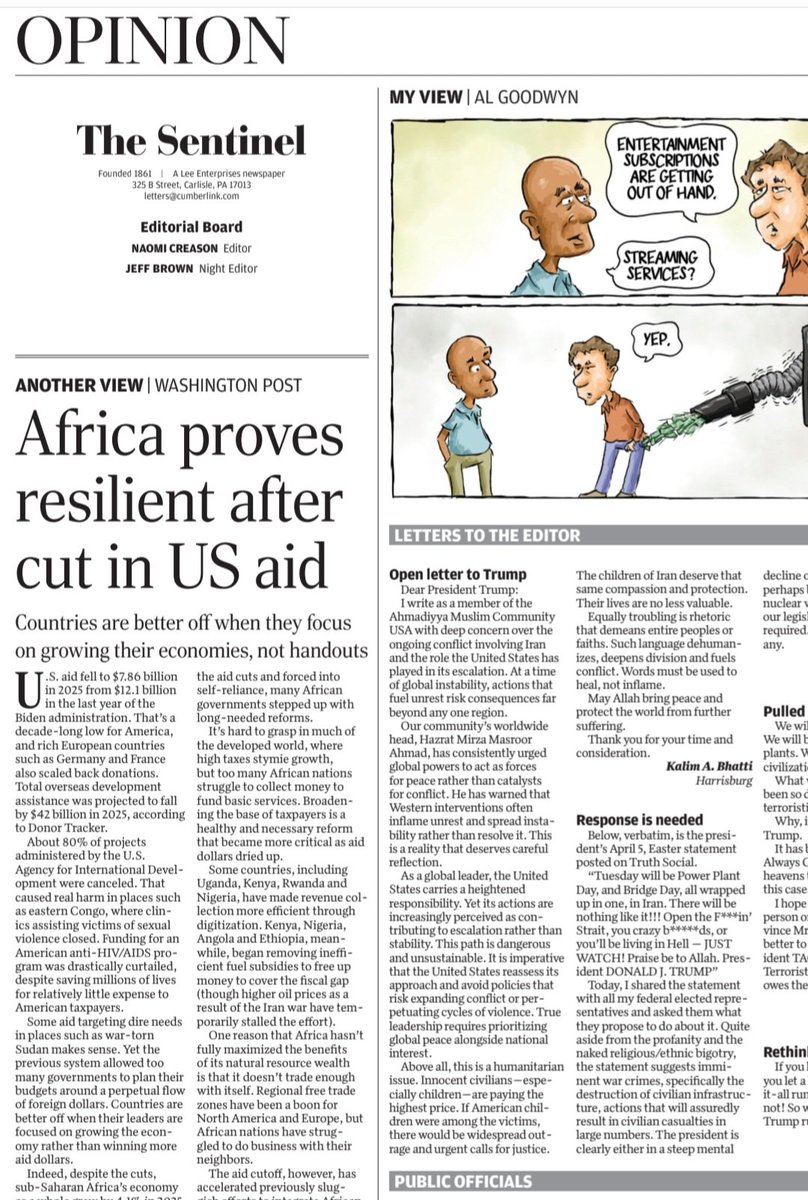
We are thankful that an open letter to President Trump was published in today's @cumberlink on the Iran war and the subsequent loss of innocent civilian lives. There is still time to avert #WW3. #Trueislam
166
Happy to share our Ramadan Iftar activity was included in this broadcast. #trueislam
Apr 3

Coverage of #VoicesForPeace Interfaith Iftar events held across the United States by various chapters of Ahmadiyya Muslim Community USA. youtu.be/ZqHYOdlDPQI
109