
Husband | Dad | Commonsense Conservative - Former candidate to represent the people of New Hampshire's Second Congressional District in 2024.
Joined June 2024
- Tweets 1,699
- Following 1,777
- Followers 2,500
- Likes 2,058
210 Photos and videos













Bill Hamlen retweeted

This is the greatest fucking concession speech in the history of the world. @spencerpratt
455
4,436
23,928
366,422

May 24
The 800 Pound Gorilla in NH Politics is our lack of unity!!! We need to change this! @nhgop substack.com/home/post/p-197…
6
16
515
May 19
I was at Trader Joe’s in Bedford, NH today and got a few friendly nods towards my FREEDOM shirt! I really miss Charlie… @TPUSA
20
13
193
2,060
May 8
If the NH GOP is going to win in 2026 and 2028, we need unity! @nhgop Bill Hamlen: Reagan's 80% rule and the future of NH's GOP unionleader.com/opinion/op-e… via @UnionLeader
5
11
1,007
May 1
HAMLEN: There’s a Lot of Good News to Unite the NHGOP nhjournal.com/hamlet-theres-… @NHGOP @NHRepublicans @NHGOPWOMEN
6
170
Apr 22
Last night I had dinner with @SamFarringtonNH in Hanover, NH. Sam is doing great work to get rid of auto inspections (HB649), for freedom to slaughter and sell livestock in state ( HB396), and to fight for campus carry (HB1793). I hope to live to see the day when he will represent NH down in DC! @NHGOP @NHRepublicans

Great time running into my friend @HamlenforNH at Dartmouth yesterday. Bill is a champion for MAHA and medical freedom

1
1
7
370
Feb 15
Mark my words, the high cost of New England's Green Energy mandates will be one of the top NH Voter issues in the 2026 elections!

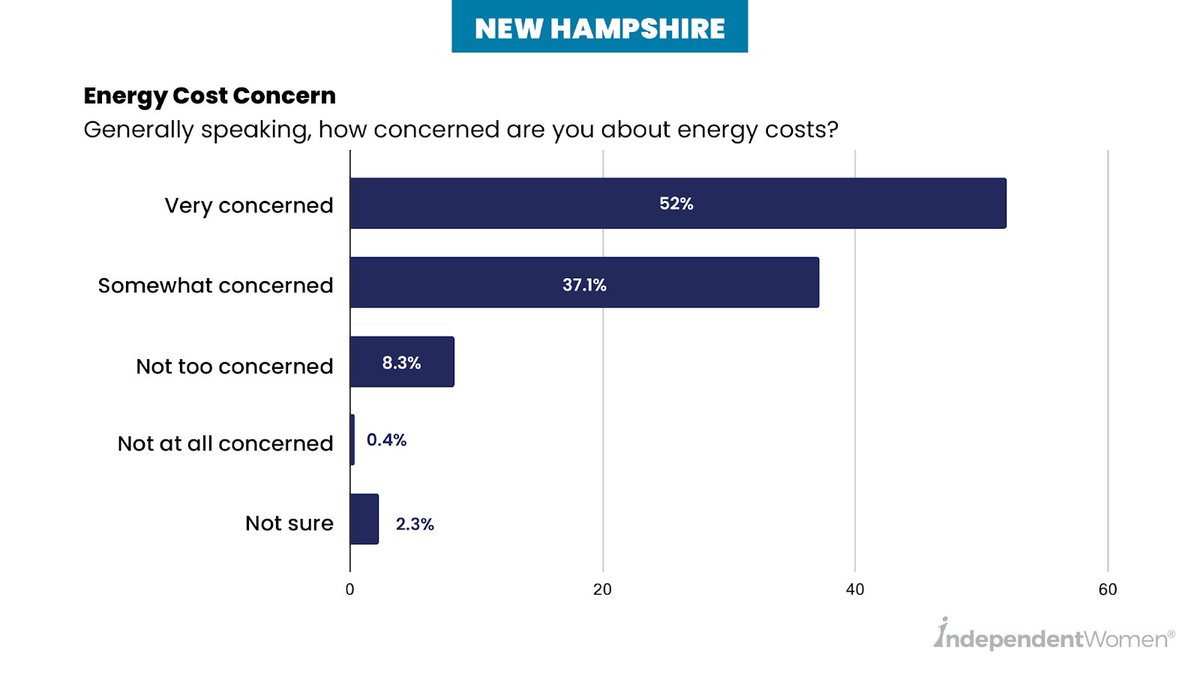
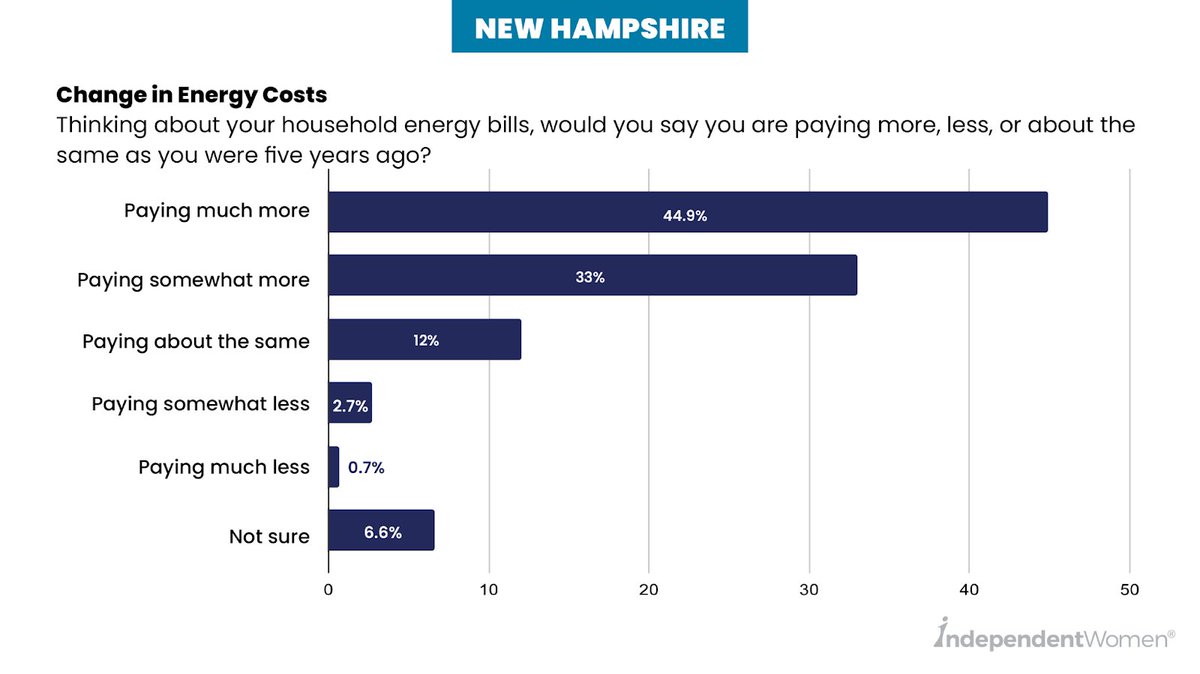
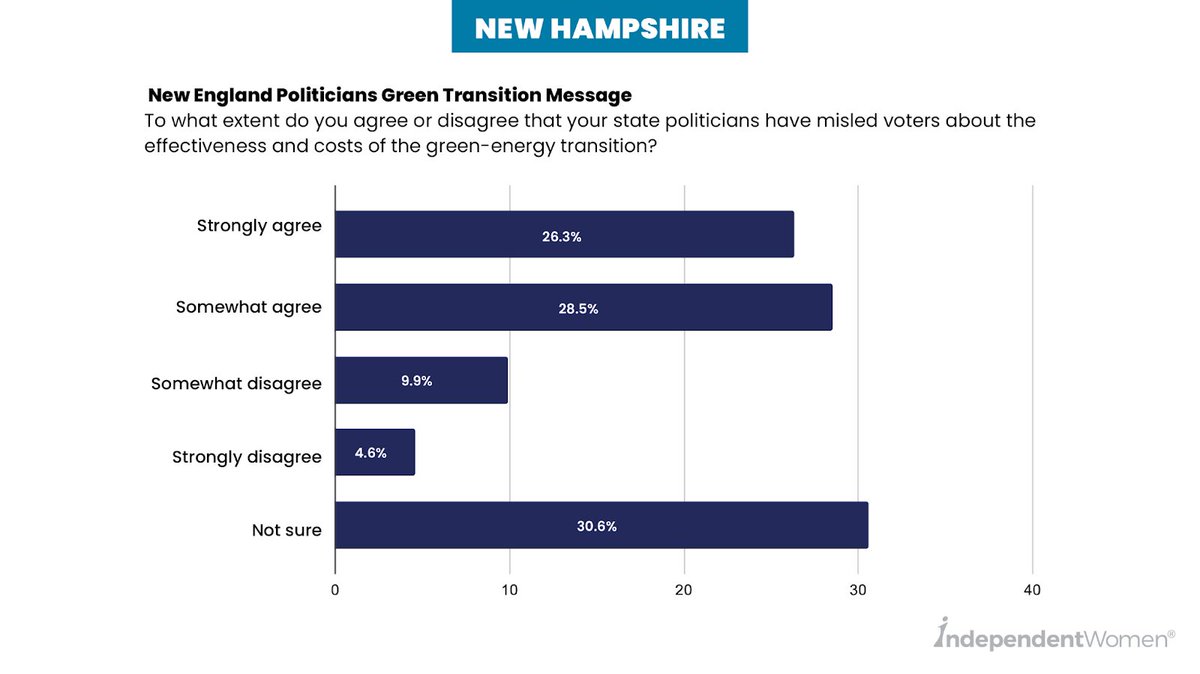
NEW POLL: New Hampshire Women Alarmed as Winter Electricity Bills Spike via @IWF
The New England Women’s Energy Survey was conducted by Wick Insights among a sample of 3,000 women who are likely 2026 general election voters across the six New England states: Connecticut, Maine, Massachusetts, New Hampshire, Rhode Island, and Vermont—the region with the highest electricity rates in the nation.
New Hampshire Results:
89% are concerned about rising energy costs
78% say they are paying more for energy than they were five years ago
55% believe New Hampshire politicians have misled voters about the effectiveness and costs of the green-energy transition.
Bronwyn Sims, New Hampshire resident and Independent Women’s Network leading member, said, “As a New Hampshire resident, I am seeing firsthand how energy costs are forcing residents, especially women managing household budgets, to make impossible choices between keeping the lights on, staying warm, and stretching every dollar just to make ends meet. Our state’s policies should not put us in this position. Lawmakers must act now to pass reforms that lower bills, protect families, and build a reliable, affordable energy future for everyone.” Please click the link to see the full polling results across New England. Thank you, @bbsfreedom1 @IWN @IWF @Lily4Liberty @TheRealNHSteve @HamlenforNH @NHGOP @DailyCaller @Citizensdogeusa
independentwomen.com/2026/02…
3
18
422
14 Dec 2025
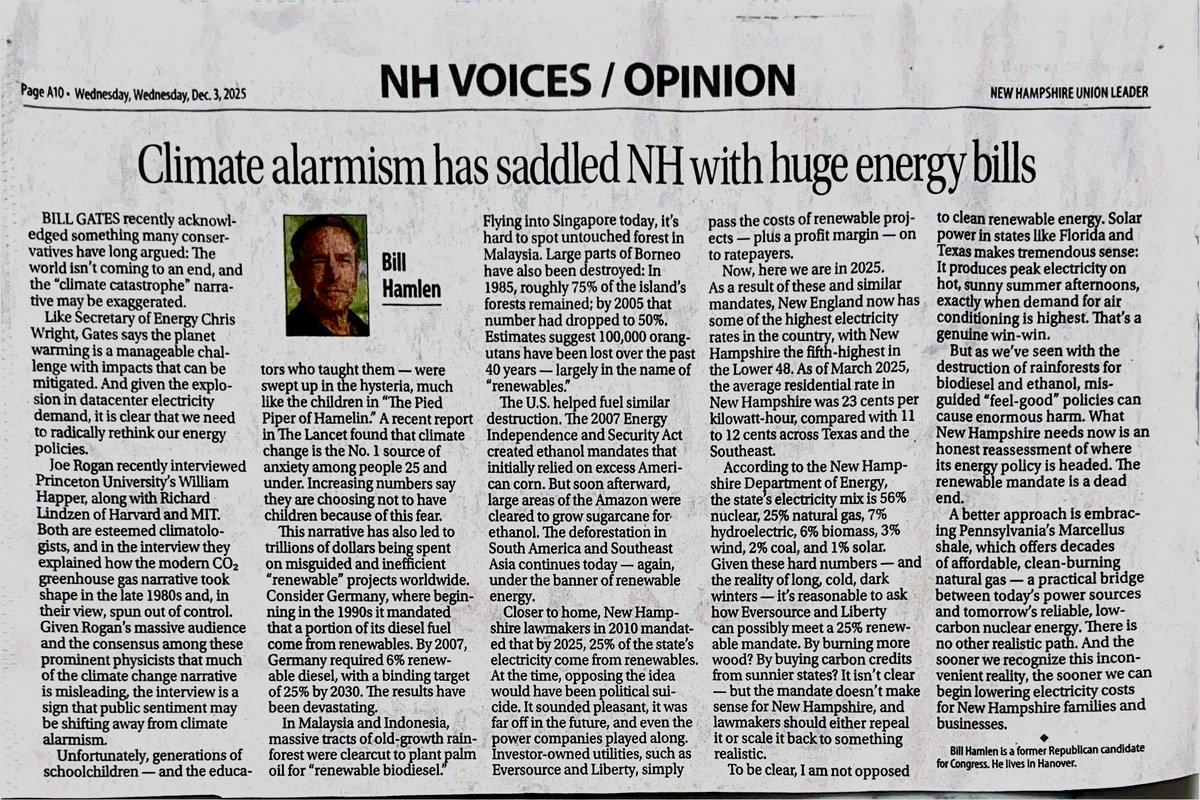
In 2010, NH's Pols created an. unrealistic mandate that that 25% of our power must come from renewables by the end of 2025. This is causing massive increases in our electricity costs. Its time to END these mandates! @NHGOP @SenScottBrown @DiLorenzo4NH @Lily4Liberty
1
2
5
416
10 Dec 2025
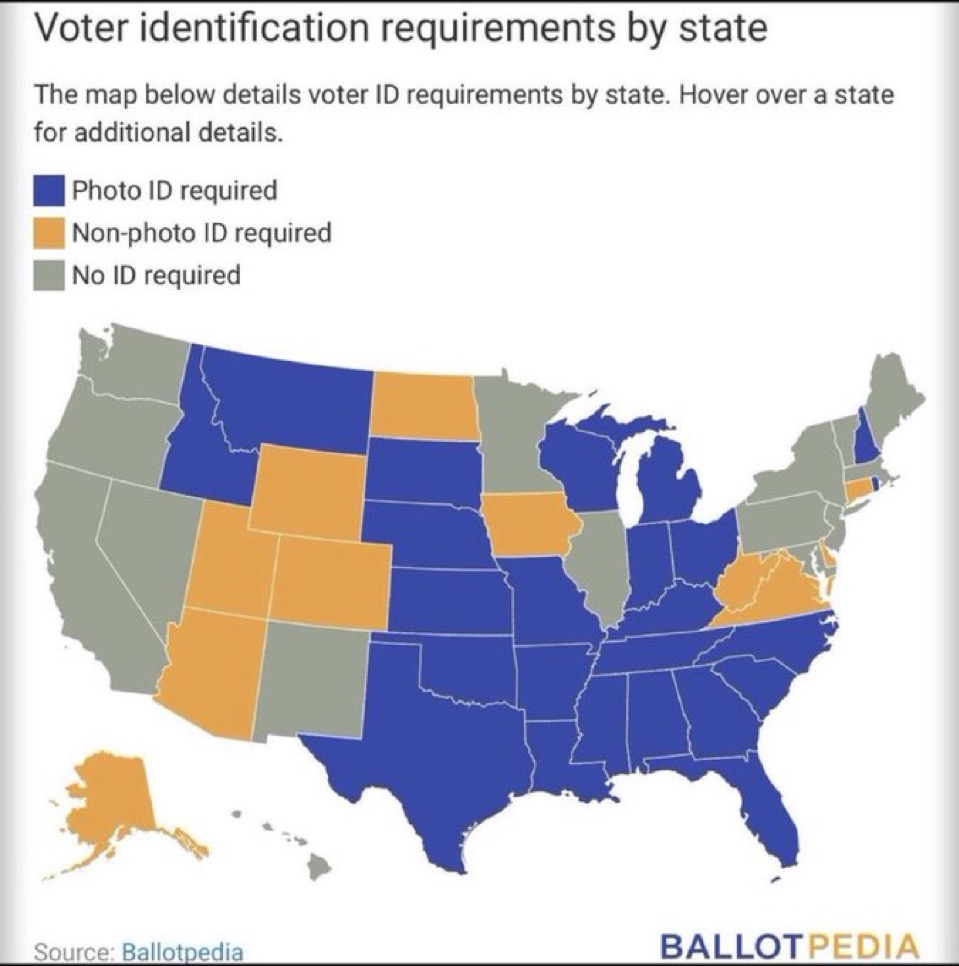
So happy to see NH as the ONLY place in New England where we have actual voter integrity laws in place! @DiLorenzo4NH @SenScottBrown @Lily4Liberty @NHGOP
9 Dec 2025

this one map explains most of the policy around immigration
2
141
6 Dec 2025
More good news for NH!!! See the link to the full story in the comments. @NHGOP @NHGOPWOMEN @bbsfreedom1 @SenScottBrown @Lily4Liberty
5
12
43
65,648
4 Dec 2025
HEY NH - are you tired of high electricity bills? It's time to end the extreme renewables mandates. If you agree with me please speak up! @nhgop unionleader.com/opinion/op-e… via @UnionLeader
6
21
52
12,792
29 Nov 2025
Full text for those who can't access the article:
More Americans are getting their power shut off, as unpaid bills pile up
By Abha Bhattarai The Washington Post Nov 25, 2025 Updated 18 hrs ago
Misty Pellew’s family lived in the dark for several days this month.
Pellew’s power was shut off Nov. 13 because of $602 in unpaid bills, the latest in a string of financial humiliations that began six months ago after her husband lost his $20-an-hour excavation job in northeastern Pennsylvania. The recent government shutdown dealt another blow, delaying federal funding for programs that helped the family pay for food and utilities.
Although Pellew’s lights were temporarily turned back on last week, they were set to be disconnected again if she didn’t pay another $102. With an overdrawn bank account, she was bracing to be without power again. Last time, her family ate peanut butter and jelly sandwiches for dinner and slept in hoodies and gloves to keep warm.
“I feel so useless and helpless,” the 44-year-old said.
Soaring electricity prices are triggering a wave of power shutoffs nationwide, leaving more Americans in the dark as unpaid bills pile up. Although there is no national count of electricity shutoffs, data from select utilities in 11 states show that disconnections have risen in at least eight of them since last year, according to figures compiled by The Washington Post and the National Energy Assistance Directors Association (NEADA). In some areas, such as New York City, the surge has been dramatic — with residential shutoffs in August up fivefold from a year ago, utility filings show.
In Pennsylvania, where Pellew lives, power shutoffs have risen 21% this year, with more than 270,000 households losing electricity, according to state data through October. The average electricity bill in the state, meanwhile, has risen 13% from a year ago, as utilities upgrade electric grids to accommodate a burst of new data centers, according to an analysis of federal data by NEADA, which represents state directors of energy aid programs for low-income families.
Overall, Americans are paying 11% more for electricity than they were in January, though that number varies widely: Costs have risen 37% in Missouri but have fallen in three states by as much as 13%, NEADA found.
“With prices going up so rapidly, electricity is becoming unaffordable in many parts of the country,” said Mark Wolfe, an energy economist and executive director of NEADA. “And it isn’t just lower-income households anymore; it’s spilling into the middle class.”
Utility prices have risen roughly three times faster than overall inflation this year, at a precarious time for the economy. Businesses are announcing mass layoffs, and it’s taking unemployed Americans much longer to find new work. There are also signs that lower- and middle-class families are pulling back on spending.
“People are feeling a squeeze across the board, but what’s even more alarming is that we’re seeing people struggling to pay for these very, very basic necessities,” said Julie Margetta Morgan, president of the Century Foundation, a liberal think tank. “Electricity is not a luxury; it isn’t optional.”
Nearly 1 in 20 households, or about 14 million Americans, were so behind on utility debt that it was reported to collections agencies or in arrears as of June, according to an analysis by the Century Foundation and Protect Borrowers, a nonprofit that advocates for consumers. Meanwhile, the average overdue balance of $789 has risen 32% since 2022.
Anthony Ponce, who lives in Pasadena, California, had his electricity disconnected in early October after falling months behind on his bill. Ponce makes $26 an hour working at Trader Joe’s but says almost all of that goes toward his $1,900 rent for the one-bedroom apartment he shares with his two children.
“I feel like every time I start to get on track with one thing, something else comes up to bite me,” Ponce, 46, said. “Every little thing you can think of — utilities, my car — is becoming delinquent or past due. I’m barely surviving.”
A recent divorce and government-shutdown-related lapse in SNAP benefits only added to his troubles. By the time his power got shut off, Ponce was eating just a hot dog a day to save money. He was able to get his electricity restored two days later, after raising $825 on GoFundMe. But even that was only enough to pay half his bill, so he’s still behind.
“I don’t know when I’ll have the extra money to put towards that because I just had to pay for my car’s registration and new battery,” he said. “It’s a constant question of: What’s most important at this point to focus my money on? Everything else has to wait.”
Americans across the country appear to be making similar calculations each month, leading to higher delinquency rates on student debt and credit cards in recent quarters. Bankruptcy filings are beginning to inch up, too, according to data from the Federal Reserve Bank of New York.
At Citizens Utility Board, an advocacy group for consumers in Chicago, the number of people calling with disconnection notices has risen 70% since last year, spokesman Jim Chilsen said, noting “intense consumer pain over power bills.”
Utility companies, meanwhile, say they are expanding financial assistance programs and adding flexible polices to help those who fall behind. In New York City, for example, Con Edison spokesman Jamie McShane said the company is making “every effort” to offer payment plans and extensions before shutting off power.
“Service termination remains a last resort,” he said.
Still, the utility has reported 111,000 residential power shutoffs so far this year, up from 30,000 in all of 2024.
Utility costs have become a political flash point in recent elections across the country, emerging as a key issue in gubernatorial races in New Jersey (where the average bill has risen 24% since last year) and Georgia (up 10%). In Virginia, which has the highest concentration of data centers in the world, Gov.-elect Abigail Spanberger made energy affordability one of the cornerstones of her campaign.
A majority of Americans — 6 in 10 — say they are spending more on utilities than they were a year ago, and they blame President Donald Trump for the rising prices, according to a Washington Post-ABC News-Ipsos poll conducted in late October.
The Trump administration says it is doubling down on coal, natural gas and nuclear power to keep up with rising demand and to help lower prices. It is also scrapping wind and solar investments, which the White House says are “unaffordable and unreliable” and have led to higher energy prices in “Democrat-led” states.
“By adopting President Trump’s commonsense energy dominance agenda, blue states could lower the price of electricity, gasoline, transportation, and manufacturing,” White House spokeswoman Taylor Rogers said in a statement. “The key to grid stability and affordable energy is unleashing reliable sources of power like coal, natural gas, and nuclear.”
Still, experts say the situation is likely to get worse in coming months. The cost of heating a home this winter is expected to rise 7.6% to an average $976 because of rising electricity and natural gas costs, according to estimates from NEADA.
Although delinquent payments may not lead to immediate disconnections — more than 40 states have rules against turning off customers’ power during the winter or in extreme cold weather, for example — rising energy insecurity sets a worrisome precedent, according to the Energy Justice Lab, a collaboration between the University of Pennsylvania and Indiana University. Studies also show that difficulty paying utility bills can increase the risks of poverty and that once a household falls behind on energy payments, it is likely to become a recurring problem.
In Sheffield Lake, Ohio, Jason Ross and his wife are each working three jobs to keep up with their bills, including for power, which has more than doubled in the past year to about $350 a month. Even with their combined annual income of $80,000, their family of seven is barely scraping by.
“For the first time, we’re behind on all of our utilities,” said Ross, a special education coordinator for charter schools who also delivers for DoorDash and does freelance work. “I’m 40 years old, and I’ve never been behind on anything, until now.”
Ross got paid Thursday and immediately put $300 toward his electricity balance. But he still owes $826.
Service, his bill says, is set to be disconnected Dec. 8.
2
115
25 Nov 2025
Why do we have to put up with electricity prices that are TWICE what people pay in Texas and Florida? It's time to reduce the renewables mandates in NH. @SenScottBrown @nhgop @Lily4Liberty nhjournal.com/hamlen-an-inco…
1
7
139
Bill Hamlen retweeted

18 Nov 2025
BREAKING: 1500 students cheer as RFK Jr walks out at TPUSA event at GWU!
MAHA is here to stay
613
5,858
48,849
375,241