PhD candidate @CommUcsb | @UofIllinois alum | I study how people detect, perceive & respond to AI/algorithmic bias. Mostly on BlueSky these days. On the market!
Joined May 2015
- Tweets 295
- Following 633
- Followers 360
- Likes 1,030
86 Photos and videos
Pinned Tweet

28 Mar 2025
I'm excited to share that I'm officially a Ph.D. candidate 🎉 Meaning I'll be on the job market this fall (gulp). My research explores human-algorithm interaction and the social impact of emerging tech at the intersection of mass communication & decision-making.
1
5
95
7,972
16 Oct 2025
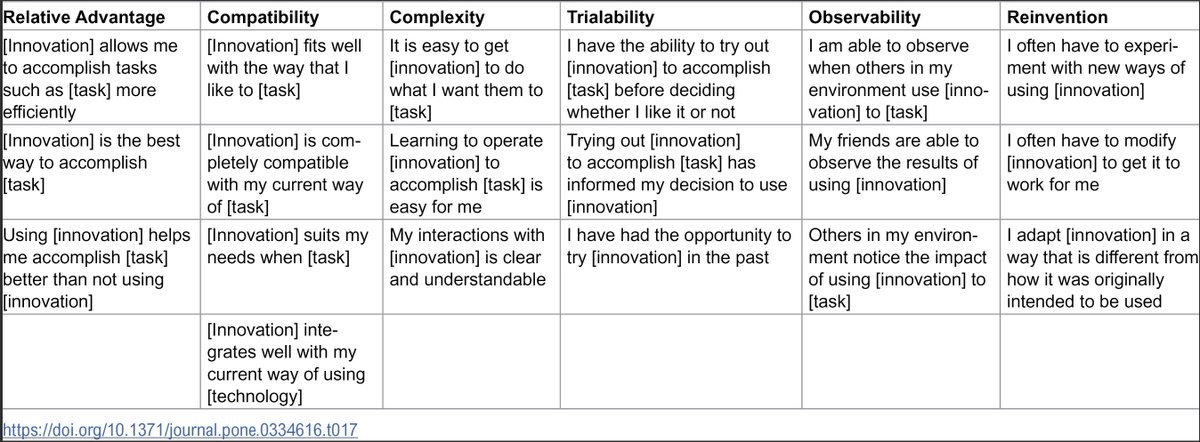
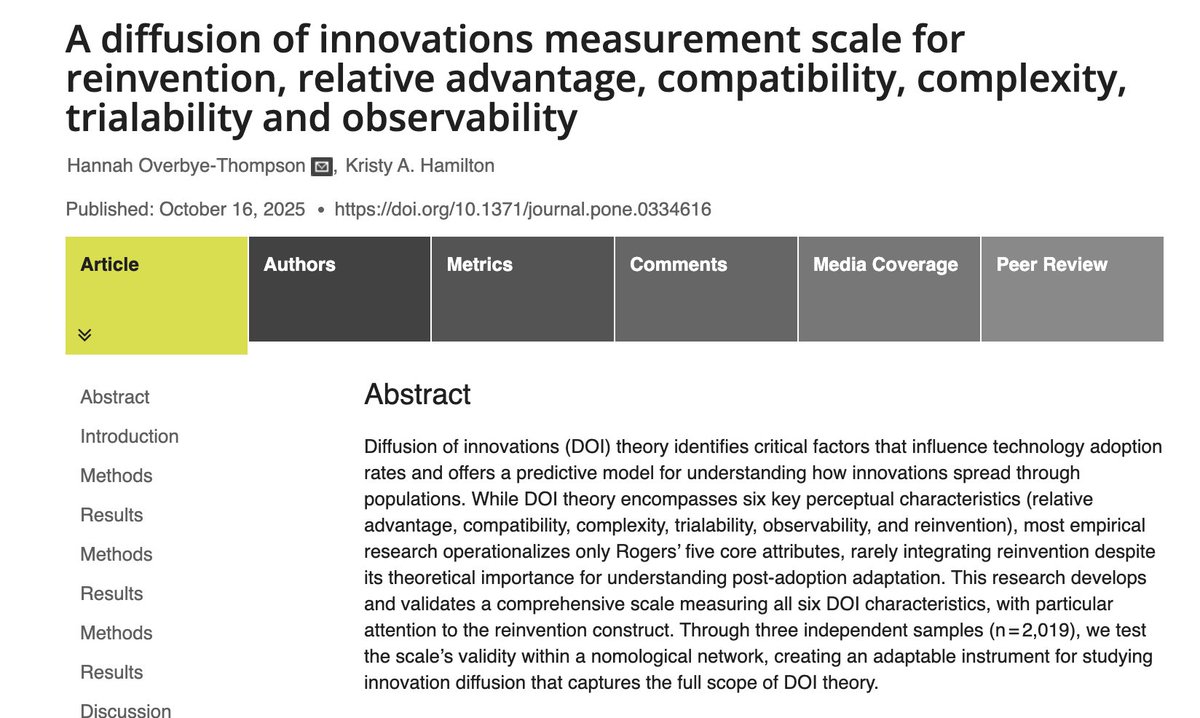
I've noticed w/research it's often hard to find validated measures of constructs without hobbling together scales from multiple papers; now when possible I try to contribute by validating scales. Below is a scale that I hope is helpful measuresing the perceptual attributes of DOI
1
1
122
16 Oct 2025
1
52
3 Sep 2025
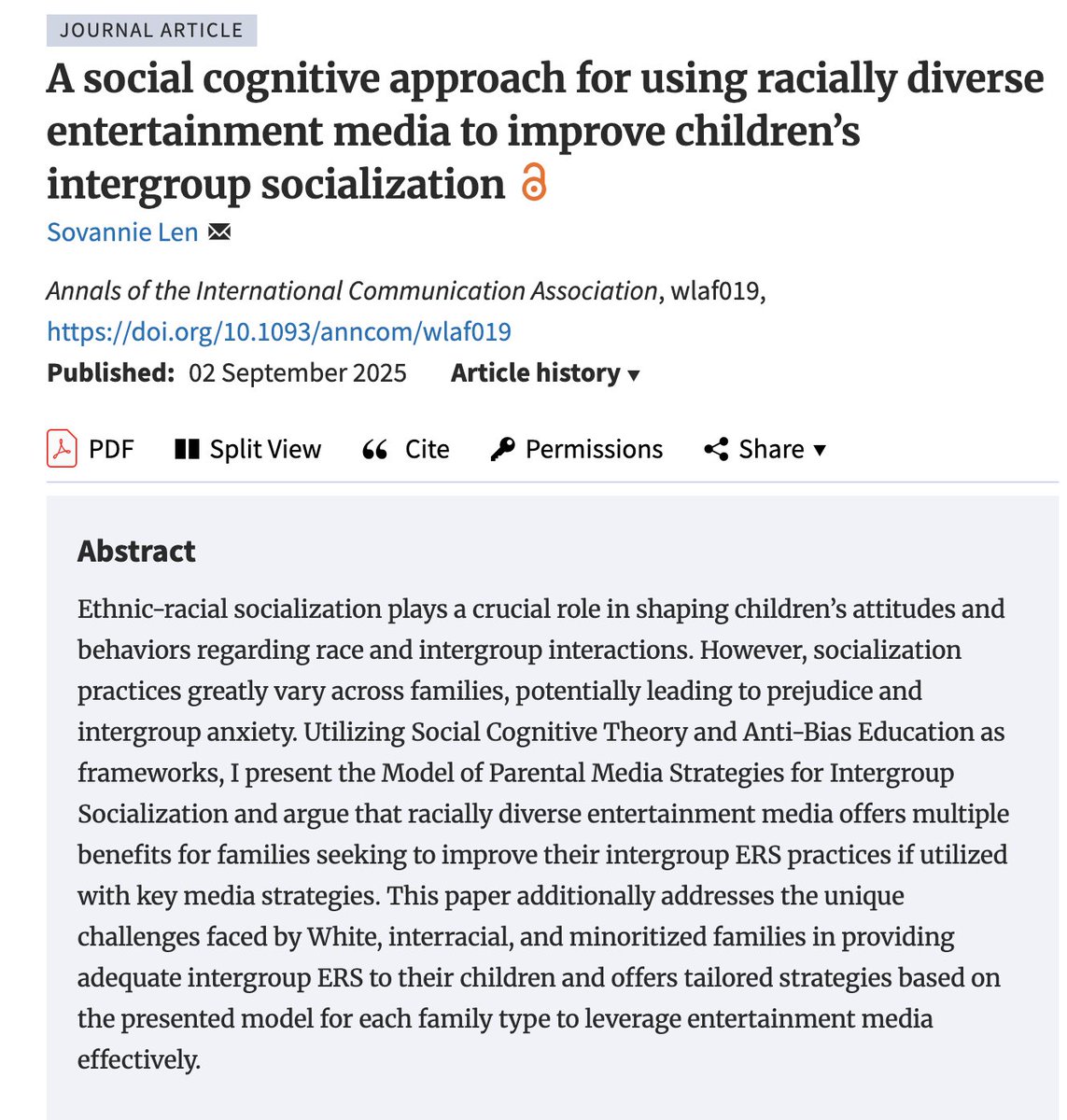
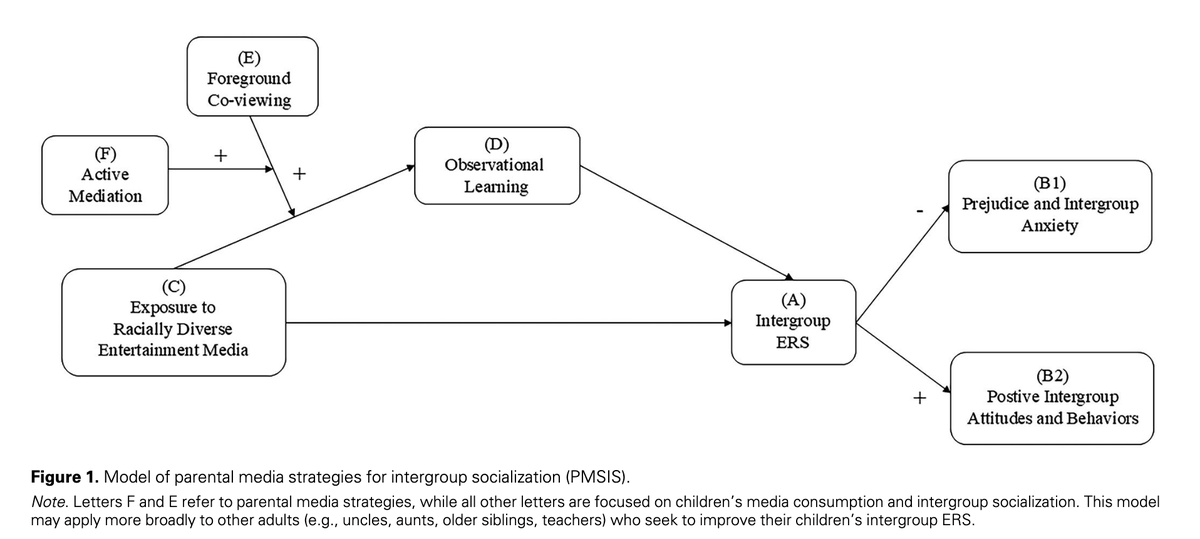
New paper (2025) by Sovannie Len proposes the PMSIS model: parents can use racially diverse entertainment media "foreground co-viewing" active mediation to improve children's intergroup socialization doi.org/10.1093/anncom/wlaf0…
Great work Sovannie 👏👏👏
1
3
216
29 Aug 2025
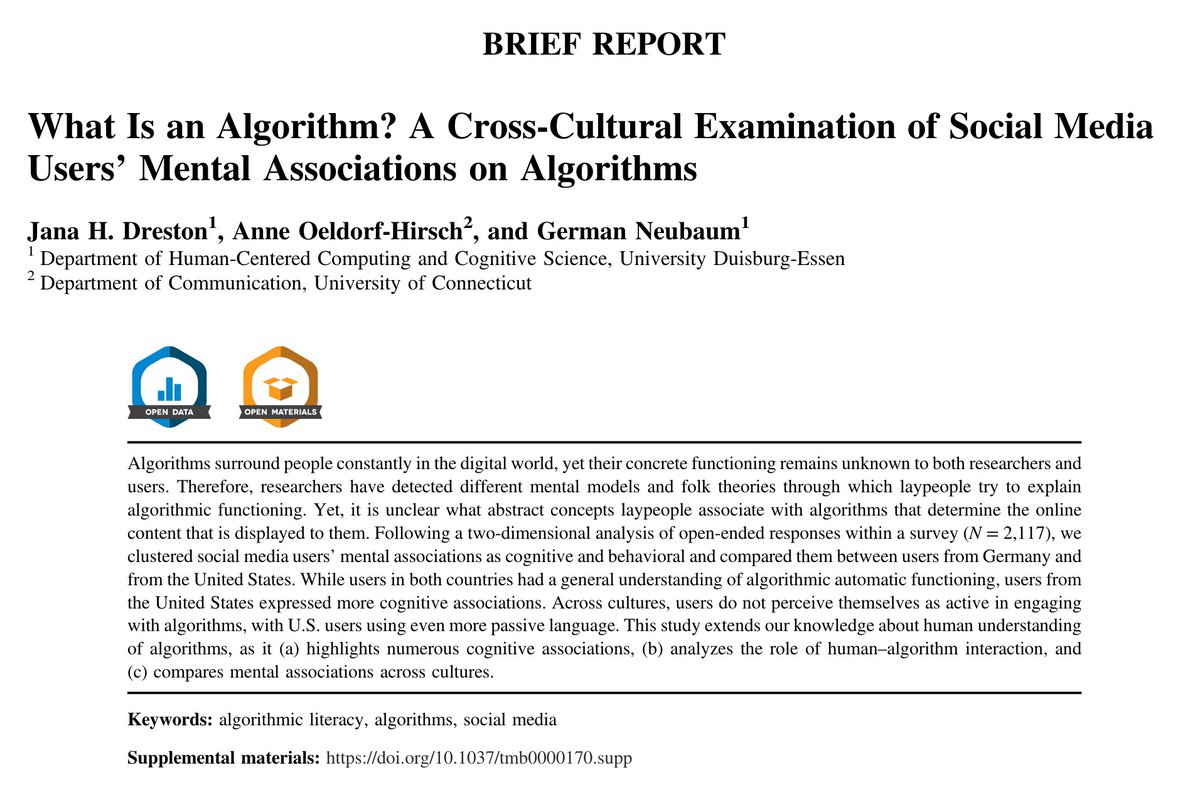
New study by @JanaDreston @anneohirsch & @g_neubaum reveals how users understand algorithms. Key findings: 71% have a basic understanding of algorithms but only 33% can explain how they work; users see themselves as passive actors when interacting with algorithms
1
1
5
287
27 Aug 2025
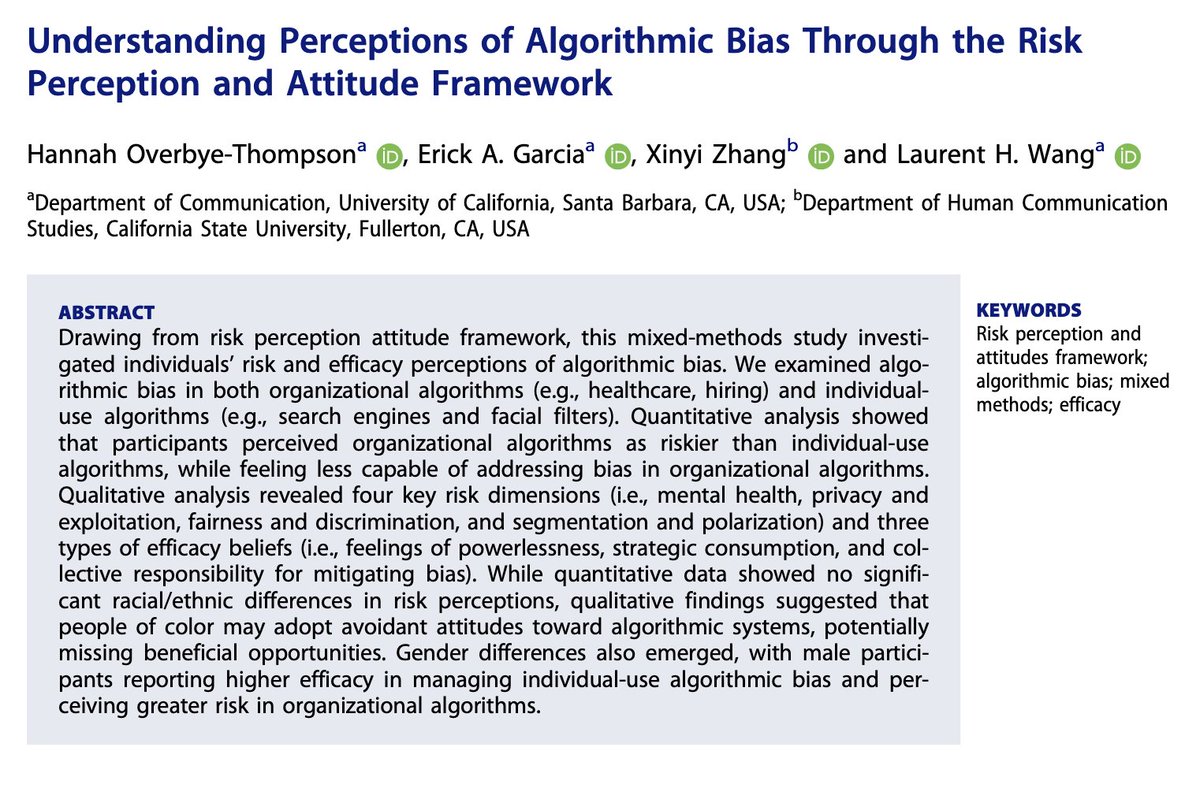
Excited to share my new paper with with Erick Garcia, Xinyi Zhang & @LaurentH_Wang
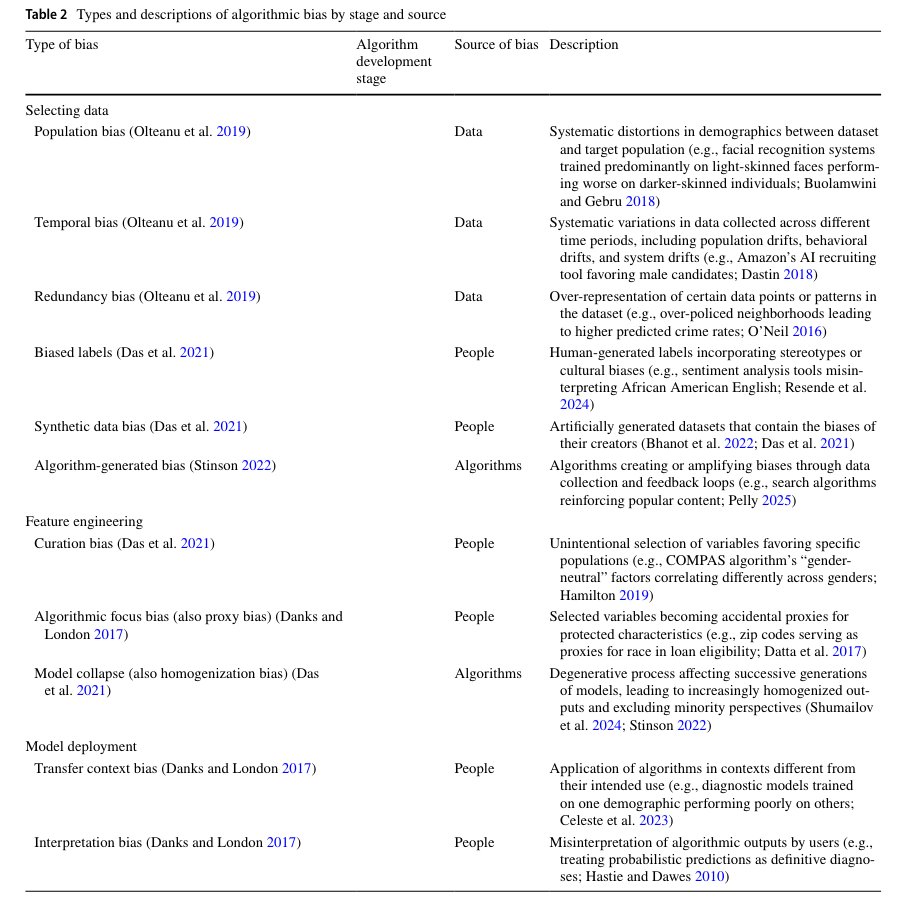
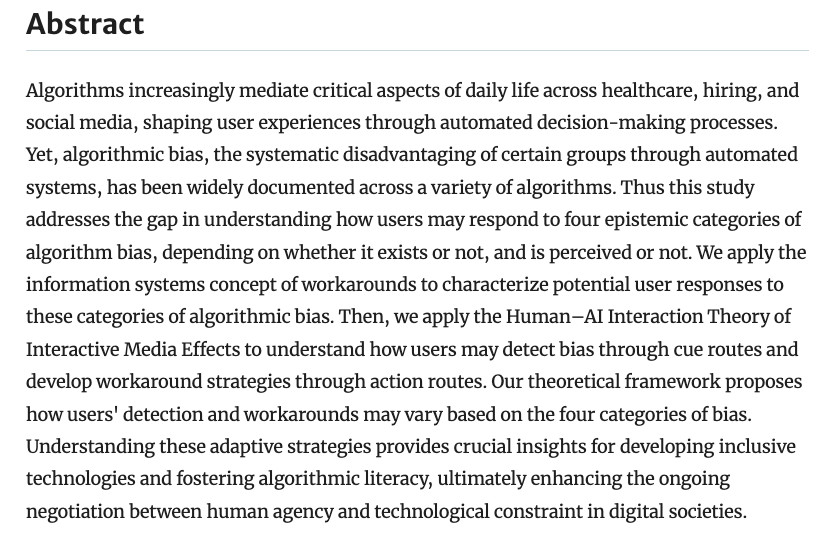
We ask: Do people see algorithmic bias as a risk—and do they feel capable of addressing it? Answer... It depends! More below 👇
doi.org/10.1080/10447318.202…
1
8
1,322
27 Aug 2025
Demographics mattered too:
👩🦱 Women & people of color often described avoidant attitudes—seeing risks but feeling powerless. Which makes sense as they are often the target of algorithmic bias
👨 White men sometimes saw systemic risks but reported higher efficacy.
1
93
27 Aug 2025
Personally, I had a lot of fun on this project. It was my first time leading a mixed-methods study and an all student team. I hope this research is useful for informing design, policy, and education efforts that help people feel more empowered in the algorithmic age.
66
21 Aug 2025
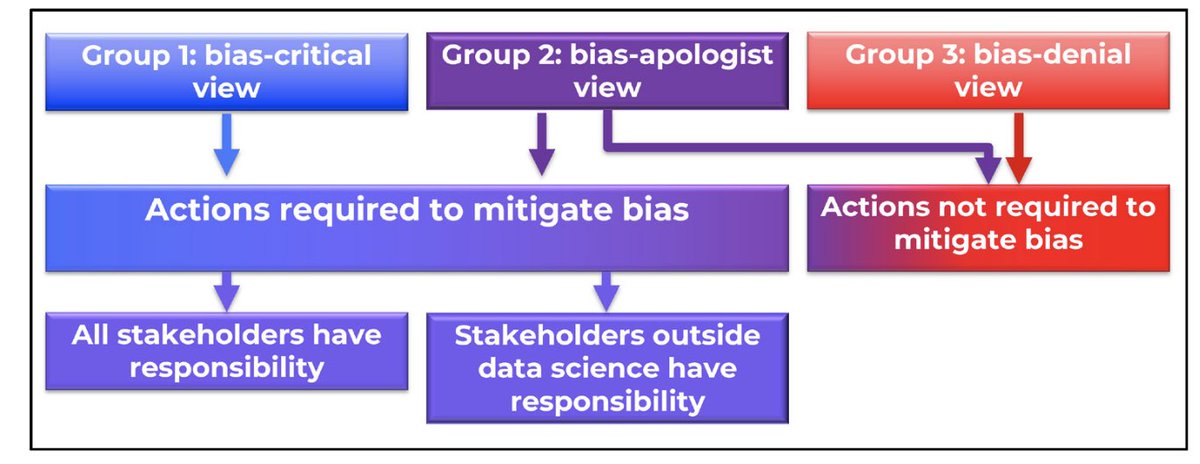
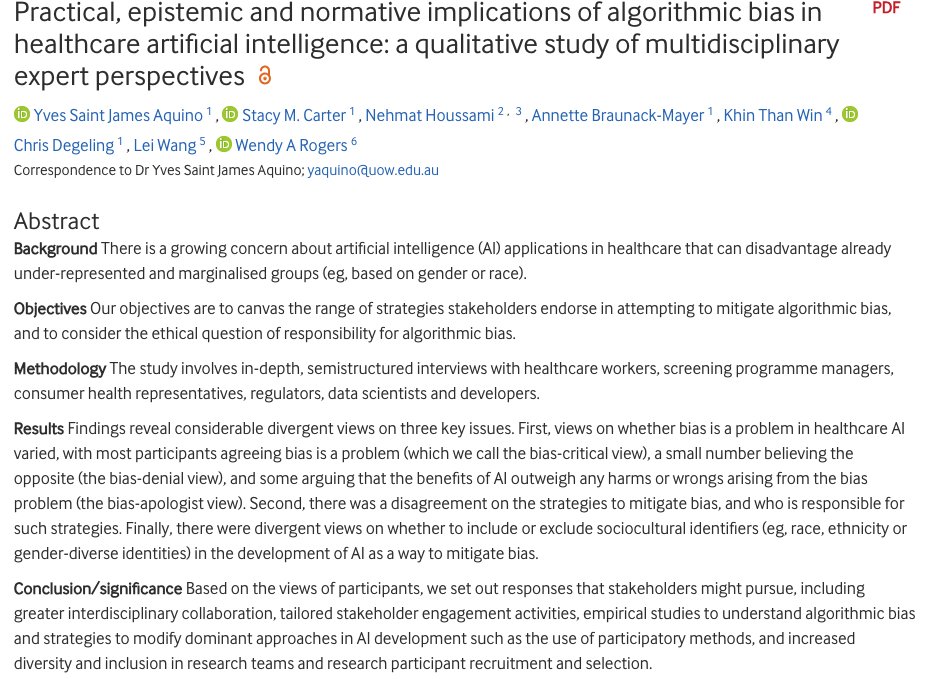
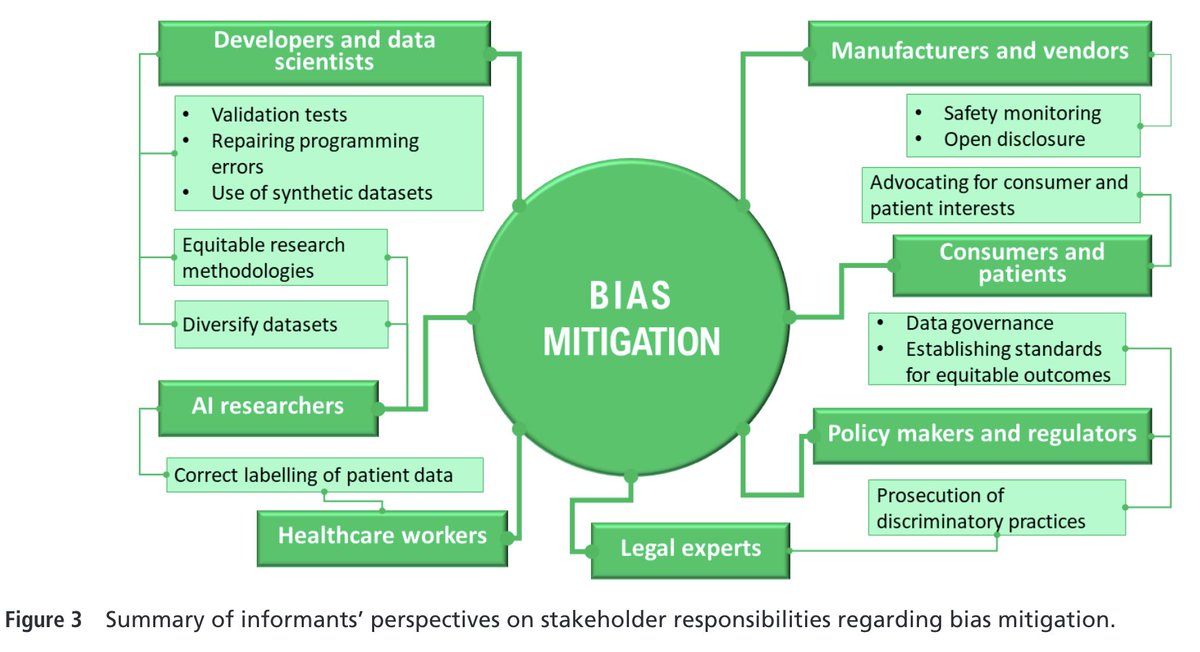
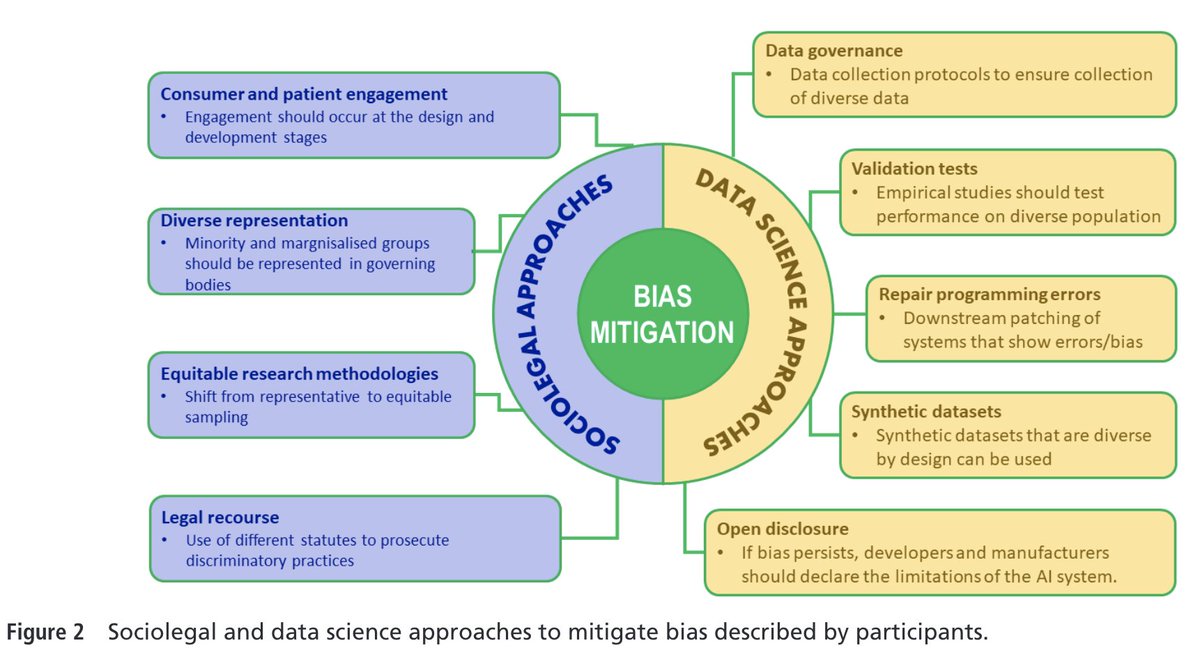
New study by @yvessj_aquino et al. provides a fabulous look at differing opinions about algorithmic bias held by healthcare professionals. 72 experts had 3 key disagreements: whether bias exists, who's responsible for fixing it & whether to include race data in AI systems
1
3
215
21 Aug 2025
36
21 Aug 2025
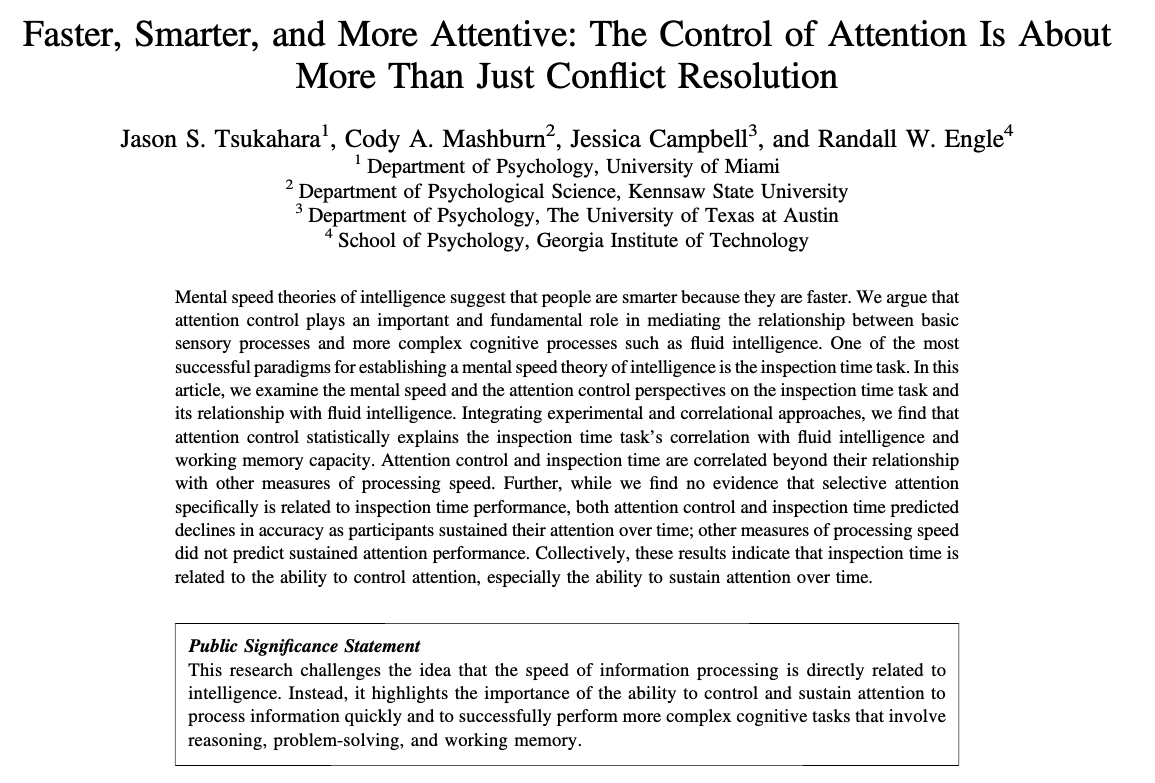
New study by @jasontsukahara examines if attention control explains the 🔗 between inspection time tasks & intelligence. Key finding: attention control mediated the inspection time-intelligence relationship people with better sustained attention showed less performance decline
1
1
155
Hannah Overbye-Thompson retweeted

19 Aug 2025
We are hiring!
The Stanford Psychology Department is seeking applicants for a tenure-track Assistant Professor position, with a research focus in affective science.
Our ad, including application link, can be found here:
drive.google.com/file/d/1lEL…
3
61
147
18,807
1 Aug 2025
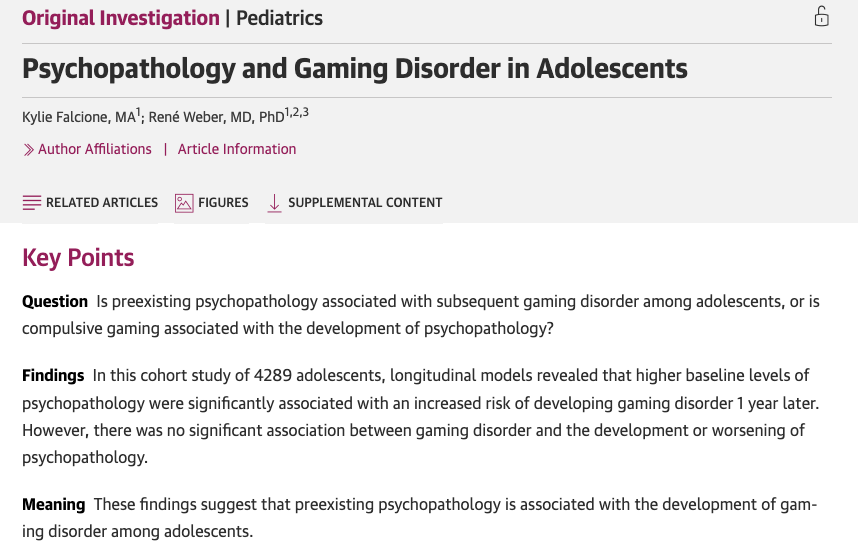
New from @KylieWoodman1 "baseline levels of psychopathology were significantly associated with an increased risk of developing gaming disorder 1 year later. However, there was no significant association between gaming disorder and the development or worsening of psychopathology."
1
2
70
1 Aug 2025
35
1 Aug 2025
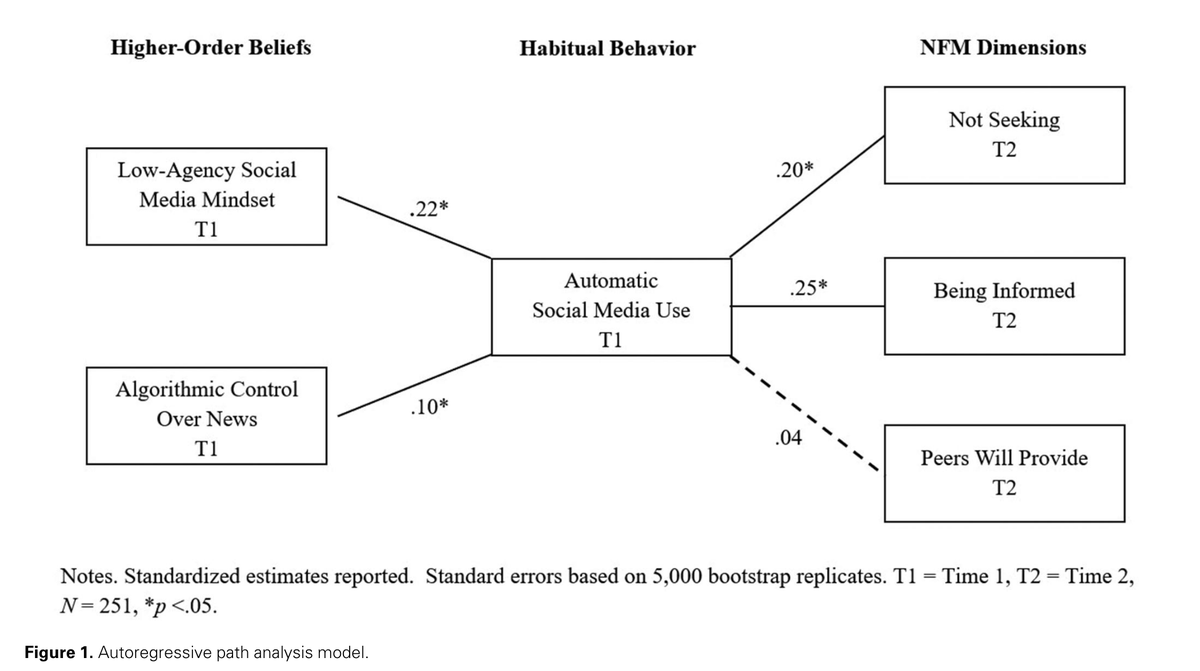
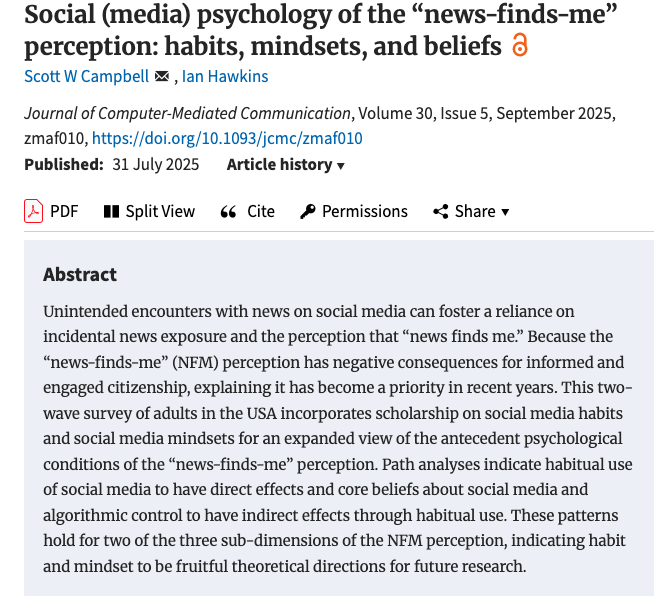
New study (2025) examines why people expect news to find them on social media (vs seeking it out). Key finding: when people habitually scroll social media w/out thinking believe algorithms/lack of control drive SM usage, they're more likely to rely on incidental news exposure
1
70
1 Aug 2025
29