
7-figure Investor & Advisor | Cryptocurrencies • Web3 Marketing • KOL Management | Portfolios & Real Estate | NFA ⍶
Joined March 2022
- Tweets 2,619
- Following 1,461
- Followers 10,089
- Likes 7,517
705 Photos and videos




Jun 11
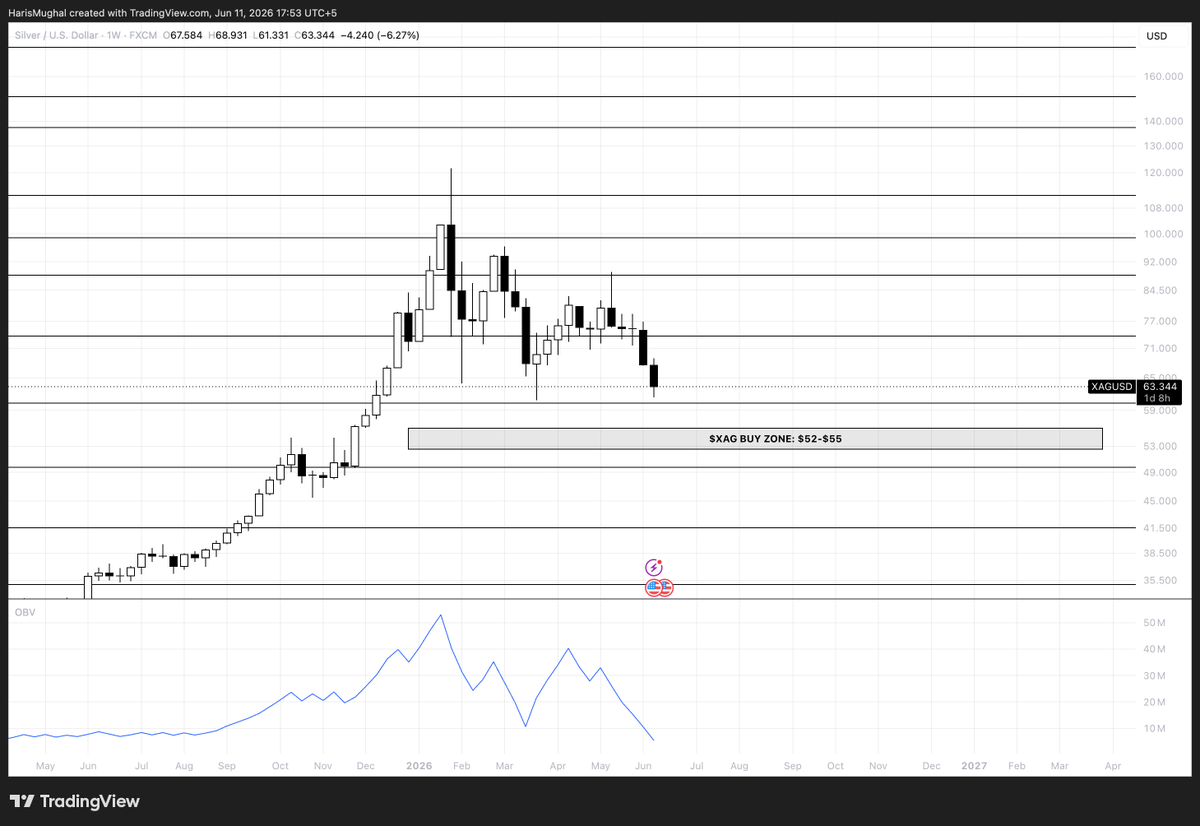
$XAG - The metals rally was great, but momentum is clearly cooling off.
If this correction continues, I’ll be looking to accumulate in the $52–$55 region.
No FOMO. No guessing. Just waiting for my levels.
3
2
4
123
Jun 10
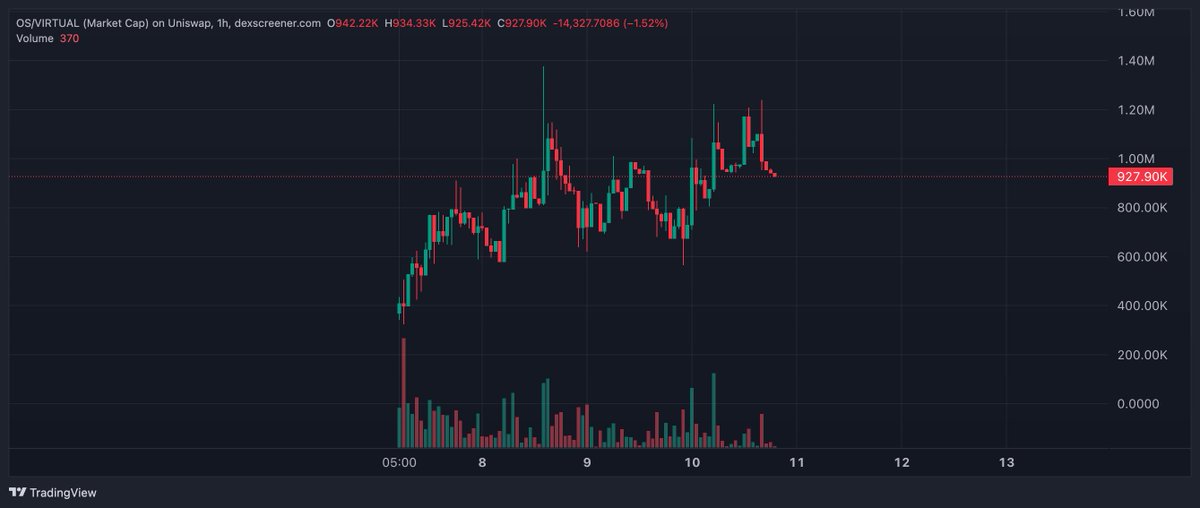
$OS - Still holding my position in @officialbunnyos.
The team continues to deliver with a high level of professionalism, and several key developments and integrations are currently in the pipeline.
The fundamentals are strengthening, and I believe it has the potential for a strong run once market conditions improve.
Jun 9

Bought a bag of $OS
@officialbunnyos
Really like their concept and professionalism. Will buy more if it comes down!
0xD34cF0759cb65A0fe508bb1DaE0A16Cb5109bB7B
dexscreener.com/base/0x525a1…
7
6
16
843
Jun 9
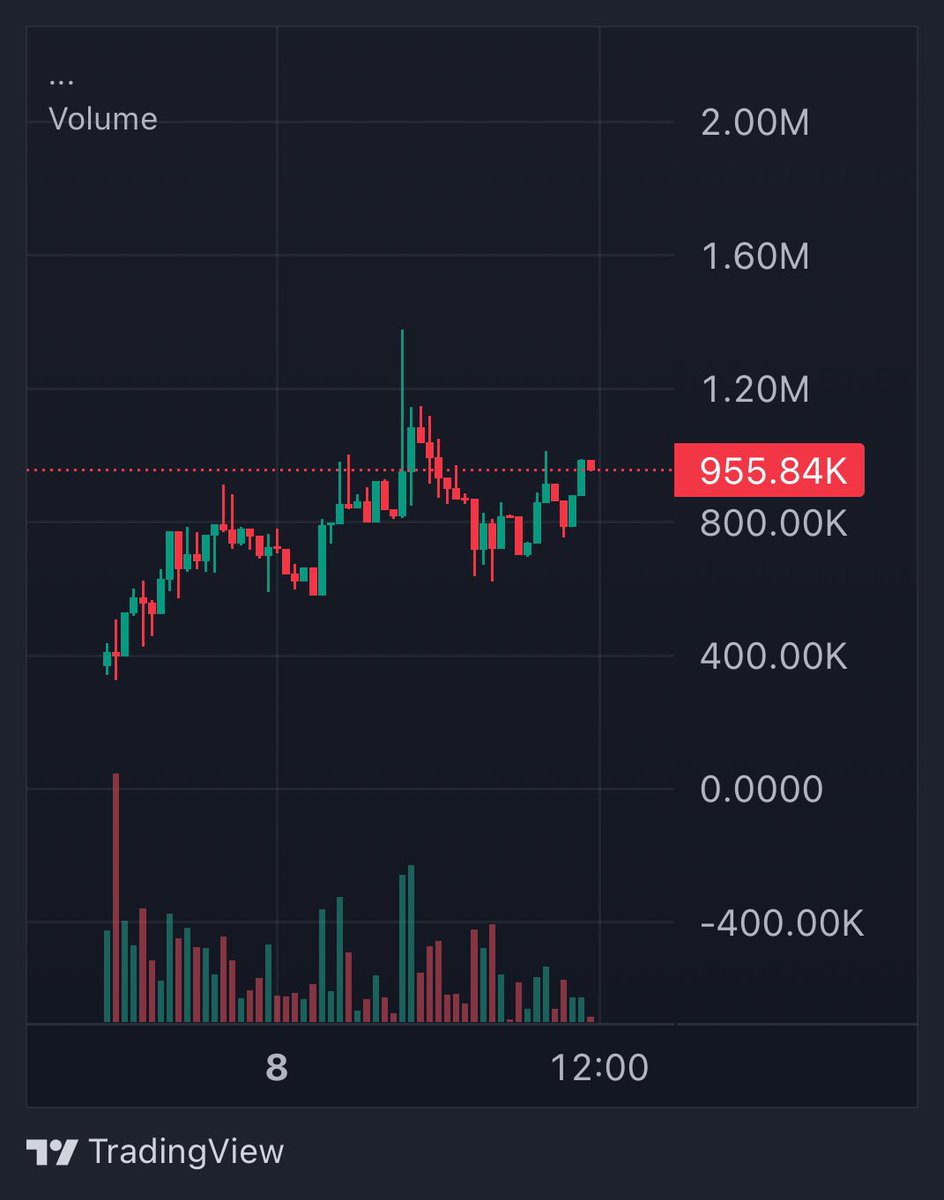
Bought a bag of $OS
@officialbunnyos
Really like their concept and professionalism. Will buy more if it comes down!
0xD34cF0759cb65A0fe508bb1DaE0A16Cb5109bB7B
dexscreener.com/base/0x525a1…
4
3
18
1,413
May 22
Nothing seems to be safe from hackers lately!
May 22

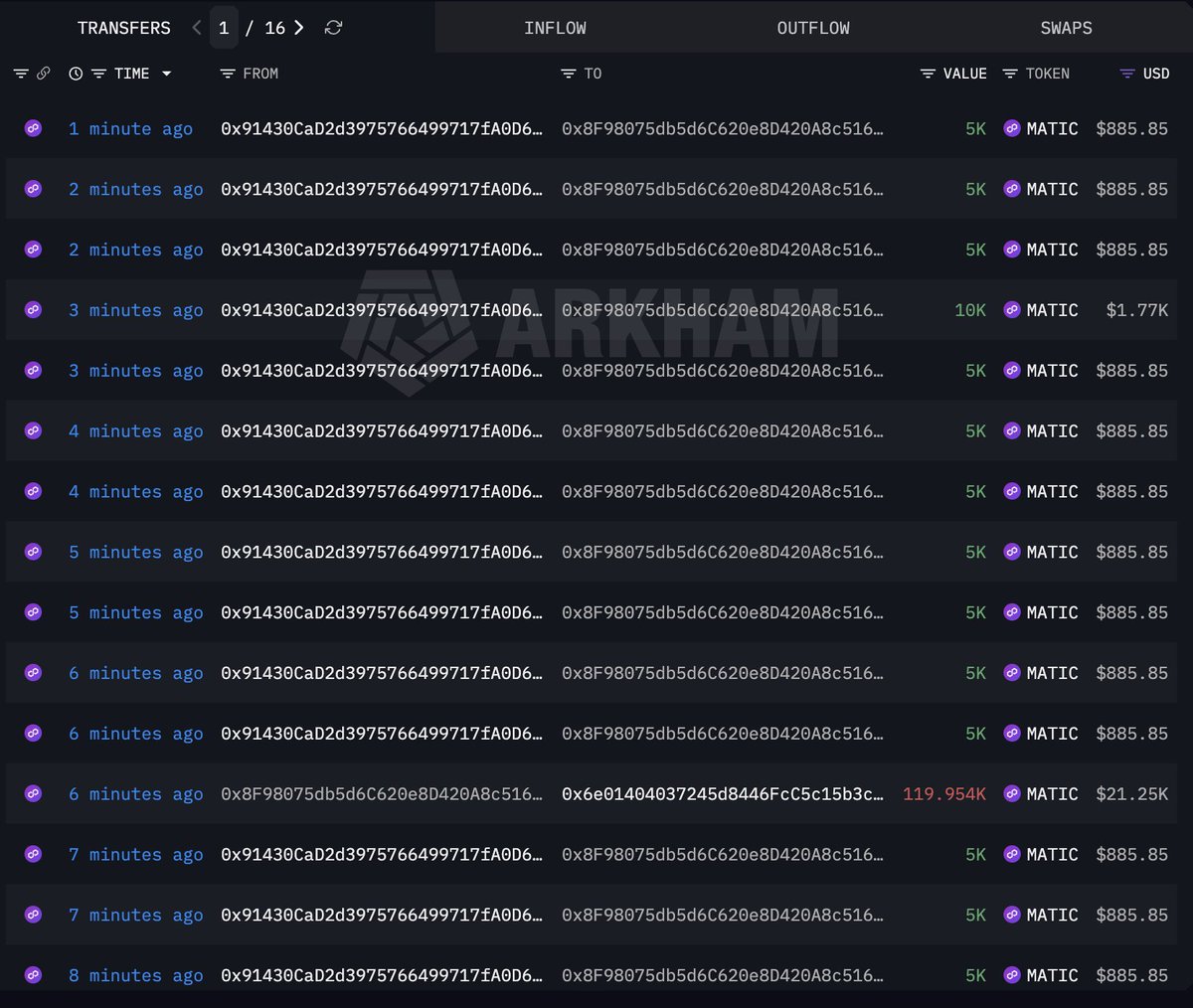
Warning: #Polymarket's contract appears to be exploited, and the attacker is stealing funds.
So far, more than $660K has already been stolen.
Source: @zachxbt
intel.arkm.com/explorer/addr…
1
3
6
287
May 21
$20 in $SOL giveaway | 2 winners
- Follow @HarrySnipes with notis on🔔
- Retweet pinned, like and drop addy
- Actives/reply guys will be prioritised
Ends in 24 HRS ⏳
19
11
21
425
May 21
Nvidia’s latest conference and earnings reinforced that AI demand remains incredibly strong. The company delivered an optimistic outlook around future growth, Blackwell chip adoption, and continued AI infrastructure investment, which strengthened market confidence.
That bullish sentiment pushed tech stocks, the Nasdaq, and crypto markets higher as risk appetite returned.

4
3
7
260
May 10
The way things are aligning up i think a correction is right around the corner
Dont go high leverage!
6
2
15
166
May 6
GM CT
I see a lot of you guys are still out here hustling while everyone else slowed down, I see you.
Time to get active.
20
1
16
185
Mar 2
GM everyone ☀️
Been quiet for a while. Markets have been chaotic, and sometimes stepping back is smarter than forcing activity.
I’ll slowly start getting active again with a focus on collaborating with teams that are actually building, not just marketing noise.
At this stage, when the trenches are the emptiest, it’s about supporting each other. The teams and communities that keep building through bear markets are usually the ones that outperform when momentum returns.
21
3
24
441
Feb 7
This was spot on!
Giving updates and announcing giveaway winners shortly.
15
4
18
1,329
Feb 6
Macro Thesis: The Leverage Supercycle & the 2026 Risk Event
The defining feature of today’s financial system is leverage saturation.
Not leverage in one corner of the market, but system-wide, cross-asset, normalized leverage that far exceeds anything seen during the 2008–09 financial crisis.
In 2008, equity margin requirements hovered around 30%. Leverage was visible, regulated, and largely confined to traditional markets. Today, investors can maintain 300% exposure indefinitely through 3x ETFs with minimal friction. What was once institutional behavior has been democratized and scaled.
Crypto did not exist in 2008. Today, it functions as the most leveraged asset class in history, with 50x–100x leverage accessible globally, 24/7, to millions of participants. This has introduced a reflexive, high-velocity liquidation engine into the global financial system, one that did not previously exist.
Housing is often cited as a counterexample, “less leveraged than 2008.” This is misleading.
The leverage has not disappeared; it has changed form. So-called “cash offers” in real estate are frequently financed through asset-backed borrowing. Investors routinely extract 60–70% of equity from stocks, crypto, and other portfolios to deploy into property. The balance sheet risk is simply relocated, not reduced.
The result is a financial ecosystem where leverage is:
•Embedded across asset classes
•Interconnected through collateral chains
•Masked by liquidity and financial engineering
This matters because leverage does not fail gradually.
History shows that high-leverage systems unwind violently. Price declines trigger margin calls, forced liquidations, and feedback loops that overwhelm organic buyers. We have already seen previews of this dynamic:
•Silver collapsing from $120 to $70 in days
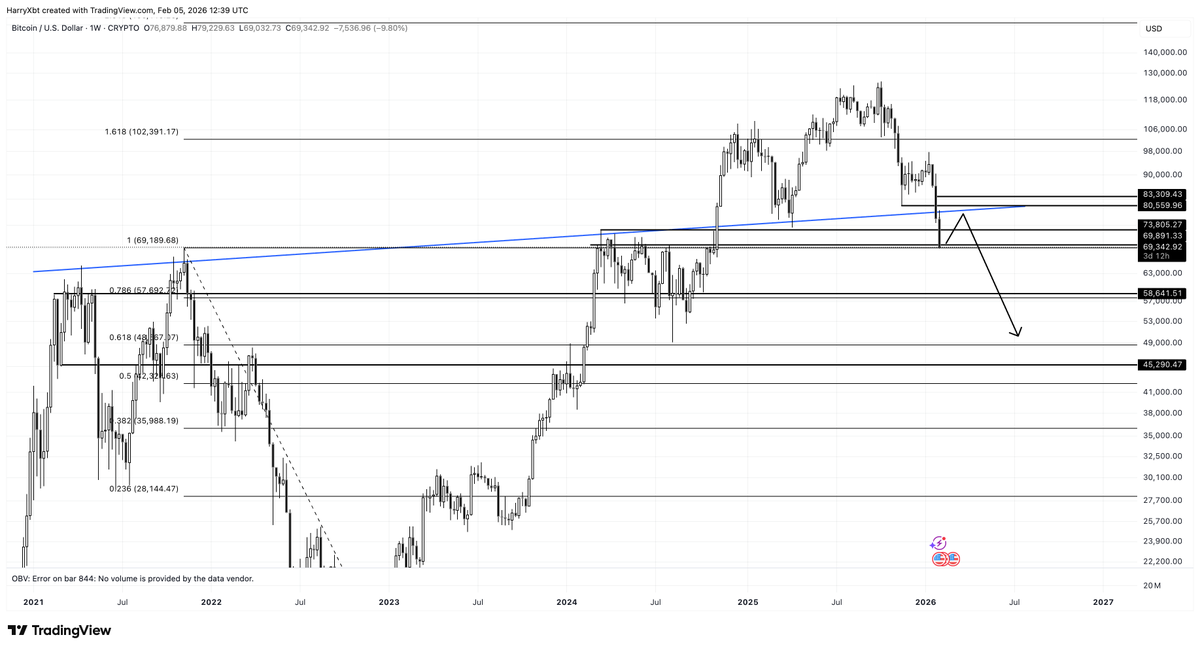
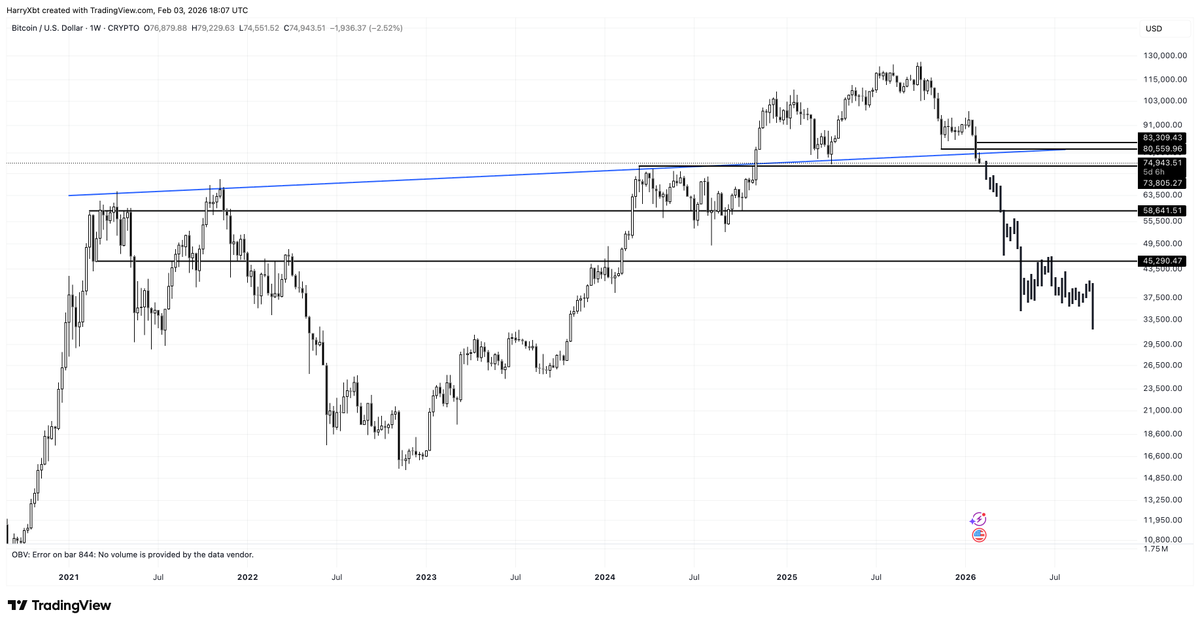
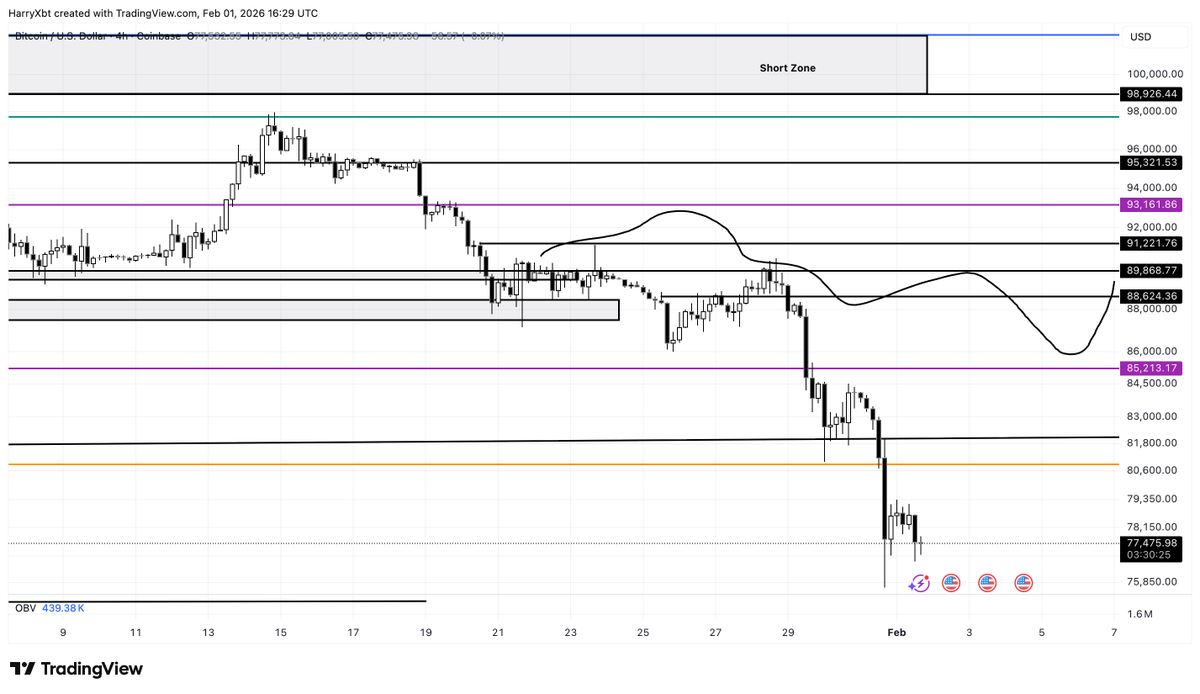
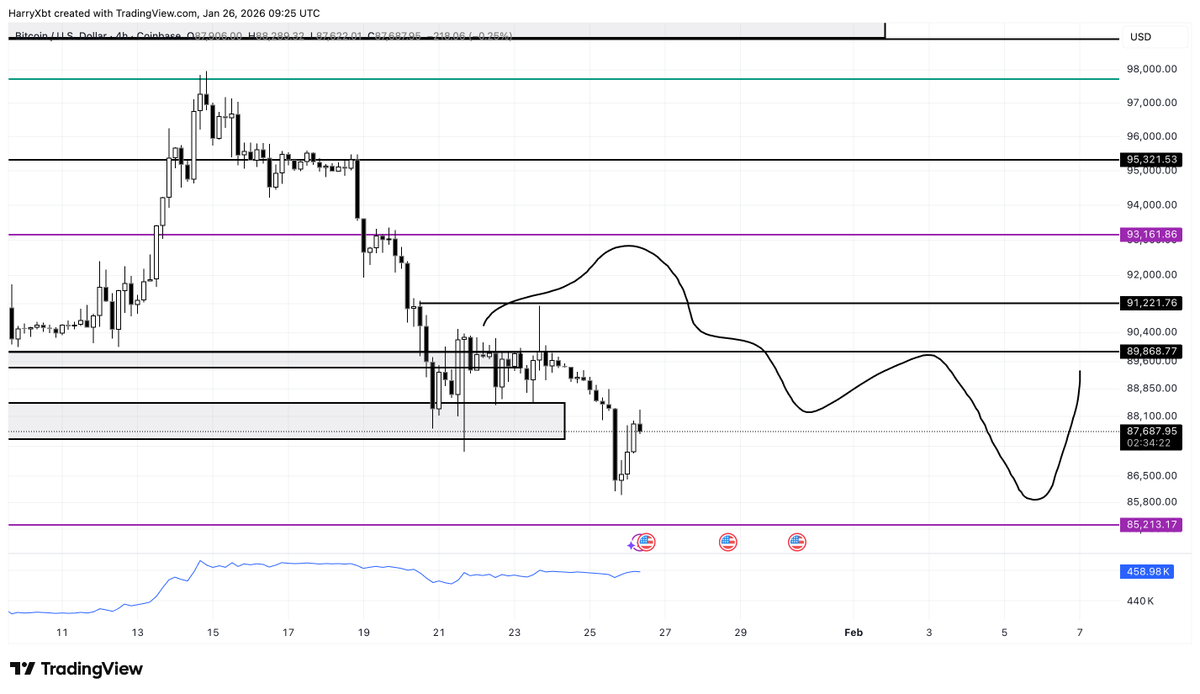
•Bitcoin moving from $90k to $60k in weeks
These are not valuation events. They are leverage events.
As more investment vehicles depend on continuous liquidity and rising prices to remain solvent, the system becomes increasingly fragile. Once a critical mass of leveraged structures fails, the unwind becomes self-reinforcing. Momentum reverses, liquidity evaporates, and price discovery turns disorderly.
This is why projections of a major financial market disruption around 2026 deserve serious consideration.
14
9
18
695
Feb 5
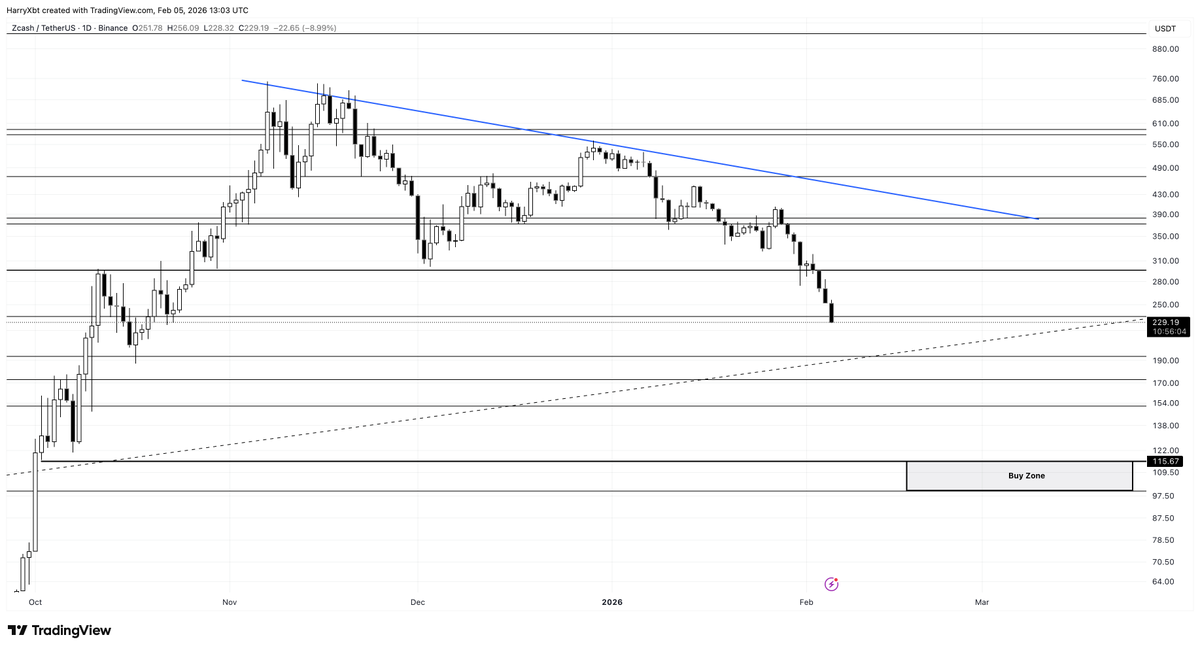
$ZEC
Exercising patience as current risk/reward profile is unfavourable.
Will look to establish positions within the marked buy zone ($110-122) where technical support converges with multi-year trendline.
Disciplined entries during periods of maximum pessimism often yield the best opportunities.
14
9
24
999
Feb 5
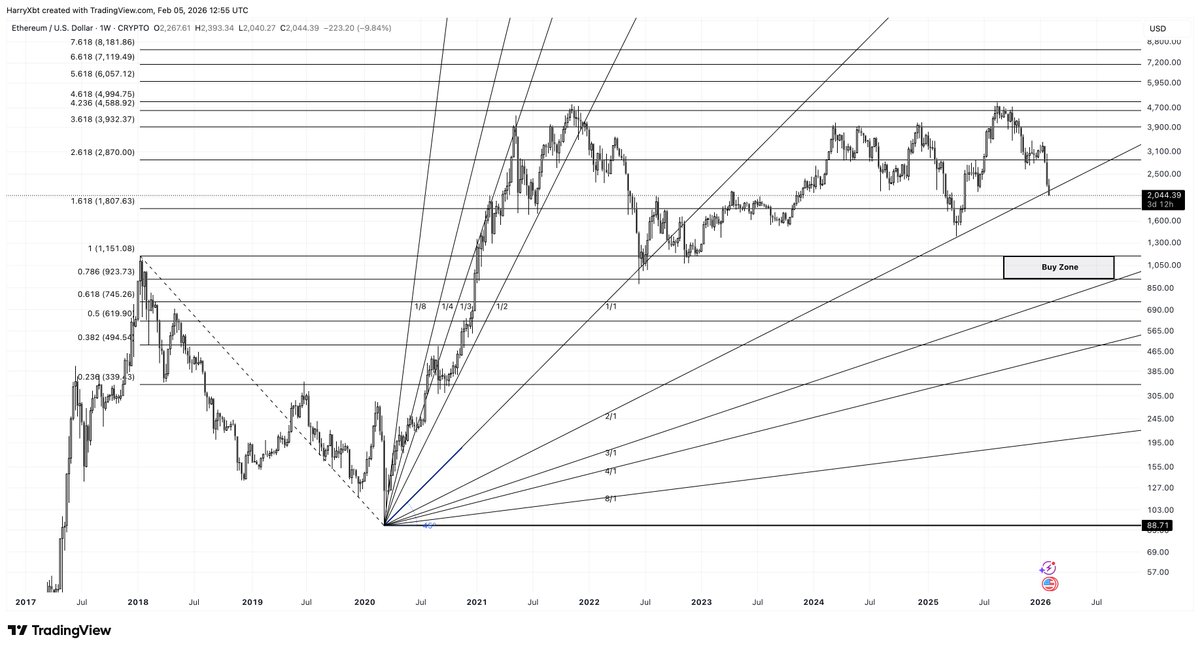
$ETH
After careful review of the weekly chart, I'm adopting a cautious stance on Ethereum for the coming weeks.
Key observations:
- Price currently at $2,050 following rejection from $4K levels
- Multiple Fibonacci retracement zones suggest significant support confluence between $1,000-$1,300
Long-term ascending trendline converging with this support zone
Strategic approach: Remaining on the sidelines until price action provides a more favorable risk/reward entry. Will look to establish positions below $1,000 where technical support appears strongest.
Patience remains a key component of disciplined trading.
15
9
22
532
Feb 5
GM ☀️
$20 in $SOL giveaway | 2 winners
- Follow @HarrySnipes with notis on🔔
- Retweet pinned, like and drop addy
- Actives/reply guys will be prioritised
Ends in 24 HRS ⏳
115
71
115
2,675
Feb 4
GM CT ☀️
Trying to get active on here again.
It always feels hardest when the effort isn’t rewarded but we keep showing up anyway.
61
6
49
2,072